2000 Quarter Error List with Pictures

A Washington quarter design helped a coin sell for $194,062 in January 2024. The other face belonged to a Sacagawea dollar.
That famous mix-up is only one part of the 2000 quarter errors story. Massachusetts, Maryland, South Carolina, New Hampshire, and Virginia quarters also show missing metal, doubled details, and striking mistakes.
Estimated values run from $10 to $200,000, depending on the error and condition. Read on to see which features matter and how to check them.
1. 2000 State Quarter Doubled Design
Look beneath Washington’s ear on some Massachusetts and Virginia quarters. A second raised outline can make the earlobe look longer or doubled.
This comes from a doubled die, a stamping tool that carries a repeated part of the design. Each coin struck by that tool can show the same extra outline.
Philadelphia and Denver Massachusetts examples have different patterns. The Virginia ear example is from Denver, while New Hampshire reports include both mints without establishing the same ear feature on every coin.
Estimated Value
Small doubled details generally fit an estimated $20–$250 range. A clear extra earlobe on an unworn coin is more appealing than a faint feature hidden by scratches.
The New Hampshire reports need their own matching photographs before a buyer can judge strength. A holder identifying a variety can help, but the dollar value still depends on the visible doubling and condition of that particular coin.
How to Identify
Read the front mintmark on a Massachusetts quarter before choosing a comparison photograph. Its Philadelphia and Denver ear patterns belong to different stamping tools.
A 10× magnifier helps you follow the lower outline of Washington’s ear. Direct a small light across it and look for a separate raised curve.
On the Philadelphia example, small tool marks near UNITED, GOD, and BAY provide further points of comparison. Do not expect those same marks on the Denver coin.
A thin, flat shelf is different. Movement during striking can shave a design edge into that shape without creating a true doubled die.
For New Hampshire, compare the identified variety itself rather than assuming its extra detail must also be on the ear.
2. 2000 State Quarter Die Cracks and Raised Breaks
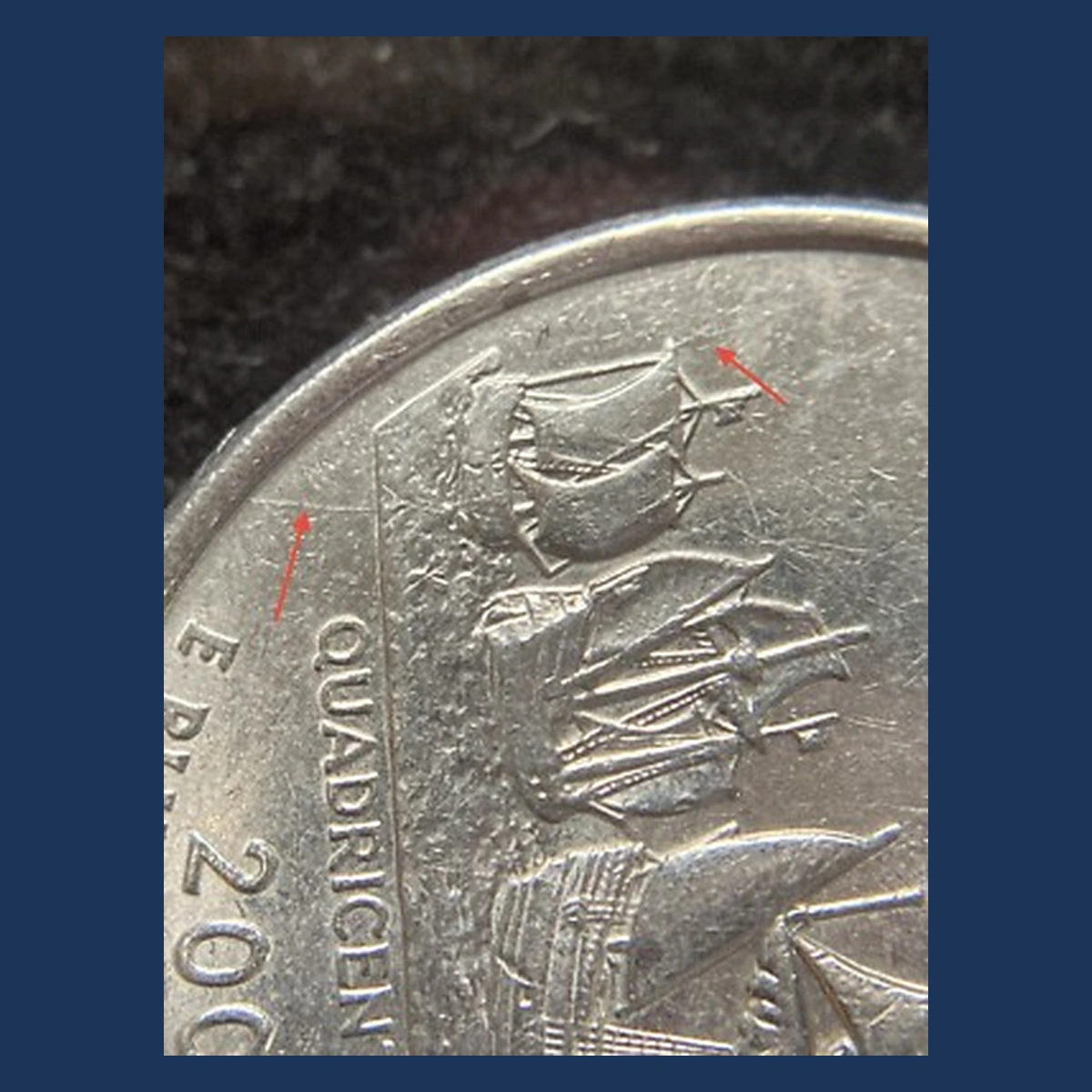
A raised line can cross Washington’s brow or extend from the Old Man of the Mountain’s mouth. These features come from cracks in a stamping tool.
Metal enters the crack as the coin is struck, leaving a thin ridge. If a piece of the tool breaks away at its edge, the coin can show a larger raised patch called a cud.
South Carolina, New Hampshire, and Virginia have crack or break reports. The mouth line and a rim cud are different shapes within this group, not interchangeable names.
Estimated Value
A small readable crack may bring about $10–$50; an obvious raised rim break can reach an estimated $75–$300. The overall range is $10–$300.
A bold mouth line on New Hampshire can attract buyers who enjoy its appearance. For a cud, size and a clear connection to the rim matter more than a dramatic nickname, especially when wear or marks make the raised area difficult to interpret.
How to Identify
Run the light across the suspicious line without rubbing the coin. A genuine crack normally stands above the surrounding surface; a scratch usually cuts into it.
For the South Carolina example, enlarge Washington’s brow and nose. On New Hampshire, turn to the mountain portrait and check the line extending from its mouth.
A 5× or 10× magnifier should show whether the line has natural, uneven edges. Fresh shiny trenches and piled-up metal can point to later damage instead.
For the reported Virginia cud, first establish that the raised patch actually joins the outer rim. An isolated bump in the middle of the design cannot be identified as a rim cud merely because it is large.
3. 2000 State Quarter Maryland Annealing Color
Some Maryland quarters look unusually red, gray, or dark instead of their normal silvery color. Heating the metal blanks before striking can produce this effect.
This stage is called annealing. Changes during heating can leave an unusual surface color that remains after the design is pressed into the metal.
Denver examples include coins described as red and gray, sometimes with rolling lines. Philadelphia examples are also reported, but dark color alone does not prove this error or show that every dark Maryland quarter had the same manufacturing problem.
Estimated Value
Allow an estimated $30–$300 for a convincing Maryland annealing error. Strong unusual color across an attractive, unworn coin can place it above a dull or heavily marked example.
A dark quarter found in circulation needs more than a color comparison. Staining, burial, and heat applied after minting can change the surface too, so a clearly identified Mint-made color change is much easier to price and sell.
How to Identify
A photograph taken under a yellow lamp can turn normal silvery metal golden. Examine the quarter under neutral white light, turning it to check whether the unusual color stays visible from different angles.
Look closely at the surface with a magnifier, especially where colored and normal-looking areas meet. Bubbles, sticky deposits, and burned-looking patches can point to later treatment rather than annealing at the Mint.
For a loose coin, record its weight against the normal clad standard of 5.67 g; a normal reading still does not prove annealing. Keep the surface untouched, and compare any holder description with the actual texture instead of relying on the nickname “Black Beauty.”
4. 2000 State Quarter Virginia Weak Strike
The portrait, ships, or lettering may look unusually faint even though the coin shows little rubbing. Too little striking pressure can leave the metal short of the deepest parts of the design.
A Denver Virginia example has been described as a die adjustment strike. That older name suggests press setup, but the weak design alone does not establish why the press struck lightly.
Wear can create a similar first impression. The important difference is how the weak areas and surviving surface fit together across the entire coin.
Estimated Value
A Denver Virginia coin labeled as a die adjustment strike, graded ANACS MS61, sold for $62 in October 2010. MS61 means no circulation wear, with noticeable marks.
An estimated $40–$300 covers weak strikes of different strength and condition. A strongly faded design with intact original surfaces is more desirable than slight weakness that could easily be confused with an ordinary worn quarter from a pocket or change jar.
How to Identify
Start with the smooth background beside the faint design. Heavy rubbing and scratches there would weaken the case for a coin that left the press with shallow details.
Then compare the front and back with a normal Virginia quarter. Light pressure can affect broad areas, while a localized blockage can erase just one part of the design.
Do not call every missing letter a weak strike. A magnifier helps separate shallow but continuous detail from a dent, stain, or scraped patch.
A loose clad example should be checked against 5.67 g and 24.3 mm with a scale and calipers. The deciding visual clue is faint striking detail without the surface wear needed to explain it.
5. 2000 State Quarter Partial Collar Edge
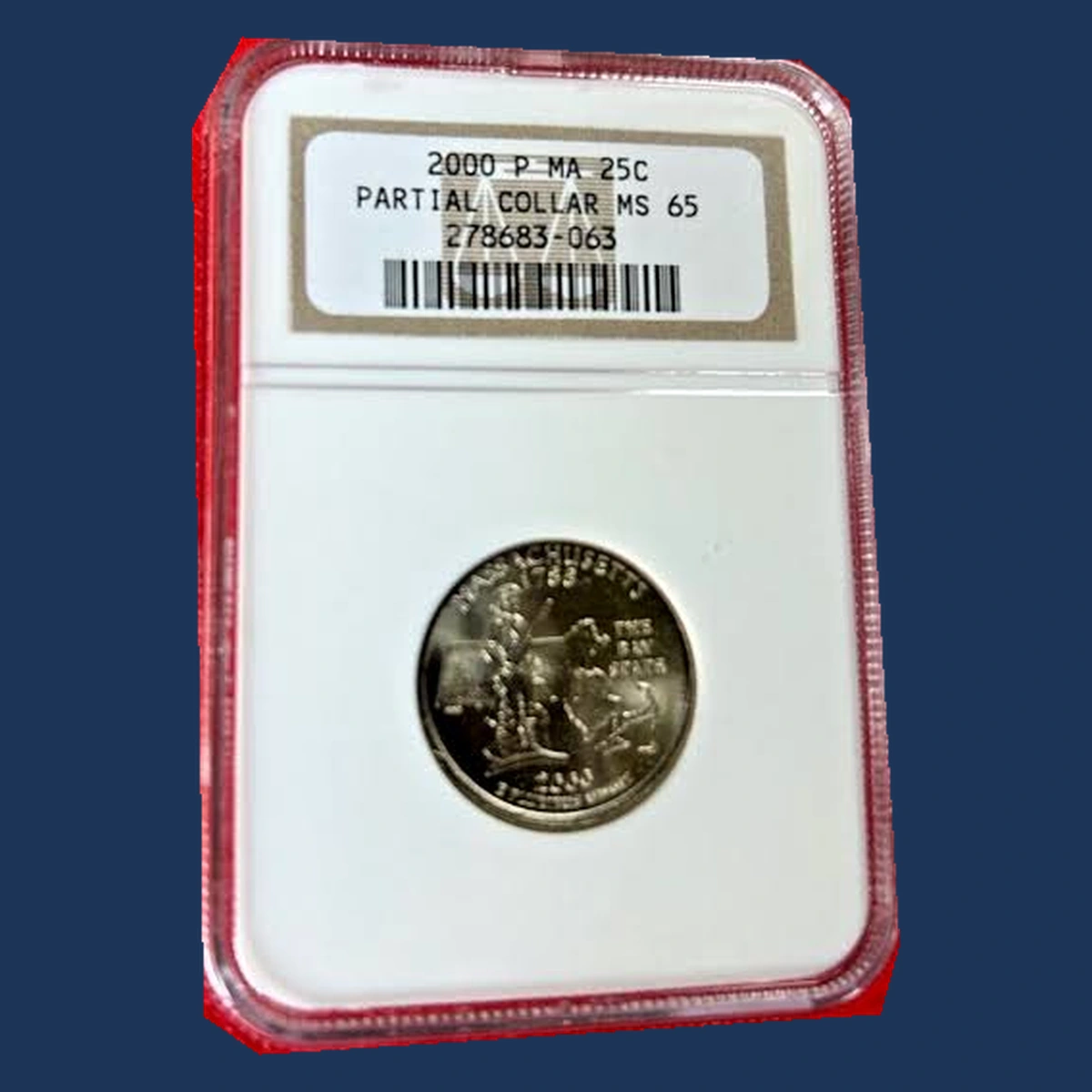
A quarter’s edge can look stepped, with grooves on one band and a wider, smoother band beside it. This happens when the blank is only partly inside the collar, the ring that controls the coin’s width.
Massachusetts and Maryland examples show this edge error. A Virginia coin combines it with a misplaced front design and an unstruck lip near one o’clock.
These are changes in the shape of the edge. The ordinary copper stripe between the outer metal layers is a different feature and appears on normal clad quarters.
Estimated Value
Maryland partial collar coins sold for $19 in September 2008 and $29 in December 2008, in different unworn grades. Those modest sales show why this error does not automatically mean a large premium.
Estimate $20–$350 across the group. A pronounced step, attractive surfaces, and an additional clear striking mistake can raise interest, while a slight edge irregularity is usually less valuable than a dramatic, easily photographed example.
How to Identify
Place the edge toward the camera. A straight-on photograph of Washington may show almost nothing useful about a partial collar strike.
Turn the coin slowly beneath a desk lamp and watch the boundary between the grooved band and expanded metal. There should be a physical step, not merely a change from silvery metal to copper color.
Under magnification, follow the step around the circumference. Its height and the amount of incomplete grooving may change as you turn the coin.
The Virginia combination also has an unstruck front lip near one o’clock. QUARTER DOLLAR is weak nearby.
Those front features help recognize that example, but its stepped edge supplies the evidence for the partial collar error itself.
6. 2000 State Quarter South Carolina Defective Silver Blank
A South Carolina silver Proof can carry a flaw that began in its blank before the design was struck. A Proof is a specially made collector coin, usually with sharp details and reflective backgrounds.
The recorded example is a San Francisco silver coin graded PR69. That is a very high condition grade, although the blank itself has a manufacturing defect.
A blank defect is not automatically a missing outer layer or a deep split. Its shape must be judged on the coin, without assigning it another error’s appearance or cause.
Estimated Value
The PR69 South Carolina silver Proof sold for $109.25 in October 2010. That was the whole coin’s price, including its silver and high condition grade.
For a similar identifiable blank defect, estimate $75–$400. Some buyers favor an obvious flaw that leaves the main design attractive.
A large rough patch may appeal to a different buyer. Its greater size does not automatically place the coin at the upper end.
How to Identify
The first distinction is the kind of coin: this example is a silver Proof, not a circulation quarter. Read the holder description before choosing a normal coin for comparison.
A loose silver Proof should be checked with a scale and calipers against 6.25 g and 24.3 mm. A sealed coin can be checked through its records; do not break the holder for a weight reading.
Now direct light across the flaw from opposite sides and inspect it with a magnifier. Look at where the struck design crosses or meets the affected metal, since fresh cuts through finished detail would point toward later damage.
7. 2000 State Quarter Struck-Through and Grease-Filled Details
Part of the state design or lettering may be faint while nearby detail stays sharp. Material between a stamping tool and the blank can prevent the design from reaching that area.
Grease mixed with debris can also fill small recesses in the tool. The result may be missing letters rather than a sharply outlined depression.
A South Carolina example has broad weakness on both faces, especially the back. A Philadelphia Virginia example has weak peripheral lettering on both sides; the two coins should not be mistaken for identical impressions from one object.
Estimated Value
Small patches of grease-filled lettering generally fit an estimated $20–$100. Larger, clearly Mint-made areas can bring roughly $100–$600, making the group range $20–$600.
For the South Carolina example, the extent of the blocked design is more important than treating every faint letter as a separate error. On Virginia, a readable year and enough surviving state detail help buyers recognize what the coin should have looked like.
How to Identify
Work around the Virginia coin’s outer lettering on each face. A group of weak letters beside sharp ones differs from wear that also flattens Washington’s highest details.
Next, examine the transition between clear and missing detail with a magnifier. Scraping tracks crossing the finished design suggest damage after minting.
For South Carolina, use wider photographs showing both faces rather than an isolated enlarged letter. Much of the reverse is affected, so the overall pattern of weakness matters.
A broad weak patch does not identify the object that blocked the strike. Avoid naming a wire, cloth, or other material unless its shape or texture survives.
The useful comparison is the untouched surface across the boundary between normal striking detail and the blocked area.
8. 2000 State Quarter Virginia Misaligned Dies
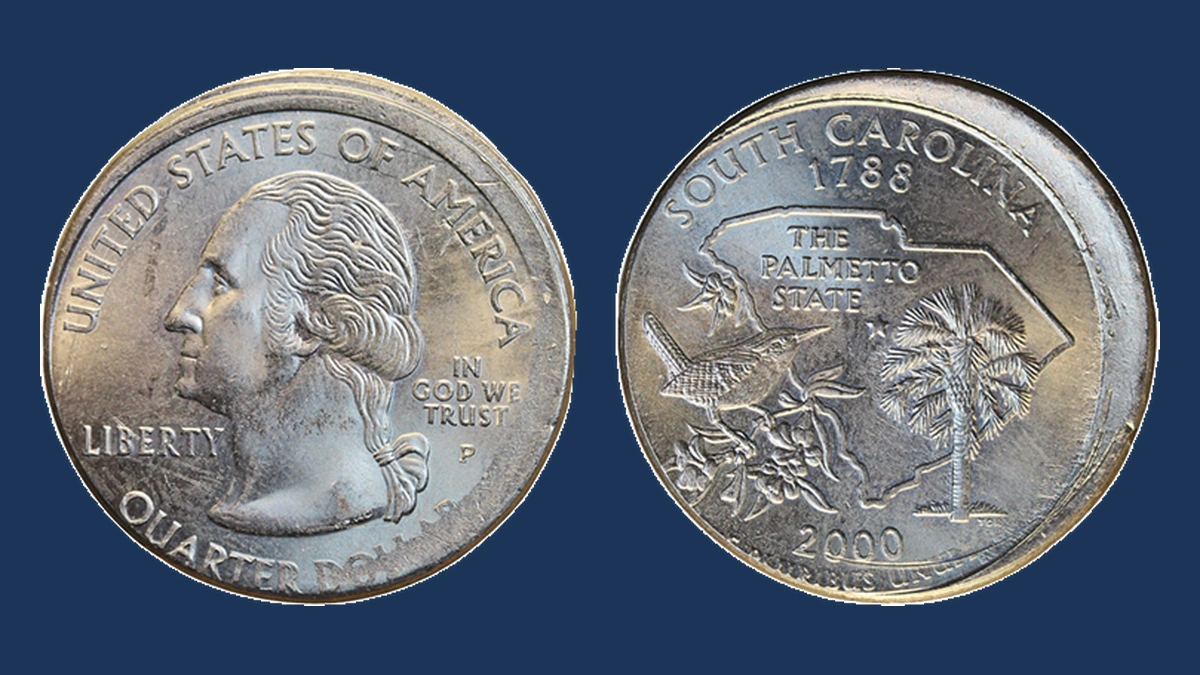
Washington or the ships can sit too close to one edge while the coin remains round. A stamping tool that is not properly centered can shift its design across the blank.
Both tools are reported as misaligned on a Philadelphia Virginia example. That does not tell us that they moved the same distance or in the same direction.
This differs from a blank that entered the press off-center. Each face needs to be examined separately, including its rim and the amount of missing design, before the error can be described clearly.
Estimated Value
Estimate $75–$600 for a convincing Virginia coin with both designs misplaced by the tools. Large, obvious shifts with a sound edge should sit above slight uneven borders.
Clean surfaces let a buyer follow the rim and see how each design moved. Dents can disguise that relationship.
An ordinary quarter with one narrow border does not belong at the top of this range. Both misplaced designs need to be clearly visible.
How to Identify
Photograph each face straight on, with the coin lying flat. A tilted photograph can make one border appear wider than the other even when the design is centered.
Mark the narrowest and widest rim areas on each image. Compare Washington’s position with the ships independently instead of assuming the two faces moved together.
Next, inspect the edge with a magnifier for dents or a folded lip that could explain the uneven outline. Calipers can help check whether the round coin remains near the usual 24.3 mm diameter.
An off-center blank usually loses corresponding portions of both designs. For this reported dual misalignment, look for evidence that the tools’ separate positions explain the front and back borders.
9. 2000 State Quarter Broadstrike
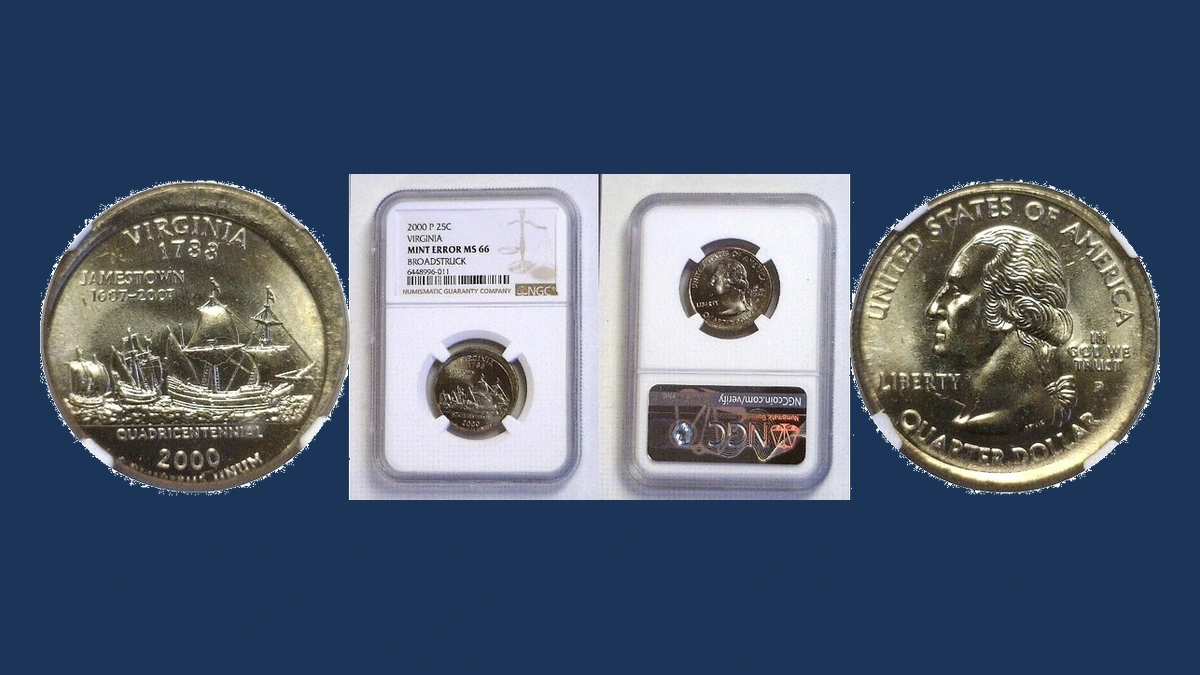
A broadstruck quarter spreads wider than usual because the collar does not hold its edge during striking. The intended design remains complete inside the expanded outline.
South Carolina, New Hampshire, and Virginia examples include coins with uneven borders. Some Massachusetts and New Hampshire pieces were struck on blanks without the usual prepared raised rim, sometimes called Type I blanks.
That term describes blank preparation, not a different state design. One Massachusetts coin also has a small front struck-through area and a die crack; these features belong to the same coin.
Estimated Value
A broadstrike can be estimated at $30–$750, with mild expansion toward the lower end. A wide, unmarked coin with the complete state design is easier to appreciate than a slightly uneven example.
The Massachusetts combination can attract extra interest because several features appear together. Its broadstrike, struck-through area, and crack still form one coin’s selling price, rather than three independent amounts that should be added together for a higher total.
How to Identify
Measure the outline at its widest and narrowest points with calipers, using 24.3 mm as the normal quarter diameter. Uneven expansion can be missed if you take only one reading.
Now compare the outline with the design: a broadstrike can retain the whole picture inside a wide border. An off-center strike instead loses part of the picture where the blank missed the stamping tools.
Inspect the edge with a magnifier for incomplete or absent collar grooves. On the Massachusetts combination, the thin impression near eleven o’clock and raised bust-tip crack are separate surface clues; neither substitutes for the expanded edge that identifies the broadstrike.
10. 2000 State Quarter Missing or Defective Clad Layer
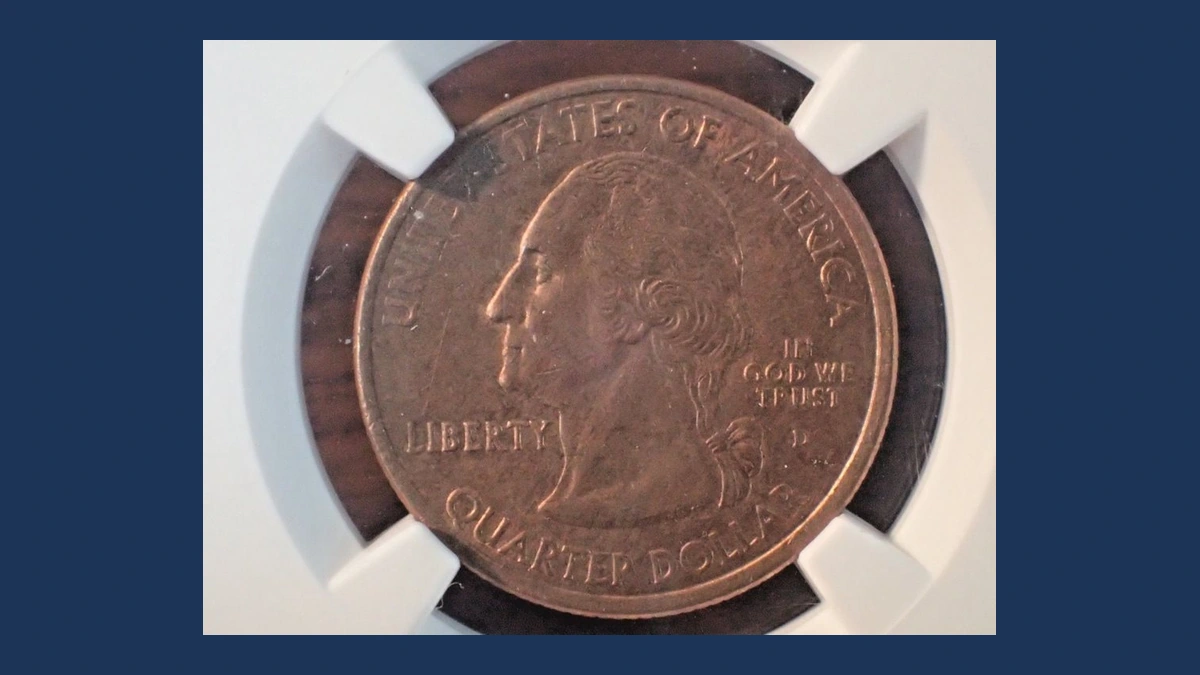
A clad quarter has silvery outer layers around a copper center. When an outer layer is missing, one whole face can look copper-colored and the coin usually weighs less.
Examples occur across all five 2000 state designs, on front or back surfaces and at different mints. The exact side must be checked on each coin.
A New Hampshire coin with defective reverse cladding is a separate-looking case within this group. A patchy or incomplete layer is not the same as a face that has lost its entire outer layer.
Estimated Value
Estimate $80–$1,000 for missing or defective cladding, depending on visibility, condition, and how clearly the layer loss is established. A full copper-colored face often attracts more attention than a small rough patch.
A Denver Massachusetts reverse-missing example with environmental damage sold for $79 in January 2014. That problem coin should not set the value of a clean, unworn piece; damage and a genuine manufacturing error can occur together.
How to Identify
Weigh a loose coin before judging it by color. Normal clad quarters weigh 5.67 g, while recorded missing-layer examples include a 4.51 g Massachusetts coin and Maryland pieces around 4.6–4.7 g.
Those are measurements of particular coins, not a required weight for every layer error. Check the diameter with calipers and inspect the edge to see which outer layer remains.
A magnifier helps distinguish exposed copper from a stain or coating over intact silvery metal. Abrasion that removed a finished layer can leave scratches and altered details.
For the New Hampshire defective-layer example, examine the boundaries of the affected patch. Do not label the entire reverse as missing merely because part of its cladding looks abnormal.
11. 2000 State Quarter Maryland Rolled-In Wire
A narrow piece of steel can become trapped in the metal strip before coin blanks are cut. Rolling presses the wire into that strip, so it can remain inside a finished quarter.
The Philadelphia Maryland example has a steel wire or bristle associated with split cladding. This differs from a loose thread leaving a groove during the final strike.
The embedded material and the opening in the outer layer belong together. A wire laid on top after minting, or caught in a scratch, would not explain the same rolled-in structure.
Estimated Value
A clearly identified rolled-in wire quarter can be estimated at $200–$1,200. The value rises when the foreign material remains visible and its connection with the surrounding metal is easy to understand.
A photograph of a dark line alone is less persuasive. Buyers will want to see how the wire sits within the coin and how the cladding opened around it, without confusing ordinary scratches or loose debris with embedded metal.
How to Identify
Do not pull at the wire. Removing it or probing the split could destroy the relationship that makes this error identifiable.
With the coin flat, photograph the wire from above and then at a low angle. These views should show whether it sits within the metal or merely rests on top.
Use a magnifier to trace the opening in the outer layer alongside the wire. The surrounding metal should explain how the foreign object became embedded.
The Error-Ref discussion of rolled-in bristles helps distinguish this from a groove left during the final strike.
Concentrate on the ends and edges of the embedded object, where loose debris and a true rolled-in wire look most different.
12. 2000 State Quarter Off-Center Strike
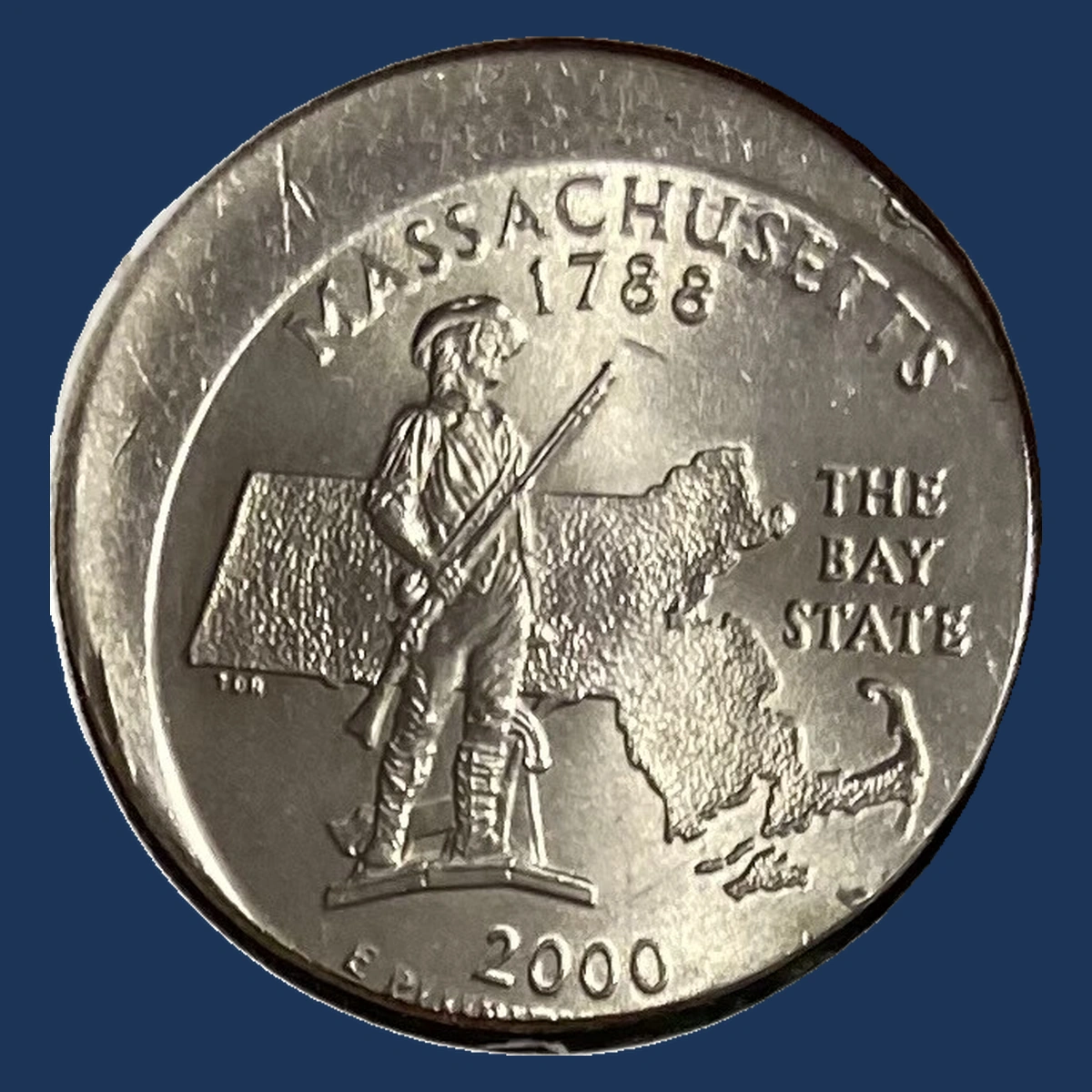
A blank that sits too far to one side can receive only part of the design. The finished quarter shows an unstruck area opposite the portion caught between the stamping tools.
Examples range from modest displacement on Virginia to roughly half the design missing on New Hampshire. A Maryland example is about 45% off-center, but its mint is not established.
A South Carolina coin may be dated as “(2000)” because the state design identifies its issue year. Parentheses matter when the actual year is outside the struck portion.
Estimated Value
Use an estimated $80–$1,500 range for these off-center quarters. A readable year, recognizable state design, and clean surfaces make a dramatic shift easier to collect.
The Denver New Hampshire example has reverse scratches, which reduce its appeal. A less displaced but clean coin can be more desirable.
Percentage alone does not settle value. A high numerical grade on another example cannot be transferred to the scratched piece.
How to Identify
Set the quarter beside an ordinary coin of the same state and compare what is missing. The blank crescent should correspond to lost design, not just an extra-wide border around a complete image.
Inspect both faces. If only one design is shifted while the other is centered, a misaligned stamping tool may explain the coin better.
Use a magnifier to check that the unstruck area has not been ground smooth. Grinding can leave lines, an altered edge, or traces of the design beneath the polishing.
Read 2000 near the bottom of the state side when it survives. Virginia’s 1607–2007 inscription refers to Jamestown history and does not replace the coin’s issue date.
13. 2000 State Quarter Virginia Assay Cut
An assay cut is associated with removing metal for testing, rather than cutting coin blanks from a strip. The Philadelphia Virginia example has been offered with that description and an NGC MS62 grade.
A missing piece by itself cannot show when or why the cut was made. It should not be grouped with a normal curved clip solely because both coins have incomplete edges.
This distinction matters to buyers. A documented Mint testing cut has a different history from a quarter someone cut with tools after it entered circulation.
Estimated Value
The Virginia MS62 example appeared at an asking price of $1,500. That was a seller’s offer, not evidence that a buyer paid that amount.
An estimated $800–$1,800 is suitable for a comparable coin whose assay-cut identity is established. A plainly cut quarter without that support should not be priced by the same range, regardless of how neatly the missing piece was removed from its edge.
How to Identify
Begin with the holder and the history supplied with the coin. For this category, the word “assay” needs support beyond the shape visible in a photograph.
Enlarge the cut edge under a magnifier and inspect the adjacent design. Compare it with the described Virginia example, rather than with a generic curved-clip photograph.
For a loose coin, record its remaining weight on a scale without treating the weight loss as proof of Mint testing. Saw marks or filed surfaces may identify how metal was removed, but not who removed it.
Do not attempt to reproduce the cut or clean its surface. A matching cut together with reliable identification is more useful than a dramatic missing section alone.
14. 2000 State Quarter Multiple Strikes
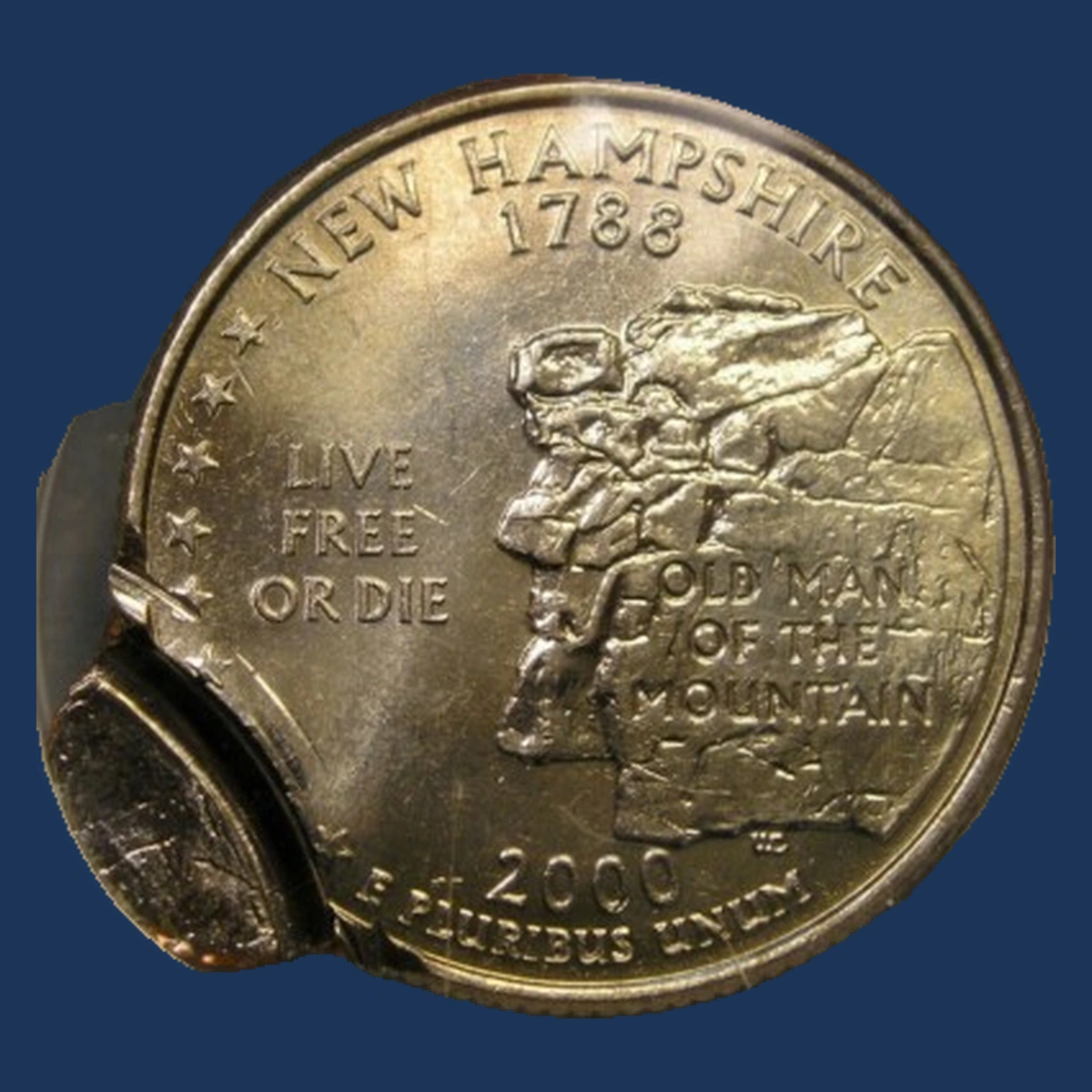
Two portraits or overlapping state designs can appear when a coin stays in the press for another strike. If it moves between blows, the next design lands in a different position.
Massachusetts, Maryland, South Carolina, New Hampshire, and Virginia examples show different amounts of displacement. Massachusetts and Virginia also have coins struck more than twice.
A San Francisco New Hampshire clad Proof shows a smaller rotated second impression. Its close doubling comes from striking the coin again, not from a doubled design already built into the stamping tool.
Estimated Value
A Massachusetts triple strike sold for $1,200 in December 2025, and a quadruple strike brought $1,037 in March 2026. More strikes did not produce the higher price.
Estimate $200–$2,500 for this group. The New Hampshire clad Proof brought $253 in October 2010.
Clear overlap and attractive condition help buyers understand the mistake. Those qualities can matter more than simply counting how many times the press struck a coin.
How to Identify
The New Hampshire clad Proof needs a close look at the date and reverse lettering through a magnifier. Its slightly rotated second impression is much nearer the first than on the widely displaced circulation examples.
For those larger errors, follow connected letters or design shapes from one impression to the next. Count groups that fit separate positions of the coin, rather than counting every extra line as another strike.
Finally, check what happened to the mintmark: a later impression can cover it, or the new mark may land beyond the metal. The Massachusetts example with no established mint must remain unidentified by mint unless a surviving mark actually resolves it.
15. 2000 State Quarter New Hampshire Indent Combinations
A smooth depression can occupy part of a quarter when another blank blocks the stamping tool. The upper blank presses into the lower coin and leaves an indent instead of a complete design.
Two Philadelphia New Hampshire examples combine this with other striking mistakes. One is about 80% off-center and indented; another is double-struck with a 40% indent.
The percentages describe different things. On the second coin, 40% refers to the indentation, not a claim that its second strike moved 40% away from the center.
Estimated Value
Estimate $300–$2,500 for recognizable New Hampshire indent combinations. A broad, clean depression beside readable state detail can be more striking than a small dent-like area.
The off-center strike or second impression belongs to the same coin’s value. Buyers assess how the features fit together, so adding a separate full price for each feature would exaggerate the value of the actual piece being offered for sale.
How to Identify
The 80% off-center New Hampshire example retains only a small struck area. Identify that portion first so the surrounding blank metal does not get confused with the indent itself.
Then trace the boundary of the depression. A magnifier should show how the design meets the place another blank occupied during striking.
On the other example, locate two connected sets of design details before judging the 40% indentation. Forty percent describes the depression, not the distance between those two strikes.
A later blow can also leave a dent. Look for finished lettering crushed or dragged by that impact.
If the depressed area contains clear backward letters or a mirrored picture, compare it with brockage rather than calling it a plain indent.
16. 2000 State Quarter Clipped and Incomplete Blanks
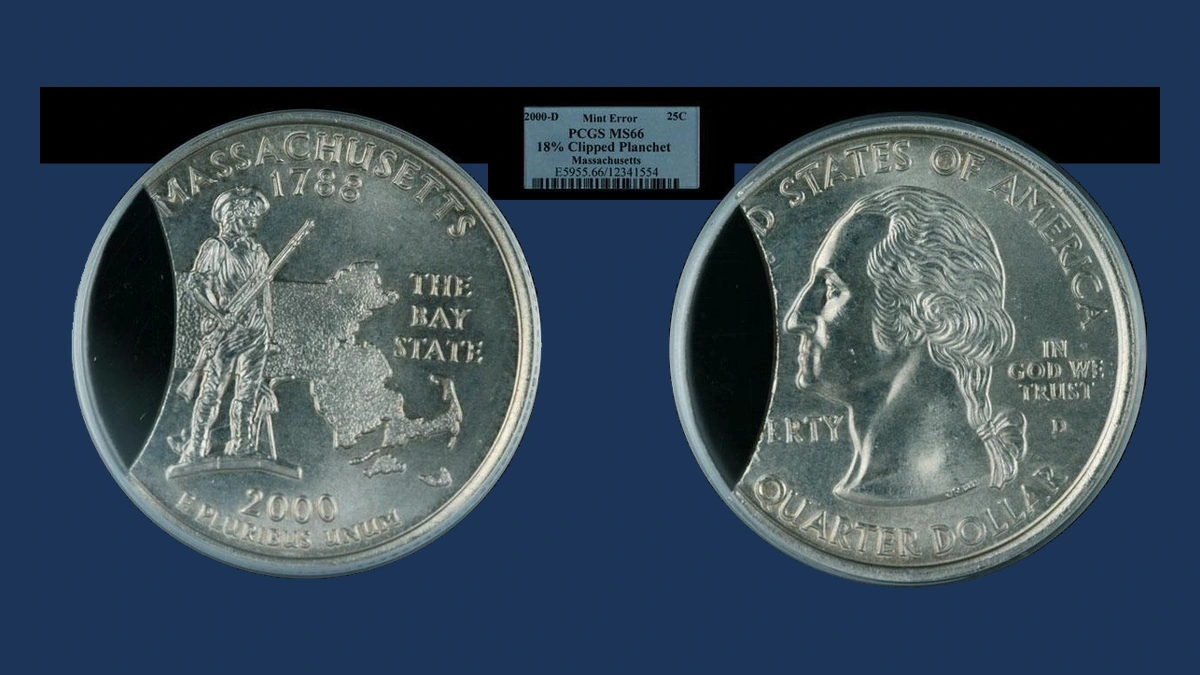
Some quarters begin as incomplete blanks, leaving a curved gap, straight missing edge, or unusual oval outline. The shape depends on how the blank was cut from the metal strip.
Massachusetts, Maryland, and Virginia examples show several forms. Some also entered the press off-center, so their missing metal and displaced designs must be viewed together.
A Massachusetts corner-clip coin weighs 4.4 g, while a different Massachusetts coin has double curved clips and an off-center strike. These are separate coins; their weights and percentages cannot be combined into one description.
Estimated Value
Small clips can fall around $40–$150, while larger or combined errors can reach an estimated $500–$3,500. The complete group range is $40–$3,500.
A Philadelphia Maryland coin with a 20% clip brought $84 in March 2014. A Massachusetts double straight-clip and off-center combination sold for $3,360 in July 2021, showing how a dramatic combination can sell far above a modest single clip.
How to Identify
A missing piece is only the starting point. Under magnification, inspect where the struck design meets the gap for normal metal flow rather than fresh cutting or filing.
A curved clip may have a weak rim opposite the missing section, though that feature is not equally strong on every coin. Straight and corner clips need their own shape comparison.
Use a scale to record a loose coin’s weight, but do not assign another example’s percentage from that reading alone. Metal can also be lost through later damage.
For an oval blank, trace the whole outline instead of searching for a single bite-shaped gap. On combined coins, distinguish the original missing metal from the separate crescent left unstruck.
17. 2000 State Quarter Reported Experimental Blanks
A Massachusetts quarter has been described as struck on an experimental blank weighing 100 grains, about 6.48 g. It is bright yellow and has small edge defects.
Experimental blank reports also exist for Maryland and South Carolina, but those reports do not establish the same metal mixture or measurements. They should not inherit the Massachusetts coin’s weight merely because the same label appears.
Unusual color is not enough to prove an experiment. A changed surface, plating, or a wrong ordinary blank can produce appearances that require a different explanation.
Estimated Value
The Massachusetts 100-grain coin, graded PCGS MS65, sold for $2,875 in February 2011. Its price belongs to that identified piece, not every yellow state quarter.
Estimate $1,500–$5,000 for an established experimental-blank example of comparable importance. Applying that range to Maryland or South Carolina requires identification of each actual blank.
Gold-colored surfaces can result from other causes. An unexplained extra weight also does not establish that the Mint used an experimental blank.
How to Identify
Color is a poor starting test for an experimental blank. A plated ordinary quarter can look yellow, so first read the coin’s identification and any documented metal analysis.
For the Massachusetts piece, a scale can compare the reported 100 grains with the ordinary clad quarter’s 5.67 g. The heavier reading supports a difference but does not reveal the metal mixture or why the Mint used it.
Inspect the edge under magnification for coating buildup and exposed base metal, without scratching it or applying acid. Maryland and South Carolina need their own measurements and identification; a Massachusetts photograph cannot establish that their blanks were physically the same.
18. 2000 State Quarter New Hampshire Brockage and Matching Pair
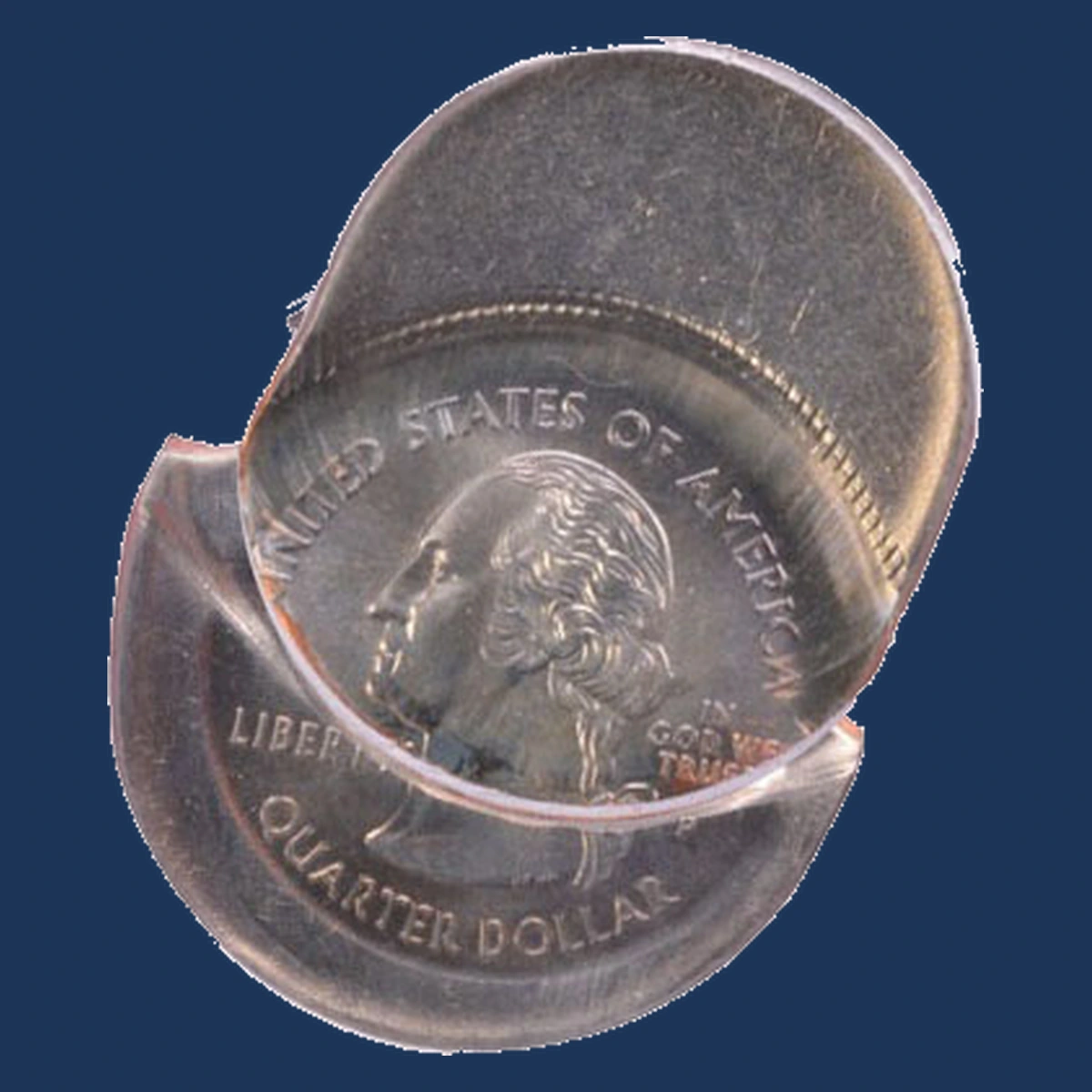
Letters pressed backward into a coin can show that a finished coin blocked the next strike. Its raised design acted like another stamping surface, leaving a sunken mirror image called a brockage.
New Hampshire examples include a matched pair associated with double striking and brockage. Another coin combines a front brockage with a broadstrike.
The coin making the impression and the coin receiving it are not the same object. A matched pair is valuable partly because its two members can show how the surfaces contacted each other.
Estimated Value
Estimate $500–$2,000 for a clear brockage and about $1,500–$6,000 for a convincing matching pair. The group range is $500–$6,000.
A pair’s price covers both members together. Sharp mirrored details and several matching shapes strengthen its appeal.
A broadstruck brockage is one combined error coin. Its expansion and mirror impression should not be priced as two unrelated pieces, even though both features contribute to what a buyer sees.
How to Identify
Read an obvious letter in the unusual impression. It should run backward and sit below the surface if it is a normal brockage received from another coin.
A magnifier and light from the side make the depth easier to see. An ordinary raised design duplicated in the usual reading direction points toward a different striking sequence.
For the matched pair, compare photographs of both coins without pressing them together. Several matching shapes and boundaries should support the connection, not just one letter that looks similar.
On the broadstruck example, inspect the expanded edge separately from the mirror image. The receiving coin’s sunken reversed design is the key to its brockage identity.
19. 2000 State Quarter Struck on Scrap Metal
An irregular piece of scrap can enter the press in place of a normal round blank. It may receive only fragments of the quarter design because its shape and size are wrong.
A Philadelphia Massachusetts example weighs 45 grains, about 2.92 g. A Denver South Carolina example is an aluminum scrap weighing only 11.1 grains, about 0.72 g, with nine strikes.
The South Carolina piece has overlapping, rotated details and a ragged outline. Its repeated strikes do not turn the thin scrap into a normal quarter blank or give it normal quarter dimensions.
Estimated Value
The South Carolina aluminum scrap with nine strikes sold for $2,990 in September 2003. That price covered the whole unusual object, including its multiple impressions.
Estimate $1,500–$10,000 for clearly identified scrap strikes in this group. Recognizable state details and convincing identification of the metal help support a strong price.
The amount of surviving design matters too. An ordinary quarter trimmed into an odd shape does not become comparable merely because it weighs less.
How to Identify
Check the units before using the weights. The South Carolina piece is listed at 11.1 grains, about 0.72 g, not 11.1 grams.
On a loose object, a suitable scale can record that small mass. A holder’s weight would be far greater and tells you nothing about the enclosed scrap.
Use enlarged photographs to follow the rotated South Carolina impressions across the ragged metal. Connected lettering helps establish the quarter design without requiring a normal round outline.
For either scrap, inspect the edges for fresh cuts through completed details. Later trimming of an ordinary coin must be ruled out.
An aluminum identification needs reliable documentation or professional testing; a silver-colored photograph alone cannot establish what metal received the strikes.
20. 2000 State Quarter Wrong Blank and Dollar Collar
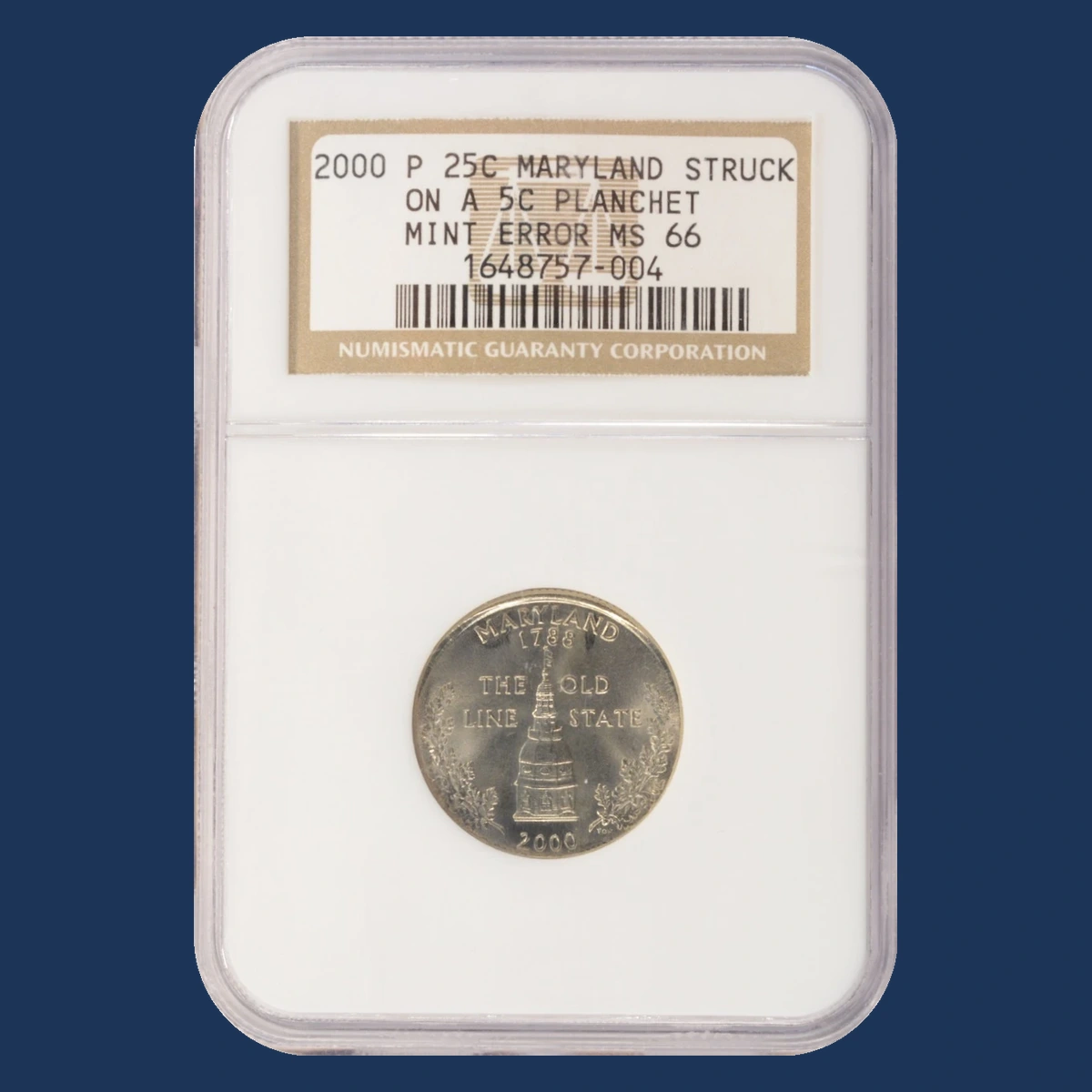
A quarter design can be squeezed onto a blank intended for a smaller coin. Maryland examples include nickel and dime blanks, while a South Carolina example uses a dime blank.
A different Maryland error uses a dollar blank and dollar collar with the quarter’s two designs. The collar is the ring controlling the edge, so this error involves both the blank and its surrounding ring.
Virginia also has a wrong-blank report without an established blank denomination. It should not be described as a nickel, dime, or silver example without that identification.
Estimated Value
Smaller wrong-blank quarters fit an estimated $800–$5,000 range. An established Maryland quarter struck on a dollar blank inside the dollar collar can be estimated at $3,000–$15,000.
The group range is $800–$15,000. A readable state design and secure identification of the blank are central to value.
Virginia’s reported blank needs its own physical identification. A high price for another coin’s known blank cannot fill that gap.
How to Identify
Read both designs before measuring. If Washington and the correct state reverse are present, a large blank alone does not make the coin a mismatched-face mule.
For a loose undersized coin, use a scale and calipers to compare its size and weight with the proposed blank. Normal nickel blanks are about 5 g; clad dime blanks are about 2.268 g.
Those standards are not measurements of the listed examples. The large Maryland case needs the dollar-sized blank and dollar-collar edge to be checked together.
Look with a magnifier at letters cut off by the smaller boundary. A ground-down ordinary quarter can lose letters too, but it will show altered edges rather than the original strike on a smaller blank.
21. 2000 State Quarter Massachusetts Over a Georgia Quarter
A Massachusetts design can overlap details from a Georgia quarter when a finished older coin enters the press again. The new strike covers part of the earlier design but may leave recognizable traces.
The reported example combines a 2000 Philadelphia Massachusetts strike with a 1999 Philadelphia Georgia quarter underneath. Both are quarters, so this is not a mix of two denominations.
It is also different from a wrong blank. The metal already carried a completed coin design before the Massachusetts stamping tools struck it a second time.
Estimated Value
An estimated $5,000–$15,000 reflects the appeal of a clearly identified cross-state overstrike. The Georgia underdesign must be convincing enough to distinguish it from ordinary clash marks or a second Massachusetts impression.
The recorded auction appearance did not result in a sale, so it supplies no realized price. Condition and readable details from both years can greatly affect an offer, especially when much of the earlier design was flattened by the later strike.
How to Identify
Place ordinary Massachusetts and Georgia quarter images beside the suspected overstrike. Identify recognizable details from each design instead of guessing at isolated lines beneath the later image.
With a magnifier, follow several connected Georgia letters or shapes and see how the stronger Massachusetts strike crosses them. The normal quarter size fits this combination, since both the original coin and the later design use the same denomination.
Check the years and mintmarks only where they remain readable. Faint transferred outlines from a die clash can look confusing too, but they do not by themselves establish a finished Georgia quarter beneath the later Massachusetts design.
22. 2000 State Quarter Overstruck by a Dollar or Cent
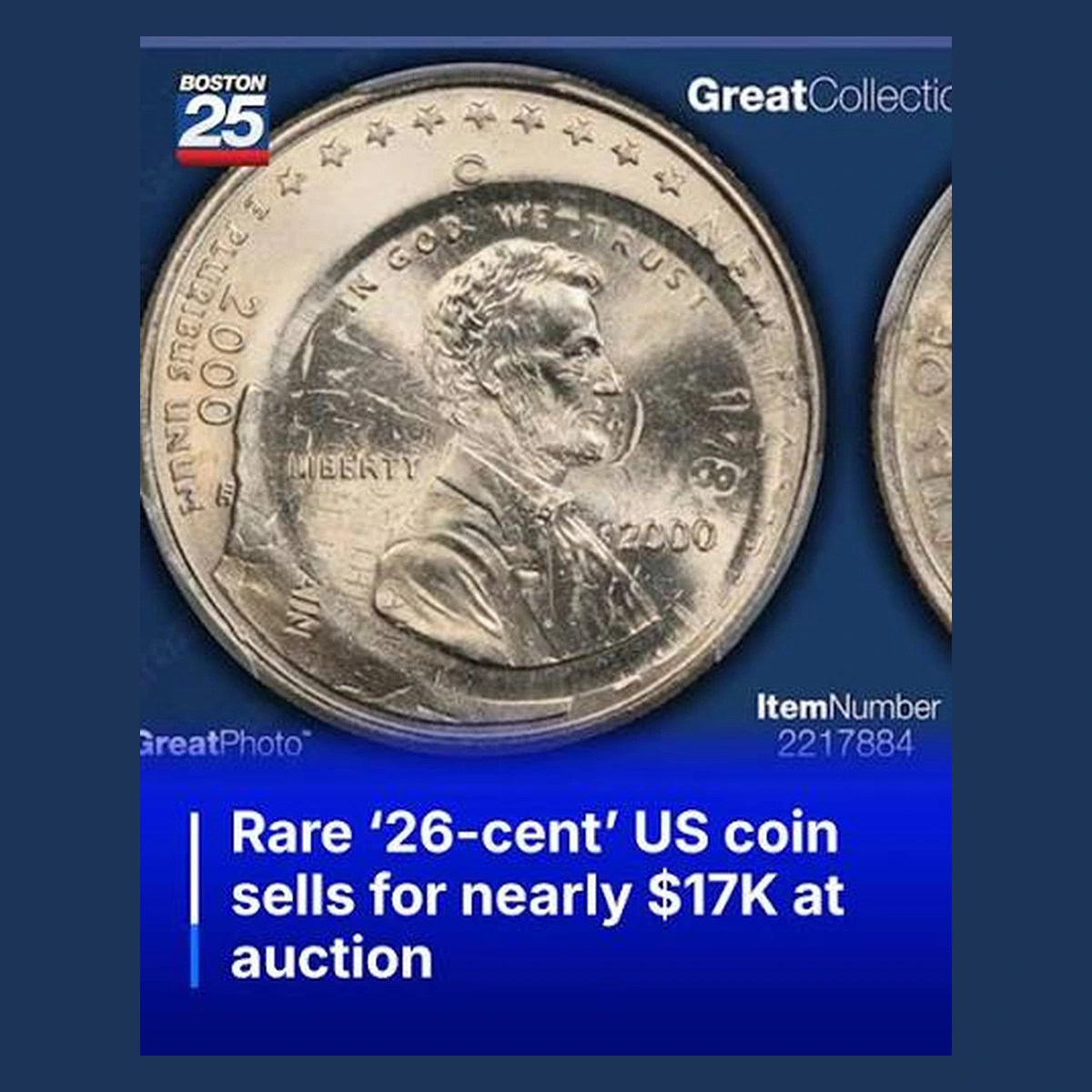
A dollar or cent design can appear over a finished state quarter. The quarter came first; the second press added a different denomination’s design to the same piece of metal.
Massachusetts and Maryland quarters are known beneath Sacagawea dollar strikes. New Hampshire and Virginia quarters appear beneath Lincoln cent strikes, including flip-over examples where the coin turned over before the later strike.
These are not quarter designs struck on unused dollar or cent blanks. Traces of the older quarter remain under the newer design and help show the order in which the two strikes occurred.
Estimated Value
Use an estimated $2,000–$20,000 range for these cross-denomination overstrikes. Strong, recognizable portions of both designs can make a coin much more desirable than a confusing mixture of shallow traces.
The Massachusetts-under-dollar auction appearance cited for this example was unsold, so it is not a completed transaction to quote. Each coin also has its own condition and orientation; a flip-over label alone does not establish a higher value than another clearly struck example.
How to Identify
Choose one unmistakable detail from each denomination, such as a state inscription and part of Lincoln or Sacagawea. Their overlap should show which design lies over the other.
On a Maryland-under-dollar example, surviving state lettering and the Capitol dome can help identify the older quarter. Do not assume its mint from the dollar’s P mintmark.
A Virginia-under-cent example has traces of the quarter beneath the smaller cent impression. Its off-center measurement refers to that later strike, not automatically to the first quarter strike.
Use enlarged photographs of both faces to compare the orientation. A flip-over claim needs the correct relationship between both old and new designs, rather than a single upside-down letter.
23. 2000 State Quarter Struck Feeder Finger or Fragment
A feeder finger is a machine part that moves blanks through the press. If it reaches the striking area, the tools can stamp a coin design into the part itself.
One Denver Maryland example is an entire feeder finger, enclosed by NGC without a numerical grade. A separate Philadelphia South Carolina example is a small tip fragment weighing 1.5 g, with repeated parts of the design.
Neither is an ordinary quarter blank. Their machine-part shapes and quarter impressions show a different accident from a coin merely struck through a loose object.
Estimated Value
The entire Denver Maryland feeder finger sold for $15,600 in August 2019 at Heritage Auctions. Its size and identity distinguish it from a small broken tip.
Estimate $2,000–$20,000 across the group. The South Carolina fragment must be evaluated through its own repeated lettering, condition, and 1.5 g weight.
The entire part’s price is not the fragment’s price. Nor should the ungraded Maryland object be assigned an invented numerical grade.
How to Identify
Look at the object’s outline before judging the coin impressions. A machine part or broken tip should not be forced into the expected round shape of a quarter.
On the Maryland piece, the large surviving part helps explain what entered the press. On the South Carolina fragment, use a magnifier to follow the repeated UNITED STATES lettering and other design traces.
The recorded 1.5 g weight belongs to the South Carolina fragment alone. Ordinary quarter standards cannot describe either object, and weighing a sealed example would not give the object’s weight anyway.
Inspect how the pressed design runs across the metal surface. Clear quarter impressions on an identifiable feeder part are the central evidence for this unusual error.
24. 2000 State Quarter Mismatched Quarter and Dollar Faces
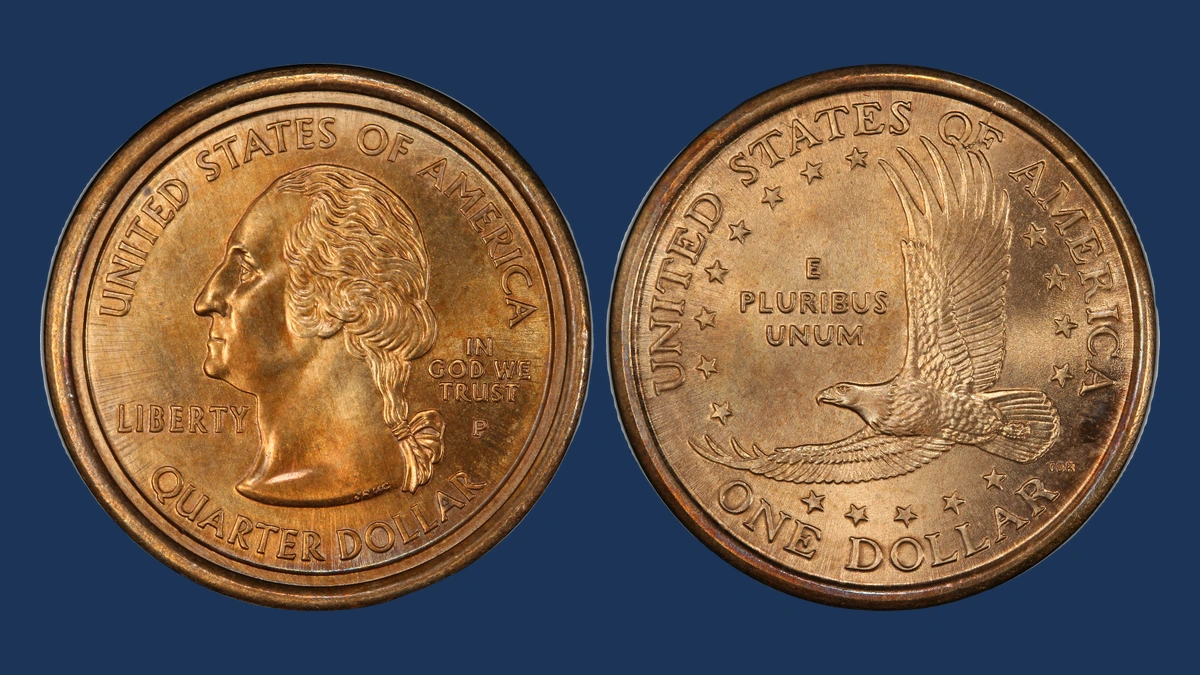
Two different coin designs can be paired in one press by mistake. This is called a mule, and the 2000-related quarter and dollar combinations show two distinct pairings.
One has Washington on the front and the Sacagawea dollar’s eagle on the back. It is undated and assigned to 2000, rather than displaying a normal quarter date.
The other has Sacagawea on the front and South Carolina on the back, with a Denver mintmark. Both involve dollar blanks, but swapping their descriptions would create a coin that does not match either example.
Estimated Value
The Washington/eagle mule graded PCGS MS66 brought $194,062 in January 2024, as PCGS reported. A different mule, the Denver Sacagawea/South Carolina coin graded MS64, sold for $84,000 in August 2024.
An estimated $75,000–$200,000 covers examples of these established pairings. Identity, condition, and the specific pairing are essential; an ordinary gold-colored quarter or a coin with altered faces has no claim to those auction values.
How to Identify
Identify the pairing by turning the coin over. Washington with an eagle and Sacagawea with South Carolina are two different mules.
The Washington/eagle combination is undated. Its lack of a visible 2000 date is expected, so a search for date digits is not the right test.
The Denver Sacagawea/South Carolina piece has a plain edge, weighs 8.1 g, and measures 26.5 mm. Its reverse also has raised inner and outer rim levels around a lower middle band.
A loose candidate can be measured with a scale and calipers, while a magnifier may reveal a seam from joined halves. At these prices, authentication of both mismatched faces and the intact coin is essential.
Conclusion
A 2000 quarter can show a tiny raised crack, missing metal, or an extraordinary mix of two coin designs. Estimated values span $10–$200,000, with the highest prices belonging to established quarter-and-dollar mules.
Check the state, mintmark, and actual feature before comparing prices. Keep photographs of both faces and the edge, and leave unusual surfaces untouched so the evidence remains clear.