1981 Dime Error List with Pictures

Two presidents share one piece of metal on a 1981-D dime struck again as a cent. That NGC MS63 example sold for $822.50 in June 2013, with Roosevelt still visible beneath Lincoln.
Other 1981 dime errors range from tiny raised lines to thin detached sheets and unusual cup-shaped pieces. Estimated values below span $2–$25,000.
Follow the shape and surviving design to understand what happened to each example.
1. 1981 Roosevelt Dime Raised Cracks and Broken-Tool Patches
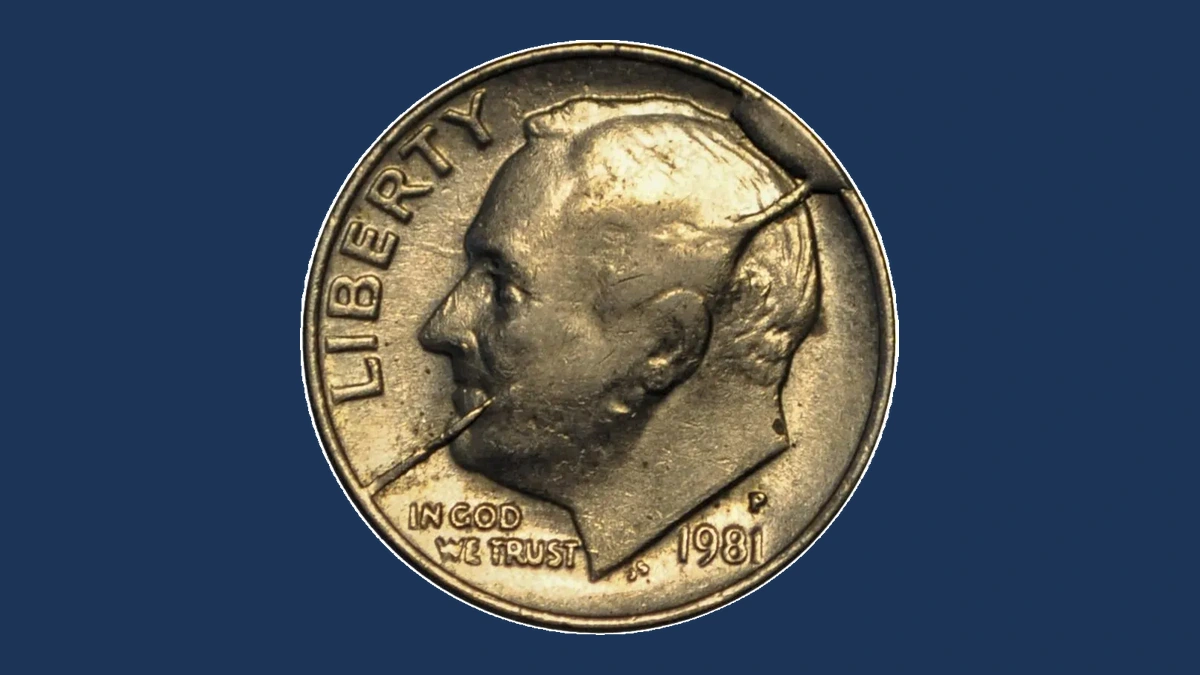
A raised line can appear when coin metal enters a crack in a stamping tool. A larger missing piece of the tool can leave a plain raised patch instead.
The tool is called a die, giving these features names such as die crack and die break. A break connected to the outer rim is often called a cud.
Both are reported for 1981 without one fixed path shared by every example. The separate Philadelphia coin struck beneath a trapped cap also has tool damage, but its combined features need to be assessed together.
Estimated Value
Genuine modest cracks and small tool-break patches have an estimated range of $2–$100. Strong relief and a clear location within the design can make the feature easier to display.
A faint crack on a worn coin generally attracts less interest than a prominent original patch. Several lines on one dime still need one whole-coin price.
Dirt, corrosion, and metal pushed up beside a later dent do not qualify just because they create a raised shape.
How to Identify
Trace the unusual line through the nearby portrait or lettering before looking at a close crop. Normal hair and torch details can resemble narrow cracks when their surroundings disappear from view.
Move a light across the surface to tell a raised ridge from a groove cut into the metal. Inspect both sides of the line for a dent that could have pushed up a lip.
For a larger blob, follow its edge and see whether it reaches the rim. Keep an interior patch distinct from a rim-connected break, and do not scrape the metal to test whether the feature is attached dirt.
2. 1981 Roosevelt Dime Doubled Front or Back Details
A repeated image can be built into a stamping tool before any coin touches it. Coins made from that tool may then share the same extra raised outlines.
This is called a doubled die. Reports for 1981 mention front lettering and the date, as well as the back words, torch, and branches.
Those reports do not establish one cataloged pattern common to every mint. Doubling of the separately applied mint letter is another issue, and a flat shelf caused by movement during striking does not prove that the main design was doubled on the tool.
Estimated Value
For a confirmed modest doubled-tool pattern, estimate $10–$150. The range assumes a matching original pattern, rather than ordinary thick lettering or a bright reflected edge.
Clear corners and rounded separation can support greater collector interest. Heavy wear may hide those shapes and make identification harder.
Compare the same mint and affected face before applying the estimate. A front letter on one dime and a back branch on another do not combine into a single variety.
How to Identify
Choose one suspected feature and compare it with a normal dime of similar wear. Flattened lettering on an old coin can look wider without containing a second image.
Under magnification, examine the ends and corners for rounded separation or small notches. Long straight edges can be harder to judge because glare may outline them.
Look for related extra shapes nearby, keeping the front and back observations separate.
Photograph the affected area with the mint letter and full face recorded in additional views. A repeatable pattern on another identified 1981 example is a stronger comparison than a seller’s nickname or a catalog number borrowed from a different year.
3. 1981 Roosevelt Dime Faint Traces from the Opposite Design
Part of a torch or portrait can appear where it does not belong after the two stamping tools touch each other. No blank metal disk lies between them during that contact.
The damaged tools can pass faint traces of the opposing design onto later coins. This is called a die clash.
A collector showed a Philadelphia dime described as having two sets of clash traces. A separate Denver report also exists, but the Philadelphia images do not establish the Denver pattern or require every 1981 example to show two identical sets.
Estimated Value
Estimate $10–$200 for comparable genuine 1981 clash examples. A recognizable transferred shape on clean original surfaces is easier to appreciate than a faint line hidden by wear.
Two sets of clear traces can make the event more interesting, but they do not automatically double the coin’s price. Their relationship needs to be visible.
The Philadelphia collector’s coin and the Denver report require separate comparisons. Scratches and normal design lines do not receive the same error premium.
How to Identify
Start with full photographs of both faces and compare the shapes on one side with unusual lines on the other. A clash should fit the way the opposing designs met inside the press.
Use normal dimes to identify which lines already belong to the portrait, torch, and branches. An extra line must be distinguished from those built-in features.
For the reported Philadelphia double clash, trace each proposed set independently. Two nearby scratches do not prove two tool contacts.
Keep the mint letter visible in the comparison photographs.
Leave the exact pattern unnamed until its shapes and placement match an identified example. The Denver report should not be illustrated as if it were the Philadelphia coin.
4. 1981 Roosevelt Dime Reported Extra P or D Mint-Letter Traces
An extra part of a mint letter can result when the letter is punched into the tool more than once. For 1981-P, WRPM-001 describes a possible earlier P above the main letter, extending toward the neck.
The explanation for that feature remains questioned in specialist literature. A catalog name alone does not settle whether the upper trace is truly another P.
Denver repeated-letter reports are separate and lack a matched number here. The normal P on a Philadelphia dime is not an error, and it does not prove doubling in the portrait or date.
Estimated Value
For a genuinely identified repeated-mint-letter example, use a conditional estimated range of $10–$250. Clear surviving parts of the earlier letter matter more than the mere presence of an unusual line.
The questioned Philadelphia trace needs its origin resolved before it receives a variety premium. The Denver reports likewise need an actual matching pattern.
This range covers an accepted original feature on the whole coin. It does not turn an ordinary P or a damaged D into a valuable error.
How to Identify
Find the main mint letter above the date and photograph the entire area up to Roosevelt’s neck. The proposed Philadelphia trace sits above P, so a close crop of only the normal letter is insufficient.
Compare the suspected upper shape with the curves and straight portions of an actual P. A raised line that cannot form part of the letter needs another explanation.
For a Denver candidate, make a separate comparison rather than applying the Philadelphia location. Use changing light to distinguish rounded raised detail from a flat shelf, and seek specialist agreement on the complete shape before using the repeated-punch label.
5. 1981 Roosevelt Dime Abnormal Surface from Heat Treatment
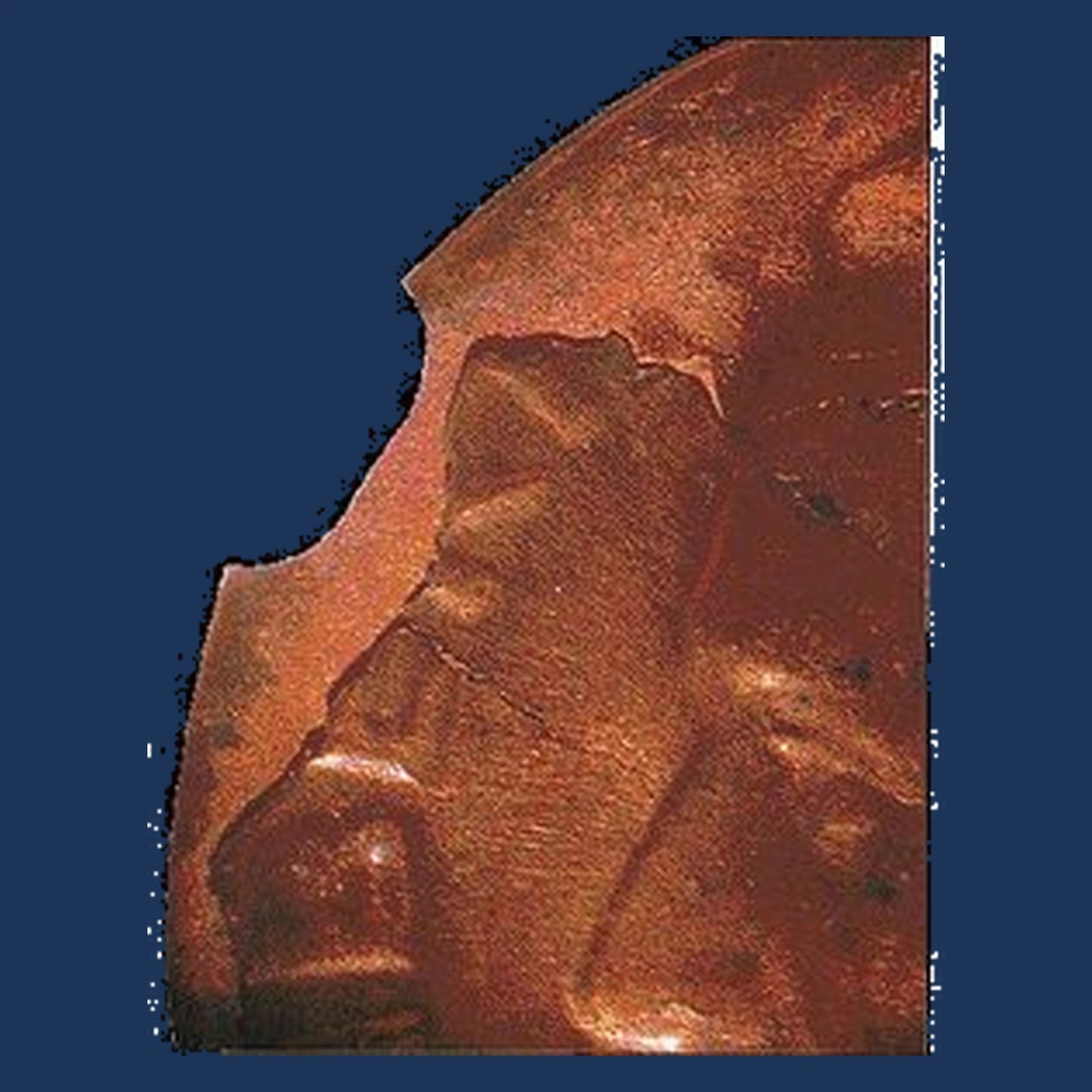
A dime can show abnormal surface color when heating the metal blank goes wrong before striking. This preparation step is called annealing.
A 1981-P example graded PCGS MS63 was cataloged with an improperly annealed blank. MS63 means an unworn coin with noticeable surface marks, not a particular color or chemical composition.
Later fire, soil, and chemical treatment can also change a coin’s appearance. The original finish and edge structure matter because a brown surface may come from staining or missing metal instead of the heating process that prepared the blank for the press.
Estimated Value
The PCGS MS63 example sold for $139 in March 2025. Comparable identified 1981 annealing errors have an estimated range of $30–$300, depending on their surface and preservation.
An undisturbed finish helps show the effect clearly. Corrosion and cleaning can reduce interest and make the source of a color change harder to establish.
Compare the whole surface rather than choosing the darkest coin. Dark color alone does not place an ordinary damaged dime within this range.
How to Identify
Check whether both pale outer sheets remain attached before judging the color. A normal dime has a copper center between those bonded sheets; missing one exposes copper through metal loss.
View the coin under neutral light so a yellow lamp does not create a false copper tone. Compare sheltered areas inside letters with the exposed surface.
Look for thick residue, rough corrosion, or peeling added coatings that suggest a later change.
Do not polish a test spot to see what lies underneath. Preserve the surface for comparison with an identified annealing error, since appearance alone cannot prove when heating or discoloration occurred.
6. 1981 Roosevelt Dime Expanded Outline around a Complete Design
A broadstrike can spread the metal outside a dime’s usual outline while keeping the main design present. It forms when the steel edge ring fails to restrain the blank fully.
That ring, called the collar, normally controls size and makes the grooves around the edge. Missing restraint can change both the border and the edge surface.
A Denver broadstrike is reported for 1981 without a measured size for a specific example. A coin that rocks on a table or appears unusually wide still needs examination, because later flattening can also change its outline.
Estimated Value
For a genuine simple 1981-D broadstrike, estimate $25–$350. A noticeable expanded border surrounding readable original details makes the error easy to display.
A slight uneven rim usually creates less interest than clear outward spread. Scratches and crushed design can reduce appeal even when the original strike was abnormal.
The estimate assumes the expansion occurred in the press. Extra diameter from hammering or squeezing after minting is damage and does not receive the same premium.
How to Identify
Follow the complete words on both faces to see whether they fit inside the expanded metal. Missing design beyond one edge instead calls for an off-center comparison.
At the widest area, inspect how the border and edge grooves change. A smooth expanded section can support a loss of collar restraint.
If the coin is loose, measure several directions with calipers and compare with the normal 17.91-millimeter diameter. Record its actual readings rather than assuming a standard size for every broadstrike.
Check the central portrait and torch for later crushing or hammer marks. The intact design and expanded border should fit the same original striking event.
7. 1981 Roosevelt Dime Large Missing Section of the Blank
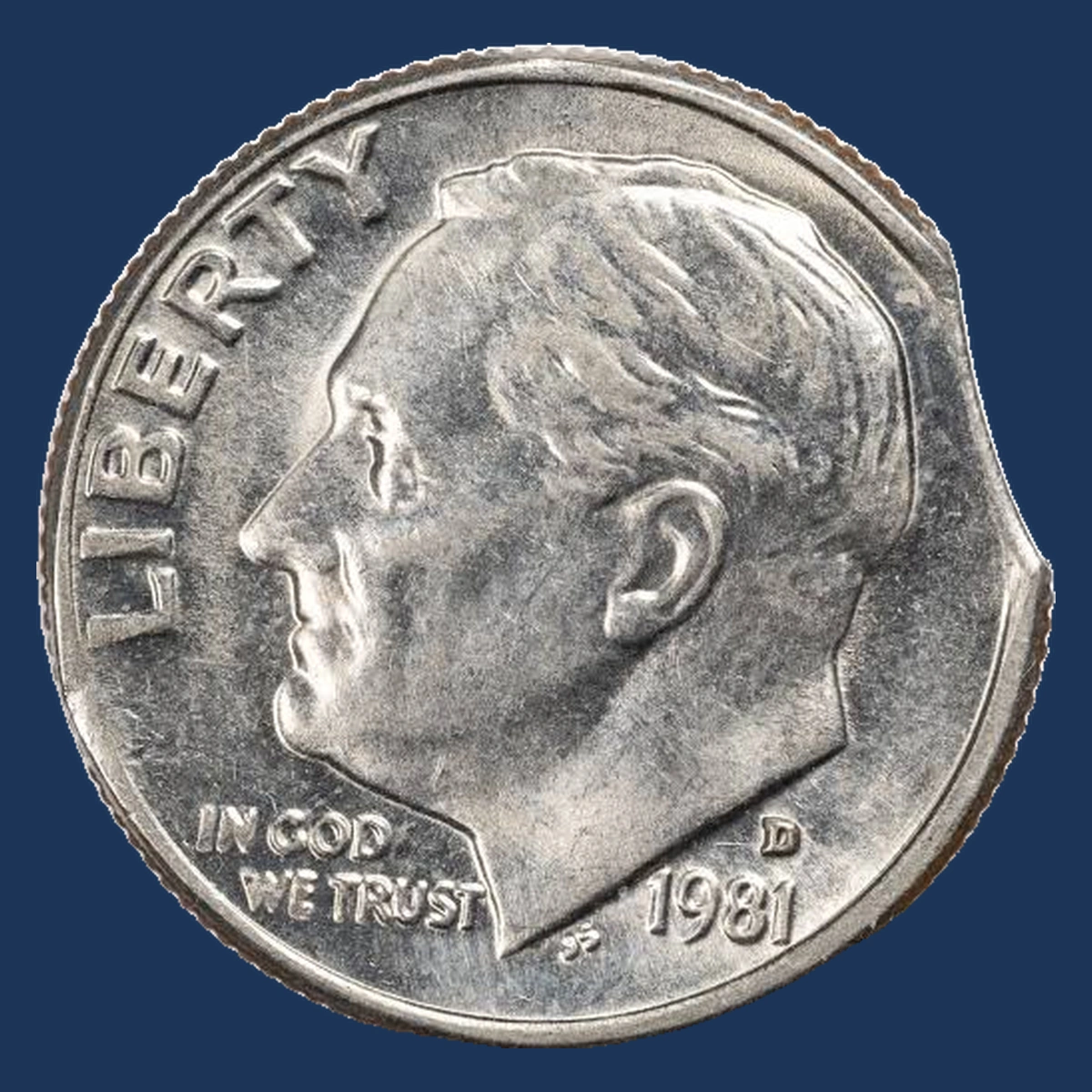
A blank can lose part of its intended outline before the coin design is applied. The remaining disk then receives the portrait and lettering around an incomplete edge.
A 1981-D graded PCGS MS63 was cataloged with a thirty-eight-percent clip. It appeared in a three-coin lot, but the other coins’ shapes and percentages do not describe this dime.
The missing portion is a gap where metal is absent. That differs from the plain but still-present metal of an off-center strike, and its precise shape must be read from this particular example.
Estimated Value
Comparable genuine large clips on 1981 dimes have an estimated value of $30–$400. A readable date and a clear original boundary make the missing section easier to understand.
The cataloged Denver coin was offered with two other errors. A combined lot price should remain attached to the group rather than be divided into assumed individual sales.
Compare the surviving design, wear, and edge condition. A large section cut away after minting is not a more valuable clip.
How to Identify
Look through the coin’s thickness along the missing section, then follow the rim toward both ends. Fresh cuts and filing can leave a different surface from a gap that was present during striking.
Inspect nearby lettering for softening or stretching toward the opening. Those details can connect the missing metal with the original strike.
Check the opposite rim for weakness, while remembering that this clue need not be equally strong on every clip.
A loose coin’s low weight records missing metal but does not show when it disappeared.
Photograph the entire Denver dime by itself. Keep neighboring auction coins out of the identification, especially when comparing the shape and percentage of the gap.
8. 1981 Roosevelt Dime Thin Layer from an Off-Center Dime
A thin sheet can retain a coin image after separating from the rest of the metal. One Philadelphia example carries a twenty-percent off-center design and weighs just 0.38 grams.
ANACS graded the piece MS62, indicating no circulation wear but noticeable marks. The auction described the separation as occurring after the strike.
This is a surviving layer from a struck coin, rather than a normal complete dime at a very low weight. Its offset image and thin separated surface belong together, and should not be confused with the separate 1.3-gram copper-core example.
Estimated Value
This off-center layer sold for $132 in May 2018. Comparable genuine detached layers have an estimated range of $75–$450, depending on design clarity and preservation.
The price concerns the surviving sheet, not an assumed matching remainder. Its recognizable date and displaced image help explain what happened before the metal separated.
Bending, flattening, or scraping can damage both the appearance and the evidence of separation. A fragile piece should be compared in its preserved shape.
How to Identify
Leave the layer in its holder if it has been graded. A loose piece should not be flexed or flattened just to prove how thin it is.
Photograph the struck surface and the exposed inner side, then compare their boundaries. The surviving image and separated face should support a sheet that came away after receiving its design.
Trace the off-center portion without borrowing the fifty-five-percent figure from another Philadelphia dime. This piece was described as twenty percent off center, and its recorded 0.38 grams applies only to it.
Inspect the edges for grinding or scraping that could imitate a thin shell. Those marks need to be distinguished from the original separation surface.
9. 1981 Roosevelt Dime Nearly All Outer Metal Missing from Both Faces
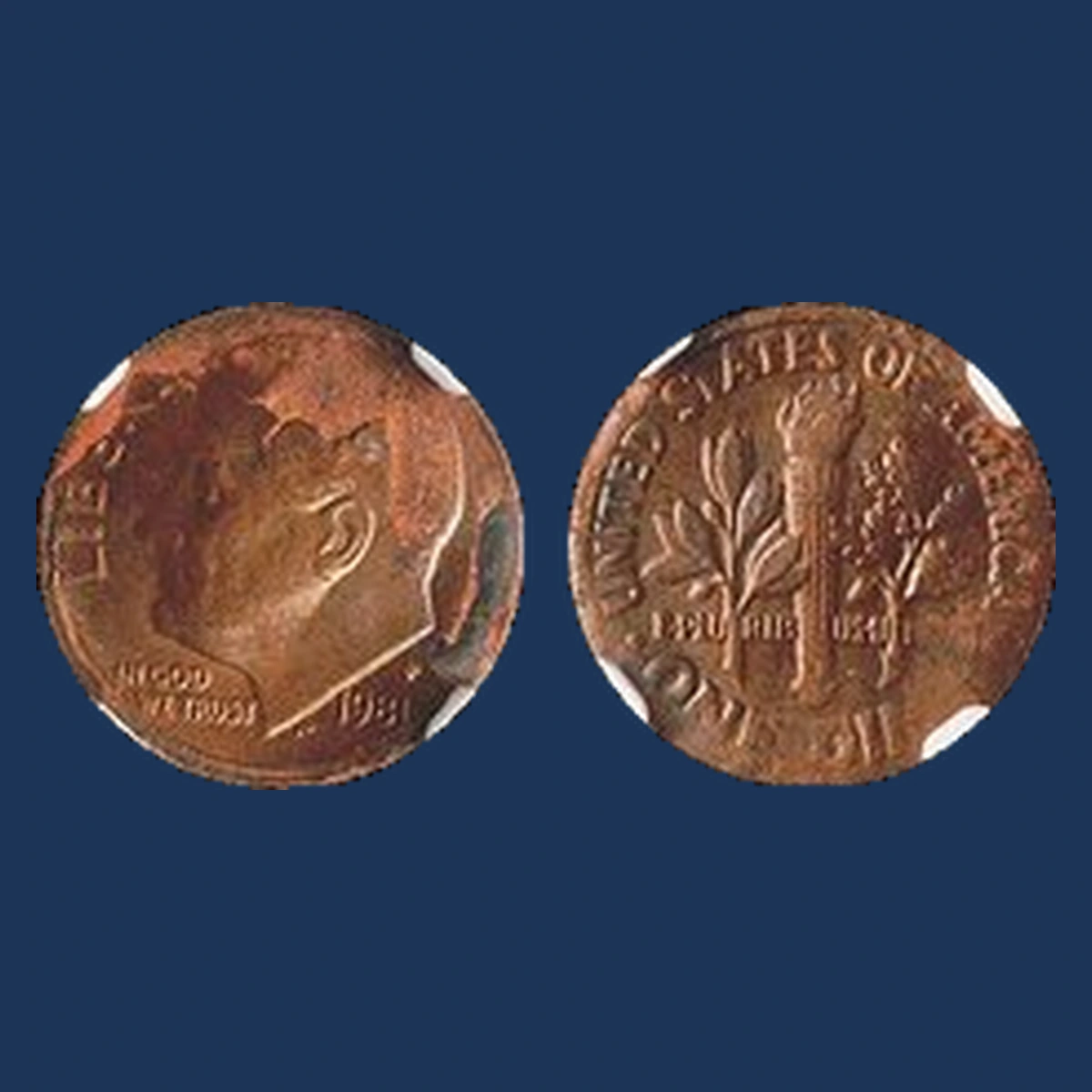
A normal dime has two pale metal sheets bonded to a copper center. When both outer sheets are largely absent, most of the surviving coin can look copper-colored.
One 1981-P graded NGC MS65 Red and Brown was cataloged with about ninety-nine percent of both outer layers missing. Its recorded weight is 1.3 grams.
A specialist separately examined a 1.3-gram copper-core dime with small gray islands whose exact origin was debated. Matching weight alone does not establish that it was the auction coin, and those gray spots should not automatically be called surviving outer-layer metal.
Estimated Value
The NGC MS65 Red and Brown example sold for $129.25 in January 2013. Comparable genuine missing-layer pieces have an estimated range of $75–$600.
The amount of loss, intact design, and condition of the exposed copper affect interest. Single-face loss needs its own comparison rather than the same description as nearly complete loss from both sides.
A low weight or brown color alone does not establish the error. Later chemical removal can produce a different kind of altered coin.
How to Identify
Examine both faces before weighing the coin. The cataloged piece lacks almost all pale outer metal on each side, rather than just having one brown face.
Follow the exposed surface into the edge and inspect the remaining pale areas closely. Gray islands may need specialist analysis instead of a quick label based on color.
Compare a loose candidate with the normal 2.268-gram dime standard, including 1981-S Proofs, the specially made collector coins. The measured 1.3 grams belongs to the described example, not every missing-layer dime.
Check for original design on the copper and for scraping or chemical pits. Those surfaces help distinguish a manufacturing problem from metal removed after the coin was finished.
10. 1981 Roosevelt Dime Large Philadelphia and Denver Off-Center Strikes
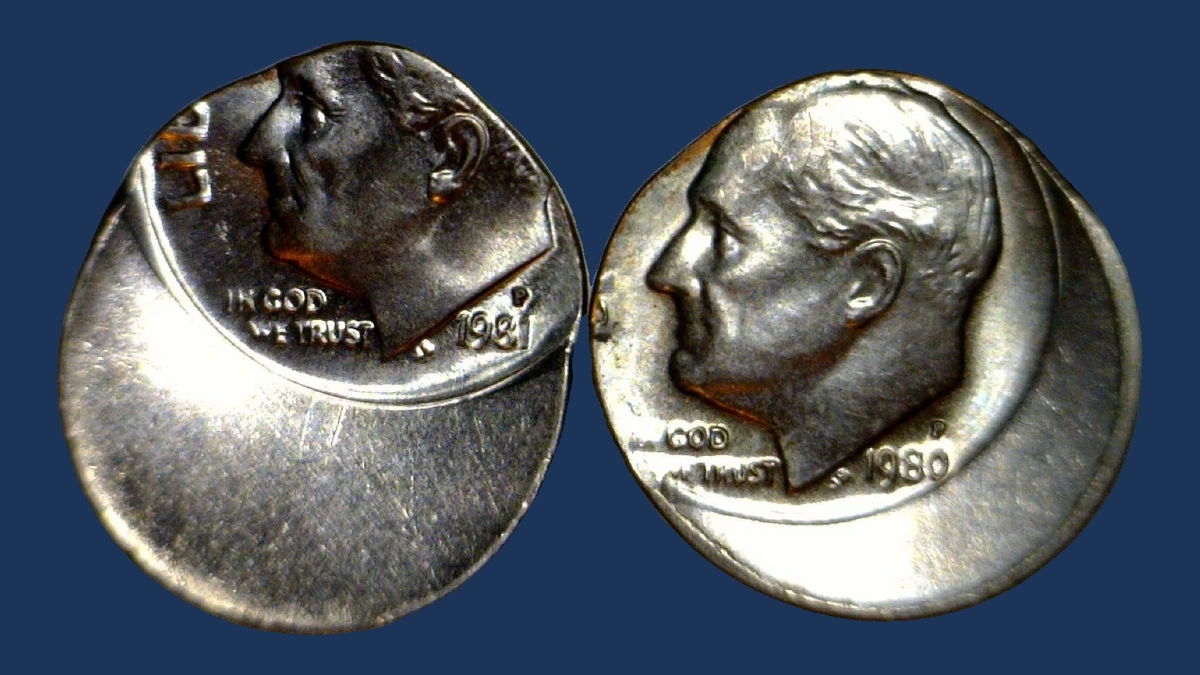
A large plain area remains when a dime blank sits far from the center of the press. The two designs reach only part of the metal, leaving the rest without the intended image.
A Philadelphia example graded ANACS MS64 is described as fifty-five percent off center toward one o’clock. A separate Denver dealer listing describes sixty percent toward the same general direction.
These percentages measure displacement, not missing metal. The unstruck part still belongs to the coin, and the two mints’ examples must remain separate even though their outlines can look similar.
Estimated Value
The Philadelphia ANACS MS64 example sold for $49 in January 2022. Comparable genuine dated 1981 off-center dimes have an estimated range of $30–$750.
The readability of the date, condition of the blank area, and visual balance can matter more than a small percentage difference. A larger shift can hide identifying detail rather than automatically increase the price.
The Denver listing describes another piece. Its mint and sixty-percent figure should not be transferred to the Philadelphia sale.
How to Identify
With Roosevelt upright, locate the design displaced toward one o’clock and the plain metal opposite it. Follow the boundary where letters or portrait details run beyond the blank.
Turn to the other face and relate its image to the same shape. Both sides should make sense as a disk that missed its centered striking position.
Read the date and any surviving P or D rather than filling them in from another photograph. A lost mint-letter area cannot establish Philadelphia origin merely because no D is visible.
Check the bare surface for erased design or grinding marks. Keep photographs of the complete outline so original unused metal can be distinguished from later alteration.
11. 1981 Roosevelt Dime Front Struck beneath a Trapped Coin Cap
A coin stuck on a stamping tool can spread into a thin cap and interfere with the next blank. The new coin beneath it may receive a faint or distorted front image.
One 1981-P graded NGC MS64 Full Bands combines this effect with a cracked and broken tool. Full Bands describes clear horizontal torch bands, not another minting error.
The auction coin is the piece struck beneath the cap, rather than the cap itself. A dealer also described a similar combination with a break behind the head, but the two descriptions alone do not prove one shared specimen.
Estimated Value
The NGC MS64 Full Bands coin sold for $149.50 in January 2010. Comparable genuine cap-blocked dimes with tool damage have an estimated range of $50–$800.
The faint front, raised breaks, and intact back should be judged as one complete coin. Adding a separate full price for each feature would count the same piece several times.
Clear original surfaces help explain the combination. Later scratches or cleaning can reduce interest even when the minting errors are genuine.
How to Identify
Compare the weaker front with the clearer back first. A cap between the front tool and blank can obstruct that face without requiring the torch design to be equally faint.
Now locate any raised crack or broken-tool patch and inspect it separately from the weak image. Raised metal and missing detail can coexist for different reasons.
Do not expect this coin to have the tall walls of the trapped cap itself.
Check a matching reference before placing the reported behind-head break on a new candidate. Similar wording in two catalogs does not establish identical crack paths.
Photograph both faces under low light, preserving the relationship between the blocked design and any genuine raised tool damage.
12. 1981 Roosevelt Dime Reported Strike on an Incorrect Blank
A dime design may be struck on a metal disk intended for a different coin. The result can have an unusual weight, diameter, or metal composition.
This category is reported for 1981, but a particular wrong blank has not been identified for the Roosevelt example. A gold-colored surface does not establish a gold blank.
The direction of the error also matters. A cent on an unused dime blank differs from Roosevelt on another blank or a finished dime struck again as a cent.
Estimated Value
For an authenticated 1981 dime on a genuinely incorrect blank, use a conditional estimated range of $200–$2,000. The actual metal and intended denomination would narrow the comparison.
The estimate does not apply merely because a normal dime has become thin, colored, or damaged. Original construction and a genuine dime strike must support the explanation.
Compare the complete design and edge with measured examples. A seller’s proposed blank name does not establish the coin’s identity or value.
How to Identify
Measure a loose candidate with a scale and calipers, comparing it with the normal 2.268 grams and 17.91 millimeters. Treat an unusual result as a clue rather than a denomination label.
Inspect the edge for the copper center and bonded outer sheets expected on an ordinary dime.
Look for cuts, filed edges, or chemical pits that could explain missing metal. Added plating can change color without changing which blank entered the press.
Check whether the complete design fits the available metal and whether its boundary looks original.
A specialist can examine composition without scraping the surface. Keep the blank unnamed until the measurements, metal, and original strike support a specific identification.
13. 1981 Roosevelt Dime Struck Again as a Cent
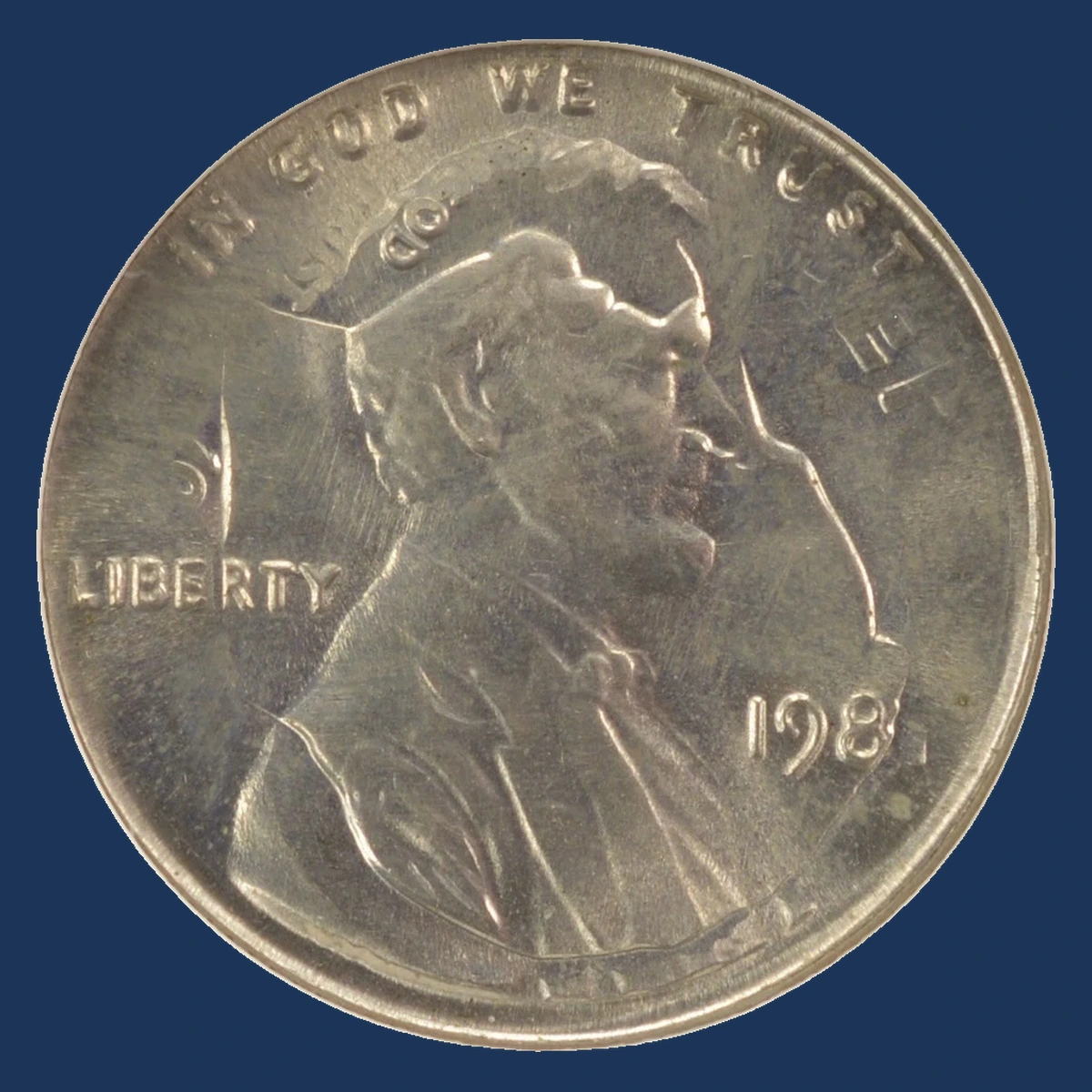
Roosevelt can remain visible beneath Lincoln when a finished dime enters a cent press. The new cent image covers parts of the older design but may leave enough to identify both coins.
A 1981-D example graded NGC MS63 carries a later 1981-D cent design. The original dime’s date and D remain readable, while the newer cent date is clearer.
Roosevelt lies toward roughly one-thirty relative to Lincoln’s upright position. This is a double-denomination error: two different denominations appear on one piece, rather than two coins being joined together or an unused dime blank receiving its first design.
Estimated Value
The NGC MS63 example sold for $822.50 in June 2013. Comparable authenticated 1981 cent-over-dime pieces have an estimated range of $600–$2,500.
Clear traces of both dates and portraits help explain the sequence and support collector interest. Heavy wear or damage can hide the older design and make the coin harder to identify.
The estimate concerns this combined object. Adding separate full values for a dime and a cent does not measure the unusual minting event.
How to Identify
Find Roosevelt’s earlier profile beside the newer Lincoln portrait before reading either date. The reported Denver example places Roosevelt toward one-thirty when Lincoln is upright.
Trace a connected piece of the dime design, then compare the back for surviving torch details beneath the cent image. A finished dime must leave evidence of its first strike, unlike an unused dime blank.
Read the two dates and mint letters independently. A bold cent date does not automatically establish the older dime’s year.
Inspect the edge for seams or added metal that could indicate a joined novelty. Both designs should belong to one continuous piece whose overlapping impressions support the recorded order of striking.
14. 1981 Roosevelt Dime Repeated Strikes and a Blocked Proof Strike
A Philadelphia dime graded ANACS MS64 received a second strike ninety-five percent off center, with one face blocked. Another Philadelphia coin received an eighty-percent second strike and has a later wheel mark on its front.
A different San Francisco Type 1 Proof met an overlapping blank during a later blow. Proofs are specially made collector coins that normally receive multiple blows; the obstruction created this error.
The NGC PR68 Ultra Cameo example has a flattened area from seven to eleven o’clock and a stretched portrait. Faint opposite-design outlines are also described on both faces.
Estimated Value
The ninety-five-percent ANACS MS64 example brought $60 in April 2020. The damaged eighty-percent example sold for $36 in January 2016, showing how condition affects a dramatic error.
Estimate $30–$500 for comparable ordinary repeated strikes and $500–$5,000 for a genuine major Proof obstruction. The latter range is an estimate, not the PR68 coin’s recorded sale.
Ultra Cameo describes strong contrast between frosted design and reflective background. It is not an additional error.
How to Identify
For the ninety-five-percent example, locate the small second impression and examine the area directly behind it. A blocked face need not show the same fresh image as the exposed face.
On the eighty-percent coin, separate the added impression from the front wheel mark. That mark is later damage, not evidence of another strike.
For the Proof, study the flattened seven-to-eleven-o’clock area and how Roosevelt’s portrait stretches beside it. Compare the faint designs on both faces without assuming the coin flipped between blows.
Keep the Proof in its holder and use several lighting angles to avoid confusing reflections with impressions. Normal repeated Proof striking alone does not create the overlapping-blank error.
15. 1981 Roosevelt Dime Lincoln Coin Cap Struck by a Dime Tool
A trapped coin can spread up around a stamping tool and become cup-shaped. The piece is then called a die cap.
One unusual example began as a Lincoln cent cap and later received the image of a 1981-P Roosevelt front tool. It therefore combines two denominations with a cap-shaped body, rather than being an ordinary flat dime struck again as a cent.
Specialist Mike Diamond discusses this piece among unusual larger objects struck by smaller tools. Its appearance supports a sequence of impressions, but it should not be presented as a proven accidental transfer between normal production lines.
Estimated Value
For a genuine, fully identified dual-denomination cap of this kind, estimate $5,000–$25,000. The unusual structure and surviving evidence of both designs are central to that conditional comparison.
The estimate is not a recorded sale of the reported piece. Condition, damage to the walls, and how clearly the sequence can be demonstrated would affect interest.
A bent ordinary coin does not qualify simply because it resembles a cup. The cap body and overlapping original designs must both be established.
How to Identify
Examine the side profile before interpreting the portraits. A cap should have a body and walls formed by repeated pressure around a tool, rather than a simple fold through an ordinary flat coin.
Locate surviving Lincoln details and the later Roosevelt image, keeping the whole shape visible. Their overlap should explain which design came first.
Compare the smaller dime-tool image with the wider original cap instead of applying the normal dime diameter to the entire object.
Do not straighten the walls or scrape inside the cup. An error specialist should examine the structure and impressions together; shape alone cannot prove the piece’s history or establish whether its transfer was accidental.
Conclusion
Estimated $2–$25,000 values cover very different 1981 dime errors, including modest cracks and exceptional pieces carrying two denominations. The ordinary dime, a detached sheet, and a cup-shaped cap require different comparisons.
Keep each measurement and grade attached to its own example. Protect loose metal, examine both faces, and distinguish an actual auction result from an estimated range before comparing a coin offered for sale.