1987 Quarter Error List with Pictures

Two quarters can preserve evidence of the same accident. A matched 1987 pair sold together for $411.25 in November 2013; that was the price for both coins.
The 1987 quarter errors below also include single coins with weak letters, clipped edges, repeated designs, and dime-sized blanks. Their estimated ranges extend from $2 to $1,500.
Start with the feature you can see, then use the checks to separate the minting error from later damage.
1. 1987 Washington Quarter Misaligned Die
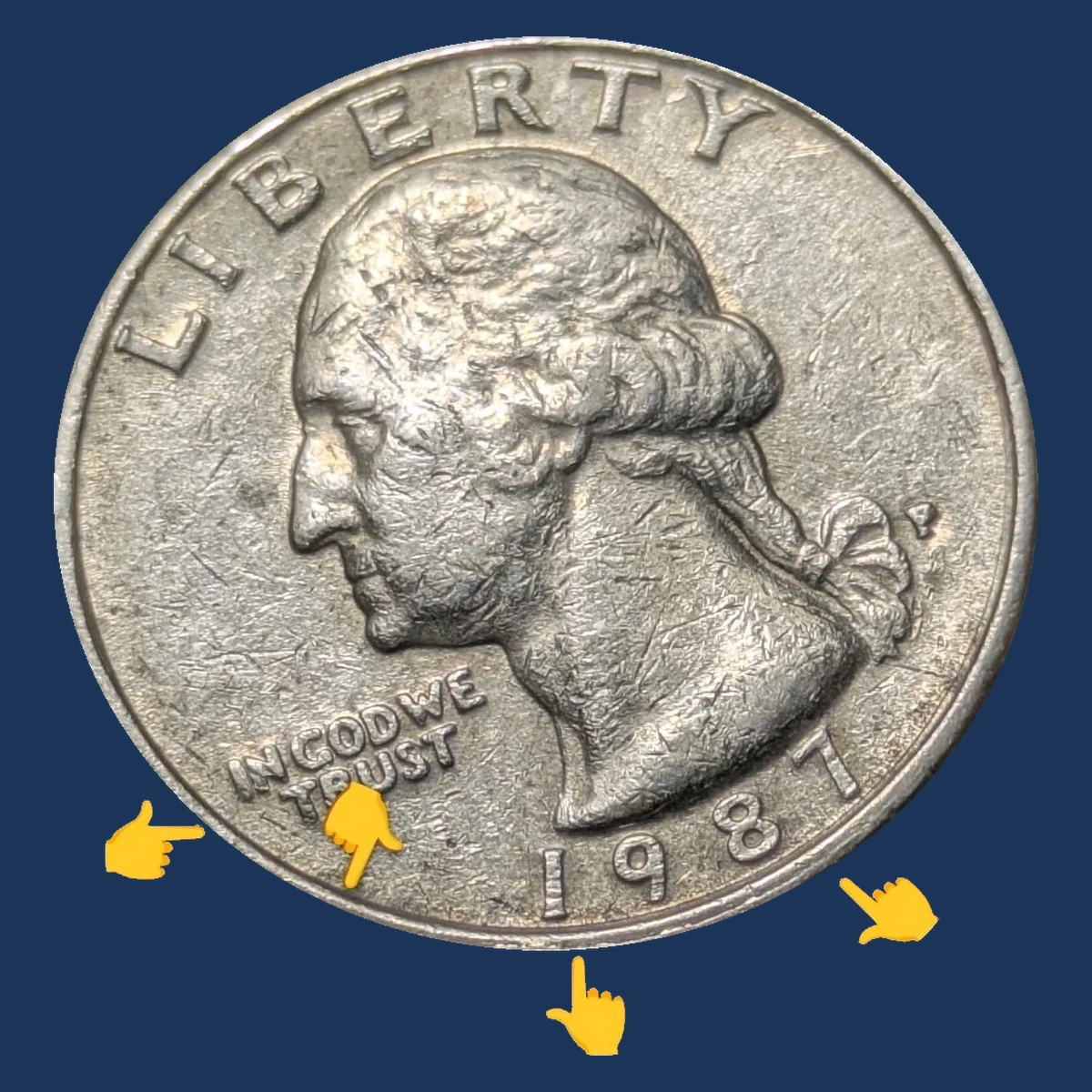
A design pushed toward one edge can come from a sideways shift of one stamping tool. The other face may remain centered on the same coin.
The stamping tool is called a die, and this is a misaligned-die error. A Philadelphia example is reported for 1987.
The report does not establish a particular amount of movement or a fixed affected face. Both sides are needed to see the difference.
An uneven border does not mean a metal layer is missing. It concerns the position of the stamped design instead.
Estimated Value
An estimated range of $2 to $50 covers modest genuine sideways shifts on this year’s ordinary quarters. Slightly uneven borders are usually inexpensive.
The upper end needs a clear displacement that is easy to demonstrate against the opposite face. Strong remaining detail and clean surfaces help.
A raised price tag should not rest on the word “misaligned” alone. The coin’s two faces must actually show the alignment difference, rather than a tilted photograph or damaged rim.
How to Identify
Take two straight-on photographs without cropping away the rim. Use the same image scale so the border widths can be compared fairly.
Follow the outer lettering around each face and note where it approaches the edge. One shifted face beside a centered face supports a misaligned tool.
If both designs are cut off beside matching blank areas, consider an off-center strike instead. A design that points sideways after a controlled flip presents a rotation question, not simply a sideways shift.
Finally, check the close border for a folded rim or impact dent. A later edge blow can distort the circle and make the design appear misplaced without showing a genuine press alignment error.
2. 1987 Washington Quarter Grease-Filled Details
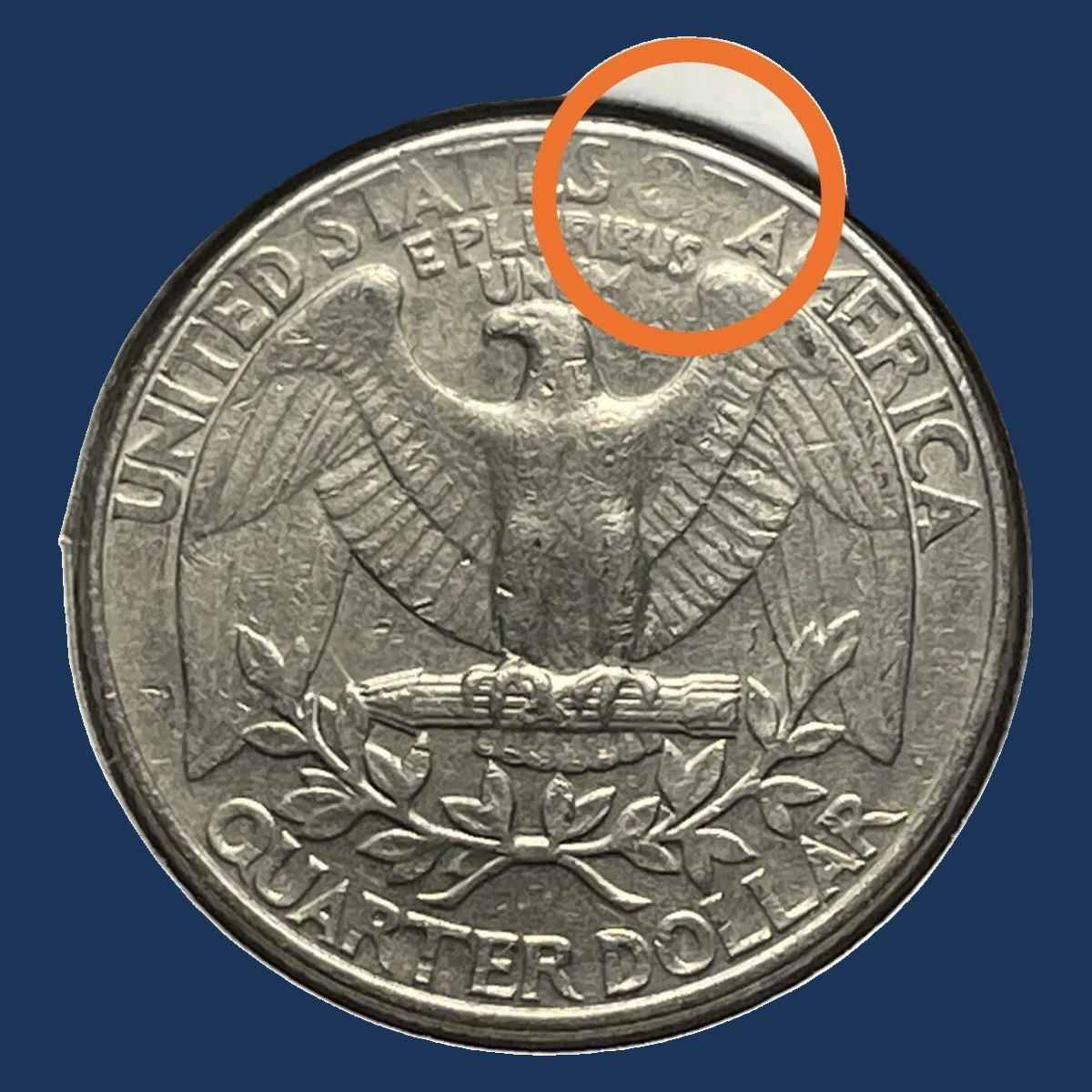
On a reported Denver example, ER in LIBERTY looks weak and TER in QUARTER is missing. The coin’s owner posted a weight of 5.58 grams.
Forum participants suggested grease-filled tools. Packed grease or debris can block recessed parts of a stamping tool, preventing those letters from forming normally.
That explanation concerns this reported coin rather than every weakly struck 1987-D quarter. Wear, a weak overall strike, or later surface damage must still be considered.
The pattern across both faces and the condition of the rim help separate those possibilities.
Estimated Value
For a genuine grease-filled example with visible missing letters, an estimated range is $5 to $75. A few weak strokes tend to bring less than clearly absent lettering.
The forum coin’s 5.58-gram weight is not a sale price or an authentication result. Its value would depend on acceptance of the mint-made weakness.
A strong surrounding design makes the contrast more appealing. General wear across the coin usually reduces that contrast and can explain weak letters without an error.
How to Identify
The owner’s collector discussion includes the proposed grease explanation. Treat that opinion as a comparison rather than professional certification.
Look at ER in LIBERTY, then TER in QUARTER under the same light. Check the letters on either side of each weak area.
Sharp neighboring detail can support a local obstruction. If everything nearby is worn smooth, wear becomes a stronger explanation.
Inspect the rim and Washington’s highest points for broader weakness. A weak overall strike can affect both faces without grease filling those exact letters.
The reported 5.58 grams is close to the normal 5.67-gram weight. It does not decide which explanation fits the missing strokes.
3. 1987 Washington Quarter Clashed Design
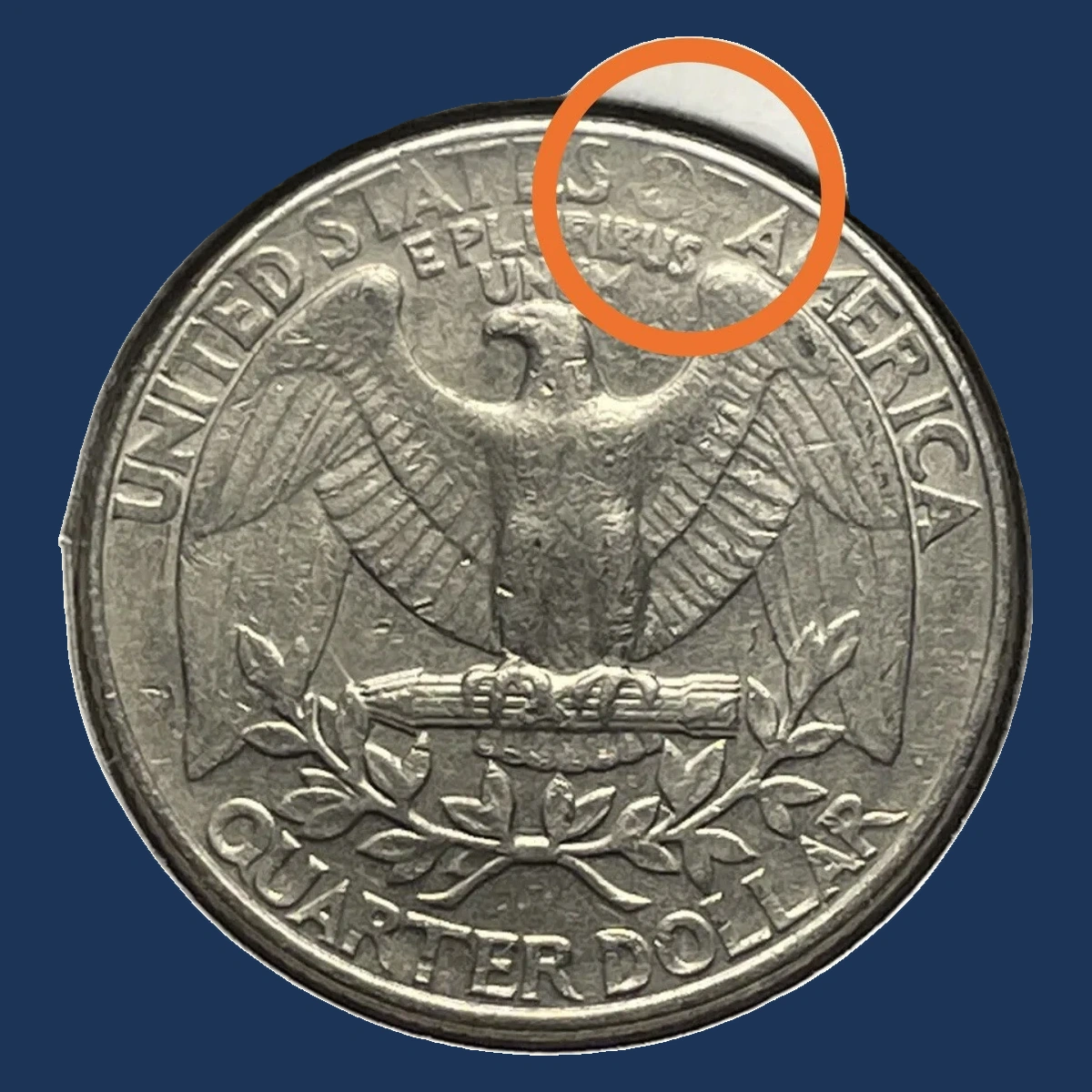
Faint extra shapes can appear among otherwise normal details when the two stamping tools hit each other without a blank between them. The tools may pick up traces of the opposing design.
Later coins can carry those transferred shapes. This is a die clash, and a Philadelphia example is reported for 1987.
A clash line should relate to a recognizable part of the opposite design. It is not automatically a crack merely because it looks thin and irregular.
The precise location on this reported example needs a comparison with its actual photographs.
Estimated Value
An estimated $5 to $100 applies to a recognizable Philadelphia clash of this general kind. Small traces that need strong magnification usually sit near the lower end.
A transferred shape that a collector can match readily to the opposite design has more appeal. Good lighting and clear photographs help show that relationship.
The price concerns the clash itself. A random scratch or unexplained raised line does not acquire the same value simply because it is unusual.
How to Identify
Make a simple outline of the extra shape in an enlarged photograph. Avoid naming it before comparing its curves and angles with the portrait and eagle designs.
Turn to the opposite face and look for a design element with matching proportions. The location must make sense for contact between the two tools, not just resemble a familiar shape loosely.
Check the line under light from more than one direction. A surface scratch cuts into finished metal, while a true transferred design belongs to the strike.
If the extra line matches neither face, leave the clash identification open for expert review. A crack can produce a raised line without transferring any part of the opposite picture.
4. 1987 Washington Quarter Doubled Dies
The Denver back-doubling report points to E, R, I, and C in AMERICA. A separate Philadelphia front report directs attention to LIBERTY, the motto, and the date.
Both concern possible doubled dies: stamping tools that already carried repeated design details. A single strike can transfer those extra outlines to a coin.
The reports do not identify an established specialist number for either example. They should not be treated as proof that every thick letter belongs to a recognized variety.
Flat machine doubling and worn-tool thickening are common lookalikes.
Estimated Value
For genuine minor doubled-die examples matching these reports, an estimated range is $10 to $150. Strong, rounded separation is more desirable than vague thickening.
A specialist match helps buyers know exactly what they are purchasing. Without one, a seller’s doubled-die label adds little by itself.
The estimate covers the repeated design, not an ordinary quarter with flat machine doubling. Heavy wear can hide the small features that would otherwise justify an error premium.
How to Identify
Begin with the mint: P belongs to the front-doubling report, while D belongs to the back-lettering report. Do not combine both sets of clues into one required pattern.
On the Denver coin, compare E, R, I, and C in AMERICA with a normal example. On Philadelphia coins, inspect LIBERTY, IN GOD WE TRUST, and the date.
A 10× magnifier should reveal whether the added outline is rounded and has split corners. A flat ledge beside a reduced letter points toward machine doubling instead.
Photograph several letters in sequence so the pattern can be assessed as a whole. One bright edge or one thick digit cannot establish the reported doubled tool.
5. 1987 Washington Quarter Broadstrike
This Philadelphia quarter spread beyond its usual border when the edge-forming ring failed to contain it. The expanded metal surrounds a recognizable Washington and eagle design.
The error is called a broadstrike. It concerns outward spreading rather than a large part of the blank missing the stamping tools.
The auctioned 1987-P example was graded NGC MS63, meaning unworn with noticeable marks. Its catalog did not give an actual diameter.
An expanded outline therefore supports the identification, but an invented measurement or off-center percentage would not describe this particular coin.
Estimated Value
The documented Philadelphia MS63 broadstrike sold for $20 in August 2009. An estimated range of $20 to $150 allows for different degrees of spread and surface quality.
That low historical result shows that a genuine mint error need not be expensive. Small broadstrikes can remain approachable beginner purchases.
A broader, cleaner example may attract more interest. Compare the amount of extra metal and the completeness of the design before paying much more than an ordinary small spread warrants.
How to Identify
A photograph with a normal quarter beside the error makes the expanded border easier to see. Compare the metal beyond the letters rather than only the total width.
For a loose coin, calipers can show how its widest point differs from the normal diameter of about 24.3 millimeters. Do not treat that normal standard as the measured size of the auctioned coin.
Inspect the edge for areas where normal ring restraint and grooves failed to form. The letters should retain natural struck shapes rather than look flattened by a later hammer blow.
If large design sections are absent beside an unstruck crescent, compare an off-center strike before settling on a simple broadstrike.
6. 1987 Washington Quarter Proof Die Crack
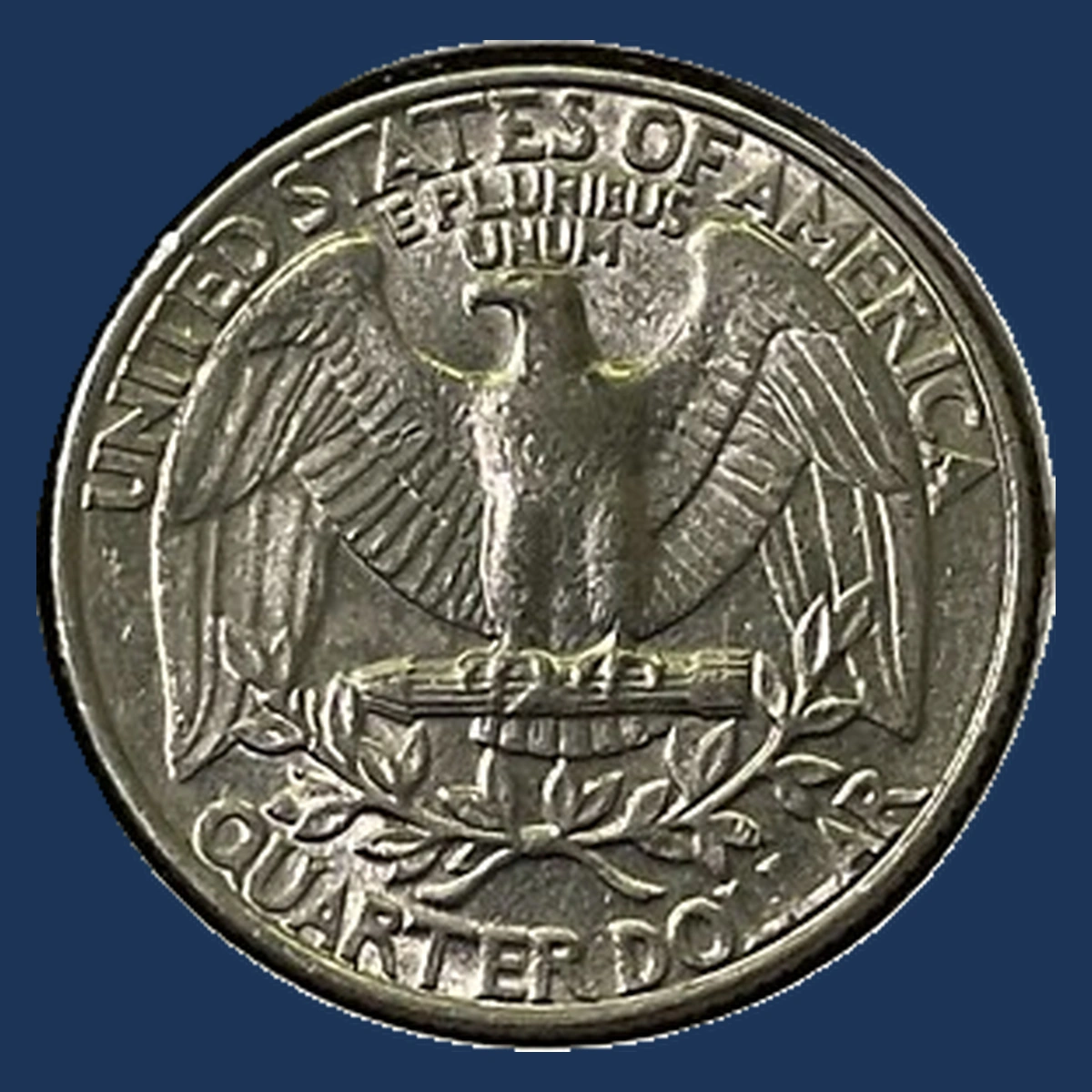
A fine raised line on a collector coin can record a crack in the stamping tool. Metal enters that narrow opening during striking and forms a line above the surrounding surface.
This type is reported for the 1987-S Proof, a collector issue made with specially prepared tools and surfaces. No exact path for the reported crack is established.
The standard 1987-S quarter is clad, not a silver Proof. Its reflective surface can also show hairline scratches clearly, so raised and sunken lines must be distinguished.
Estimated Value
A working estimate for a confirmed small 1987-S Proof crack is $25 to $200. Visibility and the condition of the reflective surface matter together.
A thin line that takes considerable effort to see usually adds less interest than an obvious raised crack. Scratches, haze, or handling marks can reduce the coin’s appeal.
The estimate does not assume a large missing piece of the tool. A crack and a major raised edge lump are different visible features.
How to Identify
A scratch can shine like a raised line in one photograph. Turn the protected Proof slowly under a small light and watch the line’s shadow change.
A crack leaves metal above the surrounding surface. A scratch cuts a groove below it.
Follow the line through each open area or letter it actually meets. Cleaning hairlines often occur in groups rather than forming one continuous raised path.
The reported 1987-S example has no established route to copy onto another coin. Photograph what you can see instead of assuming the line belongs beside Washington or along the rim.
Keep the Proof in its holder throughout the examination. Fingerprints and cleaning marks would damage its delicate reflective surface.
7. 1987 Washington Quarter Clipped Blanks
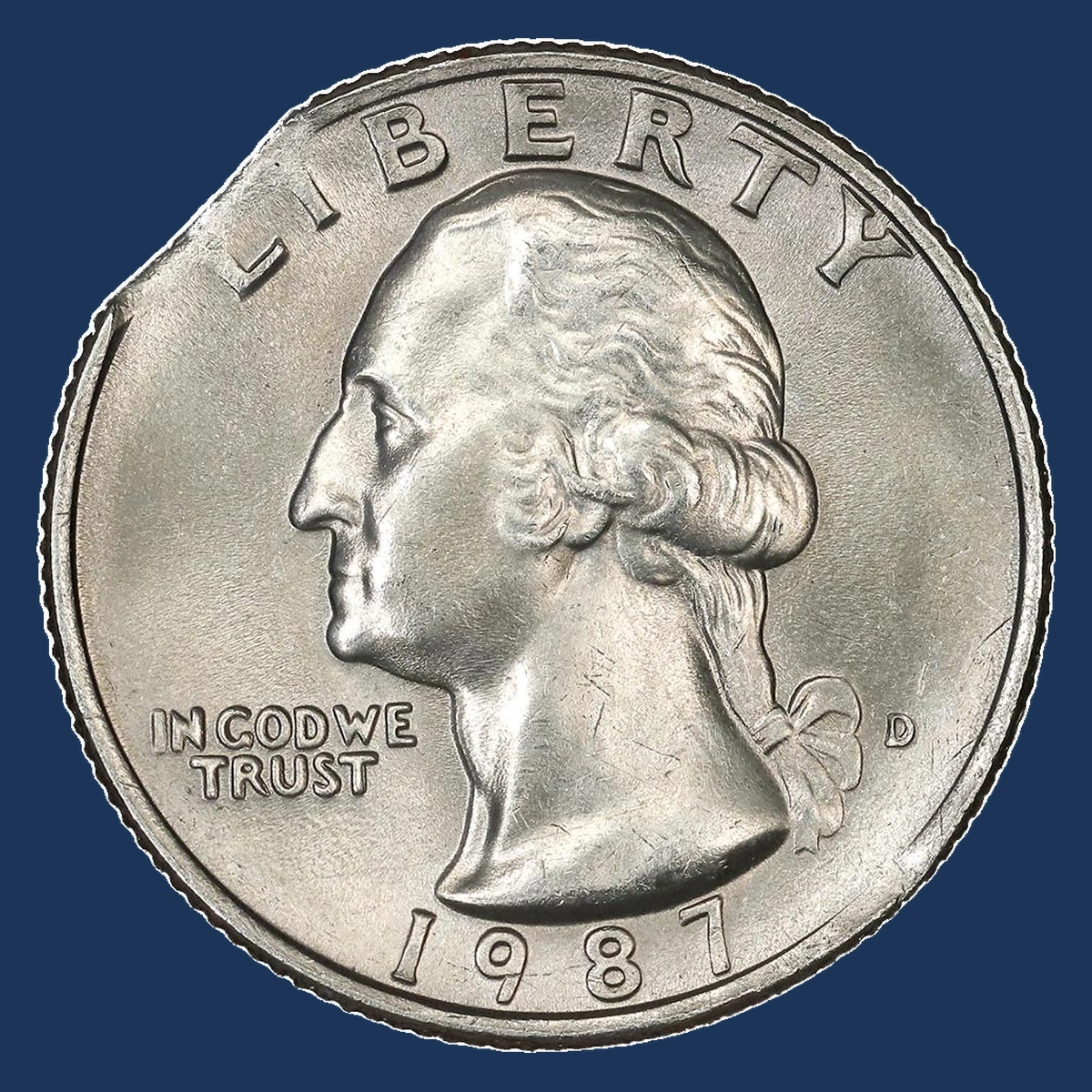
A curved gap at the edge shows that part of the blank was missing before striking. Philadelphia reports include single and double curved clips; a Denver curved clip is also pictured in a year guide.
A separate 1987 coin combines a small curved clip with a much larger off-center strike. A dealer described it as about 3% clipped, 50% off center, and weighing 5.52 grams.
Its mint was not identified. The clip removes metal, while the off-center strike leaves part of the remaining metal blank.
Those features must be distinguished.
Estimated Value
Estimated values are $10 to $100 for small simple clips and $75 to $250 for the combined clip-and-off-center type. Two visible clipping gaps can also increase interest.
In a 2007 price list, Al’s Coins asked $99.95 for the 5.52-gram combination. That was a dealer asking price, not an auction result.
The combination should be valued as one coin. Adding a separate off-center price to a clip price would overstate what the listing supports.
How to Identify
On the combined error, locate the missing curved notch before studying the large blank crescent. One is absent metal; the other is metal that never received the design.
Follow the notch’s edge under magnification. The adjacent rim and letters should show natural flow around an opening that already existed during striking.
A weak rim opposite the notch can support a clip, but it is not present on every genuine example. Do not reject a coin solely because that feature is subtle.
For a double clip, check each gap separately. Similar-looking cuts made later can still leave fresh tool marks.
Weigh a loose candidate as supporting evidence, keeping the reported 5.52 grams tied to the single off-center combination rather than all 1987 clips.
8. 1987 Washington Quarter Off-Center Strike
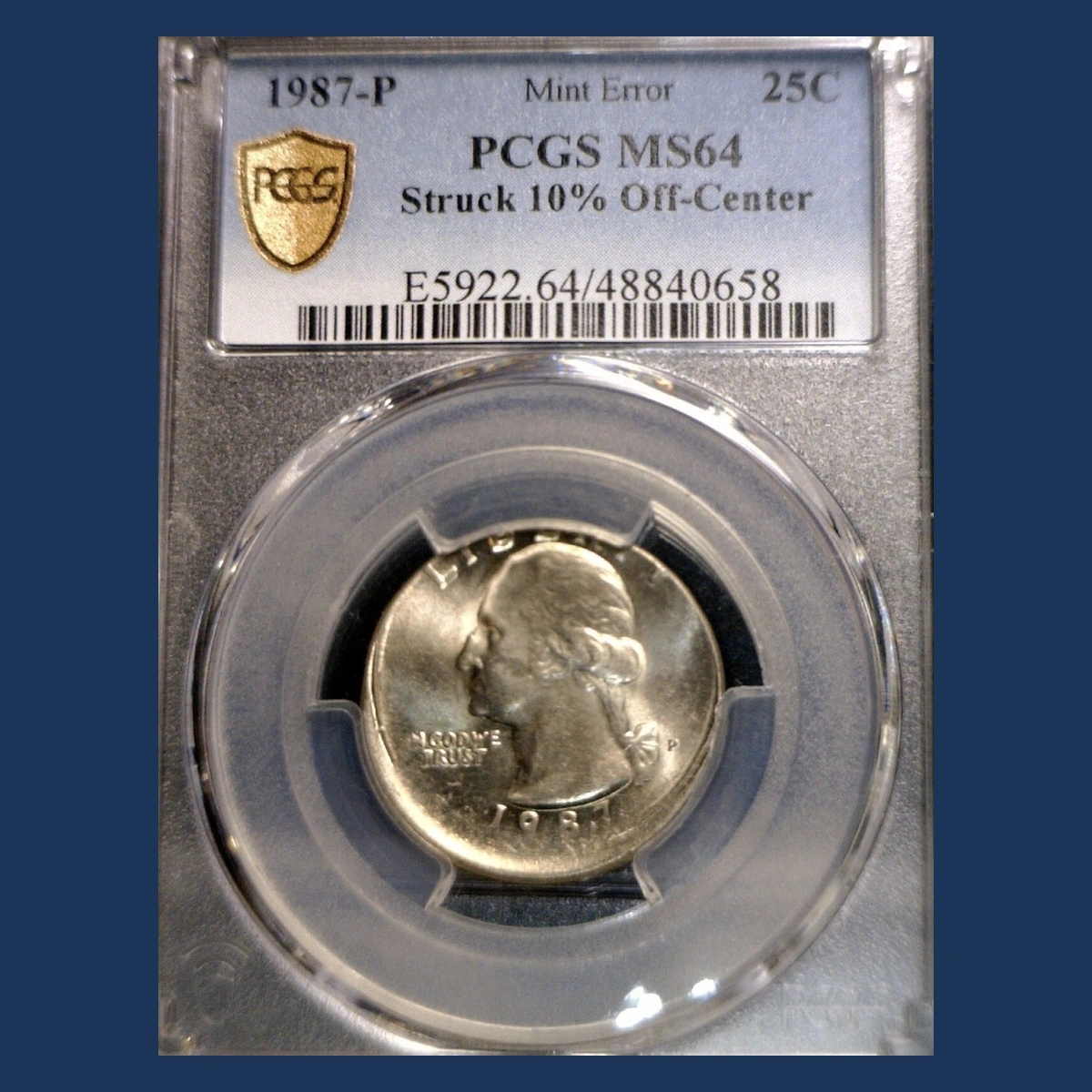
The Philadelphia examples show that small shifts can occur in different directions. One was struck about 15% off center toward 4 o’clock; another about 10% toward 12 o’clock.
The first also has scratches from later handling. That damage is separate from the minting error.
A Denver quarter is reported as 25% off center, without a stated direction. These are different coins, not three descriptions of one specimen.
In each case, the blank sat partly beyond the stamping tools, leaving an unstruck area beside the displaced design.
Estimated Value
An estimated $25 to $300 covers ordinary 1987 off-center quarters with varying shifts and condition. A readable date and a clean, obvious blank crescent help.
The scratched Philadelphia 15% example sold in a $65 two-coin lot in January 2022. The other coin was a 1990-D quarter with a partial collar error.
That $65 cannot be assigned entirely to the 1987 coin. Scratches also make it a weaker comparison for an otherwise similar undamaged example.
How to Identify
Check whether the date and mint remain readable before comparing percentages. On this eagle-back design, both are on the front.
The 15% Philadelphia example points toward 4 o’clock; the separate 10% example points toward 12 o’clock. A different direction does not make one photograph an earlier view of the same coin.
Compare both faces for the area that missed the tools. A sideways shift limited to one face suggests a misaligned tool instead.
On the scratched coin, separate narrow cut marks from the broad unstruck crescent. The scratch is damage, while the untouched blank area explains the original minting error.
Keep the reported Denver percentage separate from those Philadelphia positions, since its direction was not specified.
9. 1987 Washington Quarter Double Strike with Broadstrike
This Philadelphia coin carries two kinds of evidence: repeated design details and metal that spread beyond the normal border. It was both double struck and broadstruck.
The first feature means it received more than one blow. The second means the edge-forming ring did not fully contain the spreading metal.
The documented coin was graded ICG MS64, meaning unworn with some marks. Its description does not establish a particular turn or direction between the strikes.
Look at the surviving images rather than assuming every repeated strike creates two fully separate portraits.
Estimated Value
The double-struck broadstrike sold for $86.25 on December 30, 2008. An estimated range of $75 to $500 covers comparable 1987 combinations.
How clearly the two images separate matters as much as overall condition. An obvious repeated date or lettering can be easier to display than a slight overlap.
The error should be priced as one combination. The $20 single-broadstrike result does not become an extra amount to add on top of the double-strike value.
How to Identify
Locate one feature that appears twice, then trace both versions into neighboring details. Repeated lettering that follows two image positions is stronger evidence than an isolated doubled-looking edge.
Study the front and back independently. A later blow can partly flatten the first image, so its survival need not be equally strong on both faces.
After mapping the repeated design, examine the expanded border. Extra spread outside the picture supports the broadstrike part of the identification.
Flat machine doubling can create shelves beside letters but does not explain two coherent image positions across the design. Use photographs of the certified example to assess the actual overlap, without assigning it an unsupported rotation angle.
10. 1987 Washington Quarter Struck on a Dime Blank
The Washington quarter design is too large for a dime blank, so outer details can fall beyond the available metal. A Philadelphia example labeled (1987) was reported at 2.3 grams.
Parentheses around the year indicate an attributed date rather than a promise that all four digits are plainly visible. The published holder graded the piece NGC AU58, meaning nearly unworn.
This is a quarter design on an unused dime blank. It is not described as a quarter struck over an already finished Roosevelt dime.
No second denomination’s original picture is required.
Estimated Value
Mint Error News reported $253 for this 2.3-gram coin in its September 2010 Long Beach auction results. An estimated range for comparable pieces is $200 to $1,000.
The amount of readable quarter design and the security of the year identification affect the comparison. Attractive surfaces can improve the appeal.
The 2.3 grams is the reported measurement of this specimen. Its price should not be transferred to a smaller quarter made by cutting away the perimeter.
How to Identify
A loose example should feel much lighter than a normal 5.67-gram quarter. Confirm that impression with a scale instead of relying on touch alone.
The published coin weighs 2.3 grams, close to a normal dime blank’s standard weight. That does not mean every light quarter is on a dime blank.
Examine the perimeter for a naturally struck design running beyond the metal. A cut-down quarter may show filing, an altered rim, or severed finished details.
Check the holder and published photographs for the P and year identification. Keep the parentheses when the full date is not visible.
The published auction-results illustration lets you compare the actual small blank and surviving quarter design without inventing a clear full date.
11. 1987 Washington Quarter Mated Pair
These two coins were cataloged as a mated pair because their features link them to the same minting accident. They were sold together, with separate grades for each piece.
The first was identified as 1987 and graded NGC AU58, with slight wear. The second was labeled (1987) and graded MS63, meaning unworn with visible marks.
A mated pair does not automatically mean two coins stuck together. The auction description did not establish bonding, a specific depression, or a mirror-image transfer.
The relationship between the pieces is the important feature.
Estimated Value
The complete pair sold for $411.25 on November 3, 2013. An estimated range for a comparable authenticated pair is $300 to $1,500.
That estimate and the auction result cover both coins together. Splitting the result evenly would not establish an independent market price for either member.
Clear matching features strengthen the pair’s appeal. Keeping its documentation and both pieces together preserves the evidence that makes the combination meaningful.
How to Identify
Work from photographs of both fronts, both backs, and the two holder descriptions. Keep the coins protected rather than pressing their surfaces together to test a fit.
Look for complementary shapes or contact areas that connect the pieces physically. Two unusual quarters with the same date are not enough to prove a shared accident.
The separate grades help you keep the identities straight: slight wear on the first coin, no wear on the second. The second coin’s parenthesized year also needs to remain distinct.
If the matching relationship is not visible in the available photographs, request clearer images or an expert explanation. Do not replace missing evidence with an assumed bond, indent, or mirror image that the original description never established.
Conclusion
A missing letter, a curved gap, and two matching coins each call for a different check. The estimated values here span $2 to $1,500, from small shifts to complete mated pairs.
Remember that the $411.25 pair result covers two coins. The $65 off-center lot also contained a separate 1990 quarter.
Keep the year, mint, condition, and combination together when comparing a 1987 error with a pictured example.