1941 Quarter Error List with Pictures

Some 1941 quarters show extra outlines in the motto; another documented example has nearly two-fifths of its blank missing. The visible mistake tells you where to begin checking.
A Denver FS-101 doubled-front quarter graded MS67 sold for $2,640 in February 2018. The 1941 quarter errors in this guide have estimated whole-coin values of $20–$3,500.
Read on to compare the small raised details, altered edges, and larger striking mistakes without confusing wear or scratches with a Mint error.
1. 1941 Washington Quarter Raised Lines from Cracked Tools
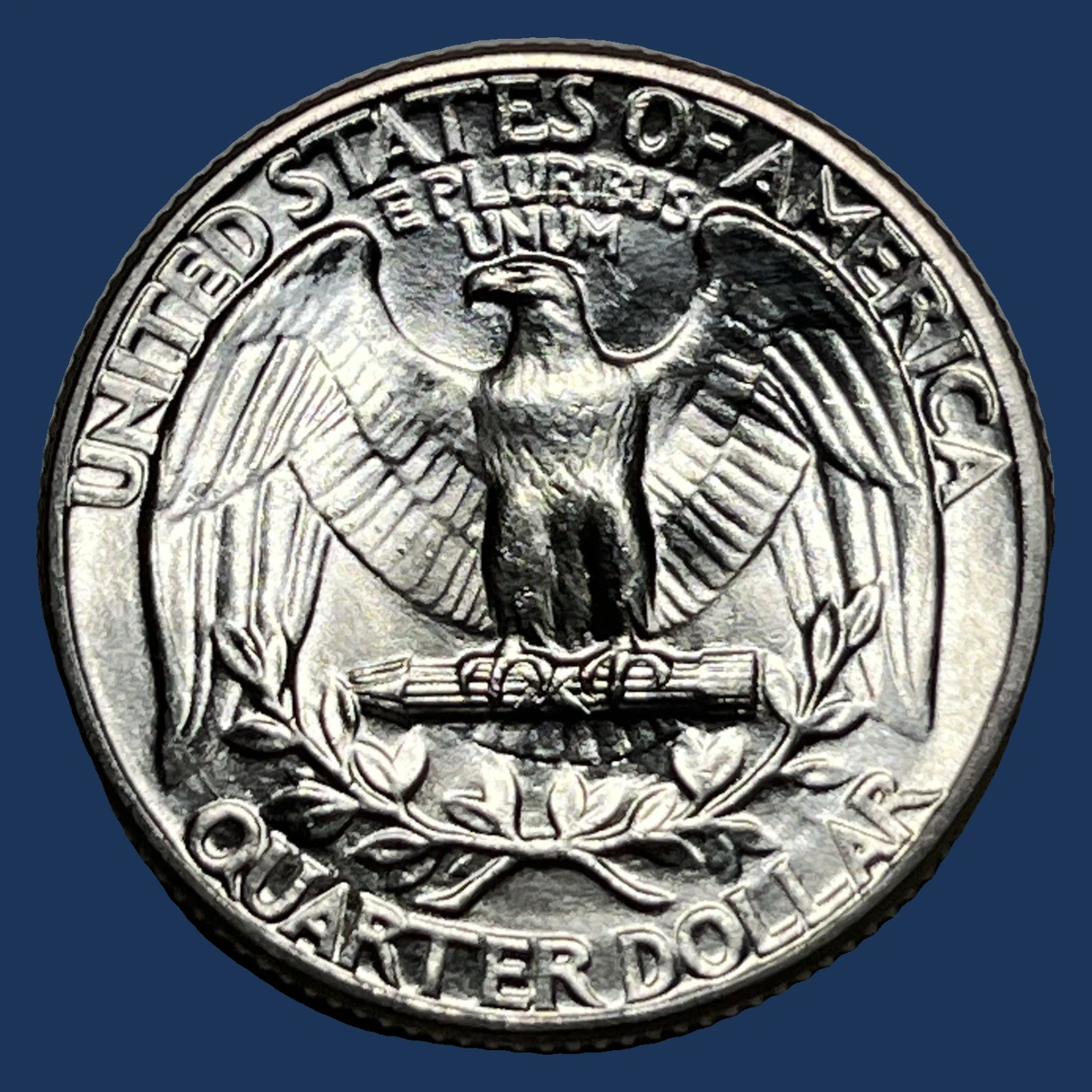
A thin raised line can cross a letter, hair strand, or part of the eagle. It forms when coin metal enters a crack in the steel tool that stamps the design.
The tool is called a die. Its crack leaves extra metal on the coin, unlike a scratch that cuts into the finished surface.
Cracks appear among the identifying details for several 1941 varieties. Their paths depend on the particular tool, so a line on an eagle’s wing should not be assumed to appear on every quarter from that mint.
Estimated Value
For ordinary 1941 quarters with visible tool cracks, estimate $20–$150 for the whole coin. Thin, common lines usually add little compared with the coin’s condition and silver value.
An extensive raised path can be easier to display than a short faint trace. If the same coin also matches a valuable doubled-tool variety, compare it with that complete variety instead of adding separate crack and doubling estimates as though two coins were being sold.
How to Identify
Pass light across the suspected line from a low angle and watch which side casts the shadow. A raised ridge catches light differently from a groove cut into the surface.
With a magnifier, follow the ridge across any nearby letters or portrait details. Check for a neighboring dent that could explain metal pushed upward by an impact.
Do not scrape the feature to test it. Dirt and deposits can also look raised, but removing them may damage the original surface.
When using a variety photograph, compare the entire path and the surrounding design rather than matching one short segment. A specific tool crack should follow the same route on coins struck at that stage.
2. 1941 Washington Quarter Peeling Metal
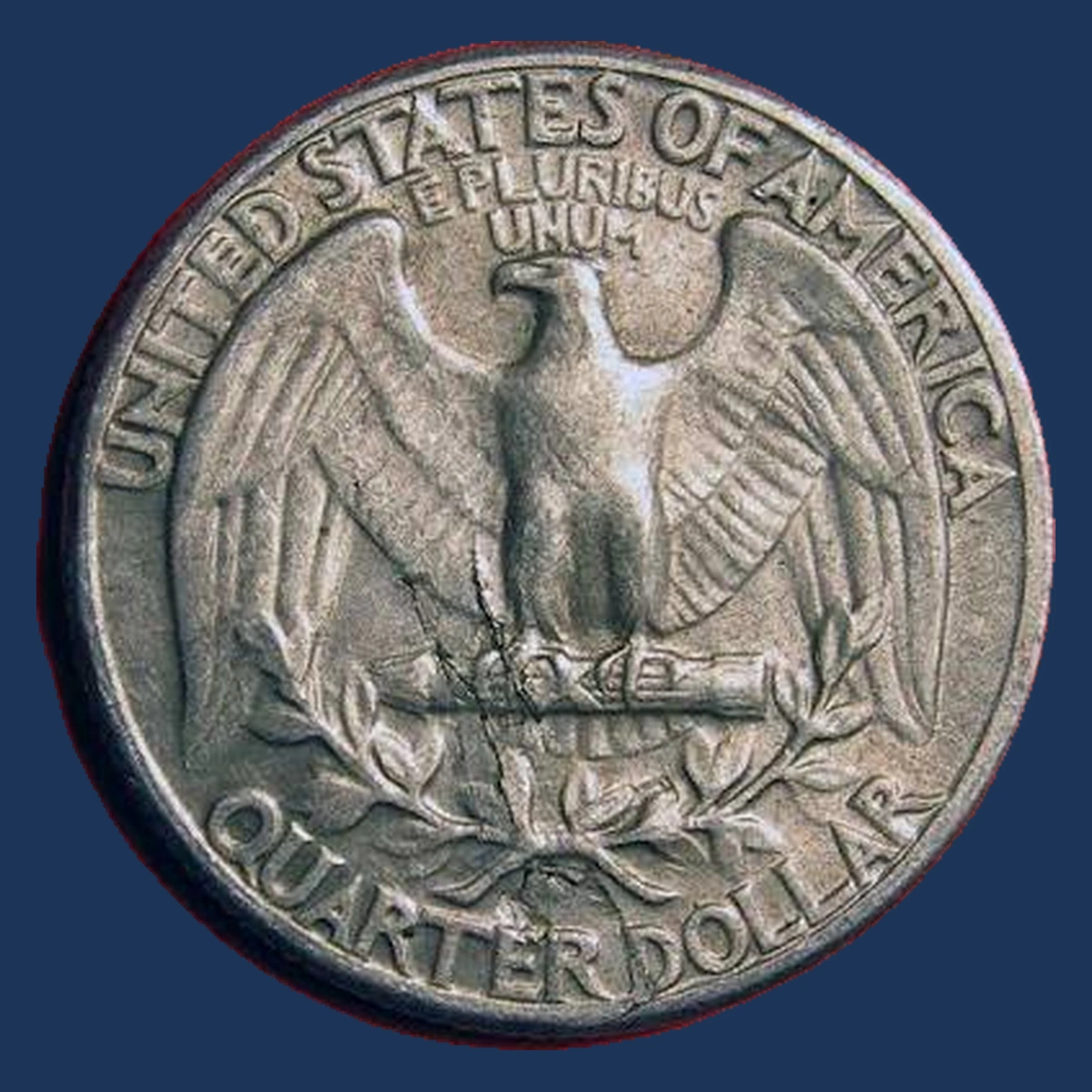
A thin sheet of metal may lift or come away from the surface, leaving a shallow rough area beneath it. Collectors call this kind of separation a lamination.
The flaw begins within the metal, where a weak bond allows part of the blank to separate. It can interrupt letters or portrait details without cutting through the whole coin.
A 1941 quarter uses silver mixed with copper throughout, not the bonded outer sheets found on later clad quarters. Its peeling metal therefore needs a different explanation from a modern coin missing an entire manufactured outer layer.
Estimated Value
Use an estimated $20–$250 for an identified 1941 lamination, depending on the area affected and the coin’s condition. Small rough patches can add little, while a clearly attached flap makes the separation easier to understand.
For a different-coin comparison, a 1911 Liberty Head nickel with peeling metal sold for $51 in January 2023. That result illustrates modest collector interest, but does not set the price of a silver quarter with a different-sized flaw.
How to Identify
Leave a lifted flap in place. Its connection to the surrounding metal can explain more than an empty patch would after the fragment is removed.
Look along the flap’s edge for a thin separation within the coin, using gentle side lighting rather than a tool to pry it open. Follow any surviving design to see how the break passes through it.
If the piece is already gone, inspect the shallow exposed area for a natural layered boundary. A sharp scoop, parallel scraping, or widespread pitting may point to later damage instead of an original weak bond.
Photograph the feature with the adjacent letters visible, keeping any loose fragment separate and safely stored. The thin split itself is the key evidence.
3. 1941 Washington Quarter Design Blocked by Foreign Material
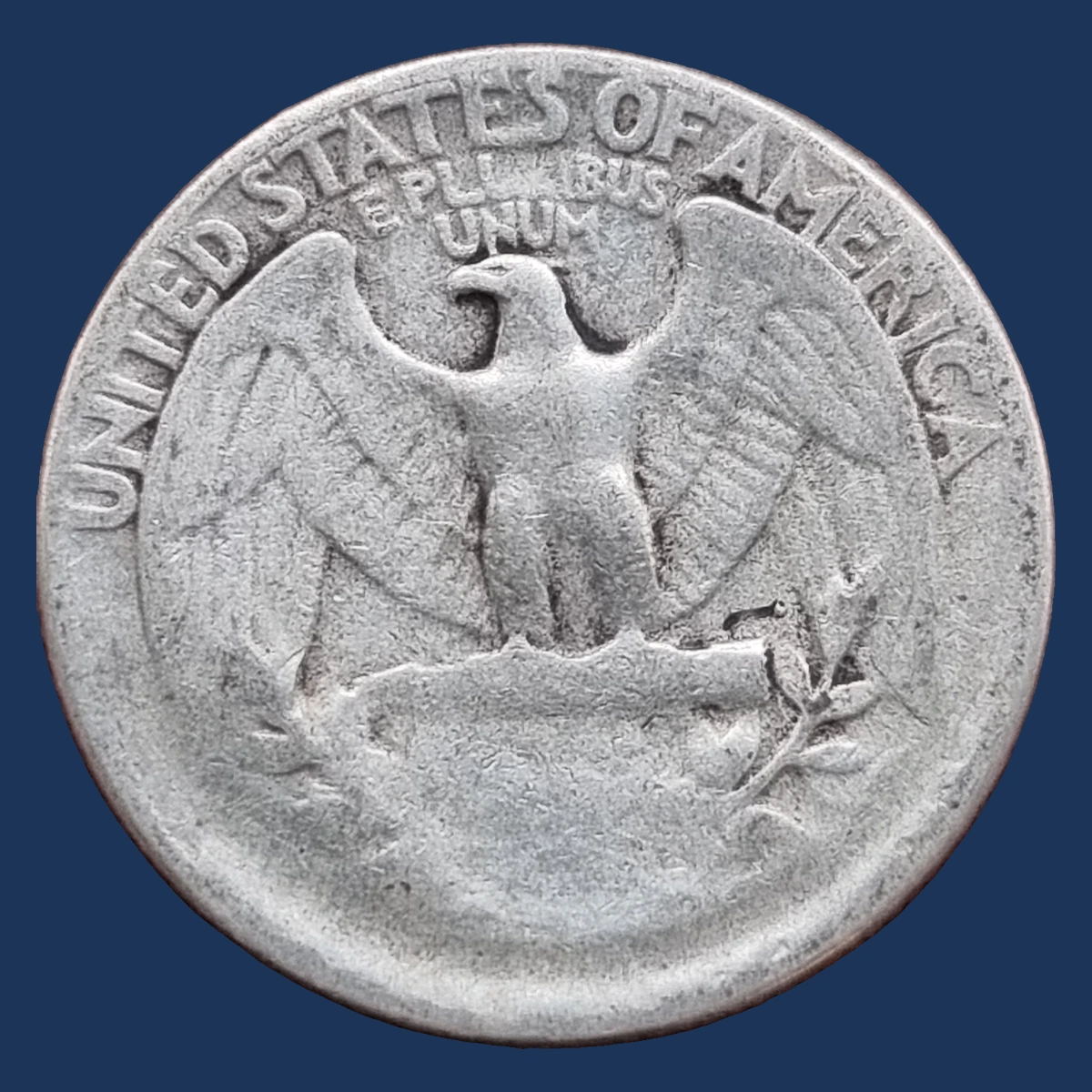
One part of a quarter may lack the detail that appears clearly beside it. Material between the blank and a stamping tool can keep the tool from reaching that area.
A hard object may leave a shaped hollow, while grease can soften or block small letters. Both effects are described as a strike through foreign material.
The 1941 reports do not establish a particular piece of wire or cloth. A weak-looking area alone cannot identify what caused it, because wear, scratches, and corrosion can also remove or blur an already finished design.
Estimated Value
Estimate $25–$400 for a confirmed 1941 strike-through error, with stronger prices for an obvious original impression. A barely visible weak letter generally offers less interest than a clear shape.
A 1986-P nickel with a struck-through error sold for $204 in June 2023. This is a different denomination and year, so use it only as a broad comparison while judging the quarter’s own affected area, remaining design, and surface condition.
How to Identify
Compare the weak area with the strongest nearby detail before trying to name an object. If high points across the whole coin are worn smooth, general wear may explain more than a local obstruction.
For a hollow, inspect its edges under changing light and look for metal pushed up by a later impact. A scratch can cut across finished details, while an original obstruction changes how those details formed.
Keep the entire affected face in one photograph, then take a close view of the boundary. A claimed wire or cloth impression needs the corresponding narrow shape or texture; leave the material unnamed when the surface does not show it.
4. 1941 Washington Quarter Partial Collar Strike
The edge may have two levels instead of one even band. Part of the blank was held by the surrounding steel collar while another part extended beyond it during the strike.
The confined area can retain grooves, and the unconfined metal can spread into a wider step. This is called a partial collar strike.
A 1941 example was offered as an unworn coin in Mint Error News. Its edge feature is different from ordinary rim wear or a quarter whose entire design spread because the blank completely missed the collar.
Estimated Value
A genuine 1941 partial collar strike has an estimated whole-coin value of $75–$500. A continuous, easy-to-see edge step and clean surfaces can make the error more appealing.
For a later and different-denomination comparison, a 1990-P nickel with a partial collar error sold for $99 in June 2025. The 1941 quarter’s silver composition, surviving grooves, and preservation need their own assessment, rather than borrowing the nickel’s price as an exact match.
How to Identify
Keep your fingers off the faces and examine the edge before studying Washington or the eagle. Rotate it slowly to follow any step between a grooved lower band and the wider metal beside it.
Photograph the transition from the side, where both levels can be seen together. A face-on photograph may hide the feature almost completely.
Check the stepped area for fresh filing, squeezed metal, or repeated impact marks. Later edge damage can deform a normal quarter without leaving the same original collar boundary.
If loose, compare its weight with the normal 6.25 grams; spreading should not require a large loss of silver. The edge must still explain which part was held and which part spread.
5. 1941 Washington Quarter Repunched D and S Mint Marks
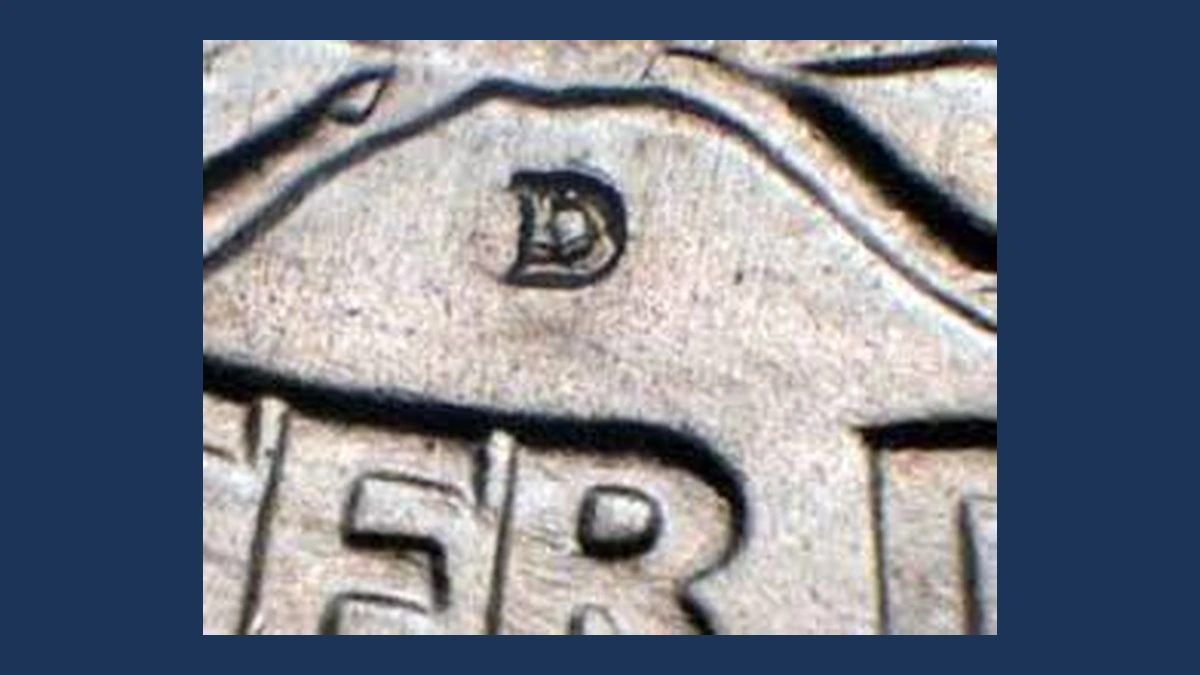
A second small arc or upright can survive beside the main mint letter when the letter was punched into a tool more than once. The resulting coins repeat that extra outline.
Denver varieties include northward, southward, and eastward D/D patterns, plus a D over an upside-down D. San Francisco has several S/S patterns using different-sized S punches.
The small-S FS-501 is distinct from a large-S repunched example. Letter size alone is not the error, and a large S should not be given the small-S variety’s number merely because both look unusual.
Estimated Value
Estimate $20–$600 for identified 1941 repunched mint marks, allowing for the exact pattern, wear, and original surface quality. A clear extra curve on an unworn coin is generally easier to sell than a faint worn trace.
As a different-year example, a 1949-D D/D FS-501 in MS65 sold for $384 in March 2018. That result is a comparison for a named mint-letter variety, not a sale of a 1941 small-S or large-S coin.
How to Identify
Keep the coin upright and find D or S below the branches on the back. Note the letter’s size and shape before enlarging a suspected extra curve.
Choose a photograph for the same mint and proposed variety. An upside-down-D remnant needs a different match from an ordinary northward D/D.
Use a 10× magnifier to follow where the extra outline separates from the main letter. Check more than the center, where a hit or a shadow can create a misleading shape.
The small-S FS-501 has an upper extra impression; compare its exact outline rather than transferring it to a large S.
Photograph the full letter and nearby branches together so the orientation remains clear.
6. 1941 Washington Quarter Rotated Back Design
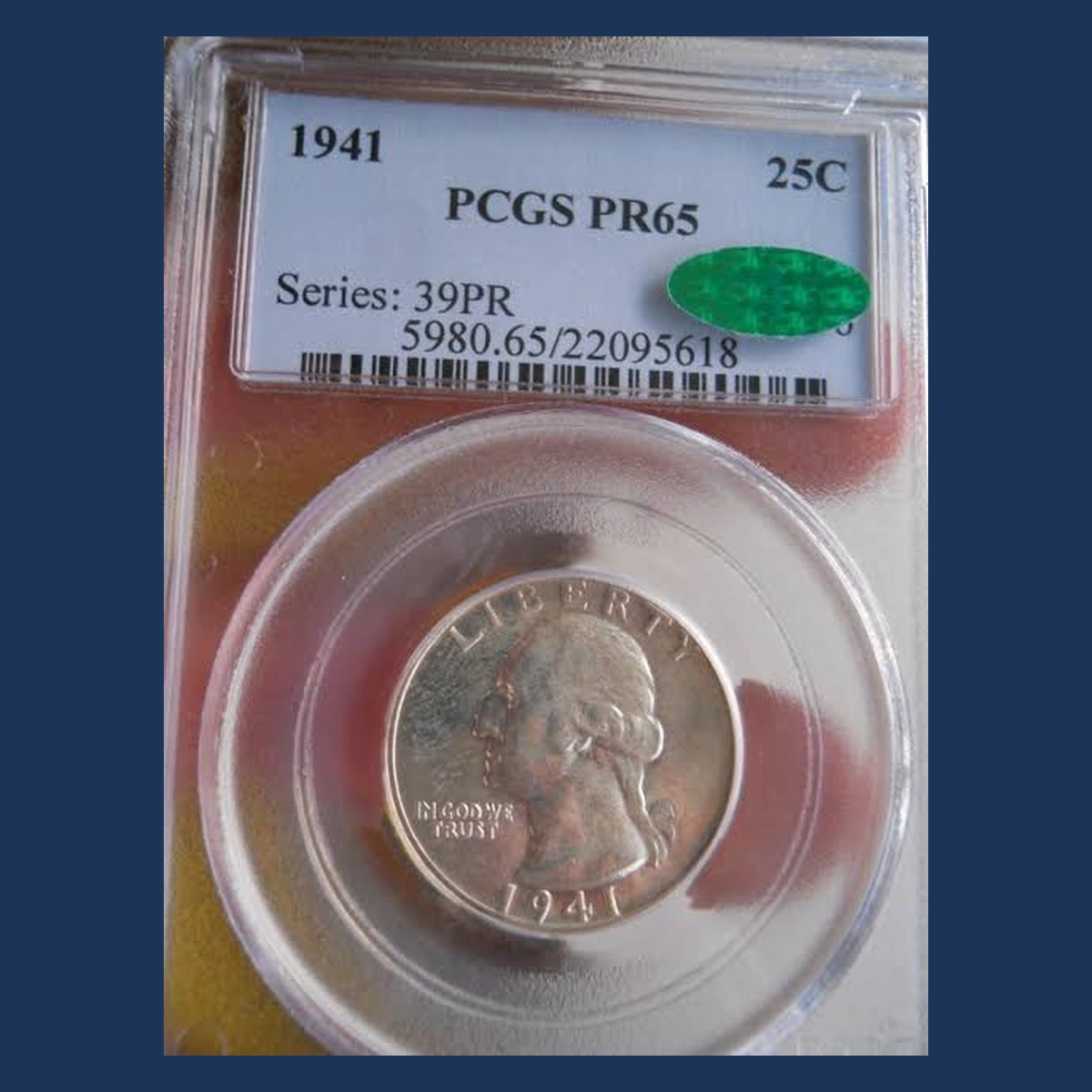
An eagle that finishes tilted after a careful top-to-bottom flip may show that the two stamping tools were not aligned normally. Collectors call this a rotated-die error.
It concerns the angle between the designs, not whether one portrait or eagle sits closer to the rim. The front and back may each look centered when viewed separately.
Rotation is reported for 1941 without an established angle for a specific example. A turn introduced while photographing or handling the coin can imitate the effect, so the relationship between both faces has to be tested directly.
Estimated Value
For a genuine, clearly visible rotation, estimate $50–$700 for an ordinary 1941 quarter. A large departure from normal alignment can display more strongly than a slight tilt.
A 2015-D nickel with a ninety-degree rotation sold for $79 in October 2021. That different-year coin provides a modest comparison, while the 1941 quarter needs its own measured angle and condition considered; no ninety-degree claim should be copied onto it from the nickel.
How to Identify
Place a normal quarter beside the candidate and practice flipping it from top to bottom with Washington upright. The eagle should finish upright too.
Keep the candidate from twisting sideways, then repeat the same motion. A clear holder can help keep its position fixed between views.
Repeat the test several times before measuring the angle. If the result changes with your grip, handling is affecting the comparison.
Use a straight photograph and protractor to record how far the eagle leans and in which direction. Do not straighten each face separately in an image editor.
The same tilt must remain after each controlled flip for the photographs to demonstrate the proposed rotation.
7. 1941 Washington Quarter Broadstrike
A quarter can spread beyond its usual circle if the collar does not contain the blank. The resulting broadstrike may have a wide, uneven border around a complete main design.
A 1941 example is reported as ANACS MS60 Details with a major broadstrike. The Details description should remain attached to that particular coin rather than being replaced by a clean numerical grade.
This is separate from the PCGS MS64 coin with a 38% clip discussed below. Both can show spreading, but the large amount of missing metal belongs to the clipped example.
Estimated Value
Estimate $75–$750 for a genuine 1941 broadstrike, depending on expansion, original detail, and surface damage. A strong outline does not erase the effects of scratches or cleaning.
A 1945 Philadelphia broadstrike with scratched front surfaces sold for $134 in June 2026. That different-year silver quarter offers a useful comparison for an imperfect example, while a cleaner and more dramatic 1941 coin may attract stronger interest than the damaged comparison.
How to Identify
Check all the outer lettering first, using both faces to decide whether the intended design remains on the metal. A complete design with an expanded border supports a broadstrike; lettering lost beyond one edge suggests an off-center strike.
Measure the loose coin across more than one direction with calipers, comparing it with the normal 24.3-millimeter diameter. Examine the edge for lost or incomplete grooves where the collar failed to contain it.
Look at the portrait and eagle for crushing that could explain later flattening. A widened coin needs natural struck details to support the original broadstrike, and any separate scratches or cleaning should still be considered when judging condition.
8. 1941 Washington Quarter Clipped Blank with or without a Broadstrike
The blank can be missing a section before either design is stamped onto it. The remaining metal then takes the strike around that incomplete boundary.
One striking 1941 example has a 38% clip together with a broadstrike. PCGS graded this particular coin MS64, and both features belong to the same piece.
Other clipped 1941 quarters are reported without an established missing percentage or mint. They should not inherit the larger example’s 38% description, expanded outline, or grade merely because each coin has a gap along its edge.
Estimated Value
Estimate $25–$1,500 across small clips and dramatic compound examples. The larger end of the range assumes a substantial, clearly original error on an attractive coin.
The 38% clip with a broadstrike sold for $1,057.50 on November 3, 2013. That was the price of one PCGS MS64 coin with both features, so the amount should not be divided into separate clip and broadstrike sales or assigned to every smaller gap.
How to Identify
For the documented large example, compare two features separately: the missing metal and the outward spread of what remains. A clipped coin does not have to be broadstruck, and a broadstrike does not have to lose metal.
Inspect the gap’s ends under a magnifier for natural rim formation beside the original opening. A later saw cut can remove silver while slicing abruptly through finished design.
Weigh the coin if it is loose, but do not use weight loss alone to prove a clip. Photograph the surviving date and entire outline together.
Only apply the 38% description when matching that actual specimen or measuring the particular coin; the generic 1941 clip report gives no common percentage.
9. 1941 Washington Quarter Off-Center Strike
An off-center quarter has an unused area on one side of the blank and part of the intended design missing beyond the other. The metal was out of position when the tools struck it.
The shift affects how both faces fit within the same disk. It is different from a broadstrike that spreads metal while keeping the main design complete.
Off-center examples are reported for 1941, but no single percentage or mint describes the whole category. A readable year helps connect a particular coin to this date instead of relying on a seller’s label.
Estimated Value
Genuine dated 1941 off-center quarters have an estimated range of $100–$2,000. The amount of displacement, remaining identity, and condition determine where an example belongs.
A 1965 quarter struck 25% off center sold for $180 in December 2025. That later copper-nickel coin is a comparison for the mechanism.
A 1941 silver example with a different shift or more wear needs its own whole-coin assessment. Its price cannot be calculated from the off-center percentage alone.
How to Identify
Identify which design elements actually missed the metal before estimating the shift. A wide blank border with all intended lettering still present may point to a broadstrike instead.
Compare both faces for a matching displacement on the same original blank. If only one design is displaced, a shifted tool may explain the uneven rim.
Look at the date next. Missing mint-letter space cannot identify Philadelphia when the D or S position fell beyond the metal.
Inspect the empty area with side lighting for grinding, hammered surfaces, or artificial removal of detail. A genuine off-center strike leaves a natural boundary between the design that formed and the part of the blank that remained untouched.
10. 1941 Washington Quarter Doubled Front and Back Designs
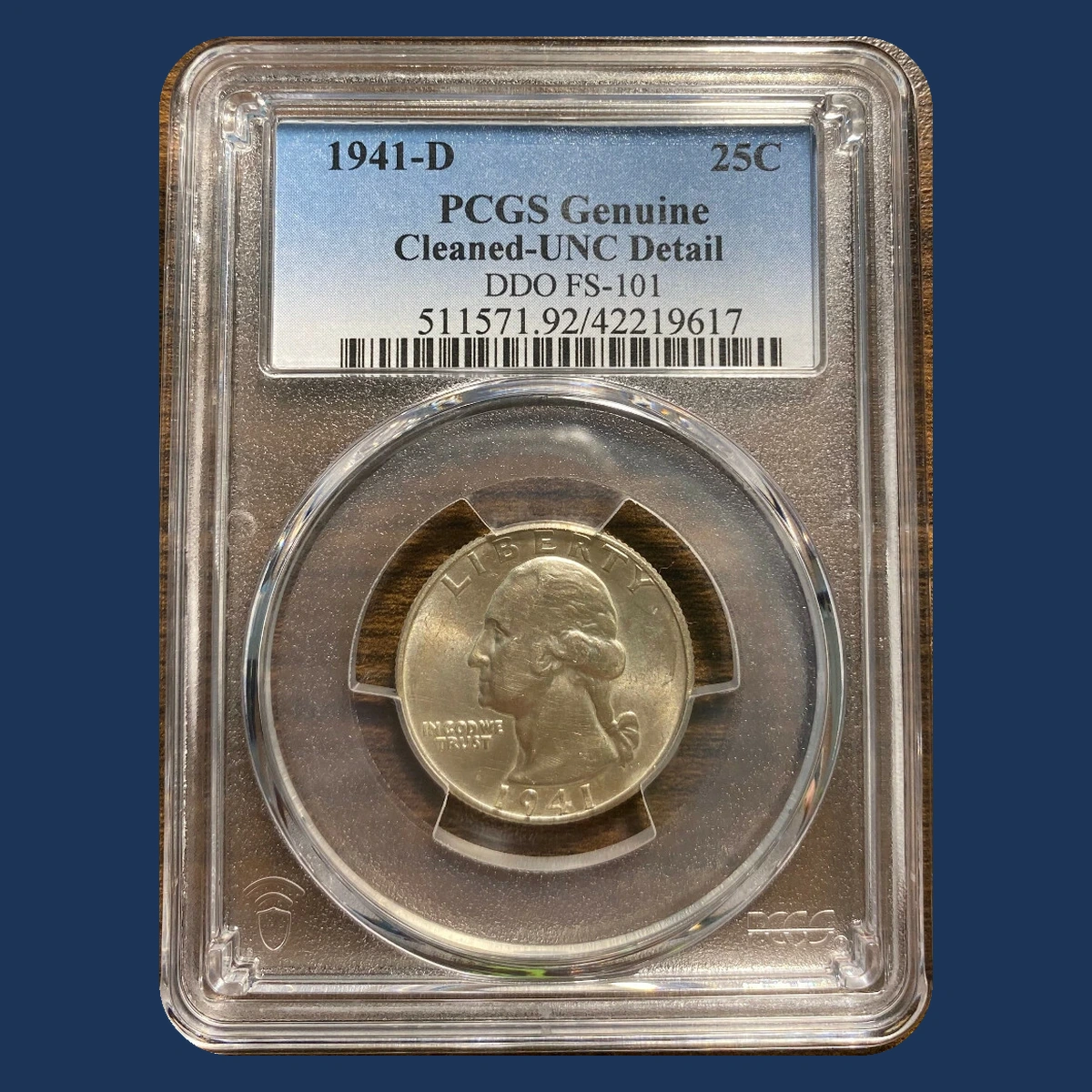
Repeated lettering can originate in the steel tool itself rather than from striking one coin twice. Such a tool is called a doubled die.
Denver FS-101 has strong extra outlines in parts of the motto and portrait. Its separate FS-801 back variety shows especially clear separation in STATES OF AMERICA.
Philadelphia and San Francisco have their own patterns. Some Philadelphia back doubling came from a parent tool used to make several working tools.
A shared doubled beak or branch therefore does not identify one specific working-tool variety or establish its value by itself.
Estimated Value
Identified 1941 doubled-tool varieties have an estimated whole-coin range of $25–$3,000. Minor worn patterns and exceptional high-grade major varieties occupy very different parts of that range.
The Denver FS-101 auction record is $2,640 for MS67 on February 22, 2018. Its high preservation is part of that price; the figure does not apply automatically to a common shared back feature or to another mint’s variety with a similar number.
How to Identify
For the Denver front FS-101, examine GOD WE, UST, the nose, eyelid, and hair ribbon under a magnifier. The documented second outlines lie generally upward and slightly left of the main design.
Turn to the back for FS-801 and compare STATES OF AMERICA. This is a different pattern, not proof that every front-doubled coin also carries that back.
On a Philadelphia coin, match additional marks to distinguish a particular working tool from shared parent-tool doubling. Use the catalog for the correct mint and face.
Rounded repeated edges or consistent thickening need to match the named variety. Flat ledges from movement during striking should not be priced as the same doubled-tool feature.
11. 1941 Washington Quarter Blank Back from a Blocked Strike
A quarter can receive Washington’s portrait while its entire back remains without the eagle or lettering. Another blank inside the collar can block the back stamping tool from reaching it.
This is a uniface strike, meaning only one face received its normal design. Fred Weinberg listed a 1941 PCGS AU55 example with a completely blocked back.
The missing back also removes the normal mint-mark area. An absent D or S therefore cannot prove Philadelphia on this coin, and a back made smooth by grinding would have a different surface and edge.
Estimated Value
For an authenticated 1941 fully blocked-back quarter, estimate $1,000–$3,500. The completeness of the blank face, preservation of the front, and evidence of original striking support the stronger values.
The PCGS AU55 example appeared in a Fred Weinberg price list at $2,900. That is a historical dealer asking price, not a completed auction sale, and repeated advertisements of the same coin should not be mistaken for several independently priced specimens.
How to Identify
Look across the supposedly blank back for grinding lines or remnants of an erased eagle. A smooth-looking photograph alone cannot show whether the surface was blocked during striking or altered much later.
Inspect the edge beside it for thinning, seams, or evidence that two pieces were joined. A loose ordinary silver quarter normally weighs about 6.25 grams.
The Washington front should still show an original strike, not simply a portrait pasted onto a featureless disk.
Photograph both faces and the edge under varied light without polishing the blank side. The intact surface needs specialist examination to establish the blocked-strike explanation; the missing mint-letter area cannot supply a mint identity that the coin no longer shows.
Conclusion
Estimated 1941 quarter error values span $20–$3,500, from modest raised cracks to a fully blocked back design. Exact variety and condition can matter as much as the size of a visible mistake.
Keep the mint and the specific example attached to any price comparison. The 38% clip is one coin with an additional broadstrike, while a dealer’s price for the blank-backed quarter remains an asking price rather than an auction result.