1937 Quarter Error List with Pictures

Washington’s nose can reveal more than a worn date on a 1937 quarter. The Philadelphia FS-101 variety repeats the nose tip as well as the motto and date.
A sharp MS66 example brought $8,700 at Heritage in July 2022. This guide covers 1937 quarter errors with estimated whole-coin values from $25–$9,000.
Read on to compare that repeated design with peeling silver, an extra D outline, and a quarter struck on metal intended for a nickel.
1. 1937 Washington Quarter Peeling Front Surface
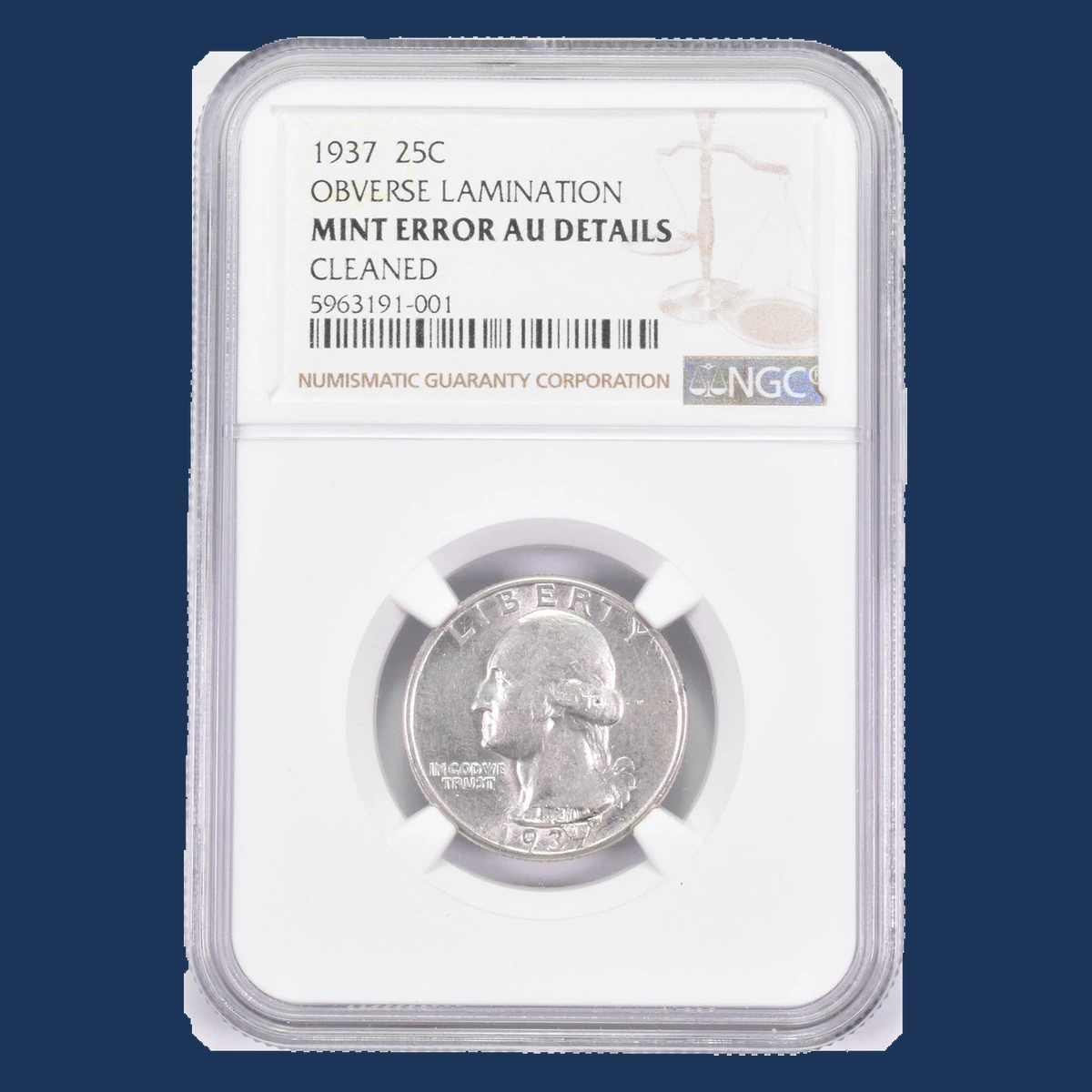
A thin piece of the front surface can lift or flake away from the metal beneath it. The resulting split is called a lamination.
A dealer listed a 1937 quarter graded NGC AU Details with this feature on the front. Its exact location and mint need to be read from that coin, rather than assumed from another example.
The quarter is made from silver mixed with copper throughout. It does not have the bonded outer sheets of modern clad quarters, so the peeling reflects a weakness within its alloy rather than the loss of a separate factory-applied skin.
Estimated Value
For a genuine 1937 front lamination, estimate $25–$250 according to visibility, condition, and the area affected. A small rough patch often attracts less attention than a clear thin separation.
The NGC AU Details example was offered by its dealer at $149 or Best Offer. That is a seller’s asking price, not a confirmed sale, and the condition problems behind a Details label still matter when comparing the whole coin.
How to Identify
Follow a surviving portrait line or letter toward the damaged-looking area and see how it meets the separation. A thin surface split should have a different boundary from a deep scratch that cuts across finished design.
Look from a low angle with a magnifier, keeping any attached metal in place. Do not lift a flap just to see beneath it.
If metal has already fallen away, inspect the exposed patch for its shallow layered edge. Rough corrosion pits or a clean scoop can indicate a different cause.
Compare the coin with its holder description and whole-face photographs. An AU Details label does not by itself explain every mark, so identify the actual lamination separately from any later damage.
2. 1937 Washington Quarter Extra D Mint-Mark Outline
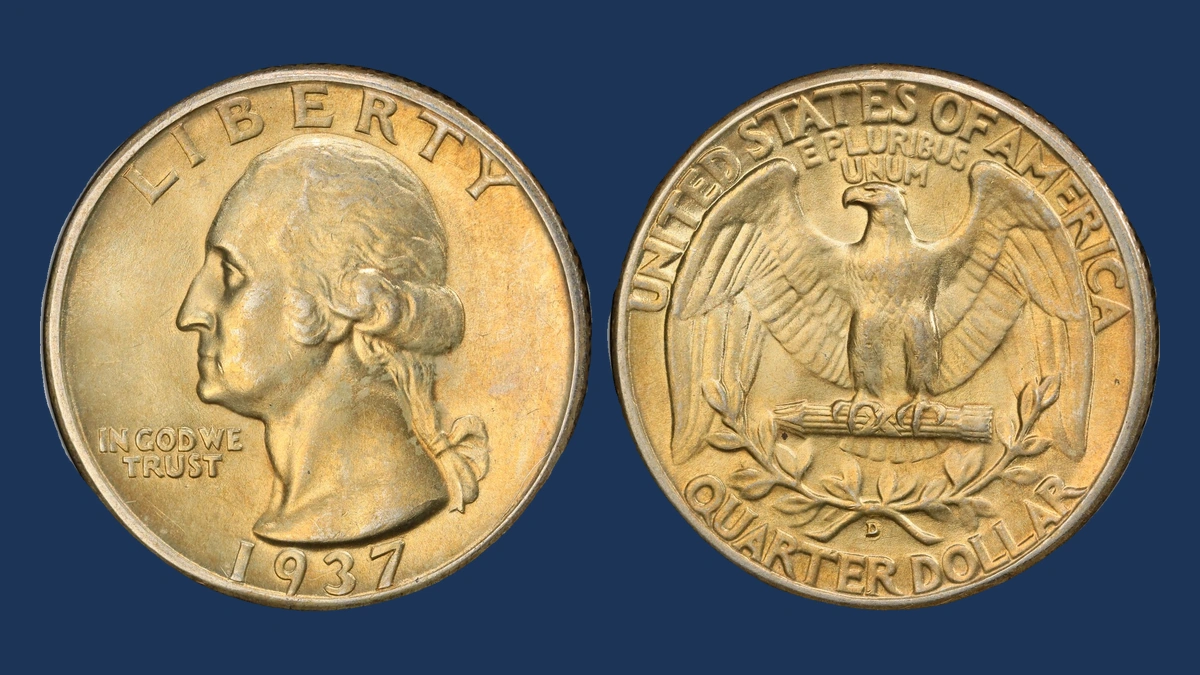
The D below the eagle’s tail can show a remnant of another D toward its lower-right side. This is reported as a repunched mint mark on 1937 Denver quarters.
At the time, workers placed the letter into the stamping tool with a small punch. A shifted repeat impression could leave two outlines in that tool and on the coins it struck.
A dent can also push metal beside a D, and lighting can make its rounded side appear doubled. The important feature is a repeatable extra letter shape, not merely a wide or battered mint mark.
Estimated Value
An identified 1937-D repunched mint mark has an estimated whole-coin value of $30–$500. A clear outline on an unworn coin can support stronger interest than a faint trace hidden by circulation wear.
A 1949-D D/D FS-501 graded MS65 sold for $384 in March 2018. That later-year variety provides a price comparison, but its catalog identity should not be transferred to the 1937 coin just because both involve an extra D.
How to Identify
Find D below the tail and branches on the back, then photograph it upright with the nearby design visible. Check the lower-right side for the reported remnant before studying smaller shadows inside the letter.
Use a 10× magnifier and light from two directions to follow the extra contour. A raised curve that belongs to a second impression should stay in the same position as the light changes.
Look for impact dents beside the mark and compare a normal D of the same year. Match the complete extra outline with a confirmed repunched example; a damaged edge of the main letter is not enough to establish a second punch impression.
3. 1937 Washington Quarter Design Struck on a Nickel Blank
The familiar quarter design can be struck on a blank intended for a five-cent coin. The nickel alloy differs from the normal silver quarter metal, even when the design looks surprisingly complete.
The documented 1937 PCGS MS63 example has intact outer lettering with metal flowing toward the rim. Grooves remain visible along its edge.
Those features matter because a smaller starting blank does not guarantee missing letters or a smooth edge. The strike can spread the metal, so this coin should not automatically be called off center merely because the blank began at nickel size.
Estimated Value
Estimate $1,500–$6,000 for an authenticated 1937 quarter struck on a nickel blank, depending on preservation and how clearly its original construction can be shown. Attractive surfaces and a readable date support stronger interest.
The PCGS MS63 example sold for $4,600 on January 7, 2006. That price belongs to the complete wrong-blank coin, including its condition, rather than separate values for an assumed off-center strike or missing collar.
How to Identify
A full date and complete outer words do not eliminate this possibility. The recorded nickel-blank example retained the lettering and also shows grooves along its edge.
For a loose candidate, record actual weight and diameter rather than relying on the size of its photograph. A nickel blank starts around 5.0 grams and 21.2 millimeters, compared with the quarter’s normal 6.25 grams and 24.3 millimeters.
The strike can spread that smaller blank. Its final diameter therefore needs to be considered with its metal and weight.
Inspect the edge for filing or plating, then have the metal checked without damaging the coin. Copper-nickel composition and a natural original quarter strike must support the same wrong-blank identification.
4. 1937 Washington Quarter Doubled Front Details
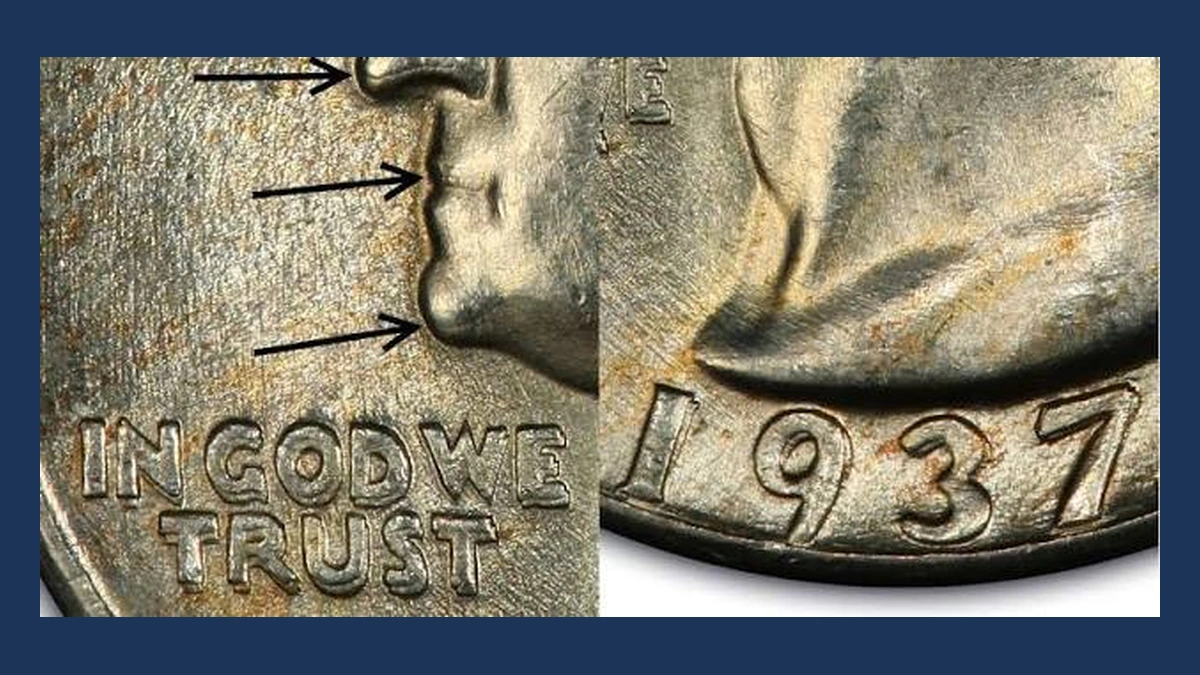
An extra outline at the tip of Washington’s nose can accompany repeated date digits and motto letters. On Philadelphia FS-101, these details were already doubled in the steel stamping tool, called a die.
The tool then repeated its altered design on the coins it struck. This differs from striking one coin twice after it moved in the press.
A San Francisco doubled-front example is also reported, but its precise pattern needs its own confirmation. An S coin should not be matched by simply borrowing the Philadelphia nose, motto, and date details or their established price.
Estimated Value
For Philadelphia FS-101, estimate $300–$9,000 across worn to exceptional examples. PCGS records an MS66 auction result of $8,700 on July 17, 2022, while an MS65 sold for $5,040 in February 2018.
For a separately confirmed minor San Francisco doubled-front variety, estimate $30–$300. This lower estimate requires a genuine matching pattern; it does not treat every doubled-looking S quarter as the famous Philadelphia variety or borrow that variety’s highest price.
How to Identify
Check the back mint-letter area first. Philadelphia ordinary quarters have no D or S, and the documented FS-101 is an ordinary strike rather than a specially made collector Proof.
Compare the date and IN GOD WE TRUST under a magnifier with the FS-101 reference photographs. The nose tip provides another useful matching feature.
Follow the second outlines across those areas rather than accepting one wide letter. Rounded separation differs from a flat lowered shelf caused by movement during striking.
If the coin has S, use a reference for its own proposed pattern. A seller’s doubled-front label cannot make a San Francisco coin match the Philadelphia tool.
Conclusion
The estimated $25–$9,000 range for these 1937 quarter errors covers very different coins. A thin surface peel calls for a different comparison from the Philadelphia doubled-front variety or a quarter struck on a nickel blank.
Keep the mint, original surface, and exact feature together when checking value. The nickel-blank example also shows why complete outer lettering and edge grooves do not rule out an unusual blank.