1939 Quarter Error List with Pictures

Look at the right-hand lettering on the 1939 quarter struck on a nickel blank: parts are stretched or missing. That PCGS MS67 coin sold for $4,025 in January 2012.
Other 1939 quarter errors require a closer view of the mintmark or a small surface feature. Estimated values across the groups below run from $10–$6,000.
An extra letter outline and a filled-looking D need different explanations. Use the following checks to tell the visible features apart.
1. 1939 Washington Quarter Filled or Weak D Mintmark
The opening inside a D may look filled, or the entire letter may appear weak. Those are different appearances and need different explanations.
A broken piece of the stamping tool can allow extra metal to fill a letter’s center. Material clogging the tool can instead stop part of the letter from forming clearly.
The 1939-D year report mixes these descriptions without establishing a particular coin. A candidate therefore needs a close look at the letter’s height and shape before calling it either a raised filling or a grease-blocked mark.
Estimated Value
For a genuine small mintmark defect of either kind, estimate $10–$100, depending on clarity and the condition of the quarter. This conditional range does not identify the cause of every filled-looking D.
A clear original feature surrounded by undamaged metal is easier to judge than a letter clogged with dirt. Wear can also close a small opening visually.
A nickname alone adds no value. The actual raised or weakened detail must support the explanation being offered.
How to Identify
Light the D from the side and focus a magnifier on its inner opening. Decide whether metal rises into that space or whether the main letter itself is shallow.
Compare the outside curve and straight stroke with an ordinary 1939-D quarter. Dirt can sit inside a complete D, while wear can blur its edges.
Do not scrape the opening to test it. A sharp tool can damage the letter and remove the feature you are trying to understand.
Photograph the mark from two lighting angles so the height becomes easier to see. A solid raised center and a weak incomplete D should remain visibly different when the shadows change.
2. 1939 Washington Quarter Raised Tool Cracks
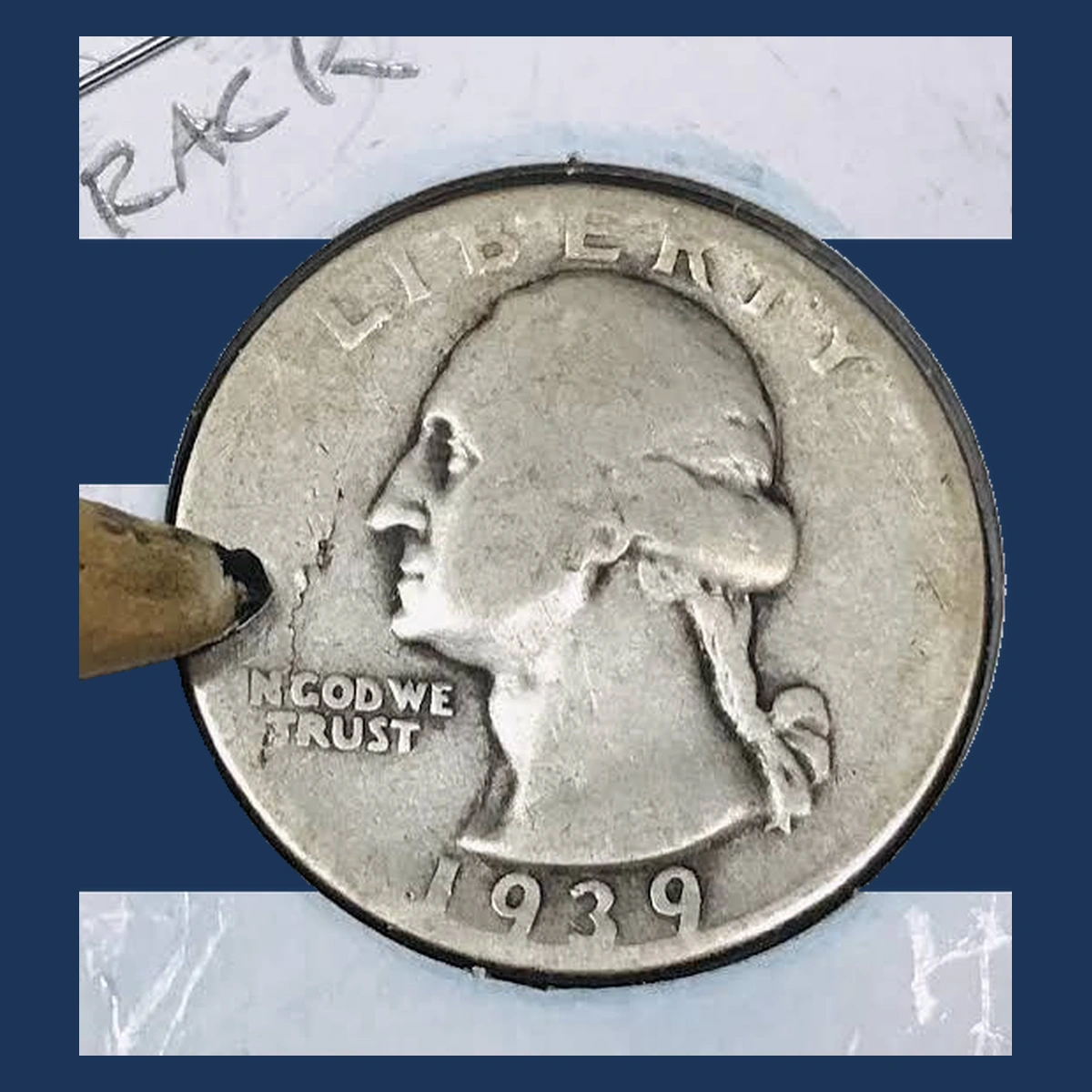
A fine ridge may cross a smooth area or connect letters on either face. It can form when the die, the steel stamping tool, cracks and silver flows into that opening.
The ridge is then part of the struck coin. A scratch usually cuts downward instead, although pushed-up edges beside a scratch can look raised.
The 1939 year list reports this type across Philadelphia, Denver, and San Francisco issues. It does not give one crack path shared by all three, so a line must be judged on its own shape and surrounding design.
Estimated Value
An estimated $10–$200 covers small genuine 1939 tool cracks through stronger, more visible raised lines. A clear line crossing recognizable design is generally easier to display than an almost invisible trace.
The amount of circulation wear and any cleaning affect the complete coin. An attractive silver quarter with a distinct ridge may draw more interest than a heavily scratched example.
This is an estimate for identified cracks, not a documented sale of one specific 1939 pattern.
How to Identify
Follow the line across the surface under a magnifier. Pay attention where it reaches a letter, portrait edge, or the rim.
A natural raised ridge can continue through those meeting points. A cut often leaves a recessed center with scraped metal along its sides.
Move the light rather than rubbing the coin. If the line is shallow, photographs from opposite directions can help show which part rises above the surrounding surface.
Check for a narrow opening in the actual coin metal too. That would need examination as a blank crack rather than a raised tool crack.
At each crossing, look for a continuous raised line incorporated into the original struck design.
3. 1939 Washington Quarter Defective Blank
A blank can contain a physical flaw before the press gives it a design. Such a problem may leave an irregular area that a grading service describes broadly as a defective planchet.
Planchet means the prepared metal blank. Heritage cataloged a 1939 quarter with this description and an NGC MS66 grade, indicating no circulation wear and relatively few marks.
The catalog does not name a specific split, peeled layer, or bubble. Those more detailed explanations require visible evidence, rather than treating the broad label as proof of one particular kind of blank flaw.
Estimated Value
The NGC MS66 defective-blank example brought $65 in July 2021. That result values the entire coin, including its condition, rather than an isolated error premium.
For comparable genuine 1939 blank flaws, estimate $25–$250. A clearly visible original defect can be more appealing than a vague rough patch.
The nature and extent of the flaw matter alongside grade. Later scratches, corrosion, or attempts to clean the area can reduce the value despite an unusual appearance.
How to Identify
Begin with full views of both faces and the side, not an isolated rough spot. For a coin in a grading holder, compare those views with its stated defective-blank description.
Examine the transition from the irregular area into intact design under magnification. Look for evidence that the press struck over or around the flaw.
A digital scale can compare a loose coin with the normal 6.25-gram silver-quarter standard. Low weight alone does not explain a defect, because wear and removed metal can reduce weight too.
Check the boundary for fresh scraping, pits, or other later damage. Identify what the surface actually shows before describing it as a split or peeling layer.
4. 1939 Washington Quarter Doubled Front Lettering
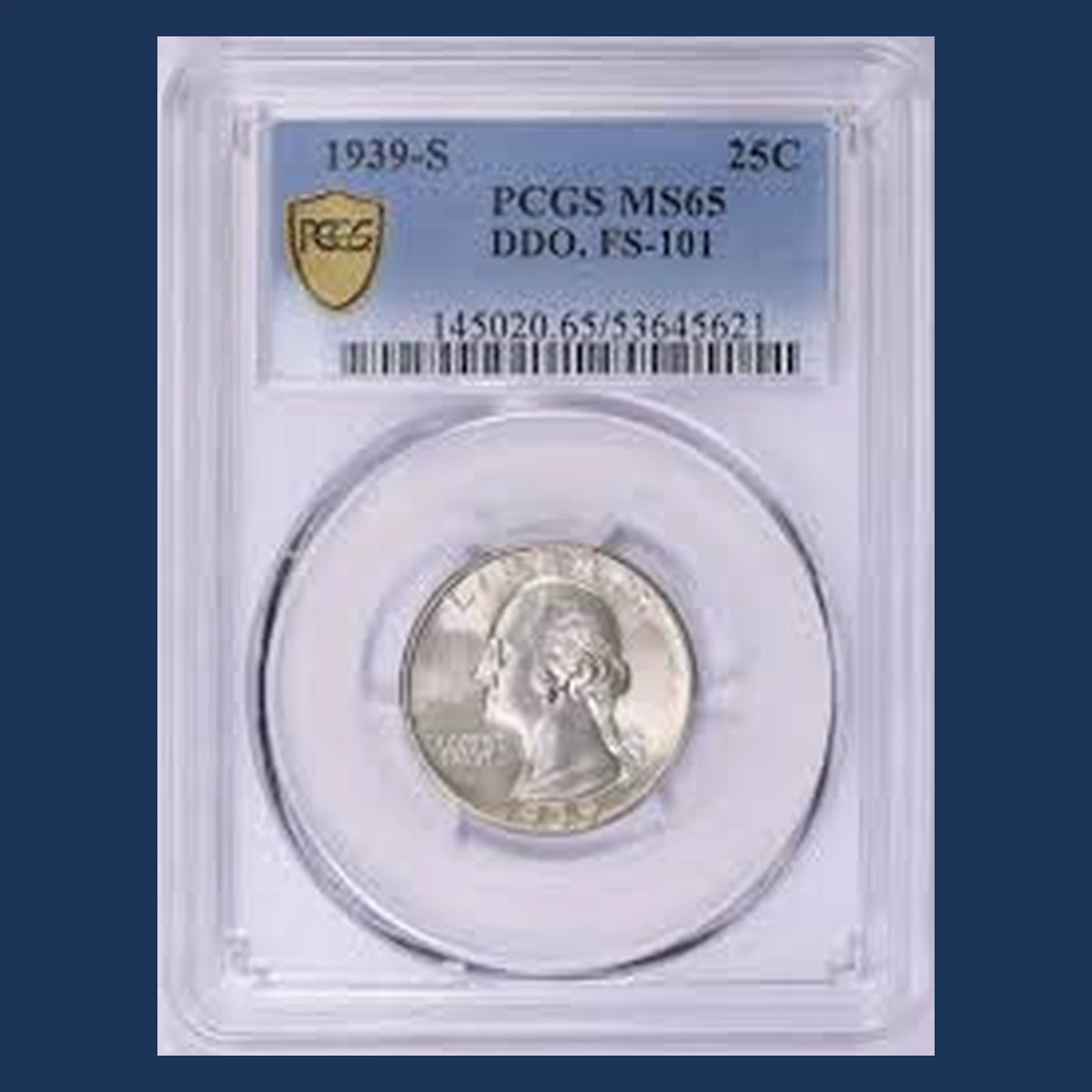
Small repeated edges can appear in IN GOD WE TRUST on a Philadelphia quarter. Heritage described that light motto doubling on an ANACS MS65 example.
A die carrying a doubled design can transfer those details in one strike. This differs from the flat shelves made when striking equipment moves against the coin.
A separate year report describes front doubling on 1939-S quarters, with LIBERTY and the date among the areas to compare. That San Francisco report does not identify the same tool or exact pattern as the Philadelphia auction example.
Estimated Value
The Philadelphia ANACS MS65 quarter sold for $45 in May 2000. The catalog noted golden toning and a contact mark on Washington’s cheek, so its condition was part of the sale.
Estimate $25–$350 for identified 1939 doubled fronts, depending on the pattern, visibility, and preservation. The historical result is a comparison rather than a current price guarantee.
The separately reported S pattern needs its own match; thick lettering alone does not qualify.
How to Identify
For a Philadelphia candidate, focus first on IN GOD WE TRUST with a 10× magnifier. Compare the same letters under matching light on a normal quarter.
Look at the height of each extra edge. A rounded raised outline differs from a low flat shelf that reduces the main letter’s shape.
Then check the reverse mintmark area. A coin with S belongs to the separate San Francisco comparison, where the front lettering and date need their own pattern match.
Take pictures showing several affected letters together rather than one enlarged corner. For the cataloged Philadelphia type, consistent small raised repeats in the motto provide the useful starting match.
5. 1939 Washington Quarter Repunched D or S Mintmark
Two partial D outlines or extra S curves can result from repeated mintmark punches into the stamping tool. The finished quarter then repeats the surviving parts of those earlier positions.
The 1939 year list reports same-letter repunching for Denver and San Francisco. These reports require comparison with the appropriate letter and year.
They are separate from the variety traditionally labeled D over S, which involves a different-letter interpretation. A thick D, a normal S punch shape, or a hit beside a mintmark does not by itself establish repunching.
Estimated Value
Use an estimated $25–$400 for a verified 1939 same-letter repunched mintmark. The clearer the additional letter strokes, the easier the feature is for another collector to recognize.
Well-preserved examples may attract stronger interest, but a high grade cannot replace a correct pattern match. Worn or damaged mintmarks can be difficult to judge.
This range applies to D-over-D or S-over-S candidates that are identified as such, not to the separately named D-over-S variety.
How to Identify
Locate the mintmark beneath the eagle’s wreath and decide whether the main letter is D or S. Keep the reverse upright while examining its curves.
A 10× magnifier should reveal an extra portion that fits another position of that same letter. On D, compare the straight stroke and curved side; on S, follow both curved ends.
Switch the lamp direction to check that the extra stroke is metal, rather than a shadow. Inspect nearby marks for evidence that an impact moved the original letter.
Choose a matching 1939 example before naming a direction or catalog number. The additional strokes should form a plausible second D or S around the main letter.
6. 1939 Washington Quarter D-over-S Mintmark Variety
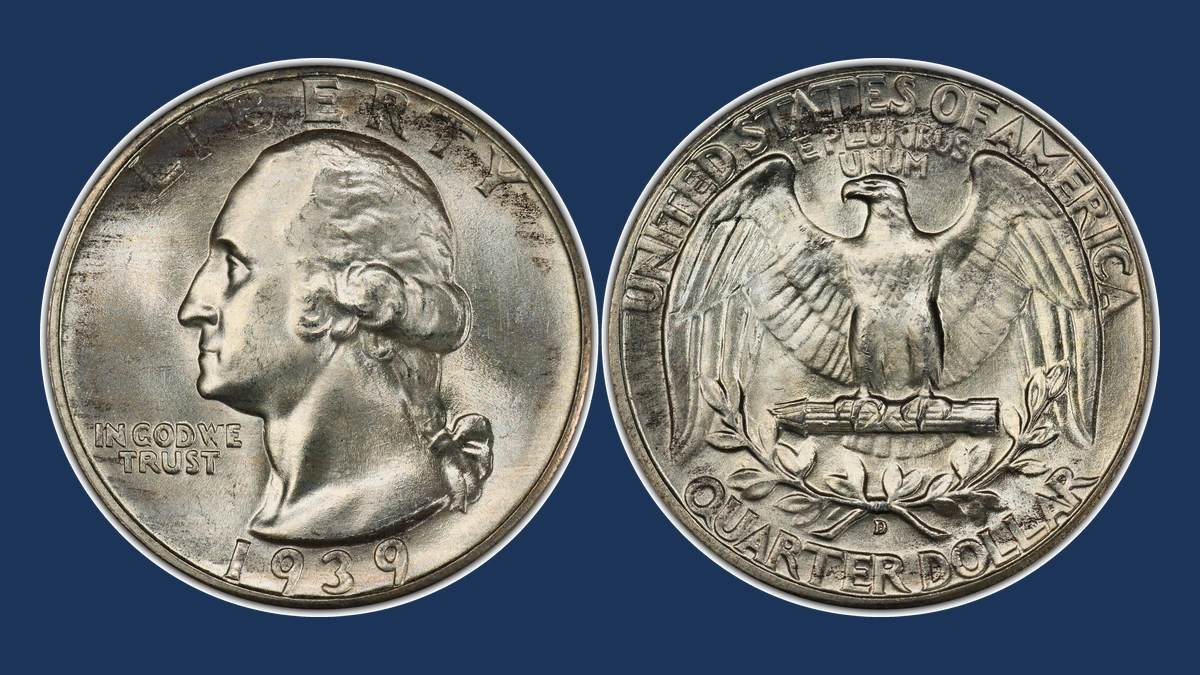
The variety traditionally labeled 1939-D/S has extra detail around the Denver D. The name describes a D-over-S interpretation, rather than another full mintmark printed beside the first.
PCGS lists this coin as FS-501. Collectors should match the actual recognized pattern instead of assigning the name to any rough or thick-looking D.
A same-letter repunching report belongs to a different comparison. The distinction matters because a trace that resembles another D is not automatically evidence of an underlying S, and an ordinary mark near the letter can be unrelated damage.
Estimated Value
PCGS lists an MS64 example at $870 on eBay in February 2015. MS64 means an unworn coin with visible marks, and the recorded price applies to the named variety.
Estimate $50–$1,000 for properly matched 1939-D/S FS-501 quarters across different conditions. Sharp mintmark detail and original surfaces help support the stronger values.
A candidate with only a vague extra lump should not receive that premium before its features match the recognized example.
How to Identify
Use a clear photograph of a PCGS-listed FS-501 and enlarge its D to the same size as your coin. Compare the precise positions of the additional traces.
Examine both the inside and outside of the main letter with a magnifier. A broad swollen area is less useful than several matching points around the D.
Change the lighting angle to rule out shadows, then check for a scratch or impact crossing the mark. Those can create misleading extra edges.
Keep the 1939 date and Denver letter visible in the full-coin views. Identify the recognized FS-501 shape by its matching details, rather than imagining an S from one isolated bump.
7. 1939 Washington Quarter Strike on a Five-Cent Blank
The right-side lettering stretches and runs out of room on this quarter. Its design was struck on a smaller five-cent blank rather than the normal silver quarter blank.
The PCGS MS67 example lay against the retaining ring near nine o’clock. That off-center placement within the available space helps explain the incomplete words along the opposite border.
A nickel blank contains copper and nickel, unlike the quarter’s ninety-percent-silver alloy. Both can look pale, so the different metal cannot be identified by color alone, and ordinary copper-nickel coin metal is not strongly attracted to a magnet.
Estimated Value
The PCGS MS67 nickel-blank quarter sold for $4,025 on January 7, 2012. Its high grade and clear wrong-blank shape contribute to that result.
Estimate $1,500–$6,000 for a comparable authenticated 1939 example. A readable year, attractive original metal, and recognizable quarter details make the error easier to appreciate.
The price belongs to the whole coin. A normal silver quarter cut down or plated to look unusual is a different object.
How to Identify
Compare the visible design with the known example: the left side sits near the rim while right-side words are stretched or incomplete. Use a magnifier to examine the small-blank edge.
For a loose candidate, a digital scale and calipers can test the starting-blank comparison. A nickel normally weighs 5 grams and measures about 21.21 millimeters; a silver quarter starts at 6.25 grams and 24.3 millimeters.
These are normal standards, not measured figures for the auctioned error. Striking can spread the smaller blank.
Look for filing or plating that could imitate reduced size or pale color. The original edge, missing outer lettering, and copper-nickel composition must fit together.
Conclusion
The estimated $10–$6,000 range for these 1939 quarters covers small mintmark flaws through a high-grade wrong-blank strike. Each group needs its own physical evidence.
Check a suspicious D for raised filling, weak detail, or an extra letter before choosing a name. For a small pale quarter, weight and edge shape matter more than color.
Keep the recorded auction examples separate from estimates for other coins with similar features.