1943 Quarter Error List with Pictures

The wartime date does not make a quarter steel. Yet a few 1943 quarters really were struck on steel penny blanks, while others show valuable doubled designs.
A Philadelphia doubled-front example brought $22,250 in March 2020. The 1943 quarter errors below span an estimated $10–$25,000, from small tool defects to major wrong-blank strikes.
Weight, raised outlines, and missing design answer different questions. Work through these groups to see which clues fit your coin.
1. 1943 Washington Quarter Misaligned Striking Tool
The picture can sit closer to one edge on the front while the eagle remains centered on the back. One die, the steel stamping tool, may have shifted sideways before striking.
This differs from moving the entire blank out of position. A true off-center blank affects the placement of both designs.
The 1943 year list includes misaligned-tool errors without a specific mint or measured example. A slightly uneven rim is only a starting clue, since ordinary centering differences and later edge damage can produce a similar first impression.
Estimated Value
Estimate $10–$150 for a genuine 1943 misaligned-tool strike, depending on the size of the shift and the coin’s condition. Very slight unevenness may add little collector interest.
The strongest candidates show a clear difference between the centering of the two faces while retaining original surfaces. Wear or a battered edge can hide that relationship.
This range is an estimate for the reported type. It is not a sale price for an individually identified 1943 example.
How to Identify
Hold the coin upright and compare the distance between the front lettering and rim on opposite sides. Turn it over without losing track of the same physical edges.
If the eagle side stays centered while the front is noticeably displaced, investigate a shifted front tool. If both designs miss the metal, examine it as an off-center strike instead.
Use a magnifier to check the narrow rim for filing or impact marks. Photograph both faces straight on, because tilted pictures can exaggerate an apparent shift.
A rim pushed inward by damage often has disturbed metal nearby. Compare the actual front and back design positions against the undamaged outer edge.
2. 1943 Washington Quarter Silver-Alloy Lamination
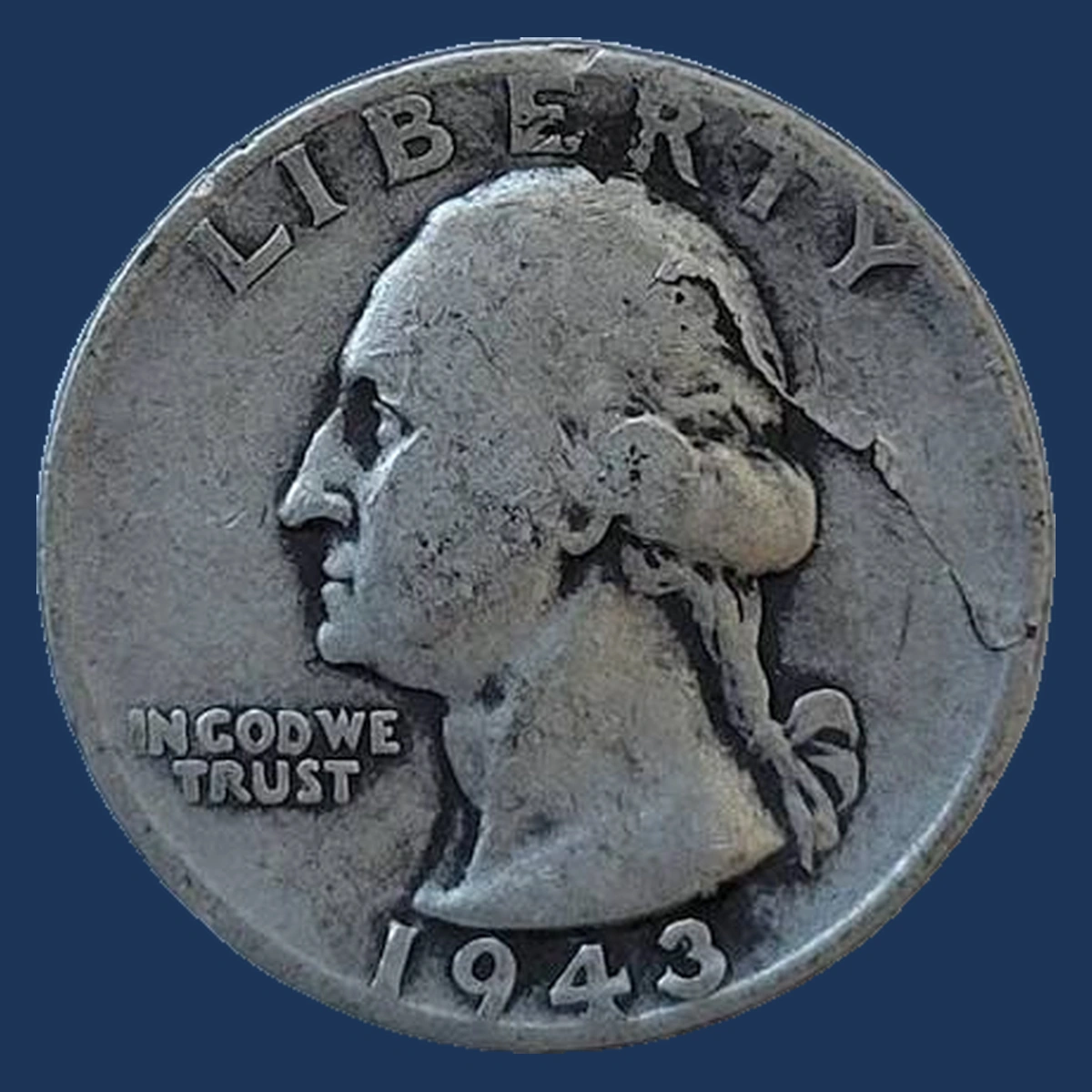
A thin silver flap may lift away from a quarter, leaving an uneven shallow patch. This lamination begins with a weak layer in the metal rather than a broken stamping tool.
Normal 1943 quarters contain ninety percent silver mixed with copper. They do not have the separate copper center and pale outer sheets of later clad quarters.
Laminations appear in the 1943 year list without an exact mint or fixed position. A dark patch alone does not establish the error; the surface needs to show actual peeling or separation within the alloy.
Estimated Value
For a genuine 1943 lamination, an estimated $20–$200 allows for small splits through more visible original flaps. The quality of the surrounding coin matters along with the size of the flaw.
A natural edge lifting beside clear design is easier to recognize than an uneven patch covered by cleaning scratches. An intact flap can also help show how the layer separated.
This is an estimated whole-coin range, rather than a fixed premium for every rough silver surface.
How to Identify
Leave any lifted metal attached. Pressing it down or bending it can destroy the most useful part of the flaw.
Use a magnifier and light from the side to examine the opening beneath the thin edge. Check whether the split continues into the surrounding metal.
For a missing flake, inspect the shallow exposed area and its irregular border. A cut or scrape may instead leave a directional groove with metal pushed along one side.
Compare the color with intact silver nearby, but do not rely on color alone. A coating, stain, or corroded surface needs its own explanation.
Follow the thin separating layer where it meets undamaged design.
3. 1943 Washington Quarter Crack Through the Blank
A narrow opening can run into the coin’s own metal. This is a cracked planchet, meaning the blank itself split rather than the stamping tool developing a crack.
Heritage cataloged a 1943 example graded PCGS VG8. That grade describes a heavily worn coin, so some design detail has already been lost to circulation.
The key distinction is an actual fissure in the silver. A raised line from a cracked die sits above the surface, while a cut made after minting may leave tool marks along an artificial opening.
Estimated Value
An estimated $30–$250 fits identifiable 1943 cracked blanks across worn and better-preserved examples. The known VG8 coin shows that a genuine blank defect can remain collectible despite considerable wear.
A visible natural fissure with an intact connection to the surrounding metal is useful. Damage from bending, sawing, or attempts to widen the opening reduces confidence and appeal.
This range values the whole coin. A larger opening alone does not guarantee a higher price.
How to Identify
Look at the coin edge first to see whether the line enters the metal or only crosses the surface. Keep the coin supported and do not flex it.
Then follow the opening onto each face under a magnifier. A true fissure has depth, unlike a raised ridge copied from a cracked stamping tool.
Note any sharp saw marks or fresh torn metal around a bend. Those can indicate damage after the coin left the Mint.
Wear on the VG8 example can soften details, so compare the opening with the remaining original surface rather than expecting sharp lettering. The visible split should continue into the blank, not stand above it as an added line.
4. 1943 Washington Quarter Curved Clip
A curved gap can form when the punch used to cut coin blanks overlaps an earlier hole in the metal strip. The incomplete disk then receives the quarter design.
The date’s error guides report curved clips. They do not establish a particular mint, missing percentage, or direction for an individual 1943 example.
The rim beside the opening may be weak because metal flowed differently during striking. That can help distinguish a clip from a curved bite cut out later, but the shape alone cannot establish when the metal disappeared.
Estimated Value
Allow an estimated $25–$300 for a verified 1943 curved clip. A small original gap may attract modest interest, while a larger obvious segment can make the error easier to display.
As a later comparison, a 1967 double-curved-clip quarter graded NGC MS66 sold for $144 in July 2021. That coin was clad and had two gaps.
The comparison does not assign its grade, number of clips, or price to an unspecified 1943 silver example.
How to Identify
Compare the coin with a normal round quarter before zooming in. Mark the two places where the curved gap meets the surviving edge.
With a 10× magnifier, inspect the nearby rim and any lettering approaching those endpoints. Look for naturally weakened detail instead of letters cleanly sliced after striking.
A digital scale can document the weight of a loose coin against the normal 6.25 grams. Cutting or filing also removes weight, so the number needs the edge examination.
Check the rim opposite the missing segment for weakness, which can accompany a genuine clip. Return to the gap and look for original struck metal flowing toward its edges rather than sharp cutting burrs.
5. 1943 Washington Quarter Broadstrike
An extra-wide outline around a complete design can result when the retaining ring fails to contain the metal. This ring, called the collar, normally controls the quarter’s width and helps form its reeded edge.
Without that restraint, the blank can spread outward during striking. The result is called a broadstrike.
The 1943 year list reports the type without a specific certified example. The entire intended design must remain on the coin; an image partly missing beyond the metal instead points toward an off-center strike or another error.
Estimated Value
For an authenticated 1943 broadstrike, estimate $50–$400. Clear outward spreading around a complete design is more useful than a small unexplained difference in diameter.
A readable date and undamaged expanded edge help the viewer understand the error. Coins flattened by tools can also grow wider, but that damage does not deserve the same premium.
The estimate includes the condition of the entire silver coin. It is not based on a recorded sale of a named 1943 specimen.
How to Identify
Put a normal quarter beside the candidate and compare their outlines. Use calipers on a loose example to check for width beyond the normal 24.3 millimeters.
Next, inspect the side and the outer design together. A broadstrike should combine expansion with a complete picture, rather than losing letters off the metal.
A 6.25-gram weight is the normal silver-quarter standard, so a digital scale can help check that a full blank remains. Keep encapsulated coins in their holders.
Use a magnifier to look for repeated hammer impacts, flattened details, or a crushed edge. Follow the full outer lettering within the expanded metal to separate genuine spreading from missing design.
6. 1943 Washington Quarter Raised Cracks and Tool Breaks
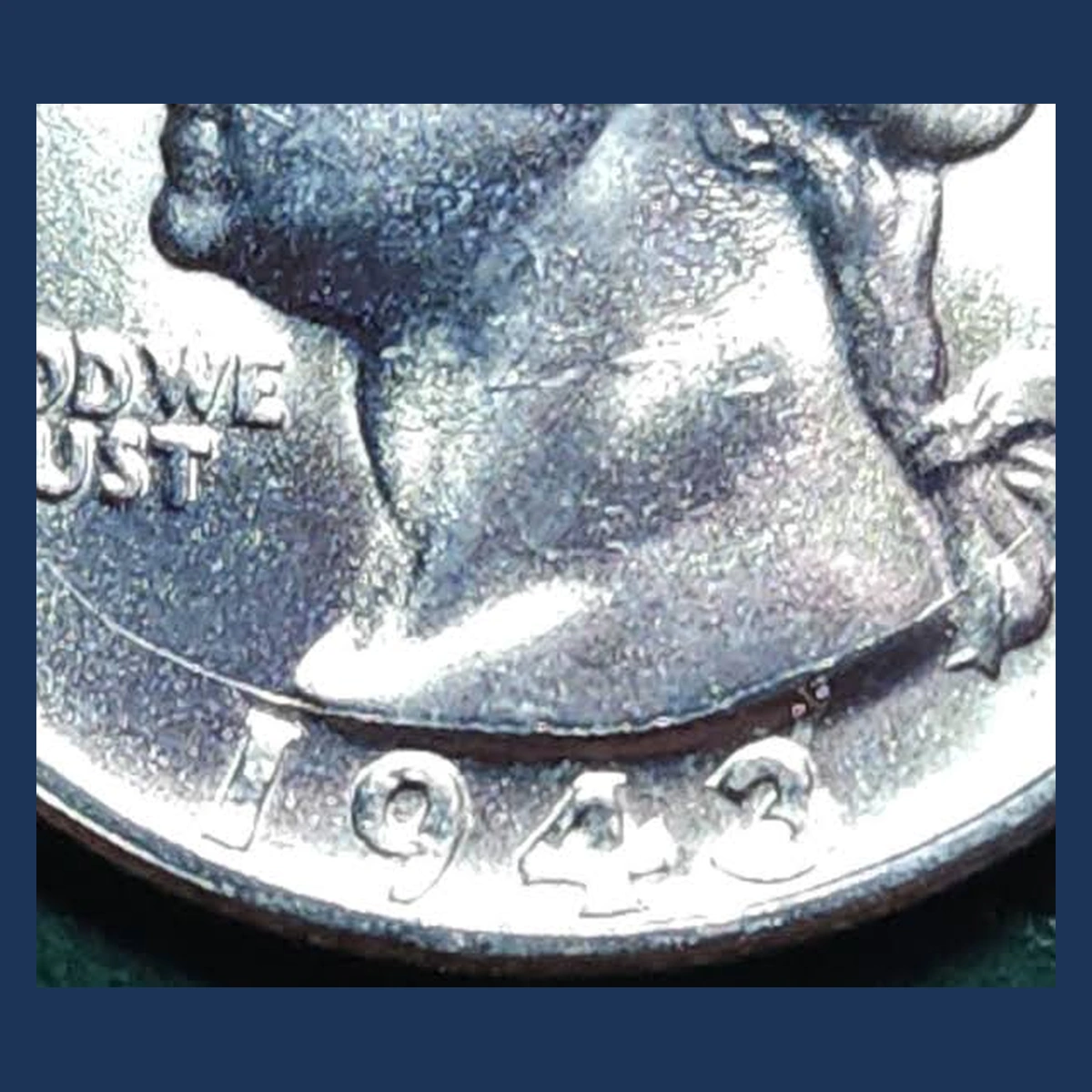
Thin raised lines can appear where silver flowed into a crack in the stamping tool. If a piece of that tool broke away, the coin may carry a larger raised lump.
The 1943 year list reports cracks and breaks without fixing a mint or exact position. Their appearance depends on where the tool was damaged and how far the damage developed.
These features add raised metal to the visible design. They are different from a cracked blank, which has an opening in its own metal, or a lamination that peels away.
Estimated Value
Estimate $10–$400 for genuine 1943 tool cracks and breaks. Small lines often add little, while clear raised areas that interrupt recognizable design can attract more interest.
A substantial break connected to the rim may be easier to display than a tiny isolated mark. The feature still needs original surfaces and a clear explanation.
Wear, cleaning, and nearby damage affect the complete coin’s price. A large bump added after minting is not valued as a Mint-made break.
How to Identify
Tilt the coin until the light shows whether the line is raised or sunken. Use a magnifier to inspect its center rather than judging only the shadow.
A tool crack normally leaves a raised ridge. A scratch often cuts a groove and can push small lips of metal up along its sides.
For a larger lump, check how it meets nearby letters and the rim. A rim-connected tool break should actually reach the outer border, not merely sit near it.
Added metal can hide underneath a dark surface, so inspect the boundary for a seam or different texture. Trace the raised feature through its meeting points with original design to see whether it formed in the strike.
7. 1943 Washington Quarter Repunched D and S Mintmarks
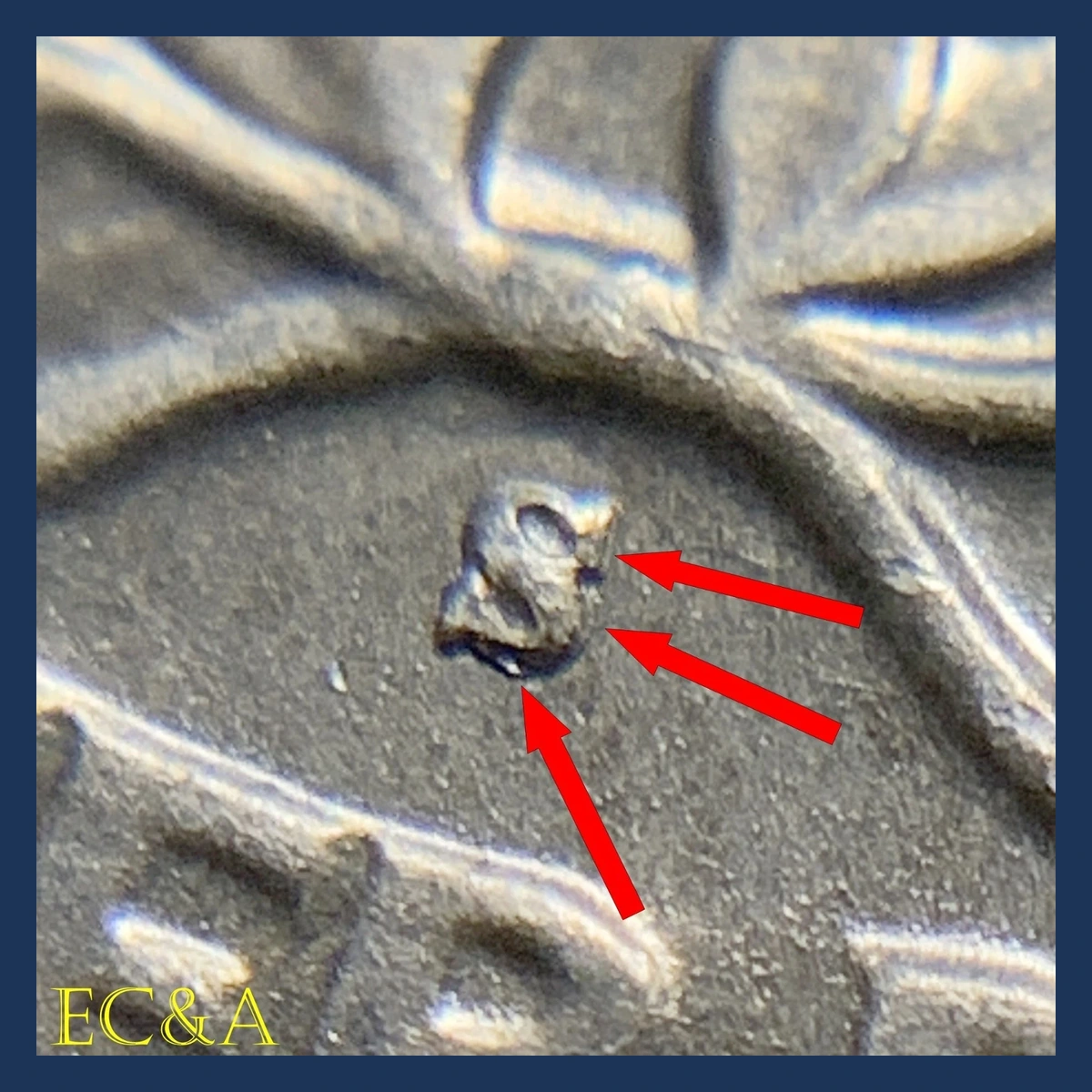
The D or S can contain extra letter strokes left by a mintmark punch entering the die more than once. Each later coin struck from that tool can repeat those outlines.
Denver and San Francisco listings include several different patterns. Some extra strokes sit below the main letter, while others lie to its side.
A large S or a differently shaped S is not enough. Ordinary punch styles, including the named Trumpet Tail and Medium S forms, must not be called repunched mintmarks unless another punched outline is actually present.
Estimated Value
An estimated $25–$500 covers many identified 1943-D and 1943-S repunched mintmarks. Clear secondary strokes and attractive original surfaces support the stronger prices.
For a specific comparison, PCGS records a 1943-S FS-504 graded MS66 at $312 in March 2018. That grade means no circulation wear and relatively few marks.
The sale belongs to that particular S pattern. It does not price every Denver or San Francisco mintmark that looks unusually thick or oddly shaped.
How to Identify
Find the mintmark below the reverse wreath and keep the eagle upright. Compare the letter with a normal example before deciding that its shape is doubled.
Use a 10× magnifier to trace the D’s straight stroke or the S’s curves. Look for extra portions that fit a second position of the same letter.
Choose a catalog photograph for the same mint and pattern. A southward trace should not be matched by rotating a photograph of an eastward example.
Check whether a hit has shoved part of the letter sideways or left a flat shelf. The evidence for repunching is a consistent additional letter shape, not simply a swollen or unusually styled mintmark.
8. 1943 Washington Quarter Obstructed Strike
A patch of the design may be missing because something came between the blank and a stamping tool. The obstruction can leave a depression or prevent nearby details from forming fully.
This is called a strike-through. CoinHub’s 1943 guide lists the mechanism without identifying the material or a particular authenticated specimen.
A weak patch does not reveal its cause by itself. Cloth, wire, and other objects can leave different textures, but the general report does not establish any of those specific objects on a 1943 quarter or identify the affected face.
Estimated Value
For a verified 1943 strike-through, use an estimated $20–$600. Clear original texture and a strong boundary beside normal detail can make an example more appealing than a shallow weak spot.
A different-year quarter struck through cloth, graded NGC MS66 and dated 1776–1976, sold for $881.25 in January 2017. Its recognizable fabric impression explains that comparison.
The higher result does not prove a cloth origin for any reported 1943 patch. Price the feature that the actual coin shows.
How to Identify
Examine the boundary of the weak or recessed patch before trying to name the object. Under angled light, compare the affected area with the normally raised design beside it.
A magnifier may reveal a texture pressed into the surface. Scrapes that remove a finished design often disturb metal in a different direction.
Look across the other face for evidence of a blow or squeeze after minting. One damaged side can leave related distortion elsewhere.
If material remains attached, leave it undisturbed and photograph the point where it meets the design. Look for an interruption made during striking, with original detail stopping or weakening along that boundary.
9. 1943 Washington Quarter Sixty-Five-Percent Off-Center Strike
Much of the quarter design misses the disk on the cataloged sixty-five-percent off-center example. The result leaves a large portion of original blank metal beside only part of the intended image.
Heritage listed this coin as PCGS MS63, an unworn grade with noticeable marks. The percentage describes the design’s displacement rather than an amount of silver removed.
Unlike a slightly misaligned tool, a blank sitting this far out of position affects both faces. The surviving portrait, reverse details, and date must be read together to understand what remains on the metal.
Estimated Value
Estimate $300–$1,500 for a clearly identified 1943 off-center quarter, allowing for the dramatic cataloged example and less pronounced shifts. A readable date and attractive original blank area make the coin easier to display.
The PCGS MS63 description establishes the known coin’s condition, but no individual realized price is quoted here. This is an estimated range.
An undated piece requires separate support for its year. A large blank crescent alone does not establish a 1943 identity.
How to Identify
Begin with the surviving date and the portion of Washington that remains. The sixty-five-percent figure does not tell you which direction the design moved.
Compare the reverse with the front so both struck areas fit the same disk. A magnifier can help separate genuine unfinished metal from a surface ground smooth afterward.
Check the junction where the struck design ends beside the blank area. Look for later cutting, fresh abrasion, or metal pushed up by an impact.
A loose silver example can be weighed against the normal 6.25 grams, although wear may reduce it slightly. The defining view is a displaced design ending beside original blank metal on both faces.
10. 1943 Washington Quarter Goiter Bulge at Washington’s Throat
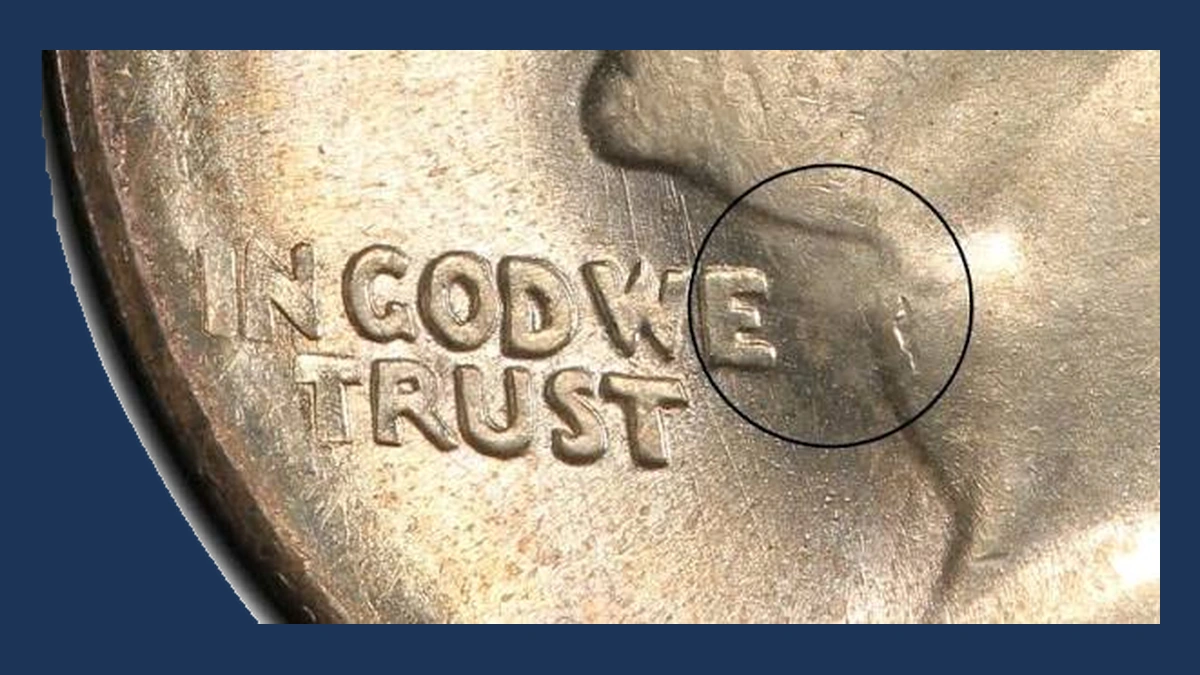
A swelling beneath Washington’s chin can make his throat look unusually full. Collectors call the 1943-S variety the Goiter, identified as FS-401.
PCGS explains the feature as a local sinking of the die surface. Metal filled that deeper area during striking, leaving a raised bulge on the coin.
The nearby WE and UST letters tend to lean left. That surrounding distortion helps distinguish the variety from an isolated dent or lump, and it is unrelated to a coin sticking to a tool and forming a cup-shaped die cap.
Estimated Value
PCGS records a high-grade Goiter example at $4,935 in September 2016. The MS67 grade reflects an unworn coin with very few marks, so condition contributes substantially to that result.
Estimate $50–$5,000 across recognizable 1943-S Goiter examples in different states of preservation. The bulge and nearby lettering should match the variety together.
A worn swelling without those matching features needs closer examination. It should not inherit the price of the recorded high-grade coin.
How to Identify
Look beneath Washington’s chin, then move directly to WE and UST. The bulge and the letters leaning left should be considered together.
Compare a straight-on photograph with an identified FS-401, keeping the portrait upright. Tilting a photograph can make normal lettering appear to lean.
A magnifier and low light can show the broad surface change around the throat. Check for a dent on the opposite face that might explain metal pushed outward after minting.
Confirm the S beneath the reverse wreath. A normal 1943 quarter is silver, so the swelling is not a wartime change to the coin’s standard composition.
The throat shape and neighboring tilted letters provide the useful paired check.
11. 1943 Washington Quarter Wrong Steel-Cent or Five-Cent Blank
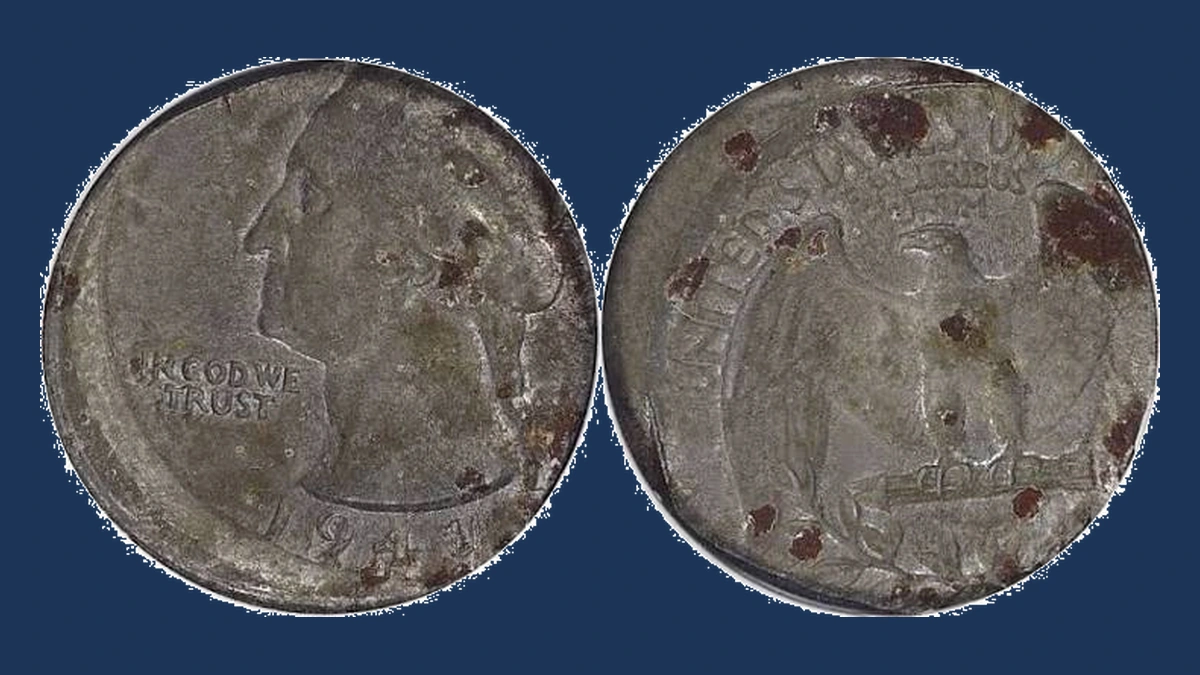
A smaller blank can truncate the quarter’s outer words and change its metal. GreatCollections announced an ANACS-authenticated 1943 quarter on a steel cent blank.
A separate 1943-S example on a five-cent blank weighs 4.9 grams and is graded NGC MS64. The auction description does not establish that blank’s alloy.
Another Denver steel piece is illustrated as (1943), but its NCS label gives no date and records 2.6 grams with corrosion. Steel alone cannot prove 1943, so this example remains an attributed-year comparison rather than a confirmed dated 1943 coin.
Estimated Value
The 1943-S five-cent-blank example sold for $3,818.75 in November 2013; estimate $1,500–$5,000 for comparable pieces. For authenticated dated steel-blank quarters, estimate $5,000–$20,000.
The corroded, undated Denver piece has a conditional whole-coin estimate of $2,000–$8,000, without pricing it as a proven 1943.
GreatCollections’ early $2,350 bid on its dated steel example was not a final sale. The group’s combined estimate spans $1,500–$20,000.
How to Identify
For the San Francisco five-cent blank, inspect the missing portions of LIBERTY and QUARTER DOLLAR. Its lower front and upper reverse are clearer because the disk lay against the retaining ring near seven o’clock.
Use a digital scale on a loose candidate: the cataloged S coin actually weighs 4.9 grams. Its year does not prove a wartime silver-nickel alloy; composition testing would settle that.
A steel-cent blank should respond to a magnet, unlike normal silver quarter metal. Keep the magnet from touching the surface and combine that result with professional examination.
Check the entire date before naming a steel example as 1943. The undated Denver coin’s 2.6-gram label and steel identity do not supply the missing digits.
12. 1943 Washington Quarter Doubled Front and Reverse Designs
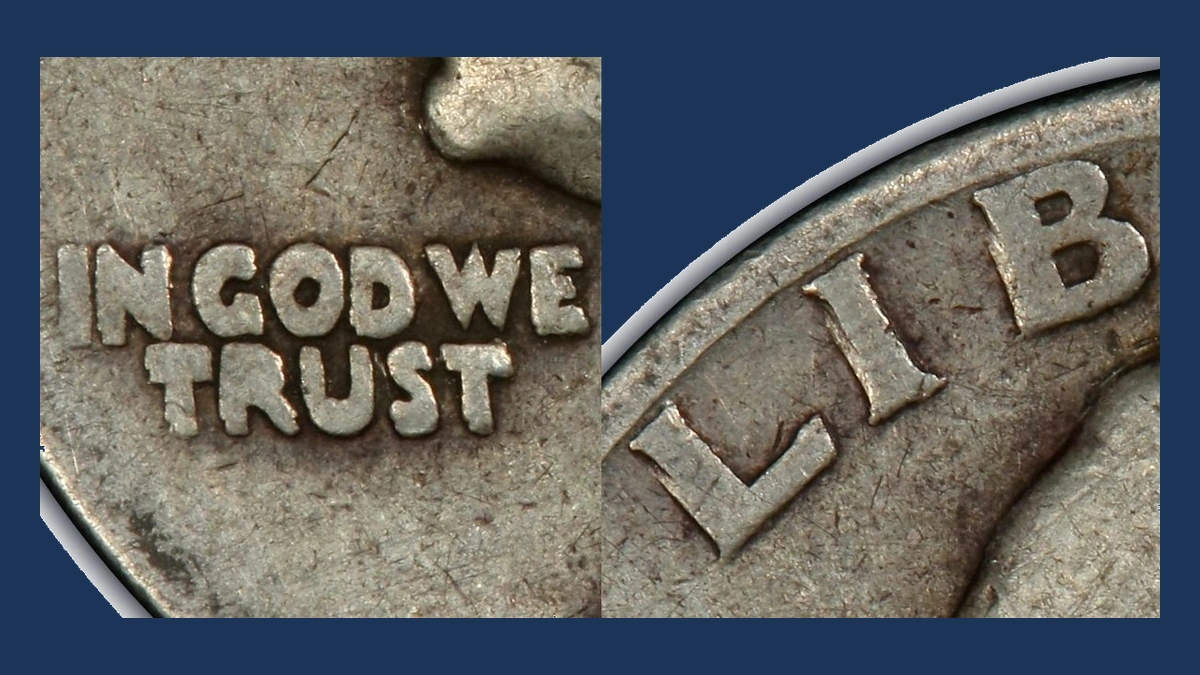
Repeated letter edges, facial outlines, or eagle-side details can come from a die carrying a doubled design. The quarter can receive these features in one normal strike.
Philadelphia and San Francisco major fronts show separated motto, date, and LIBERTY details. A Denver pattern instead emphasizes Washington’s ear and hair, while other examples show different front lettering.
Reverse varieties can affect words, feathers, or the wreath. Each mint and pattern needs its own comparison: strong Philadelphia doubling does not establish that a faint San Francisco letter or Denver portrait has the same identity.
Estimated Value
A Philadelphia doubled-front coin graded PCGS MS67 sold for $22,250 in March 2020. A San Francisco major front graded MS67 brought $18,800 in February 2021.
Estimate $25–$25,000 across this broad group, from subtle identified patterns to exceptional major varieties. The strongest prices reflect both the exact doubled design and remarkable preservation.
Many small doubled details belong near the lower end. They should not receive a major-variety price merely because they share the year.
How to Identify
Check the mintmark area first, then choose front or reverse photographs from that mint. No letter indicates Philadelphia; D and S identify Denver and San Francisco.
With a 10× magnifier, compare multiple affected details rather than one blurry edge. For the major Philadelphia and San Francisco fronts, work across the motto, date, and LIBERTY.
Denver portrait varieties require an ear-and-hair comparison, while reverse candidates need the matching words, feathers, or wreath details. Keep those different patterns separate.
Flat ledges from striking movement and worn, swollen letters can imitate doubling. Compare the height and spacing of the extra outlines at several matching points on an identified example, not just the apparent thickness of one letter.
Conclusion
Across these 1943 quarter errors, estimated whole-coin values run from $10–$25,000. Major doubled designs and unusual blanks occupy a different price level from small cracks or shallow surface flaws.
Identify the mint and inspect both faces before choosing a comparison. Use weight and metal tests for wrong blanks, and matched close-ups for tool varieties.
A steel blank alone cannot supply a missing date, and a swollen S is not automatically a repunched mintmark.