1864 Quarter Error List with Pictures

The first two digits deserve a closer look on an 1864-S quarter. Extra traces around 18 can remain from a date punched twice into the stamping tool.
A superb 1864-S sold for $112,700 in August 2006, a whole-coin result driven by rarity and condition. It does not measure the extra value of the repeated date.
This guide to 1864 quarter errors covers that date feature, with estimated whole-coin values of $750 to $25,000 for worn through lower-grade unworn examples. Read on to separate genuine extra strokes from a battered numeral.
1864 Liberty Seated Quarter Repunched 18 in the Date
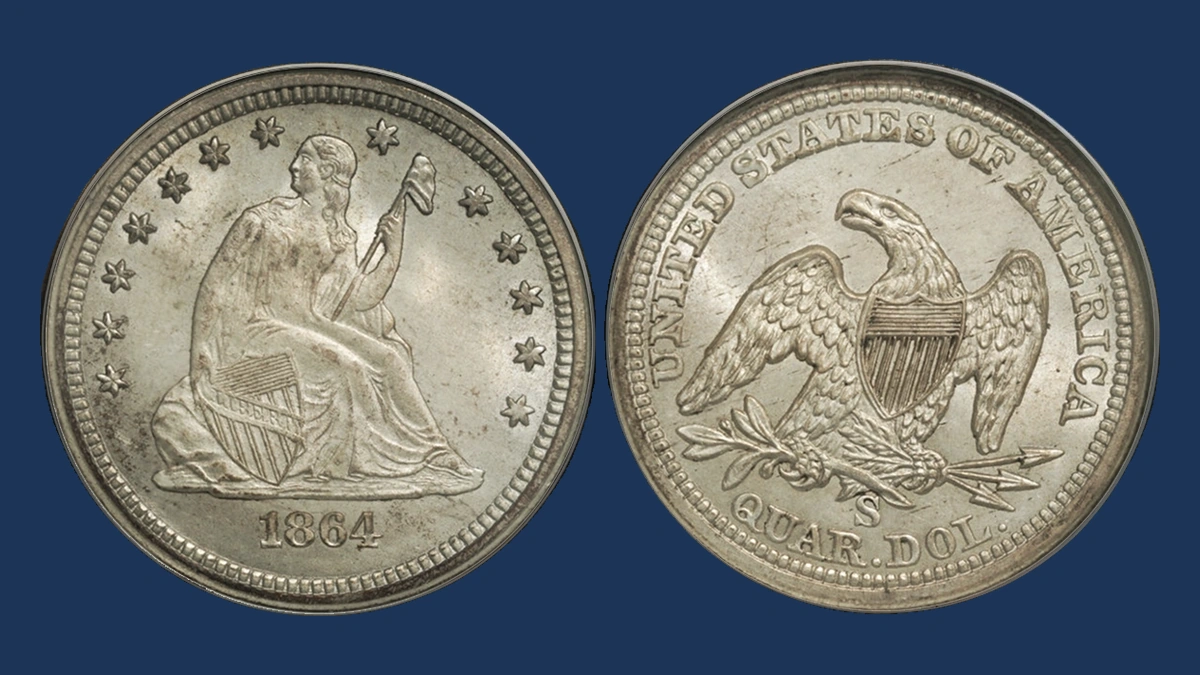
On well-preserved 1864-S quarters, the 1 and 8 can show traces of an earlier date impression. This is called a repunched date.
The date was applied by hand to a die, the steel tool that stamped the coins. A second application left overlapping shapes in that tool.
Those shapes then appeared on the coins it made. They are not evidence that each coin was struck twice.
Wear can merge the extra detail into a thick, lumpy 1. The 1864-S date description specifically notes this change as the surface wears down.
Estimated Value
Allow an estimated $750 to $25,000 for circulated through lower-grade unworn examples. These are whole-coin prices, since the scarce 1864-S date accounts for much of the value.
Reported sales include a cleaned coin at $750 in May 2020 and an MS64 at $21,737.50 in July 2020. MS64 means unworn, with some visible marks.
Clear date detail is desirable, but the repunching does not explain the entire price. Exceptional top-grade coins can exceed this working range.
How to Identify
Begin with the back: the S should appear beneath the eagle and above the denomination. This date feature belongs to the San Francisco issue, so do not transfer it to a Philadelphia coin.
Photograph the complete date before enlarging 1 and 8. Use a 10× magnifier and light from the side to separate raised extra strokes from cuts into the surface.
Compare both numerals with a sharper example of the same date feature, keeping the photographs upright. Follow the outline of each numeral instead of judging only whether the 1 looks unusually fat.
A worn, lumpy 1 is a reason to inspect more closely, not enough to identify the variety alone. Matching extra detail at 8 makes that judgment much stronger.
Conclusion
The repeated 18 gives an 1864-S quarter a small feature worth learning. Start with the S on the back, then compare both front numerals with a clear example.
Estimated whole-coin values run from $750 to $25,000 across worn and lower-grade unworn pieces. The finest coins sell beyond that range.
A visible extra stroke helps identify the tool used, while preservation and the rare date still drive much of the price.