2004 Dime Error List with Pictures

Roosevelt’s ear is a useful starting point on a 2004-D dime. An extra outline identifies the Doubled Ear variety, and PCGS records a $275 eBay result in June 2022 for an unworn example.
This 2004 dime error list covers estimated values from $2–$5,000. The larger mistakes include missing metal, repeated strikes, and a collector Proof with a broad depression.
Look beyond color or a nickname and follow the specific feature that makes each coin different.
1. 2004 Roosevelt Dime Raised Die Cracks
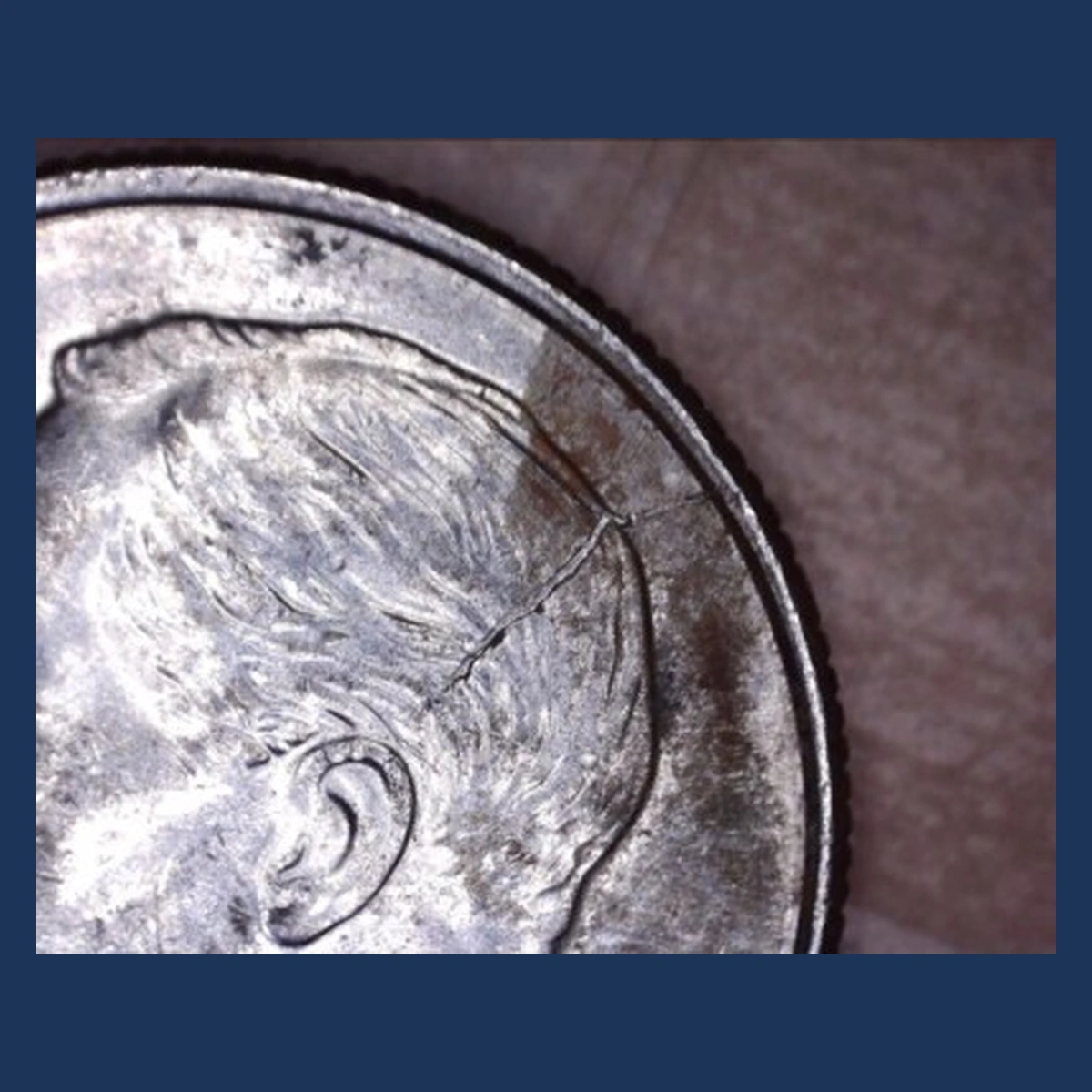
A crack in the steel stamping tool can leave a thin raised line on a coin. Metal enters the opening during the strike and records its path.
Collectors call the tool a die, so this feature is known as a die crack. Reports include both Philadelphia and Denver dimes for 2004.
The name describes the cause, not one fixed route across Roosevelt or the torch. Each example needs its own line traced against the nearby design, since a scratch added later can appear equally bright in a photograph.
Estimated Value
Modest original cracks fit an estimated $2–$100 range. A faint line on a worn coin generally adds little.
A clear raised path across an attractive surface can draw more interest. Its length and visibility help explain the difference within this range.
Several short lines still belong to one coin, so their values are not added separately. Deep scratches can reduce its appeal even if a genuine raised crack is also present.
How to Identify
Move a small light from one side of the line to the other. Watch whether the feature rises above the surface or cuts down into it.
A magnifier can show a scratch’s groove and the narrow lips of displaced metal beside it. Those lips can make later damage look raised at first.
Follow the line through nearby letters or design details. Photograph its entire path rather than a single bright segment.
Compare the actual shape with a documented same-year example if one is available. The general 2004 reports do not establish a route to expect on every P or D dime, so avoid borrowing a torch or portrait location from another coin.
2. 2004 Roosevelt Dime Striped or Wood-Grain Surface
Alternating light and dark bands can make metal look like wood grain. Collectors sometimes nickname this appearance a woodie.
A striped Denver dime is reported for 2004, with uneven alloy mixing offered as an explanation. The bands may follow the direction in which the metal strip was rolled.
The appearance alone does not establish that cause. Striped toning, brushing, or another surface treatment can also create lines after minting.
Examine the original finish and the condition of the metal along with the color pattern.
Estimated Value
For an identified manufacturing-related striped-metal feature, estimate $10–$100. A clear pattern across original surfaces is more useful to a collector than faint streaks hidden by wear.
This is an estimate for the reported type after its origin is examined, not a recorded sale for a specific 2004-D coin. Brush marks or ordinary toning may add no error premium, even when a seller uses the same wood-grain nickname in a listing.
How to Identify
Photograph the bands under neutral white light, keeping the whole face visible. This shows whether they run consistently across both the design and the open background.
Enlarge the surface to look for parallel grooves. Brushing can cut or drag metal across finished details rather than merely changing their color.
Compare protected areas beside letters with the exposed surface. Residue or uneven wear may explain why some strips look darker.
Do not rub the coin with a fingernail to test for ridges.
If the original surface seems intact, have the metal and finish examined before assigning an alloy-mixing cause. The pattern deserves a physical explanation, not just a resemblance to wood.
3. 2004 Roosevelt Dime Color Changed during Heat Treatment
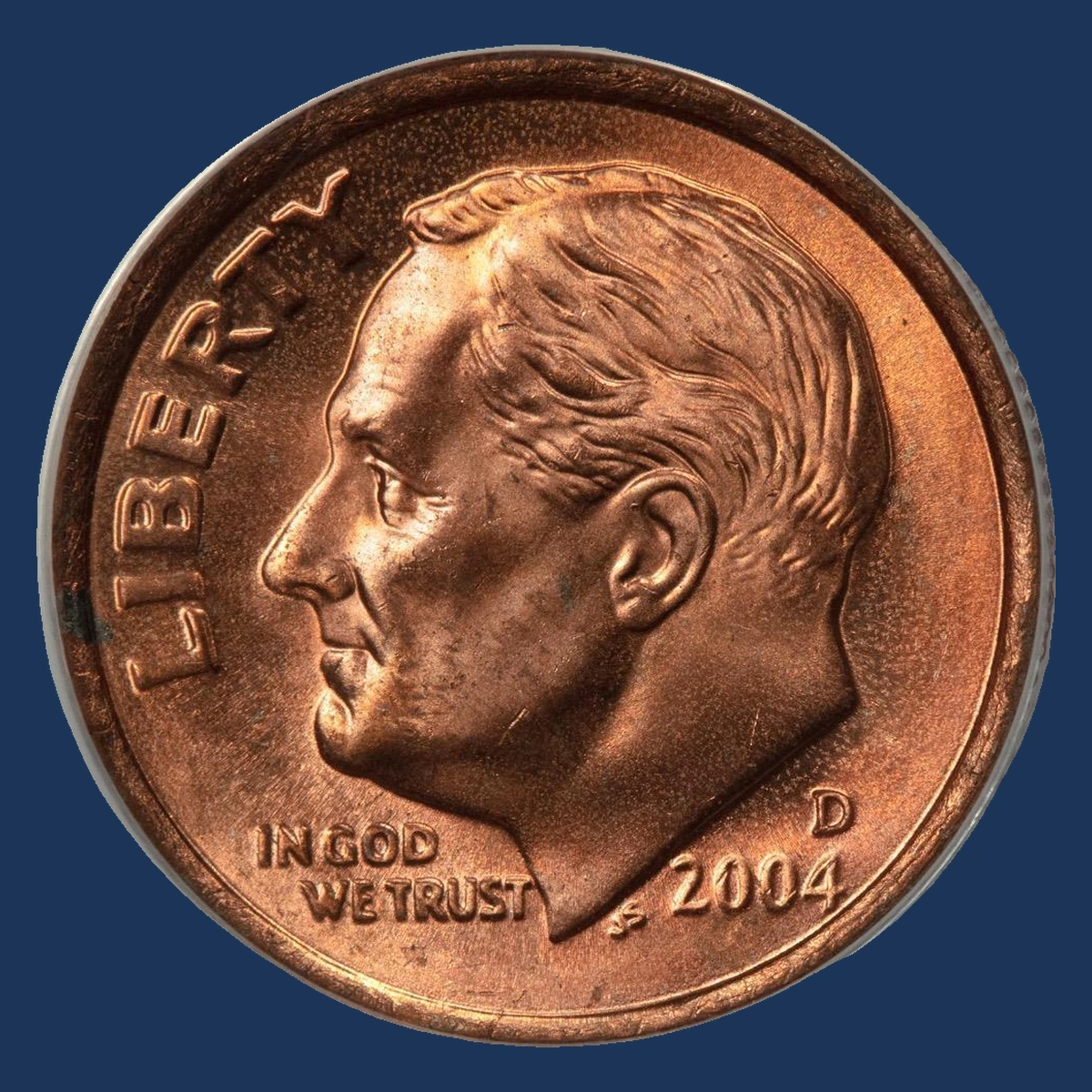
Heating prepares metal blanks for striking by making them easier to shape. An abnormal result from that stage can leave unusual color on the finished coin.
The process is called annealing. Heritage cataloged a 2004-D dime with an improperly annealed blank and an NGC MS65 grade, meaning an unworn coin with relatively few marks.
This concerns the metal’s treatment before striking. Burning a finished dime or leaving it in a corrosive environment can also change its color, but neither process creates the same kind of production error.
Estimated Value
The NGC MS65 Denver example sold for $38 in November 2015. Comparable identified 2004 annealing errors fit an estimated $20–$150 range, depending on color, original finish, and overall condition.
An even unusual surface can display well, but dark color alone does not justify a premium. The documented modest result is a useful reminder to compare the actual treatment error and preservation rather than assuming any coppery or blackened dime must be extremely valuable.
How to Identify
Compare the affected surfaces with a normal clad dime under the same light. Record whether the unusual color covers both faces or only selected areas.
Look into protected recesses with a magnifier and examine the surviving original shine. Deposits, pitting, or scratches may point to environmental damage or later treatment.
The layered edge should be assessed separately from the surface color. Exposed copper caused by a missing outer sheet is a different possibility.
Weight near the normal 2.268 grams only indicates that much of the metal remains. It cannot prove when the color formed, so preserve the surface for an expert comparison with an identified annealing error.
4. 2004 Roosevelt Dime Traces of the Opposite Design
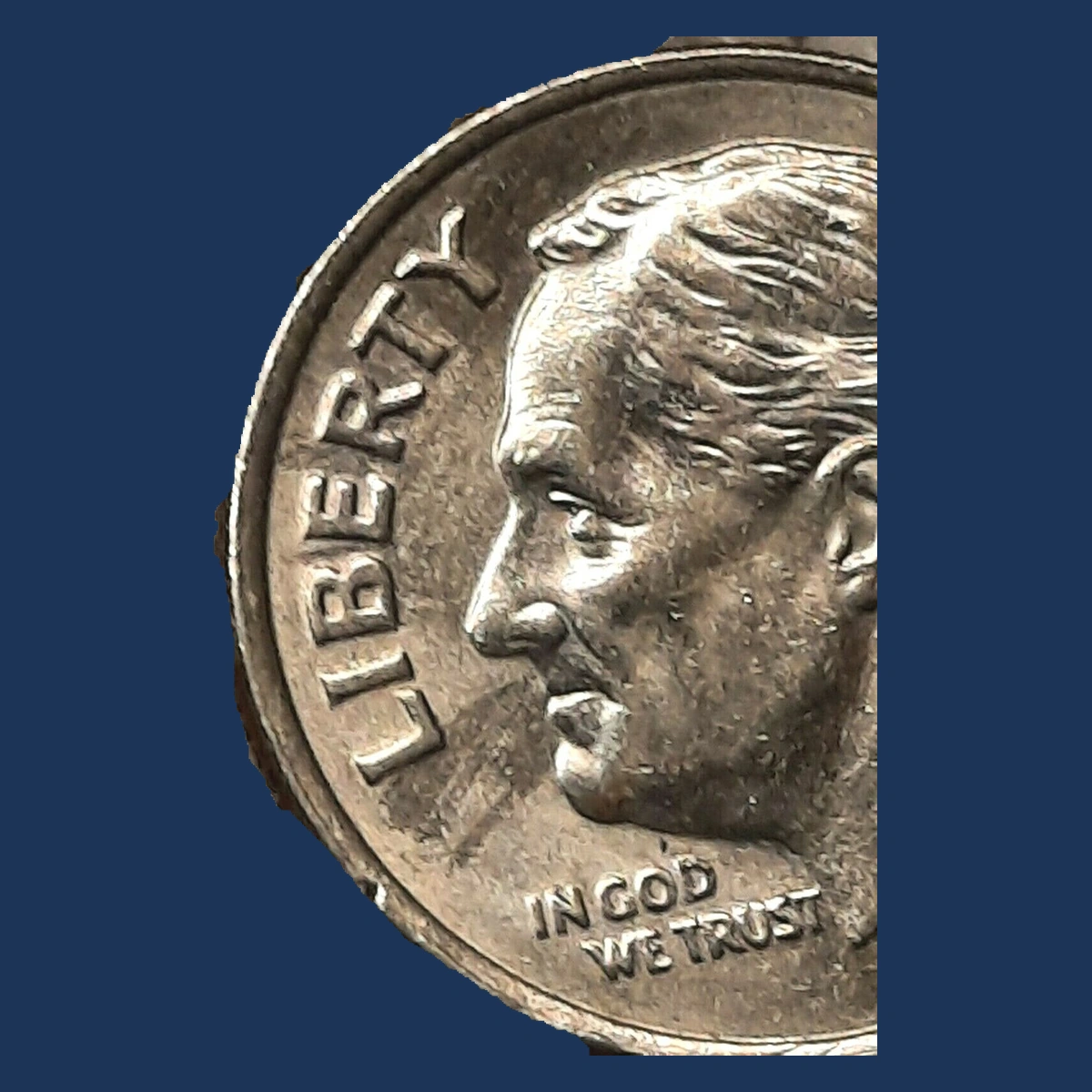
The torch belongs on the back and Roosevelt belongs on the front. A faint trace from the opposite design can appear when the stamping tools meet without a blank between them.
That contact marks their surfaces. Later strikes may transfer those marks along with the intended design, producing what collectors call a die clash.
A Philadelphia example with marks on both faces is reported for 2004. The exact outlines need to be matched on the actual coin; a random line behind the portrait does not establish a particular transferred torch image.
Estimated Value
Clearly recognizable clash marks fit an estimated $10–$150 range on ordinary 2004 dimes. A faint line may add little.
Connected shapes that explain the opposite design are easier to display. Good remaining detail helps a buyer understand the transferred image.
Marks on both faces are valued together on the complete coin. Scratches can lower its appeal, even when the genuine clash remains visible beneath them or elsewhere on the same surface.
How to Identify
Trace the extra shape on a full photograph of one face. Use enough surrounding design to show exactly where the mark lies.
Find a possible matching shape on the opposite face, keeping both photographs at the same size. Compare several connected curves and angles rather than one suggestive line.
Do not turn the images freely until unrelated marks happen to fit. The proposed transfer must agree with the normal position of the two stamping tools.
Once the shape fits, examine the surface under side lighting. Fresh cuts can cross finished details without following the opposite design.
If only one short line matches, seek a clearer comparison before naming the transferred feature.
5. 2004 Roosevelt Dime Clipped Blank
A missing section can start when the cutting machine makes an incomplete blank. The dime’s design is then struck around the gap rather than cut away from a finished coin.
A Philadelphia clip is reported for 2004. The available description does not establish whether its boundary is curved or straight, or whether more than one section is missing.
Those details should be recorded from the actual piece. Both the edge through the gap and the nearby lettering can help show whether the missing metal preceded the original strike.
Estimated Value
A genuine 2004 clipped dime has an estimated value of $20–$300. Small losses usually fall nearer the lower end.
A conspicuous gap with a readable year and attractive remaining design can bring more interest. The shape and clarity of the original boundary also matter.
Heavy damage can reduce the value despite a large missing section. This range concerns blanks that were incomplete before striking; a later cut does not earn the same premium.
How to Identify
Inspect the opening through the coin’s thickness, not just from above. The exposed boundary should agree with a gap present before the design was stamped.
At each end, use a magnifier to look for softened lettering or changes in how the rim formed. Sharp saw marks or a cut through finished detail suggest later alteration.
Check the opposite rim for possible weakness, while remembering that not every genuine clip shows it clearly.
A loose clad dime normally starts near 2.268 grams. Weigh the actual candidate and compare the missing shape with the loss, without assigning a particular clip size or direction from another coin’s photograph.
6. 2004 Roosevelt Dime Doubled Ear and Other Doubled-Design Reports
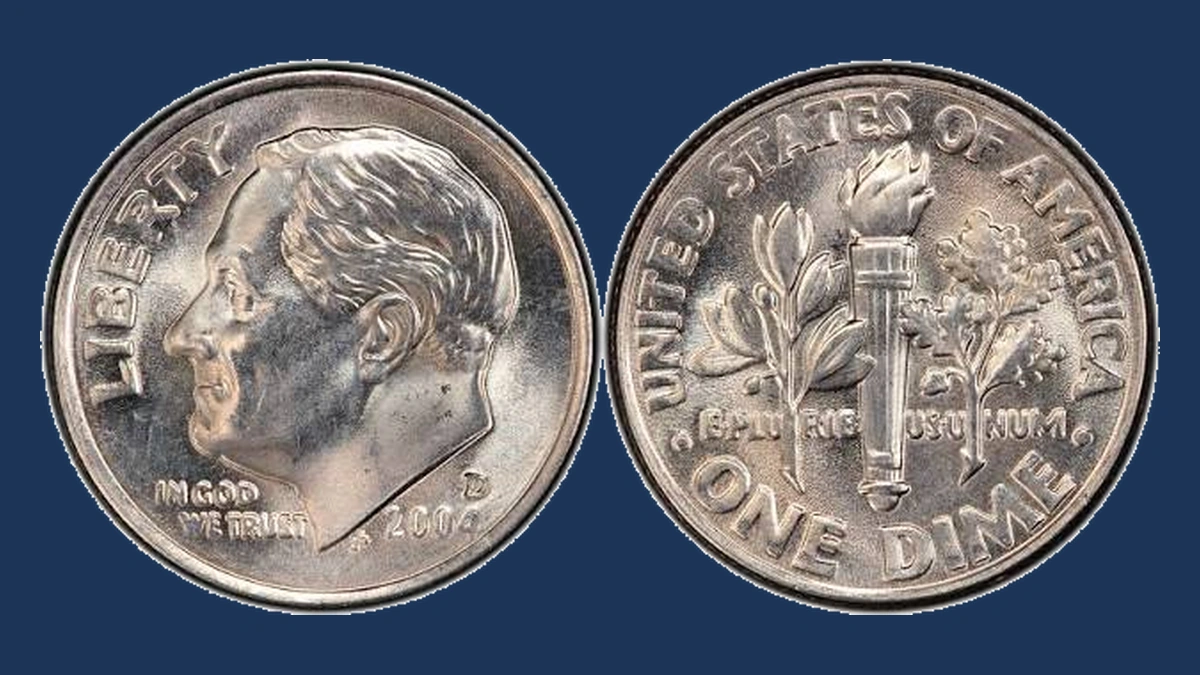
An extra outline near the top of Roosevelt’s ear identifies the recognized 2004-D Doubled Ear variety. PCGS lists it as FS-101 on ordinary Denver dimes.
The repeated detail was part of the stamping tool’s design. It does not mean the whole coin received another blow after moving.
A separate year report describes Denver back doubling around the torch and lettering. That claim needs its own matching pattern; finding the Doubled Ear does not prove that the same dime also carries a doubled back design.
Estimated Value
An estimated $25–$400 range covers identifiable Doubled Ear examples across collectible conditions. PCGS records a $275 eBay result in June 2022 for an MS65 coin, an unworn grade.
For the separately reported back pattern, use a conditional $10–$150 estimate after genuine doubled-tool detail is established. Clear separation supports stronger interest, while wear or flat strike-movement shelves can make the comparison much less convincing.
How to Identify
Enlarge Roosevelt’s ear and compare its upper outline with a normal Denver dime. Look for the repeated shape in a recognized FS-101 photograph rather than a generally thick ear.
Turn the light to confirm that the extra outline stays raised and fixed. A reflection or a flat shelf can give a different appearance.
If checking the separate back report, inspect the torch, UNITED STATES OF AMERICA, and ONE DIME independently.
Full Bands or Full Torch labels describe the sharpness of normal torch detail. They do not add another error to the coin.
Keep the ear and back comparisons separate unless the actual dime demonstrates both patterns. Neither a grade nor an extra band designation proves the other face is doubled.
7. 2004 Roosevelt Dime Broadstrike with an Expanded Border
A wide border can surround an otherwise complete dime design when the collar fails to contain the blank. The collar is the ring that normally controls the edge as the metal spreads.
Broadstrikes are reported for both Philadelphia and Denver in 2004. Their outlines may be uneven rather than perfectly round.
The key is a complete main design within naturally expanded metal. A smooth edge alone is insufficient, because wear, grinding, or hammering can remove grooves without creating an original broadstrike or explaining how the border formed.
Estimated Value
Estimate $40–$500 for genuine 2004 broadstruck dimes with a readable date and mint. Strong expansion and clean original surfaces can support the higher end.
Slight unevenness may attract much less interest than an obvious wide border. The whole design should fit within the expanded metal.
Wear or later marks can reduce the price. A smooth edge by itself does not justify a broadstrike premium, since ordinary wear can remove the grooves too.
How to Identify
Calipers can compare a loose candidate with the normal 17.91-millimeter diameter. Measure in more than one direction if the outline is uneven.
Then trace the outside lettering on both faces. The main design should remain on the metal despite the wider or uneven border.
At the widest part, look at the edge for a shape consistent with metal escaping the retaining ring. Follow that area into the nearby lettering.
Hammering after minting can also spread a dime, but it usually crushes the finished design. Look closely at Roosevelt and the torch for flattening, impact marks, or scraping.
Photograph the complete outline so the width and surviving design can be judged together.
8. 2004 Roosevelt Dime Off-Center Strike
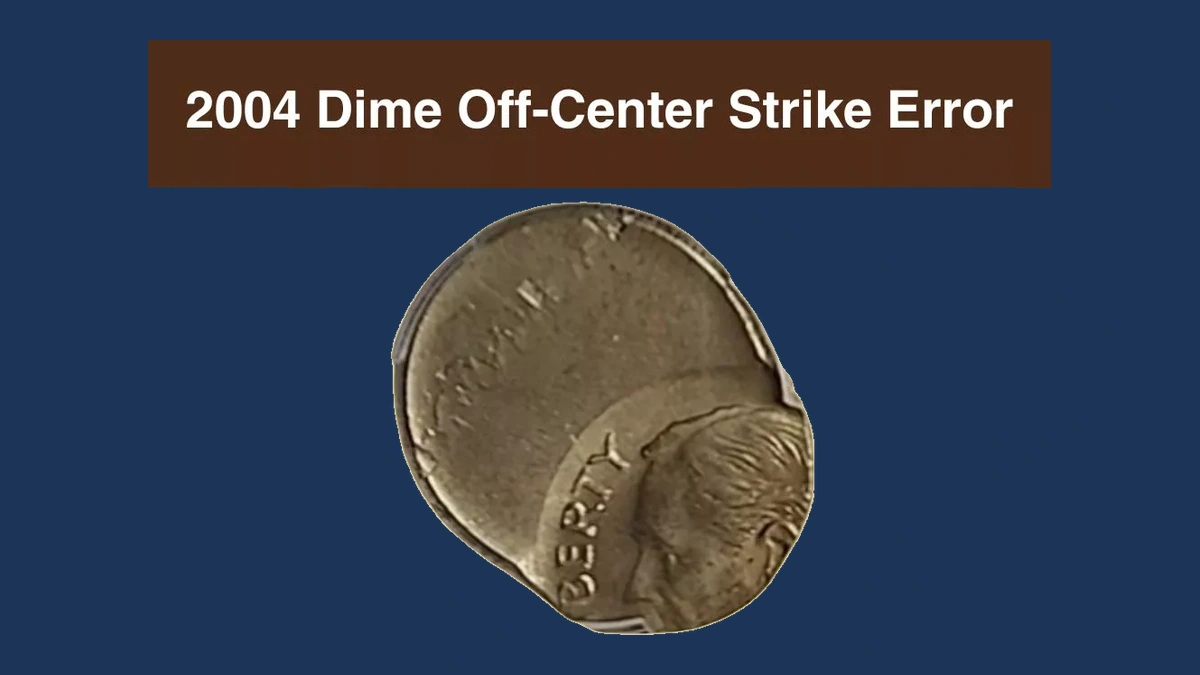
The dime’s design can run beyond its metal when a blank enters the press off center. An empty crescent remains on the opposite side of the struck area.
Philadelphia and Denver examples are reported for 2004. One Philadelphia account describes a forty-five-percent shift, but its direction needs to be established from the specimen.
That amount should not be assigned to every coin. A small displacement and a large one can have very different outlines, and an uneven rim on just one face may instead reflect a shifted stamping tool.
Estimated Value
Estimated values of $50–$750 cover genuine dated off-center 2004 dimes. Both the amount of displacement and the coin’s condition affect the comparison.
A strong shift with a readable date often makes a better display. Heavy scratches or an unclear year can reduce that appeal.
A smaller clean example may be easier to collect than a badly damaged large shift. The reported Philadelphia forty-five-percent figure describes one example, not a price category for every coin.
How to Identify
Place the whole outline in view and identify the boundary between struck design and unused metal. The blank area should sit opposite intended details that missed the edge.
Compare the back with the front to see whether both designs fit the same misplaced blank. One centered face calls for a different explanation.
Look closely at the unstruck crescent for grinding or hammer marks. Removing a finished design later can create an artificial blank-looking patch.
Keep the surviving date and mint letter in the photographs. If either falls beyond the struck area, do not reconstruct it from another coin or treat the reported forty-five-percent shift as proof of identity.
9. 2004 Roosevelt Dime Missing One or Both Outer Layers
A normal clad dime contains a copper center between pale outer layers. Losing an outer sheet exposes copper-colored metal where the design can still be visible.
A Denver missing-layer example is reported for 2004, and another year account describes loss on both faces. Those reports do not establish one fixed weight or affected area for every piece.
One copper-colored side and two copper-colored sides therefore need their own measurements and edge comparisons. Added plating or staining changes appearance without necessarily removing metal, while chemical treatment can remove metal after the strike.
Estimated Value
Estimate $50–$800 for authenticated partial or whole-layer losses of the reported kinds. A clearly explained two-face loss can draw interest, but its original construction must be established rather than inferred from color.
A different-denomination comparison is the 1986-P quarter missing its front layer that sold for $62 in September 2024. That modest result shows why exposed copper alone cannot set a high price; the dime’s own loss, design, and preservation still matter.
How to Identify
Count the affected faces before weighing the coin. A full loss on one side and partial losses on both sides do not have to leave equal amounts of metal.
Use the normal clad weight of about 2.268 grams as a starting comparison, not a rule that every missing-layer example must reach one particular lower weight.
Examine the edge and exposed design under a magnifier. Original struck detail should agree with the layer boundary, rather than showing grinding or chemical pits.
A normal 2004-S silver Proof has no copper center and weighs about 2.50 grams. Identify that collector issue separately so its plain silver-colored edge is not mistaken for a layer-loss error.
10. 2004 Roosevelt Dime Repeated Strikes
A coin can remain in the press and receive another blow after moving. Parts of its earlier design may survive beside or beneath the new impression.
A Philadelphia double strike is reported for 2004. Its exact shift and overlap need to be read from the actual dime rather than filled in from a generic example.
The second strike need not be as clear as the first on both faces. What matters is evidence of separate design positions, not the small repeated ear outline that identifies a doubled stamping tool.
Estimated Value
For a confirmed 2004 repeated strike, estimate $150–$2,000. Clearly separated images and a surviving date can support stronger interest.
Tight overlaps may be harder to recognize than widely displaced designs. A clear portrait or repeated date helps the viewer understand what happened.
Condition matters as well: scratches can interrupt those useful details. The range values the complete coin, so a second image does not automatically double its price or create a separately priced error.
How to Identify
A repeated ear outline does not by itself show two blows. For a double strike, look for a second position of related letters or larger design features.
Trace the first portrait or torch image in a photograph. Then mark the displaced features that fit another position.
At the overlap, inspect where one impression crosses or flattens the other. This can help establish which image came later.
Turn to the other face without expecting the same amount of detail. An obstruction during one blow can keep part of that image from forming.
If the supposed second design consists only of isolated thick edges, compare machine doubling instead. Coherent image positions are the stronger clue.
11. 2004 Roosevelt Dime Proof with a Large Front Indent
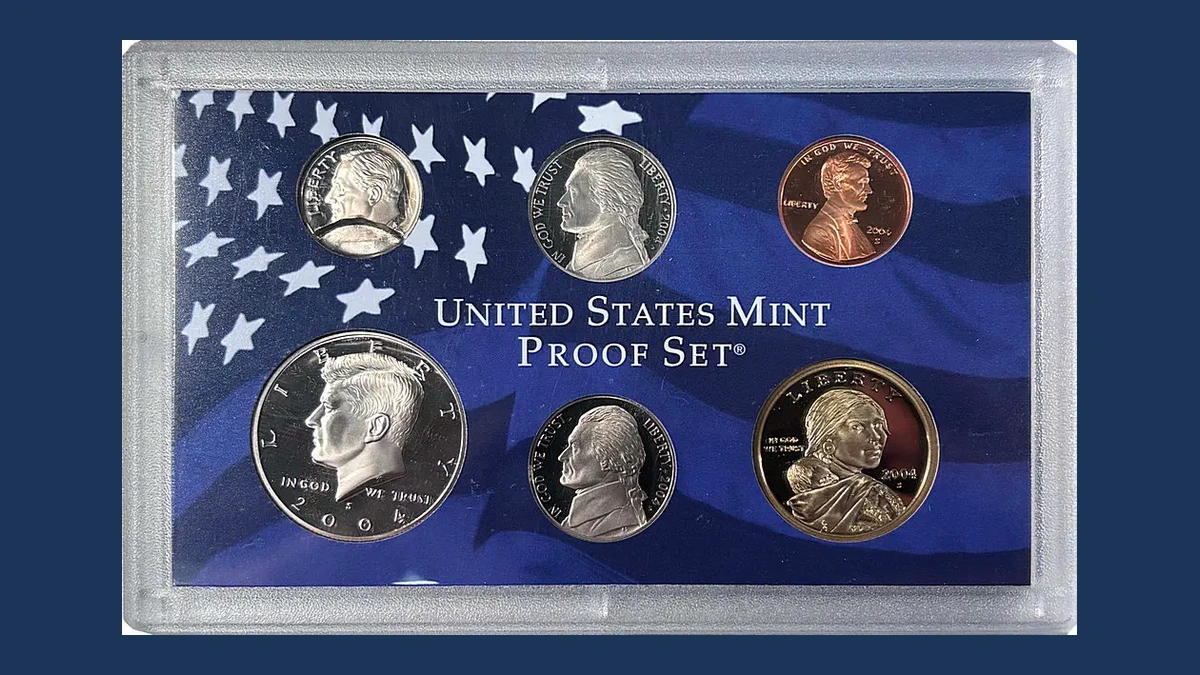
A second blank can overlap a dime during striking and leave a broad rounded depression. This effect is called an indent because the blocking blank presses into the coin.
In September 2026, a report described a 2004-S clad Proof with an indent covering about a quarter of its front. Specialist Mike Byers held the coin in its original Mint-sealed packaging.
Proofs are specially prepared collector coins. The original packaging is part of this example’s history, and its visible depression should be distinguished from a reflection or scratch on the plastic.
Estimated Value
For an authenticated major indent on a comparable modern Proof dime, use an estimated $500–$5,000 range. This is not a reported sale of the sealed 2004 set.
The untouched packaging may add collector interest beyond the dime alone. The intact set needs its own assessment.
Compare the depression’s size, visibility, and surrounding surface condition. Do not add an arbitrary packaging premium or treat the estimated range as an offer for this specific discovery.
How to Identify
Keep the original sealed holder intact. Removing the coin would lose the packaging context described in the published discovery report.
Photograph the front from several light angles, keeping the whole dime visible through the plastic. Locate the boundary of the large depression and compare it with nearby normal design.
A scratch on the holder may move across the coin in your view as the camera angle changes. Separate those marks from features fixed in the metal itself.
An indent interrupts the original strike rather than cutting away a completed design. For a similar loose candidate, have the depression examined without polishing or attempting to deepen its outline.
Conclusion
Estimated values run from $2–$5,000 across these 2004 dime errors. The Doubled Ear has a specific outline to match, while unusual color and missing layers require different kinds of evidence.
Photograph the whole coin before focusing on a small feature. Preserve original surfaces, and leave the documented Proof indent in its original packaging.
Condition, a clear identity, and an understandable error matter more than a dramatic label by itself.