1874 Quarter Error List with Pictures

The small mark to inspect is on the eagle’s shield, not beside the date arrows. Collectors comparing 1874 Proof quarters noticed the same raised-looking fault along the shield’s left edge.
A different-year 1878 Proof with a documented tool crack sold for $1,762.50 in January 2017. It provides a whole-coin comparison, not an 1874 sale.
This 1874 Liberty Seated Quarter error guide explains the reported shield mark and an estimated $1,000–$8,000 range. Follow the close-up checks below.
1874 Liberty Seated Quarter Die Cracks and Tool Breaks
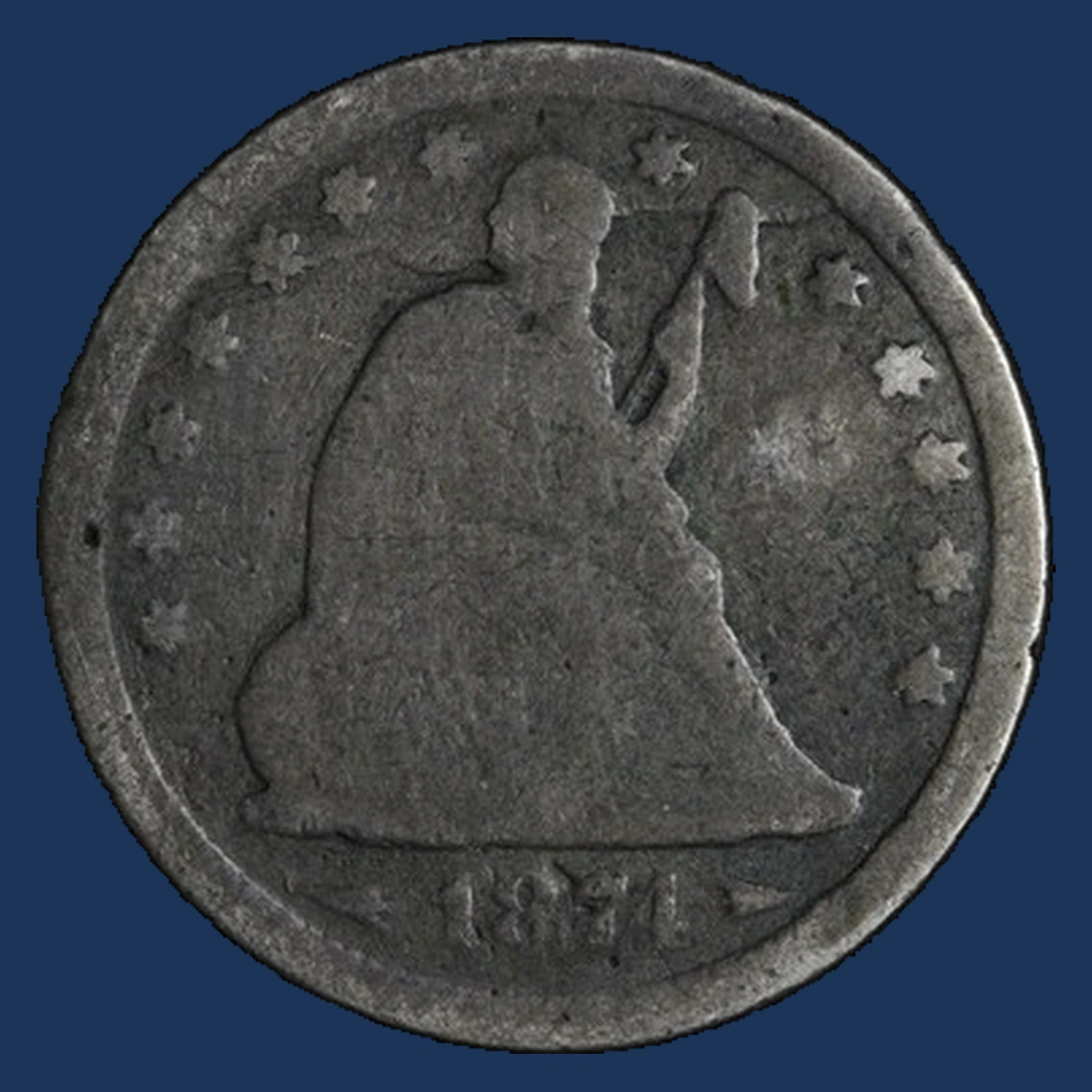
A small mark appears along the left edge of the eagle’s shield, just below its horizontal stripes. Collectors described it as a possible crack or break in the stamping tool.
The comparison included an owner’s NGC PR66 Proof, a specially made collector coin. Similar marks on other photographed coins suggested that the shape came from a shared tool.
That observation helps identify a feature to examine, but it does not make every nearby mark a tool break. The normal shield border and later surface damage still need to be ruled out.
Estimated Value
An estimated whole-coin range of $1,000–$8,000 suits genuine 1874 Proof examples across differing preservation levels. This prices the collector coin with the reported feature, not the small mark by itself.
For comparison, an 1878 NGC PR66+ Proof with a documented star-area crack brought $1,762.50 in January 2017. Its year and crack position differ.
Original reflective surfaces and minimal scratches can matter much more than the break; cleaning or wear lowers the appropriate comparison.
How to Identify
Find the horizontal stripes at the top of the shield on the eagle’s chest. Move down slightly to the shield’s left border, around nine o’clock if the shield were a clock face.
Use a magnifier and change the angle of the light. Check whether the mark is raised above the surrounding metal, rather than a cut or a dark spot.
Compare that small area with the photographed Proof discussion, keeping the shield upright in both views.
Then consider the whole coin’s finish. A shiny surface alone does not establish a Proof, and this mark should not be used as its only test.
A matching raised shape at the left shield edge is the useful clue; a specialist should also confirm the coin’s finish and original surface.
Conclusion
The reported 1874 feature is small, so location and surface height matter more than dramatic magnification. Look just below the shield’s horizontal stripes on its left edge, then compare the shape with a proper Proof example.
The estimated $1,000–$8,000 range covers the complete coin. Preserve its reflective surface and judge condition separately from the tiny tool mark before choosing a price comparison.