1878 Quarter Error List with Pictures

A long raised slash across Liberty and a fine line between two stars tell different stories on 1878 quarters. The first belongs to a Carson City tool variety; the second appears on a Philadelphia Proof.
A Briggs 1-B Carson City example graded PCGS MS67 sold for $19,200 in October 2025. That is a whole-coin price, strongly affected by exceptional preservation.
This 1878 Liberty Seated Quarter error guide explains both features, with estimated values of $100–$22,000. Read on for the separate checks.
1878 Liberty Seated Quarter Proof Crack between Stars
A faint raised line connects the area between the third and fourth stars on a documented Philadelphia Proof. Proofs were specially made collector coins, separate from ordinary coins intended for circulation.
The line came from a crack in the steel stamping tool, or die. Silver entered the narrow opening during striking and reproduced it on the coin.
The reported example belongs to the Briggs 4-D tool pairing. That number helps select the right comparison, but a small line near a star must still be distinguished from a scratch or polishing mark.
Estimated Value
The documented NGC PR66+ Proof sold for $1,762.50 in January 2017, according to NGC’s auction record. Its grade describes a highly preserved collector strike.
Estimate $800–$5,000 for comparable genuine Proofs across a wider range of surface quality. Most of that value belongs to the Proof itself rather than the tiny crack.
Hairline scratches, cleaning, and reduced reflectivity can matter far more to price than the presence of this fine raised line.
How to Identify
Confirm the coin is a Philadelphia Proof before applying this particular description. A shiny circulated coin is not automatically a Proof, and the raised line alone cannot establish the finish.
Use an upright reference photograph to locate stars three and four on the front. Examine the narrow space between them with a magnifier and light from the side.
Trace the line without touching the surface. It should stand above the nearby silver; a scratch cuts into the surface and may leave disturbed metal beside it.
Compare the route with the photographed Briggs 4-D Proof. Look for the same small connection between the stars rather than treating any line near any star as this feature.
1878 Liberty Seated Quarter Raised Slash across Liberty
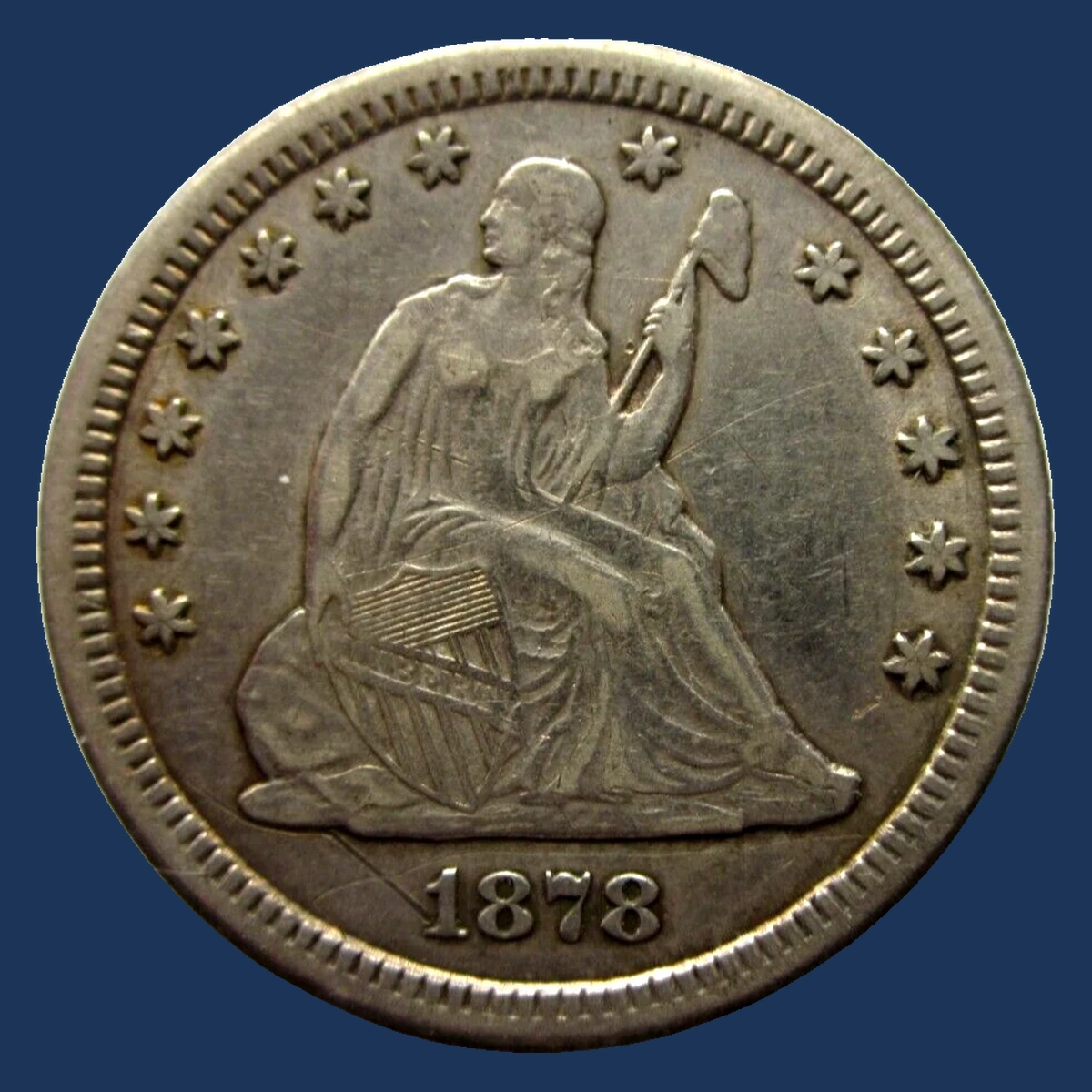
A long diagonal line crosses Liberty’s body on this Carson City variety. It runs from the viewer-right knee, through the abdomen, toward and above the viewer-left elbow.
The line is raised silver copied from damage cut into the stamping tool. It is traditionally called the Cancelled Die variety, although the nickname does not prove why the tool was marked.
Briggs 1-A and 1-B identify examples using this front tool with different back tools. The conspicuous slash is not a later scratch in the coin, and it should not be judged as one.
Estimated Value
A Briggs 1-B graded PCGS MS67 brought $19,200 on October 5, 2025 at Heritage. MS67 means an exceptionally well-preserved unworn coin.
For worn through exceptional examples, estimate $100–$22,000 for the complete quarter. The Carson City mint, wear, and original surface condition drive much of the range.
The slash is a recognized feature seen on multiple coins. Finding it does not make an ordinary worn piece worth the same as that exceptional auction example.
How to Identify
Look across Liberty’s body before reaching for strong magnification. The long diagonal route is more useful than any isolated bump along it.
Follow it from the knee on your right toward the elbow on your left. Check that the back carries CC beneath the eagle, identifying Carson City.
A single low light should show the line standing above the surface.
Now inspect the silver immediately beside it with a magnifier. A later scratch may expose a groove and pushed-up edges; this variety should match the raised line in reliable Briggs 1-A or 1-B photographs.
Keep the portrait upright in both photographs so left and right stay consistent. The complete knee-to-elbow route and raised surface distinguish the familiar tool mark from random damage.
Conclusion
The Carson City slash is a raised copy of damage to a stamping tool, not a scratch made on the finished coin. The Philadelphia Proof has a smaller crack between its third and fourth stars.
Estimated whole-coin values span $100–$22,000. Compare mint, finish, and preservation before using an auction result, and remember that a familiar tool mark does not by itself create a top-grade price.