1925 Dollar Coin Error List with Pictures

One missing ray beneath an eagle’s tail helped identify a 1925 dollar that sold for $1,920 in February 2019. Its exceptional condition mattered too.
The 1925 Peace dollar error list below explains missing, doubled, raised, and peeling details. Estimated ranges of $90–$3,000 cover the stated conditions, while exceptionally fine San Francisco coins need higher ordinary-coin comparisons.
Start with the shape of the feature, then use the matching section to check how it formed.
1. 1925 Peace Dollar Peeling or Split Surface Metal
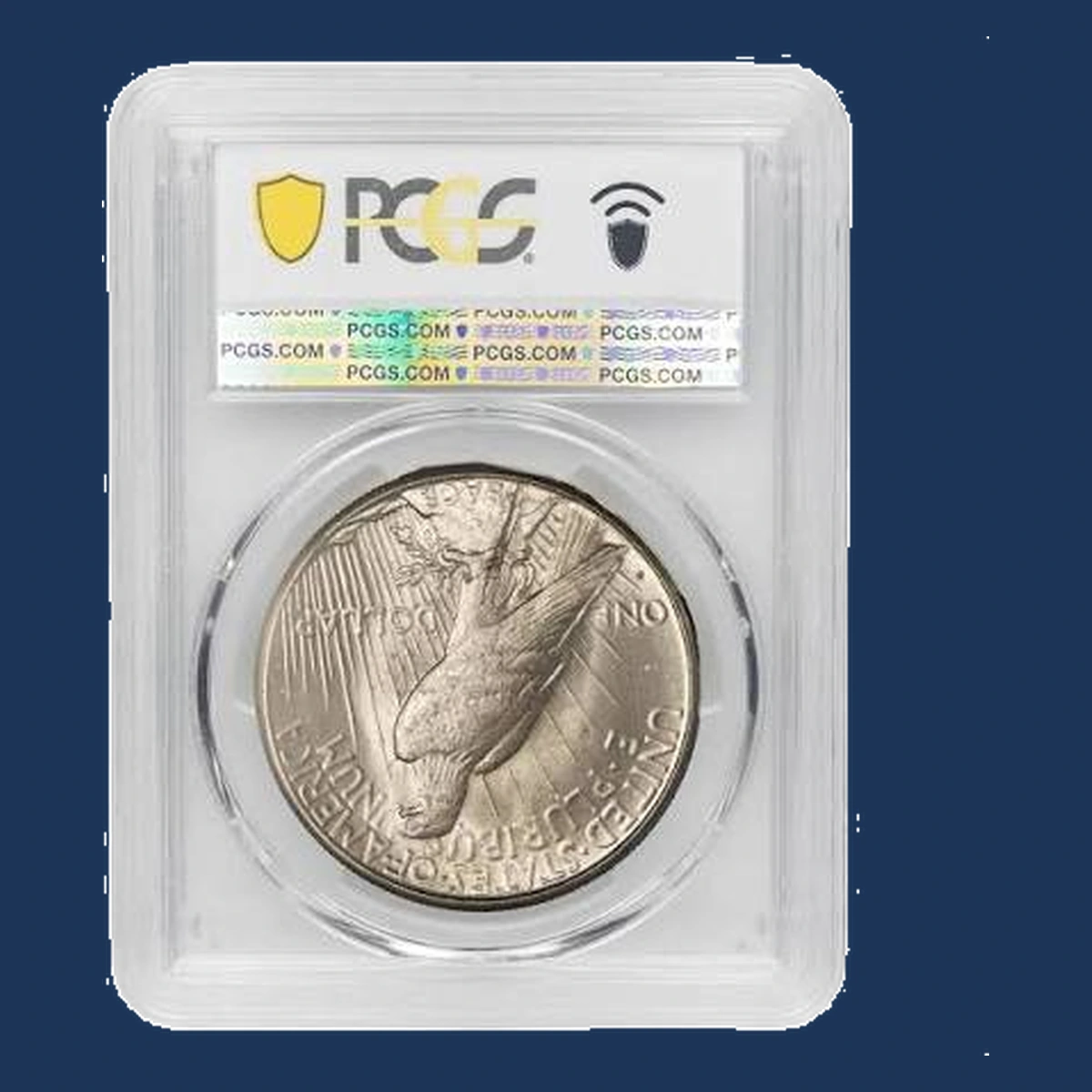
Metal can lift away from a weak area inside a coin blank. This peeling or separation is called a lamination, and it can affect either face.
APMEX describes a Philadelphia example with back lamination, graded NGC MS63. The grade means unworn with visible marks.
Another report describes front lamination on a coin with an ANACS Details grade, which indicates a condition problem. The report does not establish its mint.
Peace dollars are made from ninety-percent-silver alloy rather than modern copper-nickel layers. A peeling patch here is not automatically a missing outer clad layer.
Estimated Value
Estimate $90–$500 for authenticated worn to moderately marked unworn laminations. Small defects need to be considered alongside the value of the underlying dollar.
For comparison, a 1934-D Peace dollar with back lamination sold for $247 in March 2014. That is a different year, not a sale of either 1925 example.
A large visible flap may attract interest, while cleaning or broken-off metal can reduce appeal. An exceptional condition rarity needs a separate price comparison.
How to Identify
Leave a loose flap exactly where it is. Moving it can break the thin metal and destroy the boundary you need to examine.
Photograph the flap from the side under gentle light, then look for struck details that continue onto it. Compare the exposed area with intact metal nearby.
A stain changes color without separating the metal. A fresh gouge usually leaves scraped grooves or metal pushed up beside the cut.
Keep photographs of both faces so the mint and the location of the defect stay clear.
An ANACS Details label warns of a condition problem. Read the label and inspect the coin together; the word Details alone does not identify the peeling patch or its size.
2. 1925 Peace Dollar Texture from a Rusted or Worn Stamping Tool
Tiny raised patches or roughened details can originate in the stamping tool rather than in the finished coin. Rust can pit the steel, and those hollows can leave raised texture on later dollars.
Continued use can also wear down the tool’s fine details. A San Francisco variety is cataloged with a rusted or worn front die, the tool that made the portrait.
This description does not mean the silver dollar itself rusted. Damage or corrosion after minting can create a different rough surface.
The repeated pattern on matching coins helps separate those possibilities.
Estimated Value
For a matched San Francisco example in worn through moderately marked unworn condition, estimate $100–$600. Much of that value belongs to the coin’s mint and preservation.
Subtle tool wear may add little beyond the ordinary dollar’s value. Clear repeated texture can interest a specialist, particularly when the rest of the design remains easy to examine.
The range is not intended for exceptional high-grade San Francisco coins. A rough surface caused by later damage receives a different assessment.
How to Identify
Find a photograph of the same San Francisco tool pattern before deciding what the roughness means. Compare where the texture starts and stops around the portrait and lettering.
Use low-angle light to distinguish raised bumps from pits in the coin itself. Rust hollows in a stamping tool can produce raised metal, while later surface attack usually removes or changes the coin’s own metal.
Check whether sharp nearby details survive beside the rough area. General softness across the high points may instead reflect wear on the coin.
Do not polish the surface to improve visibility. The original texture and its exact position are what allow another matching example to support a tool-origin explanation.
3. 1925 Peace Dollar Extra Eagle-Shoulder Traces from Tool Contact
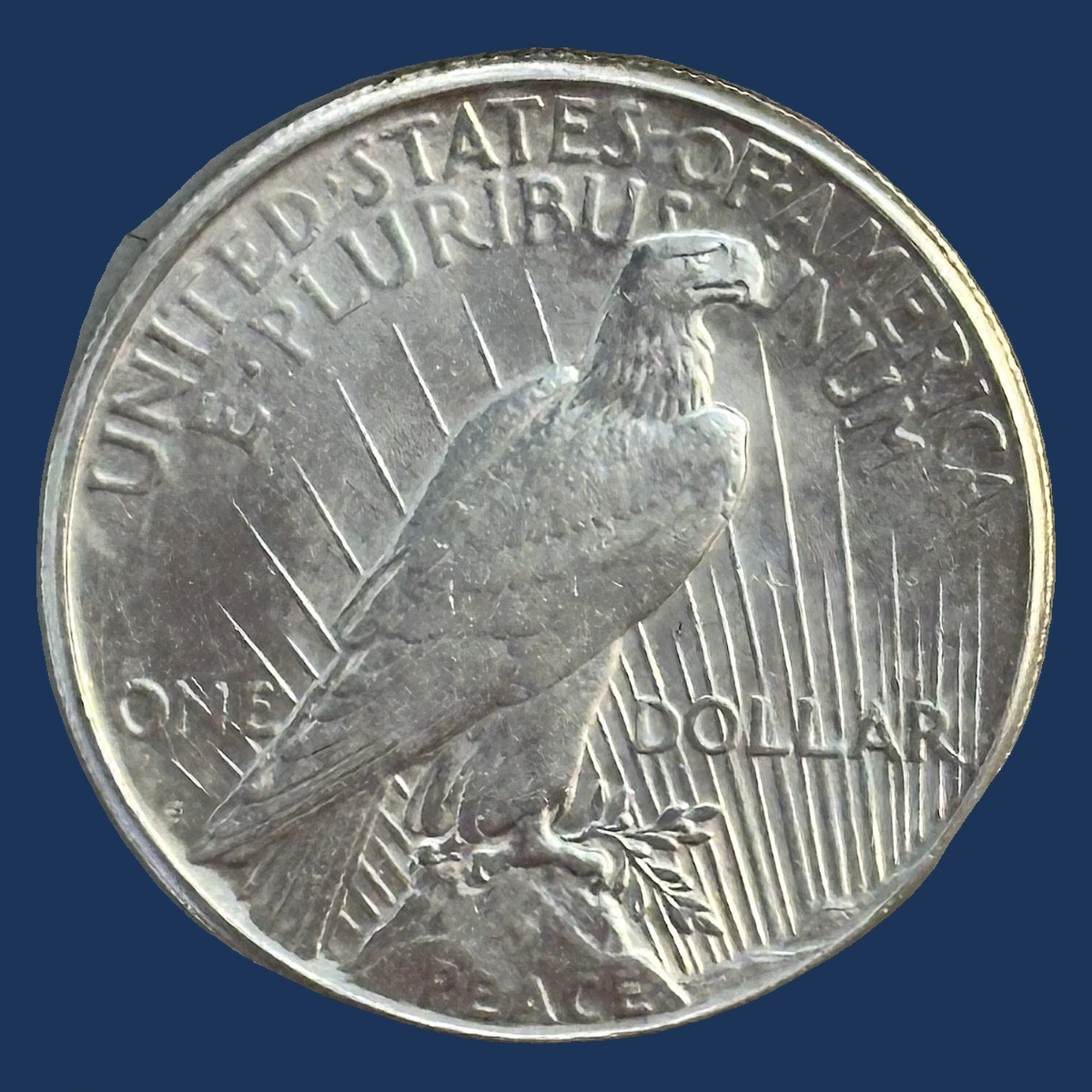
Unexpected spike-like traces near the eagle’s shoulder can come from contact between the two stamping tools. They hit each other when no blank was in place.
The contact marks can then appear on coins made afterward. This event is called a die clash.
A San Francisco example is cataloged with a double clash near the eagle’s shoulder. Other San Francisco coins combine shoulder traces with a doubled wing, so the two features can occur together.
A clash trace is not an extra feather added by the designer. Scratches and nearby normal rays can confuse the comparison.
Estimated Value
A confirmed shoulder-clash example is estimated at $100–$800 in worn through moderately marked unworn condition. Clear repeated traces can make the feature easier to recognize.
The mint and the coin’s condition still account for much of the total. A vague line beside the eagle does not automatically deserve a strong error premium.
When a coin also has a doubled wing, compare the complete combination with similar pieces. Do not add two full-dollar prices for features on one coin.
How to Identify
Locate the eagle’s shoulder and compare the normal rays with a clear same-mint photograph. Identify which short traces are extra before trying to explain their direction.
Next compare those traces with the documented clash pattern. A transferred fragment can be small, so a random line that merely points toward the shoulder is not enough.
Some examples also have a doubled wing. Follow the wing’s raised edges separately from the short clash traces, because one feature does not authenticate the other.
Photograph the whole back and then the shoulder under a 10× magnifier. A later scratch may cut across several unrelated raised details; a matching repeated shoulder pattern gives a much more useful comparison.
4. 1925 Peace Dollar Designs Blocked by Grease, Debris, or Cloth
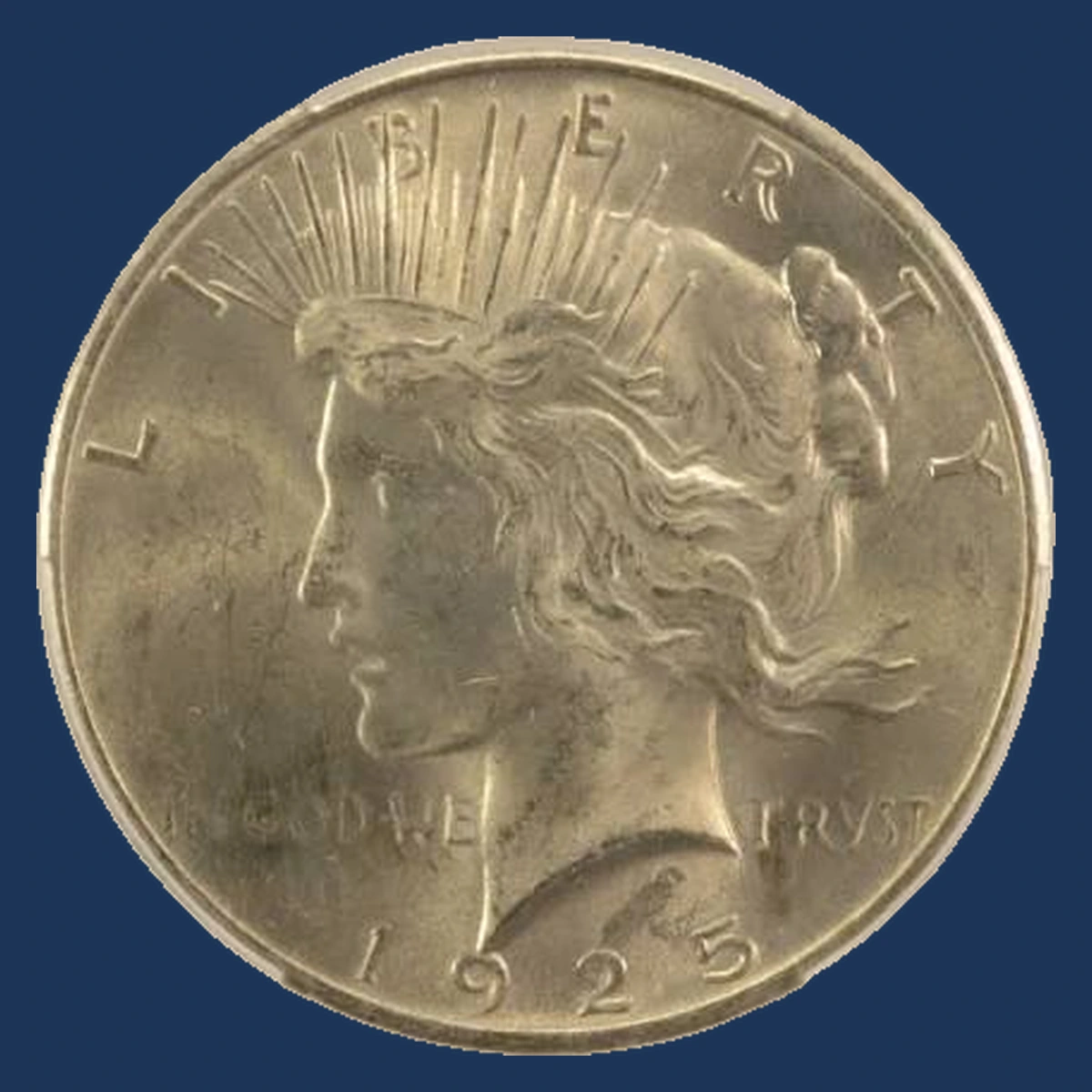
Missing letters or an unusual texture can show where material blocked the stamping tool. Grease can fill small recesses, while a piece of debris can leave an impression on the blank.
Year listings report 1925 examples with missing motto details and another described as NGC MS65. The reports do not identify the obstructing material for every coin.
A separate seller describes a cloth-struck dollar. Fabric can leave fine crossing lines, but the listing’s description is not a professional authentication.
These different appearances need their own close-ups rather than one assumed cause for every weak patch.
Estimated Value
For confirmed grease or debris effects, estimate $90–$500; for a clearly identified cloth impression, estimate $150–$1,000. Size, recognizable texture, and original surfaces affect interest.
A few faint letters on a worn dollar sit near the lower end. An extensive woven impression tells a more visible story than an isolated smooth depression.
These are estimated whole-coin ranges for ordinary conditions, not reported sales of the seller’s cloth example. Damage that merely removes letters belongs in a different comparison.
How to Identify
Examine the texture before naming the material. Cloth should leave a recognizable pattern of threads, while grease more often prevents letters from forming cleanly.
Compare the affected area with neighboring letters and portrait details at similar heights. If every high point is worn smooth, circulation may explain the missing detail without an obstruction.
Use angled light to look for scraping lines or displaced metal. Later tool damage can remove a letter but will not reproduce an undisturbed impression formed during striking.
On a claimed cloth example, photograph the crossing pattern at several points, not just one suggestive patch. Leave any trapped material in place for an examiner rather than trying to remove it.
5. 1925 Peace Dollar Clipped or Incomplete Blank
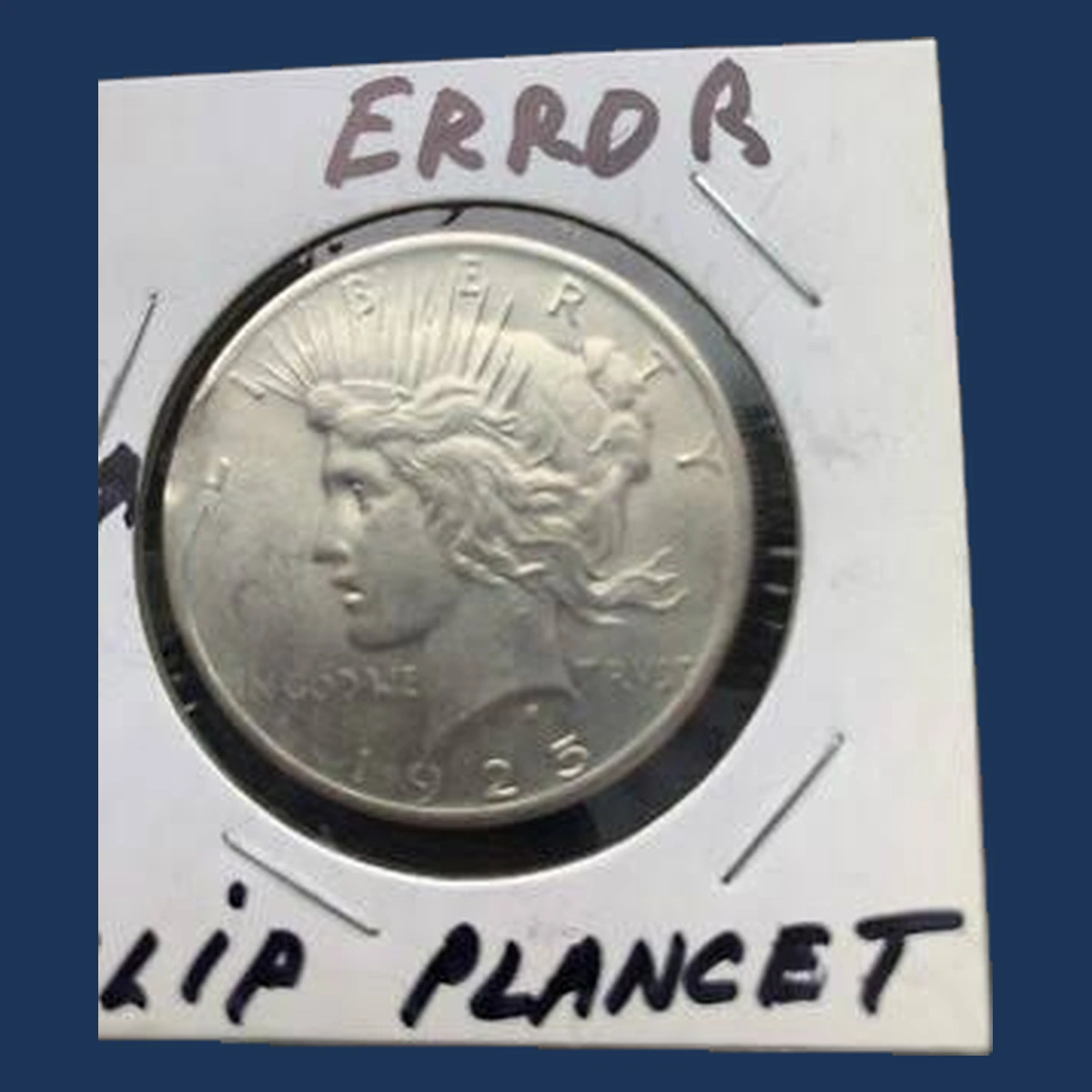
A piece missing from the outline may have been absent before the dollar was struck. The incomplete blank then received its design around the gap.
Year listings describe an irregular clip and a separate small clip near ten o’clock. The exact shape and mint need to be established from each coin, rather than borrowed from the other report.
A classic curved clip can form when a cutter overlaps a previous hole in the metal strip. Not every reported incomplete boundary is a neat arc.
Later sawing, filing, or a hard rim impact can create misleading gaps.
Estimated Value
Use an estimated $100–$1,000 for authenticated clips on ordinary-condition 1925 dollars. A larger original missing section and an undamaged remaining surface can support greater interest.
The year guide lists examples around $179–$200, but those reported amounts are not treated here as independently checked auction results. They offer only broad context.
The coin’s mint and grade matter alongside the gap. A high-grade San Francisco coin requires a different ordinary-value comparison before considering any clip premium.
How to Identify
A normal loose Peace dollar weighs 26.73 grams. A missing section should reduce that weight, but later cutting also removes metal, so the scale cannot settle the question.
Ask for a side photograph of the gap along with both faces. Parallel grooves along the exposed boundary can reveal sawing or filing that a face-only picture hides.
Follow the raised rim into each end of the gap and examine the design beside it. Both should fit a blank that was incomplete before it received the design.
Look across to the opposite rim for supporting weakness.
Compare the actual boundary with the reported example rather than demanding a neat curve. Keep the readable date and mint mark, if present, visible in the photographs.
6. 1925 Peace Dollar Raised Metal from Cracked or Broken Tools
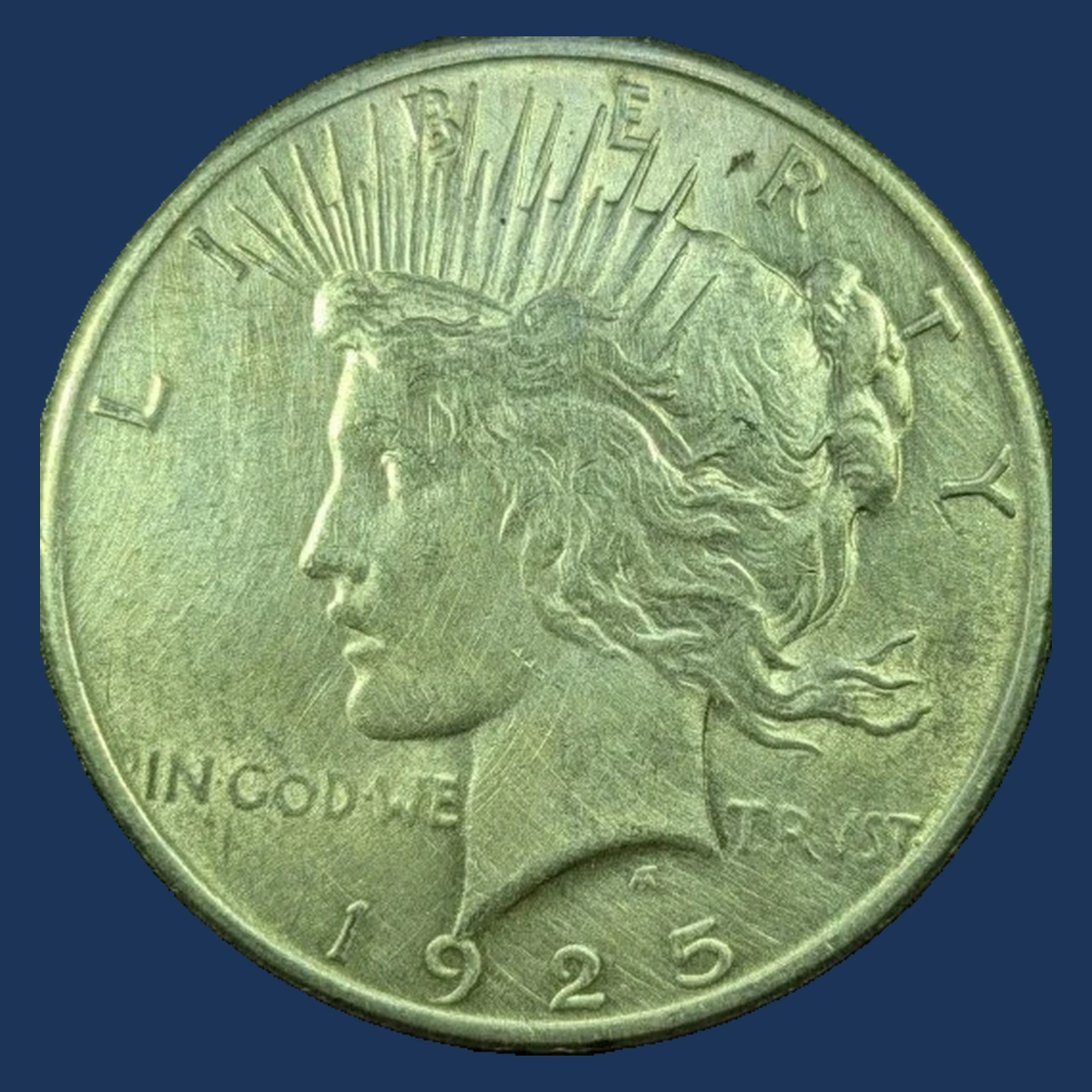
A raised lump or irregular line can begin when a stamping tool cracks or loses a small piece. Coin metal enters the damaged space during the strike.
San Francisco descriptions include a neck break and a later combination involving breaks at the neck and PEACE. Some of these coins also show separate fine tool grooves.
Another San Francisco doubled-design variety includes a break at the bottom of the neck. The presence of both features does not make them the same physical defect.
Later scratches usually cut into the coin, while these tool breaks create raised metal.
Estimated Value
Estimate $100–$1,200 for confirmed examples in worn through moderately marked unworn condition. A larger recognizable break can draw more attention than a very fine line.
Neck and PEACE breaks should be compared with coins showing the same combination. A catalog number alone does not guarantee an extra premium.
The estimate includes the underlying San Francisco dollar. Exceptional preservation may dominate the price, while cleaning, deep marks, or a break that obscures important design can reduce appeal.
How to Identify
Study the boundary of the raised area before following any nearby fine lines. A break should add metal above the expected surface, whereas a gouged or scraped patch removes metal.
At the neck, compare the lump with the normal outline of the portrait. For a coin described with a PEACE break as well, check that second area independently.
Fine raised tool lines can accompany the breaks, but they do not make every neighboring line another crack. Match their positions using a photograph of the same variety.
Turn the light so the raised edge casts a small shadow. Do not scratch the feature to test it; its height and its relationship to the normal design provide the useful evidence.
7. 1925 Peace Dollar Raised Lines from Tool Gouges and Filing
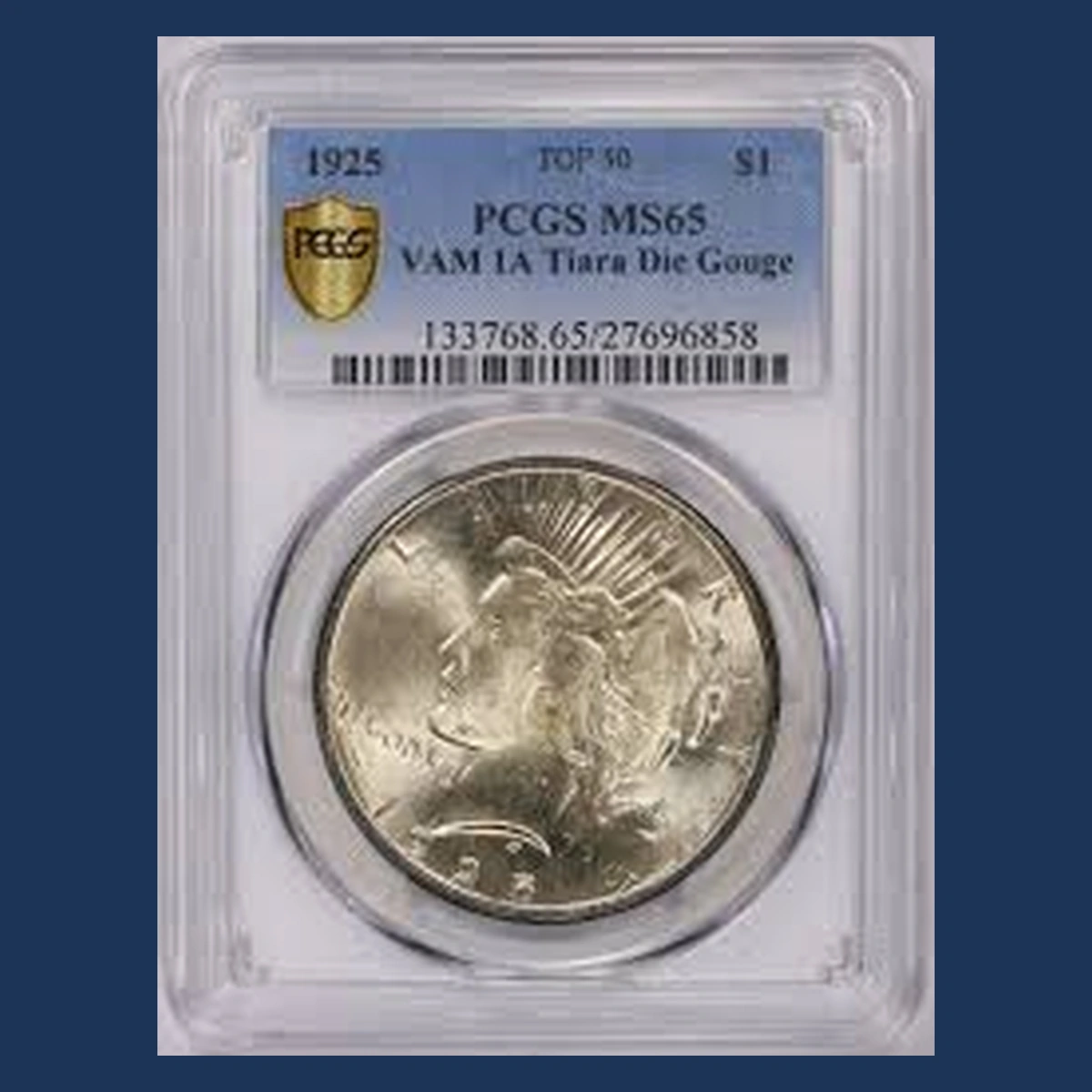
A cut in a stamping tool leaves a raised line on the coin, reversing what a scratch on the coin itself would do. Tool filing can also leave groups of fine raised lines.
The Philadelphia crown-band variety shows a gouge around the tiara beneath B in LIBERTY. Its recorded stages belong to the same general feature.
San Francisco examples have other tool lines around crown rays, letters, and the area left of U in UNITED. One catalog description also includes rough patches from tool rust.
These marks need separate comparisons; the Philadelphia crown line is not a universal marker.
Estimated Value
The Philadelphia crown-gouge variety graded MS66 sold for $600 in June 2021, according to PCGS. MS66 describes an unworn coin with few marks.
Estimate $90–$1,500 across matched examples in the stated ordinary conditions. The upper part allows for strong features and attractive preservation, particularly on scarcer San Francisco coins.
Minor filing lines may add little to a normal coin’s value. A recognized gouge and a scratch added after minting should never receive the same comparison.
How to Identify
Move a small light across the line and watch which side becomes bright. A genuine tool gouge produces raised metal on the dollar; a later scratch usually forms a trench with disturbed edges.
For the Philadelphia crown variety, compare the line’s shape near the band beneath B. Do not connect it to an unrelated line near TRVST merely because both appear on the front.
On a San Francisco coin, choose the appropriate local comparison around its letters or rays. Several different tool-line patterns occur, and their marks need not appear together.
Photograph the full face before enlarging the line. That context keeps a tiny raised feature tied to the correct letter, mint, and surrounding design.
8. 1925 Peace Dollar Shortened or Missing Rays from Tool Polishing
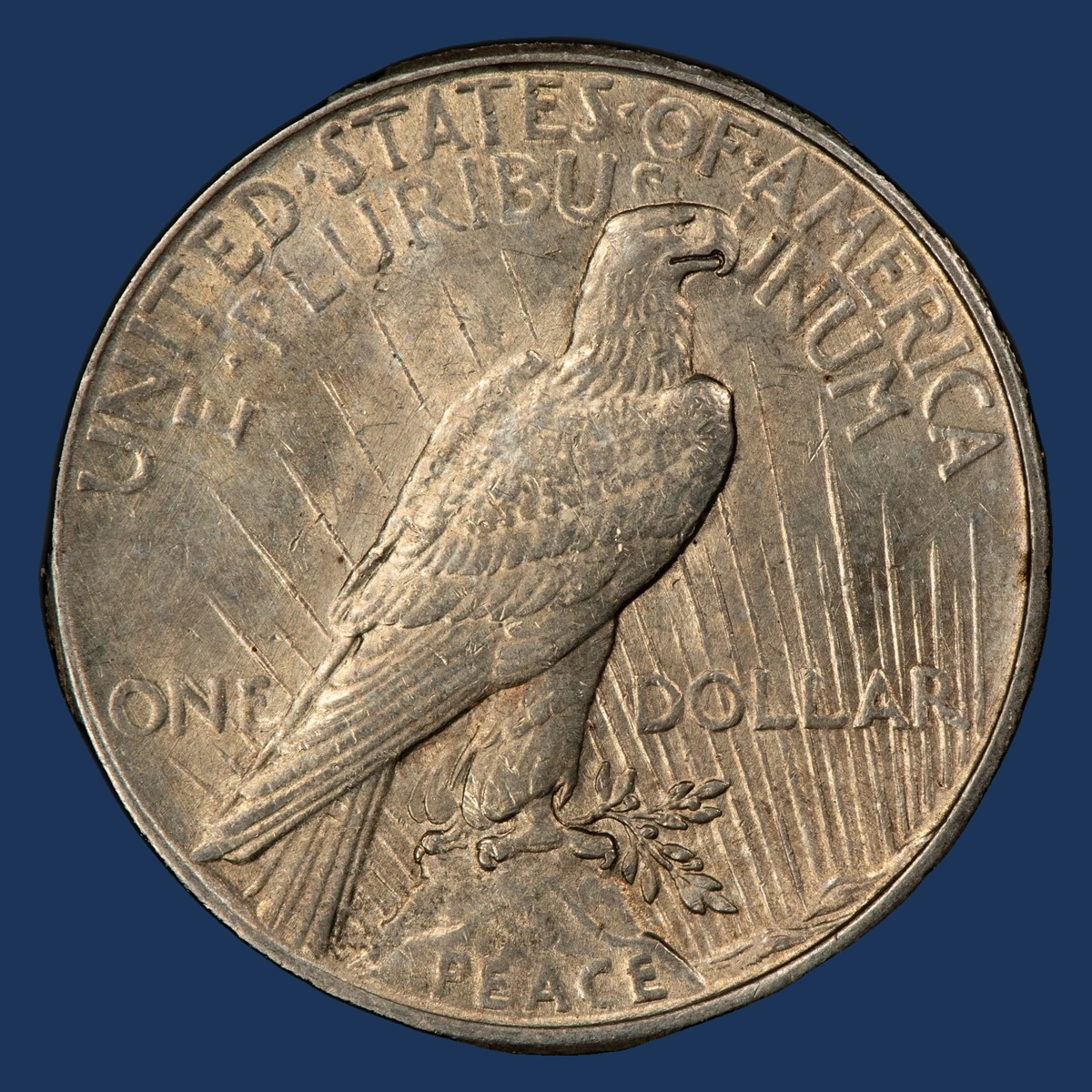
A ray that ends too soon can result from work on the stamping tool. Polishing its surface can remove a shallow part of the design before later coins are struck.
Philadelphia examples include a missing-ray variety beneath the eagle’s tail and another with shortened back rays. These are separate patterns of design loss.
The missing-ray example can also show a small clash trace near the eagle’s shoulder. That companion trace helps identify the coin but does not cause every short ray.
Ordinary wear and a weak strike can make rays hard to see for other reasons.
Estimated Value
A missing-ray example graded MS66 brought $1,920 in February 2019, recorded by PCGS for the Heritage sale. Its high unworn grade is part of that result.
Estimated values of $100–$2,500 cover matched missing- or shortened-ray coins across more ordinary conditions through strong unworn examples. A vague weak ray deserves a closer look before applying the variety price.
Compare the exact surviving pattern and overall preservation, rather than pricing every incomplete ray equally.
How to Identify
First rule out simple wear by comparing the eagle and nearby rays. If all the high details are similarly weak, one faint ray does not establish a polished-tool variety.
Place a sharp normal Philadelphia back photograph beside the candidate at the same size. Follow the rays beneath the tail, noting which end early and which remain complete.
The missing pattern must match the particular variety, not merely resemble a shortened line somewhere on the back. A small shoulder clash trace supports the appropriate missing-ray pattern but is not required on every shortened-ray coin.
Finally, tilt the coin to inspect the bare area between the surviving rays. Scraping lines or disturbed metal suggest someone removed detail from the finished dollar.
9. 1925 Peace Dollar Doubled Designs on the Front or Back
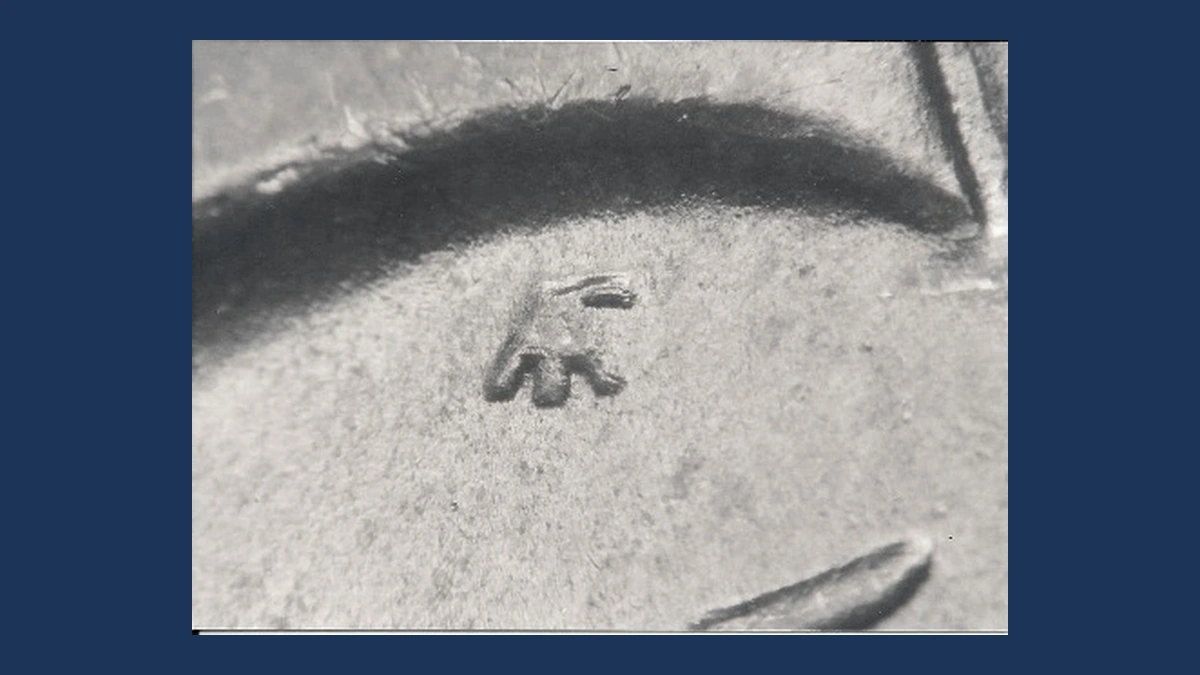
Extra raised outlines can affect the eagle, olive leaves, lettering, or rays on different 1925 dollars. The repeated picture was built into the stamping tool rather than created by a second blow to each coin.
Philadelphia examples include back doubling at the eagle’s shoulder and small front doubling at the designer’s initials or date. Some have both faces doubled.
San Francisco examples show their own wing, leg, leaf, and letter patterns. Certain coins also carry clash traces, rough tool texture, or a neck break.
Those companion features belong to particular coins, not every doubled-design example.
Estimated Value
A San Francisco doubled-back example graded MS64+ sold for $1,800 in June 2017 through David Lawrence, as recorded by PCGS. A Philadelphia doubled-shoulder MS64 brought $920 in December 2007 at Heritage.
Estimate $90–$3,000 for identified examples across ordinary worn and unworn grades. Stronger San Francisco condition rarities can exceed this range.
The spread and location of doubling matter, but grade and mint remain essential. Two doubled faces on one coin do not mean two separate sale values.
How to Identify
Read the mint mark before choosing a close-up for comparison: an S belongs to San Francisco, while Philadelphia has no letter. The back shoulder referred to here is the eagle’s shoulder, not Liberty’s.
Trace the raised second outlines at the affected wing, leaves, claws, letters, or rays. Front examples may instead require a 10× magnifier at the small designer’s initials and the date.
Some Philadelphia coins pair front and back doubling. Check both faces, but do not assume every back pattern must have a doubled front.
Use a known example to separate raised copied details from flat ledges caused during striking. Companion scratches in the tool, clash traces, or neck breaks can support a match only when they belong to that same pattern.
Conclusion
Estimated values across these 1925 Peace dollar features run from $90–$3,000 for the conditions described. The $1,920 missing-ray sale involved an especially well-preserved example.
Raised lines, missing rays, peeling metal, and copied outlines point to different causes. Look at their boundaries and compare the correct mint before choosing a variety price.
A rare high-grade San Francisco dollar needs its own condition comparison, even when the visible defect looks small.