1840 Quarter Error List with Pictures

Before checking 1840 quarter errors, look for the extra cloth beneath Liberty’s elbow. The With Drapery and No Drapery designs lead to different varieties.
A With Drapery, large-O example with back-tool cracks and bulges sold for $35,250 in April 2014. Its price reflects the rare variety and condition, not just the raised line.
Estimated whole-coin values here range from $50 to $40,000. Compare the date, shield, and edge using the correct design, and keep the more lightly documented reports separate from identified specimens.
1. 1840 Liberty Seated Quarter Reported Metal Lamination
A thin piece of silver may lift or peel away when the metal contains a weak layer. Collectors call this lamination, meaning separation within the coin’s metal.
The problem can begin with impurities or poorly joined metal in the blank. A flap or shallow irregular loss may interrupt the finished design.
Lamination has been reported for 1840 quarters, but the report does not identify a mint, cloth design, or affected area. Those details must come from an actual example.
This silver alloy is not a modern sandwich of different metals. Peeling here should not be described as missing copper-nickel cladding.
Estimated Value
For a confirmed lamination on an otherwise ordinary example, estimate $50 to $1,500. The coin’s mint, design, and preservation still set much of its value.
A visible peeling flap can explain the defect more clearly than a shallow rough patch. Heavy corrosion or scraping may lower value without creating a collectible manufacturing error.
The estimate applies to genuine metal separation, not every missing-looking area. An unusually rare underlying variety would need its own higher-value comparison.
How to Identify
Leave any loose flap untouched. Pulling it back can destroy the connection between the damaged area and the original struck surface.
Use low light from the side to look for a thin layer lifting above the surrounding metal. Follow the nearby lettering or picture to see how it approaches that separation.
Corrosion can leave a rough hollow without any layered structure, while a scrape may leave parallel cuts. Glue or a surface coating can also peel without being part of the coin.
Photograph the entire front and back to establish the mint and cloth design before assigning a value. A specialist should be able to explain the separation as part of the metal itself, rather than an added film.
2. 1840 Liberty Seated Quarter Reported Repunched O Mintmark
An O with a second curved outline can suggest that the mint letter was punched into the stamping tool more than once. This is called a repunched mintmark.
The steel tool, or die, would then reproduce both outlines on its coins. The coin itself did not need a second mintmark applied afterward.
An O-over-O type is reported for 1840 quarters, without a clearly established With Drapery or No Drapery example. The earlier letter’s exact direction is not specified.
Large and small normal O mintmarks also occur within this year’s designs. Their size difference alone does not prove a repeated punch.
Estimated Value
A confirmed example of the reported repeated O can be assessed at an estimated $150 to $2,500 in circulated condition. This is a conditional whole-coin estimate, not an 1840 auction result.
Separated, recognizable curves would make a better example than a thick letter with no clear earlier outline. Wear can hide the feature and reduce its appeal.
The With Drapery large-O variety discussed later has its own rarity. Its high price should not be assigned to an unidentified O-over-O candidate.
How to Identify
First decide whether the coin has the extra cloth below Liberty’s elbow. That separates the two designs before you compare mintmark shapes.
At the O below the eagle, examine the inside opening and the outside curve under a 10× magnifier. Look for a second shaped outline, not simply an unusually wide ring.
Compare a candidate with a normal O from the same design and with an identified repeated-mintmark photograph. A small O and a large O placed side by side are different normal tools, not evidence of overlap.
Check for a flat shelf, displaced metal, or dirt beside the letter. The final judgment should rest on matching extra curved strokes, with their position established on that actual coin.
3. 1840 Liberty Seated Quarter Reported Off-Center Strike
Part of a quarter’s picture can miss the blank if the metal disc sits away from the center of the press. The opposite side can retain an untouched crescent.
This is an off-center strike. It changes the relationship between the original metal outline and both designs.
Year-specific reports list mild off-center 1840 quarters, but do not establish one mint, cloth design, or measured specimen. A broad percentage range should not be treated as a particular coin’s measurement.
An uneven border on one face is a different clue. It can result from tool alignment without the blank itself being off center.
Estimated Value
For an authenticated 1840 off-center quarter with enough date and design remaining, estimate $300 to $10,000. The underlying issue and the visible displacement both affect value.
An older comparison is a 30% off-center 1876 quarter that sold for $2,160 in December 2022. It is a different year and retained detail despite cleaning.
A mildly shifted 1840 example would not automatically match that larger error. Attractive surfaces and a recognizable cloth design allow a more useful price comparison.
How to Identify
Compare the original metal outline with the surviving picture on both faces. The same displaced blank should explain the missing portions and the untouched area.
Check the date and the cloth below Liberty’s elbow before naming the exact issue. If the area for O is missing, leave the mint open rather than assuming Philadelphia.
A loose 1840 quarter normally began near 6.68 grams, although wear and damage can reduce that figure. Weight can help detect a cut-down piece but does not prove an off-center strike.
Inspect the apparently blank area for smoothed letters, grinding, or an altered surface. It must be original metal that never received the design, not a completed picture removed afterward.
4. 1840 Liberty Seated Quarter Repunched Date on the No Drapery New Orleans Design
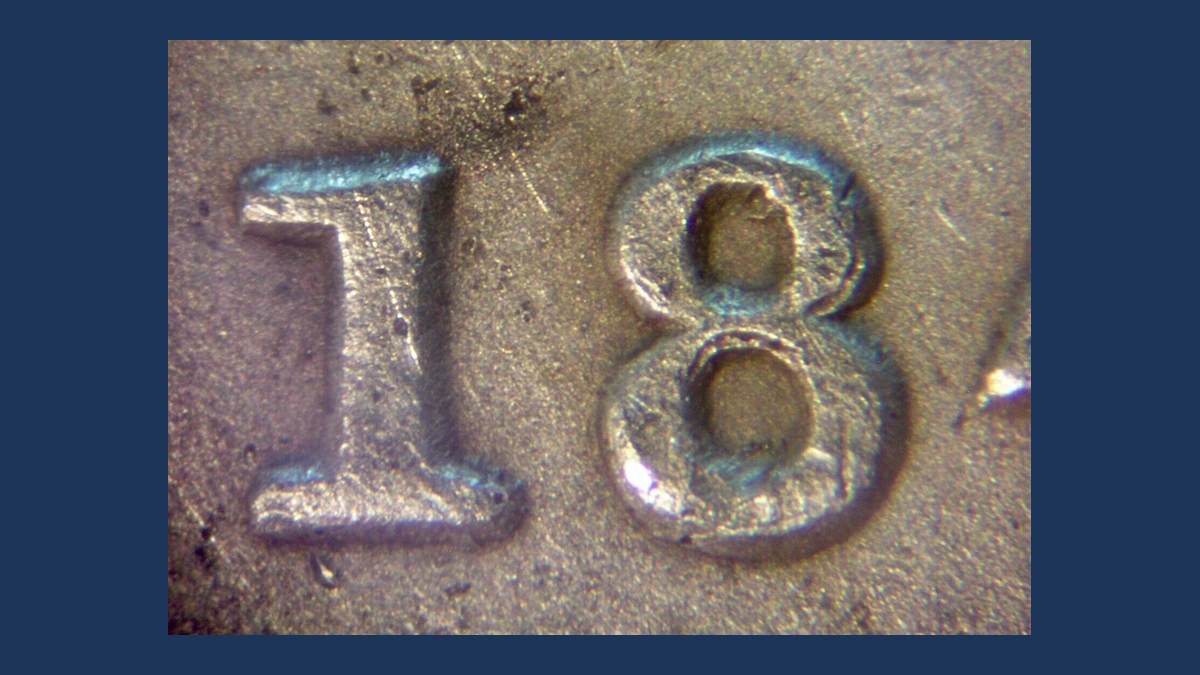
A faint earlier outline below the 8 appears on one 1840-O No Drapery date variety. Another cataloged variety concerns a repeated 0.
These are separate examples of a hand-punched date entered more than once in a die. Do not expect both features simply because one is visible.
The auctioned repeated-8 coin also has diagonal clash marks inside the eagle’s shield. That back feature can help match this particular example.
No Drapery means the design lacks the added fold beneath Liberty’s elbow. The same year also has With Drapery quarters, whose tool numbers and features must be checked separately.
Estimated Value
Estimate $100 to $15,000 for identified No Drapery date varieties across worn through well-preserved unworn examples. Most of the difference comes from condition and the underlying issue.
The documented repeated-8 specimen was graded NGC MS65, meaning unworn with relatively few marks. A clear date and smooth surfaces make such pieces desirable.
A clear extra 0 belongs to its own comparison. When the repeated 8 and shield clash occur together, they still receive one whole-coin price.
How to Identify
Choose the digit you are checking before opening a comparison photograph. The auction description places the earlier 8 below the final 8; the 1840/0 entry concerns a different numeral.
Examine the underside of 8 in a sharply focused date image. An extra curved outline should follow the known shape rather than continue as a scratch across the nearby surface.
For a suspected repeated 0, compare the exact pattern with the NGC No Drapery variety listing and an identified example. Do not borrow the 8’s downward direction for the 0.
Keep the O and the No Drapery front visible in full photographs. The correct year alone cannot distinguish this coin from another 1840 subtype.
5. 1840 Liberty Seated Quarter Shield Clash on the No Drapery New Orleans Design
Diagonal traces inside the eagle’s shield are described on an 1840-O No Drapery quarter. They are marks from dies touching without a blank between them.
That contact can leave part of one design on the opposite stamping tool. Later coins then receive those unintended traces alongside their normal picture.
The cataloged example also carries the repeated 8 described above. The clash helps identify its back without turning every line on the shield into an error.
Compare the diagonal traces with the normal upright shield lines. Scratches or later contact with another coin can make confusing marks in the same area.
Estimated Value
For No Drapery examples with a clear genuine shield clash, estimate $100 to $15,000 across circulated through high-grade unworn coins. The upper end depends heavily on preservation.
A visible clash may interest a variety collector, but it does not account for the full value of a rare, attractive coin. Tiny traces lost among heavy scratches offer less appeal.
The documented MS65 coin combines this clash with the repeated 8. Its two features should not be given two additive prices.
How to Identify
Use a normal No Drapery back to learn the shield’s intended line pattern. Then examine the diagonal marks that cross that pattern on the reported variety.
Keep the light low enough to show whether the traces are raised or cut into the surface. Scratches often have a sunken center and disturbed edges, while clash traces were impressed during striking.
Compare the position and shape of the diagonal marks with the cataloged example. A random line at a similar angle is not a sufficient match.
Finish by checking the front for the repeated 8 and the absence of the added cloth fold. These linked features help establish that the front and back belong to the correct No Drapery coin.
6. 1840 Liberty Seated Quarter Back Crack and Bulges on the With Drapery Large-O Design
A raised line runs from the rim through the left upright of N in UNITED and onward to the wing. This is a feature of the With Drapery, large-O New Orleans variety.
The back tool also developed bulges near the right wing’s meeting with the shield and beside the lower right leg. Its damaged surface left raised areas on the coins.
The identified PCGS MS64 example belongs to this scarce variety. MS64 indicates an unworn coin with some visible marks.
The cloth design and the large O are essential parts of the match.
Estimated Value
The PCGS MS64 coin sold for $35,250 in April 2014. That is the value of a rare, well-preserved With Drapery large-O quarter, not a stand-alone price for a crack.
For worn examples through strong unworn pieces of this variety, estimate $500 to $40,000. Heavy cleaning, corrosion, or missing detail can reduce the value substantially.
A similar line on a common quarter cannot borrow this price. The complete variety and its preservation must match the comparison.
How to Identify
Confirm the With Drapery front before tracing the crack. The added cloth below Liberty’s elbow separates this coin from the No Drapery pieces discussed earlier.
On the back, locate N in UNITED and follow its left upright toward the rim and wing. Side lighting should reveal a raised path rather than a cut through finished lettering.
Next inspect the right wing’s junction with the shield and the area beside the lower right leg. Compare the gently raised areas with the identified example, not with unrelated dents.
The large O is elongated and centered beneath the eagle’s crossed stem and arrow ends. Matching that shape, the cloth design, and the illustrated damage together avoids confusing two differently named 1840-O varieties.
Conclusion
A crack from N to the wing belongs to a different 1840-O design from the repeated 8 and shield clash. Identify the cloth detail and mint before comparing close-ups.
Estimated whole-coin values span $50 to $40,000. Strong preservation and a rare variety can matter far more than the size of one mark.
For shape or surface reports, let the coin’s original metal explain the feature before applying an error price.