1835 Quarter Error List with Pictures

An extra shield outline below Liberty’s ear and a line running across her forehead have different causes. One comes from colliding tools; the other records a crack in the steel.
Among documented 1835 Capped Bust Quarter errors, an unworn coin with a long back crack sold for $1,762.50 in June 2015. Its overall condition mattered far more than the line alone.
The groups below span estimated whole-coin values of $50–$5,000. Read on for clash marks, cracked tools, and a reported clipped-edge example.
1. 1835 Capped Bust Quarter Shield Outline below Liberty’s Ear
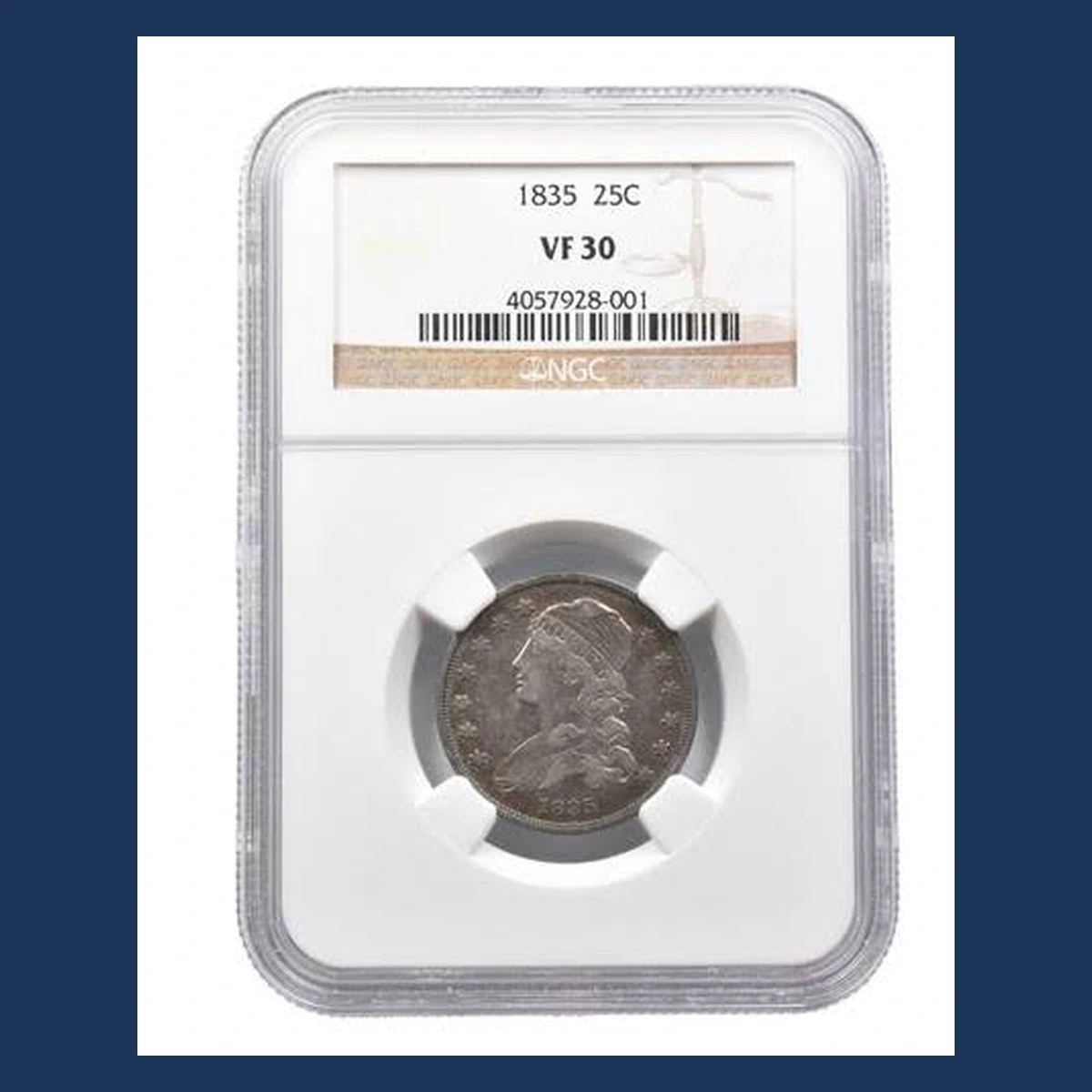
A faint shape below Liberty’s ear can resemble the shield from the opposite face. The B-2 variety has these marks, along with transferred outlines on the back.
The steel stamping tools, called dies, collided without a metal disc between them. Contact left traces of one design on the other tool, which later copied those marks onto coins.
This is a die clash. The coin itself need not have been struck more than once.
The extra shapes interrupt the normal portrait area, but they are usually partial outlines rather than a complete second face.
Estimated Value
For circulated pieces with recognizable clash marks, estimate $75–$2,000. Much of that amount is the value of the underlying 1835 quarter.
Clarity can add interest when the shield outline below the ear is easy to demonstrate. Heavy wear may leave only a confusing fragment, which is less appealing.
Surface quality remains important. An original lightly worn example can be more desirable than a scrubbed coin with stronger traces, and faint marks do not justify an automatic large premium.
How to Identify
Look at the shield on the eagle’s chest to understand the shape being transferred. Then inspect the area below Liberty’s ear for an extra outline that does not belong to her hair or clothing.
The published B-2 description also records traces on the back. Compare both faces with an identified example, keeping their orientation fixed.
A magnifier helps separate the extra shapes from fine scratches. Change the light direction so shadows do not join unrelated marks into a false outline.
A later impression squeezed in with another coin can be sunken and reversed. For the clash variety, match several transferred details in their published positions, especially the shield trace below the ear.
2. 1835 Capped Bust Quarter Raised Lines from Cracked Tools
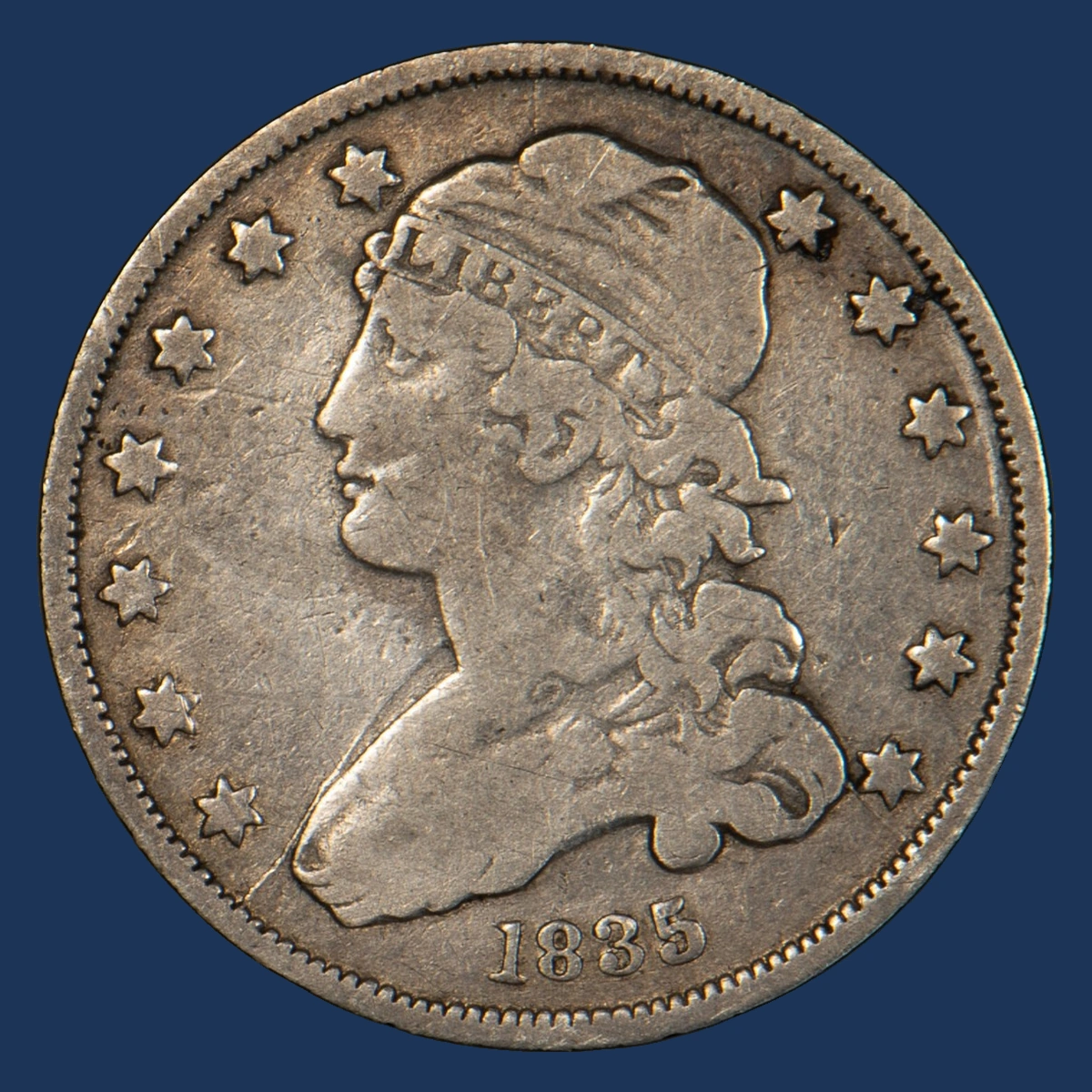
Raised lines can cross the date or portrait when the stamping steel begins to crack. Coin metal enters the gap, leaving a ridge on the finished quarter.
One 1835 pattern runs from the base of 5 toward the lower right. Another passes through the bottoms of 3 and 5.
A longer pattern crosses above Liberty’s eyebrow, linking stars on opposite sides of the portrait. These paths belong to different tools and should be compared separately.
A narrow crack is not automatically a cud, the larger lump formed when steel breaks away at the edge.
Estimated Value
Estimate $50–$4,000 across worn through attractive unworn examples. A small date-area crack can have little effect on the price.
An NGC MS62 with a long upper-back crack sold for $1,762.50 on June 4, 2015 at Heritage. That grade describes an unworn coin with noticeable marks.
The result values the complete piece. The same line on a much more worn coin should not receive the same price.
How to Identify
Choose the visible path on your coin before comparing catalog photographs. For a date-area crack, follow the ridge from the bottom of 5 or through the bottoms of 3 and 5.
For the long forehead pattern, count the stars from the lower left. The recorded line links star six with star ten, passing above the eyebrow.
Light the coin from the side to test whether the line stands above the surrounding silver. A scratch can cross the same area but cuts into the surface instead.
The front and back may have different cracks; each needs its own match. Follow the complete raised path rather than naming every isolated rim bump a broken-tool error.
3. 1835 Capped Bust Quarter Missing Part of the Original Metal Disc
A clipped quarter begins with an incomplete metal disc before the design is struck. Part of the circular edge is missing from the start.
An 1835 listing reports an ANACS VF25 Details example with a rim clip. The description identifies moderate wear plus a condition problem, but does not specify the problem’s cause.
The missing portion must be distinguished from metal removed after the coin entered circulation. A later cut, file mark, or heavy edge impact can imitate the outline.
The clip’s shape and position need to be checked on the actual coin.
Estimated Value
Allow an estimated $250–$5,000 for genuine circulated examples, depending on the missing area, remaining design, and surfaces. Larger clear clips can command more attention when the date survives.
The reported VF25 Details coin needs a condition adjustment alongside its error assessment. Details does not mean that every surface is problem-free.
This range values the whole quarter. A sawed or filed edge is later damage and should not be priced as an original clip.
How to Identify
Inspect the missing edge from the side before deciding what its outline resembles. Saw cuts and filing can leave parallel marks or an abruptly cut wall.
Follow the edge grooves into both ends of the missing portion. On an original incomplete disc, striking can change the rim and design near those junctions.
A weak rim opposite the missing area can support the diagnosis, but its absence is not decisive. It should be considered with the cutout surface, not used as a single test.
Weigh a loose coin only as a supporting check: a normal unworn example is about 6.74 g. Both an original clip and later cutting remove metal.
The natural transition from the struck rim into the missing area matters more than low weight alone.
Conclusion
The three 1835 checks look for different evidence: a transferred shield outline, a raised crack path, or the original boundary of missing metal. Neither an ordinary scratch nor a later cut becomes a Mint error because it looks unusual.
Estimated whole-coin values range from $50–$5,000. The $1,762.50 cracked-tool example was unworn; use its grade and surfaces alongside the visible feature when comparing your coin.