1894 Dollar Coin Error List with Pictures

A broad border can come from spreading metal or a misplaced stamping tool. The 1894 Morgan dollar errors below show why the other face and edge matter.
A listed San Francisco struck-through coin carried a $5,500 asking price, not a recorded sale. A different-year Morgan broadstrike sold for $1,020 in July 2021.
Estimated whole-coin ranges here run from $150–$6,000. Use the checks below to compare the feature, mint, and condition together.
1. 1894 Morgan Dollar Shifted Front Tool
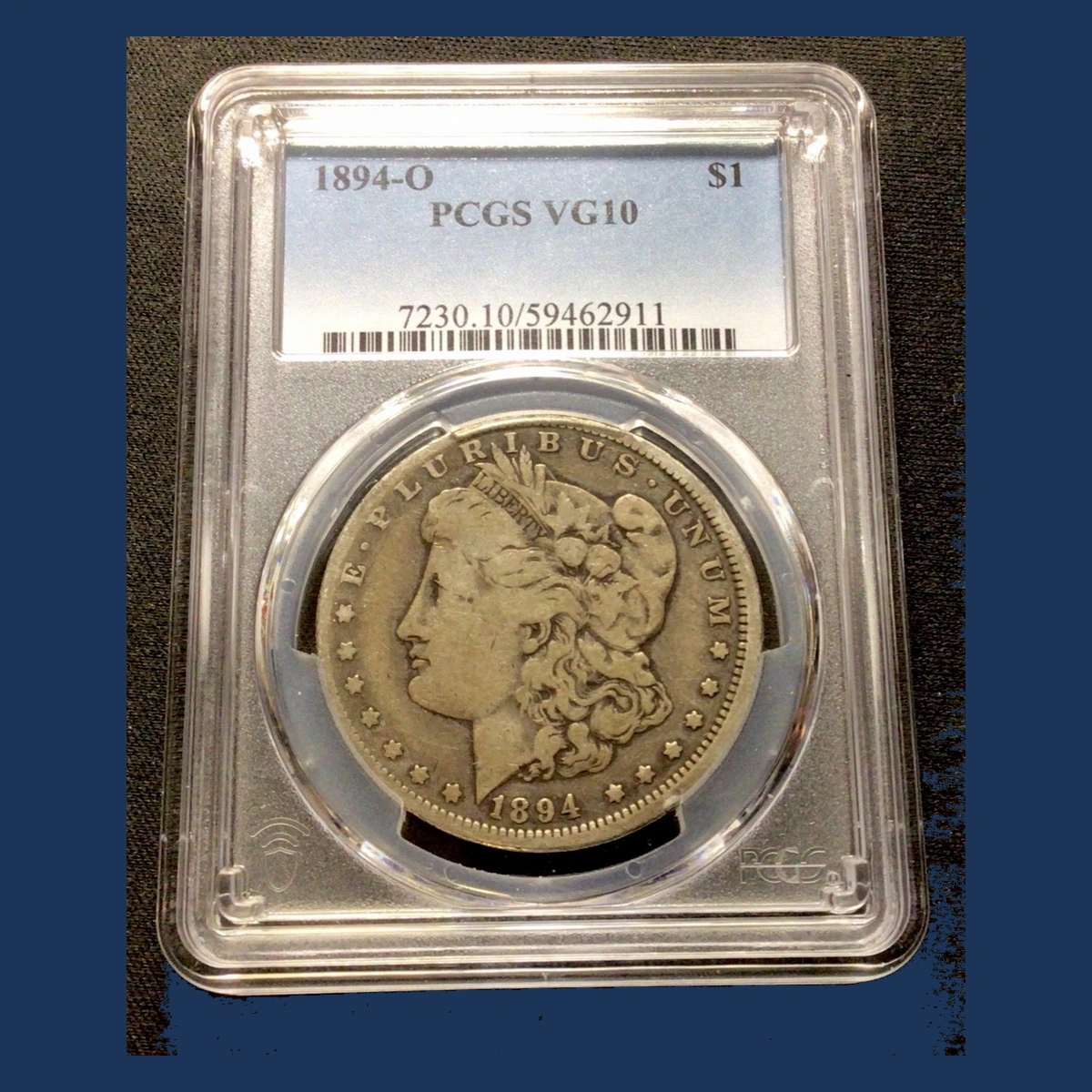
A stamping tool that sits out of alignment can move the design on only one face. The blank itself does not need to sit off center.
A Coin Galleries catalog describes this on an 1894-O dollar graded VF35. That grade indicates circulation wear with many details still readable.
Its front has a much wider rim and edge at the lower left than at the upper right. The back design remains centered.
The contrast between the two faces is the useful clue. A tilted photograph, a squeezed rim, or a different broadstrike should not be identified from the wide border alone.
Estimated Value
Estimate $200–$1,500 for a New Orleans example in worn through lightly worn condition. The amount of one-sided displacement and the original surfaces affect its appeal.
The reported VF35 has enough detail to show the contrast between the faces. A smaller imbalance on a heavily damaged dollar may attract little additional interest.
This range concerns the misaligned tool, not every coin with an uneven rim. Particularly fine unworn coins need a separate comparison for their underlying date and mint value.
How to Identify
Photograph the front directly from above so the coin’s outline appears round. Center that outline in the picture rather than adjusting the camera to center Liberty.
Compare the lower-left border with the upper-right border. Then photograph the back the same way and check whether its design stays centered.
That unequal behavior distinguishes the cataloged New Orleans coin from a blank displaced beneath both tools. Repeat the pictures if camera tilt could be changing the apparent rim width.
Inspect the wider edge for squeezed or pushed-over metal from an impact. A later rim blow can distort the outline without reproducing the full front-to-back relationship of the reported striking error.
2. 1894 Morgan Dollar Repunched Date
A small extra stroke can survive when the date punch enters a stamping tool more than once. Its earlier position may remain beside the final numeral.
Heritage describes slight repunching on the serif of 1 in an 1894-O dollar. A serif is the small finishing stroke at the end of a numeral’s main line.
The cataloged example was graded ANACS MS60, an unworn coin with noticeable surface marks. The report concerns that small date feature, not a second complete date across the coin.
A low date, a thick digit, or a scratch beside 1 does not establish repunching.
Estimated Value
For a confirmed lightly repunched date, estimate $150–$2,000 from circulated examples through ordinary unworn coins. Much of the price can belong to the New Orleans dollar’s condition rather than the tiny extra stroke.
The cataloged MS60 is unworn but shows marks that affect its appeal. Strong date remnants and original surfaces can improve collector interest.
Avoid applying another year’s date-variety premium to this subtle feature. A faint remnant can be collectible without producing a large increase over the underlying coin.
How to Identify
Read the O below the back wreath before examining the date. The reported example belongs to New Orleans rather than the scarcer unmarked Philadelphia issue.
Use a 10× magnifier on the small finishing stroke of 1. Compare its shape with a clear image of the cataloged example, keeping the whole numeral visible.
An earlier punch trace should fit part of the numeral instead of crossing it at a random angle. A low flat shelf beside a digit can arise during striking and needs a different explanation.
Move the light to inspect for a later engraved line or added metal. The actual raised trace and undisturbed surroundings are more useful than choosing a variety name from the date’s general position.
3. 1894 Morgan Dollar Tilted Partial Collar
The collar ring supports the blank and forms its edge grooves while a dollar is struck. A blank that sits unevenly in the ring can develop a changing step along its edge.
Mint Error News lists an 1894-S example described as a tilted partial collar and graded NGC 40. That number denotes a circulated condition with substantial remaining detail.
Its exact direction around the coin is not specified in the brief report. The feature must be checked from the actual edge.
A partly supported blank differs from one that escaped the collar completely and spread into a broadstrike.
Estimated Value
Mint Error News lists $237.50 beside the NGC 40 tilted-collar example. Treat that published amount as price context, without assigning an auction date or fee basis that the brief entry does not establish.
Estimate $200–$2,500 for authenticated San Francisco partial-collar dollars in worn through lightly worn condition. A clear original step and undamaged surfaces improve the comparison.
The San Francisco date already has collector value. Especially fine unworn coins need an additional condition comparison beyond this range for circulated examples.
How to Identify
Begin at the edge rather than the portrait. Under angled light, follow the boundary between metal held by the collar and the section that spread beyond it.
The height or width of that boundary can change around a tilted example. Photograph several sections so one isolated smooth patch cannot be mistaken for the whole effect.
File marks tell a different story: filing removes grooves from a finished edge instead of forming a step as the metal spreads.
Keep a certified dollar in its holder and use existing edge photographs when the plastic hides part of the boundary.
Check the back S and both faces against the same coin’s edge images. Do not assign a clock direction borrowed from another year’s tilted-collar example.
4. 1894 Morgan Dollar Front Design Struck Through Material
Material caught between a blank and a stamping tool can block part of the design. After the object leaves, a depression or missing detail may show where it interrupted the strike.
A seller lists an 1894-S dollar as a front struck-through error in a PCGS MS64 holder. MS64 means unworn with some surface marks.
The brief description does not identify the material or give a precise location. It should not be expanded into a claim that cloth, wood, or a retained object is present.
Later scraping and peeling alloy can also leave shallow gaps that need a different explanation.
Estimated Value
The seller advertised the MS64 example at $5,500 or best offer. That is an asking price, not confirmation that a buyer paid that amount.
Estimate $200–$6,000 for authenticated San Francisco struck-through examples across worn and more attractive unworn conditions. The underlying date’s value, size of the impression, and surface quality all matter.
A clear original interruption can be more appealing than a tiny weak patch. Do not add the seller’s asking price as an error premium to an ordinary dollar.
How to Identify
Use the seller’s full front photograph to locate the actual affected area before enlarging it. The short listing title does not supply a clock position.
Follow the boundary into the neighboring letters or portrait. An obstruction should explain how some details failed to form while nearby design remained intact.
Inspect the surface under changing light for scraping grooves, displaced metal, or a peeling edge. Those signs may support later damage or alloy separation rather than the claimed obstruction.
Check the holder’s actual error description and certification record independently of the seller’s inventory code. Photograph the back S as well, so a picture of a different mint’s weakly struck coin cannot become the comparison by accident.
5. 1894 Morgan Dollar Uncentered Broadstrike
A dollar struck without full collar support can spread outward unevenly. Its design may sit off center inside the expanded metal even though the event is classified as a broadstrike.
The cataloged 1894-O example has the design toward seven o’clock and a wide blank band near one o’clock. Its date and stars look stretched by the metal’s outward movement.
PCGS graded it AU55, meaning light circulation wear. The auction calls it an uncentered broadstrike.
That description should not be changed automatically to an off-center strike that loses part of its design beyond the blank.
Estimated Value
Estimate $1,000–$6,000 for an authenticated New Orleans broadstrike with comparable visibility, depending on wear, surface quality, and expansion. The cataloged AU55 has a notably uneven border and stretched details.
For a different-year comparison, a Philadelphia 1921 broadstrike graded MS64+ sold for $1,020 in July 2021 at Heritage. That sale does not price the 1894-O directly.
The documented 1894-O auction entry was unsold, so it supplies no completed sale figure. A particularly attractive example needs comparison with similarly preserved error dollars.
How to Identify
Trace the stretched date and stars before deciding that the wide band means missing design. On this example, the catalog links their distortion to a broadstrike.
Check the design toward seven o’clock and the blank band near one o’clock using the same face orientation. Both belong to one expanded coin.
Measure a loose specimen across several directions with non-scratching calipers and compare the readings with the normal 38.1 millimeters. Examine its edge alongside the measurements, since flattening a finished coin can enlarge it too.
Then compare both faces with the auction photographs. Keep the documented broadstrike classification tied to the complete metal-flow pattern rather than renaming the error from the outline alone.
Conclusion
Estimated prices for the described 1894 Morgan dollar examples span $150–$6,000. The $5,500 struck-through listing is an offer price, while the $1,020 broadstrike sale concerns a different year.
The wide border, extra stroke on 1, and stepped edge need different observations. A photograph of the other face or the edge can change the identification.
Keep the New Orleans and San Francisco examples distinct when comparing their condition and value.