1982 Penny Error List with Pictures

An ordinary-looking Denver penny brought $18,800 in August 2017 because its small date appeared on the wrong copper-alloy blank. The date style, D, and heavier metal mattered together.
That distinction is essential to this 1982 penny error list: both 3.11-g copper-alloy cents and 2.50-g copper-coated zinc cents are normal for the year. Weight alone does not make every heavy penny rare.
Explore estimated values from $2–$25,000, with simple checks for the right combination of design, metal, and minting mistake.
1. 1982 Lincoln Penny Repunched Denver Mintmark (Estimated Up to $150)
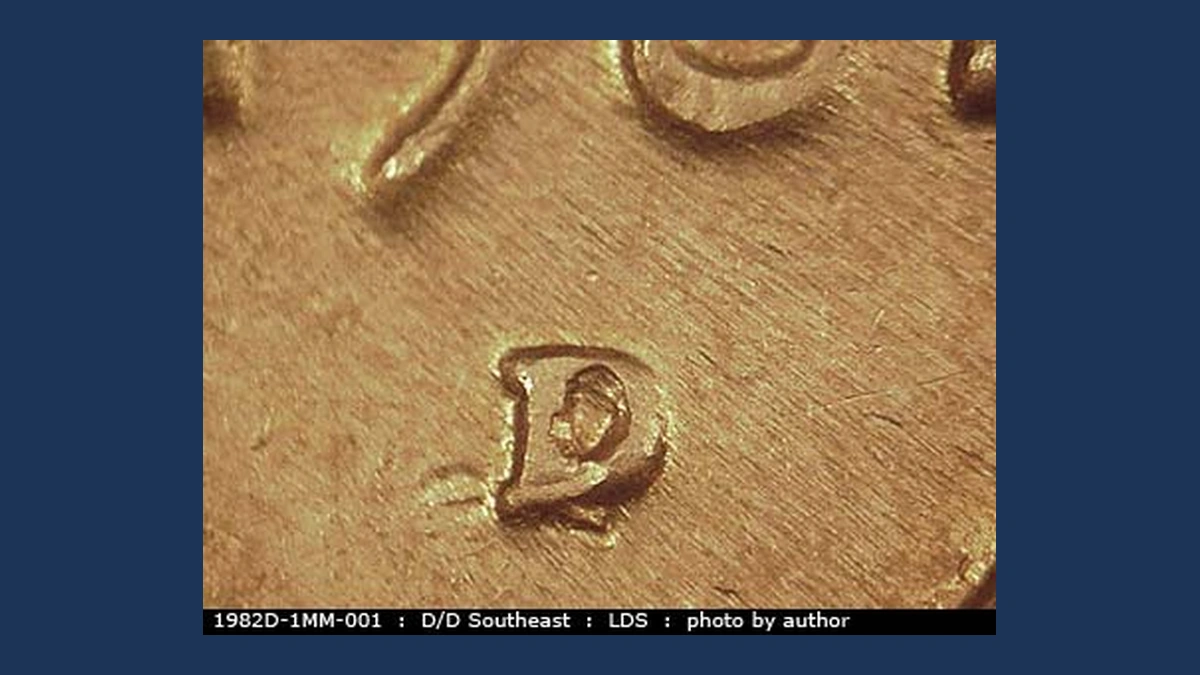
The D can carry part of an earlier letter beside its main outline. During this period, the mint letter was punched separately into the die, the steel stamping tool.
A shifted repeat of that punch could leave overlapping letter shapes. Every later coin made with the tool could then carry the same repunched mintmark.
The year report includes this type without fixing one pattern to a particular copper or zinc version. The coin’s actual metal still needs checking.
An isolated bump or split-looking tip is not enough. The added shape must fit another placement of the D.
Estimated Value
For an identified minor repunched D, estimate $5–$150. The range compares similar Memorial-cent mintmark varieties, with clear extra strokes and preserved surfaces generally more appealing.
It is not a separate auction record for an unnamed 1982 tool. Copper and zinc examples should be identified before matching condition and appearance.
A thick letter caused by wear or damaged plating does not earn the same premium. Follow a recognizable second outline before using a variety price.
How to Identify
Photograph the date and D together before enlarging the mintmark. A close-up detached from the full coin can hide which year and version you are examining.
Trace the upright and curved parts with a 10× magnifier. A real extra letter segment should fit a second D rather than simply swell the main letter.
Weigh the cent: normal copper alloy is about 3.11 g, while plated zinc is about 2.50 g. Calipers compare either version with the same 19.05-mm diameter.
Inspect the plain edge and copper surface for squeezing or lifted coating. Compare the extra stroke with the correct recorded pattern, keeping its direction and letter position together.
2. 1982 Lincoln Penny Peeling Copper-Alloy Metal (Estimated Up to $150)
Peeling metal can mean two different things in this changeover year. A copper-alloy cent may have a split within its metal, leaving a loose flap or missing surface layer.
That separation is called lamination. A copper-coated zinc cent can instead lose its thin outer coating and expose gray zinc.
The 1982 report uses a peeling-metal label without securely separating those mechanisms. For a copper-alloy lamination, the split must run within the alloy rather than along a zinc core’s coating.
The broken surface and the coin’s weight help tell them apart. Similar-looking flakes do not establish the same cause.
Estimated Value
Estimate $5–$150 for a confirmed copper-alloy lamination, from small patches to larger retained flaps. This range compares peeling copper-alloy Lincoln cents rather than treating every lifted zinc-cent coating as lamination.
A visible natural split with readable nearby design is more useful than a rough corroded patch. A loose flap should remain attached.
If examination instead identifies missing copper plating on a zinc blank, use that separate error comparison. The names should follow the metal, not the asking price.
How to Identify
Weigh the coin before selecting a comparison photograph. A reading near 3.11 g points toward the copper-alloy version; about 2.50 g points toward plated zinc.
Missing metal can lower either reading, so examine the exposed material as well. Under a 10× magnifier, follow whether the separation runs through copper-colored alloy or reveals gray zinc below a thin skin.
Use calipers to compare the width with 19.05 mm and inspect the plain edge for filing. Do not pull back the flap to see underneath it.
Check how the struck design meets the split. A natural internal separation should explain the missing layer without scrape marks or widespread corrosion.
3. 1982 Lincoln Penny Broadstrike with a Straight Clip (Estimated Up to $400)
This Denver cent combines missing metal with an expanded outline. A straight clip removed part of the blank before the coin was struck.
During striking, the collar ring did not contain the metal normally. The remaining blank spread outward, making the coin a broadstrike as well.
The recorded large-date copper-alloy example weighs 2.56 g and was graded ANACS MS60 Brown. That describes an unworn coin with many marks and a brown surface.
Its weight is below the normal copper-alloy standard because metal is missing. A reading near a zinc cent’s weight does not automatically make this clipped coin zinc.
Estimated Value
Use an estimated $30–$400 for a genuine broadstrike with an original straight clip. The clarity of both features, readable date, and surface quality influence the comparison.
A 2021 straight-clip cent sold for $114 in September 2025. That later zinc-centered coin provides context for the missing-metal feature, not the complete 1982 copper-alloy combination.
The two errors receive one whole-coin value. Do not add a full broadstrike price to a full clip price for the same piece.
How to Identify
Locate the straight missing boundary first, then examine the metal spread elsewhere. The clip removes part of the blank; the broadstrike changes the shape of what remains.
With a 10× magnifier, inspect the rim where it approaches the missing section. Fresh file lines or saw marks would point toward a later cut.
Use a scale to check the reported 2.56 g against the normal copper-alloy 3.11 g. Calipers record the expanded surviving widths relative to 19.05 mm.
The rim opposite a genuine clip may be weak, but that sign is not conclusive alone. Inspect the remaining plain edge and confirm original struck detail around both the clipped and spread areas.
4. 1982 Lincoln Penny Struck Through Material (Estimated Up to $400)
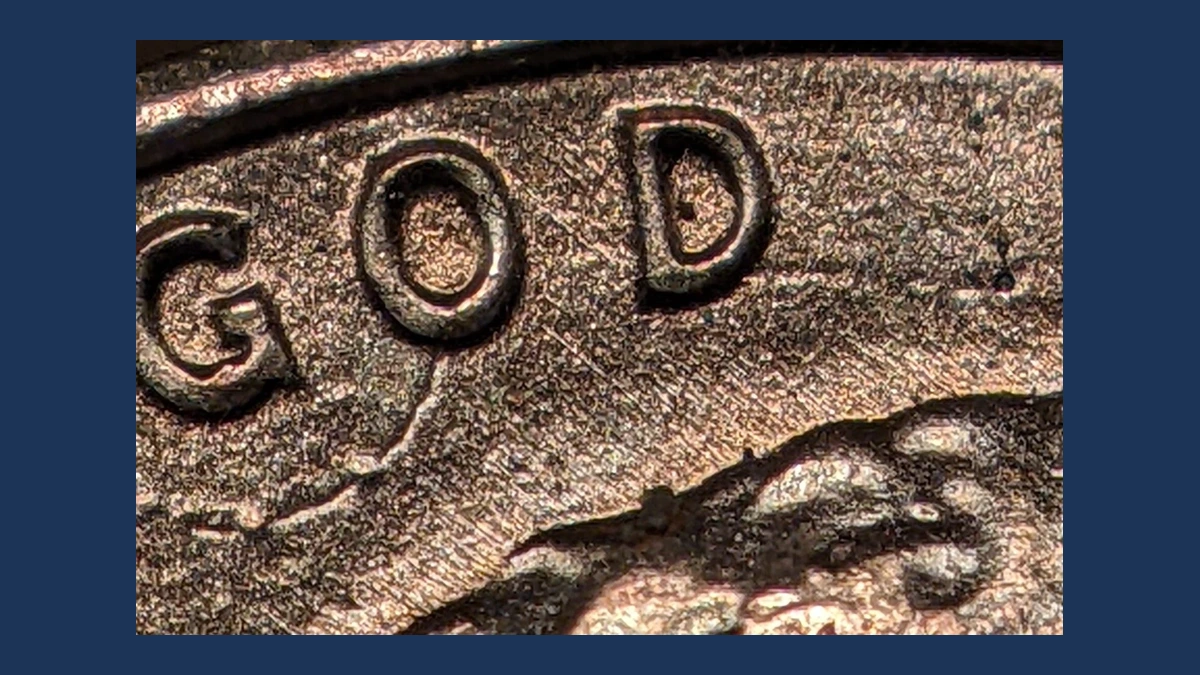
A patch of weak lettering does not always come from circulation. Material caught between the blank and a stamping tool can block detail during the strike.
A solid obstruction may leave a shaped depression. Softer material can produce a less distinct area of missing design.
The 1982 report does not establish one material, location, or metal version for every candidate. A mark should therefore be described by what it shows before it is named as cloth, wire, or grease.
The surrounding original surface helps explain the timing. A later scratch or dent interrupts an already finished coin differently.
Estimated Value
Estimate $5–$400 for an authenticated struck-through error, allowing for the size and clarity of the original impression. Small weak patches usually compare below large, recognizable shapes.
A 2021-D grease-struck cent sold for $84 in September 2025. It offers a recent comparison for soft-material obstruction rather than identifying the material on a 1982 coin.
The price depends on the actual effect and preservation. An imaginative material label should not add value to ordinary damage.
How to Identify
Inspect the mark’s boundary under a 10× magnifier. Look for original impressed texture rather than grooves made by scraping after the strike.
Turn the coin over to see how the opposite design formed. A later hard impact may distort both faces or push metal up around a dent.
Check the plain edge for related blows. Calipers compare the normal 19.05-mm width, while a scale helps compare the usual 3.11-g copper-alloy and 2.50-g zinc weights.
Neither normal weight proves the mark’s cause. Keep any retained material untouched, and compare the shape and surface inside the impression before deciding what stood between the blank and tool.
5. 1982 Lincoln Penny BIE, Cracks, and Large Cuds (Estimated Up to $500)
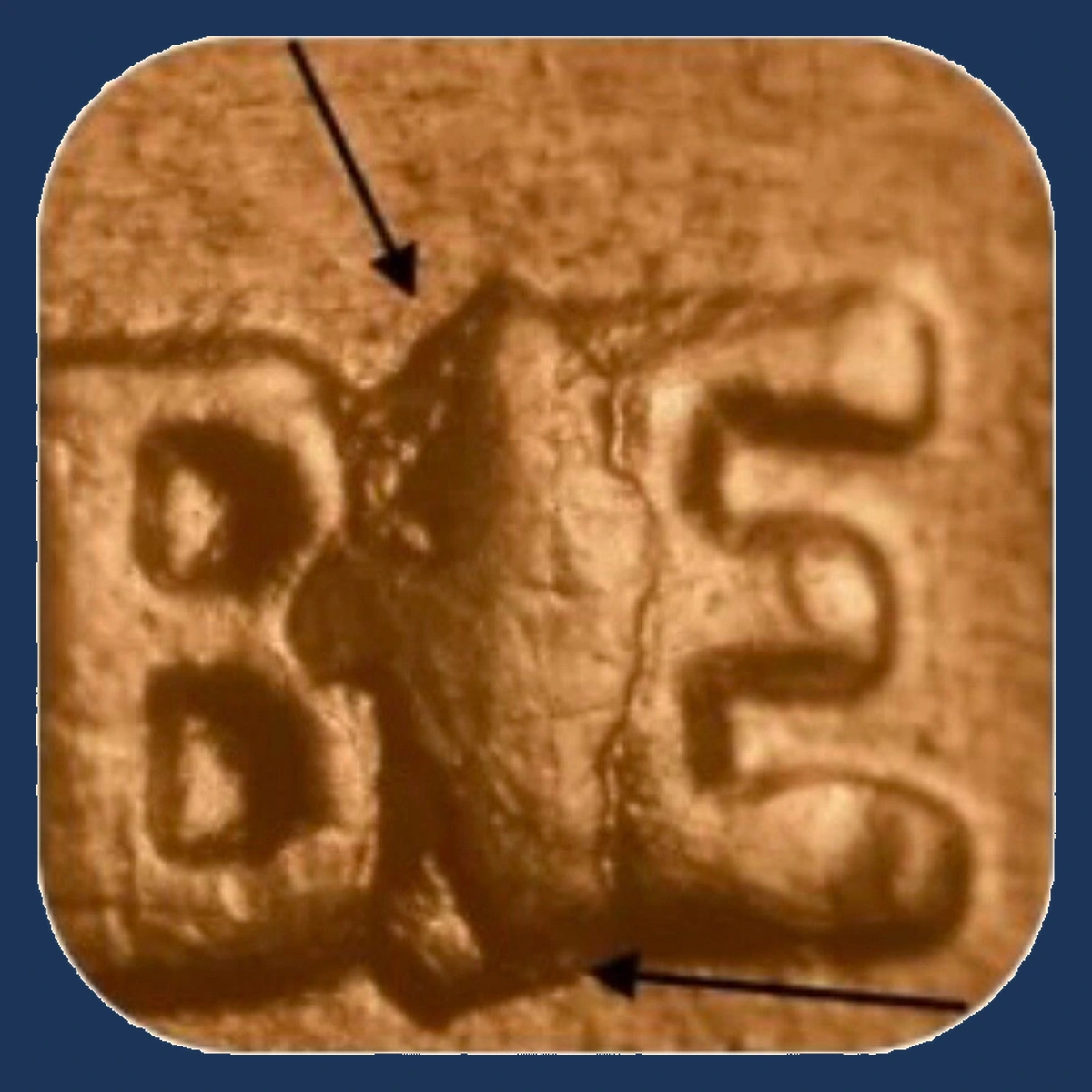
A little bar between B and E in LIBERTY can resemble an extra I. Metal filled a small broken area in the stamping tool, creating the BIE feature.
A crack in that tool can leave a longer raised line. A larger missing section at the edge leaves a raised patch connected to the rim, called a cud.
Auction records include major breaks on Philadelphia copper-alloy cents with both date sizes. These are different examples rather than one shape that applies to every 1982 penny.
Follow the actual raised outline. Thin cracks, small chips, and broad patches have different visual impact.
Estimated Value
Small BIE bars and cracks can fit an estimated $2–$30. Larger authenticated cuds can fit approximately $30–$500, depending on how much design is replaced and how well the coin is preserved.
A 2021-D retained cud sold for $186 in September 2025. It supplies a related tool-break comparison, with the broken piece remaining in the tool.
Do not give every thin raised line the price of a large cud. The visible size and shape guide the comparison.
How to Identify
Place the coin under low side lighting to see whether the feature rises above the surface. A scratch normally cuts down, although displaced metal can form a ridge beside it.
Use a 10× magnifier to follow the whole path. For BIE, the bar belongs between B and E; for a cud, the patch must reach the rim.
Check an accessible coin with a scale against its normal 3.11-g copper or 2.50-g zinc standard. Both versions normally measure 19.05 mm, which calipers can check.
Inspect the plain edge for added material or forced deformation. Compare the specific raised shape and the remaining design instead of identifying it from the year alone.
6. 1982 Lincoln Penny Off-Center Strike (Estimated Up to $600)
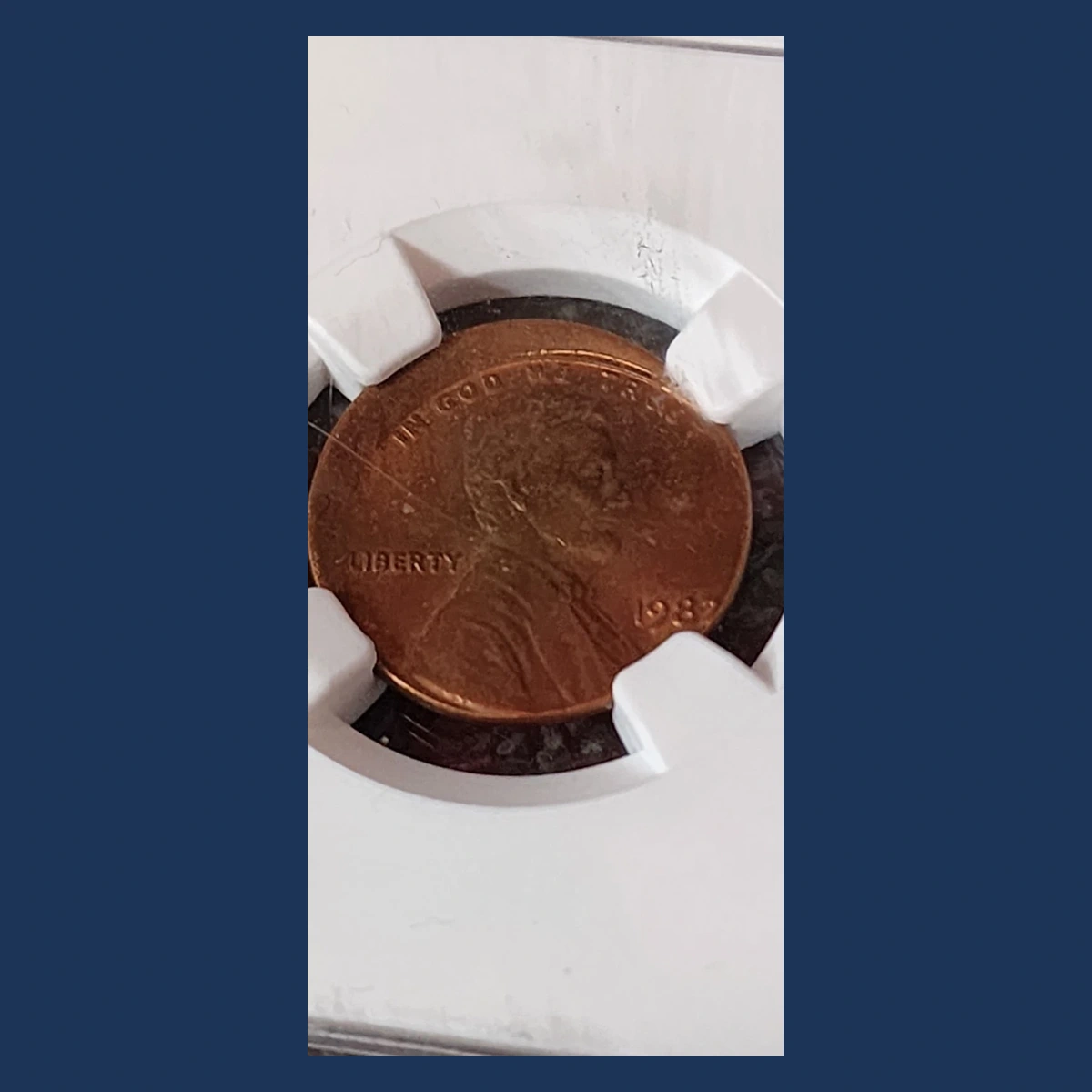
A large plain crescent can remain when a blank sits partly outside the striking area. The tools stamp only the metal they reach.
Recorded Philadelphia copper-alloy examples include both large and small dates. Other listings include fifty- and eighty-percent shifts, with a separate Denver fifty-percent example.
The percentage describes missing design, not missing metal. A strongly displaced cent can still retain approximately the weight of its original blank.
Because 1982 used two normal metals, the starting weight needs identification. An unusual outline does not tell you whether the coin began as copper alloy or plated zinc.
Estimated Value
For genuine dated examples, estimate $15–$600. A readable year and mint identity, clean surface, and appealing shape can matter more than a larger displacement alone.
A 1982 zinc cent struck seventy percent off center sold for $74 in June 2025, graded PCGS MS64 Red. It was unworn with some marks and retained red copper color.
That sale belongs to the zinc specimen. Copper-alloy examples and coins with different remaining dates need their own comparisons.
How to Identify
Keep the entire coin visible while locating the remaining date. Read any D separately; a normal Philadelphia coin has no P.
Follow the transition from struck detail to untouched metal with a 10× magnifier. Compare both faces to see whether they fit one misplaced blank.
Record the weight with a scale instead of assuming a single normal standard. Copper alloy is about 3.11 g and plated zinc about 2.50 g; calipers compare either outline with 19.05 mm.
Inspect the plain edge and empty area for cutting or grinding. A shift on only one face can suggest a different tool-alignment problem, so photograph both sides before selecting the closest off-center example.
7. 1982 Lincoln Penny Missing Copper Coating (Estimated Up to $750)
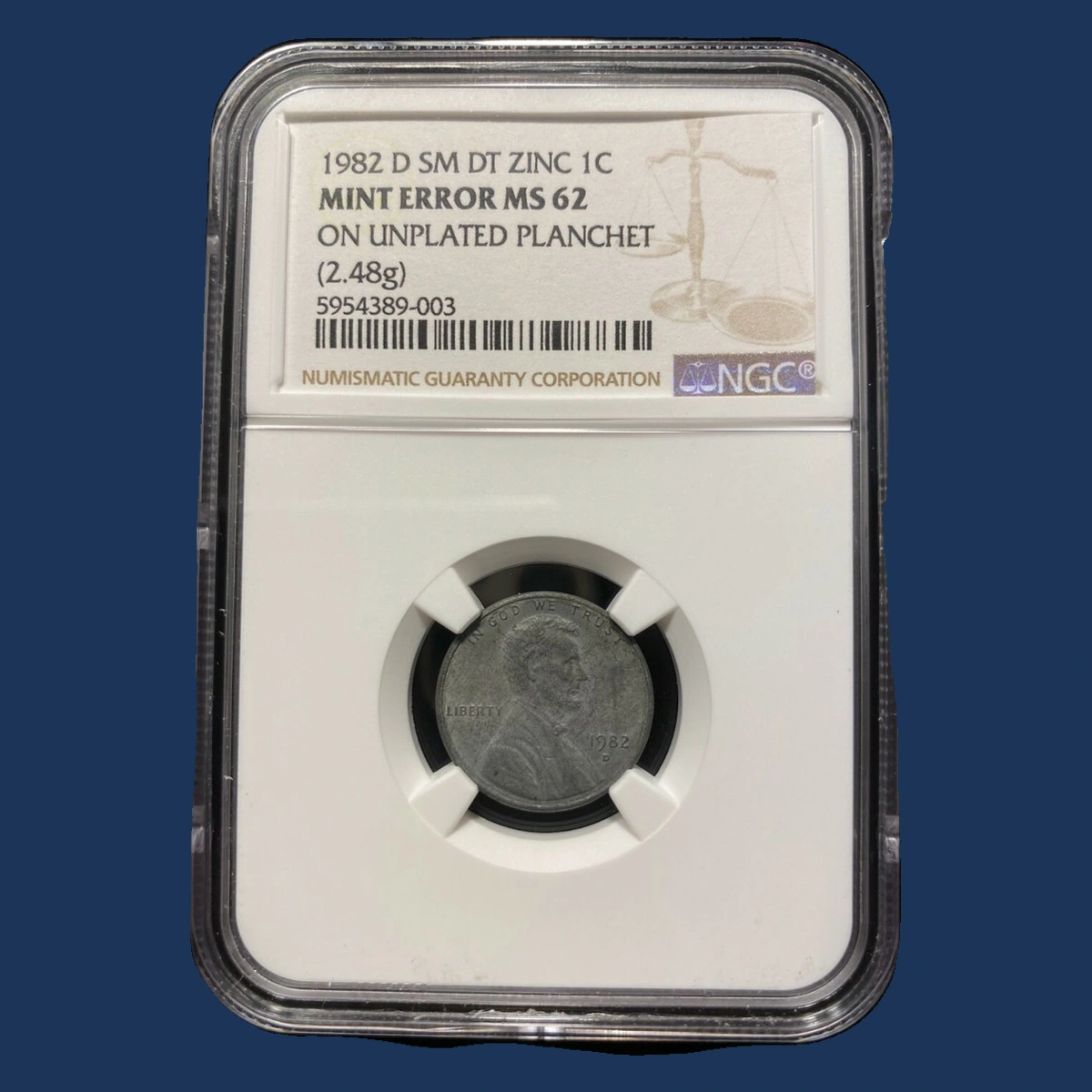
Copper color normally hides the zinc inside a lighter 1982 cent. Missing plating can expose the gray center across all or part of the struck coin.
A recorded Denver unplated example weighs 2.4 g and was graded NGC MS64. A separate Philadelphia large-date cent was listed with partial plating and an NGC MS64 Red grade.
These are different coins with different copper coverage. The Denver weight should not be copied onto the Philadelphia specimen.
A solid copper-alloy cent has no zinc core to expose. Its peeling metal needs a different explanation from an original missing copper coat.
Estimated Value
Estimate $50–$750 for identified partial or fully unplated zinc examples. Clear contrast and well-preserved original zinc can support more interest than a rough, corroded surface.
A 1995-D unplated cent graded MS63 sold for $180 in March 2023. That other-year result compares the missing-coating mechanism without setting a fixed price for the two 1982 coins.
The reported 2.4 g is a specimen measurement, not a universal test. Later removal of copper can also reduce weight.
How to Identify
Use a scale precise enough to distinguish a small change from the usual 2.50-g zinc-cent weight. A much heavier copper-alloy coin should not be classified as bare zinc from color alone.
Under a 10× magnifier, inspect both faces and the plain edge for original struck zinc. Photograph the boundary of any surviving copper without rubbing it.
Calipers compare the diameter with 19.05 mm. Scratches, rough chemical attack, or widespread corrosion can explain missing coating after the coin left the Mint.
Keep the completely bare and partly covered specimens separate when choosing a photograph. Their original surface texture and actual copper coverage should support the same explanation as their measurements.
8. 1982 Lincoln Penny Struck Through a Coin Cap (Estimated Up to $750)
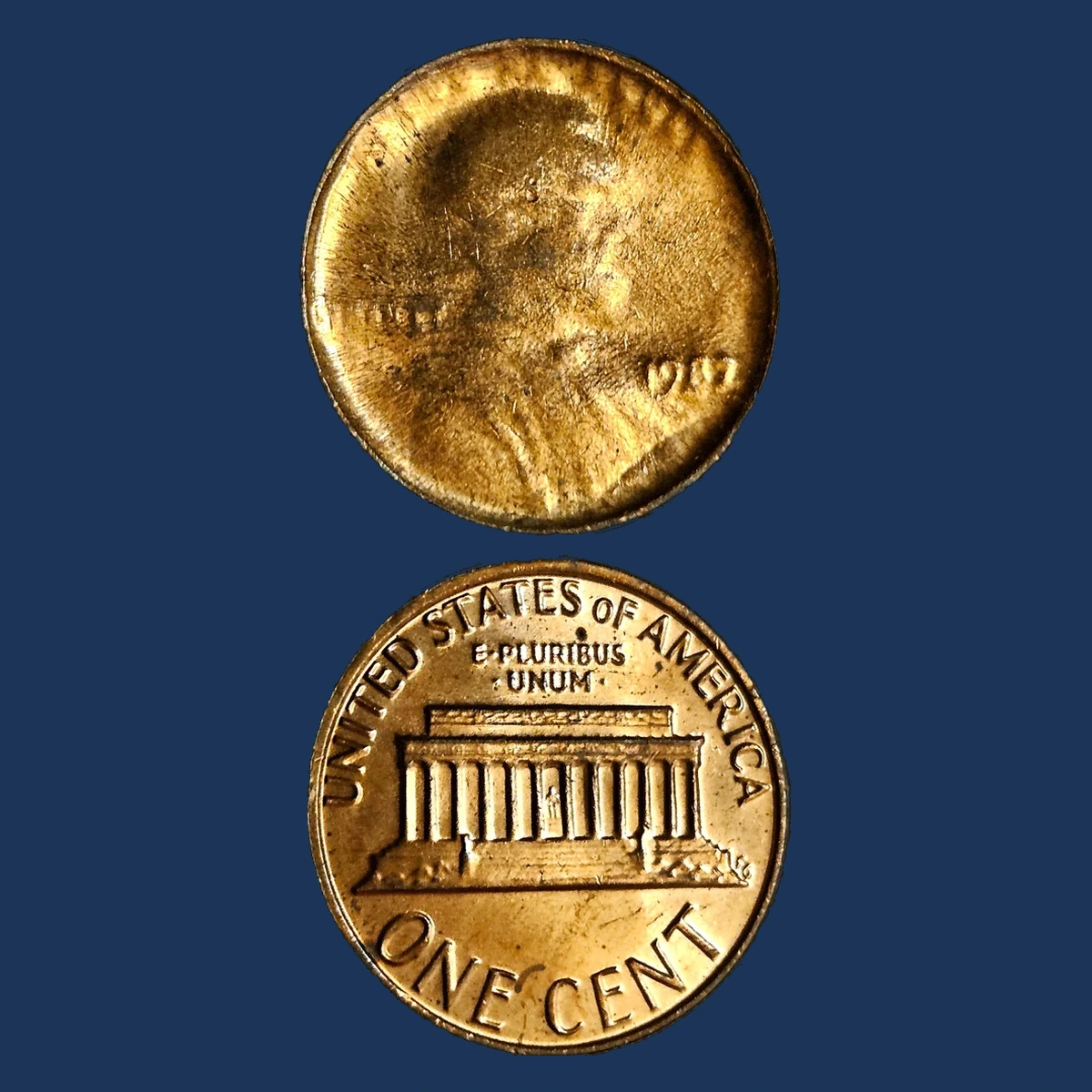
The penny can remain fairly flat while Lincoln’s portrait looks blurred or stretched. An earlier coin stuck to a stamping tool and covered it like a cap.
New blanks beneath that covering received a distorted version of the design. The obstructing coin and the receiving coin are different objects.
The 1982 records include Philadelphia large-date examples in copper alloy and plated zinc. Their original weights differ even though both can show cap-related effects.
These pieces should not automatically be called cup-shaped die caps. Their role was to receive the impression through a covering that remained on the tool.
Estimated Value
Allow an estimated $50–$750 for identified receiving coins struck through a cap. A clearly visible, well-preserved pattern generally compares above a faint or worn patch.
A 1995 late-stage cap strike brought $180 in March 2025. That plated-zinc example provides a direct mechanism comparison for the receiving coin.
Actual caps with tall walls are different objects and can have different prices. The 1982 estimate follows the transmitted design and preservation, with copper and zinc examples identified separately.
How to Identify
Compare clear and distorted areas of Lincoln’s design under a 10× magnifier. Look for a connected pattern that fits a covering coin rather than ordinary wear on exposed high points.
Turn the penny over and inspect its overall shape. A flat receiver is not the cup-shaped cap itself.
Use the scale to choose the correct material comparison: about 3.11 g for copper alloy or 2.50 g for plated zinc. Calipers check the usual 19.05-mm starting diameter.
Examine the plain edge for later squeezing, then compare with a confirmed cap-struck example. Weak lettering alone cannot establish this cause, particularly when both faces show general wear or corrosion.
9. 1982 Lincoln Penny Back Rotated 180 Degrees (Estimated Up to $800)
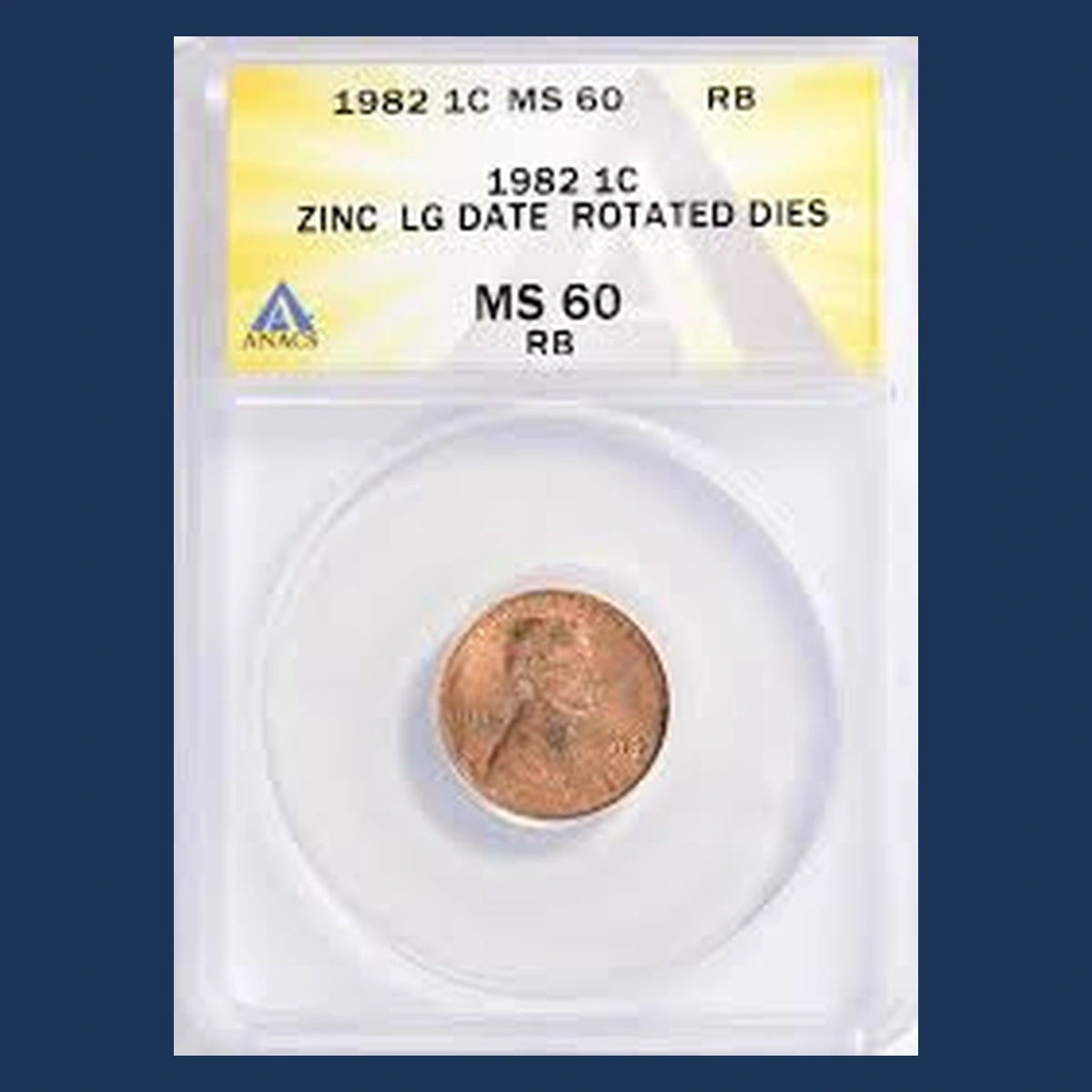
Try turning an upright Lincoln over from top to bottom. The Memorial should normally stand upright, but the recorded example leaves it upside down.
Its back is rotated 180 degrees from normal United States coin alignment. A side-to-side turn instead leaves both designs upright, an arrangement often used on medals.
The coin is a Philadelphia large-date zinc cent graded NGC MS63 Red and Brown. That means unworn with marks and a mixture of red and brown copper surface color.
The rotation comes from the tools’ relative positions. It does not require a second portrait or a distorted outer shape.
Estimated Value
Estimate $50–$800 for a genuine 180-degree rotated-back example, with condition and a clear demonstration of the angle affecting interest. A complete half-turn is easier to show than a small tilt.
A 1980-S Proof with a 130-degree rotated back sold for $384 in July 2022. That collector coin differs in finish, metal, and angle from this ordinary 1982 zinc cent.
The comparison supplies context, not an identical specimen price. Keep the actual angle and issue type attached to each coin.
How to Identify
Practice the top-to-bottom flip with a normal cent first. Keep the portrait upright and avoid adding a sideways twist during the turn.
Repeat with the suspected penny: the Memorial should end upside down on this 180-degree example. Photographs aligned to a fixed reference can record the result.
Use a 10× magnifier around the date and plain edge to check for alteration or a joined construction. The recorded coin has no Philadelphia mint letter.
For an accessible zinc example, compare weight with 2.50 g on a scale and diameter with 19.05 mm using calipers. Repeat the flip several times so a handling mistake does not become an apparent rotation.
10. 1982 Lincoln Penny Double Strike (Estimated Up to $1,000)
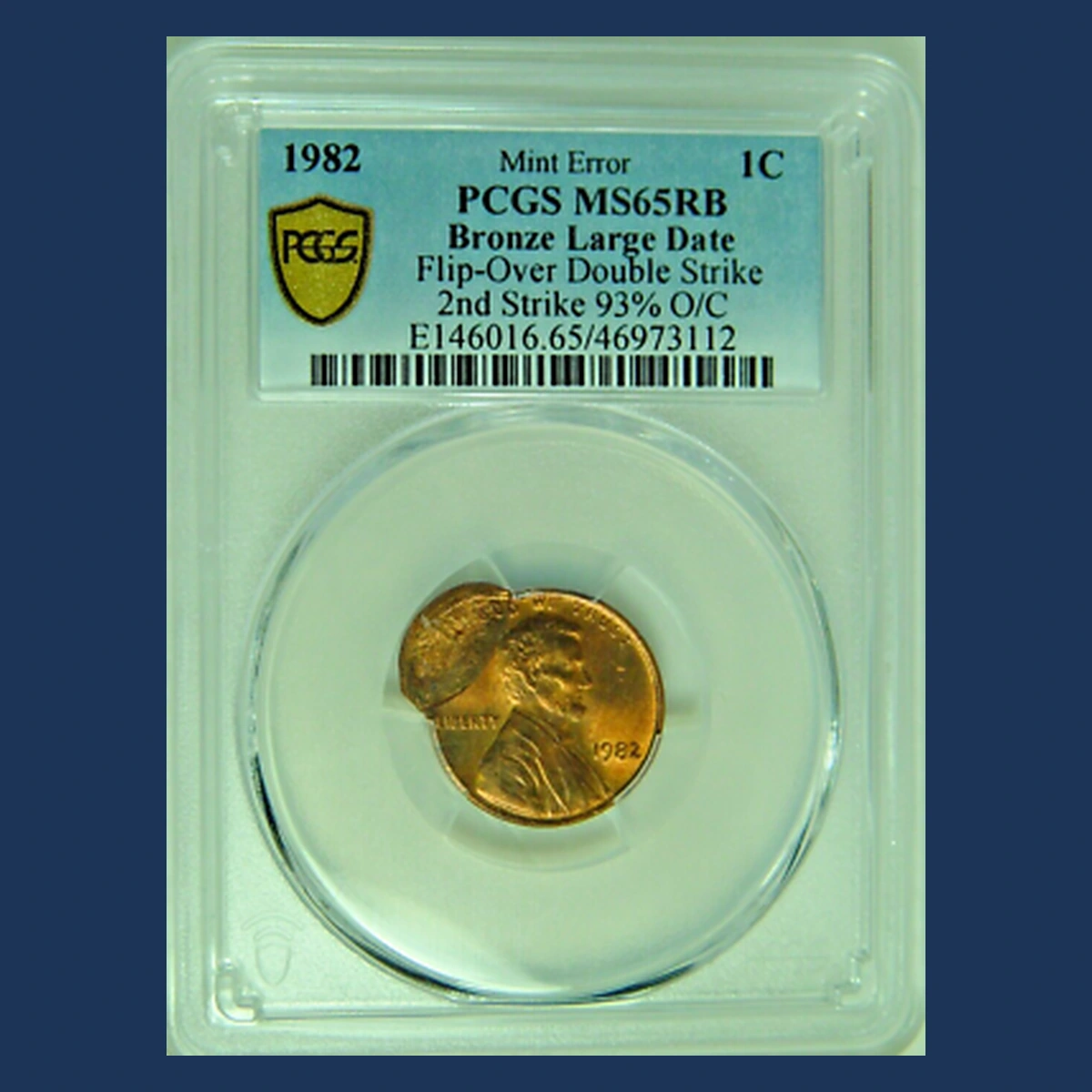
An extra portrait or date position can show that the same coin received another blow. After the first strike, the penny moved before the tools met again.
A recorded 1982-D example has an off-center second strike and a PCGS MS62 Brown grade. It was unworn but had substantial marks and a brown surface.
The record establishes a second displaced impression without requiring every 1982 double strike to share its exact position. Follow the visible designs on each coin.
A doubled die is different: its extra design was already on the tool. One blow can transfer that smaller repeated detail.
Estimated Value
An estimated $50–$1,000 covers identified double strikes with different amounts of displacement and preservation. Readable design from both blows can matter more than a dramatic outline with little detail left.
A 1979 cent with an off-center second strike sold for $204 in September 2023. That copper-alloy coin supplies a material comparison only when the 1982 piece also uses copper alloy.
Zinc examples need their own material check. The estimate concerns the whole twice-struck coin, not a price for each blow.
How to Identify
Find a connected set of details from the first strike, then trace the later set with a 10× magnifier. A second portrait or long word fragment is stronger evidence than isolated extra lines.
Compare the overlapping area on the other face. Both sides should fit the movement described by the later impression.
Record the weight with a scale, allowing for the normal 3.11-g copper-alloy and 2.50-g zinc possibilities. Measure the altered outline with calipers against the normal 19.05 mm.
Inspect the plain edge and raised details for artificial pressing. The second design should be an original struck impression with a consistent position, rather than a collection of flattened letter shelves.
11. 1982 Lincoln Penny Struck on a Clad Dime Blank (Estimated Up to $1,500)
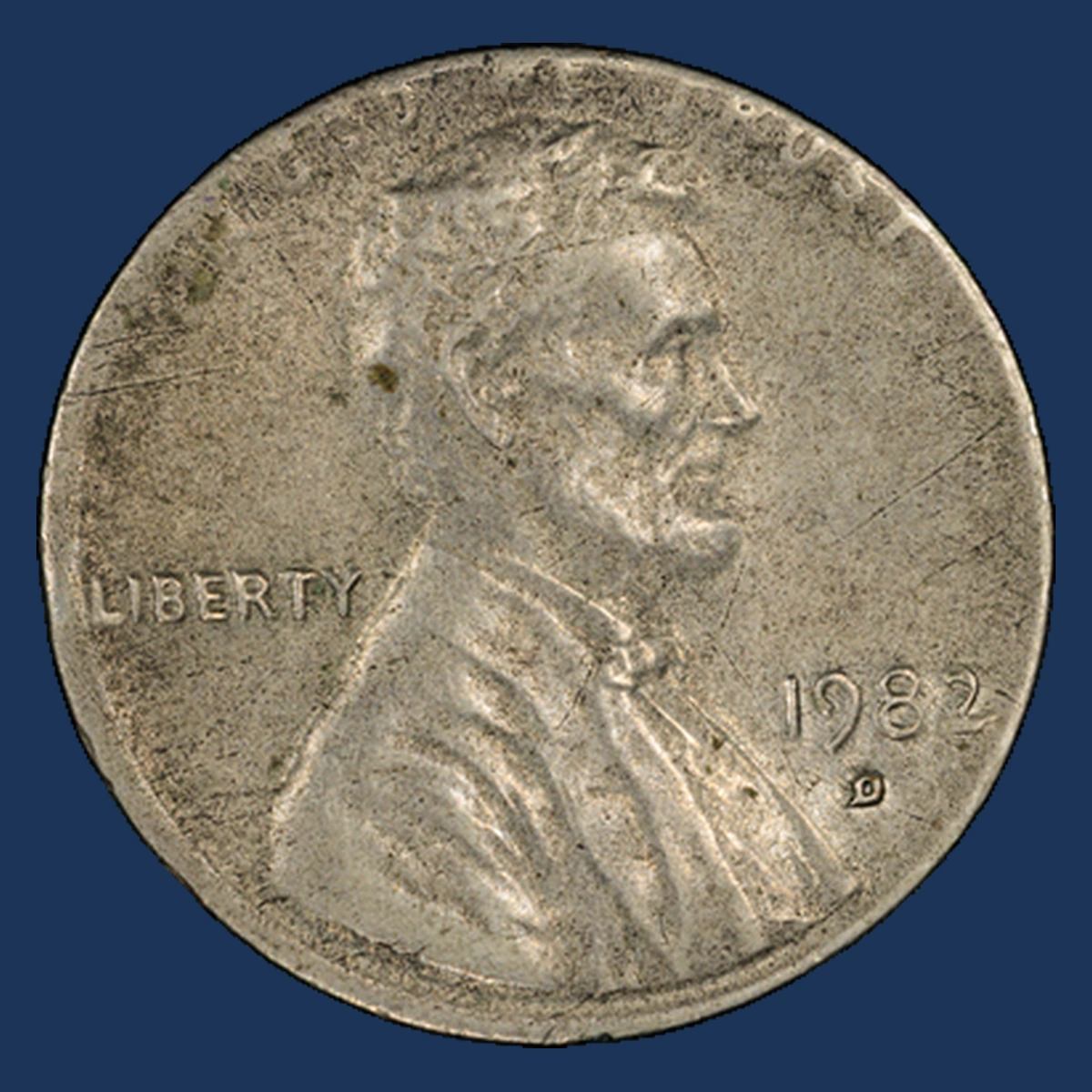
A smaller silver-colored blank leaves less space for the cent design. It was intended for a dime but reached a press fitted with Lincoln-cent tools.
The Philadelphia small-date example was graded PCGS MS64 and sits slightly off center. A separate Denver large-date specimen was graded NGC MS64 and weighs 2.27 g.
Those are separate coins, with different date styles and mint identities. The Philadelphia displacement should not be assigned to the Denver piece.
A clad dime blank has copper-nickel outer layers around a copper center. It differs from both normal 1982 cent metals and has no earlier dime design.
Estimated Value
Use an estimated $250–$1,500 for genuine 1982 cents on clad dime blanks. Readable dates, clean surfaces, and clearly visible wrong-blank features help collectors appreciate the error.
A 1981-D cent on a clad dime blank sold for $372 in September 2025. That nearby-year transaction provides a recent same-mechanism comparison.
The listed 1982 examples have different mint and date combinations. Their grades do not make them the same specimen, and an extra off-center feature should be valued within the complete coin.
How to Identify
Check weight and edge together. A clad dime starts near 2.268 g, below both normal 1982 cent weights of 2.50 g and 3.11 g.
Use a 10× magnifier to inspect the bonded outer layers and copper-colored center at the edge. Do not cut the metal to expose a layer.
Calipers compare a normal dime’s 17.91 mm with a cent’s 19.05 mm. The later cent strike may expand the smaller blank, so the finished diameter is not a rigid test.
Read the date style and any D, then search both faces for older Roosevelt or torch details. An unused dime blank should carry only the cent design.
12. 1982 Lincoln Penny Doubled Front or Back Design (Estimated Up to $6,000)
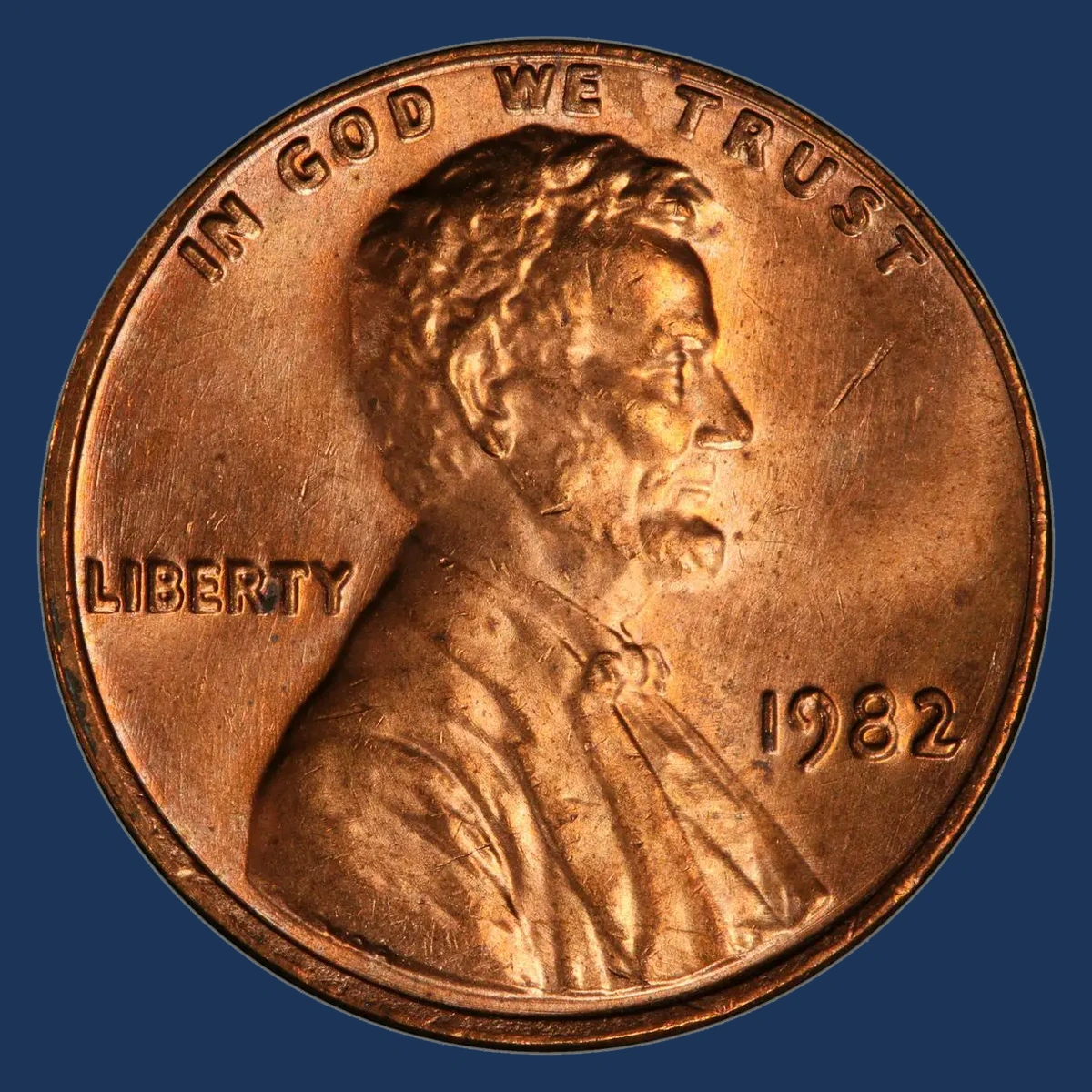
Repeated outlines can appear even when a penny received only one strike. The extra design was already present on its stamping tool.
The important 1982 back variety shows doubling throughout the lettering, including ONE CENT and AMERICA. It belongs to Philadelphia small-date zinc cents, not every date style or metal.
Front doubled-design reports are a separate comparison and should not inherit this back variety’s identity. A candidate must match an actual repeated design at the correct location.
Thin copper ridges and flat shelves can imitate doubled edges. The metal’s raised shape matters as much as the words that appear affected.
Estimated Value
Estimate $5–$200 for identified minor front varieties and approximately $1,000–$6,000 for the strong small-date zinc back variety. These are condition-dependent estimates, not one shared auction result.
GreatCollections offered the named back variety in NGC MS62 Red in June 2021. Its visible listing does not provide a final price used here.
For wider context, an exceptionally graded 1983 doubled-back cent brought $21,937.50 in June 2023. That different-year result should not be transferred to an ordinary 1982 candidate.
How to Identify
For the back variety, establish the small date and absence of a mint letter first. A scale should read near the zinc version’s 2.50 g; calipers compare the normal 19.05-mm diameter.
Under a 10× magnifier, inspect ONE CENT and AMERICA, then the other back lettering. Compare the spread with the documented small-date zinc doubled back.
Look for repeated raised outlines rather than a flat ledge cutting into each letter. Inspect the plain edge and copper skin for squeezing or lifted plating.
A front-side candidate needs its own confirmed pattern. Do not use the back variety’s price because a date or LIBERTY letter merely looks thick.
13. 1982 Lincoln Penny Denver Small Date on Copper Alloy (Estimated Up to $25,000)
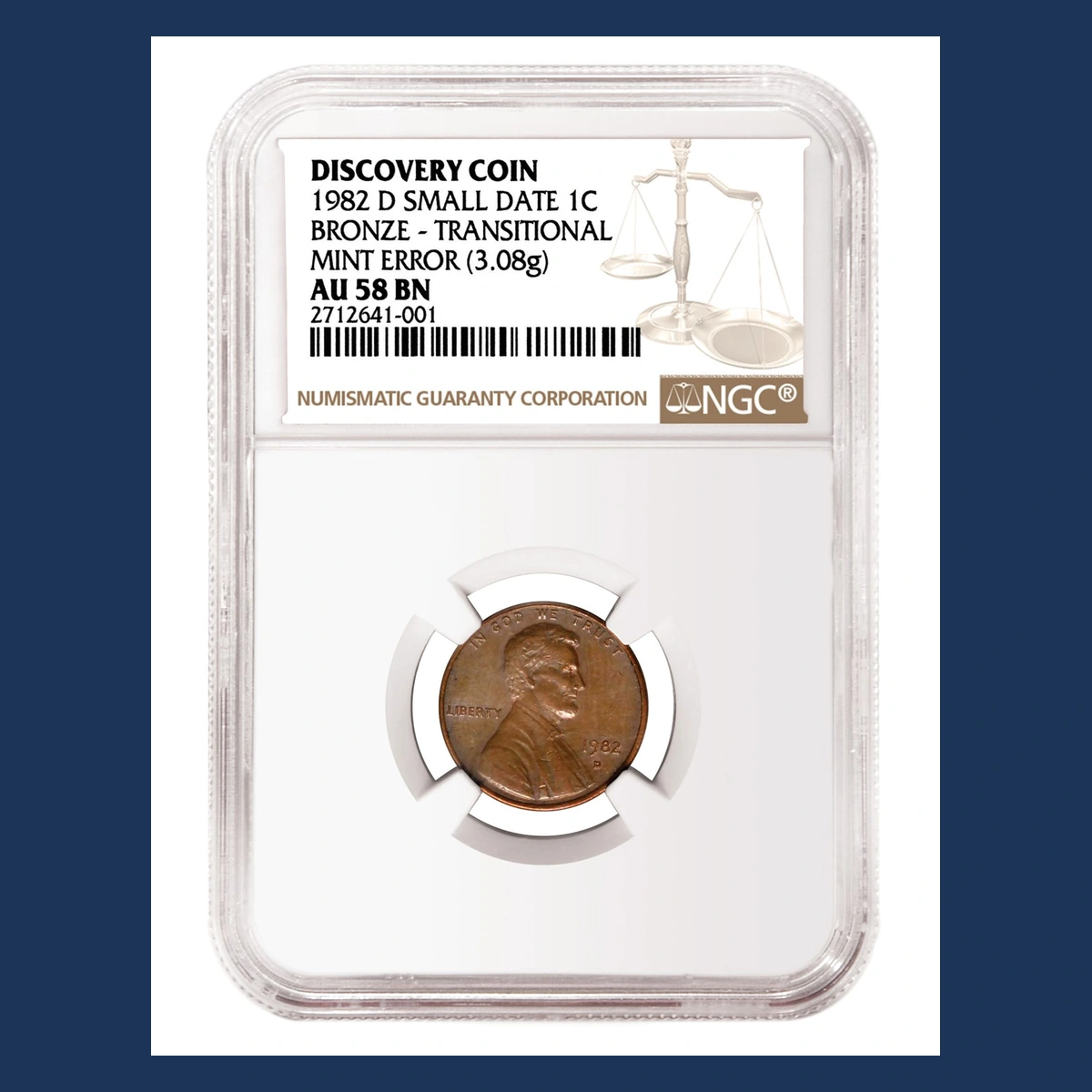
A heavy 1982 cent is usually not an error. Philadelphia small-date copper-alloy cents and Denver large-date copper-alloy cents are normal combinations.
The rare exception here joins Denver’s D and the small-date design with copper-alloy metal. That combination should have used the lighter copper-coated zinc blank.
An older heavy blank instead reached the press. The resulting penny can look ordinary until its date style, mint letter, and metal are checked together.
Certified examples have been graded AU58, meaning only slight wear. One auction specimen weighed 3.07 g, close to the nominal 3.11-g copper-alloy standard.
Estimated Value
The discovery example realized $18,800 in August 2017, as NGC reported. A different NGC AU58 example brought $10,800 on April 25, 2019.
An estimated $8,000–$25,000 reflects this rare confirmed combination and differences in preservation. These two results are separate specimens, not an assumed price change for one coin.
Neither amount applies to a normal heavy Philadelphia small date or Denver large date. Confirm all three identifying features before using this range.
How to Identify
Read the D and compare the complete date with a reliable small-date photograph. The shape and position of the 2 help; judging only how large the numerals look is unreliable.
A precise scale should place a copper-alloy candidate near 3.11 g instead of the zinc version’s 2.50 g. Check calibration and repeat the reading.
Use a 10× magnifier to examine the date, mintmark, and plain edge for altered digits or added metal. Calipers should show roughly the normal 19.05-mm width.
Professional, non-damaging metal testing can confirm copper alloy throughout. A genuine D, correct small-date design, and heavier original alloy must all belong to the same coin.
Conclusion
Sort 1982 cents by date style, mint letter, and metal before using a price. A heavy Philadelphia small-date penny is a normal combination; the rare copper-alloy small-date error has D.
The estimated $2–$25,000 range also covers tool breaks, displaced strikes, and wrong blanks. Keep surfaces intact, weigh the coin carefully, and compare the exact design feature rather than treating every unusual mark as the same error.