1972 Penny Error List with Pictures

The famous doubled 1972 date is only one way this penny can look unusual. A sharply preserved example of that major variety sold for $14,400 in June 2019.
This 1972 penny error list also includes folded metal, foreign blanks, and a cent design over a 1964 silver dime. Small letter details need very different comparisons from those larger accidents.
Estimated values span $2–$25,000. Read on to connect the visible feature with its cause, then use the price for that particular type.
1. 1972 Lincoln Penny Clipped Blank (Estimated Up to $250)
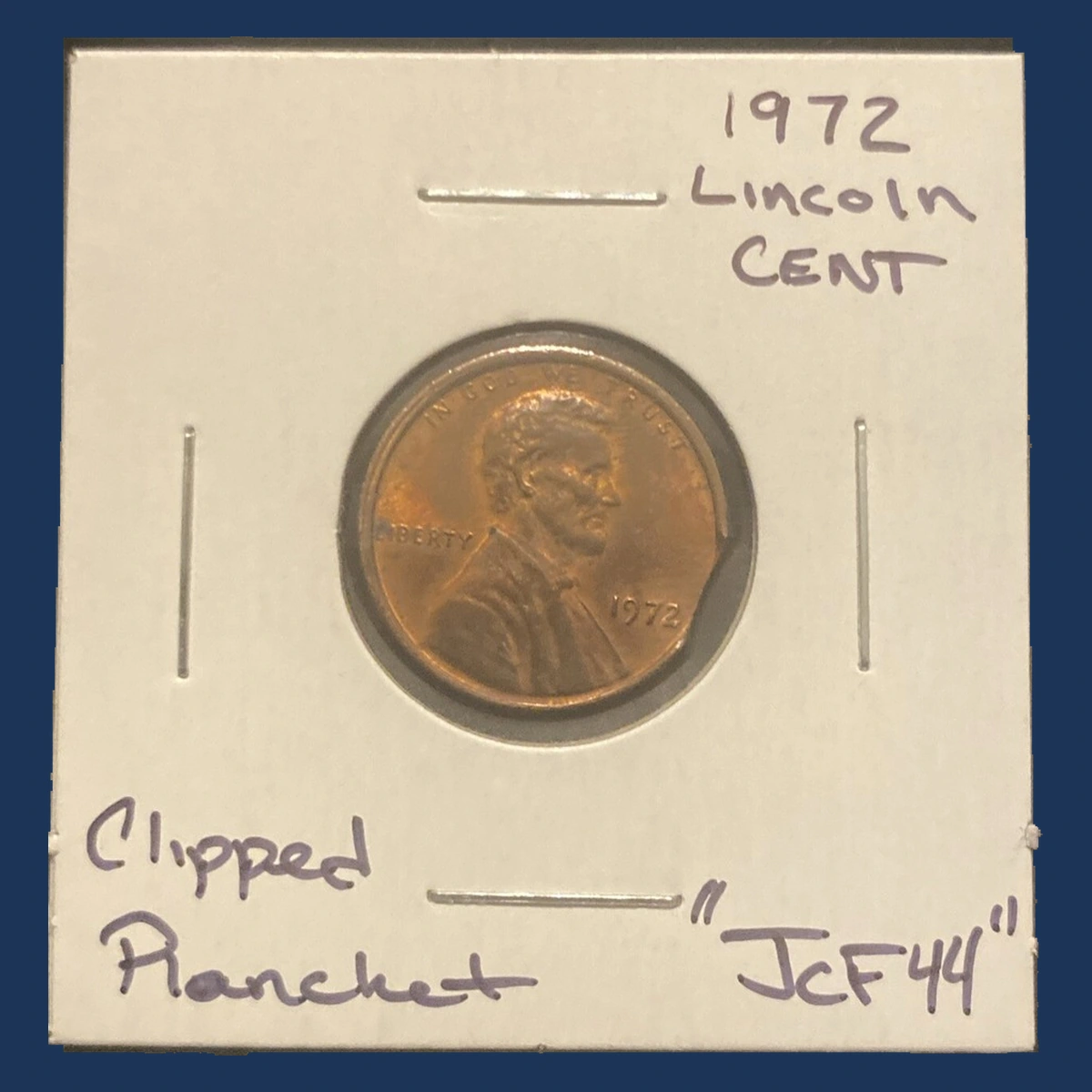
A curved section can be missing while the remaining penny looks normally struck. The gap began when the blank was punched from a metal strip.
If the punch overlapped an earlier hole, the new disc lacked part of its outline. It could still enter the press and receive Lincoln’s design.
Clipped blanks are reported for 1972 without one specific mint or gap size assigned to every example. Each coin needs its own missing boundary examined.
Cutting a finished penny can imitate the outline. The nearby rim and design help distinguish original missing metal from a later saw cut.
Estimated Value
For a genuine curved clip, estimate $10–$250. A larger, clearly original gap on an attractive coin usually provides a stronger comparison than a tiny bite hidden by wear.
A 2021 straight-clip cent sold for $114 in September 2025. That later zinc-centered coin has a different cut shape, so it supplies only a general clip comparison.
The 1972 range concerns the missing blank metal itself. Later filing or cutting should not receive the same premium merely because the gap looks dramatic.
How to Identify
Follow the curve of the missing section under a 10× magnifier. Compare how the rim and letters meet it on both faces.
The rim opposite a genuine clip may be weak because the blank formed differently. That feature helps, but its absence does not settle the question.
A normal 1972 penny weighs 3.11 grams and measures 19.05 mm. Use a scale to assess lost metal and calipers across an intact width.
Inspect the remaining smooth edge for file marks or fresh cutting. Do not improve the gap with cleaning or tools.
Original struck details meeting the incomplete boundary are more persuasive than a curved outline alone.
2. 1972-D Lincoln Penny Repunched D (Estimated Up to $250)
Parts of another D can appear around the mint letter without the rest of the date being doubled. The letter was added separately to the steel stamping tool, called a die.
A second punch placed slightly differently could preserve an earlier stroke. Pennies struck from that tool then repeated the overlapping letter.
Denver examples show several directions of overlap, including westward, northward, and tilted patterns. Similar directions do not guarantee identical shapes.
Look at the whole D instead of a single bump. Wear, damage to the letter punch, and metal pushed aside during striking can create misleading projections.
Estimated Value
An estimated $5–$250 covers identified 1972-D repunched mintmarks with different separation and condition. Strong recognizable strokes on an unworn coin are easier to collect and compare.
The range reflects similar small Memorial-cent mintmark varieties. It does not assign a sale price to every catalog entry or count another price for each surviving D stroke.
Tiny overlaps can be interesting without being expensive. The upper estimate needs a clear matching pattern, not just a thick or damaged mint letter.
How to Identify
The date can remain normal while the D contains an extra stroke. Start with the mint letter under a 10× magnifier rather than expecting the whole front to repeat.
Trace the upright, curve, and short ends of the D. Each extra piece should fit another placement of that same letter.
Compare tiny surrounding tool marks only after finding a matching letter shape. Those marks can change when a tool is polished or wears.
Use a scale and calipers against 3.11 grams and 19.05 mm when the coin is safely accessible. Its ordinary edge is smooth.
A second recognizable D segment in the correct relationship to the main letter supports repunching.
3. 1972 Lincoln Penny Clashed Tools (Estimated Up to $300)
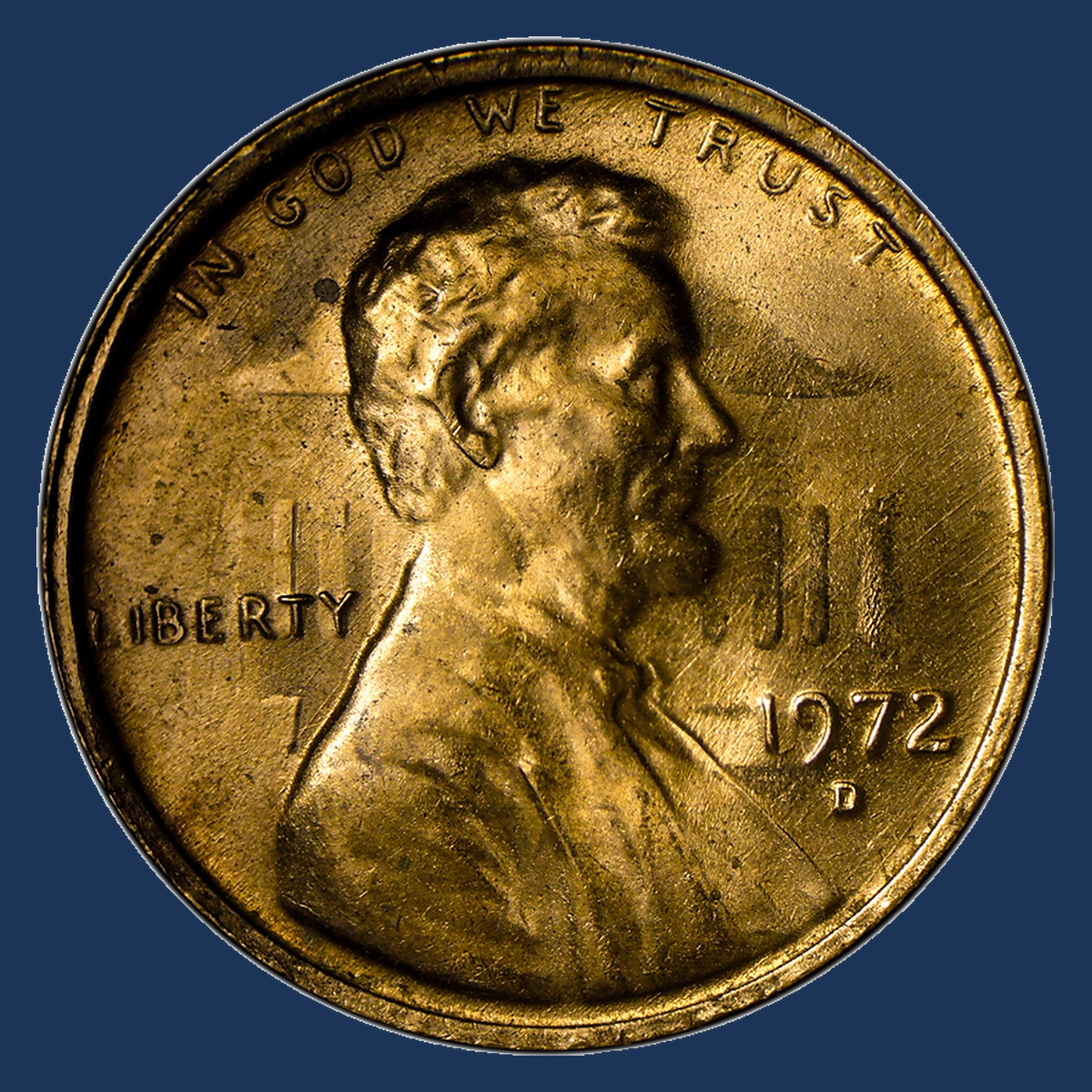
A piece of the opposite design can appear faintly where it does not belong. The two stamping tools touched without a blank between them.
That contact marked the tools, and later pennies carried the transferred shapes. Collectors call the effect a die clash.
Philadelphia and Denver examples are reported, including more complicated repeated transfers. One Denver pattern includes light marks near RTY in LIBERTY.
A repeated transfer back to the original tool is called a counterclash. Random polishing lines are different: they need not resemble any part of the coin’s intended design.
Estimated Value
Use an estimated $5–$300 for recognizable clashes and repeated-transfer patterns. A clear piece of misplaced design generally provides a stronger comparison than several faint unrelated lines.
This is an estimate based on similar Memorial-cent tool-contact errors. The catalog reports do not provide a separate auction result for every 1972 pattern.
Preservation matters because polishing or wear can hide the transferred detail. A larger number of apparent lines does not establish a fixed number of collisions or a multiplied price.
How to Identify
Choose a suspect line and ask which part of the opposite face it could represent. A roof edge, letter segment, or portrait outline makes a useful comparison.
Under a 10× magnifier, follow the whole shape with light from the side. Several short unrelated scratches should not be joined into an imaginary design.
Compare both faces with photographs of the matching mint and pattern. The RTY-area example does not locate every Philadelphia or Denver clash.
The normal smooth-edged penny is 3.11 grams and 19.05 mm. A scale and calipers help check for changes caused by later squeezing.
A misplaced outline that actually matches the opposite design establishes the useful clash clue.
4. 1972-D Lincoln Penny Misaligned Front Tool (Estimated Up to $350)
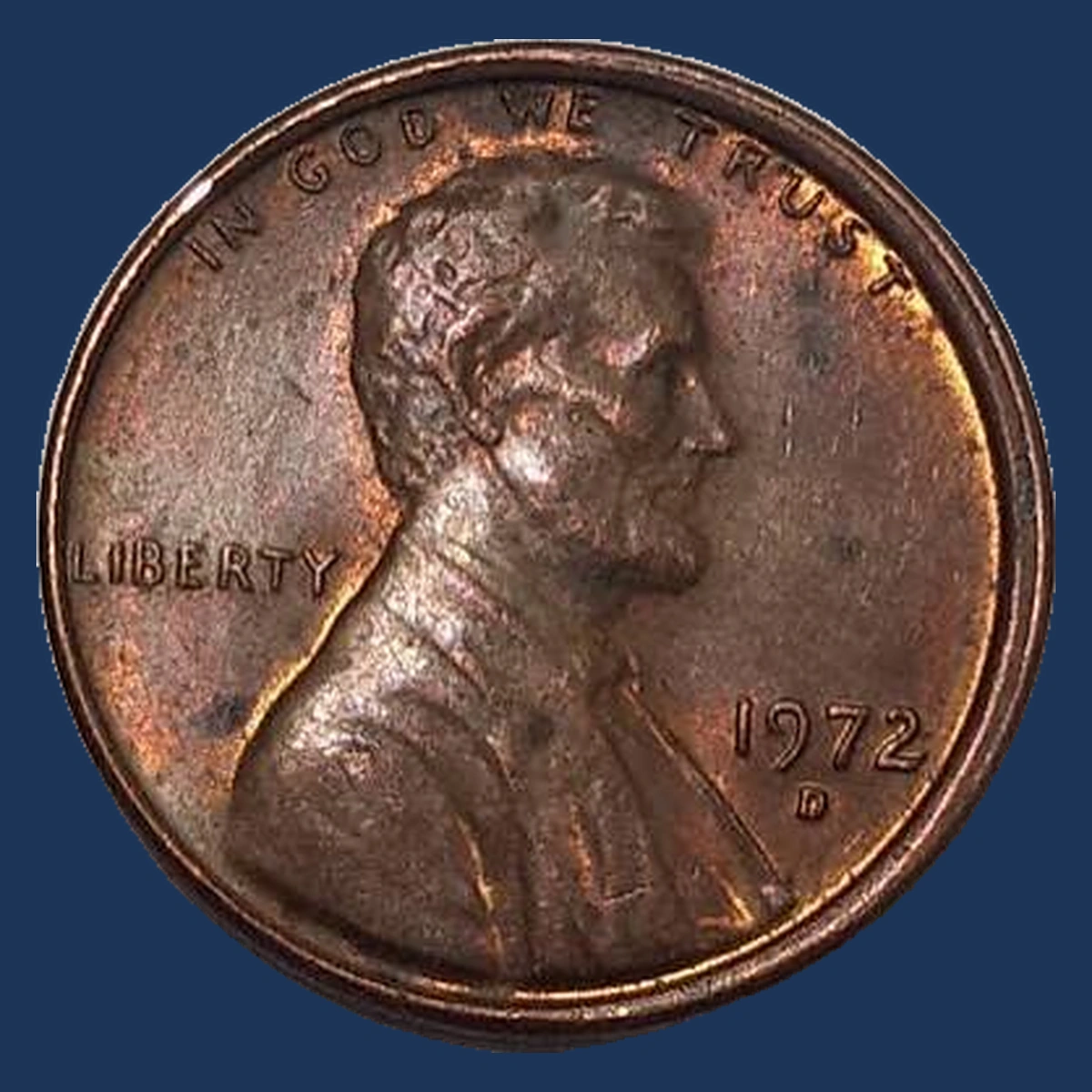
An uneven front border can occur without the entire blank being off center. The front stamping tool sat out of alignment with the other tool.
The recorded 1972-D example was graded NGC MS63 Red and Brown. It is an unworn coin with marks and a mixture of copper-red and brown color.
Its front is the displaced face. The back helps show that this is a tool-position problem rather than a blank missing the striking area on both sides.
A wide rim alone is not enough. The relationship between the two faces is what separates these similar-looking mistakes.
Estimated Value
The NGC MS63 Red and Brown example sold for $114 in March 2026. An estimated $10–$350 covers different degrees of visible misalignment and preservation.
A modestly uneven rim is less dramatic than a displacement that clearly changes where the design meets the edge. Both still need the correct two-face comparison.
The recorded sale belongs to this front-tool error. It should not be assigned automatically to an off-center strike where both designs miss part of the blank.
How to Identify
Photograph the front and back at the same size. Compare where each design sits inside the metal outline.
If only the front shifts, inspect the back’s centered position carefully. A blank placed partly outside both tools produces a different paired pattern.
Use calipers around the outline against the normal 19.05 mm. A scale compares the amount of metal with 3.11 grams.
A 10× magnifier helps check the rim and outer letters for filing or later flattening. Inspect the normally smooth edge as well.
The important evidence is different centering on the two faces, with original struck surfaces showing that one tool was misplaced.
5. 1972-D Lincoln Penny Rotated Back (Estimated Up to $350)
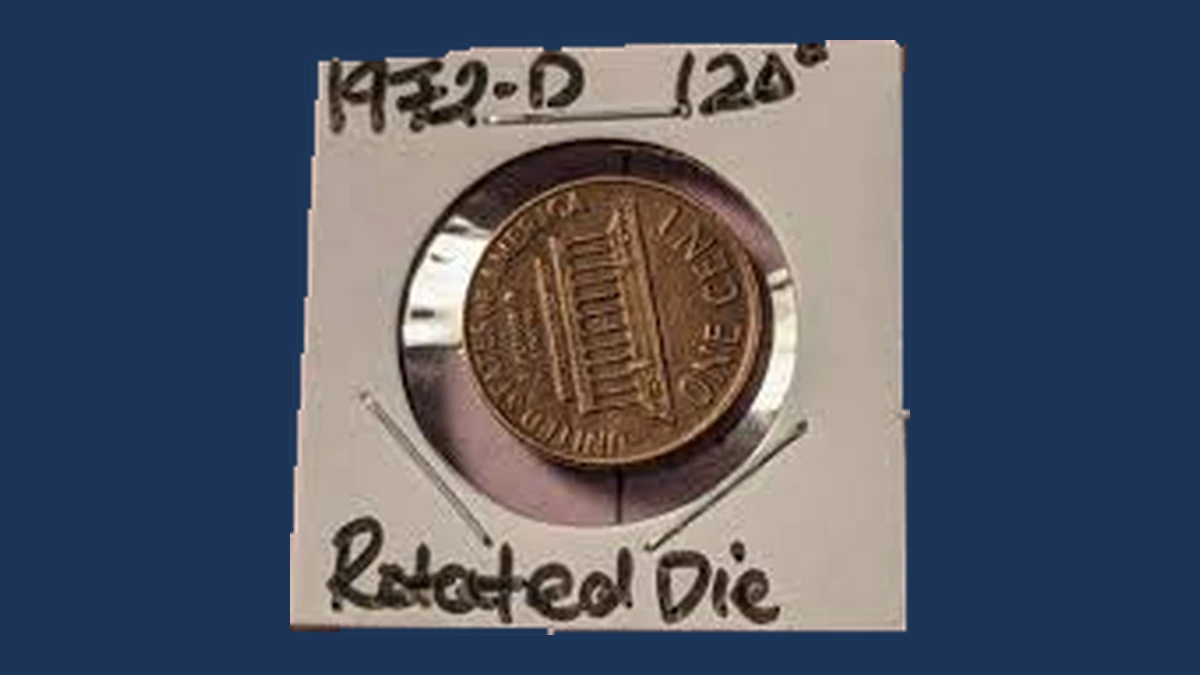
The Memorial can lean sharply when an upright Lincoln is turned over correctly. The two designs were stamped at the wrong angle to each other.
One recorded Denver example has its back rotated about eighty degrees clockwise. It was graded ANACS MS62 Red and Brown.
The rotation changes the relationship between the faces. It does not require a shifted blank, extra lettering, or another complete strike.
Normal United States coins must be turned from top to bottom for this check. Turning one from left to right produces a different view and can make an ordinary penny look incorrectly aligned.
Estimated Value
The eighty-degree example sold for $67 in July 2021. Estimate $15–$350 for genuine rotated-back coins with different angles and condition.
The recorded grade describes an unworn coin with noticeable marks. A larger or cleaner example needs its own comparison rather than an automatic increase for every extra degree.
A small tilt may attract only modest interest. A clearly demonstrated large turn is easier for a collector to appreciate, especially when the original surfaces remain undamaged.
How to Identify
Hold Lincoln upright and turn the penny from top to bottom. Keep your fingers on the same sides so the coin does not twist during the movement.
The Memorial should then stand upright on a normal cent. Repeat the test with the suspected piece and compare its angle.
The documented Denver coin turns about eighty degrees clockwise. Do not apply that measurement to every rotated 1972 example.
Inspect the date, D, and smooth edge with a 10× magnifier for alteration. A scale and calipers compare the standard 3.11 grams and 19.05 mm when safely accessible.
A repeatable tilt after the correct flip demonstrates the changed relationship between the designs.
6. 1972 Lincoln Penny Struck Through Material (Estimated Up to $500)
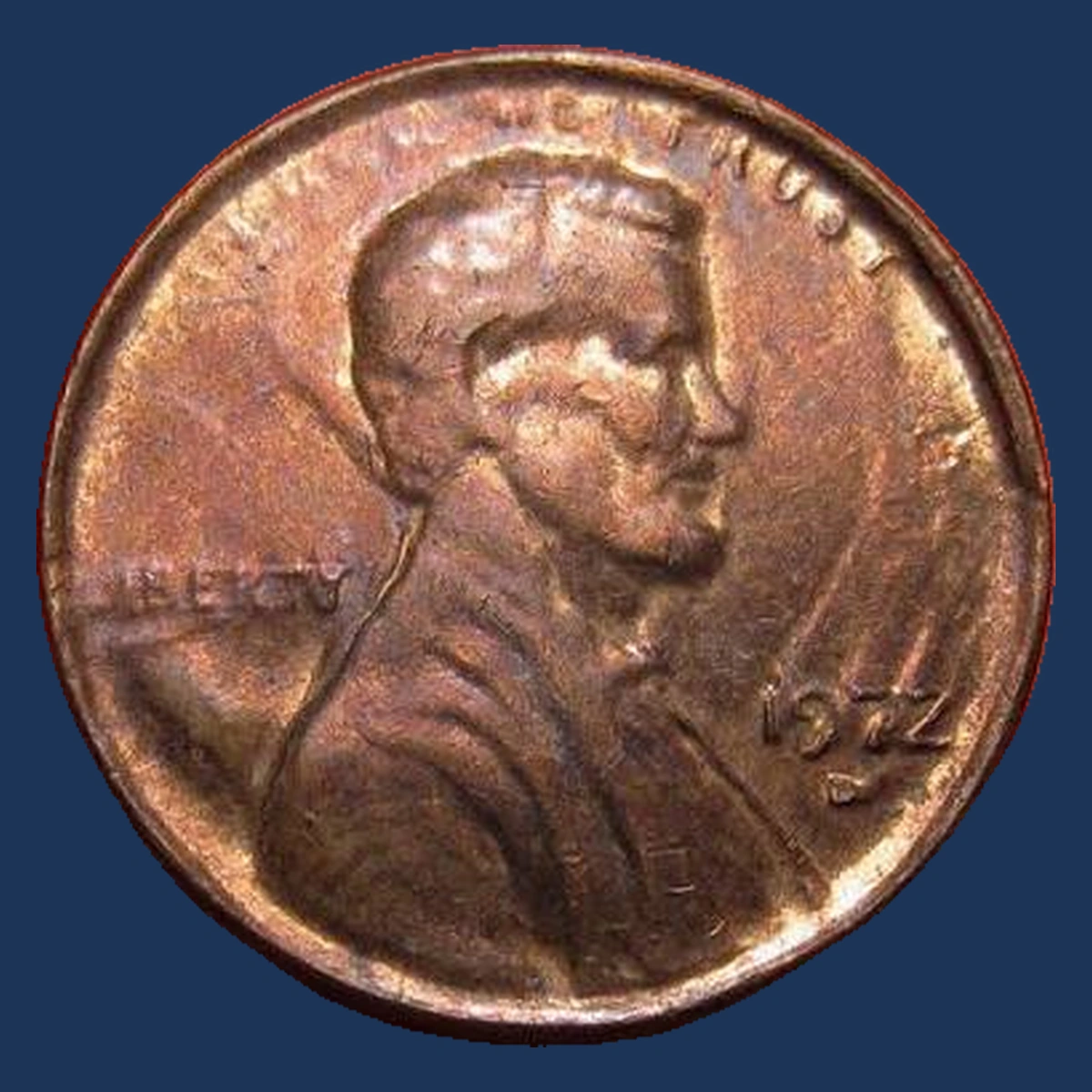
A local hollow or weak area can form when something lies between the blank and a stamping tool. The design cannot reach that part of the metal normally.
Collectors call this a struck-through error. A hard object may leave a defined outline, while soft material can blur or block detail.
Year-specific reports include this type for 1972 without identifying one exact substance or position. A weak patch should not automatically be described as a wire or piece of cloth.
Examine the surrounding surface first. A dent made after the coin leaves the Mint can remove detail for a different reason.
Estimated Value
An estimated $5–$500 spans small blocked areas through stronger, clearly original impressions. A recognizable outline or texture can make an unusual patch easier to explain.
A 2017-D cent with a front struck-through error sold for $228 in March 2025. Its copper-coated zinc blank differs from the copper-rich 1972 penny.
The comparison concerns the obstruction during striking. It does not identify the material on a 1972 coin or give the same value to later scratches, dents, or corrosion.
How to Identify
Use a 10× magnifier to inspect the inside of the affected area. Original surface continuing into an impression can help explain how the object blocked the strike.
Check nearby letters and turn the coin over. A later blow may push up metal around a dent or disturb the opposite face.
Normal dimensions are 19.05 mm and 3.11 grams, with a smooth edge. Use calipers and a scale on an accessible example, leaving sealed coins in their holders.
Do not dig into an impression or remove material that remains attached. Compare the boundary with genuine struck-through examples.
The original impression and its relationship to the surrounding design matter more than a guessed object name.
7. 1972 Lincoln Penny Cuds, Cracks, and Split Tools (Estimated Up to $600)
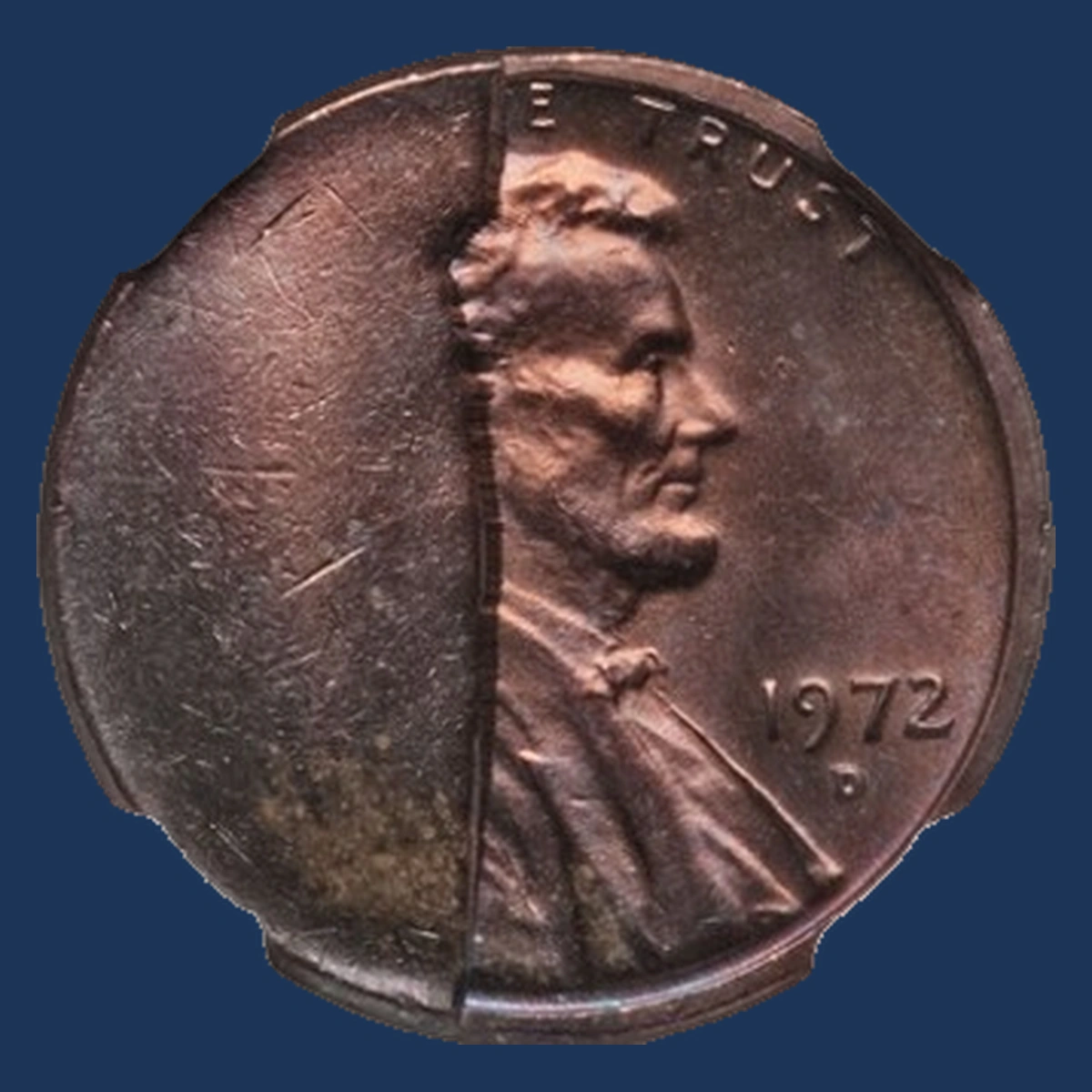
A broken stamping tool can leave extra raised metal on the penny. A narrow crack makes a line, while a missing rim section creates a solid patch called a cud.
Some broken pieces remain in the tool and preserve design inside the damaged area. These are retained breaks rather than fully missing sections.
Head-to-rim lines occur on Philadelphia and Denver examples. A more severe Denver split-tool coin has a broad vertical raised band and an unusually wide Lincoln portrait.
The metal coin itself need not be split. Here, the damaged object is the tool that formed its design.
Estimated Value
Small cracks can fit approximately $2–$30, while clear cuds and larger split-tool effects can fit an estimated $30–$600. Size and preservation guide the comparison.
A Denver LC-72-D-8B cud sold for $156 in March 2021. A separate broad vertical split-tool example brought $258.75 in September 2004.
These are prices for complete coins with different damage patterns. Several raised lines on one penny do not create several independent values to add together.
How to Identify
Inspect the feature with low light and a 10× magnifier. It should rise from the coin rather than open as a tear through its metal.
A cud reaches the rim; an interior break can stay away from it. Retained broken-tool areas may preserve detail, often shifted relative to neighboring design.
For the severe split example, compare the vertical band and widened portrait with the normally formed back. Do not assign that wide shape to every small head crack.
A scale and calipers compare an accessible coin with 3.11 grams and 19.05 mm. Check the smooth edge for added metal.
Original raised breaks following the matching tool pattern provide the useful identification.
8. 1972-D Lincoln Penny Off-Center Strike (Estimated Up to $600)
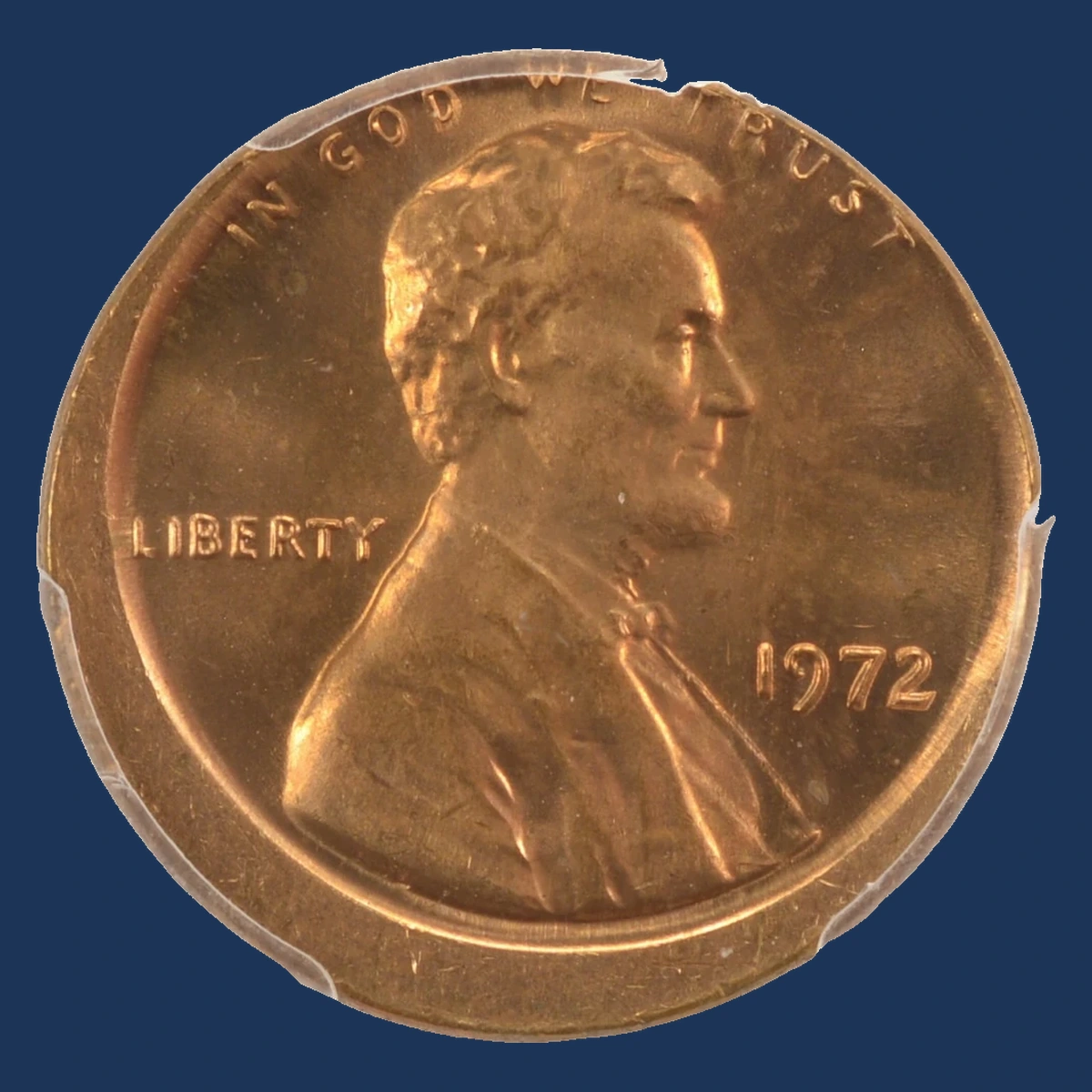
The untouched crescent is still part of the penny. The blank sat too far to one side when the tools came together.
A recorded Denver example was struck about sixty-five percent off center. Other pieces preserve different amounts of Lincoln, lettering, and date.
The missing design does not mean the same percentage of the metal is gone. The tools simply failed to reach that portion of the original disc.
Both faces need to fit the same misplaced blank. A shifted front border with a normally centered back points instead to one tool being out of alignment.
Estimated Value
The sixty-five-percent Denver example sold for $216 in May 2021. A separate sixty-percent example brought $44 in September 2025.
An estimated $15–$600 covers dated examples with varied displacement, clarity, and condition. The two sale prices show why a percentage alone is not a value formula.
A readable date and attractive original surfaces help collectors compare an extreme piece. Missing identity or damage can reduce interest even when most of the design lies beyond the blank.
How to Identify
Look for the actual date before naming the year. A large untouched crescent cannot identify a coin on its own.
Compare the missing design on the two faces using a 10× magnifier. The blank boundary should explain both impressions as one displaced disc.
Check plain metal for grinding or other work that could remove a finished design. Inspect the smooth edge for cutting as well.
An accessible coin can be weighed against 3.11 grams. Calipers document how its outline differs from the normal 19.05 mm without assuming that a wider coin lost metal.
Original unstruck surface beside corresponding design loss on both faces is the off-center relationship to recognize.
9. 1972 Lincoln Penny Broadstrike, Including a Doubled-Tool Example (Estimated Up to $750)
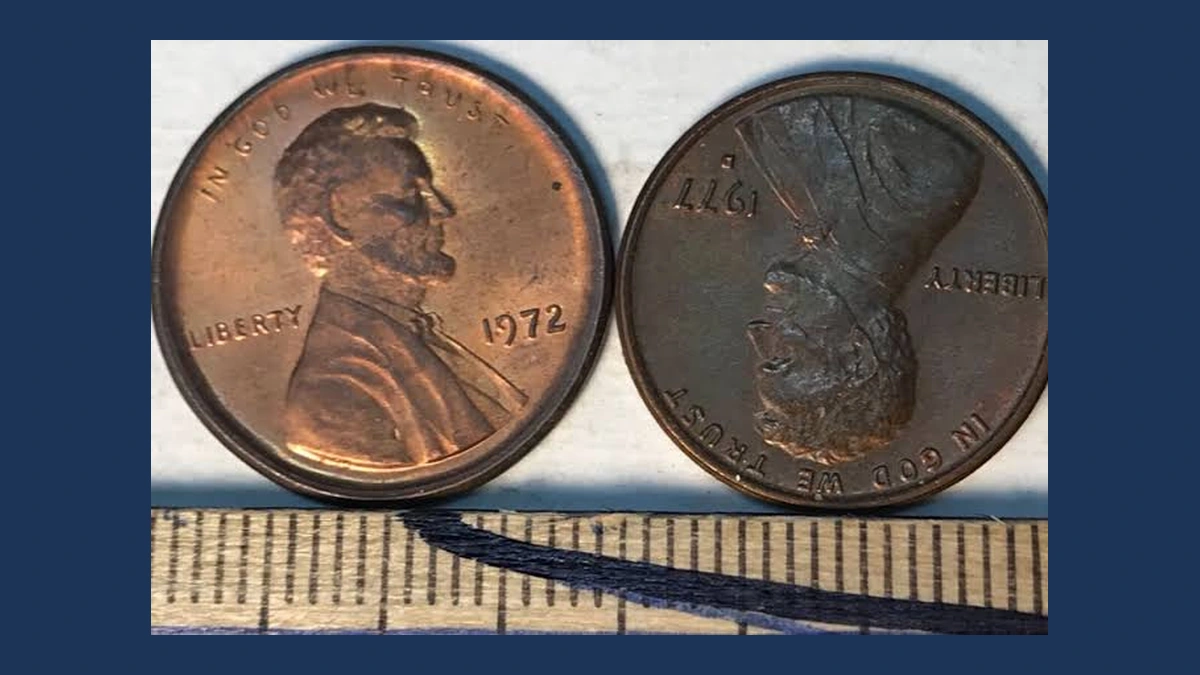
A penny can look displaced even when its complete design remains on the metal. Without normal support from the edge ring, the blank spreads outward unevenly.
That ring is called the collar. This outward spread creates a broadstrike rather than simply cutting off part of the design.
For 1972, recorded examples include a noncentered broadstrike and pieces from a doubled front tool known as WDDO-003. The latter combine extra design with the enlarged outline.
The doubled-tool pattern and the spreading happened at different stages. Their appearance on one coin should be examined together when choosing a comparison.
Estimated Value
Plain broadstrikes can fit approximately $20–$350. A clear broadstrike carrying the WDDO-003 doubled pattern can fit an estimated $100–$750.
A 1980-D broadstrike sold for $57 in March 2021. It offers a copper-rich cent comparison for spreading, without sharing the 1972 doubled-tool variety.
The combined piece has one total value. Its broadstrike and smaller doubled pattern should not inherit the much higher record for Philadelphia’s famous FS-101 variety, which is a different tool.
How to Identify
Read around the outer lettering on both faces. A broadstrike keeps the intended design within its metal even if one outer margin is much wider.
Use calipers to measure the spread from the usual 19.05-mm outline. A scale compares the metal amount with 3.11 grams.
For the combined variety, inspect the date and LIBERTY with a 10× magnifier. Match WDDO-003 specifically rather than the famous FS-101 photographs.
Inspect the smooth edge and portrait for hammering or later flattening. Those actions can widen a completed coin while crushing the existing details.
Complete, naturally struck designs within extra spread establish the broadstrike; matching added outlines establish the separate doubled-tool feature.
10. 1972-D Lincoln Penny Struck Through a Cap on a Split Tool (Estimated Up to $750)
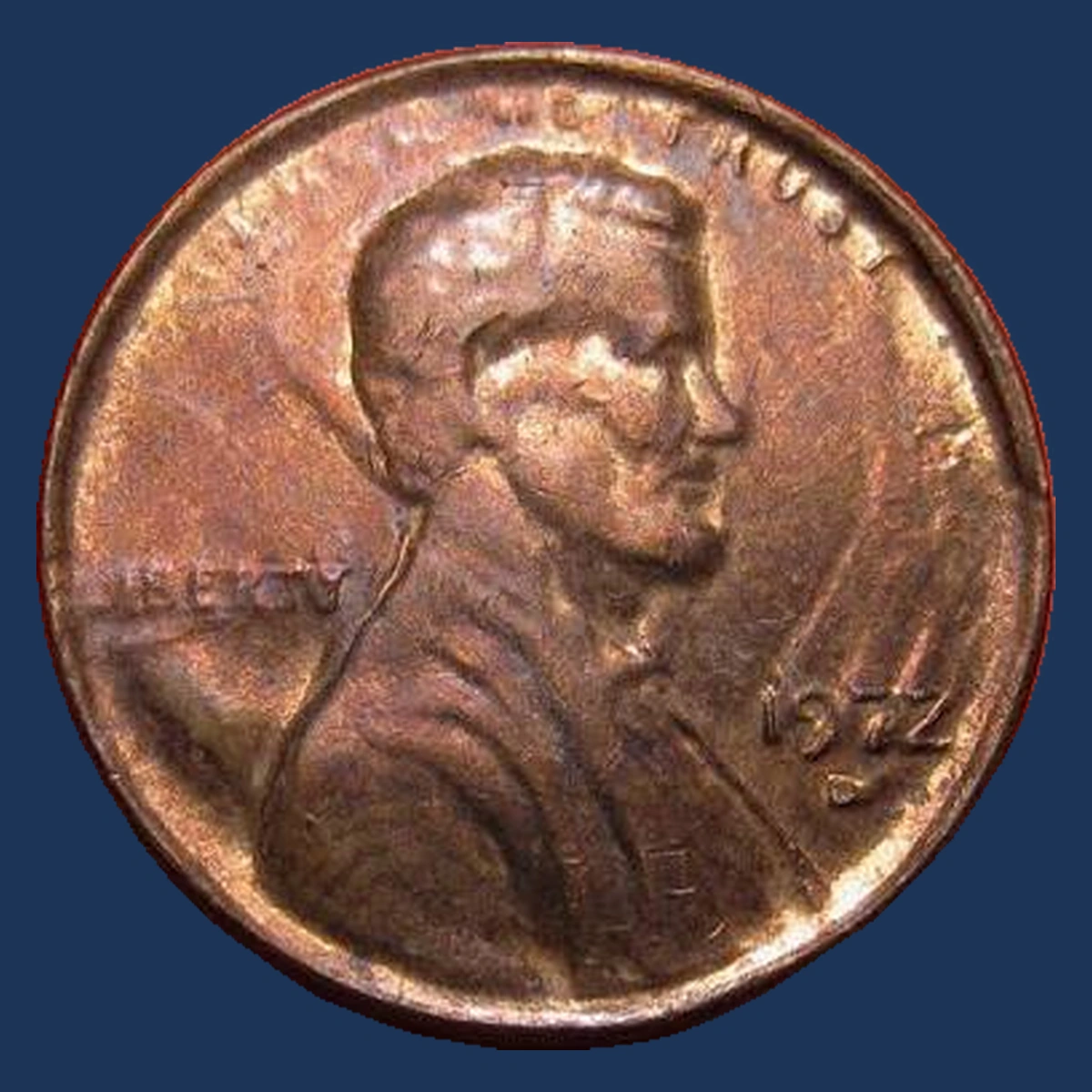
Two things altered the front of these pennies. The stamping tool split, and a coin stuck over its working face formed a cover called a die cap.
As that cover became thinner, later blanks received softened design through it. The tool’s split could also leave a broad vertical raised feature.
Recorded Denver examples show a blurred but readable date and mint letter, with faint Memorial traces on the front. The back can look normally struck.
These are receiving coins beneath the covering. They are not the cup-shaped cap itself, and the weak front is not simply ordinary circulation wear.
Estimated Value
A recorded NGC MS65 Red and Brown example sold for $149.50 in January 2010. A later-stage covered-tool comparison from 1972-D brought $114 in September 2024.
Estimate $75–$750 for clear receiving coins with the combined split-tool and cap effects. The relationship between the vertical break and softened design matters.
The coin receives one combined value. Prices for an actual cup-shaped cap should not be applied directly to a flatter penny struck underneath that covering.
How to Identify
Examine the vertical raised break and weak front together under a 10× magnifier. A genuine combination should explain both features on the same surface.
Look for the readable 1972 and D without sharpening the image into letters that are not present. Compare faint Memorial traces with a documented example.
Turn the coin over to assess the more normally formed back. General wear would usually affect exposed design differently from a covering trapped over one tool.
Use a scale and calipers against 3.11 grams and 19.05 mm on an accessible piece. Inspect the smooth edge for later pressure.
The split’s raised band within the cap-softened front provides the specific combination to match.
11. 1972-D Lincoln Penny Split After Striking (Estimated Up to $750)
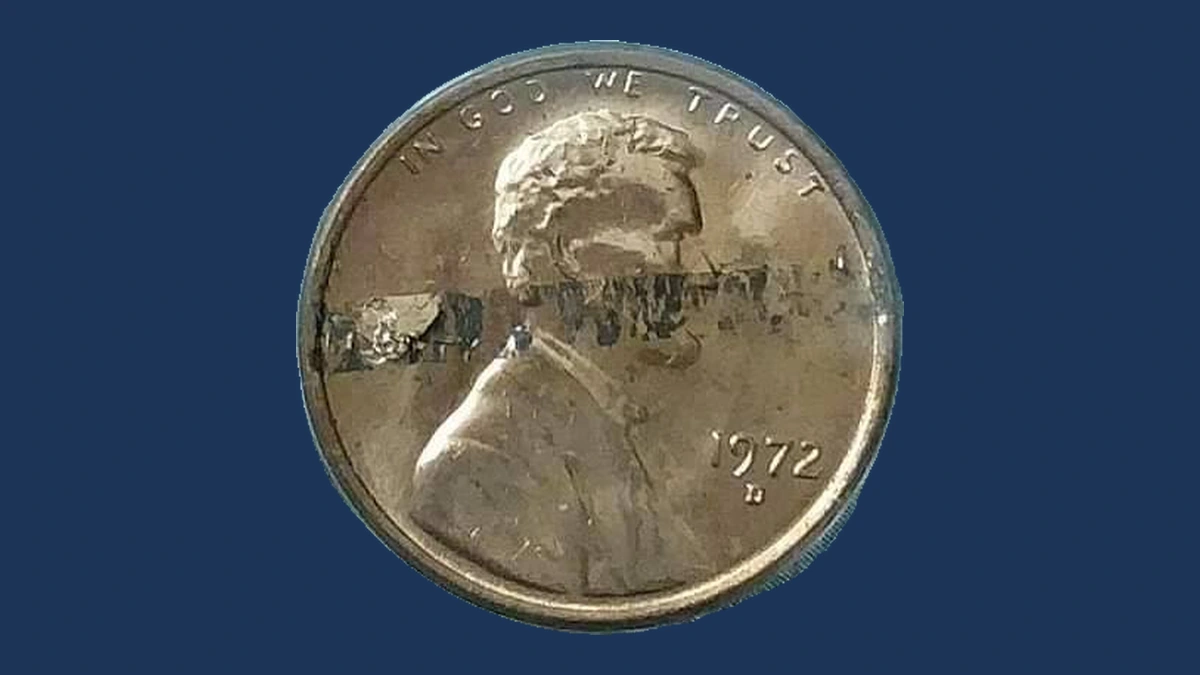
Here, the metal of the penny separated after it received its design. The exposed inner surface can look very different from the normal face that remains.
The dealer who handled this 1972-D example described a split after striking. The older ANACS label instead called it a strike through a capped tool.
Those explanations describe different physical events. A separated layer exposes the coin’s interior; a covering over a tool changes the impression placed on an otherwise intact blank.
The dealer’s interpretation belongs with this specific piece. A weak face alone cannot establish that the metal split into layers.
Estimated Value
For a genuine after-strike separation, estimate $50–$750, depending on how much metal and original design survive. The exposed surface should explain the split clearly.
This is an estimate from related split-cent errors, not a recovered selling price for the disputed-label example. Its condition was described with an ANACS Details grade.
The conflicting explanations affect which coins make useful comparisons. Establish actual layer separation before using this range rather than pricing every weak face as a split.
How to Identify
Inspect the edge first without pulling the layers apart. A real separation should show where the interior opens and how the remaining outer face connects to it.
A 10× magnifier can distinguish a separated metal surface from a soft impression on an intact coin. Photograph that relationship from several angles.
If material is missing, a scale may read below the normal 3.11 grams. Calipers compare the remaining width and thickness with an ordinary 19.05-mm penny.
The original edge is smooth. Look for sawing, grinding, or forced peeling that could create a later alteration.
An exposed inner layer with surviving struck outer detail supports separation after striking, rather than a covered-tool impression.
12. 1972-D Lincoln Penny Thick Blank (Estimated Up to $800)
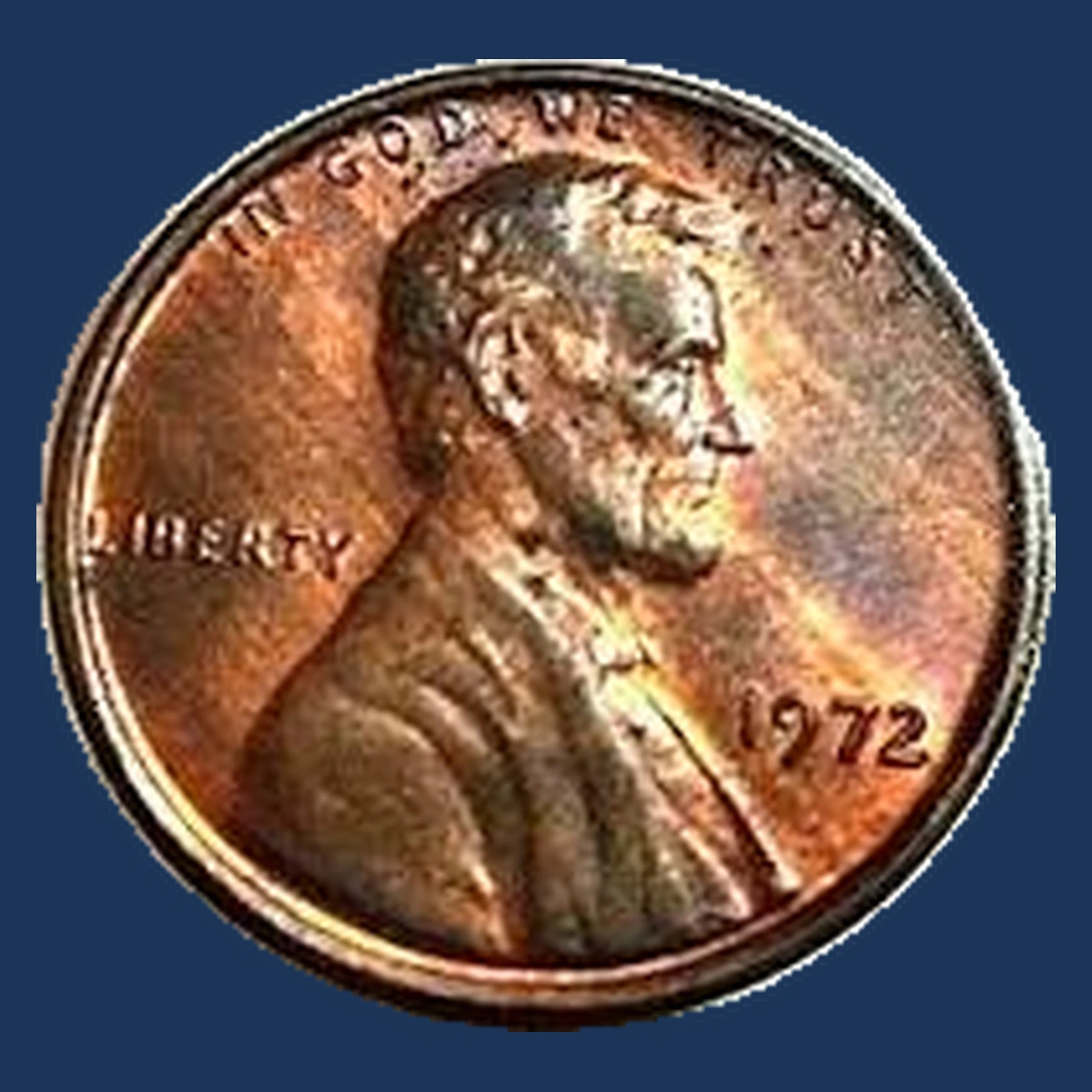
This Denver penny contains noticeably more metal than normal. Its recorded weight is four grams, compared with the usual 3.11 grams.
The example was described as a thick blank and graded PCGS MS63 Red and Brown. Its extra thickness is a different issue from a broadstrike spreading normal metal outward.
The description does not identify the blank as a particular foreign denomination. Nor does the weight alone prove precisely how the thicker metal entered production.
Added plating or two joined pieces can also make a penny heavy. An original thick blank must retain a believable struck surface and unaltered edge.
Estimated Value
An estimated $100–$800 suits an authenticated thick-blank cent with clearly measurable extra metal. Surface quality and the degree of excess help determine the comparison.
A 1976-D rolled-thick cent weighing 3.78 grams sold for $129 in December 2024. That nearby copper-rich example offers a recent comparison without proving the origin of the four-gram 1972 blank.
The recorded grade means unworn with marks and mixed red-brown color. A heavy reading alone does not earn a thick-blank premium.
How to Identify
Use a checked scale to repeat the weight reading. Four grams is substantially above the normal 3.11 grams, but the reason still needs examination.
Calipers compare diameter with 19.05 mm and record thickness along accessible areas. Do not press hard into the surface.
Under a 10× magnifier, inspect the normally smooth edge for a seam or added coating. Two joined coins or extra metal can create false weight.
Compare the design with a normal copper-rich 1972-D cent. Professional metal testing can help if the color or structure suggests a different alloy.
Original design on genuinely thicker metal, with no added layer or seam, is the combination needed here.
13. 1972-D Lincoln Penny from Two Blanks Struck Together (Estimated Up to $800)
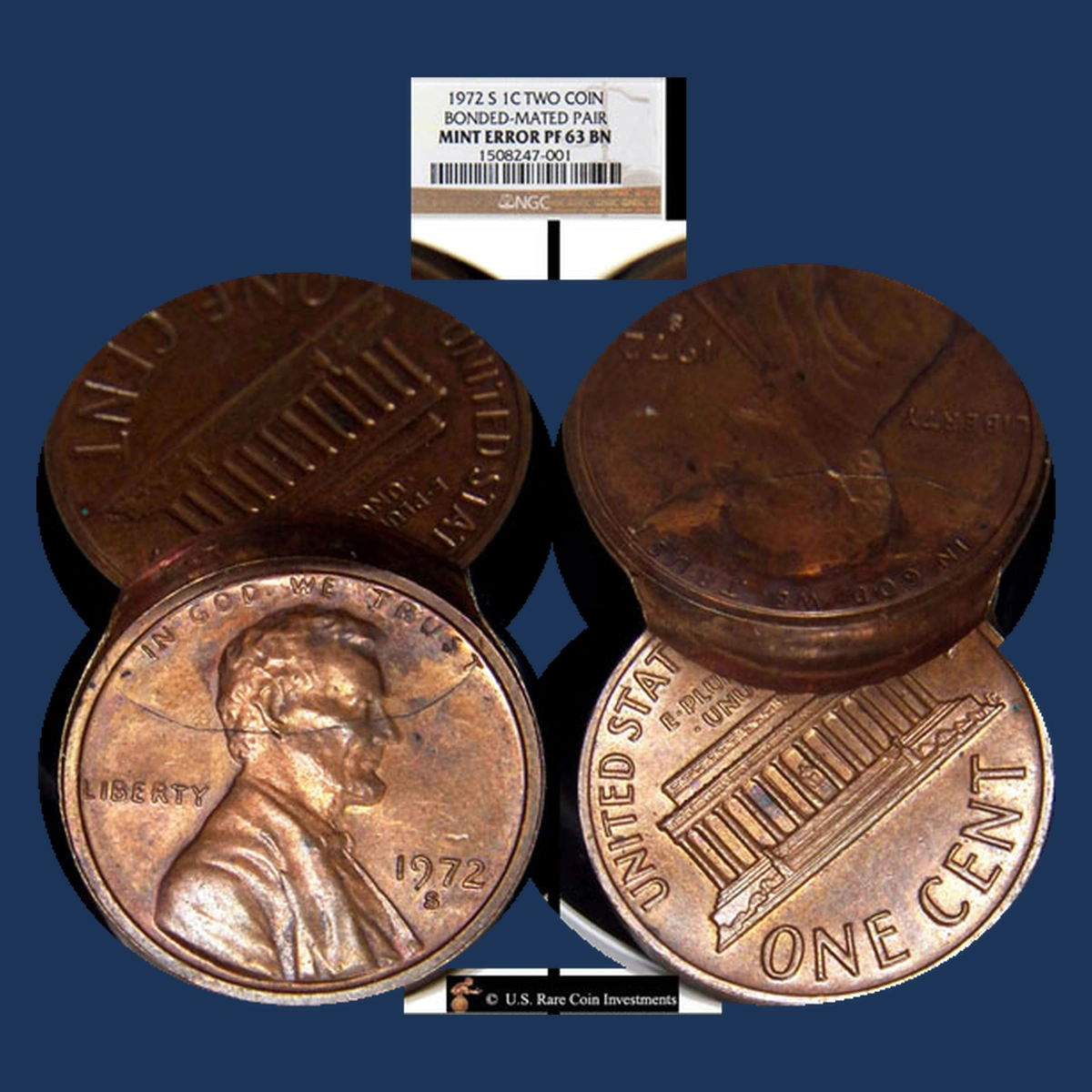
Two blanks can enter the striking space together. One receives the front tool directly, while its contact with the other blank changes the opposite surface.
The recorded 1972-D piece is described as the front member of that event. It was graded NGC MS63 Red and Brown.
Only this member is documented in the listing. It should not be presented as a complete matching pair or as two coins still bonded together.
The contact area helps explain why one surface differs from the normally struck front. A weak area by itself does not prove that another blank shared the blow.
Estimated Value
The documented front member sold for $57 in October 2022. A separate, higher-graded front member from 1972-D brought $35 in June 2023.
Estimate $30–$800 across clearly identified pieces with different contact patterns and preservation. The stronger end requires much more dramatic, readable evidence than a modest weak surface.
These are prices for individual surviving members. A complete matched pair would need its own evidence and comparison rather than assuming an undocumented second coin is included.
How to Identify
Compare the directly struck front with the opposite contact surface. A 10× magnifier helps follow where another blank blocked or altered the normal impression.
Photograph the full outline and both faces together. That makes the relationship easier to assess than a close-up of a single blank-looking patch.
Use a scale against 3.11 grams for this individual coin. Calipers record any departure from the usual 19.05-mm width.
Inspect the smooth edge for signs of later squeezing or joined pieces. Do not expect two normal coin weights when only one member survives.
A naturally struck front linked to an original blank-contact surface supports the two-blanks-together explanation.
14. 1972-D Lincoln Penny Double Strike (Estimated Up to $1,200)
The coin moved after its first strike and received another blow. Two positions of the design can therefore remain on the same piece.
One Denver example has its second strike about eighty percent off center, with one side blocked during that blow. Another documented Denver piece has an off-center second strike without that additional description.
Those are separate examples. The blocked-side feature should not be assigned to every double-struck penny.
Repeated strikes move the whole coin relative to the tools. A doubled tool instead carries extra design before the blank arrives and can transfer it during a single normal blow.
Estimated Value
The eighty-percent example with one side blocked sold for $192 in January 2022. It was graded ANACS MS64 Red and Brown.
An estimated $50–$1,200 covers clearly identified double strikes with different overlaps and preservation. Readable pieces of both striking positions strengthen the comparison.
The quoted result values the complete combination on one coin. A larger displacement does not guarantee more money when it leaves less recognizable design or when later damage hides how the strikes overlap.
How to Identify
Find a recognizable part of each design position under a 10× magnifier. Trace where the later impression crosses or interrupts the earlier one.
Then inspect the corresponding area on the other face. The blocked-side example should show that specific absence of normal second-strike detail.
Check the normal metal amount with a scale against 3.11 grams. Calipers show how the outline changed from the ordinary 19.05-mm disc.
Look along the smooth edge for flattening or evidence of later pressing. A narrow shelf beside one letter does not establish a separate full strike.
Connected impressions in two genuine striking positions are the useful evidence for a double-struck penny.
15. 1972-S Lincoln Penny Front Brockage (Estimated Up to $1,250)
Backward design pressed into the surface is different from ordinary doubled lettering. A previously struck coin contacted the new blank during the blow.
Its raised details became an inward, reversed impression on the receiving penny. Collectors call this transferred image a brockage.
The recorded 1972-S example has a front brockage and was graded NGC MS64 Red and Brown. It is an ordinary circulation-format coin, not automatically a specially made Proof because it has S.
The opposite face carries the more normal design. The mirrored impression should be examined as a transferred image rather than a missing patch of metal.
Estimated Value
Estimate $100–$1,250 for a genuine front brockage with different amounts of clear transferred design. The image’s completeness and the coin’s preservation strongly affect the comparison.
An undated cent with a full front brockage sold for $192 in March 2025. That sale provides a mechanism comparison without establishing its year or applying a Proof premium to the 1972-S coin.
Readable mirror detail helps explain the error. A poorly defined depression or a later squeeze between coins requires a different assessment.
How to Identify
Reverse a clear photograph of the unusual face. Letters or portrait details in a true mirror impression should become easier to recognize.
Use a 10× magnifier and side lighting to confirm that those details sink into the surface. Extra raised lettering instead calls for another explanation.
Inspect the opposite face and smooth edge for crushing from later pressing. Finished coins squeezed together can create misleading reversed marks.
A safely accessible penny can be checked with a scale and calipers against 3.11 grams and 19.05 mm. Those normal figures do not establish the cause by themselves.
The essential feature is a recognizable sunken mirror design within an original striking surface.
16. 1972 Lincoln Penny on a Clad Dime Blank (Estimated Up to $1,500)
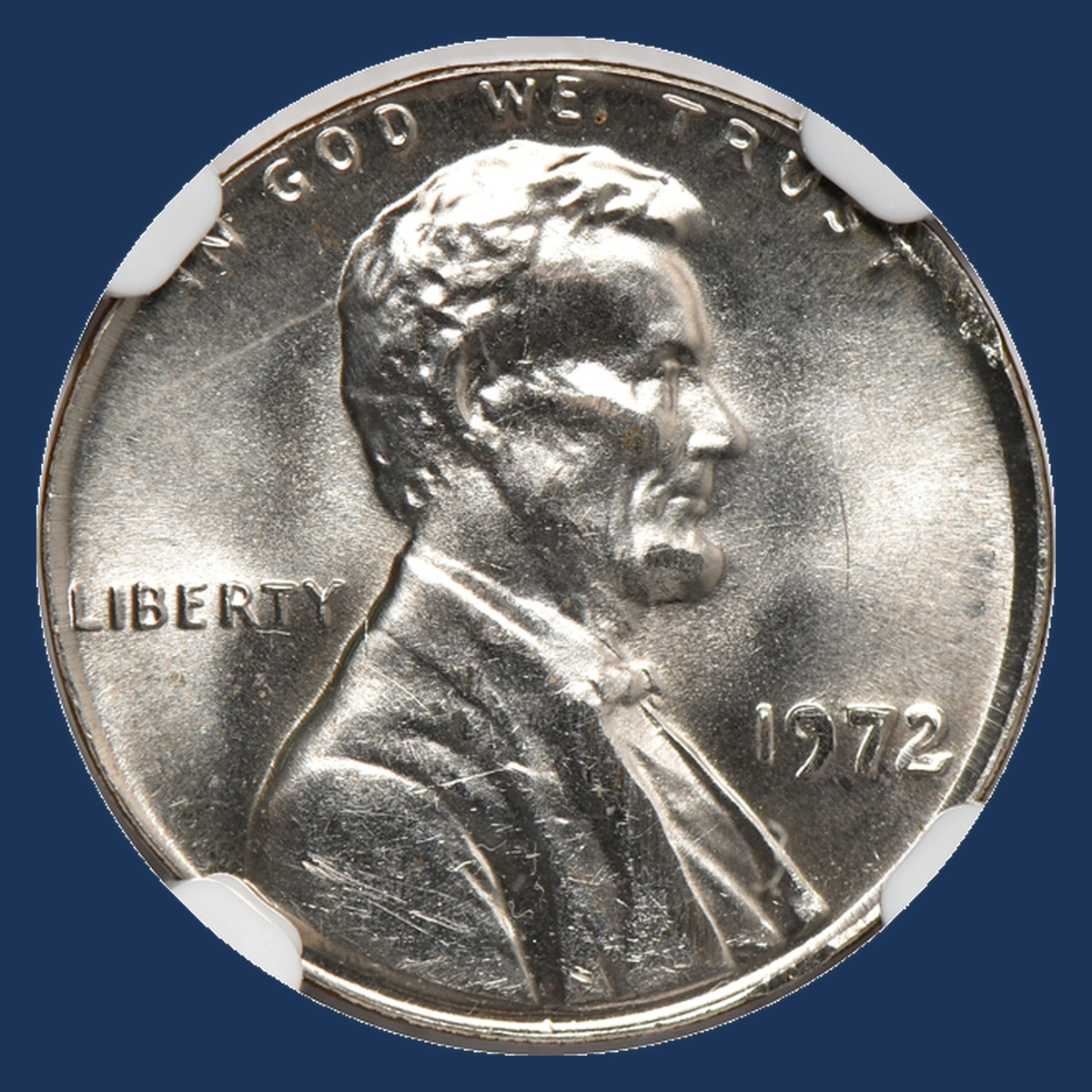
A silver-colored cent may have started on an unused dime blank. The smaller disc cannot accommodate the full outer design of a normal penny.
A recorded Philadelphia example weighs 2.3 grams and was graded NGC MS65. Denver dime-blank cents are also reported, but that measured weight belongs to the Philadelphia example.
The blank has copper-nickel outer layers bonded around a copper center. It differs from the copper-rich metal normally used for a 1972 penny.
An unused blank has no Roosevelt portrait or torch underneath Lincoln. Those designs would indicate that a dime, rather than a blank, entered the cent press.
Estimated Value
For authenticated clad dime-blank cents, estimate $300–$1,500. Clear year and mint details make a small, incomplete design easier to identify and collect.
A 1976-D cent on a clad dime blank sold for $480 in December 2024. That nearby-year example provides a recent comparison, not a transaction for the 2.3-gram Philadelphia coin.
Surface quality and the amount of surviving design influence the estimate. A normal penny with an added silver-colored coating does not acquire the same wrong-blank value.
How to Identify
Place a safely accessible coin on a precise scale. A clad dime blank begins near 2.268 grams, well below the normal cent’s 3.11 grams.
Calipers compare the outline with a dime’s 17.91 mm and a cent’s 19.05 mm. Striking can expand the smaller disc, so the final width may change.
Use a 10× magnifier at the edge to look for its layered metal and copper center. An unused blank need not show a finished dime’s edge grooves.
Search both faces for older portrait or torch details. The absence of an earlier dime design separates a blank from an overstruck coin.
Dime-type metal carrying only cent details is the combination to establish.
17. 1972-D Lincoln Penny Foldover Strike (Estimated Up to $2,500)
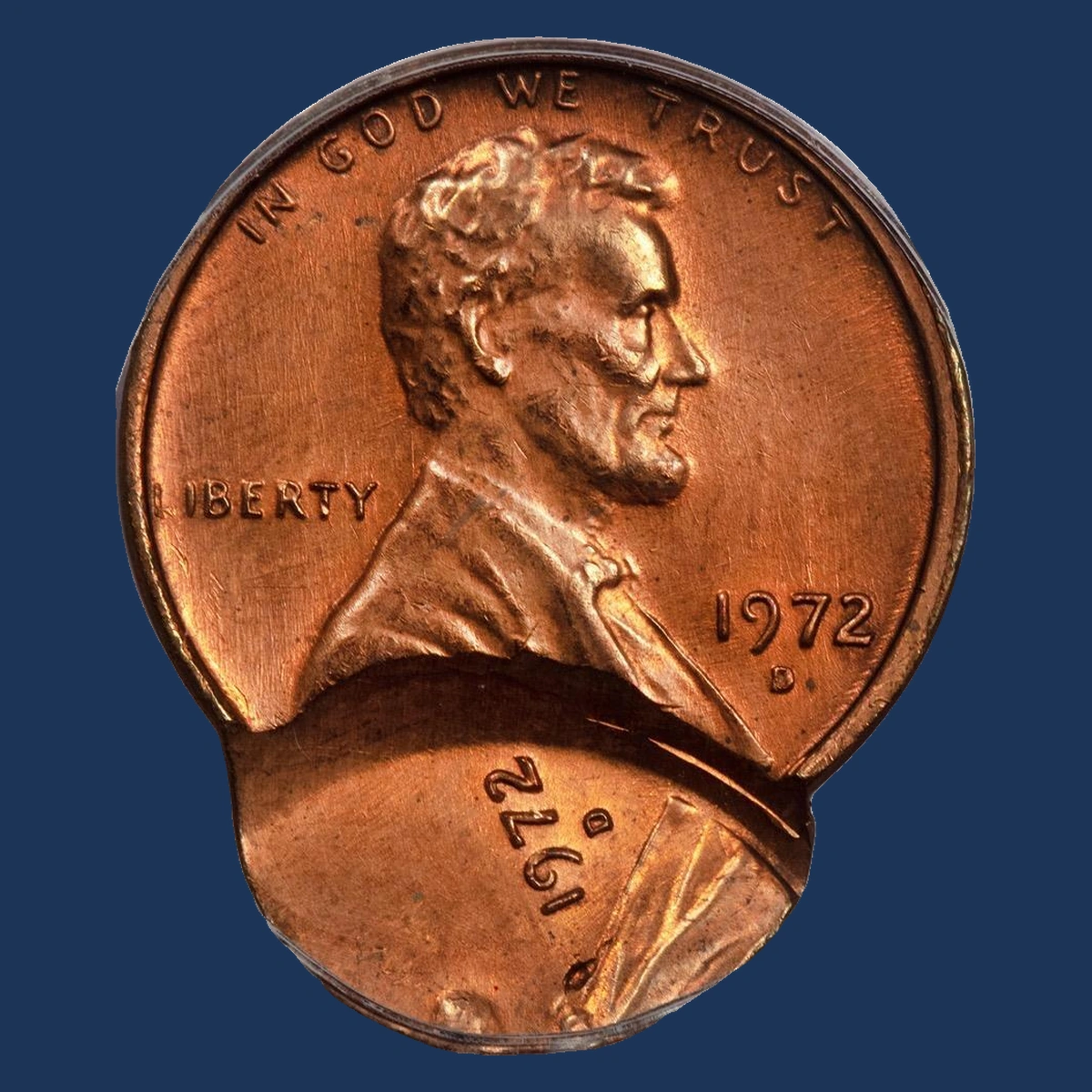
The blank entered the press standing on edge instead of lying flat. The blow folded the metal back toward itself while forming the cent design.
The recorded Denver example has a fold near the five-o’clock position. Much of IN GOD WE TRUST lies outside the surviving design area.
It was graded PCGS MS60 Red and Brown. That describes an unworn coin with substantial marks and a mixture of copper-red and brown color.
The folded shape preserves the event. It should not be straightened, and its appearance should not be confused with a penny bent after it left the Mint.
Estimated Value
A recorded 1972-D foldover sold for $960 in September 2024. An older appearance with the same grade brought $575 in February 2005.
An estimated $500–$2,500 allows for the folded shape, visible identity, and surface quality. Those auction appearances may concern the same specimen rather than two different errors.
A readable date helps connect the unusual object to its year. Later bending is a separate form of damage and should not receive the same premium as a blank folded during striking.
How to Identify
Leave the folded shape intact and examine it from the side. A 10× magnifier helps follow how the design extends onto the bent metal.
On the recorded example, compare the fold near five o’clock and the missing motto. Those positions describe this piece rather than every possible foldover.
Weigh an accessible coin against 3.11 grams. Calipers can record its altered dimensions without expecting a flat 19.05-mm circle.
Inspect the remaining smooth edge and the crease for later tool marks. A finished coin bent afterward can stretch or break details that were already present.
Struck design that fits the original fold is the key relationship, rather than a bent outline by itself.
18. 1972-D Lincoln Penny on a Philippines Five-Sentimo Blank (Estimated Up to $3,000)
A blank intended for a foreign coin received the Denver cent design. Its brass metal and smaller outline differ from the usual copper-rich penny blank.
The recorded example was identified as a Philippines five-sentimo blank and graded NGC MS65. It weighs 2.5 grams.
The smaller surface leaves less space for the outer cent lettering. Other reported examples have slightly different measured weights, so the 2.5-gram reading belongs to this specific coin.
Its identity requires more than a yellowish color. Lighting, surface treatments, or a coating can change a normal penny’s appearance without giving it the correct foreign-blank metal and dimensions.
Estimated Value
The NGC MS65 example sold for $1,500 in April 2022. An estimated $700–$3,000 covers identified examples with differing condition and surviving design.
The grade describes an unworn coin with relatively few marks. A clear date and D help collectors understand which United States tools struck the foreign blank.
The estimate concerns a verified blank identity. Yellow color or a low weight alone should not inherit the sale price, and another specimen’s measurement should not be copied onto the coin examined.
How to Identify
Compare the cent’s outer lettering with the edge of the smaller disc. Use a 10× magnifier to read the remaining date and D without guessing missing strokes.
The documented blank weighs 2.5 grams; a normal 1972 cent is 3.11 grams. Check an accessible coin with a precise scale.
Calipers record its actual dimensions against the normal 19.05-mm cent. Inspect the edge for coatings or filing that could create a misleading size or color.
Professional metal testing can help confirm the foreign brass blank instead of ordinary cent metal. The normally smooth cent edge alone cannot settle that question.
Correct smaller metal with an original 1972-D cent impression establishes the foreign-blank comparison.
19. 1972 Lincoln Penny Struck Over a 1971 Cent (Estimated Up to $5,000)
The two dates on this piece come from different years. A completed 1971 penny received a later strike from 1972 cent tools.
The earlier and later designs overlap on the same copper-rich metal. This is more specific than a coin receiving two blows from the same pair of tools.
The recorded example was graded PCGS MS62 Brown. It retains the competing date details and combined design needed to explain the sequence.
A doubled tool cannot create an earlier year from nothing. Added or altered digits can imitate two dates, so the surrounding design must support a genuine second striking event.
Estimated Value
Use an estimated $750–$5,000 for a verified 1972 strike over a completed 1971 cent. Clearly readable years and a convincing overlap strengthen the comparison.
This is an estimate for a two-year overstrike, not a recovered sale price from the recorded auction listing. Ordinary double strikes provide only a lower-level comparison.
For example, a 1972-D shifted double strike brought $192 in January 2022. It lacks the separate earlier-year host, so that result should not be treated as an identical type.
How to Identify
Locate the 1971 and 1972 date fragments separately under a 10× magnifier. Follow each into surrounding details from its own striking position.
Check whether the later impression interrupts the older design. A single thick numeral or a scratched extra digit does not establish another year.
Both normal cents use 3.11-gram copper-rich blanks and a 19.05-mm diameter. A scale and calipers can check an accessible piece while allowing for changes from the later blow.
Inspect the smooth edge for seams or evidence of joined coins. The two designs should occupy one piece of metal.
Genuine earlier-year details beneath a connected later-year impression establish the cross-year overstrike.
20. 1972 Lincoln Penny Doubled Front or Back Design (Estimated Up to $15,000)
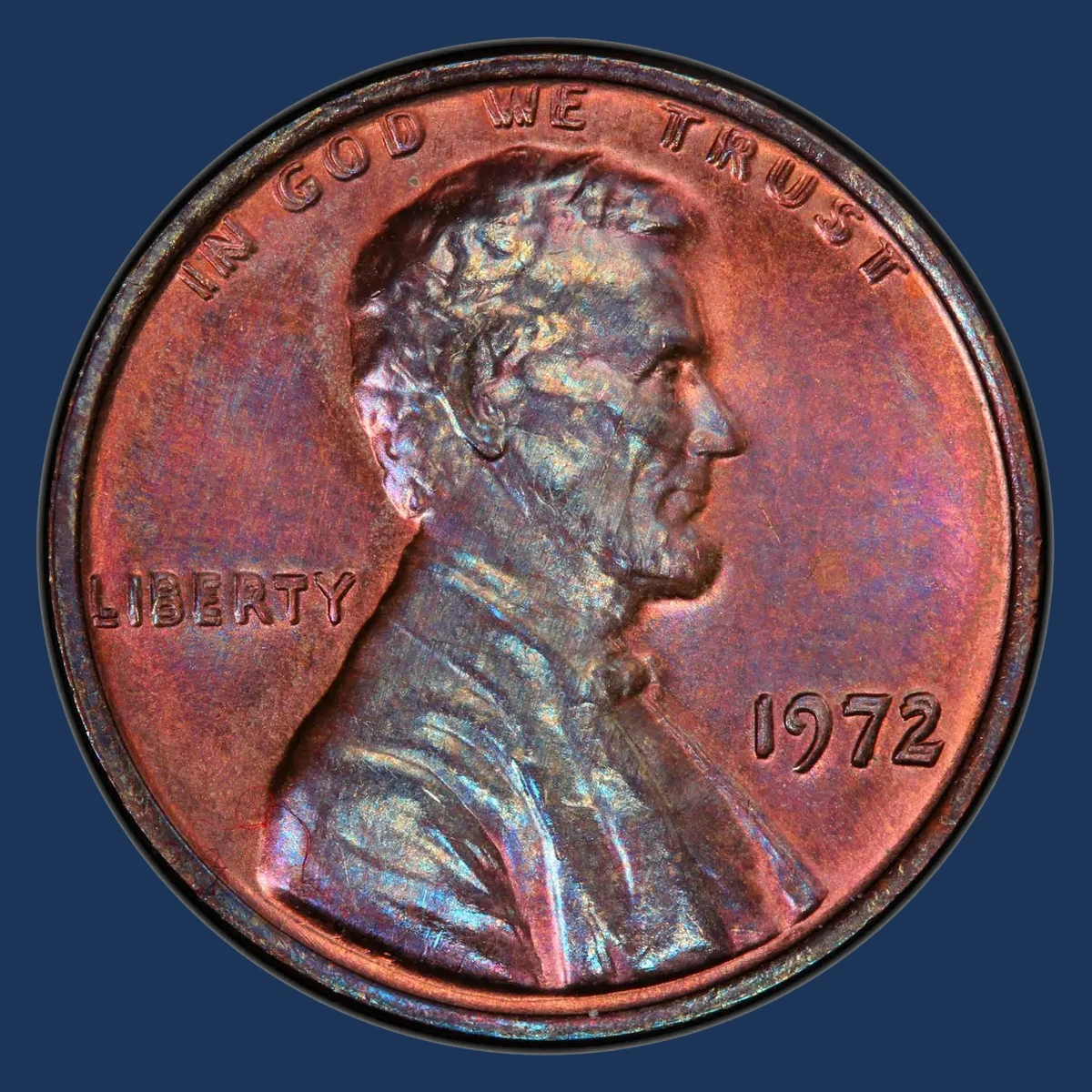
The famous Philadelphia variety shows clear repeated edges on the date, LIBERTY, and motto. Collectors usually identify this strong pattern as FS-101.
The extra design was already present on the stamping tool. A single normal blow could transfer both outlines to a blank.
Other Philadelphia and Denver patterns are smaller, sometimes limited to part of the final 2. San Francisco produced both ordinary coins and specially made collector coins called Proofs, with different doubled patterns.
Back-side varieties also repeat parts of the Memorial roof, column, or floor. These features should not inherit the appearance or price of the doubled front.
Estimated Value
Estimate $100–$15,000 for the major Philadelphia FS-101 across condition. PCGS records $14,400 in June 2019 for an exceptionally preserved MS67+ Red example.
A more recent MS64 Red sale reached $732 in July 2026. Smaller ordinary varieties can fit approximately $5–$500, while identified S Proof patterns can fit $25–$750.
These ranges concern different patterns and preservation. A tiny doubled column or a Denver numeral should not receive the major Philadelphia variety’s auction record.
How to Identify
For FS-101, examine all four date digits, LIBERTY, and the motto under a 10× magnifier. The added outlines should match the same strong Philadelphia pattern.
Check the mint and finish before using photographs of smaller varieties. An S does not automatically mean Proof; those collector pieces have specially prepared surfaces.
For Denver back varieties, inspect the roof or column detail. The S Proof back pattern instead affects the sloping floor beneath the statue.
Flat shelves from movement during striking differ from rounded repeated design. Match actual shapes rather than merely thick letters.
A scale and calipers compare the normal 3.11 grams and 19.05 mm; inspect the smooth edge. The correct repeated design on the correct mint and finish is the decisive match.
21. 1972 Lincoln Penny Struck Over a 1964 Silver Dime (Estimated Up to $25,000)
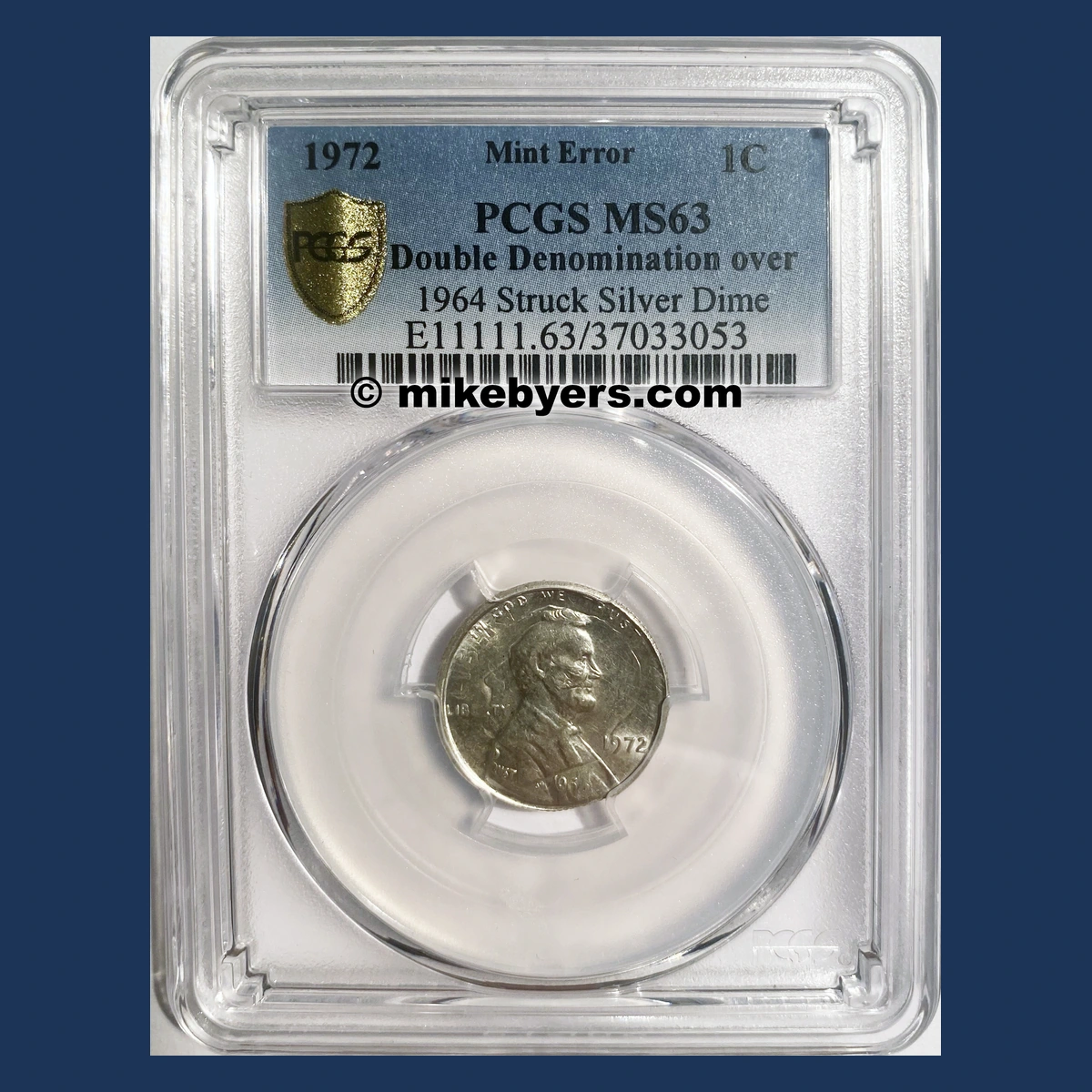
Eight years separate the two dates on this coin. A finished 1964 Roosevelt silver dime received a 1972 Lincoln-cent strike.
The example was graded PCGS MS63, meaning unworn with noticeable marks. Both full dates remain visible on the front.
The cent design has no S mint letter. Its ordinary cent impression remains distinct from a specially made San Francisco Proof, even though the silver surface looks unusual.
The dealer describes it as intentionally struck, rather than a routine accidental blank mix-up. Its silver metal and surviving dime design distinguish it from a cent struck on an unused clad dime blank.
Estimated Value
For this unusual silver-dime overstrike, use an estimated $5,000–$25,000. The dealer marks the documented piece sold without publishing the amount.
A 1980-D cent on an unused silver dime blank brought $18,000 in August 2025. That is a related silver wrong-blank comparison, not an overstrike or a sale of the 1972 coin.
The older finished dime and two complete dates give this piece a different identity. The estimate values the whole object, rather than adding cent and dime prices.
How to Identify
Read the complete 1972 and 1964 dates independently with a 10× magnifier. Follow Roosevelt-dime remnants beneath the later Lincoln design.
An ordinary 1964 silver dime begins near 2.50 grams and 17.91 mm. Those differ from a copper-rich cent’s 3.11 grams and 19.05 mm.
A scale and calipers can check an accessible specimen, allowing for expansion during the later strike. Inspect the edge for seams or a surface coating.
Professional metal testing distinguishes the silver alloy from a plated cent or a later clad dime. Keep the earlier dime design separate from the newer cent lettering.
The genuine older silver dime, two readable dates, and overlapping cent design must agree.
Conclusion
Start with what the penny actually shows: repeated letters, altered shape, unusual metal, or an older design underneath. The famous Philadelphia doubled date does not explain every thick letter on a 1972 coin.
Estimated values range from $2–$25,000, with ordinary small tool breaks far below rare silver-dime overstrikes. Keep the mint, finish, and starting metal with each comparison. A complete identification is more useful than counting every catalog number or visible line.