1981 Penny Error List with Pictures

Lincoln’s portrait on a Kennedy half dollar brought $13,200 in July 2021. A cent’s front tool had struck the larger finished coin, leaving an unusual bowl-shaped result.
That is one extreme in this 1981 penny error list. Tiny extra mintmarks and raised cracks sit at the other end of an estimated $2–$20,000 range.
A normal 1981 cent is copper alloy and weighs 3.11 g. Explore the examples below to see how their designs, edges, and metal reveal what happened.
1. 1981 Lincoln Penny Raised Lines from a Cracked Tool (Estimated Up to $40)
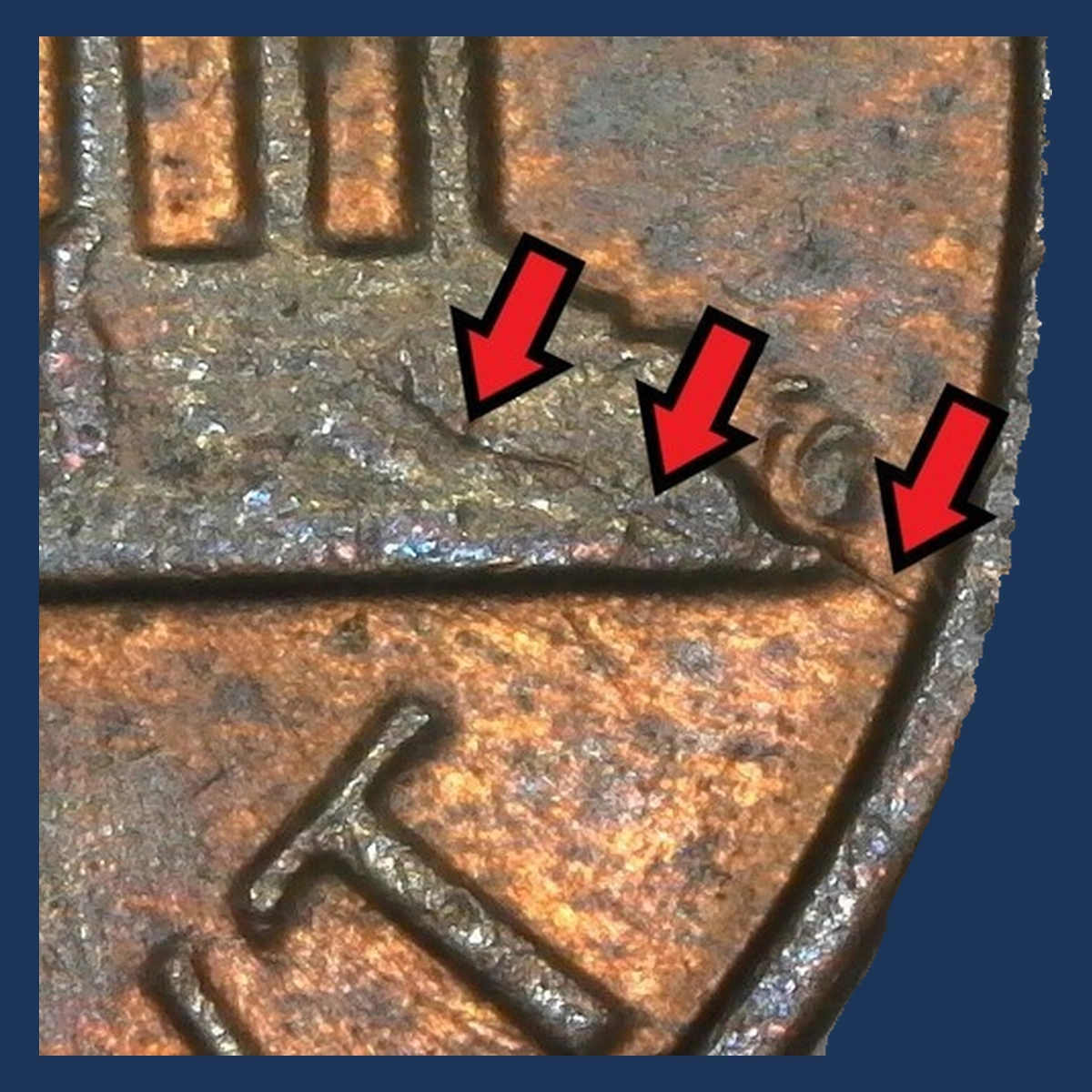
A raised line across the surface can record a crack in the steel stamping tool. Coin metal entered the opening during the blow and left a ridge.
The 1981 year guide includes this type without fixing one route for every specimen. A line through a portrait and one near the rim can belong to different cracked tools.
The crack is in the tool, not necessarily in the coin. A split in the coin itself has a different appearance and cause.
Later scratches can have edges too. Look for the groove between those edges before treating them as a mint-made ridge.
Estimated Value
An estimated $2–$40 covers ordinary identified tool cracks. A long visible ridge on a clean coin can be more appealing than a tiny trace requiring strong magnification.
The range is an estimate, not a recorded sale for the guide’s unnamed example. A dramatic rim-connected break should be compared with cuds instead of assuming all broken-tool effects have one price.
Wear may reduce the line’s height. Surface damage can also make its route difficult to follow and reduce collector interest.
How to Identify
Shine a lamp across the suspected line and inspect it with a 10× magnifier. Follow the ridge continuously, checking whether it rises above the surface without a central cut.
A scratch can leave pushed-up metal on both sides of a groove. A genuine cracked-tool ridge should instead fit the original struck surface as it crosses smooth areas or design.
Check the normal 3.11 g and 19.05 mm with a scale and calipers.
The 1981 blank is copper alloy, not the later zinc-centered type.
Follow the raised line to its end, rejecting a scratch with a central groove and displaced edges.
2. 1981 Lincoln Penny Tilted Partial Collar (Estimated Up to $150)
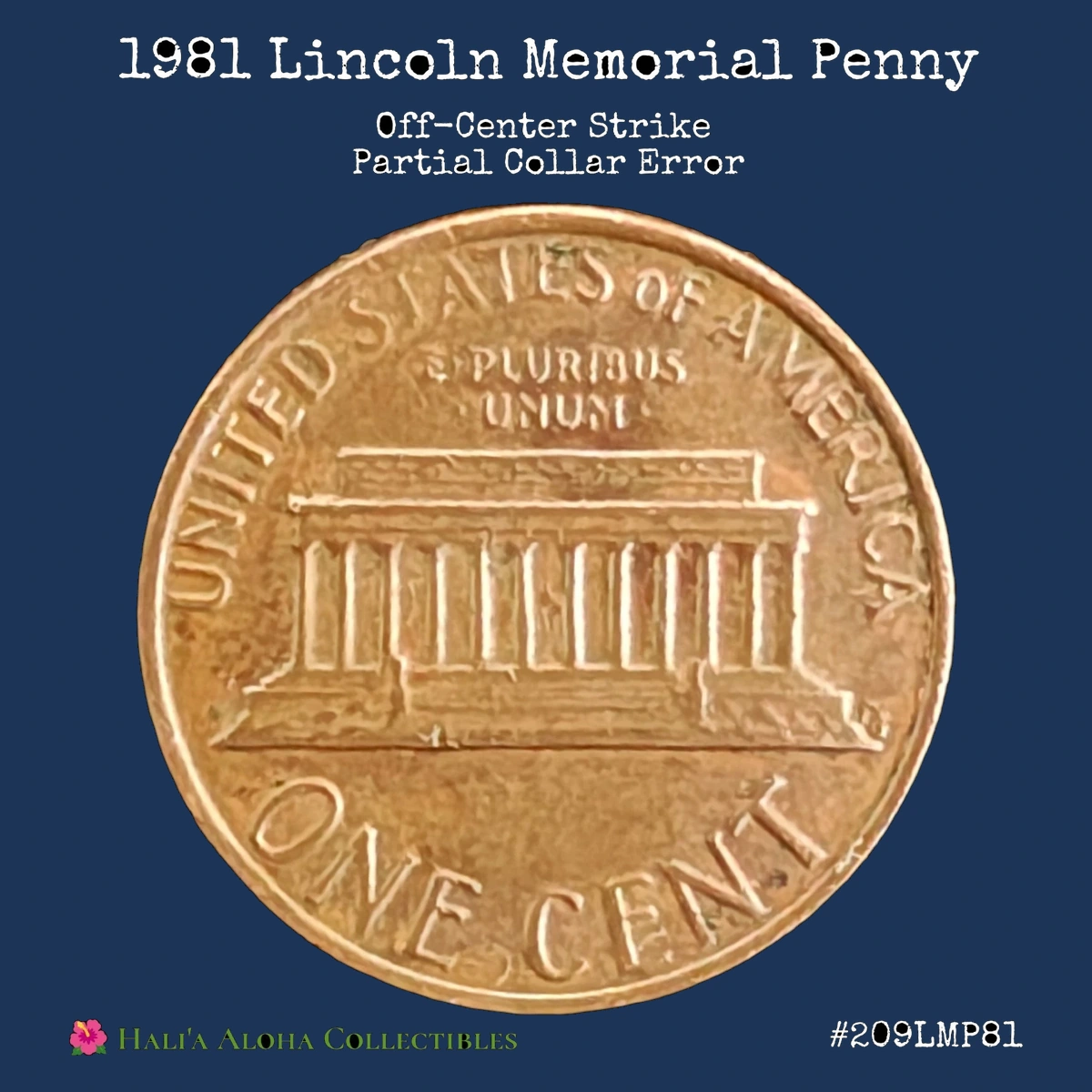
The edge can have a step that changes height as you turn the coin. Part of the blank was held by the collar ring while another part spread beyond it.
An expert forum discussion describes a 1981 Philadelphia example after edge views were supplied. Its owner noted that the front appeared slightly wider than the back.
The tilted position explains why the step need not sit level all the way around. A straight face-on picture can hide that change.
A rolled or squeezed edge can also create a ledge. Compare the entire circumference and original design before choosing the explanation.
Estimated Value
Use an estimated $15–$150 for an identified tilted partial-collar cent. A continuous, readable edge step is more useful to collectors than an indistinct thick rim.
The forum example is an observation report rather than a realized auction price. Its estimated range reflects the strength of the collar effect and the coin’s condition.
An edge altered by squeezing or rolling should not receive the same premium. The side view matters more than a dramatic shadow in a photograph.
How to Identify
View the plain edge at 10× magnification and rotate the coin slowly, following the step around its circumference. Photograph several positions so a changing height is visible rather than relying on one thick-looking point.
Calipers can compare the front and back outlines with the normal 19.05-mm width, while a scale checks the usual 3.11 g. Measure gently without compressing the ledge or changing its shape.
Inspect the nearby letters for crushing and the edge for rolling that could explain a later alteration. Watch the original edge step rise and fall around the circumference as you rotate the coin through the side light.
3. 1981 Lincoln Penny Reported S-Shaped Mark above D (Estimated Up to $150)
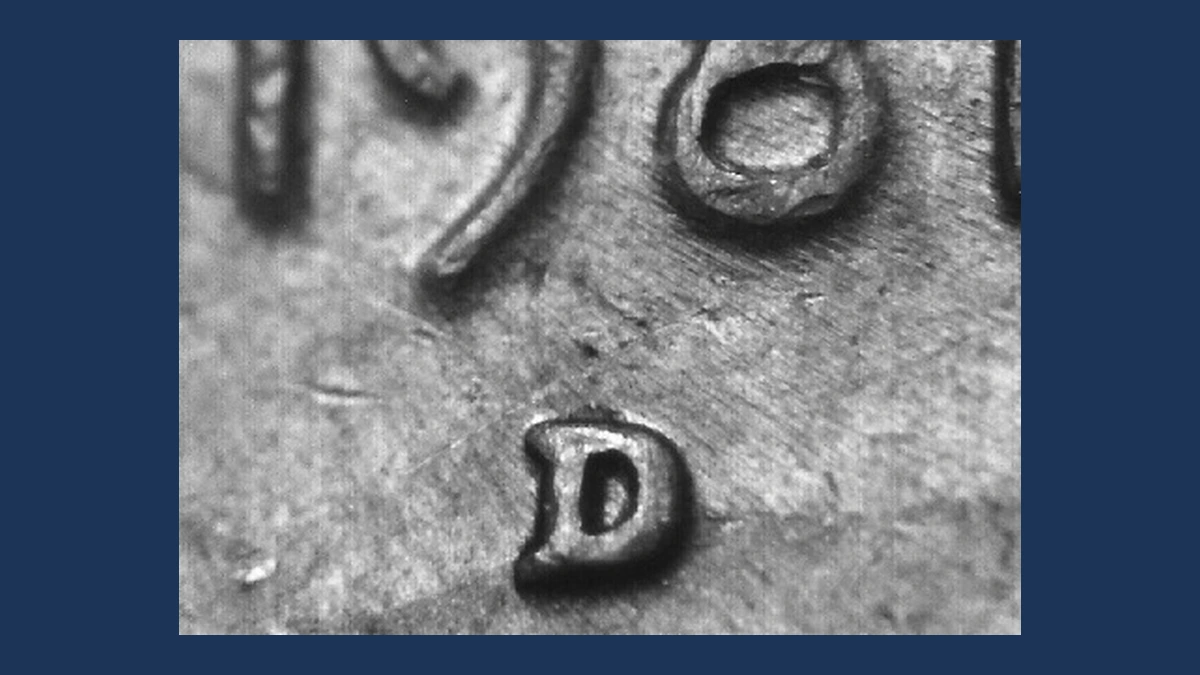
A faint S-like shape above the Denver D has led to a reported distant-mintmark variety. Wexler lists the 1981-D pattern while calling for earlier tool-state examples to explain its origin.
That means the visible pattern can be compared without declaring that an S punch definitely caused it. An odd curve is not enough to settle the mechanism.
The listing includes supporting marks inside G in GOD and around N and T in CENT. Those help keep the reported specimen pattern together.
A separate withdrawn claim from another year does not decide the identity of this 1981 report.
Estimated Value
For a clearly matched example of the reported pattern, use an estimated $10–$150. This is an estimate for collector interest in the listed feature, not a price for a proven D-over-S error.
The faint shape and supporting marks should be visible before the catalog name is used. A random mark above D may have no comparable premium.
The range is not a realized auction result. Better preservation helps show the feature but does not independently establish its origin.
How to Identify
Use a 10× magnifier above the main D and compare the entire reported S-like curve with Wexler’s listing. Keep the nearby mintmark in view so the distance and direction remain clear.
Look for the supporting line inside the lower right of G in GOD and marks near N and T in CENT. Matching these can identify the pattern without proving what originally made the curve.
A scale and calipers check the normal 3.11 g and 19.05 mm.
Do not turn an isolated blob into a letter by changing the light.
Compare the complete curve above D and its supporting marks, without naming an S from one isolated line.
4. 1981 Lincoln Penny Doubled Back Lettering (Estimated Up to $175)
Extra edges can appear on ONE CENT and other back-side lettering. Wexler’s first listed 1981 back variety shows separation toward the coin’s center in those words, FG, UNITED, and AMERICA.
The steel stamping tool carried a doubled design before it touched the blank. The coin did not need to return for a second strike.
A small line near the top of the final Y in LIBERTY provides a supporting front-side match. The front mark belongs to identification of this back variety.
Worn lettering or a flat shelf can look thick without the same separation. Inspect several listed areas together.
Estimated Value
An estimated $10–$175 covers identified examples of this minor back variety, allowing for strength and condition. Clear separation in more than one listed area makes a comparison easier.
The catalog description establishes where to look, but it does not provide a realized sale used for this range. A high-grade ordinary cent should not inherit the premium merely because its letters look bold.
Check the repeated outlines before judging color. Red, red-brown, and brown describe surfaces rather than separate errors.
How to Identify
Begin with ONE CENT under a 10× magnifier, then compare FG and the outer words UNITED and AMERICA. Look for extra detail toward the center rather than an unrelated ridge on just one letter.
Turn to LIBERTY and inspect the short supporting line near the top of Y. Keep this front mark separate from the actual doubled back design when explaining the identification.
A scale should read near the ordinary 3.11 g, with calipers comparing the normal 19.05-mm diameter.
Neither reading proves a doubled tool.
Concentrate on the repeated edges facing inward across ONE CENT, then compare UNITED and AMERICA.
5. 1981 Lincoln Penny Doubled Front Date and Motto (Estimated Up to $200)
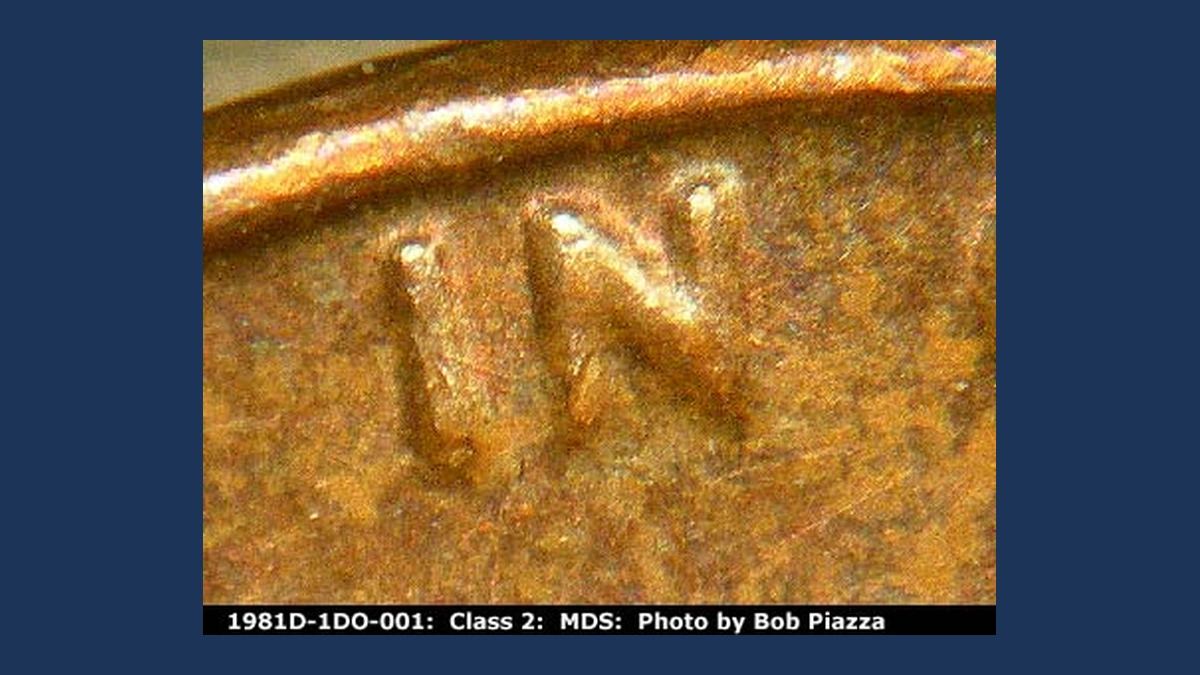
The first two digits of the date can carry a small extra outline on a Philadelphia cent. Wexler’s listed variety concentrates its inward-separated doubling on the 19.
The Denver variety has a different appearance: thicker lettering in IN GOD WE TRUST and LIBERTY, with separation in GOD. It should not be identified by borrowing the Philadelphia date feature.
Both patterns originated on their stamping tools. Supporting raised lines elsewhere help connect a coin with the correct example.
This is more specific than calling every thick date doubled. Follow the extra outline and confirm that the mint identity matches.
Estimated Value
Estimate $10–$200 for identified minor front varieties of these kinds. The visible separation and preservation of the lettering affect collector interest.
A crisp date repeat on the Philadelphia variety and a matching Denver motto pattern need their own comparisons. They are not interchangeable simply because both are called doubled fronts.
The range is an estimate rather than a sale assigned to each cataloged tool. Wear or flattened letter edges can make identification weaker and reduce the appeal.
How to Identify
Check below the date for D before selecting a comparison photograph. On the no-mint-letter variety, use a 10× magnifier on 19 and the supporting mark near the second T in TRUST.
For Denver, inspect GOD for separation and the thicker motto and LIBERTY letters. Three nearly vertical lines between the head and O in GOD help support that different pattern.
The ordinary copper-alloy cent measures 19.05 mm and weighs 3.11 g. Check with calipers and a scale without rubbing the surface.
Once the mint is identified, return to the Philadelphia 19 or Denver’s GOD and trace the actual separated outlines.
6. 1981 Lincoln Penny Repunched D Mintmarks (Estimated Up to $250)
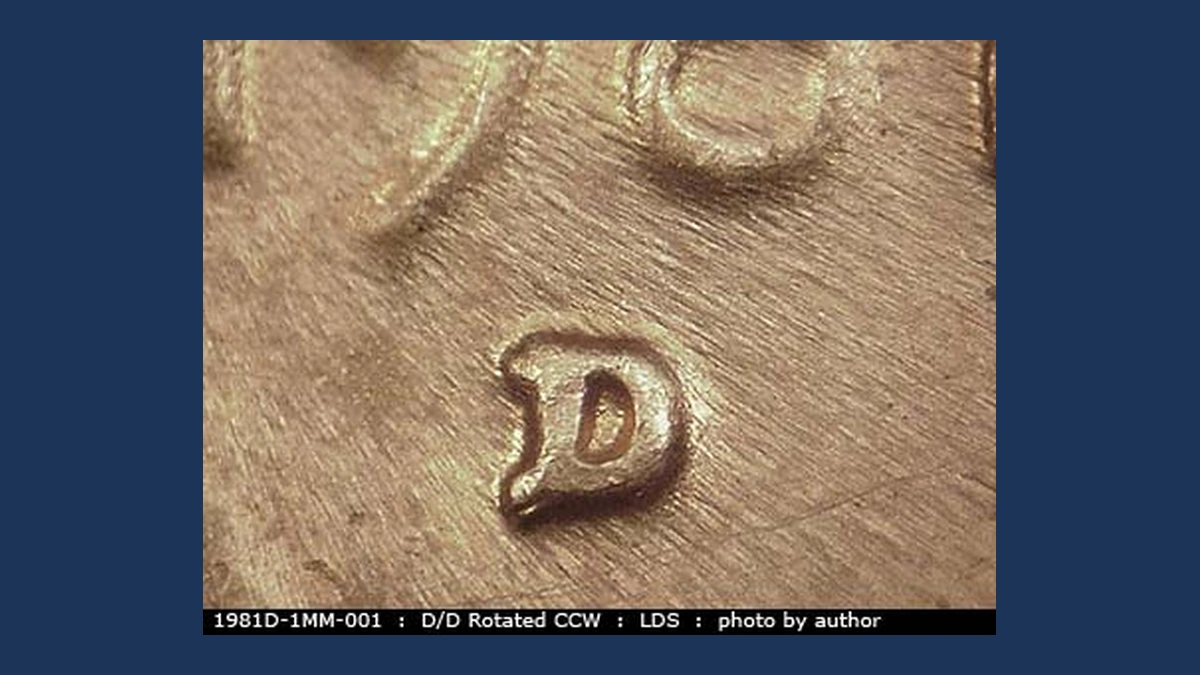
The Denver D can show another upright or a split end where the mintmark punch was applied again. Several listed 1981 patterns involve differences in position or tilt.
Wexler’s strong example includes a D to the left and another below and left of the main letter. In a clear tool state, the lower-left D is separate.
Other Coppercoins entries show divided upper or lower ends and, on one example, a tilted D. These are individual patterns rather than one set of required marks.
Only the mint letter was repunched. The surrounding date and motto need not show the same repetition.
Estimated Value
A practical estimated range is $5–$250 for identified repunched D varieties. A well-separated secondary D can attract more attention than tiny split ends visible only at strong magnification.
This range does not assign an auction price to every catalog number. Matching the specific outline matters before grade and color are compared.
A worn or damaged D may lose the small feature that identifies it. Do not use the strongest variety’s upper estimate for any minor irregularity beside the mintmark.
How to Identify
Follow the D’s upright and projecting ends through a 10× magnifier, comparing the extra shapes with the specific catalog photograph. For Wexler’s strong example, find the secondary D below and left, in addition to the leftward extra outline.
Split ends or a tilted duplicate on other listings need their own matches, not the same required lower-left letter. A normal scale reading near 3.11 g and caliper width near 19.05 mm identify the expected copper-alloy blank only.
Inspect for damage that cuts or pushes the letter rather than adding a repeated punched outline. Trace each extra D segment into the outline shown for that specific punched-mintmark pattern.
7. 1981 Lincoln Penny Indent from an Overlapping Blank (Estimated Up to $500)
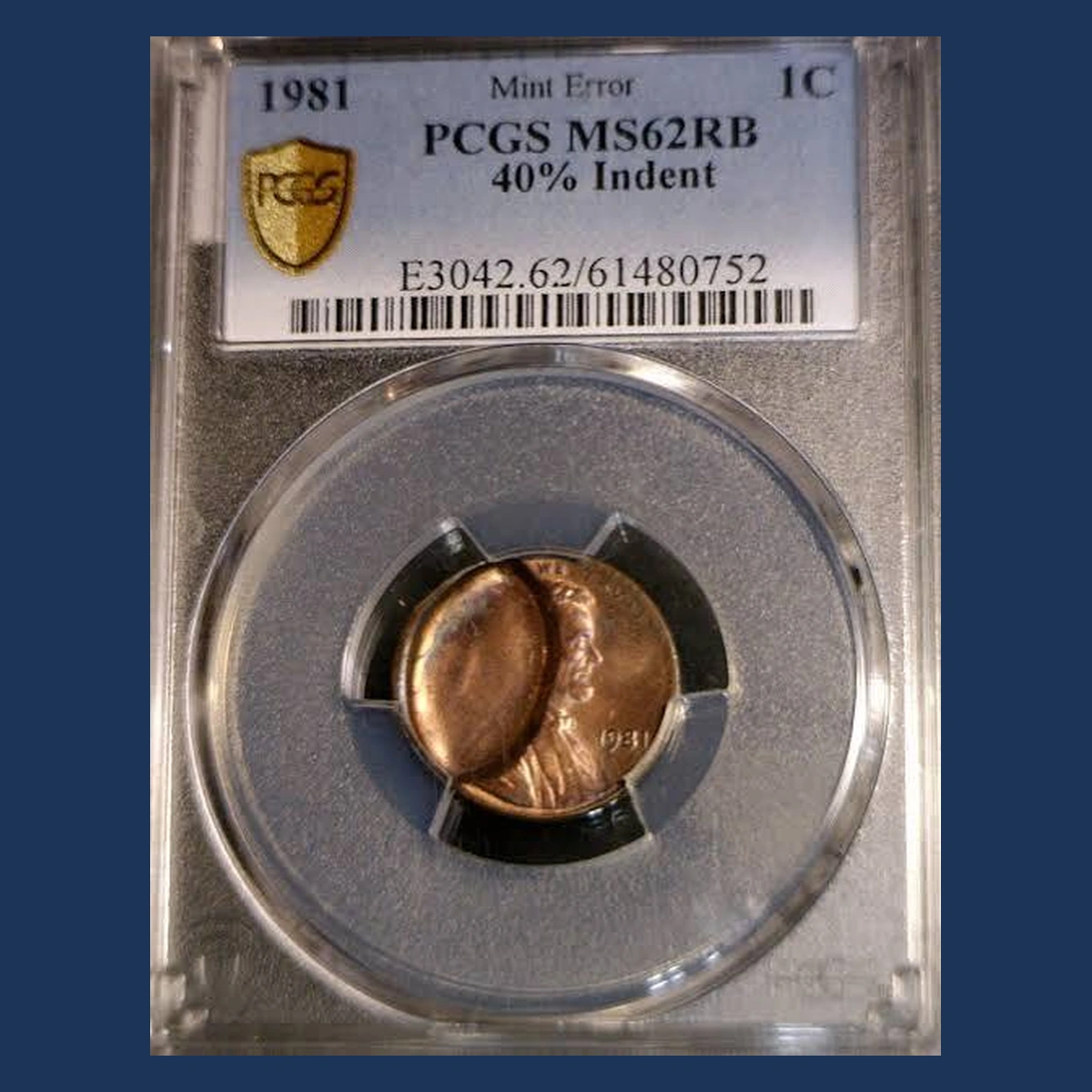
A smooth depression can interrupt the cent design where another blank covered part of the disk. The overlapping metal blocked the stamping tool and shaped the hollow during the blow.
Heritage cataloged a 1981 indent in ANACS MS64 Red and Brown. Its description does not identify the affected face or how much of the coin was covered.
An indent need not contain backward letters. Those would suggest contact with an already struck coin and a different transferred-design effect.
The boundary is between the depressed overlap area and the design struck around it. A hammer dent made later has another history.
Estimated Value
Use an estimated $30–$500 for an identified indent, depending on coverage, shape, and condition. A clear boundary that explains the overlapping blank is easier to appreciate than an indistinct hollow.
The cataloged MS64 Red and Brown example was unworn with fairly few marks. The listing establishes its described condition, not a realized price used here.
Large size alone does not guarantee the upper amount. Heavy damage or an unclear striking relationship can reduce interest in the complete coin.
How to Identify
Study the depression’s edge under a 10× magnifier and follow how the normal design meets the covered area. Look for the smooth shape of an overlap rather than forcing a recognizable portrait into a featureless hollow.
A later impact may crush existing design and push metal along its edge. Compare the opposite face for a compatible striking pattern before deciding that an overlapping blank explains it.
A scale checks the ordinary 3.11 g and calipers record the outline against 19.05 mm.
Keep measuring tools clear of thin distorted areas.
The hollow’s boundary should fit the design formed around the overlapping blank, without evidence of a later blow.
8. 1981 Lincoln Penny Clipped Blanks and Off-Center Combinations (Estimated Up to $600)
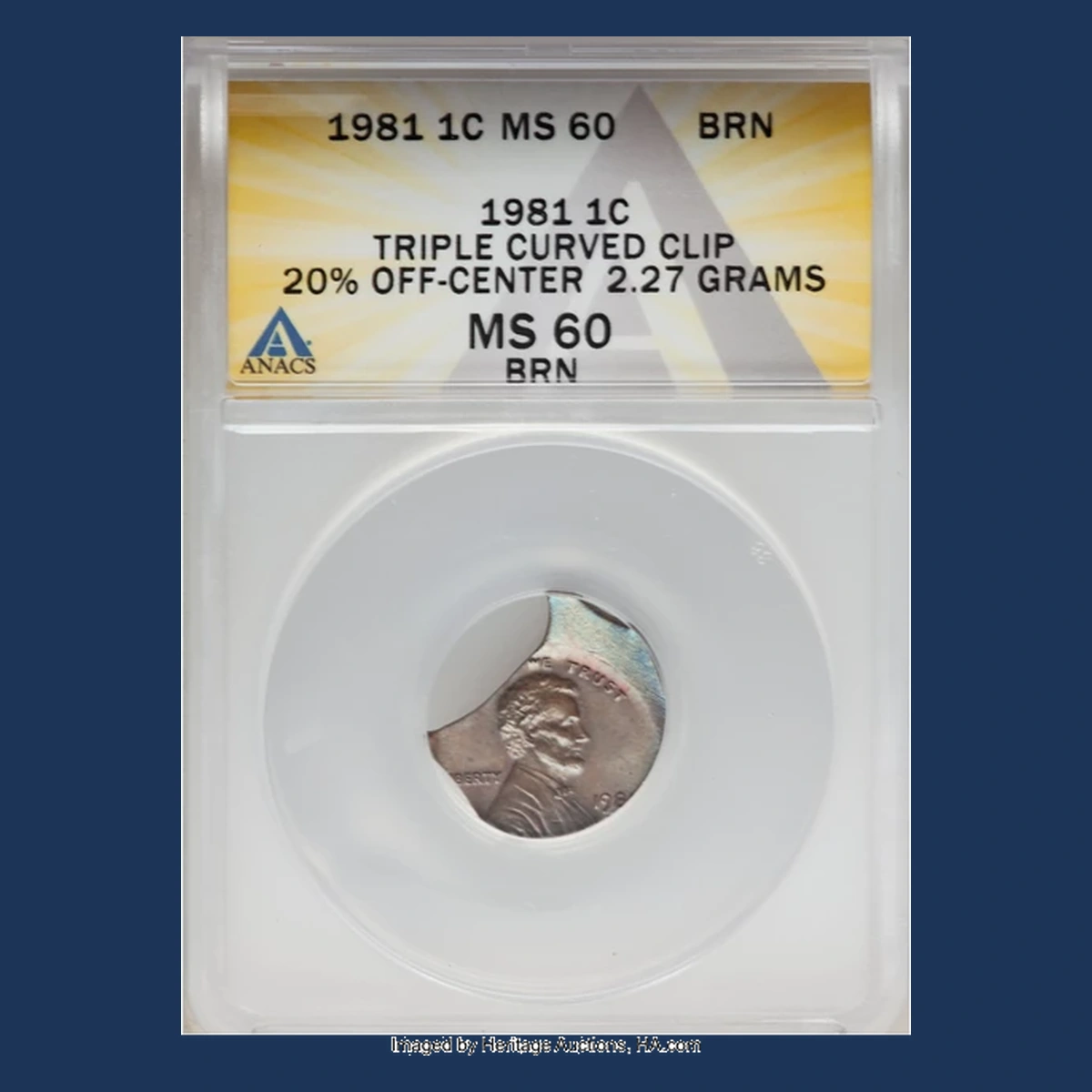
More than one curved gap can interrupt the edge of a cent. The Denver triple-clip example has three separate missing areas left in the blank before striking.
Other recorded 1981 coins combine a clip with an off-center strike. The missing metal and the smooth unstruck crescent are two different features.
A straight-clip combination weighs 2.51 g, while a separate triple-clip off-center example is recorded at 2.27 g. Those weights should stay with their own specimens.
Two curved gaps also appear in a collector report. Its suggested weight was an estimate, not a measured reading.
Estimated Value
The Denver triple curved clip sold for $156 in May 2021, graded PCGS MS63 Red and Brown. That means an unworn coin with noticeable marks and mixed copper color.
Estimate $15–$600 across identified clips and combined off-center examples. The missing area, retained date, and completeness of the striking explanation affect interest.
Three gaps do not mean three prices to add together. Value the complete coin, including any displacement or damage, rather than each visible opening separately.
How to Identify
Find the actual missing metal before measuring how far the design is off center. Through a 10× magnifier, inspect each clip’s sidewall and the way the struck rim approaches its ends.
A weaker rim opposite a curved gap can support the clipped-blank explanation. Saw marks or filing grooves instead suggest removal after minting.
A normal 1981 cent weighs 3.11 g and measures 19.05 mm. Use a scale for the reduced weight and calipers across the surviving outline.
Keep the recorded 2.51-g and 2.27-g examples separate. Keep each original missing-metal boundary separate from the smooth metal that survived outside the striking area.
9. 1981 Lincoln Penny Off-Center, Stretched, and Cupped Strikes (Estimated Up to $750)
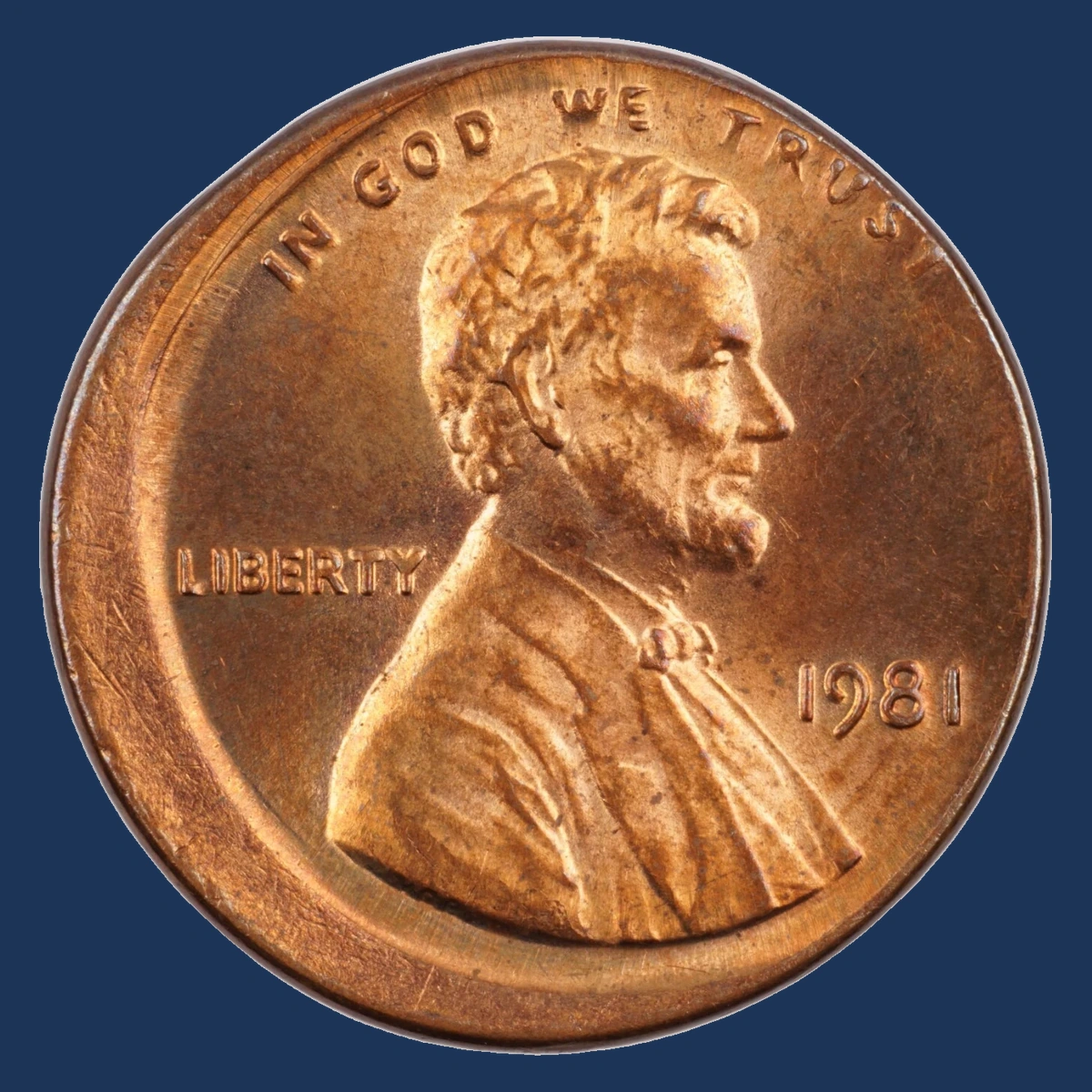
The cent design may occupy part of the blank, leaving a smooth crescent beside it. That shows the blank was out of position when the tools struck.
A recorded 1981 stretch strike is 75% off center and has elongated metal and design. Another is 45% off center, with a blocked back and an upward-curving edge.
The cupped edge does not by itself prove that the coin stuck to a tool as a cap. Its blocked side and displaced design belong to that combination.
Off-center examples can remain flatter. Judge the shape instead of assigning every displaced coin the same sequence.
Estimated Value
An estimated $20–$750 covers identified ordinary off-center and more dramatic stretched or cupped examples. A readable date and well-preserved unstruck surface help collectors follow the event.
The listed stretch specimen is PCGS MS63 Brown, while the cupped example is NGC MS64 Brown. These grades describe unworn coins with differing amounts of marks.
The range is an estimate rather than a sale assigned to those examples. Distortion and extra effects matter alongside the percentage of displacement.
How to Identify
Compare both faces with a 10× magnifier, following the boundary between struck detail and untouched metal. The stretched example should show elongated design, not simply a coin pulled or hammered after minting.
For the cupped example, inspect the blocked back and rising edge together. Do not infer that it clung to a tool from the upward curve alone.
Check whether the scale reading is close to a normal blank’s 3.11 g. Calipers document changes from the usual 19.05-mm outline without forcing curved metal flat.
Follow the original unstruck crescent around the displaced impression, then look separately for elongated detail or the blocked back.
10. 1981 Lincoln Penny Partial Backward Impressions (Estimated Up to $800)
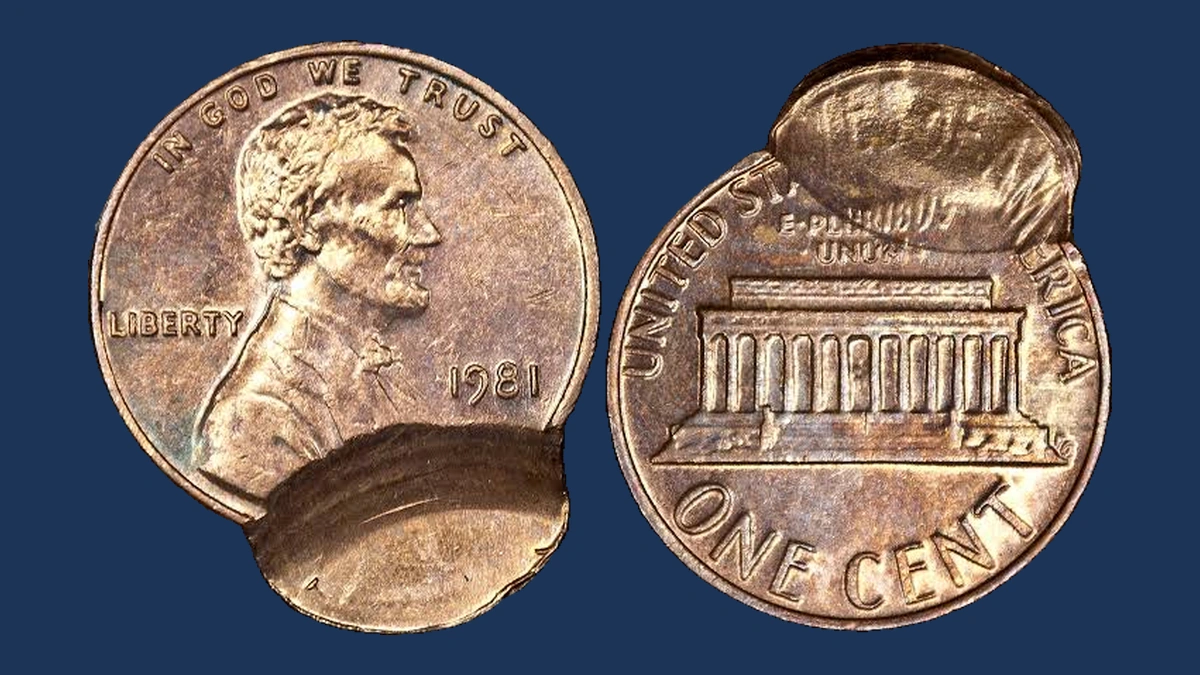
A backward, sunken part of the design can appear beside normal raised detail. An already struck coin pressed its image into a fresh blank and created what collectors call a brockage.
One listed 1981 example has about 25% coverage. Another has roughly 40% on the front and also shows a partial-collar effect at the edge.
The edge step is an additional feature of that second coin. It should not be assumed on the quarter-coverage example.
Recessed mirror-image letters are different from ordinary raised doubling. The surrounding design helps show whether the impression formed during minting or through later squeezing.
Estimated Value
Estimate $50–$800 for identified partial brockages, including combinations with partial collar support. Recognizable backward detail is easier to value than a nearly featureless depressed area.
The listed 25% example is PCGS MS63 Brown; the 40% front-side combination is PCGS MS64 Brown. Neither record supplies a realized amount used for this estimate.
A different 2001 partial-front brockage in MS64 Red sold for $79 in March 2025. Its different year, metal, and condition require comparison rather than direct price transfer.
How to Identify
Read the unexpected letters backward under a 10× magnifier and check that their outlines sink into the surface. Normal raised letters nearby help establish the depth difference.
On the 40% front-side example, inspect the plain edge for a step from partial collar support. Photograph that feature separately from the mirrored design so the two effects remain clear.
A scale and calipers compare with the normal copper-alloy cent’s 3.11 g and 19.05 mm.
Later pressing can also transfer reversed marks, so look for crushed existing detail.
Read the recessed letters backward and compare their depth with the normal raised lettering beside them.
11. 1981 Lincoln Penny Double, Flip-Over, and Triple Strikes (Estimated Up to $1,500)
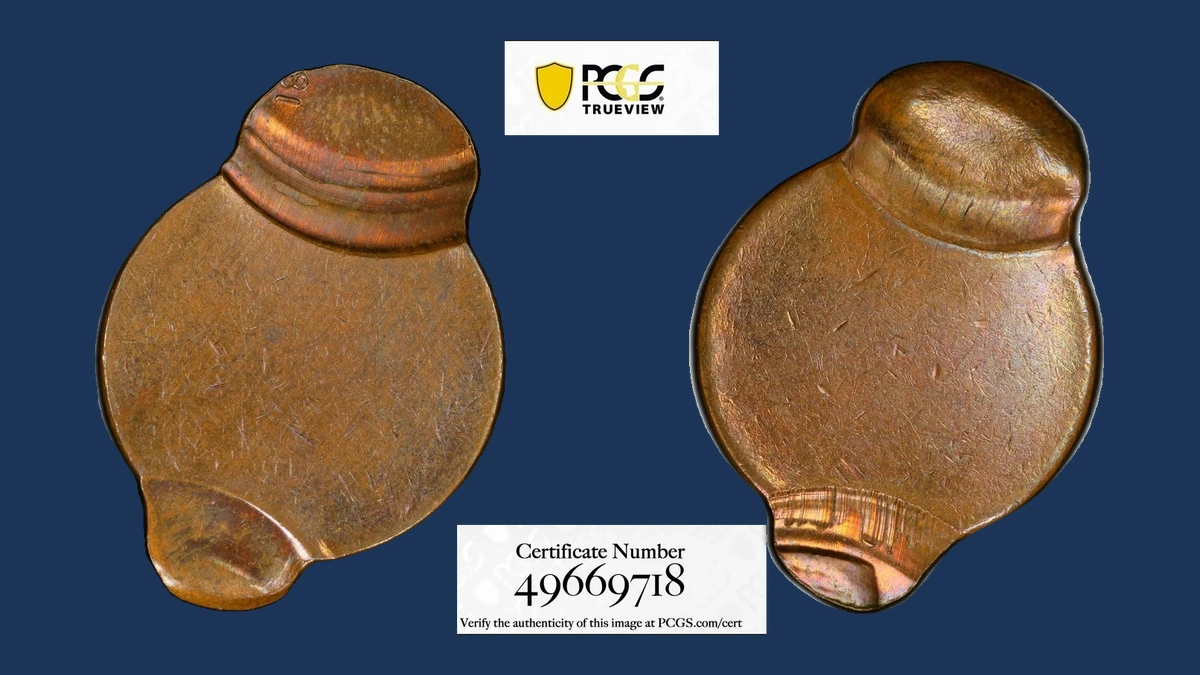
Repeated dates or portraits can record a coin that failed to leave the press. Each extra blow struck the coin again after it shifted or turned.
Heritage describes a Denver example struck off center twice, with a flip before the second blow. It gives no fixed displacement percentage for that coin.
A dealer’s different example has a second strike 90% off center. A year guide also reports a triple strike with later impressions about 50% and 70% displaced.
Those numbers describe sequences. A flipped coin can place front and back remnants together, while a simple shift need not do so.
Estimated Value
An estimated $50–$1,500 covers identified repeated-strike examples with different numbers of blows and visible displacement. Readable overlapping designs help collectors reconstruct what happened.
The year guide reports $1,035 in 2009 for its triple-struck example. That is a guide-reported figure here, rather than a primary auction result attached to the separate Denver flip-over.
Condition and clarity can matter more than simply counting strikes. A coin with three confusing impressions is not automatically worth more than a clear double strike.
How to Identify
Select one surviving date or portrait from the first strike, then trace the later impressions through a 10× magnifier. Examine the opposite face before deciding whether the coin flipped or only shifted.
The Denver flip-over should show a relationship between front and back details consistent with turning over. The separate 90% second-strike example instead needs its own movement traced.
Use a scale against 3.11 g and calipers to record expansion from 19.05 mm.
Repeated blows redistribute one blank’s metal unless another blank is separately identified.
Trace where one impression covers another, using the dates and portrait directions to work out the sequence.
12. 1981 Lincoln Penny Cent Over a Finished Dime (Estimated Up to $3,000)
Roosevelt or a torch can remain visible beneath the cent designs when a finished dime receives another strike. The earlier image may be flattened but still recognizable.
Documented 1981 examples include a cent over a 1981-P dime and a Denver cent over a 1981-D dime. On the Denver specimen, both dates and both D letters can be read.
Its Roosevelt portrait points toward about one-thirty relative to Lincoln. That orientation belongs to this coin rather than every cent-over-dime example.
The design proves that the dime was already a coin. An empty dime blank has no such earlier portrait or date.
Estimated Value
For identified 1981 cent-over-dime pieces, use an estimated $500–$3,000. Readable dates and mint letters help show both stages of the striking sequence.
A different-year 1985 cent over a 1985-P dime in NGC MS67 brought $747.50 in April 2011. That sale supplies a comparison, not a price assigned to the 1981 Denver or Philadelphia examples.
Their own condition and remaining older designs matter. A listing with a higher grade does not guarantee that its overstrike is more visually informative.
How to Identify
Use a 10× magnifier to follow a piece of the older dime design beneath the cent impression, then trace it across the same face. Turn the coin over and look for further older details that explain the first denomination.
On the Denver example, connect each D with its own date and design rather than counting an isolated extra letter. A precise scale compares the dime’s nominal 2.268 g with the ordinary cent’s 3.11 g.
Calipers record expansion from the dime’s usual 17.9 mm toward a 19.05-mm cent-sized design. Follow the surviving dime date into its older design and show where the cent impression crosses over it.
13. 1981 Lincoln Penny Folded Blank Strike (Estimated Up to $3,000)
A folded ridge can divide the coin into overlapping parts of the blank. The metal bent during the striking event and received design in its altered shape.
Heritage cataloged a 1981 fold-over in NGC MS66 Red and Brown. Its description identifies the mechanism without providing one fold direction that applies to every example.
The relationship between the design and bend matters more than the bent shape alone. A cent folded after minting carries existing design into the deformation.
Two layers do not necessarily mean two blanks. Trace the metal around the fold before calling a thicker area a bonded pair.
Estimated Value
The MS66 Red and Brown fold-over sold for $1,057.50 in January 2015. It was unworn with few marks and a mixture of red and brown copper color.
An estimated $300–$3,000 spans identified fold-over strikes with different shape and preservation. A readable design and intact fold make the event easier to understand.
The cataloged result is a historical comparison. Later flattening, cracks from handling, or heavy surface damage can change the appeal of another folded example.
How to Identify
View the folded ridge from the side through a 10× magnifier before studying the face-on design. Follow the metal around the bend to see whether it remains one continuous blank.
Compare the design where it enters the fold with the surfaces formed on the overlap. A later bend may stretch or crush already-finished detail rather than receive a strike in that position.
The original cent is normally 3.11 g and 19.05 mm. Use scale records and gentle caliper measurements for the altered outline.
Never open the fold to inspect it. Examine how the struck detail fits the folded shape rather than merely following a bend imposed afterward.
14. 1981 Lincoln Penny Dime Blanks Struck with Cent Designs (Estimated Up to $3,500)
A smaller silver-colored blank can leave little room for the outer cent lettering. The wrong disk entered the cent press before it had received any dime design.
The Denver auction example weighs 2.2 g and used a Type One dime blank, meaning its edge had not received the usual preparatory rim. A separate Philadelphia example should not automatically receive that description.
Mint Error News also records a 1981-S Proof, a specially made collector coin, on a dime blank. Its grading label notes later damage.
The wrong blank remains the minting feature. Later damage affects condition without changing that original mechanism.
Estimated Value
The Denver Type One example sold for $299 in June 2004, graded NGC MS64. It was unworn with fairly few marks.
Estimate $200–$2,000 for identified ordinary dime-blank cents and $500–$3,500 for comparable Proof wrong-blank examples. The Proof range is an estimate, not the reported damaged specimen’s realized price.
The smaller blank, surviving date, and quality of the design affect appeal. Damage on a Proof must be considered separately rather than pricing it as an undamaged collector strike.
How to Identify
Weigh with a precise scale and compare the result with the cent’s normal 3.11 g and a clad dime blank’s nominal 2.268 g. The documented Denver example is recorded at 2.2 g, so that number is a specimen measurement rather than the universal standard.
Calipers compare the dime blank’s usual 17.9 mm with the cent’s 19.05 mm, allowing for expansion during striking. Inspect the smaller boundary and any remaining cent lettering through a 10× magnifier.
For the Proof, compare finish and S mintmark with its own photographs while recording damage separately. Look for cent designs on dime-type metal, with no older Roosevelt or torch impression underneath.
15. 1981 Lincoln Penny Letter Chips and Rim-Connected Breaks (Estimated Up to $3,500)
A bar between B and E in LIBERTY can resemble an extra I. Another listed chip affects the R–T area instead, so the letter-space positions must remain separate.
Larger missing tool pieces leave raised patches joined to the rim. One illustrated 1981 example replaces roughly half the back design with such a break.
The catalog also shows combinations with a bonded pair, backward impressions, or a local indent. Those extra features belong to their particular specimens.
A faint crack and a broad cud share tool damage as a cause, but they produce different shapes. Compare each patch’s actual boundary.
Estimated Value
Estimate $2–$30 for ordinary letter chips and $30–$3,500 for rim breaks and exceptional large combinations. The top end concerns dramatic identified pieces, not every cataloged cud.
The roughly half-back break has no realized sale used here. Its size and visual impact support a separate comparison from a tiny bar in LIBERTY.
For a coin with a bonded or brockage feature, value the complete object. The estimates should not be added once for every effect visible on it.
How to Identify
Under a 10× magnifier, compare a letter-space bar with the adjacent letters: B–E for BIE, or R–T for the separate cataloged chip. On a larger break, trace the raised patch outward to establish where it joins the rim and replaces normal design.
Use a scale and calipers against 3.11 g and 19.05 mm for a single ordinary blank, while checking separate records for any bonded object. Inspect the opposite face for weakness or a transferred impression without assuming every specimen must share those effects.
Do not scrape a raised patch to test its metal. Match its complete rim-connected outline and the exact design it replaces.
16. 1981 Lincoln Penny Cent Die Cap on a Nickel Blank (Estimated Up to $10,000)
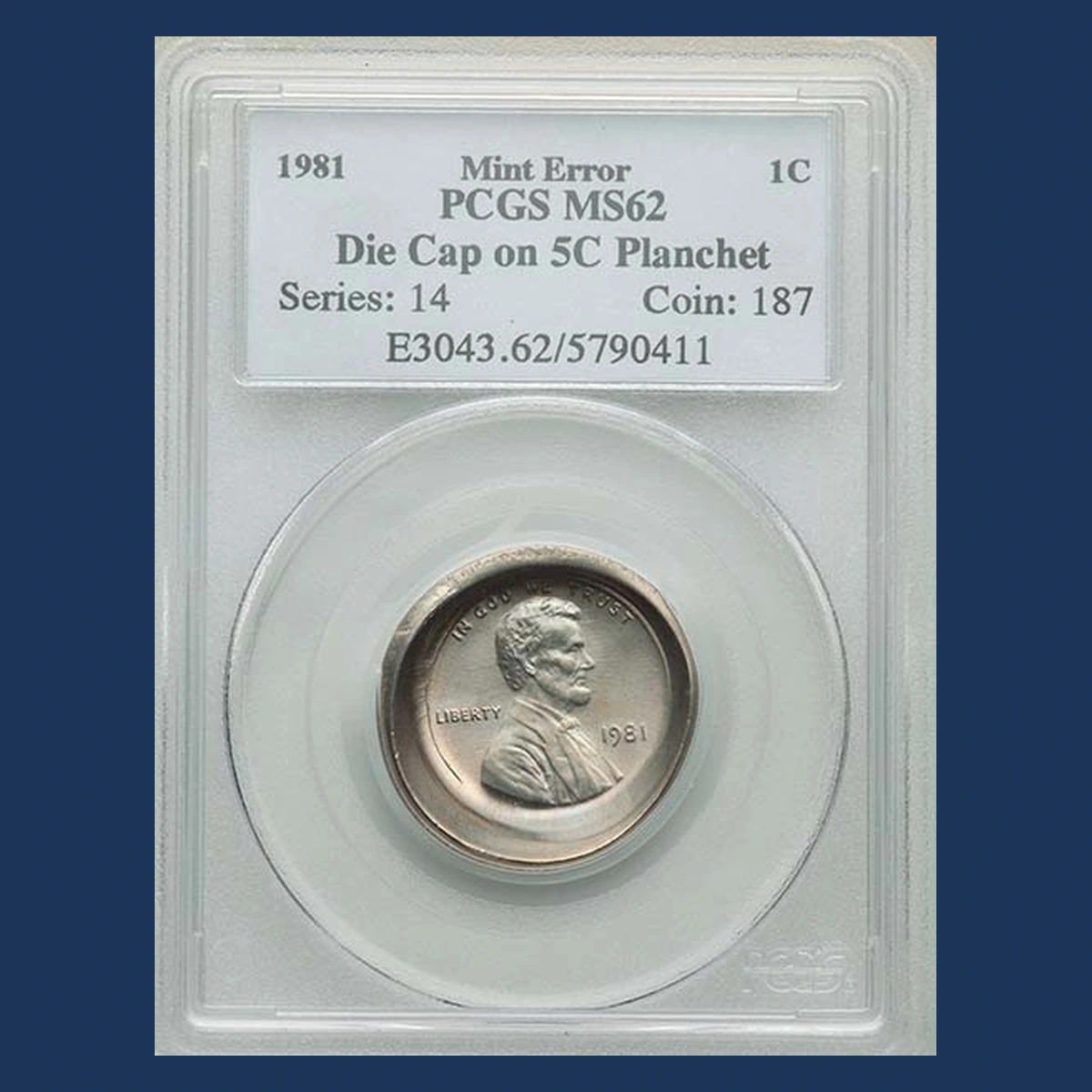
A deep cup can retain Lincoln’s design inside while its walls rise around the portrait. A coin remained attached to a stamping tool as repeated strikes bent and thinned its metal.
The 1981 example started on a nickel blank rather than a cent blank. It therefore combines the wrong metal disk with a die cap, the name for the coin wrapped around a tool.
Its silver-gray metal distinguishes it from an ordinary copper cent cap. The Lincoln design identifies the cent tool involved.
This is one object. It should not be treated as a loose nickel and a separate cap.
Estimated Value
The PCGS MS62 cap sold for $5,820 in April 2021. MS62 describes an unworn piece with more marks than higher grades, but the combined wrong-blank and cap features drive its interest.
An estimated $3,500–$10,000 is a comparison range for this unusual combination. It is not the expected value of a normal copper cent with a slightly bent edge.
The intact cup and readable interior design matter. Damage from flattening the walls would change both the shape and the evidence.
How to Identify
Look into the cup with a 10× magnifier and locate the Lincoln design at its base. Follow the sidewalls outward to see how one continuous piece wrapped around the tool.
Compare the recorded metal with a nickel blank, normally 5.00 g and 21.21 mm before striking. Those are standard blank figures, not a measured weight or final width supplied for this specimen.
A normal 1981 cent instead starts at 3.11 g and 19.05 mm. Use existing scale and caliper records for a sealed or fragile cap.
Leave the walls upright and untouched. Look for Lincoln inside a continuous cap made from the larger nickel-type blank.
17. 1981 Lincoln Penny Cent Cap Reused as a Dime Cap (Estimated Up to $12,000)
An already cup-shaped cent can carry a second denomination’s design over its first one. Mint Error News describes a 1981 cent cap that later became involved in dime striking.
The cent first formed around a front stamping tool. It then encountered a Roosevelt front tool and an already struck dime, receiving another set of details.
The reported object combines earlier Lincoln remnants with Roosevelt and a backward, sunken impression. Those features help explain why it is called a double-denomination cap.
The two stages concern the same copper object. They are not two separate caps that can be pulled apart.
Estimated Value
Use an estimated $2,000–$12,000 for this identified complex cap history. That is a comparison-based estimated range, not a recorded sale of the published specimen.
The distinct 1981 cent cap on a nickel blank brought $5,820 in April 2021 in PCGS MS62. It provides a major combined-cap comparison, while using a different metal and sequence.
Readable evidence of both stages matters more than height alone. A tall ordinary cent cap does not automatically deserve the same range.
How to Identify
Trace the surviving Lincoln detail through a 10× magnifier before looking for the later Roosevelt design and recessed backward impression. Photograph the interior, exterior, and side profile so the two striking stages can be compared on one continuous object.
The original 1981 copper-alloy cent normally weighs 3.11 g and spans 19.05 mm, although cap formation changes its final outline. Use scale and caliper records rather than opening a holder or pressing fragile walls to obtain new measurements.
A copper surface by itself cannot prove the two-stage sequence. Follow the earlier cent design into the later dime details while keeping the direction and depth of each impression clear.
18. 1981 Lincoln Penny Cent Front Struck on Larger Finished Coins (Estimated Up to $20,000)
A small Lincoln portrait can appear within a much larger coin’s older design. The reported 1981 examples involve an Anthony dollar and a 1981-P Kennedy half dollar.
The half dollar received only the cent’s front design and became bowl-shaped. Its back has no Memorial impression, indicating that something blocked direct contact with a cent back tool.
The Anthony-dollar report likewise describes a front-only cent impression. A collector listing identifies one example on a 1979 dollar, not a 1981-dated dollar.
These are overstrikes on finished coins. Their large original bodies remain visible around the smaller cent impression.
Estimated Value
The cent impression on the 1981-P half dollar sold for $13,200 in July 2021, graded PCGS MS64. It was unworn with fairly few marks.
An estimated $4,000–$20,000 covers identified large-coin combinations of these kinds. The half-dollar sale is not an actual price for the separate Anthony-dollar report.
Judge the readable older design, the cent impression, and preservation of the unusual shape together. A later stamped novelty needs a different explanation and comparison.
How to Identify
Use a 10× magnifier to separate the smaller Lincoln impression from the original Anthony or Kennedy design. Read the older coin’s date independently, since a 1981 cent tool does not make an underlying 1979 dollar a 1981 dollar.
A normal Anthony dollar starts at 8.1 g and 26.5 mm, and a clad half dollar at 11.34 g and 30.61 mm. Compare scale and caliper records with those original denominations, not the cent’s 3.11 g and 19.05 mm.
The final bowl shape can alter width. On the half dollar, inspect the centered front-only cent impression and confirm that its back lacks the Memorial.
Conclusion
The 1981 date covers both small tool defects and striking combinations involving other denominations. Begin with the normal 3.11-g copper-alloy cent, then choose checks that fit the particular feature.
Estimated values range from $2–$20,000. A matched extra mintmark, an incomplete blank, and a cent impression on a larger coin need different comparisons. Keep the coin intact and read the complete design before deciding what its unusual appearance means.