1955 Penny Error List with Pictures

The famous doubled 1955 date is bold enough to attract attention without a microscope. One exceptional red example sold for $287,156.25 in January 2023.
Yet a faint extra-looking edge can be ordinary tool wear worth very little. This 1955 penny error list spans estimated values of $0.10–$300,000, including that common lookalike; read on to separate it from genuine doubled designs, missing metal, and unusual strikes.
1. 1955 Lincoln Wheat Penny Poor Man’s Doubling (Estimated Up to $5)
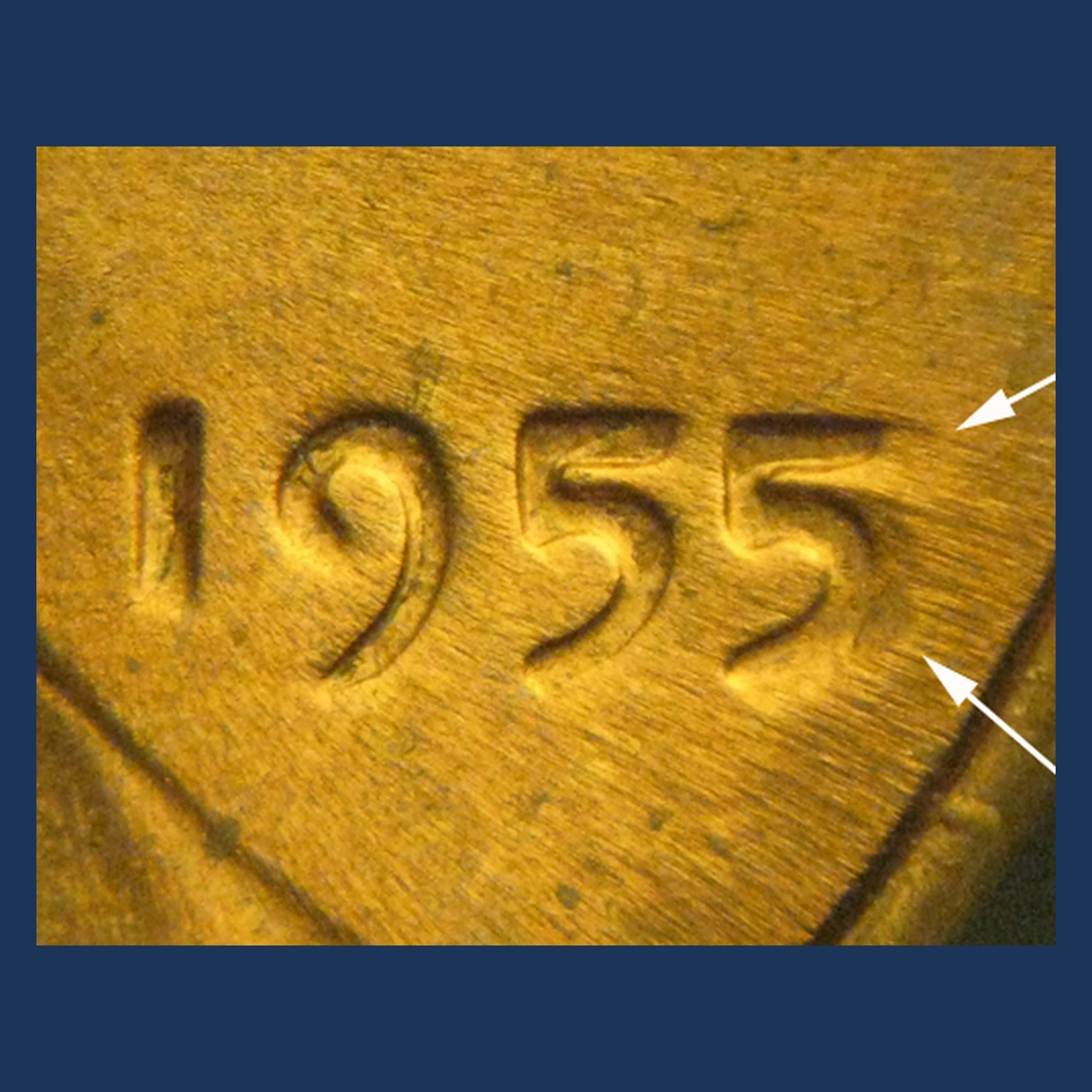
An extra-looking edge beside a date digit can tempt a collector to imagine the famous 1955 variety. Many such cents instead show changes caused by a worn stamping tool.
Collectors often call these Poor Man’s doubled dies, but that nickname is misleading. The tool deteriorated through use rather than receiving a genuinely doubled design when it was made.
The resulting outlines can look swollen, stretched, or poorly defined. They do not provide the broad, clear separation of the famous variety.
This common lookalike belongs in any practical check of 1955 cents. Its low value reflects that important difference.
Estimated Value
A common 1955 cent with Poor Man’s doubling has an estimated value of about $0.10–$5, depending mainly on its ordinary condition and collector interest. It should not be priced alongside the famous genuine doubled die.
The nickname may help explain a listing, but it does not create the same variety premium. Worn, stained, or damaged coins often remain near the bottom of the range.
An unusually high ordinary grade requires a separate condition-based valuation.
How to Identify
Examine more than the final 5 with a 10× magnifier. The famous variety has strong extra outlines across the date and inscriptions, not simply one swollen digit.
Compare the suspect edges with normal lettering elsewhere on the coin. Wear in the stamping tool can leave rough, flowing outlines rather than cleanly separated design.
Use a scale and calipers to check about 3.11 g and 19.05 mm, and inspect the plain edge for alteration. Normal measurements identify the basic coin but cannot establish a doubled die.
Keep the coin under changing light to avoid mistaking reflections for extra metal. Judge clear separation across the complete date and lettering before accepting any valuable doubled-die claim.
2. 1955 Lincoln Wheat Penny Clashed Designs (Estimated Up to $100)
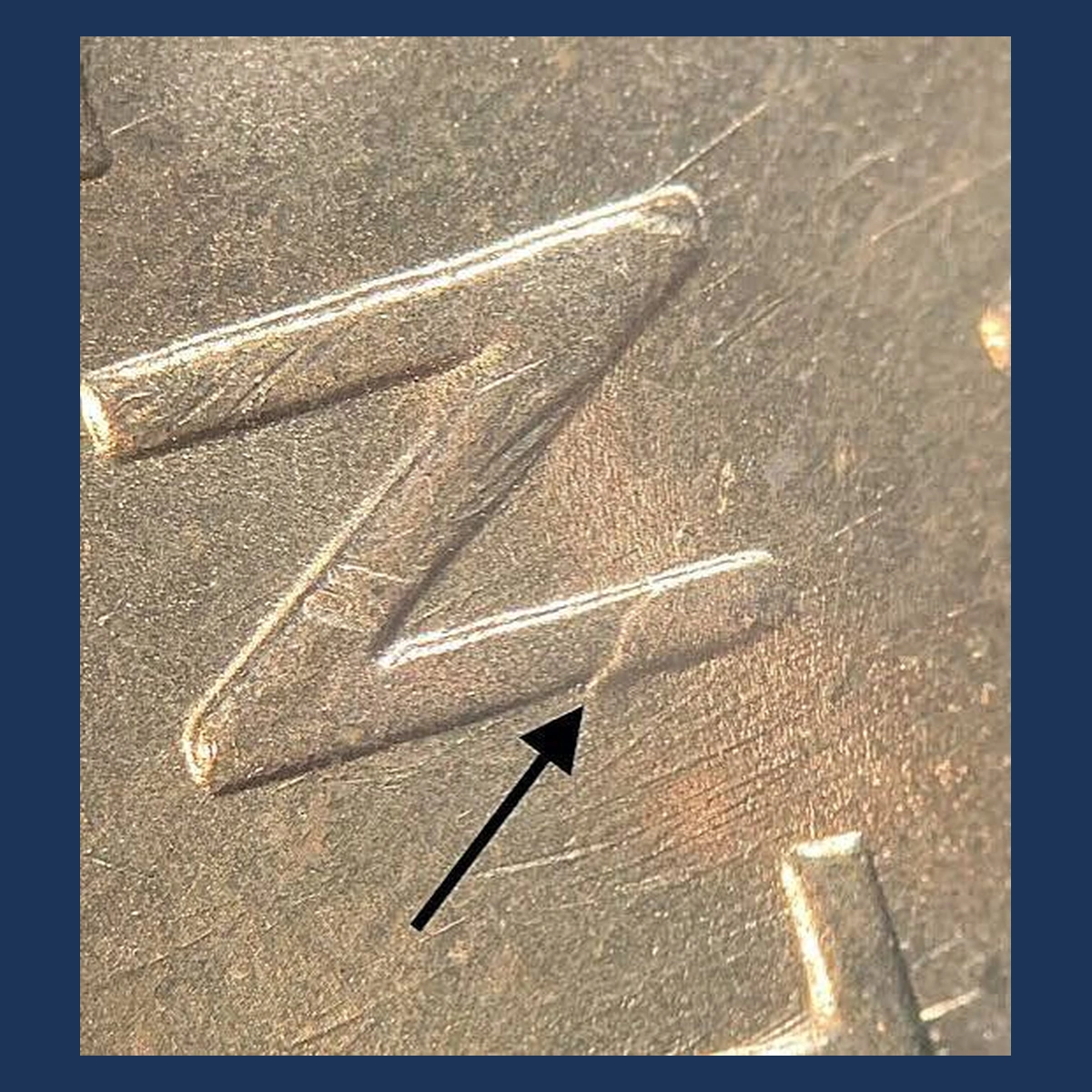
A shallow line may seem to belong to the wrong side of a penny. It can be a trace transferred when the two stamping tools struck each other without a disc between them.
This collision is called a die clash. Later coins can show parts of the opposite design in unexpected places.
Different 1955 Philadelphia, Denver, and San Francisco tools show their own clash traces. Some also produced doubled designs or repunched mintmarks.
Those accompanying varieties do not make every small line a clash. The mark itself must fit the opposite design, with the right shape and relative position.
Estimated Value
For a recognizable minor 1955 clash, estimate $5–$100. Readable transferred shapes generally interest collectors more than vague lines visible only under very strong magnification.
This is an estimate for the clash feature, not a verified sale for every recorded tool. If the same coin has a valuable doubled die or mintmark variety, that feature needs its own valuation.
Do not add several maximum estimates together simply because multiple names appear on the coin’s description.
How to Identify
Compare both coin faces before studying isolated marks. A genuine transferred line should follow a recognizable part of the opposite design.
Use a 10× magnifier around the relevant area, such as the throat or reported back-lettering traces. Keep each mint and tool comparison separate because their clash patterns differ.
A scratch normally cuts into the surface and may push up a narrow ridge beside it. An unrelated tool crack also needs a different explanation from a clash.
Check the usual 3.11 g and 19.05 mm with a scale and calipers, then inspect the plain edge for squeezing. Align the suspect trace with the opposite-side design to test whether a tool collision explains it.
3. 1955 Lincoln Wheat Penny Filled-Tool Weak Letters (Estimated Up to $100)
A word may fade while nearby parts of the coin remain more clearly struck. Grease or other packed material can block the shallow recesses of the stamping tool.
The coin then fails to receive that portion of the design. Collectors often describe this as a grease-filled die or a struck-through-grease error.
A 1955-D example with missing LIBERTY has been reported from photographs. The appearance still needs to be distinguished from wear, weak striking pressure, and later surface damage.
No particular grease material can be identified from a missing word alone. The surrounding original surface is part of the evidence.
Estimated Value
Estimate $5–$100 for a genuine 1955-D filled-tool error with clearly affected lettering. Small weak areas usually attract little premium, while a strong contrast with nearby sharp detail is easier to collect.
A 2021-D grease-struck cent graded PCGS MS64 Red sold for $84 in September 2025. That later zinc-centered coin provides a comparison for the effect, not a certified price for the reported 1955-D coin.
Worn or scraped-away lettering does not qualify for the range.
How to Identify
Compare the missing word with adjacent portrait and lettering detail. Broad wear across the whole coin is a poor basis for a grease-filled explanation.
Tilt the surface beneath a lamp and inspect it with a 10× magnifier. Scratches, polishing lines, or a depressed ground patch suggest that the letters were removed later.
A scale and calipers check the normal 3.11 g and 19.05 mm. Inspect the plain edge too, since heavy mechanical damage can distort more than one area.
Do not rub the weak letters to make them clearer. Look for an originally struck surface with a localized missing design beside better-preserved detail before assigning a filled-tool premium.
4. 1955 Lincoln Wheat Penny Folded Rim Fin (Estimated Up to $250)
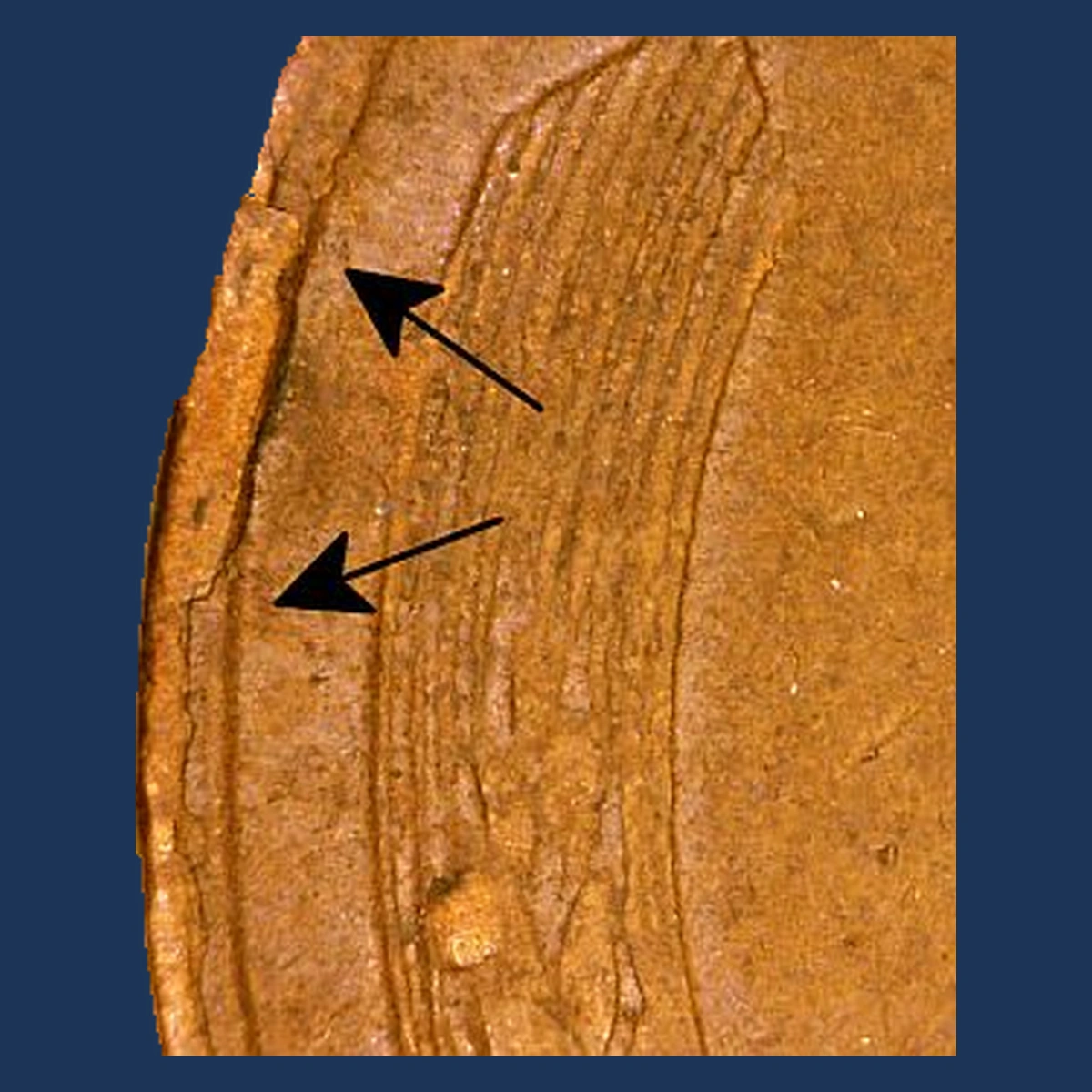
A thin flap at the edge can lie across the surface and resemble a raised lump. On the reported 1955-D example, the feature was identified as a folded rim fin.
A fin forms when metal squeezes into a narrow gap near the edge during striking. The thin extension can then bend over.
The folded sheet is different from a cud, which comes from a broken piece of the stamping tool. Looking only from above can hide that distinction.
This example was once classified as a cud. Its revised identification depends on the folded metal structure, not the old nickname.
Estimated Value
A genuine 1955-D folded rim fin has an estimated range of $25–$250. The flap’s size, clear connection to the original rim, and overall condition affect its appeal.
This is an estimate for a mint-formed fin that later folded over, not a verified auction result for the revised catalog example. Its former cud classification should not determine the price.
A rim damaged by pliers or hammered flat after minting should not receive the same error premium.
How to Identify
View the edge from the side under a 10× magnifier. Look for a thin sheet bending across the coin, rather than a solid raised lump growing from the design.
Trace where that sheet connects to the original rim. Sharp tool marks or a crushed edge can reveal an ordinary damaged coin instead.
Compare the untouched portions with the normal plain edge. Calipers can check around the standard 19.05 mm diameter without pressing the flap, and a scale compares with 3.11 g.
Leave the folded metal in its current position. The useful distinction is an original thin rim extension bent over the surface, not metal filling a cavity in a broken stamping tool.
5. 1955 Lincoln Wheat Penny Clipped Discs (Estimated Up to $300)
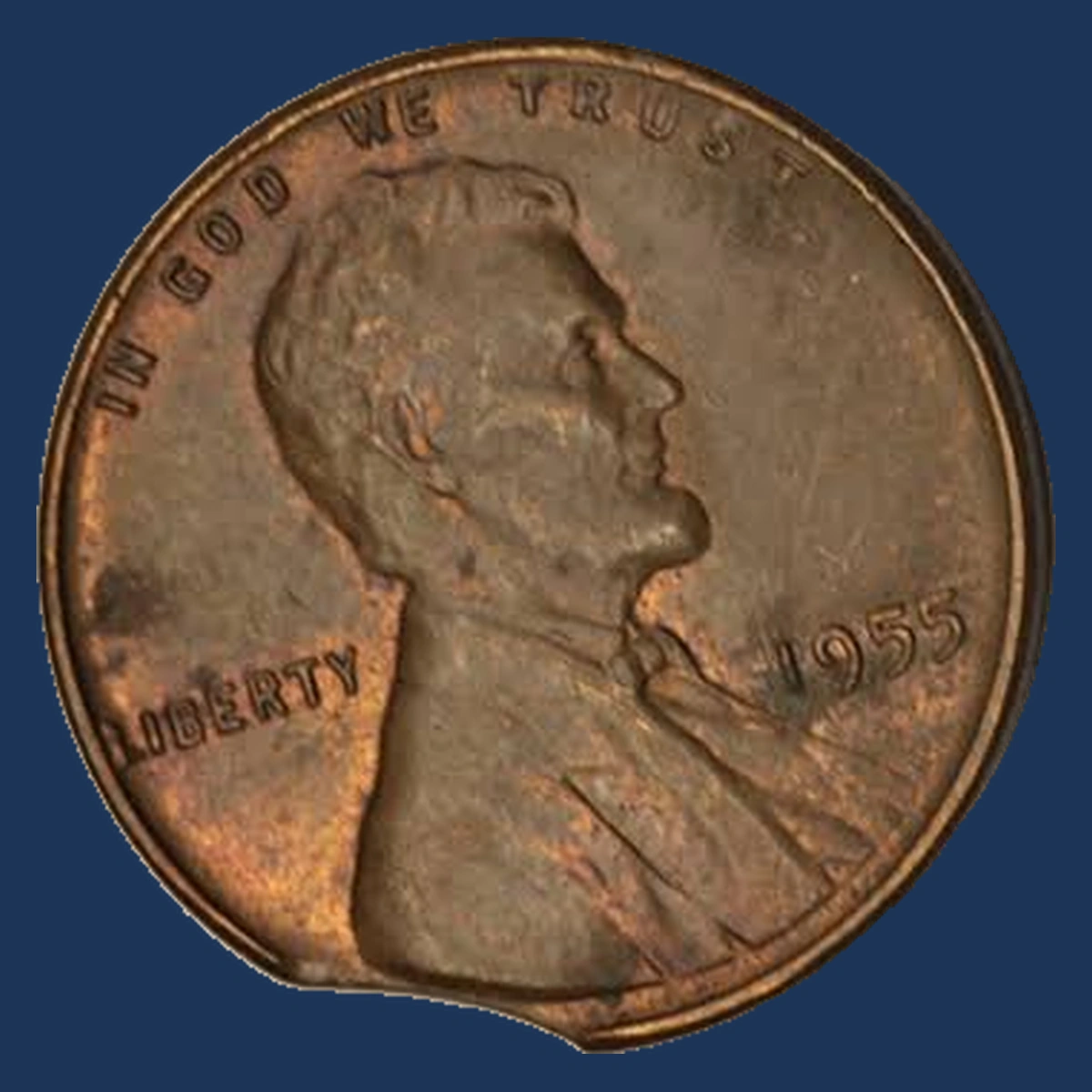
A missing piece at the edge may have been absent before the penny received its design. Different 1955 examples show rough, curved, or straight boundaries.
A Philadelphia ragged clip lies near four o’clock on its recorded example. Other Philadelphia and Denver coins have curved clips.
One straight-clip coin also spread outward during striking, a combination called a broadstrike with a clip. Its incomplete original disc and later spreading are separate features.
A later cut can imitate a missing section, so the rim and design beside the gap matter. The shape alone cannot establish when the metal disappeared.
Estimated Value
The 1955 ragged-clip cent graded NGC MS66 Red sold for $124 in March 2026. That is a same-year result for a particularly well-preserved example.
Estimate $15–$150 for ordinary genuine clips, with clear broadstrike combinations reaching roughly $75–$300. These ranges depend on the missing section, preservation, and readability of the date.
The $124 sale belongs to the ragged-clip coin, not every curved or straight clip recorded for Philadelphia or Denver.
How to Identify
Study each boundary with a 10× magnifier before checking the percentage missing. Fresh saw marks, filing, and sharply displaced burrs suggest later damage.
A curved clip may have a weak rim opposite the gap. A ragged edge needs its own examination of original metal and nearby design rather than a requirement to match a smooth arc.
Compare weight with 3.11 g using a scale. Calipers can measure surviving parts of the normal 19.05 mm outline, while the remaining plain edge should also be inspected.
On the broadstruck example, separate spreading from missing metal. Confirm that the design and rim formed around an incomplete disc before adding value for either feature.
6. 1955 Lincoln Wheat Penny Thin and Tapered Discs (Estimated Up to $400)
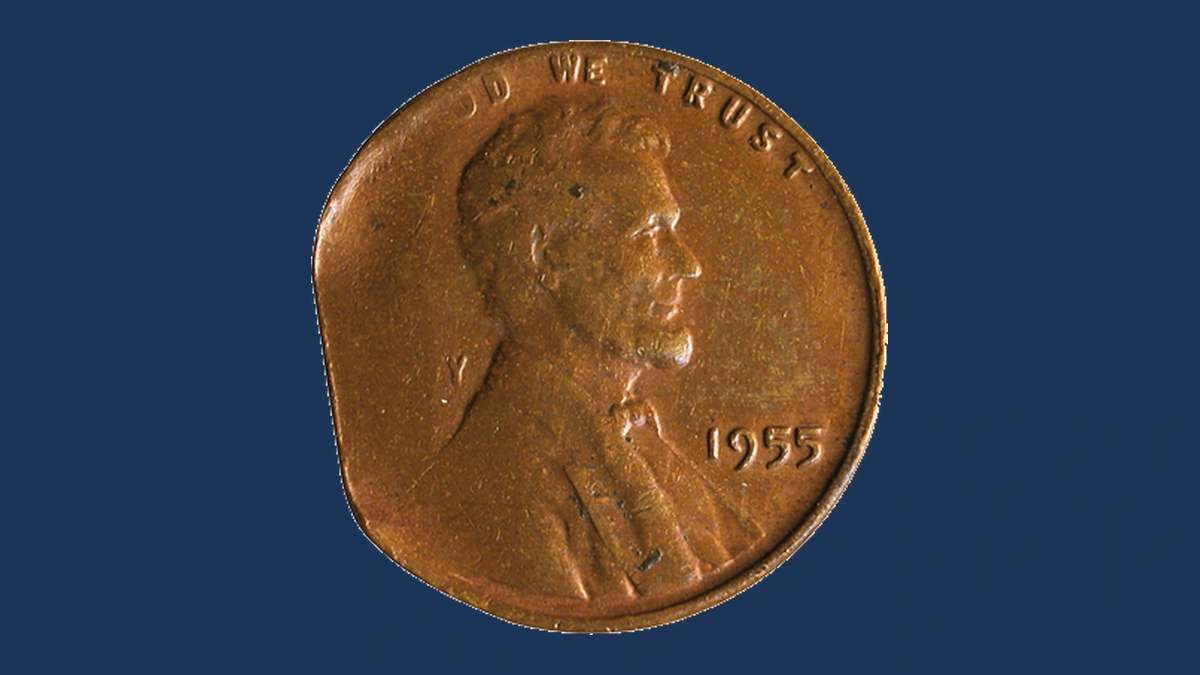
One side of a cent can become thinner toward its edge. Unevenly rolled metal can produce this taper before a disc is cut and struck.
A recorded Philadelphia 1955 cent weighs 2.12 g and combines tapering with a straight clip. A Denver example weighs 1.84 g and combines thin metal, tapering, and a straight clip.
The low weights therefore have more than one cause. They do not automatically identify another metal or a coin damaged by acid.
Striking on thin metal may leave a weak design where the disc cannot fill the tool. Each example needs its own thickness profile.
Estimated Value
These confirmed 1955 thin-and-tapered combinations have an estimated range of $50–$400. Clear changes in thickness and an original clipped boundary are more useful than low weight alone.
The range is an estimate for the combined manufacturing defects, not a reported sale of either the 2.12 g or 1.84 g example. A clean surface and readily visible taper help collectors understand the piece.
The two weights should not be used as universal targets for every tapered cent.
How to Identify
Use calipers to compare thickness at several points without pressing against the design. A taper should show a gradual change rather than a single filed patch.
Record the weight with a scale and compare it with the normal 3.11 g. The ordinary diameter is 19.05 mm, though a clip removes part of that outline.
Under a 10× magnifier, inspect the thin area, straight boundary, and surviving plain edge for grinding or chemical damage. Weak design should relate naturally to the thinner metal.
Do not identify a foreign disc from low weight alone. Map a genuine gradual taper across the original metal, then inspect the separate clip that accounts for additional loss.
7. 1955 Lincoln Wheat Penny Defective and Separating Metal (Estimated Up to $500)
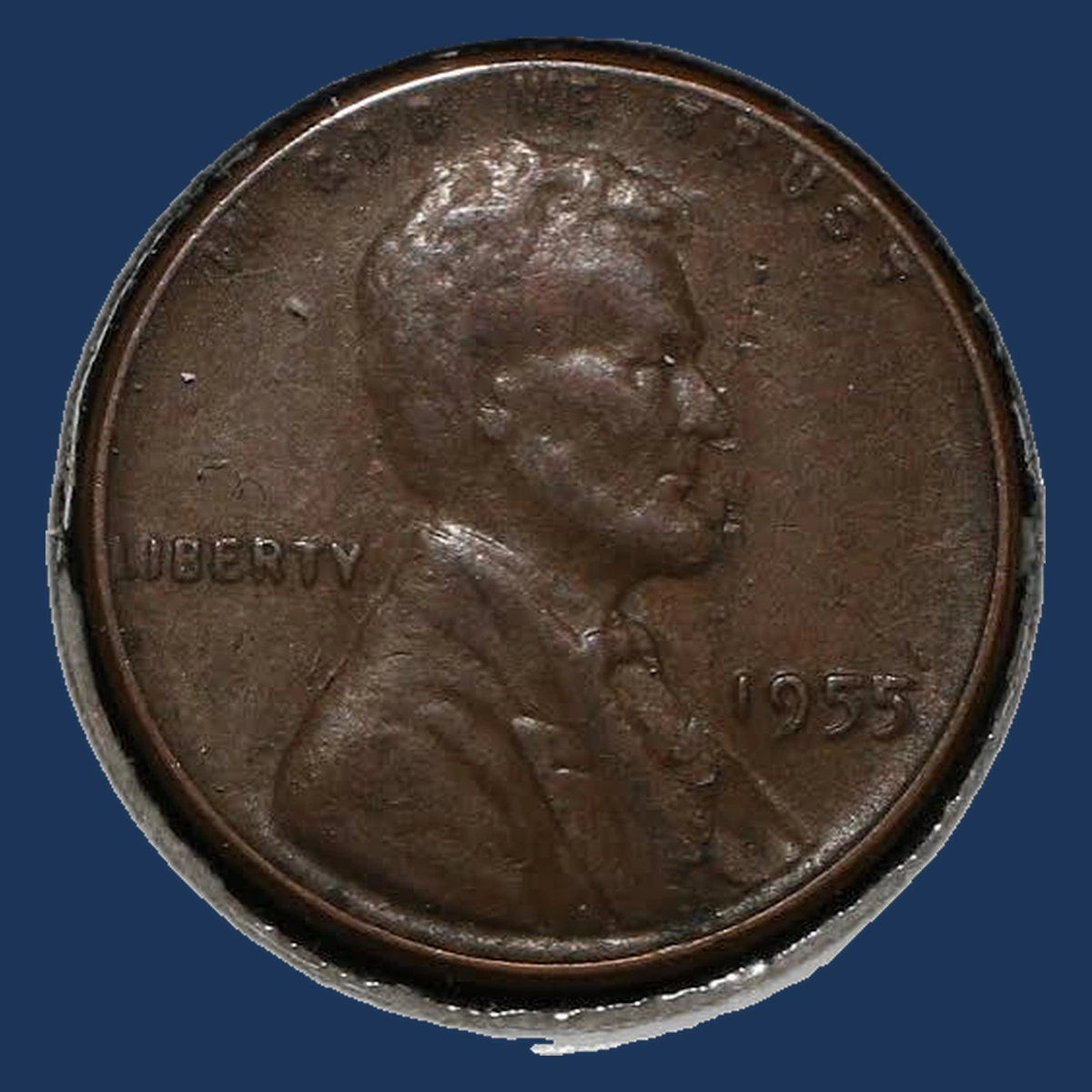
A cent can open along an internal layer while remaining joined at one edge. The shell-like shape gives this defect the name clamshell lamination.
It is a separation within the metal, not a coin folded in half by the press. A 1955 cent illustrates this partly opened structure.
Other reports include a broadly described defective Philadelphia disc and a San Francisco surface flap. The latter has been interpreted as either separating coin metal or retained material struck into the surface.
Those explanations require different evidence. A raised flap alone does not settle whether it belongs to the original disc.
Estimated Value
Estimated values of $10–$500 cover genuine 1955 metal defects of differing size and clarity. An intact clamshell separation is more striking than a small, indistinct surface flaw.
A 1971-D cent struck after its disc split sold for $59 in June 2023. That later-year example offers only a general comparison for internal metal failure, not a price for a hinged 1955 clamshell.
The San Francisco flap receives a premium only after its actual cause is established.
How to Identify
Leave a partly separated cent closed as found. Trying to open it farther can break the hinge and remove useful evidence.
Examine the split under a 10× magnifier to see whether it continues within the original metal. On the San Francisco candidate, compare that possibility with a separate object pressed into the surface.
A scale checks against the normal 3.11 g, and calipers compare untouched dimensions with 19.05 mm. An intact clamshell can keep most of its original weight despite its unusual shape.
Follow the plain edge without inserting tools into the opening. Trace continuous coin metal into the split to establish separation, rather than assuming every attached flap is part of the disc.
8. 1955 Lincoln Wheat Penny Off-Center Strikes (Estimated Up to $600)
Most of a cent’s disc can remain blank when it sits far outside the striking position. Only the small area beneath the stamping tools receives the design.
Recorded 1955-D examples include about 65% and 75% off-center strikes in different directions. They are separate coins rather than different views of one example.
The date and mintmark become especially important when so little design remains. A large blank area alone cannot establish 1955 or Denver.
An off-center strike also differs from an enlarged coin with a complete design. That latter shape may come from striking without the normal ring holding the edge.
Estimated Value
Use an estimated $40–$600 for genuine, readable-date 1955-D off-center cents. The upper end favors clean, attractive examples with a dramatic but well-identified remaining design.
A 1968-D cent struck 60% off center, graded NGC MS62 Red and Brown, sold for $47 in July 2021. This later-year comparison shows that a large percentage does not by itself establish a high price.
The documented 1955 examples need individual judgment for wear, damage, and surviving detail.
How to Identify
Identify the date and D on the struck area before measuring the amount of blank metal. Avoid assigning the year solely from a holderless seller’s title.
A 10× magnifier should show original metal flow where the design ends. Ground or cut surfaces do not reproduce a natural struck-to-blank boundary.
Turn the coin over to check that the displacement is consistent on both faces. A shifted tool on just one side is a different error.
Check weight near the ordinary 3.11 g with a scale, and compare dimensions with 19.05 mm using calipers. Inspect the plain edge, then find a genuine blank crescent opposite design missing beyond the disc’s boundary.
9. 1955 Lincoln Wheat Penny Two Discs Struck Together (Estimated Up to $750)
One face of a cent can lack the normal design because another disc blocked the stamping tool. Two metal discs entered the press together and were struck as a stack.
The recorded 1955 example is described as the front-side member of that event. Its front received the tool’s design while the other disc obstructed the back.
The word half in an auction label can refer to one of the two coins. It does not mean this cent split through its thickness.
A later ground-down back is a different explanation and must be ruled out through the original surface and edge.
Estimated Value
A genuine 1955 member of a two-disc strike has an estimated range of $100–$750. Clear one-sided striking and well-preserved original metal help distinguish an attractive example.
The recorded coin was graded NGC MS64 Red and Brown. This estimate concerns that type of single surviving member, not the combined value of a matched pair.
No verified individual sale is assigned here, and a second coin should not be assumed to exist alongside the photographed piece.
How to Identify
Examine the blocked face before interpreting a thin-looking edge. Under a 10× magnifier, look for original compressed metal rather than abrasive lines from grinding.
Compare the struck front with the back and trace their relationship around the plain edge. A stack of discs can spread differently from one ordinary cent.
Use a scale against the usual 3.11 g and calipers against 19.05 mm. A major reduction to about half weight requires a separate explanation, such as splitting, rather than an assumption based on the word half.
Do not try matching the coin to another piece by force. Confirm an originally struck front paired with a naturally blocked back on a single intact disc.
10. 1955 Lincoln Wheat Penny Double Strike with a Blocked Back (Estimated Up to $1,000)
A second patch of Lincoln’s design appears far from the first on the recorded Philadelphia cent. The coin received a normal strike and then another about 70% off center.
A fresh disc blocked the back during that second strike. The extra area therefore does not carry a matching second back design.
Collectors call such an impression uniface, meaning struck on only one side. The term applies to the affected strike, not necessarily the entire coin.
This is different from a doubled die. Here the same coin moved between two strikes rather than receiving doubled details from one stamping tool.
Estimated Value
Estimate $150–$1,000 for a genuine 1955 double strike with a clear displaced, one-sided second impression. The recorded Philadelphia coin was graded NGC MS64 Brown.
A 1979-D double-struck cent with its second impression 70% off center sold for $660 in June 2025. That later copper-alloy example provides a comparison for displacement, but it is not the sale of this 1955 blocked-back coin.
Readable overlapping designs and natural surfaces are more valuable than damage resembling another strike.
How to Identify
Trace the normal first design before following the displaced second one. A 10× magnifier helps connect actual portrait or lettering remnants rather than isolated dents.
Inspect the back of the extra area. It should explain why the second impression is described as one-sided, without showing evidence of deliberate smoothing.
A scale checks against 3.11 g, and calipers record the changed outline beside a standard 19.05 mm cent. Study the plain edge for joining, grinding, or pressure damage from two finished coins squeezed together.
Keep the first and second strikes mentally separate. Find a genuine displaced front impression with the corresponding naturally blocked back to identify this particular double-strike combination.
11. 1955 Lincoln Wheat Penny Repunched Mintmarks (Estimated Up to $1,500)
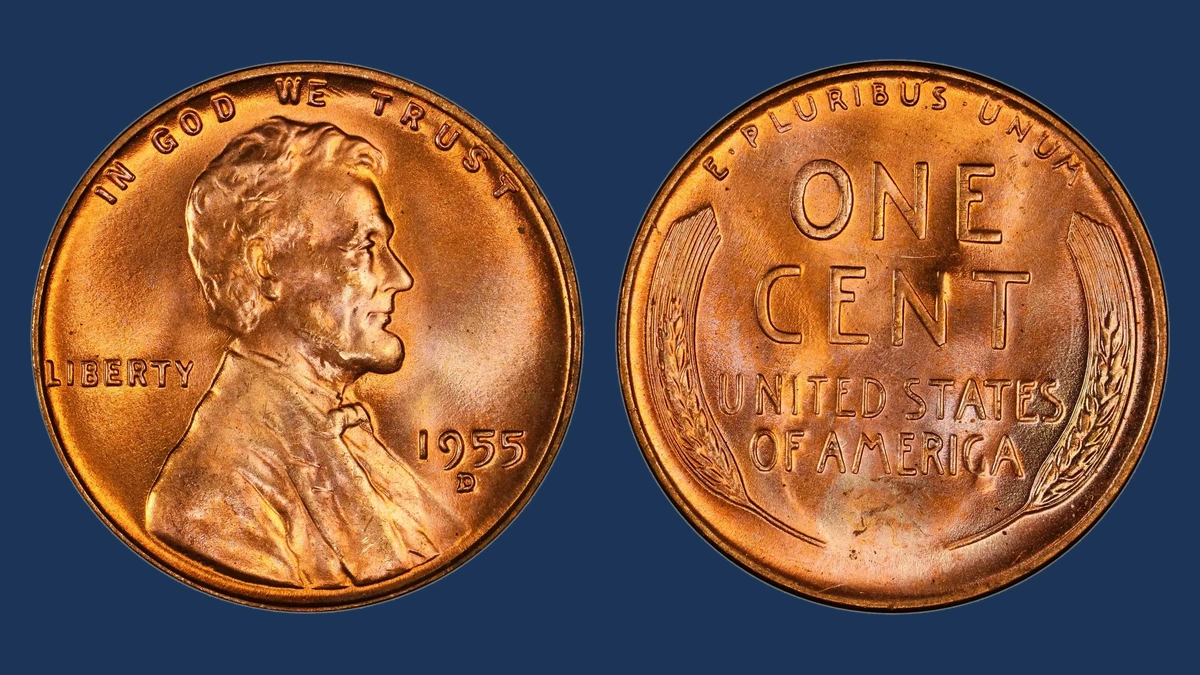
A second D curve or extra S loop can appear beside the main mintmark. In 1955, workers punched these mintmarks into the stamping tools by hand.
A punch repeated at a different angle or position could leave extra strokes. The coins made from that tool then repeated those shapes.
Denver and San Francisco have recorded varieties, including some with three mintmark impressions. The spacing and small letter corners differ between tools.
A few also share doubled portrait details or later tool breaks. Those accompanying features help identify a particular coin but do not turn every nearby bump into another mintmark.
Estimated Value
Minor confirmed 1955 repunched mintmarks have an estimated range of $3–$150. Strong, widely separated or triple-punched examples in desirable condition may reach roughly $150–$1,500.
These are comparison-based ranges for different recognized varieties, not separate realized prices for every catalog entry. A current photographic match matters more than a short catalog number copied from another naming system.
A high price requires both the correct extra letter structure and suitable preservation; ordinary chips or flat doubling do not qualify.
How to Identify
Start with the actual mintmark: D and S varieties need separate comparisons. A Philadelphia cent without a letter does not belong in this group.
Use a 10× magnifier to trace extra uprights, curves, or forked corners. Some strong examples show wide spacing, while others require attention inside the main letter.
Match the repeated mintmark before relying on surrounding scratches or cracks. Those marks can change as a tool wears, and a shared line does not prove every catalog name is equivalent.
The normal coin is 3.11 g and 19.05 mm; verify with a scale and calipers, and inspect the plain edge. Identify recognizable parts of a repeated D or S in the exact recorded positions.
12. 1955 Lincoln Wheat Penny Cracks, Chips, and Cuds (Estimated Up to $1,500)
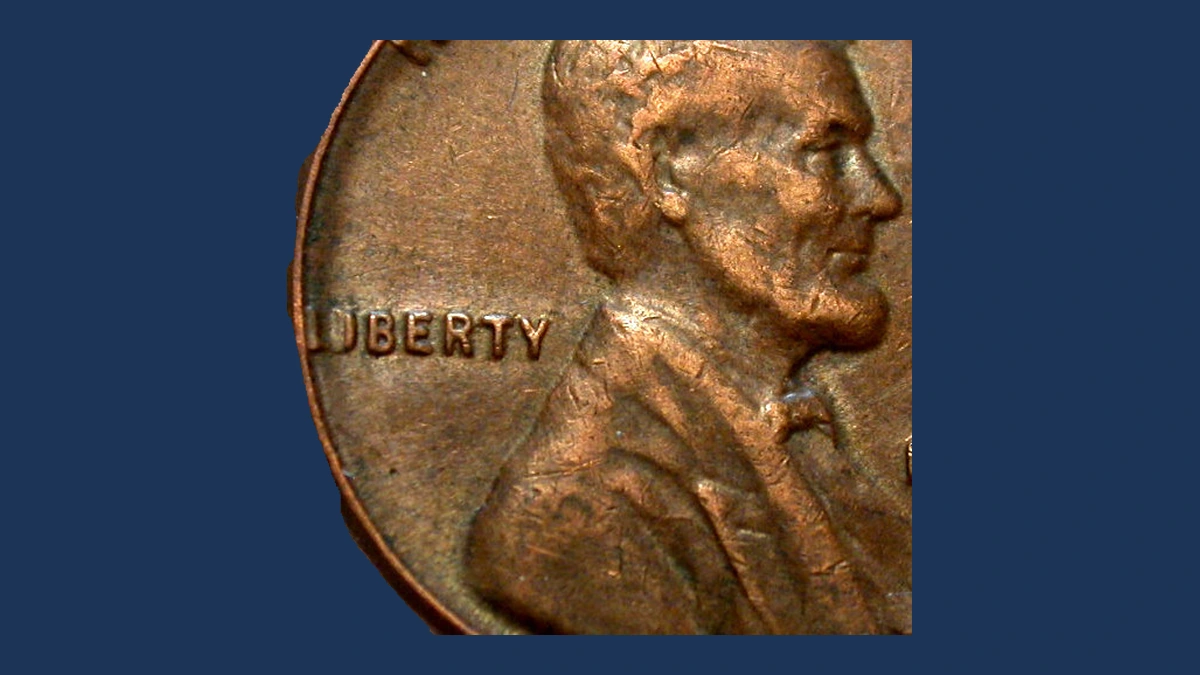
A raised bar between B and E can make LIBERTY look as though it contains an extra I. This BIE feature comes from a small break in the stamping tool.
Other damaged tools leave raised cracks, larger interior lumps, or rim-connected cuds. A cracked section that remains in place may still transfer its design at a different height.
1955 examples show these stages of damage in varied locations. Some have lines joining Lincoln’s head to the rim.
The San Francisco Capped Head name describes tool damage near the portrait. It does not mean the coin became a cup-shaped die cap.
Estimated Value
Small BIE chips and thin cracks have estimated values of $2–$50. Strong retained breaks or large cuds can bring approximately $50–$1,500, depending on their size and preservation.
A 1979 cud cent graded PCGS MS64 Brown sold for $1,020 in May 2021. That later copper-alloy example offers context for a substantial break, not every tiny 1955 chip.
Names such as spike head or Capped Head should not replace a judgment of the actual raised feature.
How to Identify
Light the coin from the side to distinguish a raised crack from a scratch cut into its surface. With a 10× magnifier, trace the line or lump rather than relying on its nickname.
A cud should join the rim. An internal break can remain away from it, and a retained section may still show design across a step in surface height.
For BIE, inspect the space between B and E separately from any larger break elsewhere. Different stages of one damaged tool can change the appearance.
Check about 3.11 g and 19.05 mm with a scale and calipers, and inspect the plain edge. Confirm original raised metal or displaced struck design matching the particular broken-tool pattern.
13. 1955 Lincoln Wheat Penny Silver Dime-Disc Errors (Estimated Up to $5,000)
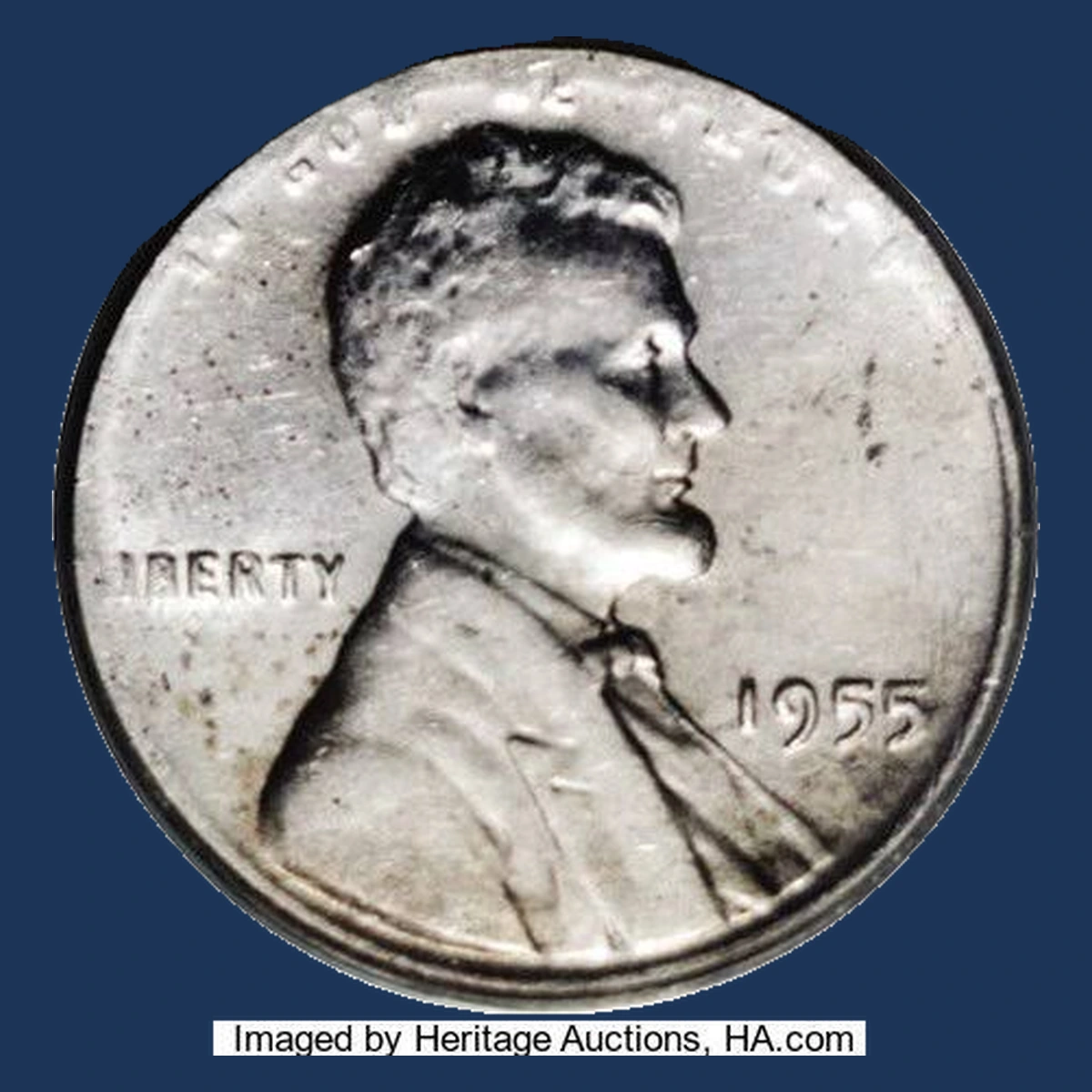
A pale 1955 penny can have a smaller disc than the normal copper-alloy cent. The wrong metal entered the press when a disc intended for a silver dime was used.
Philadelphia examples show crowded lettering and uneven, soft borders in different positions. Their outlines should not be combined into one standard appearance.
A separate San Francisco example was struck on a Type One dime blank. That means the blank had not yet passed through the machine that prepares its raised rim.
The distinction concerns disc preparation, not an already finished dime. A plated ordinary cent remains a very different object.
Estimated Value
The Philadelphia silver-disc example graded PCGS AU58 sold for $2,340 in July 2022 at Heritage. AU58 indicates slight circulation wear.
An estimated $750–$5,000 covers comparable authenticated 1955 silver dime-disc errors with varying condition and disc preparation. The Type One San Francisco example needs its own assessment; the $2,340 result belongs to the Philadelphia coin.
Neither a silver color nor an ordinary cent’s catalog weight establishes the error.
How to Identify
Compare weight and size before deciding what caused the pale appearance. A scale should distinguish a normal 3.11 g cent from a silver dime blank near 2.50 g.
Calipers compare the usual cent diameter of 19.05 mm with a dime blank’s starting diameter around 17.91 mm. Striking may spread the smaller blank.
Inspect the outer design and edge under a 10× magnifier for coating or alteration. A cent’s normal edge is plain; a wrong blank need not carry the grooves of a completed dime.
Do not scratch the metal to test it. Confirm the smaller silver disc professionally, and require separate evidence of its unprepared rim before accepting a Type One label.
14. 1955 Lincoln Wheat Penny Doubled Dies (Estimated Up to $300,000)
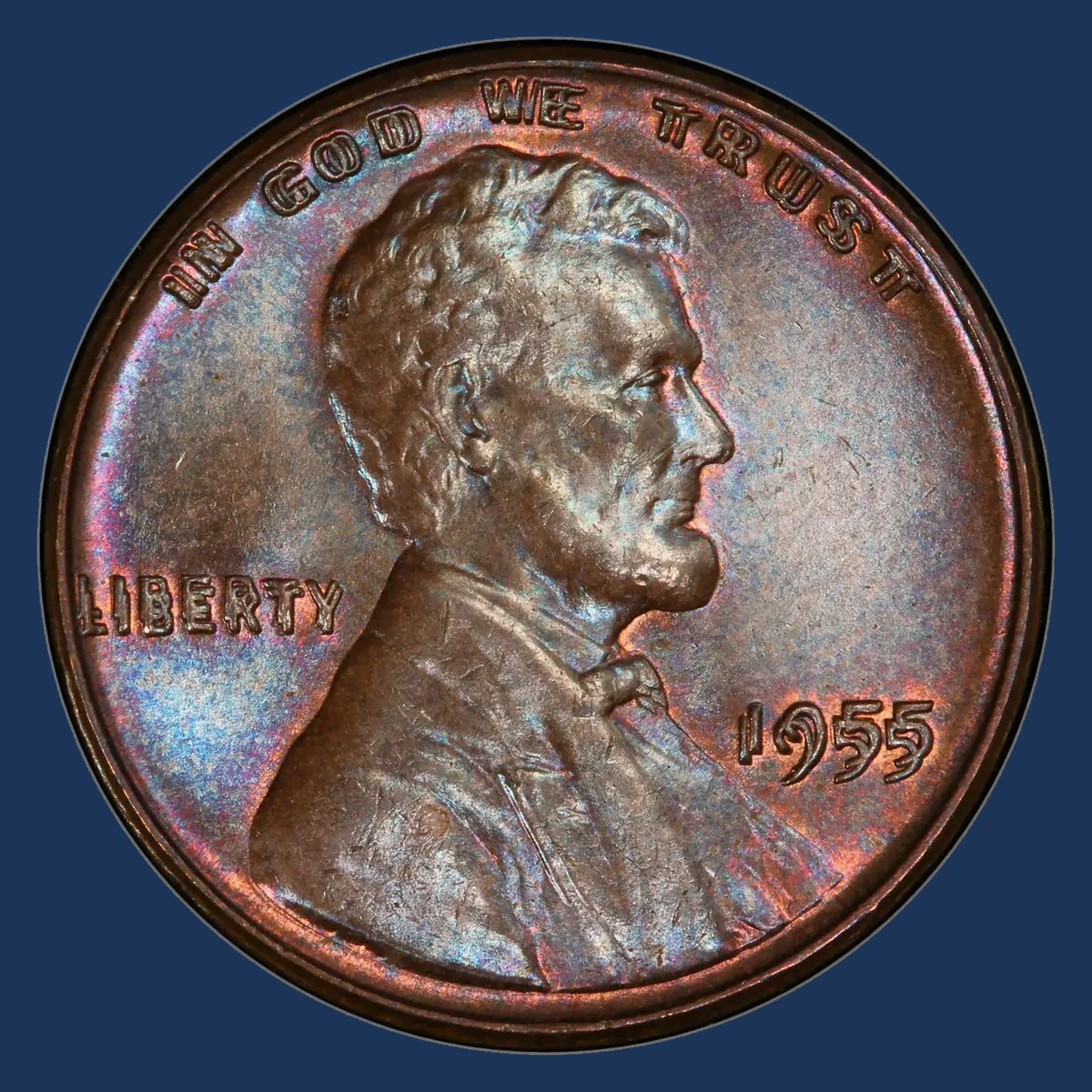
The famous 1955 variety shows a repeated date and lettering on the front. Its doubled design was already present on the stamping tool, so the coin did not need two separate strikes.
It is only one member of a much larger group. Minor varieties can add an eyelid, thicken lettering, or repeat parts of the wheat design.
Denver’s FS-101 is different from Philadelphia’s famous FS-101. Specially made collector coins called Proofs also include their own front and back varieties.
A correct identification must keep mint, finish, and visible design together. A familiar number alone cannot establish which coin is present.
Estimated Value
Minor varieties have estimated values of $5–$500, with recognized Proof combinations reaching roughly $100–$2,000. The famous Philadelphia doubled die spans about $1,000–$300,000, from worn examples to exceptional original-red coins.
PCGS reports that the Stewart Blay coin, graded MS65+ Red, sold for $287,156.25 in January 2023 at GreatCollections. That extraordinary result reflects one top-quality coin.
It should not be applied to minor eyelid varieties, the different Denver FS-101, or wear-related Poor Man’s doubling.
How to Identify
For the famous Philadelphia variety, look across the date, LIBERTY, and IN GOD WE TRUST. Strong, clearly separated extra outlines should be visible together.
With a 10× magnifier, compare a suspect coin with an authenticated example. For minor eyelid or wheat-side varieties, inspect the specific recorded feature instead of demanding the famous broad date spread.
Check for D or S and distinguish Proof manufacture before choosing a catalog match. A counterfeit can copy obvious doubling, so appearance alone is not sufficient for an expensive purchase.
The normal cent weighs 3.11 g and measures 19.05 mm; use a scale and calipers and inspect the plain edge. Match the complete variety, then obtain professional authentication before paying a major-variety price.
Conclusion
The estimated $0.10–$300,000 range begins with common wear-related doubling and reaches exceptional examples of the famous doubled die. Most unusual 1955 cents are far closer to the lower end.
Check the mint and finish, then follow the specific extra design or metal defect. A repeated date, a small BIE chip, and a silver dime disc need different tests, so a clear identification must come before a high price.