1974 Penny Error List with Pictures

A 1974-S cent on a tiny Philippine blank sold for $19,200 in January 2023. Another carried a broken steel tool fragment in its back and brought $9,000.
There is plenty more to this 1974 penny error list, from tiny repeated mintmarks to a remarkable two-coin pair. Estimated values span $2–$50,000, with the upper pair estimate covering both pieces together.
Read on to see which design, edge, and metal checks fit each example.
1. 1974 Lincoln Penny Details Lost through Tool Polishing (Estimated Up to $75)
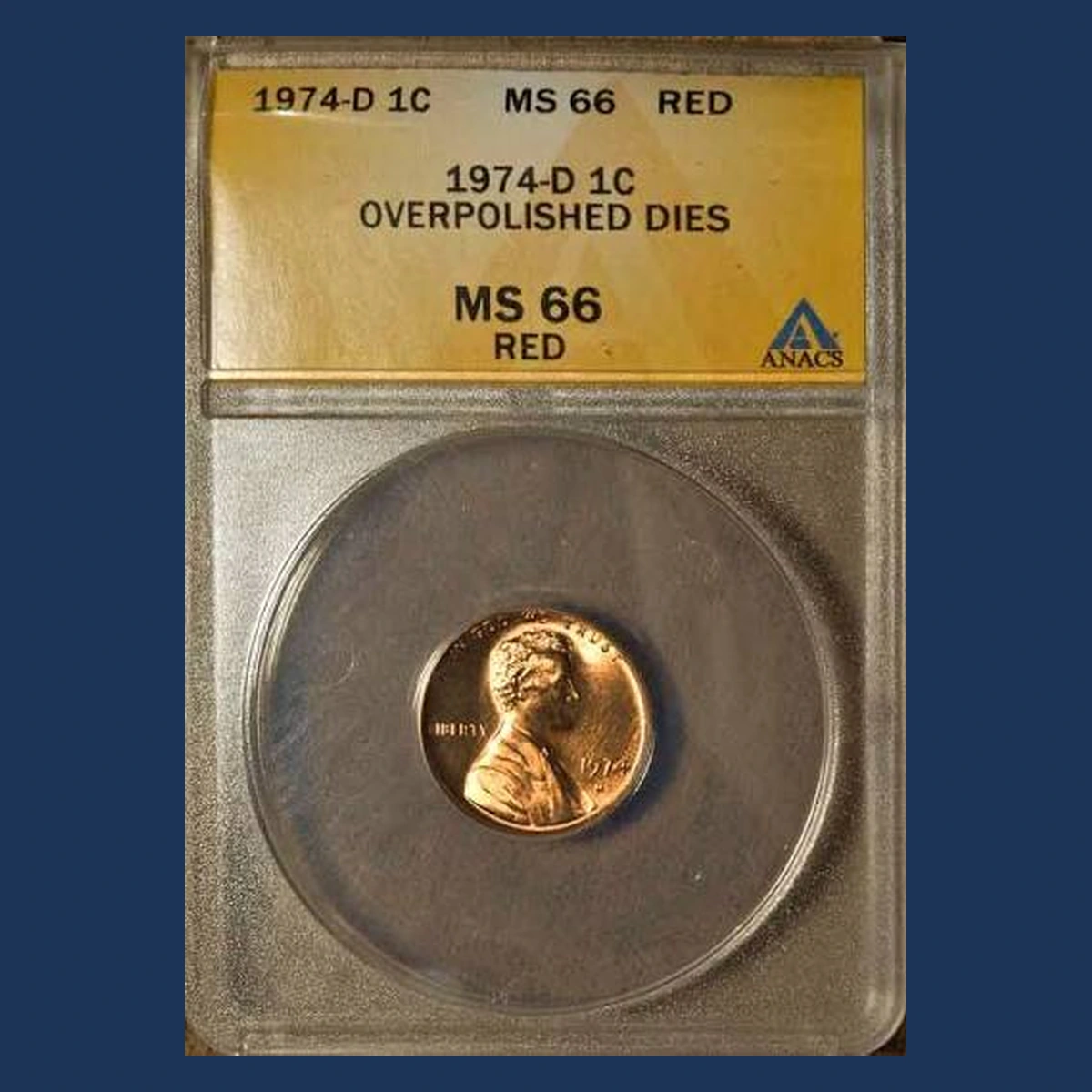
Some small details can disappear before a penny is struck. Polishing the die, the steel stamping tool, can remove shallow parts of its design.
A documented Denver example illustrates excessive polishing used to reduce marks from contact between the tools. Later coins then received the weakened design left on that tool.
The missing feature belongs to the impression, not necessarily to wear on the finished penny. Sharp neighboring details can help show the difference.
The available report does not establish one missing letter for every 1974-D candidate. Check the actual area rather than assigning a familiar nickname from another year.
Estimated Value
For an identified overpolished-tool example, estimate $2–$75. A clear local loss beside sharp remaining design is more useful to a collector than general weakness on a worn cent.
This range compares minor Memorial-cent polishing effects rather than a verified sale for the reported Denver coin. The size and visibility of the missing detail influence interest.
A penny polished after leaving the Mint has a different history. Its damaged surfaces should not receive the same mint-made-feature premium.
How to Identify
Compare Lincoln’s high points with the shallow area that appears missing. Use a 10× magnifier and side lighting to see whether nearby raised details remain sharp.
Look for tool-polishing lines that fit the documented example. Do not assume every fine scratch came from the stamping tool rather than later contact with the coin.
A scale and calipers compare the normal copper-alloy blank with 3.11 g and 19.05 mm. Inspect the plain edge and both faces for abrasive cleaning.
A locally reduced design on an otherwise original strike is the useful pattern. Match the actual missing feature and remaining detail before explaining it as excessive tool polishing.
2. 1974 Lincoln Penny Repunched Mintmarks and Reported D over S (Estimated Up to $250)
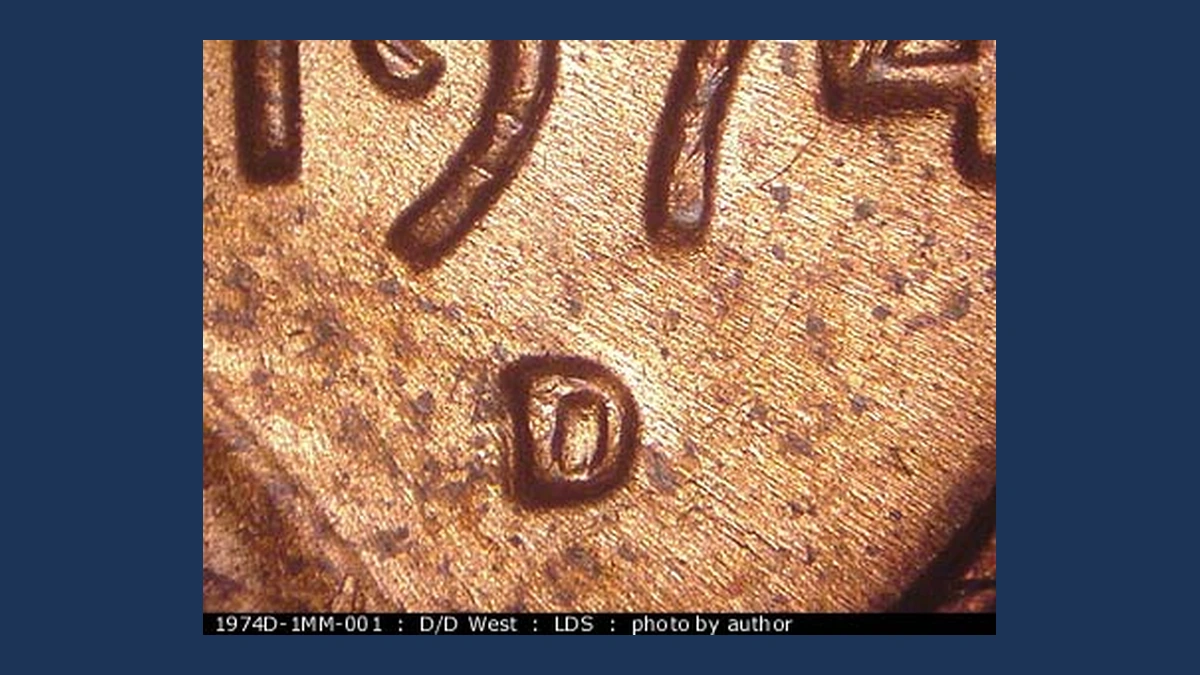
An earlier mint-letter outline can survive beside the final D or S. The punch was applied again in a slightly different position while the stamping tool was prepared.
Recorded Denver patterns include upward, downward, sideward, and tilted repeats. San Francisco listings include extra S outlines below the main letter.
A separate year report claims D over S, meaning two different letters rather than D punched twice. That explanation needs a recognizable S beneath D and its own confirmed match.
Do not build an S from a random bump. Repeated same-letter outlines and a claimed different-letter overlap are separate comparisons.
Estimated Value
Estimate $3–$200 for identified D or S repunches, depending on separation and condition. Strong recognizable extra strokes generally attract more attention than faint split tips.
For a separately authenticated D-over-S pattern, use a conditional estimated $25–$250. This is not a realized price or proof that the general 1974 claim has an established specialist identity.
Each estimate follows the actual letter pattern. A damaged punch, flat strike shelf, or unrelated chip does not inherit a repunched-mintmark premium.
How to Identify
Read the main mint letter and follow its full outline with a 10× magnifier. An extra upright, curve, or letter end should fit another placement of the same punch.
For Denver varieties, compare both the repeat’s direction and the mintmark’s position. Two northward repeats can still belong to different tools.
The ordinary 1974 cent weighs 3.11 g and measures 19.05 mm. Check with a scale and calipers, and inspect the plain edge for later squeezing.
An S coin also needs its correct ordinary or collector format identified. For the D-over-S claim, require independently recognizable S features rather than borrowing a confirmed D/D photograph.
3. 1974 Lincoln Penny Doubled Front Lettering (Estimated Up to $250)
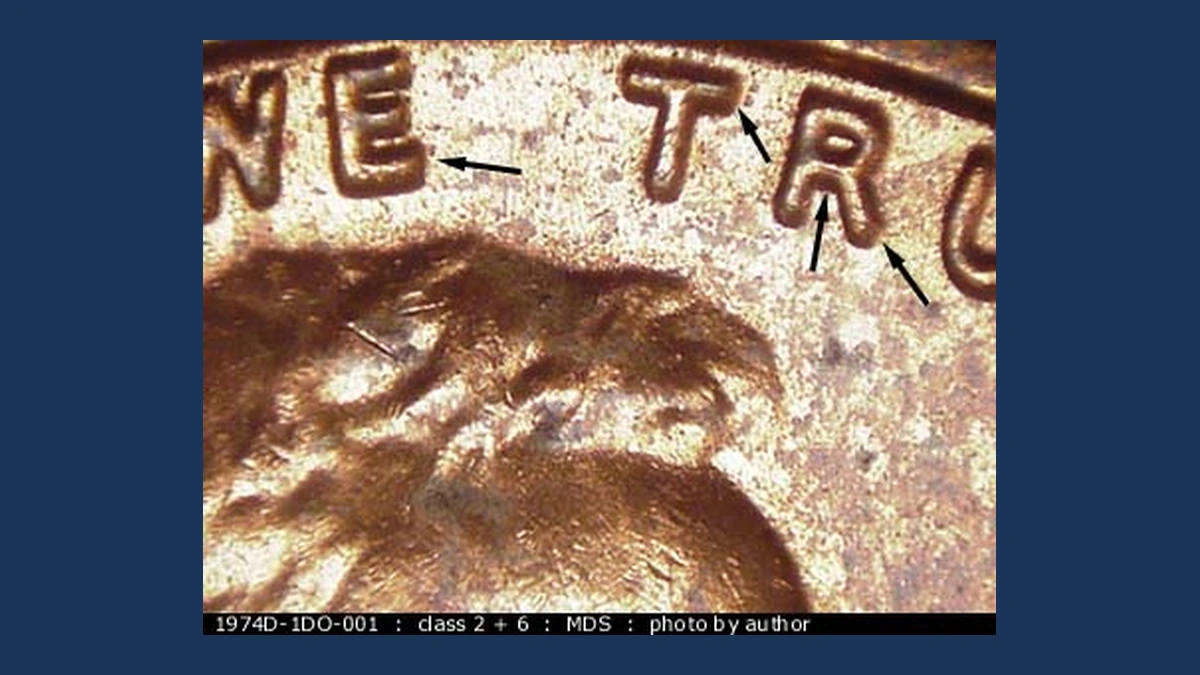
A letter corner can have a small notch where repeated design overlaps. Several Denver varieties show thickened motto lettering or extra detail around the final 4.
One recorded pattern affects E in WE and TR in TRUST. Others show different combinations of thickness and small corner splits.
The doubled design was already on the stamping tool. It could reach each blank through one ordinary strike.
A separate S report concerns LIBERTY and TRUST, but its catalog number and ordinary-versus-Proof identity need their own confirmation. A Proof is a specially made collector coin, not simply any penny with a shiny surface.
Estimated Value
Use an estimated $5–$250 for correctly identified minor doubled-front patterns. The clearer extra shapes and better-preserved surfaces provide stronger comparisons.
The range reflects similar small Lincoln-cent varieties rather than a major doubled-die auction record. It applies to the reported S pattern only after its actual doubled design and coin format are established.
A catalog number copied from a year guide does not establish that match. General thickness or a flat ledge beside a letter can have another cause.
How to Identify
Keep the date and mint letter visible while choosing a comparison photograph. On the Denver examples, inspect WE, TRUST, and the final 4 under a 10× magnifier.
Trace the actual notches or repeated edges instead of counting background scratches. Flat shelves caused by movement during striking can reduce a letter’s outline rather than repeat its raised design.
A scale and calipers check the normal 3.11 g and 19.05 mm. Look along the plain edge and nearby lettering for later pressure.
For an S candidate, establish the finish and specific visible pattern independently. A Denver tool’s marks cannot verify the different reported San Francisco variety.
4. 1974 Lincoln Penny Clipped Blank (Estimated Up to $250)
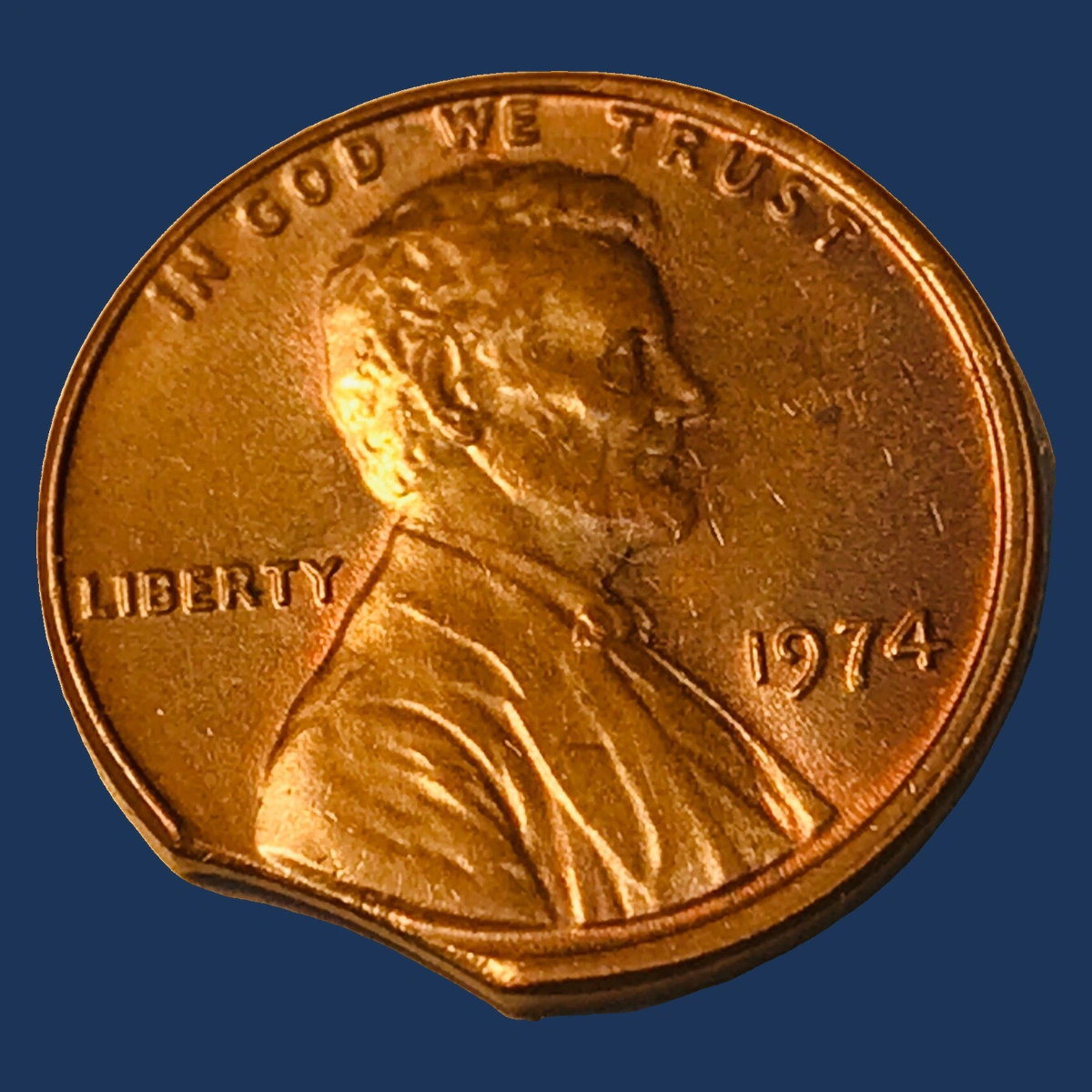
A bite-shaped gap can begin when a blank is punched from an incomplete part of a metal strip. The press then strikes a disc that already lacks part of its outline.
Collectors call the result a clipped blank. Depending on how the blank was cut, the missing boundary can be curved, straight, or irregular.
The 1974 year report includes clips without fixing one gap shape or mint for every example. The actual coin must supply those details.
A saw or file can make a similar opening after striking. Rim formation around the gap helps explain when the metal became absent.
Estimated Value
Estimate $10–$250 for genuine 1974 clipped cents, depending on size, shape, and preservation. A clearly formed original boundary is more important than a dramatic missing area alone.
A 1967 cent with a thirteen-percent straight clip sold for $39 in July 2021. That copper-alloy example provides a same-mechanism comparison, with its particular straight shape kept separate.
The estimate does not reward later cutting. A coin’s reduced weight supports missing metal but cannot establish that it disappeared before striking.
How to Identify
Use a 10× magnifier where the rim meets each end of the missing section. Look for original metal flow instead of fresh saw teeth, filing grooves, or sharp burrs.
A weak rim opposite a curved clip can support the explanation. Its strength varies, so do not use that sign alone.
Weigh the cent against the ordinary 3.11 g. Calipers compare an intact span with 19.05 mm; the measurement across the gap is not its original diameter.
Inspect the remaining plain edge and design on both faces. The rim should have formed around the already incomplete blank, rather than end abruptly at a cut through a finished coin.
5. 1974 Lincoln Penny Off-Center Strike (Estimated Up to $600)
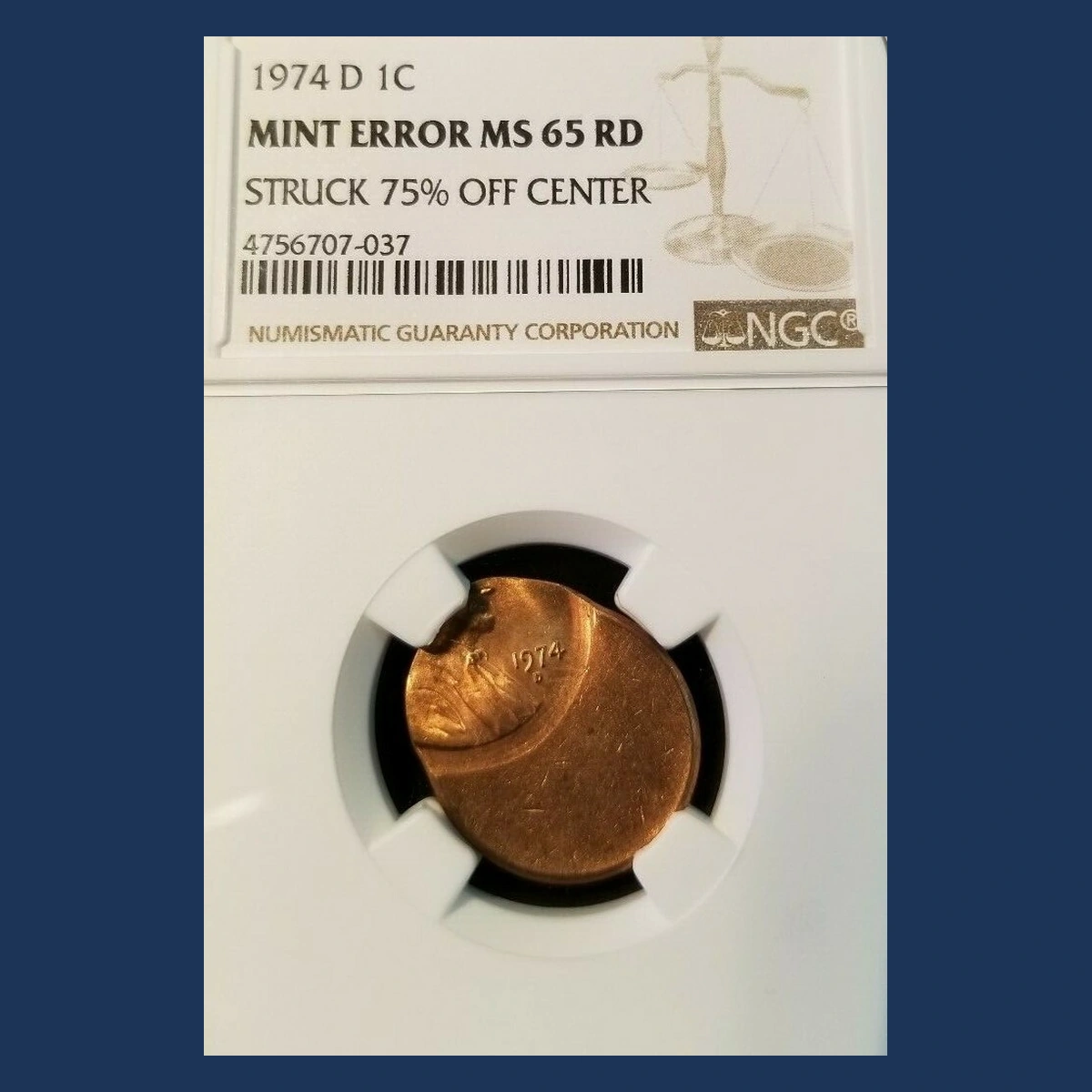
Some of the design can fall beyond the blank when it sits too far to one side. The untouched metal opposite that missing detail forms the familiar plain crescent.
A no-mintmark example is about eighty-five percent off center toward eleven o’clock. A separate Denver piece has a similar displacement toward roughly nine-thirty.
A San Francisco ordinary cent shows a smaller twenty-percent shift. The S does not automatically make it a Proof.
These examples preserve different design areas and need their own date checks. A large displacement describes missing design, not the same percentage of metal removed from the coin.
Estimated Value
For genuine dated examples, estimate $15–$600. A readable year, recognizable mint, and original surfaces help make a large shift collectible.
A 1977-D cent struck eighty-five percent off center brought $45 in January 2022. Its result shows why a large percentage does not automatically mean a large price.
The 1974 S example needs comparison as an ordinary issue, not a collector Proof. Keep the actual displacement, remaining identity, and condition attached to the individual coin when choosing a price.
How to Identify
Identify the surviving date before estimating the shift. Check for D or S where that part of the design remains; no letter is normal on other 1974 cents.
Compare both faces under a 10× magnifier. Their design loss should fit one blank partly outside the striking area.
A scale checks against 3.11 g because displacement alone normally keeps the metal. Calipers record the altered outline relative to the usual 19.05 mm.
Inspect the plain edge and untouched area for cutting or grinding. An uneven rim with complete design can instead be a broadstrike, while a shift limited to one face may come from one misaligned tool.
6. 1974 Lincoln Penny Double Strike (Estimated Up to $1,000)
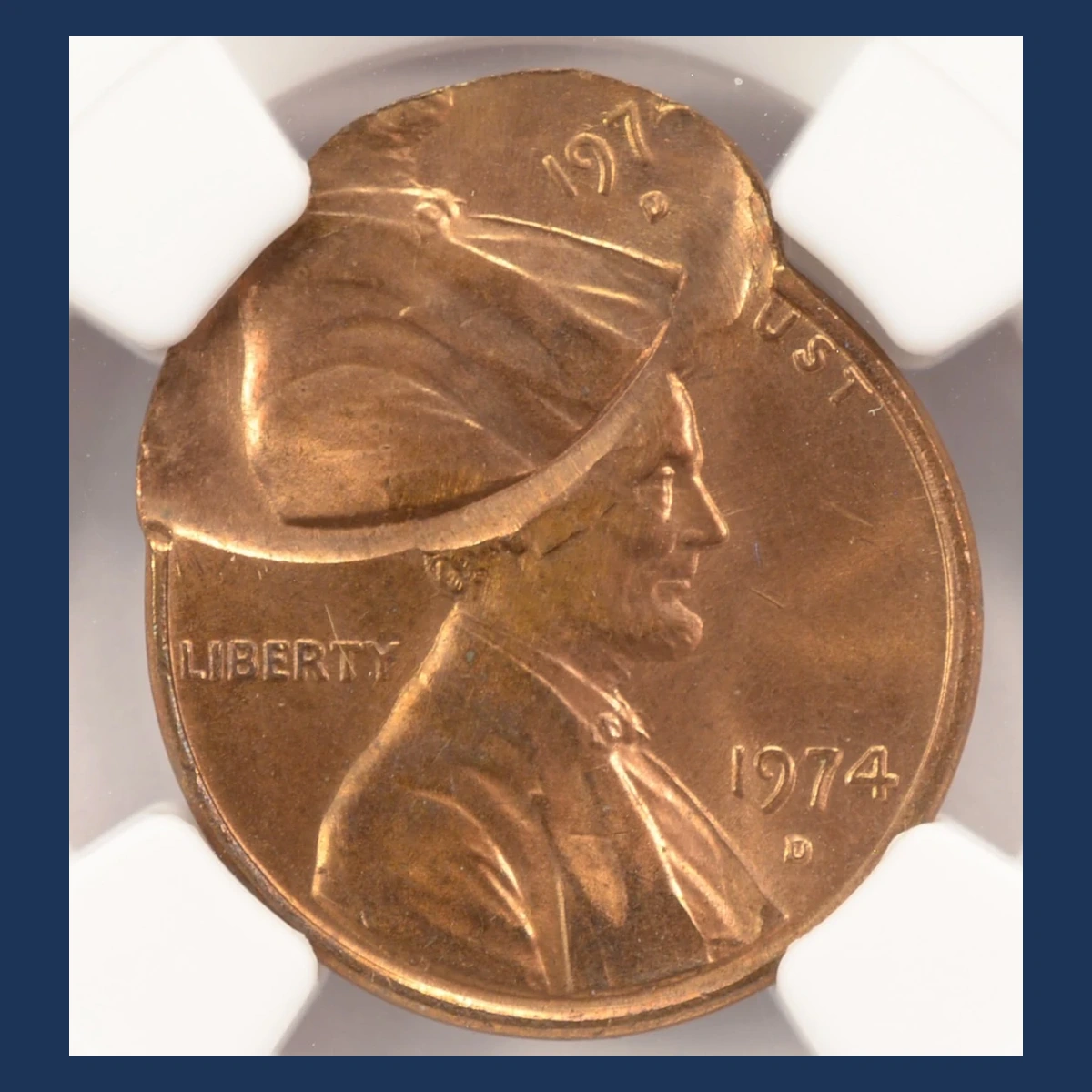
A struck penny can stay in the press long enough to receive another blow. If it moves between blows, the second design appears in a new position.
One no-mintmark 1974 example has its second strike eighty percent off center. A Denver example has an eighty-five-percent shift and an area where another object blocked the design.
The two pieces have different arrangements. The Denver description does not by itself identify which face was blocked.
Look for the second strike’s boundary as well as repeated design. Tiny flat ledges beside letters do not show that the whole penny was struck twice.
Estimated Value
Estimate $50–$1,000 for genuine double strikes with identifiable 1974 designs. Separation, surviving date, and the clarity of any blocked area help place an individual coin within that range.
A 1979 cent with its second strike off center sold for $204 in September 2023. This provides a comparable copper-alloy error, rather than a sale for either 1974 example.
A spectacular shift still needs readable evidence. Later dents or an unattributed weak area do not add the same value.
How to Identify
Find an outline that belongs to the second strike, then trace a date, portrait, or lettering within it. A 10× magnifier helps separate the two impressions where they overlap.
Turn the coin over and follow the same displaced area. On the Denver example, compare any blocked surface with the original record instead of assuming its position.
A normal 1974 cent weighs 3.11 g. Use a scale to check whether the coin retains its metal, and calipers to document the altered outline against the usual 19.05 mm.
Inspect the edge for seams or joined pieces. The two designs should be struck into one continuous piece of metal.
7. 1974 Lincoln Penny Struck on a Dime Blank (Estimated Up to $1,500)
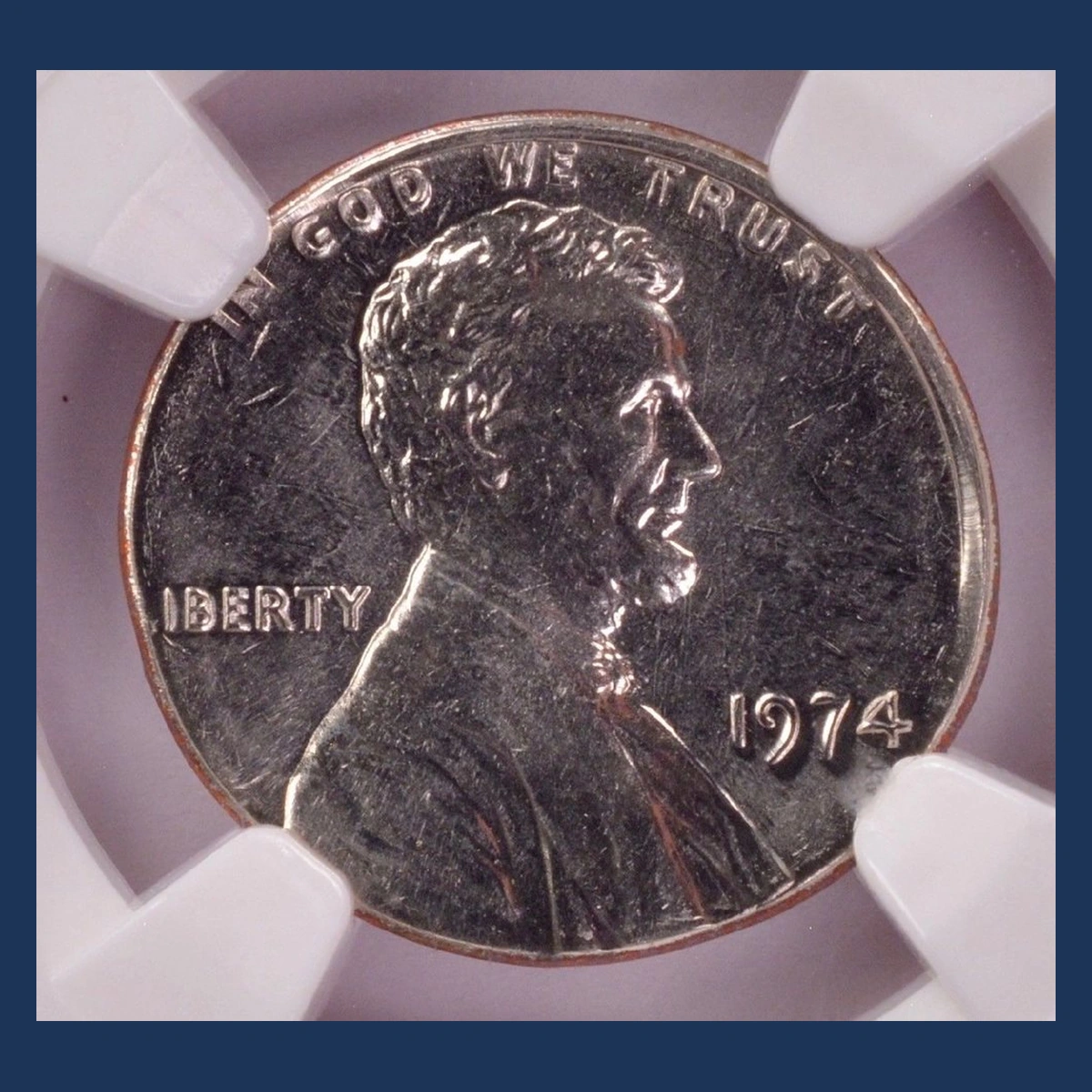
A blank intended for a dime is smaller than the disc normally used for a cent. If it enters the cent press, Lincoln’s design can extend beyond its edge.
The result belongs to a wrong-blank error. It begins with unused metal, so it does not require an earlier dime portrait beneath Lincoln.
A 1974 year report lists this type without identifying a certified specimen or mint. A candidate therefore needs its complete identification.
The expected clad dime blank has a copper core between pale outer layers. Its size, weight, and metal should fit together before the silver-colored appearance is explained.
Estimated Value
For an authenticated 1974 cent on a clad dime blank, estimate $250–$1,500. This is a comparison-based range for a confirmed example, not a realized price for the general year listing.
A 1976-D cent on a clad dime blank brought $480 in December 2024. Its date and individual condition remain separate from a possible 1974 piece.
A plated cent does not qualify simply because it looks pale. The smaller blank and expected metal structure need supporting evidence.
How to Identify
Weigh the candidate on a scale that reads to 0.01 g. Compare a clad dime blank’s expected 2.268 g with the ordinary cent’s 3.11 g.
Calipers can help document the smaller outline, although the strike may spread the metal. An unstruck dime blank starts near 17.91 mm rather than the cent’s 19.05 mm.
Examine the edge under a 10× magnifier for the copper core and pale layers. Grinding or corrosion can reduce a cent’s weight without creating that structure.
Check both faces for an older Roosevelt portrait or torch. If an earlier dime design survives, investigate an overstrike on a finished dime instead of an unused blank.
8. 1974 Lincoln Penny Struck over a Finished Dime (Estimated Up to $3,000)
A finished dime already carries a portrait, date, and reverse design. If the cent press strikes it again, parts of those earlier features can remain beneath Lincoln and the Memorial.
An auction record describes a 1974-D example graded 64 by PCGS. That grade refers to an unworn coin’s condition, not to how much of the old design survives.
This is a two-denomination coin rather than a cent on an unused dime blank. The underlying design is the main distinction.
The description does not establish the host dime’s year. Read any surviving digits before assigning a date to that earlier coin.
Estimated Value
An estimated $600–$3,000 fits an authenticated cent-over-dime example, with visible designs from both denominations adding interest. The estimate refers to the complete coin.
A 1973-D cent struck over a dime sold for $4,560 in July 2022. That stronger individual result shows the importance of preservation and identifiable overlapping features, rather than setting an automatic price for every nearby year.
The cited 1974-D record establishes a reported example. Its grade alone does not supply a sale price.
How to Identify
Choose a feature that cannot belong to a cent, such as part of Roosevelt or the dime’s torch. Follow it under a 10× magnifier until its shape is clear.
Then locate the 1974 date and D in the newer cent design. Keep the earlier and later digits separate rather than combining them into one invented date.
A clad dime normally weighs 2.268 g and starts near 17.91 mm. A scale and calipers test that starting point, while allowing for spreading during the later strike.
Look around the edge for a continuous layered object, not two attached coins. Both sets of design should share the same struck surface.
9. 1974 Lincoln Penny Broken Tool Fragment Embedded in the Coin (Estimated Up to $15,000)
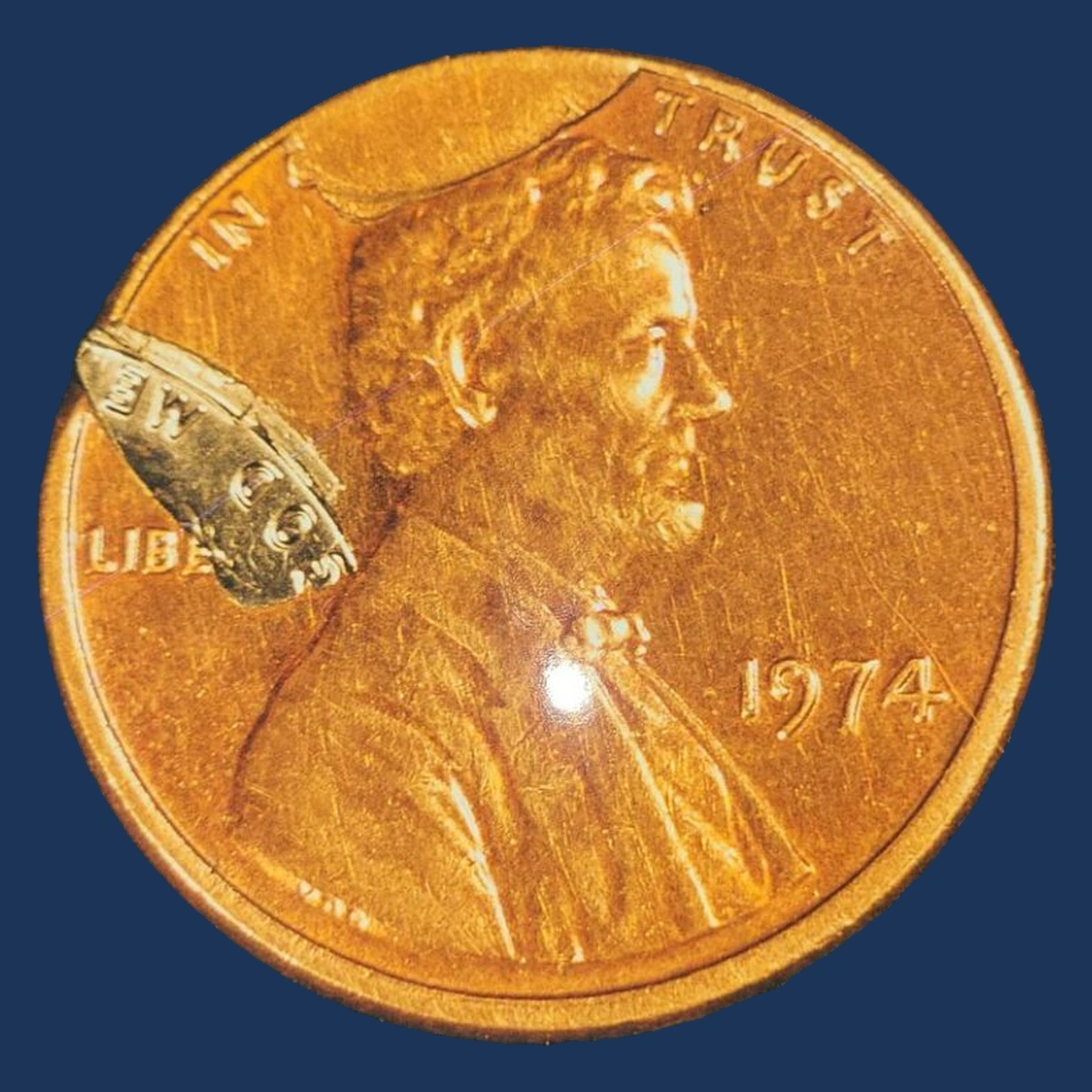
Two sides of one 1974-S penny record a broken stamping tool. A raised patch reaches inward from the front rim between nine and eleven o’clock.
The patch formed where a piece of the tool broke away. That missing section allowed the coin’s metal to rise into the gap.
The steel fragment then became embedded in the coin’s back above the Memorial. Parts of E PLURIBUS UNUM were struck into it.
An ordinary raised patch, called a cud, does not usually include the missing tool fragment. Here, the trapped piece connects the front defect with a second part of the event.
Estimated Value
The NGC-graded 63 red-and-brown example sold for $9,000 on April 24, 2021, according to Heritage Auctions. Red and brown describe its mixture of original copper color and darker toning.
Use an estimated $5,000–$15,000 for this unusual combination with the fragment still present. That range concerns the documented paired effects on one coin, not a common cud alone.
The intact fragment is central to the comparison. Removing or disturbing it would change the object being valued.
How to Identify
Inspect the front rim between nine and eleven o’clock with a 10× magnifier. The raised patch extends about 3 mm inward on the documented coin.
Turn to the back and locate the retained piece above the Memorial. Look for the partial motto struck into the fragment rather than a loose piece simply resting on the surface.
Do not pry at the metal or test it with a sharp tool. Good photographs should show its position, outline, and contact with the cent.
The ordinary cent standard is 3.11 g and 19.05 mm, but this retained piece affects the comparison. Let an error-coin specialist assess the joined materials without removing them.
10. 1974 Lincoln Penny Philippines Aluminum-Magnesium Blank (Estimated Up to $30,000)
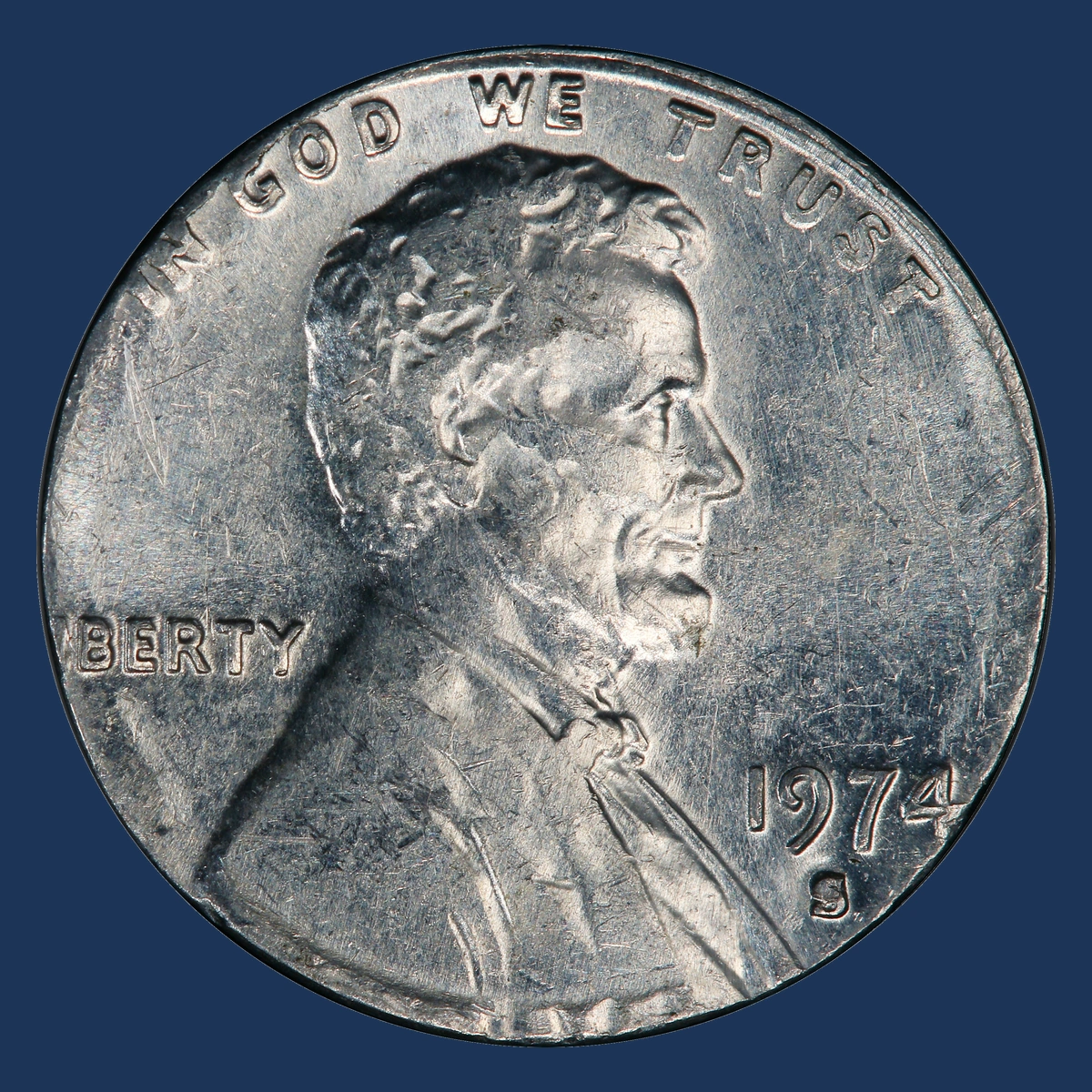
This pale 1974-S penny began on a blank intended for a Philippine one-sentimo coin. The blank’s standard metal is ninety-five percent aluminum and five percent magnesium.
It is a foreign-blank error, separate from the experimental United States aluminum cents. Its small size leaves the L of LIBERTY outside the struck design.
The auction description explains the mostly blank back as the result of another blank beneath it. That lower piece blocked the normal Memorial impression.
The listed foreign standard is 0.5 g and 15.25 mm. Those figures describe the intended blank, rather than a published measurement of this particular coin.
Estimated Value
The PCGS-graded 61 example sold for $19,200 on January 12, 2023. The grade identifies an unworn coin with noticeable surface marks.
An estimated $10,000–$30,000 reflects this specific combination of foreign metal, small blank, and blocked back. It is anchored to the actual auction result rather than to the price of a normal copper cent.
A silver-colored 1974-S penny needs much more evidence to enter that range. Plating and surface corrosion do not establish a Philippine blank.
How to Identify
Check that the surviving front design reads 1974-S and compare the missing L of LIBERTY. Use a 10× magnifier to inspect the reduced outline and the back’s blocked surface.
Record the weight and diameter carefully. The foreign blank’s 0.5 g and 15.25 mm standards provide a starting comparison, while the actual strike may change its outline.
A normal 1974 copper-alloy cent is much heavier at 3.11 g. Low weight alone still cannot distinguish the correct alloy from corrosion or later alteration.
Professional metal analysis can test the aluminum-magnesium explanation without cutting the coin. Keep the blocked back and metal identity together when matching this particular error.
11. 1974 Lincoln Penny Matched Pair Made with Two Front Tools (Estimated Up to $50,000)
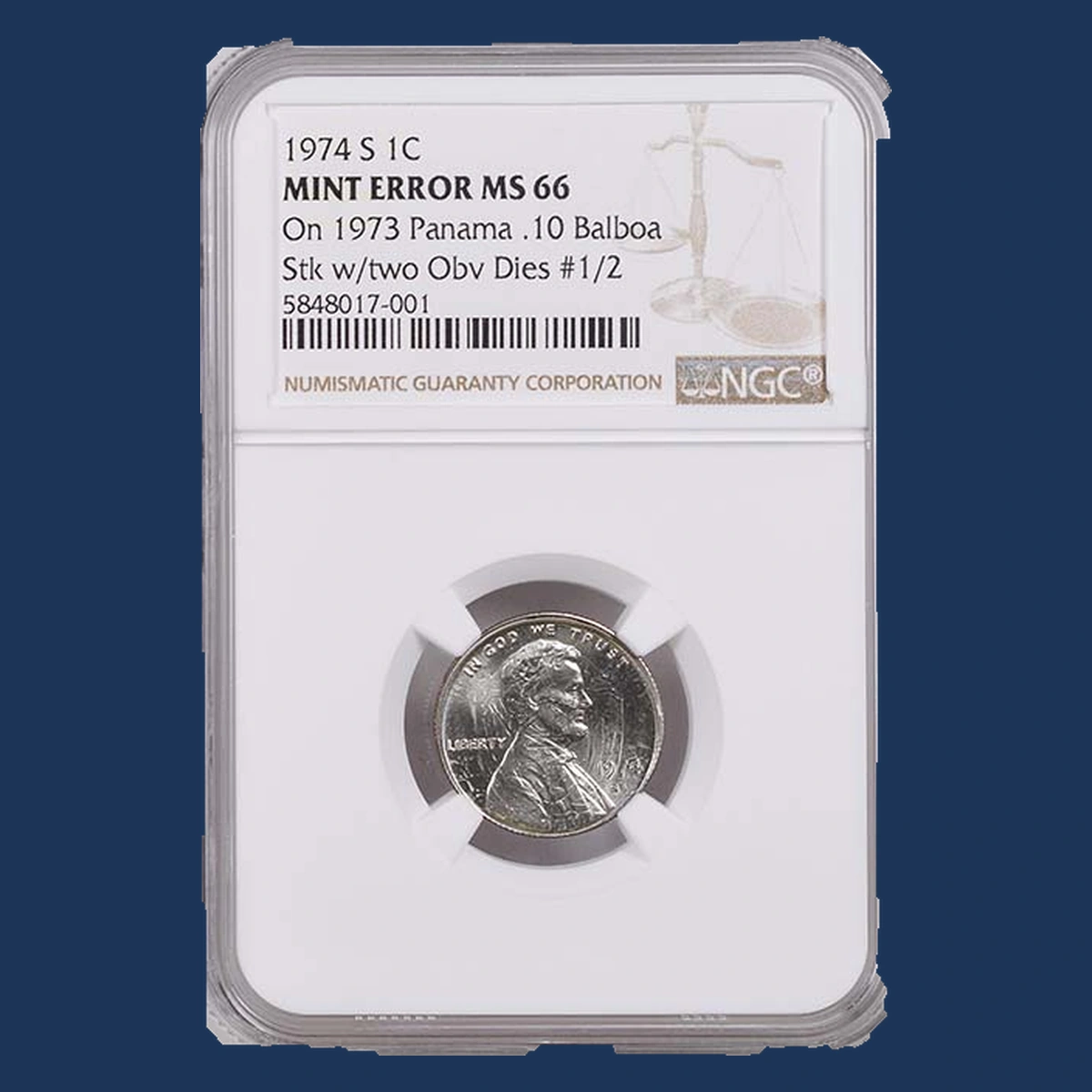
This error consists of two pieces that met in the press. A finished 1973 Panama one-tenth-balboa coin lay on top of a copper cent blank.
The press held two different 1974-S Lincoln front tools. One struck Lincoln onto the Panama coin, while the other struck Lincoln onto the copper blank’s outer face.
Between them, the Panama design pressed a sunken backward copy into the copper. The partners therefore preserve different parts of the same event.
Both pieces are described by Mint Error News. This is not a report of one ordinary copper penny with a Lincoln head on each side.
Estimated Value
For the complete authenticated pair, use an estimated $10,000–$50,000. The range covers both matching pieces together, not a price for each one.
No realized sale is supplied for the pair in the cited account. The estimate compares major combinations such as the $19,200 foreign-blank 1974-S cent and a 1981 cent-over-half-dollar coin that brought $13,200 in July 2021.
The matching contact images and two distinct front-tool impressions are central to the pair’s identity and collector appeal.
How to Identify
Start by keeping the two pieces separate in your photographs. On the Panama host, identify its remaining design and the newer 1974-S Lincoln impression.
On the copper partner, distinguish the raised Lincoln design from the sunken backward Panama image. A 10× magnifier helps compare the transferred details with the matching host coin.
The two S mintmarks differ because the press used different front tools. They should not be forced into one identical-mintmark comparison.
The Panama host used a clad dime blank, while the partner began as a copper cent blank. Record each piece’s weight, diameter, and edge separately; two joined faces or a single altered double-headed coin would not reproduce this arrangement.
Conclusion
A normal 1974 cent weighs 3.11 g, but the unusual examples here need more than a scale reading. Repeated mintmarks, a trapped steel fragment, and a foreign blank each leave their own evidence.
Estimated values run from $2–$50,000, including the complete paired error at the upper end. Compare the whole object and keep its mint and metal identity attached to the example.
Avoid disturbing any embedded fragment.