1968 Penny Error List with Pictures

A second piece of metal can turn a penny into something quite different. One 1968-S cent bonded to a Costa Rican blank sold for $15,000 in May 2022.
Most 1968 penny errors are far smaller: an extra letter stroke, a raised line, or a missing roof support. Estimated values run from $2 to $20,000 across the types below.
The S can appear on ordinary coins and specially made collector coins called Proofs. Follow the pictures and checks to separate their errors.
1. 1968 Lincoln Penny Floating Roof (Estimated Up to $25)
The roof seems detached. On reported 1968-D examples, the fine connections above the end columns are weak or missing.
A die is the steel tool that stamps a coin. Polishing that tool too heavily can remove shallow parts of its design.
The next pennies may then show a roof without its usual supports. This appearance does not mean that the roof was struck twice.
Wear and dirt can also hide these small lines. A clear missing connection beside otherwise sharp details is more useful than an entirely worn Memorial.
Estimated Value
For a clear polishing-related floating roof, estimate $2–$25. This is a modest variety estimate, not a recorded auction result for a particular 1968-D coin.
The upper end suits an unworn example with clean surfaces and obvious missing connections. Heavy wear reduces both its appeal and the strength of the identification.
A missing line alone does not support the prices paid for rare wrong-metal errors. Most of the value here comes from a small, easily displayed design difference.
How to Identify
Find an ordinary 1968-D penny with a complete Memorial and compare the two roofs. Look at the short connections above both end columns.
Change the angle of the light. Dark dirt may hide a line that remains present, while wear usually softens nearby details too.
Check the rest of the coin without cleaning it. The normal copper-rich penny weighs 3.11 grams, measures 19.05 mm, and has a smooth edge.
A scale and calipers help spot an altered coin when it is safely accessible. Correct measurements alone cannot explain the missing supports.
Sharp neighboring columns beside absent roof connections provide the clearest starting point for this variety.
2. 1968 Lincoln Penny Repunched Mintmark (Estimated Up to $150)
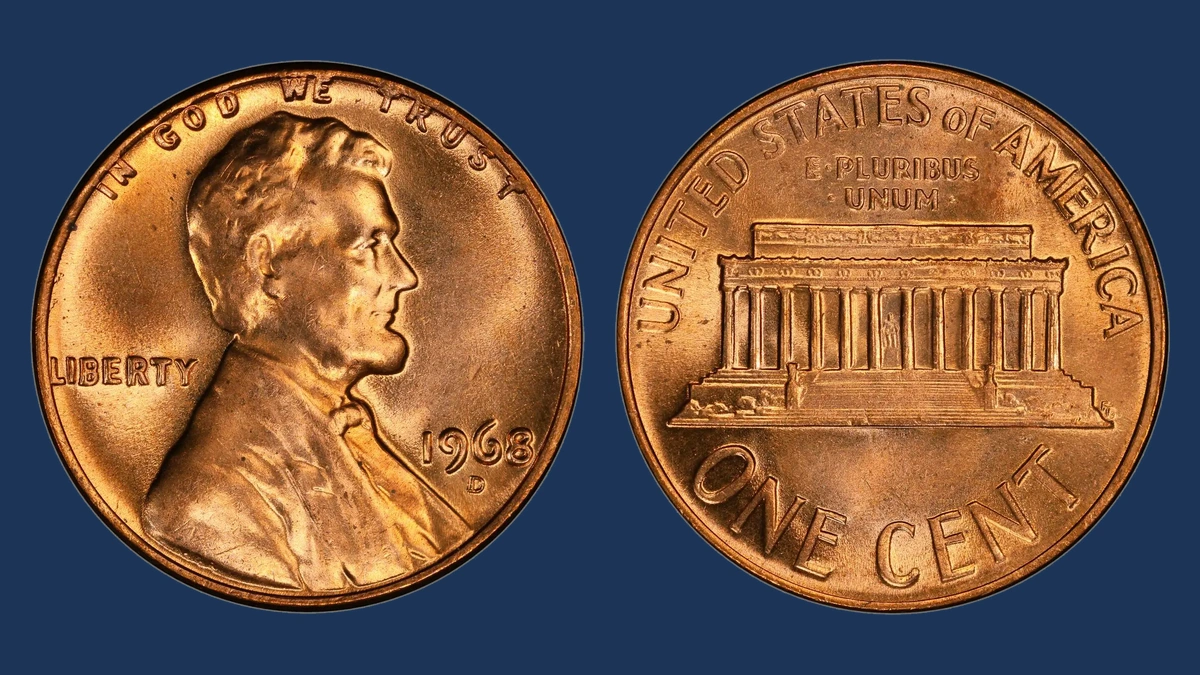
The small D or S below the date can contain pieces of another letter. These marks began on the stamping tool, before the penny was made.
In 1968, workers added mint letters to individual tools with a punch. A second placement could overlap the first without covering it completely.
Denver examples include an extra D along the left side, inside the opening, or above the main letter. San Francisco examples show several different overlaps.
Collectors call this a repunched mintmark. A thick letter caused by wear or a chip is a different feature.
Estimated Value
Clear, identified repunches fit an estimated $5–$150. Small overlapping strokes usually sell for less than a strong second letter on an attractive unworn coin.
This range compares minor Memorial-cent repunches. It is not a claim that every D or S listing has sold at the same price.
Look for a complete photographic match before paying toward the upper end. Several traces on one mint letter still describe one coin, rather than separate premiums to add together.
How to Identify
The large date can distract from the tiny mark below it. Use a 10× magnifier and turn the coin slowly under a desk light.
On the clear Denver example, another D survives along the left side and inside the main D. Other varieties require their own matching photographs.
A flattened shelf beside the letter can come from movement during striking. A repunch should preserve recognizable parts of a second letter instead.
The penny should retain a smooth edge and its normal 19.05 mm width. A safely accessible coin can be checked with calipers and a scale against 3.11 grams.
Begin with the extra letter’s curve or straight stroke, then match its exact position beside the main D or S.
3. 1968 Lincoln Penny Clashed Dies (Estimated Up to $200)
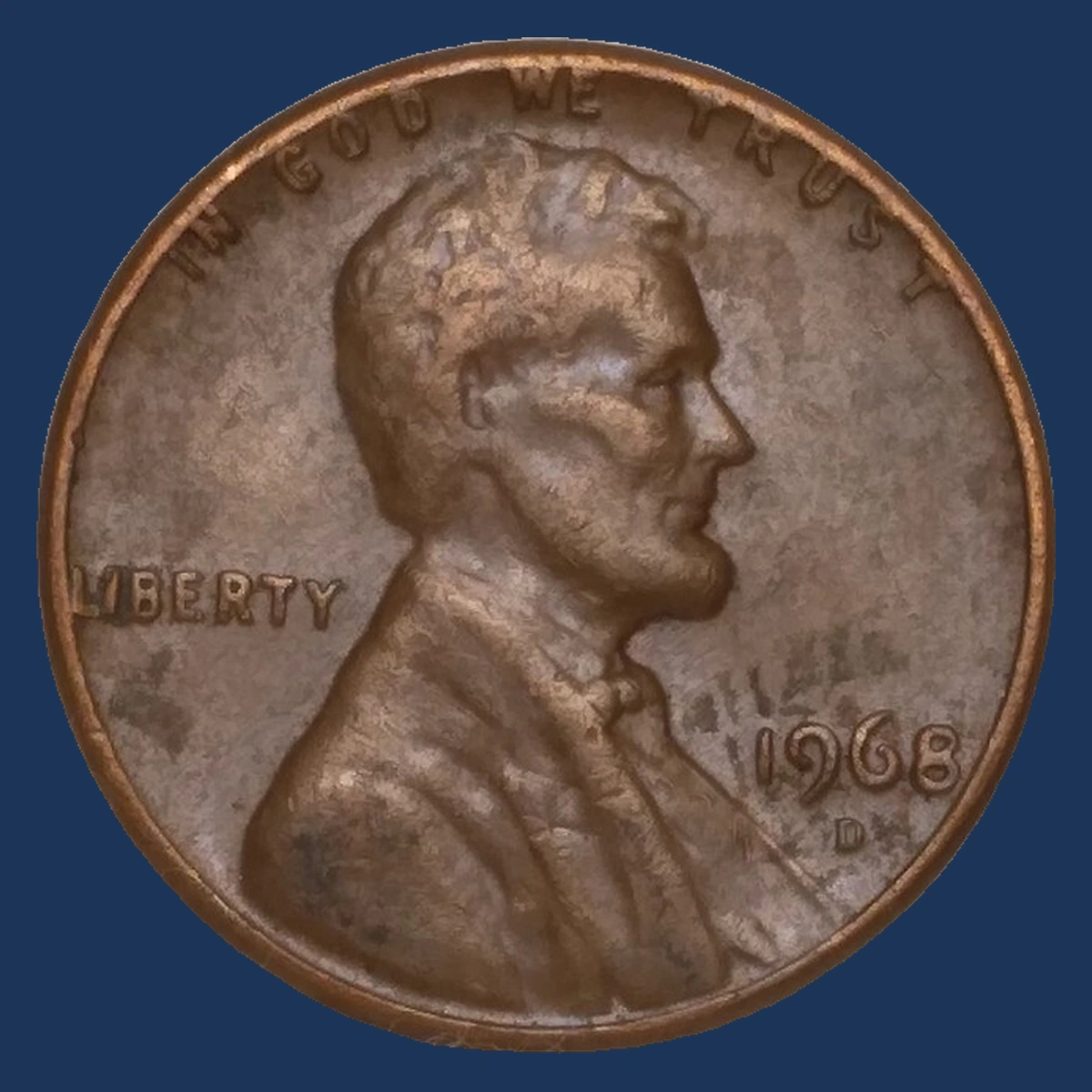
A few building lines near Lincoln may seem impossible. They can appear when the two stamping tools hit each other without a blank between them.
Each tool can pick up traces of the opposite design. Later pennies receive those traces along with their normal pictures.
This is called a die clash. Both Denver and San Francisco examples are reported for 1968.
On the San Francisco example, Memorial columns cross onto the front at a slight angle. Parts of ME appear near the date, and Lincoln’s profile leaves traces on the back.
Estimated Value
Estimate $10–$200 for recognizable 1968 clashes. Faint isolated traces belong nearer the bottom than a strong example showing transferred designs on both faces.
The range uses similar Memorial-cent clashes as a guide. It does not turn the reported five-degree angle of one transferred image into a rare coin-rotation price.
Preservation also matters: scratches can hide the feature that collectors want to see. Clear building lines and a matching face outline make a stronger purchase than unexplained marks alone.
How to Identify
Place a normal penny beside the suspected clash and trace the unexpected front lines back to the Memorial. On the San Francisco example, ME near the date and a faint back-side profile offer useful starting points.
The original coin should still be close to 3.11 grams and 19.05 mm, with a smooth edge. A scale and calipers can reveal major physical changes when it is safely accessible.
Pressing two finished coins together may leave copied designs, but it also damages the surfaces and can distort the edge. Look for recognizable opposite-side details that match the known clash, rather than treating every unexplained line as part of a building.
4. 1968 Lincoln Penny Misaligned Front Die (Estimated Up to $350)
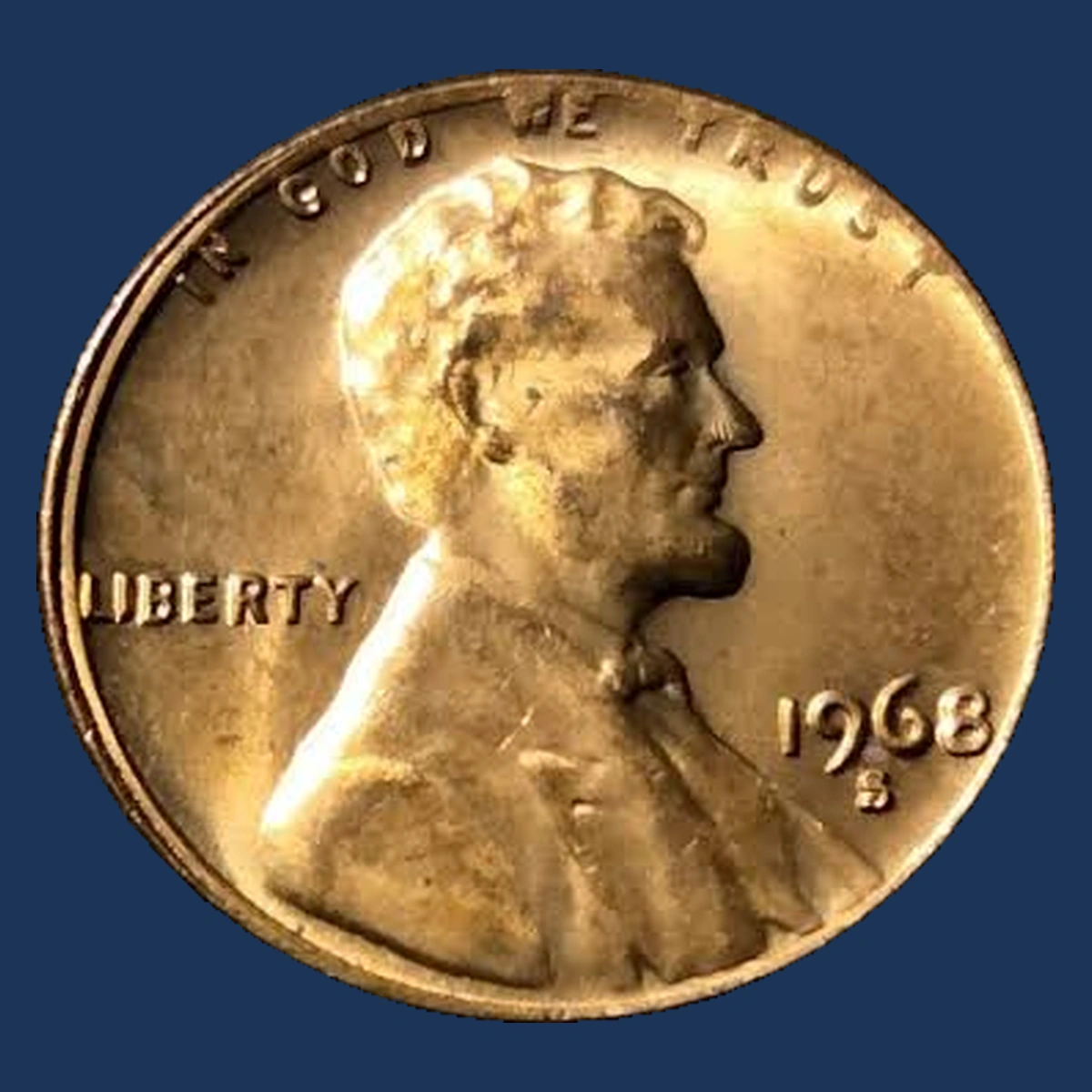
One face may look poorly centered while the other looks normal. That difference points toward a shifted front stamping tool.
The 1968-D example is reported with this front-only misalignment. The border becomes narrow on one side and wider on the opposite side.
The blank itself did not need to sit far outside the striking area. That separates this error from an off-center strike affecting both designs.
An uneven border deserves a closer look, but a tiny difference can be common. The more useful examples show a clear displacement without later damage.
Estimated Value
A related 1972 copper-rich cent with front-tool misalignment sold for $114 in March 2026. Its grade described an unworn coin with visible marks.
For the reported 1968-D type, use an estimated $10–$350. The comparison supports the general error family, not a claimed sale of this particular year.
The size of the shift and the coin’s condition guide the range. A slight border imbalance should not be priced like a dramatic two-face off-center strike.
How to Identify
Photograph both faces straight on, since a tilted camera can exaggerate an uneven border. Compare how far the front letters sit from the edge at opposite sides.
Now turn to the Memorial: its design should remain much better centered if only the front tool shifted. Missing design and blank space on both faces suggest an off-center strike instead.
The penny’s normal diameter is 19.05 mm, and its weight is 3.11 grams. Calipers and a scale help reveal filing or another physical change when the coin is safely accessible.
Also follow the smooth edge for ground or squeezed areas. A displaced front beside a substantially centered back is the useful visible contrast.
5. 1968 Lincoln Penny Curved Clipped Blank (Estimated Up to $500)
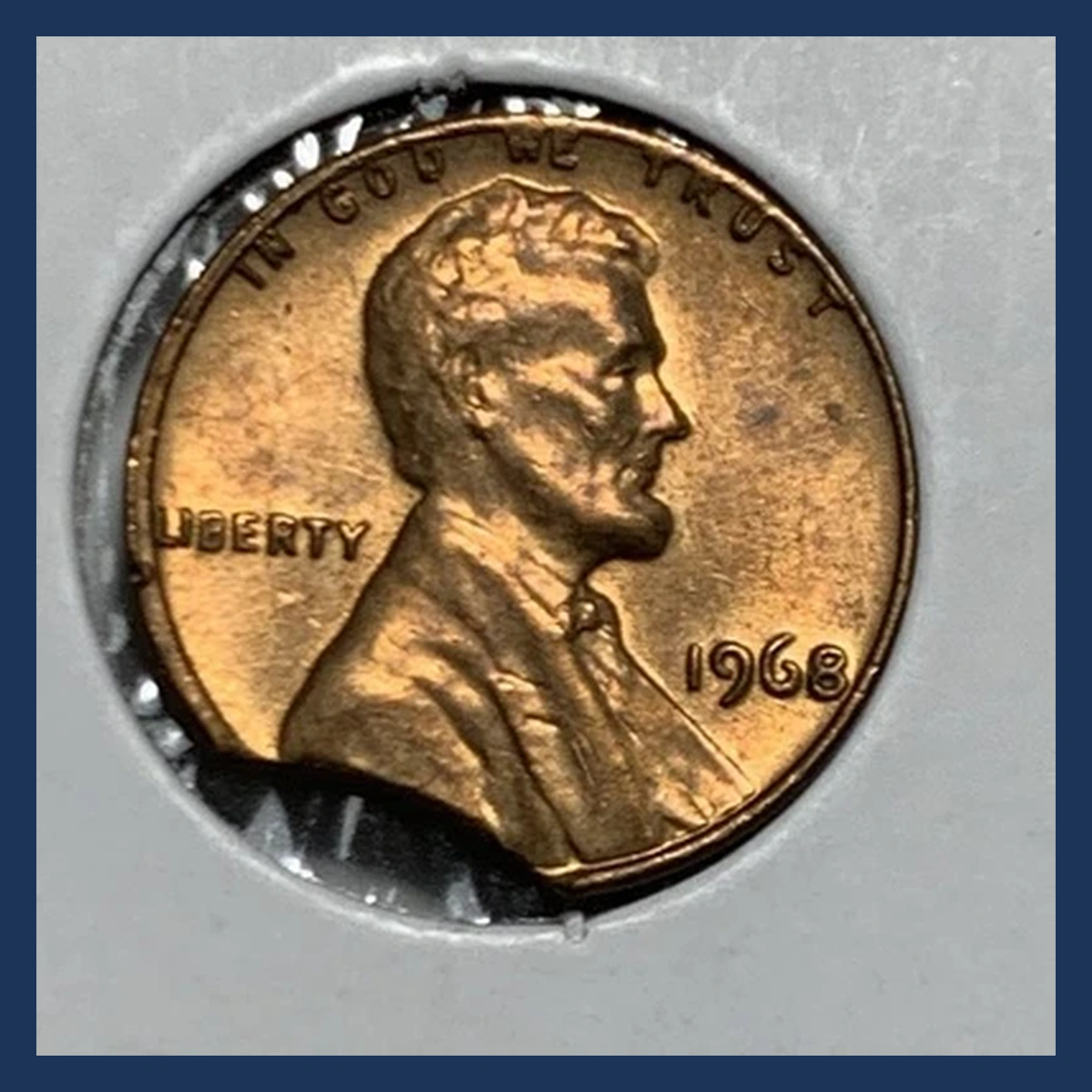
This penny has a large bite-shaped gap, but the bite was present before the design arrived. The metal blank was cut from a strip in the wrong place.
When a punch overlaps an earlier hole, the new disc is incomplete. It may still pass through the press and become a coin.
The 1968 Philadelphia example is described as a sixty-percent curved clip. Its recorded weight is only 1.3 grams.
That low weight belongs with the missing metal. It should not be used to identify the remaining penny as a foreign blank.
Estimated Value
A large original clip like this fits an estimated $75–$500. Smaller curved clips can be compared within approximately $10–$150.
For context, a 2021 straight-clipped cent sold for $114 in September 2025. That later zinc-centered coin has a different gap shape and is only a broad clip comparison.
The 1968 example’s missing area is unusually substantial. Its price still depends on remaining design, surface condition, and clear evidence that the gap existed before striking.
How to Identify
A 1.3-gram reading would be alarming on a complete penny. Here, first consider how much of the original disc is missing.
Use a scale for a safely accessible coin and calipers across an intact width. A complete 1968 cent starts at 3.11 grams and 19.05 mm.
Examine the curved boundary and the remaining smooth edge under magnification. Saw cuts, sharp filing grooves, or freshly exposed metal suggest later removal.
The rim opposite an original clip can be weak, although that clue is not present on every genuine example. Follow the struck design as it approaches the gap.
A rounded missing boundary with original struck details meeting it is more useful than the weight alone.
6. 1968 Lincoln Penny Die Cracks, Chips, and Cuds (Estimated Up to $600)
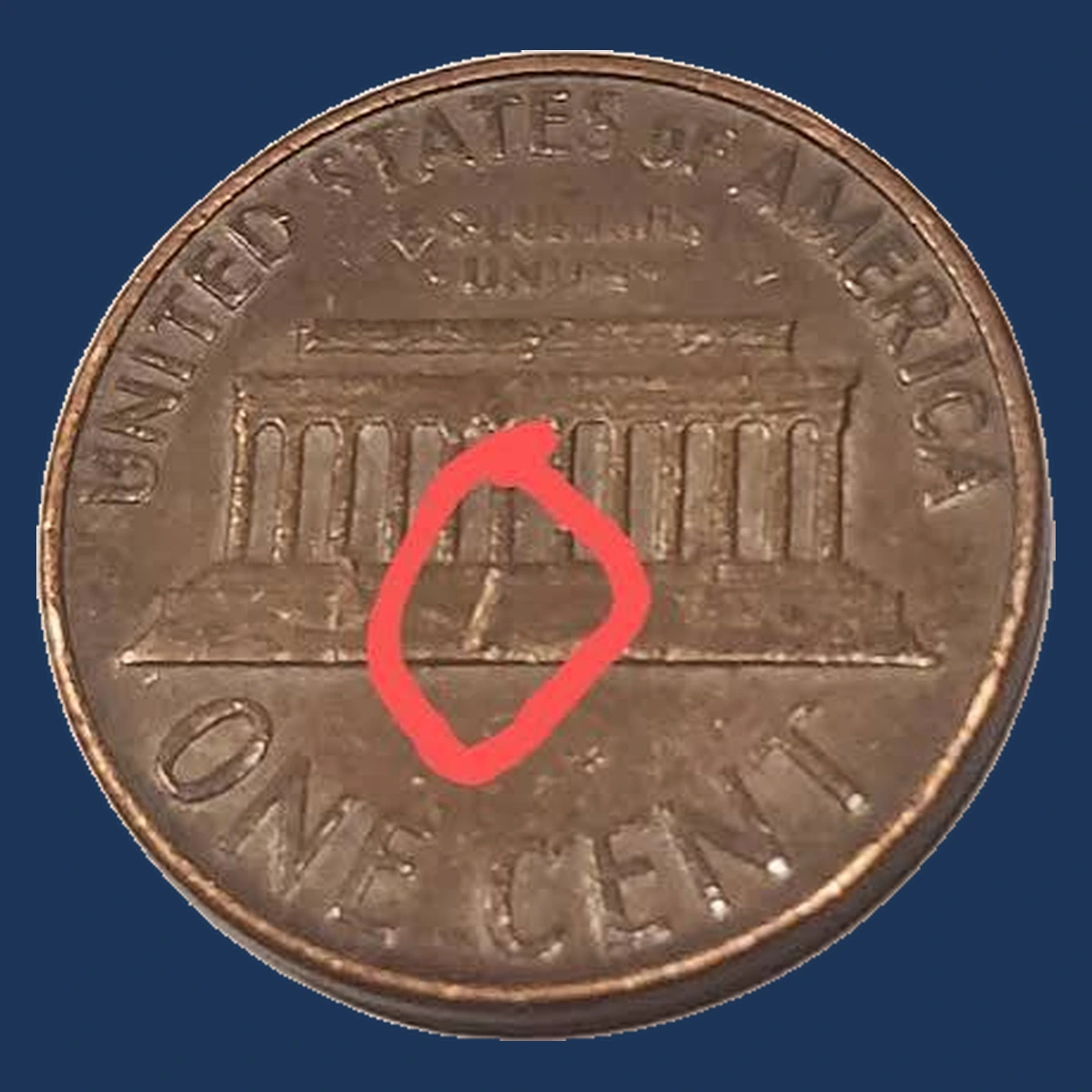
A raised line across Lincoln’s head can come from a crack in the stamping tool. Metal flowed into that crack as the penny was struck.
Small missing tool pieces leave raised chips instead. A larger missing piece at the edge creates a rim-connected lump called a cud.
Other breaks remain inside the design. If the broken tool section stays in place, it can leave an enclosed raised area with some design still present.
1968-D and 1968-S examples include head cracks, chips, and rim breaks. Their shapes should be judged individually.
Estimated Value
Small cracks and chips can fit an estimated $2–$40. Larger cuds and clear enclosed breaks can fit approximately $30–$600.
A 2021-D retained cud brought $186 in September 2025. That later zinc-centered penny provides a recent related sale, although its break shape differs.
The amount of missing tool metal matters more than the number of small raised marks. A crack, chip, and lump on the same penny contribute to one overall value, not three full prices.
How to Identify
Start with a low side light. A genuine tool crack normally creates a raised line; a scratch cuts down into the coin.
Head cracks on these pennies run from the portrait toward the rim. Some Denver examples also have small chips near the mintmark or inside LIBERTY.
For a cud, follow the raised lump to the rim. An enclosed internal break need not reach the rim at all.
Weigh an accessible coin against 3.11 grams and check its 19.05 mm width with calipers. Its edge should remain smooth rather than showing added solder or squeezing.
Look for metal raised from the original surface, with the crack or break shape matching the pictured example.
7. 1968 Lincoln Penny Struck Through a Die Cap (Estimated Up to $750)
Lincoln can look faint even when the back remains sharp. A coin stuck to the front stamping tool can act as a metal cover, called a die cap.
Later blanks receive an image through that cover instead of touching the tool directly. The 1968-D example was struck through a late, thinned cap.
A 1968-S example shows a related effect called counterbrockage. A sunken image on the covering cap transferred a raised, normally facing Lincoln to the next coin.
These pennies received the covered strike. They are not themselves the cup-shaped caps.
Estimated Value
The San Francisco counterbrockage sold for $46 in September 2004. Its NGC MS63 grade describes an unworn coin with noticeable marks.
Across covered-tool strikes with different strength and preservation, estimate $40–$750. The historical sale belongs to that specific counterbrockage, not the separate Denver late-cap coin.
A soft portrait alone is not enough to claim the upper range. Collectors need a convincing covered-strike pattern, and stronger visual effects generally make more useful comparisons than ordinary-looking weakness.
How to Identify
Compare the sharpness of Lincoln with the Memorial before focusing on individual letters. Uneven wear usually leaves other signs of handling too.
The counterbrockage portrait faces the normal way and stands above the surface. A directly transferred brockage instead has a sunken, mirror-image design.
A late-cap strike can look different as the intervening metal becomes thinner. Match the overall pattern to the correct covered-strike example.
An accessible penny should be checked with a scale and calipers against 3.11 grams and 19.05 mm. Inspect the smooth edge for flattening from later pressure.
The key comparison is a covered-looking front beside the stronger back, without the widespread wear expected on a circulated coin.
8. 1968 Lincoln Penny Doubled Die (Estimated Up to $1,500)
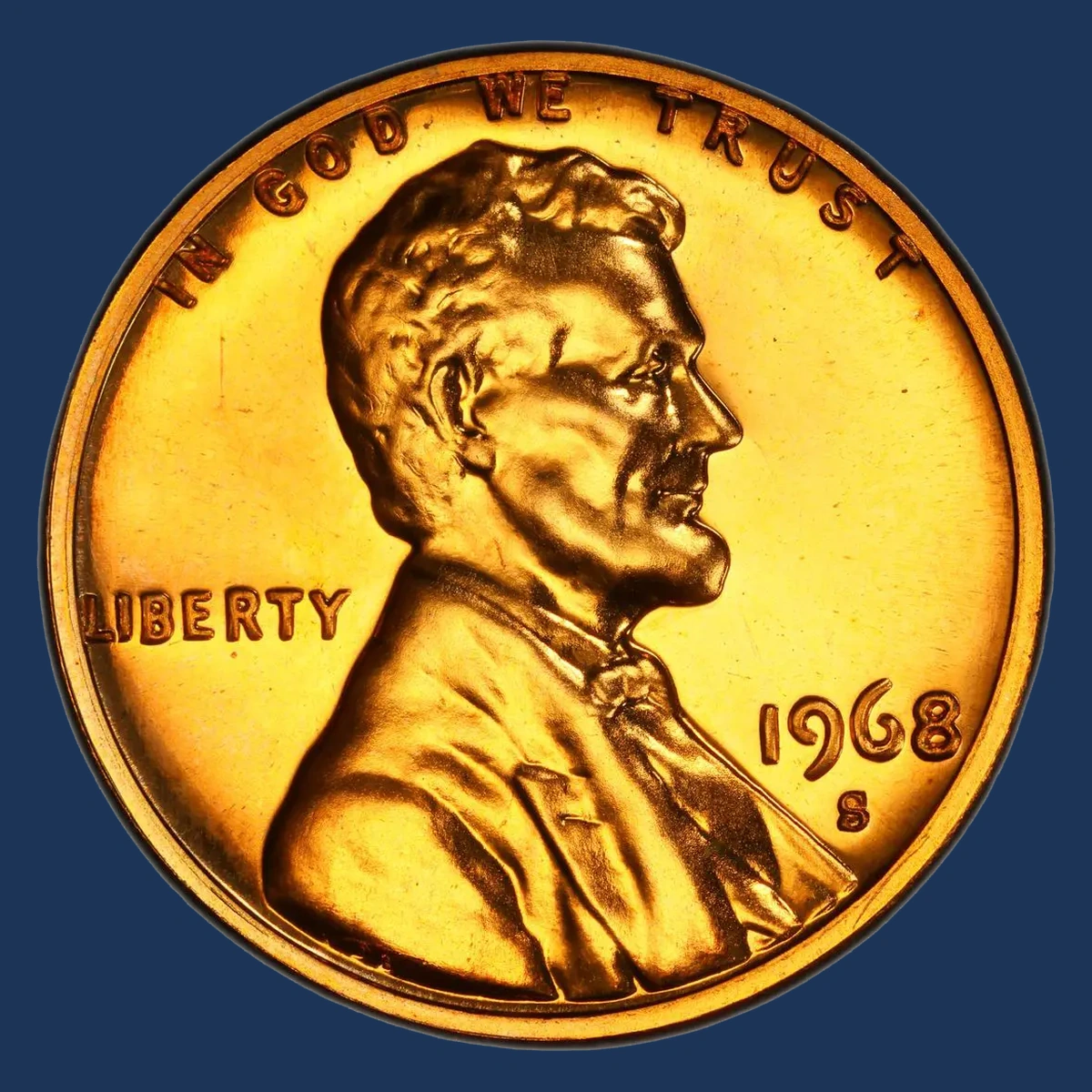
Two clear edges on a letter can start in the steel stamping tool. When the design was copied into that tool out of line, every coin it struck could repeat the difference.
Denver’s FS-801 shows strong separation in the upper back lettering. San Francisco’s FS-101 Proof has separated front letters and date details.
Others have much smaller features, including an extra eyelid or doubled Memorial roof detail. Philadelphia, Denver, and San Francisco examples need separate comparisons.
Some light doubling was inherited from a shared earlier tool. It does not make every affected penny rare.
Estimated Value
Estimate $5–$300 for minor ordinary-coin varieties, and $50–$600 for the clearer S Proof types. A Proof with both front and back doubling sold for $1,500 in March 2024.
That combined coin supports an upper estimate of $1,500, not a standard price for simple doubling. Separately, a D FS-801 sold for $285 in May 2023.
A Proof is a specially made collector coin. Its price should not be copied onto an ordinary S penny.
How to Identify
First decide which coin you have: no mint letter, D, or S. An S alone does not distinguish an ordinary penny from a Proof.
For D FS-801, examine the upper back lettering with a 10× magnifier. For S Proof FS-101, compare the front words and date with its own photographs.
Small eyelid and roof varieties require closer matching. Flat shelves from movement during striking are different from rounded separated design edges.
Normal weight remains 3.11 grams, diameter 19.05 mm, and the edge smooth. A scale and calipers check the underlying coin when accessible, but cannot identify the doubled design.
Match the doubled feature on the correct mint and finish before assigning a variety name.
9. 1968 Lincoln Penny Off-Center Strike (Estimated Up to $1,500)
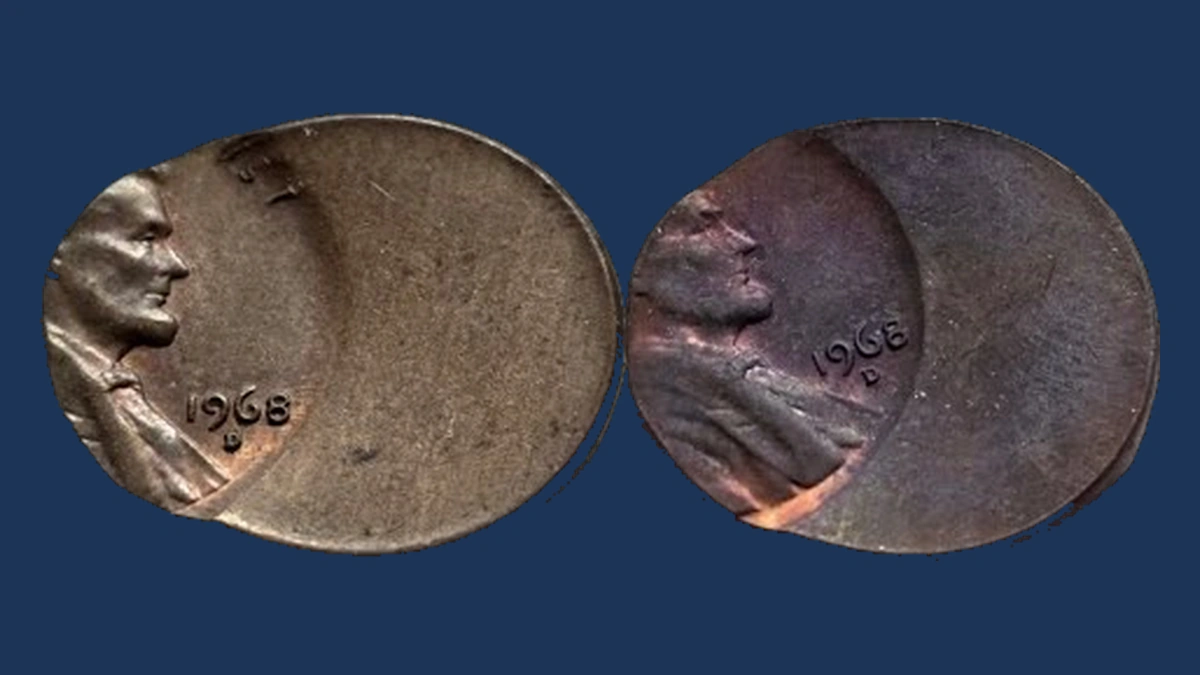
A wide blank crescent can remain when the penny’s disc misses the center of the press. Both designs then land away from their intended positions.
The Denver example is described as sixty-five percent off center. Only part of the normal design fits on the remaining struck area.
A different San Francisco penny combines a twenty-five-percent shifted strike with doubled-die variety FS-102. It is an ordinary coin, not the S Proof FS-101.
That combination survives on one damaged, unworn coin. The two visible features belong together when describing its appearance and value.
Estimated Value
For plain off-center examples, estimate $40–$500. The S doubled-die combination can be compared within approximately $200–$1,500, with its damage reducing appeal.
A sixty-percent off-center 1972-D cent sold for $44 in September 2025. That related copper-rich penny gives a recent example at the lower end.
The combined S coin does not receive two independent full prices. Visible date, mint letter, amount of shift, and preservation help determine the total someone might pay.
How to Identify
Look at both faces of the blank crescent. It should lack the normal design, rather than showing details rubbed away by a tool.
The remaining penny may spread unevenly during striking. Use calipers to record its shape and a scale to compare its weight with the normal 3.11 grams.
A standard cent measures 19.05 mm and has a smooth edge. Missing metal or a neatly ground border needs a different explanation.
On the S combination, check the surviving doubled letters separately from the displaced design. Its FS-102 name does not establish that it is a Proof.
Original blank space beside matching off-center designs on both faces is the main visible test.
10. 1968 Lincoln Penny Philippine Five-Sentimos Blank (Estimated Up to $3,000)
An unusual metal disc can receive a complete American design without becoming a normal American coin. This 1968-S penny was identified as struck on a Philippine five-sentimos blank.
The blank had not yet received Philippine coin designs. Its metal and size, rather than surviving foreign lettering, identify the intended use.
The documented example was graded NGC MS64, meaning unworn with some visible marks. It belongs among wrong-blank errors.
A changed surface color can imitate foreign metal. The important difference is the blank itself, not a stain or a coating on a normal cent.
Estimated Value
A 1972-D cent struck on a Philippine five-sentimos blank sold for $1,500 in April 2022. That later coin was graded one point higher than the documented 1968-S example.
An estimated $700–$3,000 provides a comparison range for the 1968 type. The sale is a related foreign-blank result, not this coin’s auction price.
Preserved design and verified metal identity matter greatly. A yellow-looking cent without a confirmed blank type should not automatically inherit the same price.
How to Identify
The absence of foreign letters is expected on an unused blank. Do not reject the error simply because only Lincoln and the Memorial are visible.
A normal 1968 penny weighs 3.11 grams and measures 19.05 mm, with a smooth edge. Record the suspected coin’s weight and width using a scale and calipers when accessible.
Those measurements must be compared with the identified foreign blank, rather than treated as proof by themselves. Metal analysis can help separate an unusual alloy from altered copper.
Avoid scraping the surface to test its color. For a sealed coin, check the grading service’s description and photographs.
An identified foreign blank carrying the original 1968-S design is the decisive combination.
11. 1968 Lincoln Penny Clad Dime Blank (Estimated Up to $3,500)
The penny can look silver-colored and too small for all its lettering. A dime blank entered the cent press instead of the usual copper-rich disc.
A clad dime blank has outer metal layers around a copper core. It weighs about 2.268 grams before any allowance for normal variation.
1968-S examples exist as ordinary coins and as Proofs. One Proof was recorded at 2.3 grams.
These are blank errors, so no earlier Roosevelt design is expected. That separates them from cents struck over already finished dimes, even when their color and size look similar.
Estimated Value
An ordinary 1968-S example graded PCGS MS64 sold for $576 in July 2021. A Proof graded NGC PR67 brought $2,280 that same month.
Use estimated ranges of $400–$1,200 for ordinary examples and $1,200–$3,500 for Proofs. The higher Proof grade describes a well-preserved collector coin.
The distinction matters more than the S alone. A worn or damaged ordinary wrong-blank penny should not receive the price of a sharply preserved Proof.
How to Identify
Weigh the coin before deciding that a silver appearance means silver metal. A clad dime blank is lighter than the normal 3.11-gram cent.
Use calipers to compare its width with the penny’s usual 19.05 mm. The smaller blank may leave peripheral letters cut off even when the design is centered.
At the edge, look for a copper-colored core between pale outer layers. Do not require the normal grooves of a finished dime on a blank struck in cent equipment.
A normal penny has a smooth edge, but smoothness alone does not identify this error. Plating can change its color without creating the correct smaller blank.
The smaller original disc, suitable weight, and layered metal should agree.
12. 1968 Lincoln Penny Matched Pair on Dime Blanks (Estimated Up to $5,000)
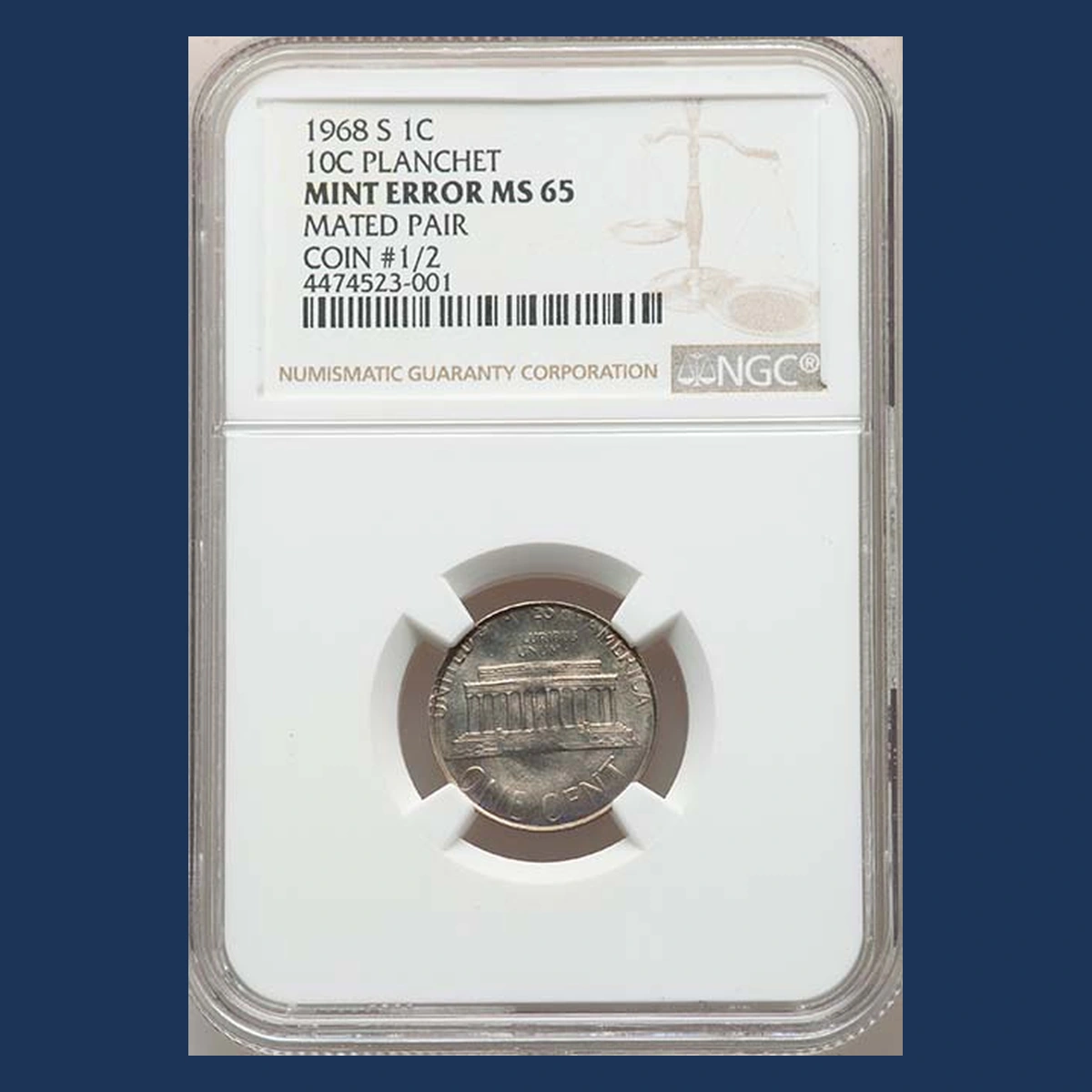
The two coins tell more of the story together. Both were made from dime blanks that entered cent equipment.
One received the normal front and back designs. The second was caught between that coin and the back stamping tool.
The first coin’s raised design pressed a sunken, mirror-image design into its partner. Collectors call that transferred image a brockage.
The pair was graded NGC MS65 and kept in separate holders. The second piece’s year and mint are assigned through the matching pair, rather than a fully readable date and S on that piece.
Estimated Value
The matched pair sold for $3,600 in July 2021. That amount bought both coins together, not each holder separately.
An estimated $2,500–$5,000 suits the complete related pair. Its appeal comes partly from preserving both sides of the striking event.
A lone coin would require a separate comparison rather than half the pair’s price by default. The matching surfaces, the wrong blanks, and the two coins’ condition all contribute to the total value of this unusual surviving combination.
How to Identify
The contact surfaces provide the best test: one coin’s raised design should match the other coin’s sunken mirror image. Keep the holders together and compare their photographs without removing either piece.
Both use dime blanks, so the normal penny’s 3.11 grams and 19.05 mm are only a starting comparison. Accessible pieces can be checked with a scale and calipers, but measurements alone cannot establish a matched pair.
Inspect the outside edges as well, looking for squeezing or other changes that might explain two loose coins with copied designs. An ordinary cent has a smooth edge; the more persuasive evidence here is the matching design on the original contact faces.
13. 1968 Lincoln Penny Proof Double Strike and Broadstrike (Estimated Up to $6,000)
A high curved rim wraps around part of this Proof penny. Its shape records more than the normal repeated blows used to make a collector coin.
The 1968-S example received two strikes away from the proper center. Without normal restraint at the edge, the metal also spread outward.
That outward expansion is called a broadstrike. Here it accompanies the shifted second strike on the same coin.
The raised rim extends around a large portion of the front. Two neatly aligned Proof strikes alone would not produce this error or justify calling an ordinary Proof double-struck.
Estimated Value
The ANACS PR65 Red example sold for $4,312.50 in January 2008. Its grade describes a well-preserved Proof, and Red refers to its retained copper color.
Estimate $3,000–$6,000 for this distinctive double-struck broadstrike. The historical result concerns the whole combined error.
The expanded metal and shifted designs should not be priced as separate coins. Changes in surface condition, rim damage, and visibility of the second strike can move a comparable piece within the estimated range.
How to Identify
The unusually high rim is the first feature to examine in a side photograph. Avoid pressing on it or trying to flatten the coin.
Next, trace repeated parts of the design across the face. Their displaced positions distinguish an error from the aligned blows normally used for Proof production.
Calipers can document the expansion beyond a normal penny’s 19.05 mm when the coin is safely accessible. A scale checks it against the usual 3.11 grams.
Inspect the smooth outer edge for later squeezing, which can also raise a rim. The collector finish and original stretched design must remain consistent.
Displaced strike details beside the tall, expanded rim identify the combined error more clearly than shine alone.
14. 1968 Lincoln Penny Struck Over a Costa Rican Ten-Centimos Coin (Estimated Up to $6,500)
Two countries appear on one piece of metal. A finished 1967 Costa Rican ten-centimos coin entered the press that struck 1968-S cents.
The new strike covered much of the older design without removing every trace. Surviving foreign lettering identifies a previously struck coin, rather than an unused blank.
This process is called an overstrike. The documented example was graded NGC MS68, an exceptionally well-preserved unworn coin.
Its ten-centimos host is different from the smaller five-centimos objects pressed into other 1968 cents. Their size, design, and striking histories should not be mixed together.
Estimated Value
The NGC MS68 ten-centimos overstrike is reported at $4,560 in March 2023. Use an estimated $3,000–$6,500 for comparable identified examples.
That result belongs to the finished 1967 foreign coin beneath Lincoln. It is not a sale of a five-centimos blank or a penny with an extra attached disc.
Clear surviving foreign details make the two-country story easier to see. Heavy damage or loss of those details calls for a lower comparison than the exceptionally preserved recorded coin.
How to Identify
Begin by finding foreign letters or numbers that cannot belong to a Lincoln cent. Their positions should fit the underlying ten-centimos design.
Check that the new design includes the 1968 date and S. Some old details may survive between the strongest parts of Lincoln and the Memorial.
A normal penny’s 3.11 grams, 19.05 mm width, and smooth edge serve only as a starting comparison. Use a scale and calipers on an accessible specimen to record its actual dimensions.
The foreign host may have changed shape under the cent strike. Do not scrape away the upper design to expose the older coin.
Recognizable 1967 Costa Rican details beneath the American design establish the overstrike’s identity.
15. 1968 Lincoln Penny Proof Struck Over a 1965 Dime (Estimated Up to $7,000)
Look beyond Lincoln and another face begins to appear. This Proof cent was struck over a finished 1965 Roosevelt dime.
The two portraits point in nearly opposite orientations on the same face. Parts of the dime’s back design also survive beneath the Memorial.
The host coin was clad, with outer layers around a copper core. A 1965 dime should not be described as a normal silver dime.
Unlike a fresh dime blank, this object already carried a denomination and design before entering the cent press. The surviving earlier image makes that sequence visible.
Estimated Value
The PCGS PR62 example realized $3,840 in June 2023. PR62 identifies a Proof with more visible marks than higher-graded examples.
An estimated $2,500–$7,000 covers comparable Proof dime overstrikes with different preservation and visibility. The recorded result is for this 1965 host, not a cent struck on an unused dime blank.
The earlier date and recognizable Roosevelt design help explain the error. Stronger surviving details can matter as much as a small change in the numerical grade.
How to Identify
Rotate the photograph about half a turn and look for Roosevelt’s outline around Lincoln. Then return to the upright cent view and locate its date and S.
Inspect the back for parts of the dime design beneath the Memorial. Both faces should support the same sequence of strikes.
The original clad dime normally weighed 2.268 grams, rather than the penny’s 3.11 grams. A scale and calipers help document an accessible coin against the normal cent width of 19.05 mm.
Examine the layered edge without requiring every original dime groove to survive. Striking can change the outline, while a normal penny begins with a smooth edge.
The recognizable older Roosevelt design separates this piece from a blank error.
16. 1968 Lincoln Penny Silver Dime Blank (Estimated Up to $12,000)
A silver-colored 1968-D penny can belong to a much earlier metal standard. This example was identified as struck on a silver dime blank.
Older silver dime blanks normally weighed 2.50 grams. That differs from the lighter copper-core clad dime blanks also found beneath cent designs.
The documented 1968-D coin received a genuine designation with wear and damage noted. It is not an unworn top-grade specimen.
A coating on a normal penny can imitate the color. The unusual blank must be established through the coin’s metal and physical features, rather than appearance alone.
Estimated Value
For identified 1968-D silver-dime-blank examples, estimate $1,000–$12,000. The damaged, worn recorded coin belongs in a different condition category from an exceptional unworn piece.
A 1980-D cent on a silver dime blank sold for $18,000 in August 2025. That later high-grade coin is a comparison, not a 1968 auction result.
The upper estimate requires substantially better preservation than the damaged example. Silver-colored plating on an ordinary cent has neither the same blank identity nor the same value.
How to Identify
A normal penny weighs 3.11 grams and measures 19.05 mm, while an older silver dime blank starts around 2.50 grams. Record an accessible coin’s actual weight and width using a scale and calipers.
The documented 1968-D example has wear and damage, so another specimen’s measurement should not be copied onto it. A low reading by itself cannot identify silver.
Examine the edge for layering, plating, filing, or other changes. A normal penny has a smooth edge, but a wrong blank may be reshaped during striking.
Professional metal testing can distinguish silver alloy from a pale coating without scraping the coin. Confirmed silver throughout the smaller blank matters more than its surface color.
17. 1968 Lincoln Penny Foreign Coin or Blank Struck Into the Front (Estimated Up to $20,000)
The front can contain an extra piece of metal. On one 1968-S cent, a small Costa Rican five-centimos blank became bonded to the penny during striking.
The steel blank sits across part of Lincoln, with the two outlines meeting near the lower left. This is a joined object, not simply a cent on a foreign blank.
A separate example has a finished 1967 Costa Rican five-centimos coin struck into its front. Its recorded total weight is four grams.
The unused blank and the finished foreign coin tell different versions of this unusual event.
Estimated Value
The bonded-blank cent sold for $15,000 in May 2022 through Heritage Auctions. It was graded PCGS MS63 Red.
Use an estimated $8,000–$20,000 for comparable joined examples with clearly established identities. The separate finished-coin example has its own preservation and appearance to assess.
The $15,000 result must not be presented as its sale. Nor should the blank’s nominal face value or the number of visible outlines be added to that auction price.
How to Identify
Do not try to separate the pieces. Their contact area and the way the design crosses it are essential parts of the error.
The bonded blank measures about 14.92 mm across and overlaps the larger cent. Its lower-left edge meets the penny’s outline, while parts of Lincoln and the right border are weak.
A normal cent is 19.05 mm, weighs 3.11 grams, and has a smooth edge. Calipers and a scale can record the complete object when safely accessible; the four-gram report belongs to the other example.
Look for glue, solder, or forced attachment without scraping the join. A grading service should assess the original bond.
Struck design blending across the contact area is the critical visible feature.
Conclusion
A tiny raised line and a joined foreign blank lead to very different collecting decisions. The estimated $2–$20,000 range reflects those differences, with the $15,000 bonded example near the upper end.
Before comparing prices, identify the coin’s mint, finish, and actual error. A normal 1968 penny starts at 3.11 grams and 19.05 mm, but genuine wrong blanks need their own checks.
Keep unusual pieces uncleaned and preserve any matching pair together.