1904 Penny Error List with Pictures

Even a carefully made collector coin can carry a misplaced date. A 1904 Proof penny brought $7,800 at Stack’s Bowers in August 2019; its special finish and condition mattered greatly to that price.
The 1904 penny errors below range from small raised lines to missing metal, with estimated whole-coin values of $5–$8,000. That upper end includes exceptional Proofs.
Look beyond the main date as you read: some of the smallest clues sit in the border beneath it.
1. 1904 Indian Head Penny Die Marks (Estimated Up to $100)
A small extra mark sits among the border teeth below the 0 on one 1904 variety. It belongs to the stamping tool, also called a die, rather than to the intended design.
The catalog records it as a die mark. Its presence does not establish an extra date digit.
That distinction matters because a misplaced number needs a recognizable part of a number. An irregular mark can look suggestive without having that shape.
The same tool can repeat a small mark on many coins. Wear may make it difficult to see on individual pennies.
Estimated Value
Treat this as an estimated $5–$100 whole-coin variety, with the upper part reserved for clearer, better-preserved examples. The small mark may add little to the value of a worn penny.
There is no separate sale price here for this particular border mark. The estimate follows the modest market for minor Indian cent tool features.
A seller’s suggestion that the mark resembles a digit is not a reason to apply a misplaced-date premium.
How to Identify
Locate the normal 0 first, then lower a 10× magnifier toward the border. Poliquin 34 places the small mark within the teeth in that area.
Compare it with the catalog photograph rather than trying to name a number from its outline. Wear or a nearby dent can change how an irregular mark appears.
A genuine ordinary 1904 cent has a plain edge, a diameter of about 19.05 mm, and a weight near 3.11 g. Use calipers and a scale to check a coin that looks reshaped.
Normal measurements will not identify this variety. Align the neighboring border teeth with the photograph and check that the mark occupies the same gap.
2. 1904 Indian Head Penny Die Clash (Estimated Up to $300)
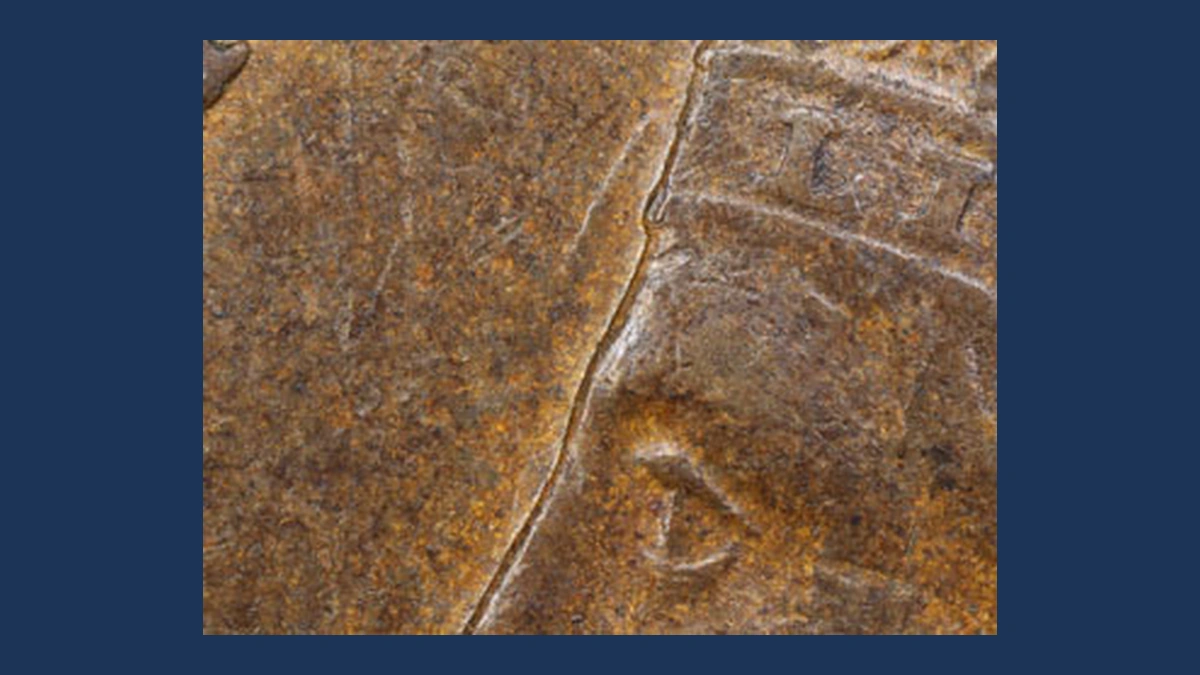
An unfamiliar outline can appear across the C in CENT on the back. It comes from the front and back stamping tools hitting each other with no coin between them.
That collision can transfer part of one design onto the opposite tool. Coins struck afterward copy the unwanted outline along with the normal design.
The 1904 example belongs to a misplaced-date variety called Snow 20. The clash appears on later coins from its back tool.
It can accompany cracks and fine tool lines. Those nearby marks do not all come from the collision.
Estimated Value
An estimated $10–$300 covers ordinary examples with a visible clash, allowing for wear and the accompanying date variety. The penny’s overall condition remains part of that figure.
A small outline crossing one letter will usually attract less interest than a large, bold transferred design. Scratches passing through the same letter do not earn a clash premium.
This is an estimate for minor Indian cent clashes, not a recorded sale of the specific Snow 20 example.
How to Identify
Pressing two finished coins together can leave misleading impressions, so inspect the plain edge for squeezing first. Use a scale and calipers to check the usual 3.11 g and 19.05 mm.
A normal weight does not establish a clash; the unwanted trace must fit part of the opposite design. Examine CENT through a 10× magnifier and distinguish that outline from an arbitrary scratch through the letter.
Choose a later Snow 20 photograph, since an earlier coin from the tool may not yet show the clash. To support the match, turn to the front and find the misplaced tops of 0 and 4 beneath the normal date.
3. 1904 Indian Head Penny Die Cracks, Chips, and Rim Breaks (Estimated Up to $750)
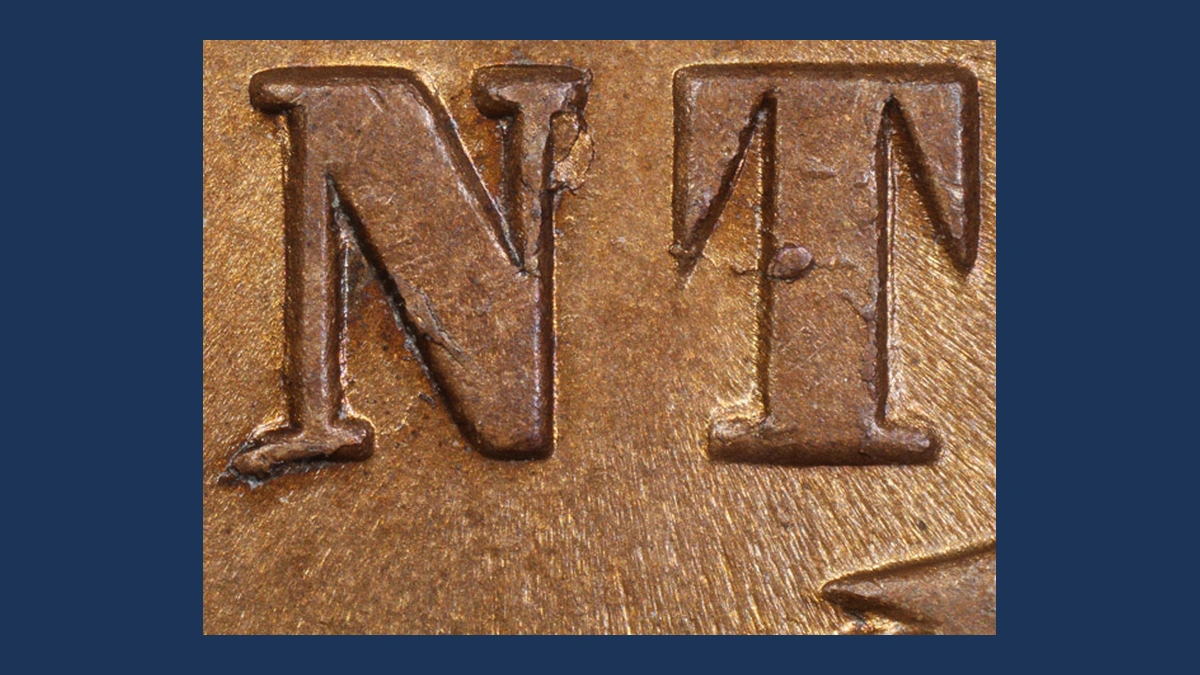
A line of raised copper records a crack in the stamping tool. A small missing piece of that tool can instead leave a lump on the penny.
One 1904 back tool developed a crack between about 3:15 and 4:15. Later coins show a displaced section, followed by a larger rim break after the piece fell away.
Other examples have small lumps around letters in CENT or a crack through the chin. Each has its own pattern.
A retained break can still show design detail. A fully missing tool piece leaves a much less detailed raised area.
Estimated Value
Fine cracks and small chips generally fit an estimated $5–$100 range. Larger, clearly identified rim breaks can place a 1904 coin around $100–$750.
The range is an estimate for the whole penny, not a promise that every raised line adds value. The more substantial breaks offer a clearer feature for collectors.
Wear, cleaning, and corrosion can reduce appeal. A chip beside a letter should not be priced like a large missing section at the rim.
How to Identify
A rim break and a small letter chip require different comparisons. For the large right-side back break, start with photographs showing its progression from crack to retained piece to complete loss.
Under a 10× magnifier, see whether design detail remains within the raised area. That helps distinguish a retained piece of the tool from one that fell away.
If the feature is only a fine line, move the lamp until you can see that it rises above the surface. A cut goes into it.
The normal 3.11 g weight and 19.05 mm diameter can be checked with a scale and calipers. Inspect the plain edge beside the feature for impact damage.
At the rim, trace the raised area’s boundary and match it to the correct stage in the comparison photographs.
4. 1904 Indian Head Penny Repunched Date (Estimated Up to $1,000)
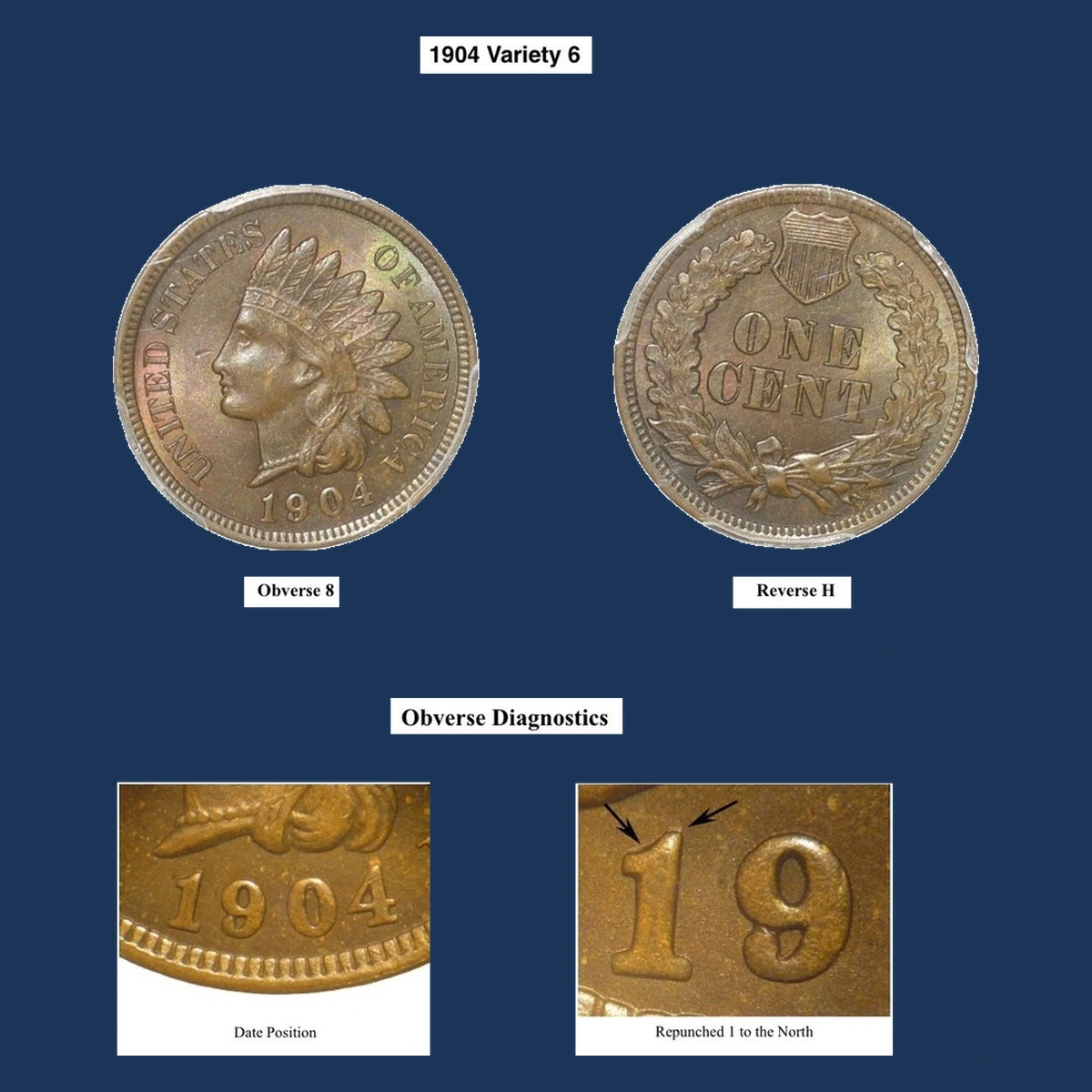
Look for a second foot beside a digit or an extra curve within its loop. These small strokes can survive when the date punch entered the stamping tool in slightly different positions.
The resulting coins carry parts of both date impressions. The whole coin was not struck twice.
For Snow 1, extra strokes lie to the right of parts of the 9, 0, and 4. Other 1904 varieties affect different numbers or directions.
The familiar FS-301 is Snow 10, a separate variety that can also show small chips around CENT on the back.
Estimated Value
A 1904 FS-301 graded MS64 Brown sold for $168 at Heritage in January 2019. The grade describes an unworn coin with some marks.
Across different varieties and conditions, an estimated $10–$1,000 leaves room for modest worn pieces and attractive high-grade examples. A clear variety identification matters as much as a thick-looking digit.
The $168 result belongs to Snow 10 specifically; it should not be assigned to every doubled-looking 1904 date.
How to Identify
Before choosing a catalog number, note which digits have an extra curve or foot. The number of affected digits and the direction of each stroke help narrow the comparison.
A scale and calipers check about 3.11 g and 19.05 mm, with a plain edge. These ordinary dimensions support the coin’s identity but do not distinguish the date varieties.
Under a 10× magnifier, reject a flat ledge as proof of repunching. A useful extra stroke should preserve a rounded part of the earlier digit.
FS-301 needs its own photographs rather than the pattern described for Snow 1. When checking Snow 1, look specifically along the right sides of the 9, 0, and 4.
5. 1904 Indian Head Penny Doubled Die Obverse (Estimated Up to $1,000)
Extra thickness in LIBERTY or at the feather tips is the reported feature on this 1904 penny. A genuine doubled die carries two slightly different versions of the design within the stamping tool itself.
Each coin made from that tool can inherit the same doubling. This differs from a loose date punch or a coin receiving two separate strikes.
The 1904 report describes a subtle effect, not widely separated letters. A thick edge alone does not establish the cause.
The shape must be compared with normal lettering, wear, and the flat doubling caused during striking.
Estimated Value
For a properly confirmed 1904 example, use an estimated $30–$1,000, depending on condition and how clearly the doubling shows. This is a conditional estimate, not a certified 1904 auction result.
As a different-year comparison, an 1887 Indian cent FS-101 graded MS63 Brown sold for $1,380 at Heritage in June 2025. That established variety is more distinct and does not set the price of this subtle 1904 report.
How to Identify
A worn letter can look thick simply because its fine edges have disappeared. Put a normal 1904 coin of similar wear beside the suspected example and compare LIBERTY through a 10× magnifier.
Move to the feather tips to see whether the apparent doubling affects the design in a related way. A scale and calipers should find about 3.11 g and 19.05 mm, while the plain edge should show no alteration.
Neither normal dimensions nor a thick letter establishes this reported doubled die. At the clearest letter corner, turn the light to distinguish a raised second outline from a flat shelf left by mechanical doubling.
6. 1904 Indian Head Penny Curved Clip (Estimated Up to $1,500)
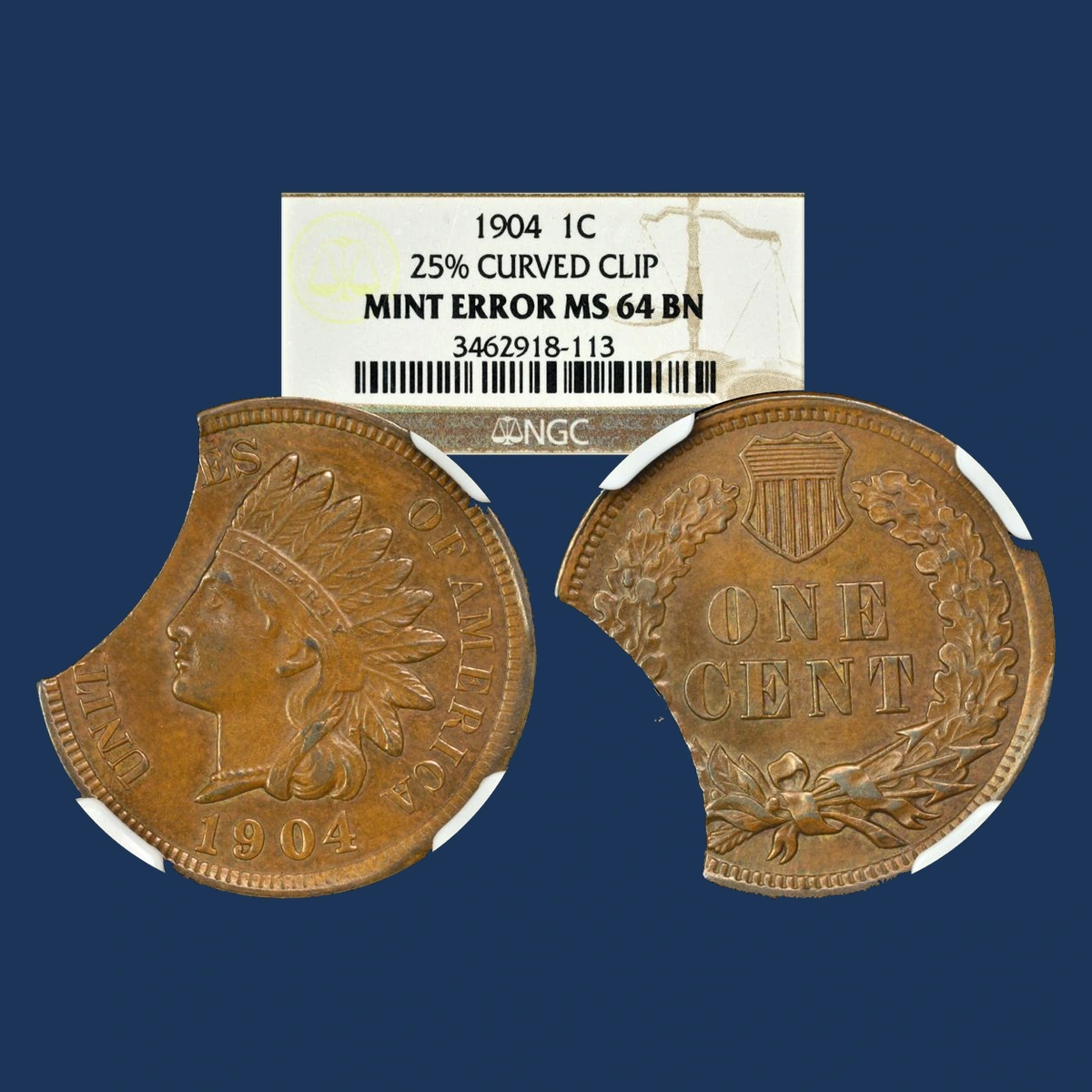
A deep curved gap removes part of the coin’s normal outline. The disc was cut from metal strip that overlapped a hole left by an earlier disc.
The incomplete piece then received the penny design. Collectors call this a curved clip, although nobody needed to clip a finished coin with scissors.
A documented 1904 example has a 25% clip and an MS64 Brown grade. That means it remained unworn, with brown surfaces.
The size of the missing section makes this example striking. Its boundary still needs examination, because later cutting can imitate a missing piece.
Estimated Value
An estimated $100–$1,500 covers genuine 1904 curved clips across different conditions and sizes. The documented 25% MS64 Brown coin provides a clear example of the error, without an assigned sale amount here.
For comparison, a 1939 Lincoln cent clip graded MS64 Brown sold for $180 in January 2023. That is another year and design, and its clip should not be assumed identical.
A large natural curve on attractive copper can support a higher estimate.
How to Identify
Missing metal should lower the weight, so begin by comparing the scale reading with the normal 3.11 g. A low reading supports a missing section but cannot tell you when it disappeared.
Calipers can check the surviving round portion against 19.05 mm. Inspect the plain edge and both ends of the arc for fresh cutting or saw marks.
Use a 10× magnifier to examine how the design approaches the gap. A mint clip was present during striking, unlike a section cut from a completed coin.
The opposite rim may retain a useful supporting clue. Turn the coin halfway around from the missing arc and look for locally weak rim detail, which can accompany a genuine clip.
7. 1904 Indian Head Penny Off-Center Strike (Estimated Up to $2,000)
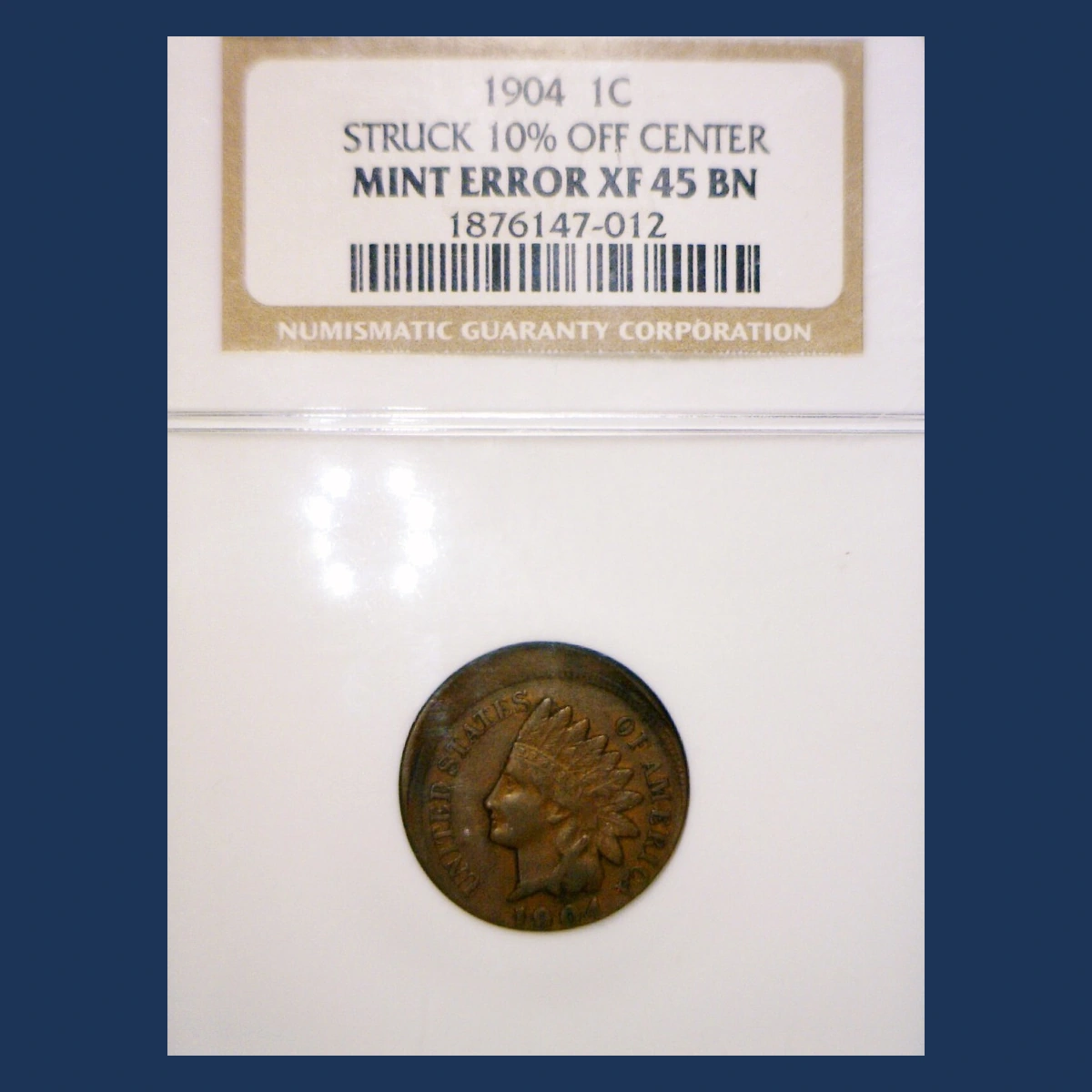
The portrait and lettering sit away from the middle when the metal disc enters the press off center. Part of the design lands beyond the disc, leaving blank copper on the opposite side.
A 1904 example is reported as 10% off center and graded MS63 Brown. Its exact direction must be judged from the coin rather than inferred from the percentage.
A complete date makes an off-center coin easier to identify. An uneven rim alone is not enough.
The decisive feature is missing design paired with metal that never received the normal impression.
Estimated Value
Use an estimated $100–$2,000 for genuine 1904 off-center cents, with larger shifts and attractive surfaces toward the higher end. A mild 10% shift generally belongs below the most dramatic examples.
A different-year comparison is a 1919 cent struck 40% off center, graded MS62 Brown, which sold for $524.60 in June 2026. Its stronger displacement makes it an imperfect comparison for a 10% 1904 coin.
These figures value the complete error coin, including its condition.
How to Identify
An off-center strike leaves metal unstruck rather than removing it, so the scale should still approach 3.11 g. Compare the altered outline with the usual 19.05 mm using calipers, and inspect the plain edge for cutting.
Use a 10× magnifier to look for grinding scratches on the blank crescent. A surface ground smooth after striking does not prove that part of the disc missed the tools.
Follow the design to the boundary where letters or the portrait end at the edge of the struck area. Then turn the coin over and check that the back also fits the same displaced disc, rather than remaining normally centered.
8. 1904 Indian Head Penny Misplaced Date (Estimated Up to $8,000)
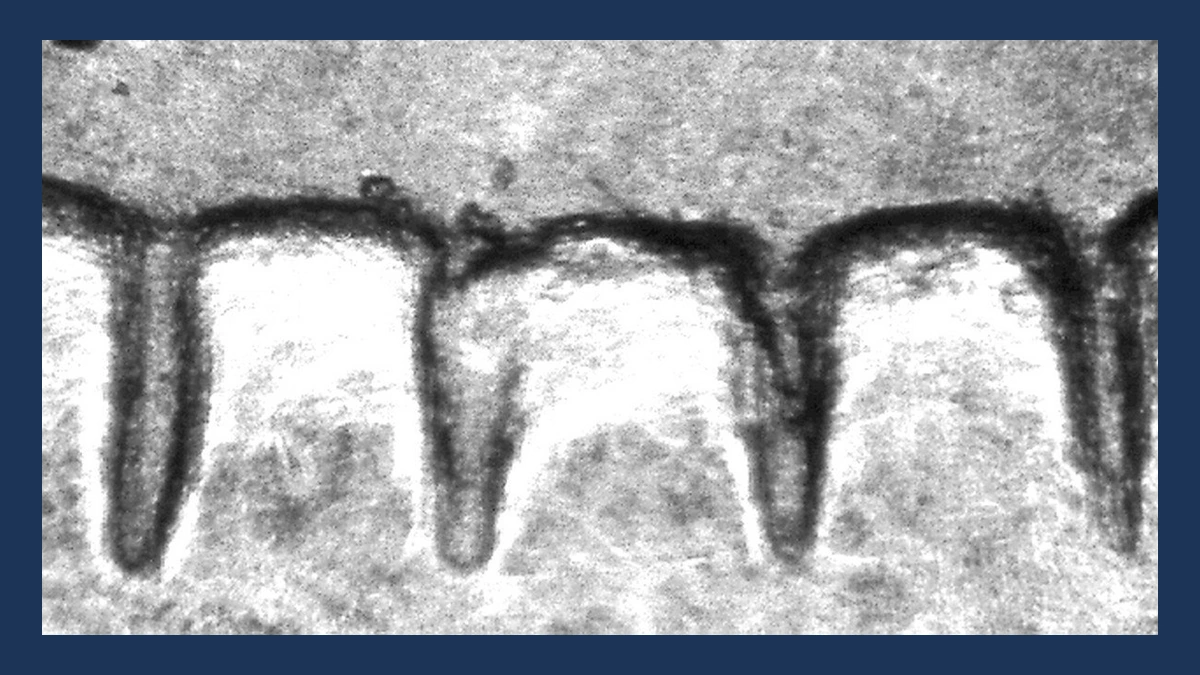
A curve or short upright below the main date can be part of a misplaced number. The date punch touched the stamping tool too low, leaving marks in the border.
Snow 9 shows the tops of an extra 0 and 4 below and left of the normal digits. Other 1904 varieties have different partial numbers.
The Proof variety Snow PR1 has the top of a misplaced 9. Proofs are specially made collector coins, not ordinary pennies that happen to shine.
A random tool mark below the date does not automatically represent a number.
Estimated Value
Circulation examples fit an estimated $25–$1,000, while Proof examples can range around $300–$8,000. Those are whole-coin estimates, with condition and finish contributing heavily.
Stack’s Bowers describes the 1904 Proof tools as misplaced-date varieties and records a $7,800 Proof sale in August 2019. That result does not mean a tiny misplaced digit adds $7,800.
A worn circulation coin with a faint digit trace belongs in a very different price range.
How to Identify
A shiny surface does not establish a Proof: polishing can make an ordinary penny shine too. Identify the finish separately before choosing between Proof and circulation-variety photographs.
Both use the usual 3.11 g weight, 19.05 mm diameter, and plain edge. A scale and calipers check those features without identifying a misplaced digit.
With a 10× magnifier, scan the border below the main date. Keep small strokes beside the normal digits separate from marks sitting farther down among the border teeth.
Snow 9 requires the extra 0 and 4 below and left of their normal positions. For Snow PR1 instead, look for the top of the misplaced 9 under the date.
Conclusion
A 1904 penny can carry extra date strokes, raised tool defects, or a much larger striking mistake. Check where the feature sits and whether it rises above or cuts into the copper.
Estimated values run from $5 to $8,000, including exceptional Proof coins at the top. A tiny variety mark alone does not explain a Proof’s price, so assess the whole coin before paying for the error.