1925 Penny Error List with Pictures

At a March 2018 auction, a 1925-S FS-501 cent brought $1,920. Bidders were buying a well-preserved penny with a small earlier S impression below its main mintmark.
The 1925 penny error list ranges from those tiny tool details to coins struck twice or on silver dime blanks. Estimated prices run from $3 to $6,000.
Read through the visible clues below to match the error, mint, and condition of your coin.
1. 1925 Lincoln Wheat Penny Grease-Filled Design
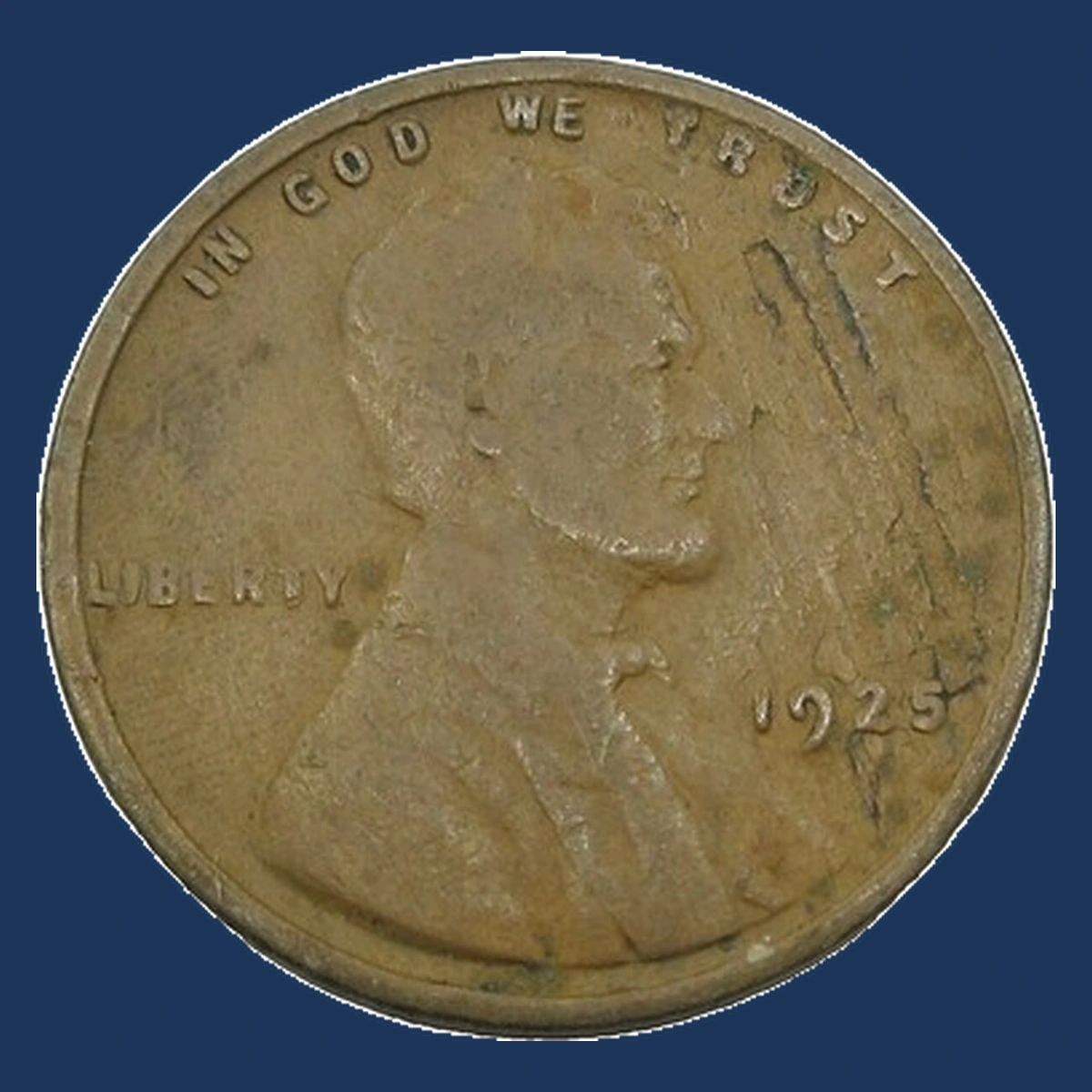
A letter may look faint even when the nearby design is sharp. Grease or debris can fill a hollow in the die, the steel stamping tool, and prevent the letter from forming fully.
A 1925 year guide lists this blocked-design effect. It does not identify one fixed letter, mintmark, or preserved piece of debris for every example.
The weak area therefore needs to be examined on the individual coin. Wear, scraping, and a worn stamping tool can also soften detail.
The useful clue is how the missing detail relates to the undisturbed surface around it.
Estimated Value
An estimated $3–$100 covers modest, identifiable grease-filled features on 1925 cents. Small losses of detail may add little, while a broad affected area is easier to appreciate.
A 1933-D back struck-through cent graded PCGS VG10 sold for $30 in October 2022. It is a worn, different-year comparison with an unspecified obstruction, not proof of grease on a 1925 coin.
Treat the original surface and the visible interruption as the basis for the estimate.
How to Identify
Compare the faint detail with another part of the same coin at a similar height. If Lincoln’s face and all nearby letters are equally rubbed, circulation may explain the weakness.
Use a 10× magnifier to inspect the border of the weak patch. Scraping can leave grooves or a sharp boundary across already finished letters.
An ordinary loose cent can be checked against 3.11 g on a scale and 19.05 mm with calipers. Those measurements check the coin’s basic identity rather than the cause of a missing letter.
Tilt the coin under a lamp and watch the weak patch. Smooth, fading detail without scratches is more consistent with a blocked tool than letters cut away later.
2. 1925 Lincoln Wheat Penny Clash Mark Below UNUM
An odd mark below the M in UNUM can resemble a mint letter on the back. The specialist description identifies it as a clash mark on a particular 1925-S tool pairing.
A clash occurs when the two stamping tools meet without a blank between them. One tool can pick up part of the other’s design and later transfer an extra trace to coins.
This mark accompanies the front mintmark variety WRPM-006. It is not a second S deliberately punched onto the back.
The actual San Francisco mintmark remains below the date on the front.
Estimated Value
For a clear example of this small clash, estimate $10–$150. The range concerns the visible transferred mark, not an auction result for a coin with a second official mintmark.
The accompanying repunched S may add collector interest, but the two features belong to one whole coin. Their upper estimated prices should not simply be added together.
A faint mark lost in wear offers less to examine than a sharp example with clean surrounding detail.
How to Identify
The mark belongs below the M in UNUM, not below the date. Enlarge that back-side area with a 10× magnifier and compare its outline with the recorded clash.
On the front, the real S should match the mintmark pattern called WRPM-006. Its earlier impression is tilted, which helps distinguish this pairing from other 1925-S cents.
A normal loose coin weighs 3.11 g and measures 19.05 mm on a scale and calipers. These checks help establish the coin’s basic size and weight.
Examine the back mark from the side as well. A seam, solder, or a different metal color suggests something added to a finished coin.
3. 1925 Lincoln Wheat Penny Curved Clip
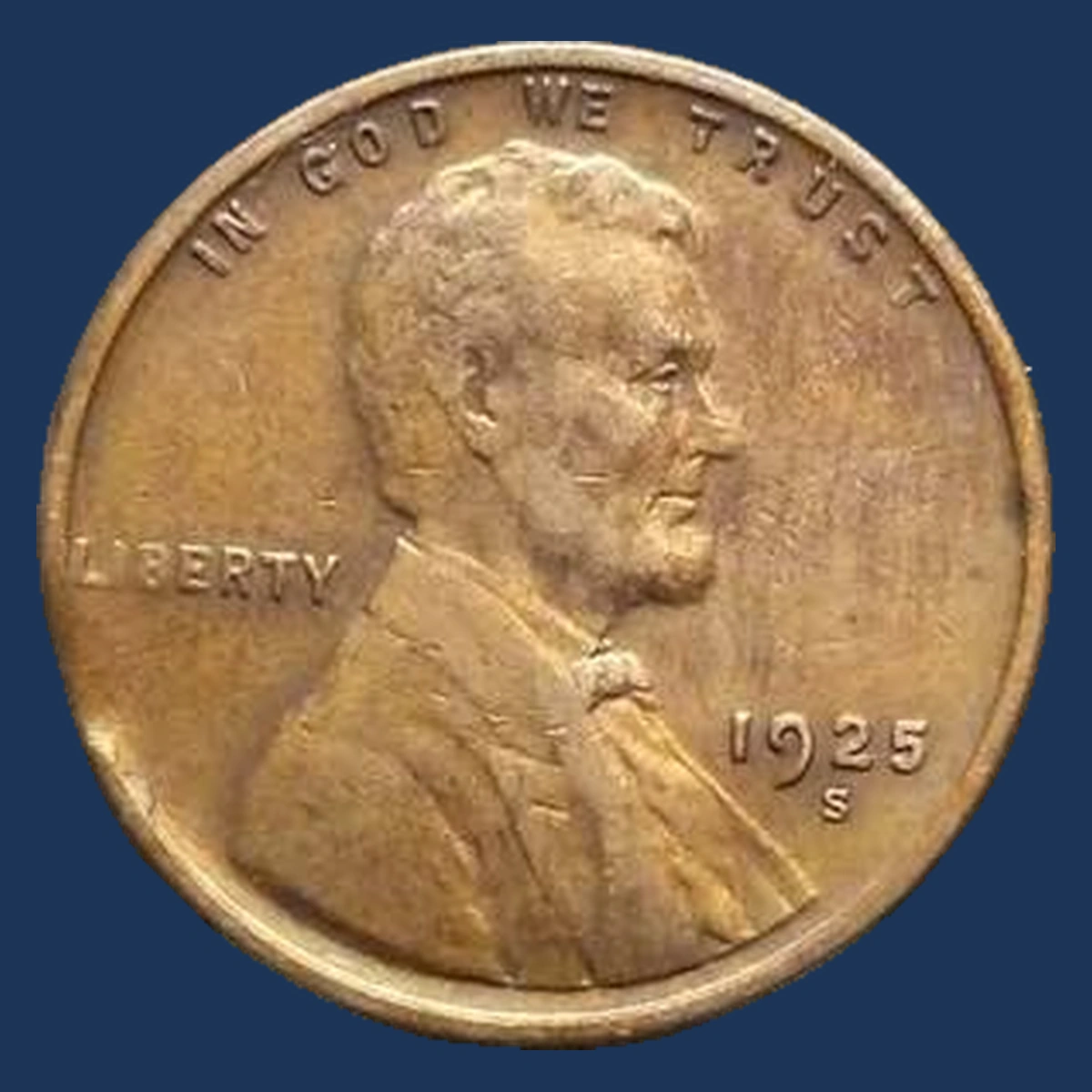
A curved gap removes part of the penny’s round outline before the design is struck. The blank-cutting punch overlapped an earlier hole in the metal sheet.
A Philadelphia example weighs 2.92 g and was graded ANACS VF20, meaning clear circulation wear. The missing metal makes it lighter than a normal cent.
A separate catalog example places a clip near eight o’clock. That location should not be assumed for the weighed coin.
The press formed the rim beside an incomplete blank, leaving clues that a later cut through a finished coin would not reproduce naturally.
Estimated Value
The 2.92 g Philadelphia curved clip sold for $56 in March 2023. Its VF20 grade places the result among visibly worn examples.
An estimated $15–$250 covers modest 1925 clips through larger or better-preserved pieces with a clearly original edge. A complete date helps collectors place the error in a year set.
The price belongs to that curved-clip coin, not the separate double-struck example that also has a small gap.
How to Identify
Weigh a loose candidate on a precise scale, using 3.11 g as the normal standard. The documented 2.92 g piece has lost a small but measurable amount of metal.
Calipers should cross an intact part of the circle when comparing with 19.05 mm. Measuring through the gap would confuse missing metal with a smaller original blank.
With a 10× magnifier, follow the rim into each end of the curve. A genuine clip may show weak letters nearby or weakness at the opposite rim.
Inspect the gap itself for file lines, sharp cutting grooves, or metal bent after striking. The rim should flow naturally into the missing curve instead of ending at a freshly cut surface.
4. 1925 Lincoln Wheat Penny Lamination and Retained Flaps
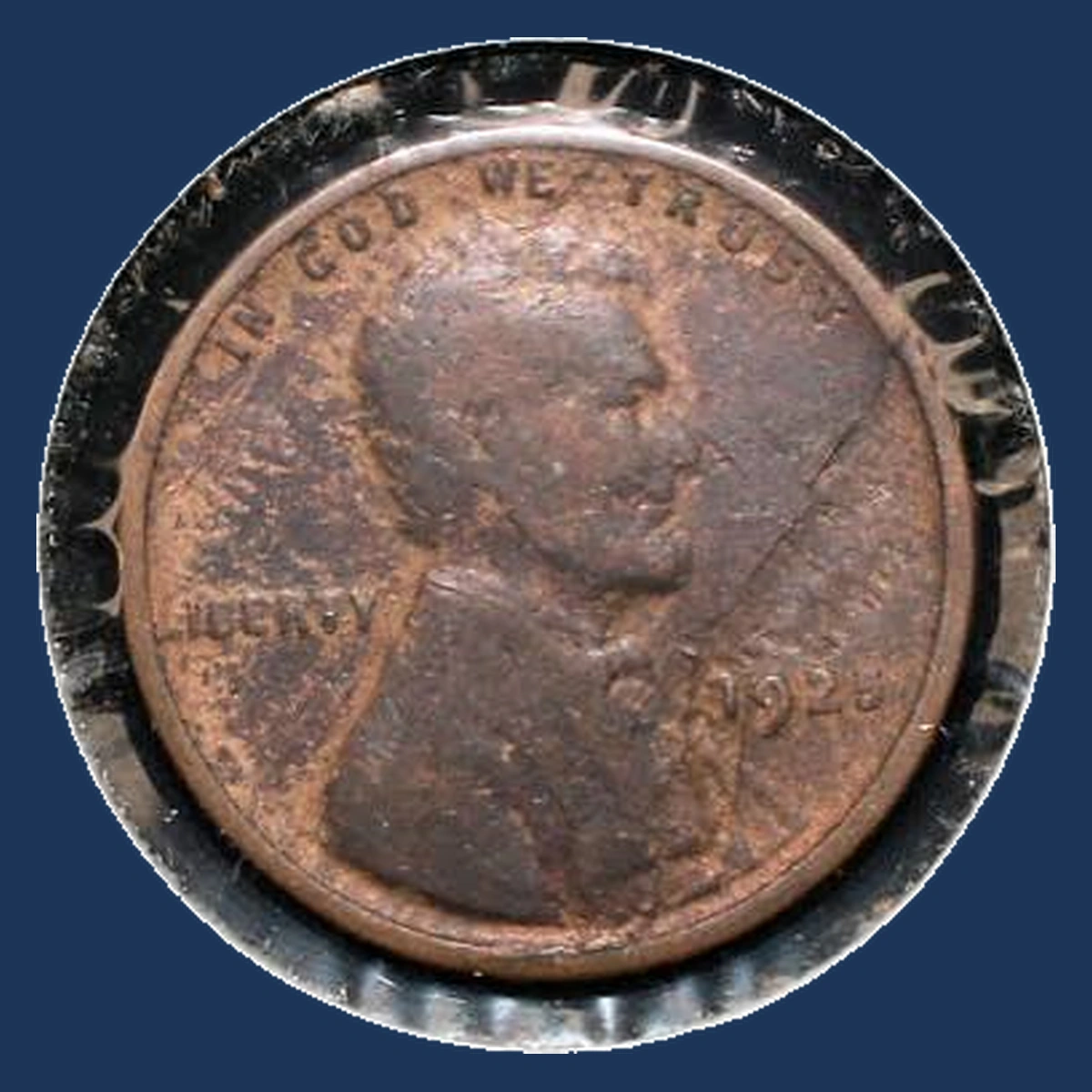
A loose strip of bronze can peel across a penny without being part of an added coating. Lamination is separation within the original alloy.
One Philadelphia catalog example has a long strip running from roughly six to eleven o’clock above the date. Another affects the back near ten o’clock and crosses ONE.
A San Francisco listing describes an attached flap along a different part of the coin. These separate examples show different amounts and locations of peeling.
An attached flap remains part of the coin’s metal. It should not be confused with a broken piece of the stamping tool.
Estimated Value
For 1925 laminations, estimate $10–$300, allowing for thin worn patches, obvious peeled strips, and well-preserved attached flaps. Larger separation is easiest to value when its boundaries remain clear.
A 1941-S retained back lamination graded PCGS MS66 Red sold for $69 in April 2020. That other-year sale concerns an unworn coin with few marks and original copper color.
A detached fragment or damage from lifting a flap can reduce the coin’s appeal.
How to Identify
Start by deciding whether the thin sheet remains attached or has already fallen away. Do not lift it to answer that question.
At 10×, view the separating edge from the side. A thin layer following the surface differs from a deep cut with metal piled beside it.
A missing piece may lower the normal 3.11 g weight on a scale. An attached flap may leave the weight nearly unchanged.
Use calipers only where they cannot catch the loose metal, comparing the surviving face with 19.05 mm. For the Philadelphia examples, read the date or ONE beside the peeled strip to select the correct photograph rather than combining their positions.
5. 1925 Lincoln Wheat Penny Defective Planchet
A Denver cent appears in a Heritage catalog with the broad description defective planchet. Planchet means the prepared blank that enters the coining press.
PCGS graded the example MS62 Red and Brown, describing an unworn coin with noticeable marks and partly preserved red color. The listing does not explain the blank defect’s exact cause.
That leaves the feature broader than a named curved clip or thin peeling layer. Its own surface needs to show what is abnormal.
The general label should not be turned into a claim of silver, a foreign blank, or an experimental alloy.
Estimated Value
A practical estimated range is $40–$400 for an authenticated 1925-D blank defect of this general kind. The amount depends on what the actual metal problem looks like and how well the coin is preserved.
This range is not a reported sale of the MS62 Red and Brown example. An unidentified label offers less pricing detail than photographs showing the affected area.
A specific diagnosis should guide any comparison with more valuable unusual-metal errors.
How to Identify
Read the complete holder description before assigning a more specific error name. Defective planchet does not automatically mean wrong metal.
Document the loose coin’s weight with a scale and diameter with calipers against 3.11 g and 19.05 mm. If it is already certified, leave it sealed and use the recorded information.
Under a 10× magnifier, examine the abnormal area from both faces and the edge. Look at whether normal strike detail enters the defect or whether later cuts cross completed detail.
Separate a genuine blank weakness from corrosion, scraping, or metal added after minting. Describe the visible shape first, then choose a narrower name only when the metal supports it.
6. 1925 Lincoln Wheat Penny Die Cracks, Retained Breaks, and Cuds
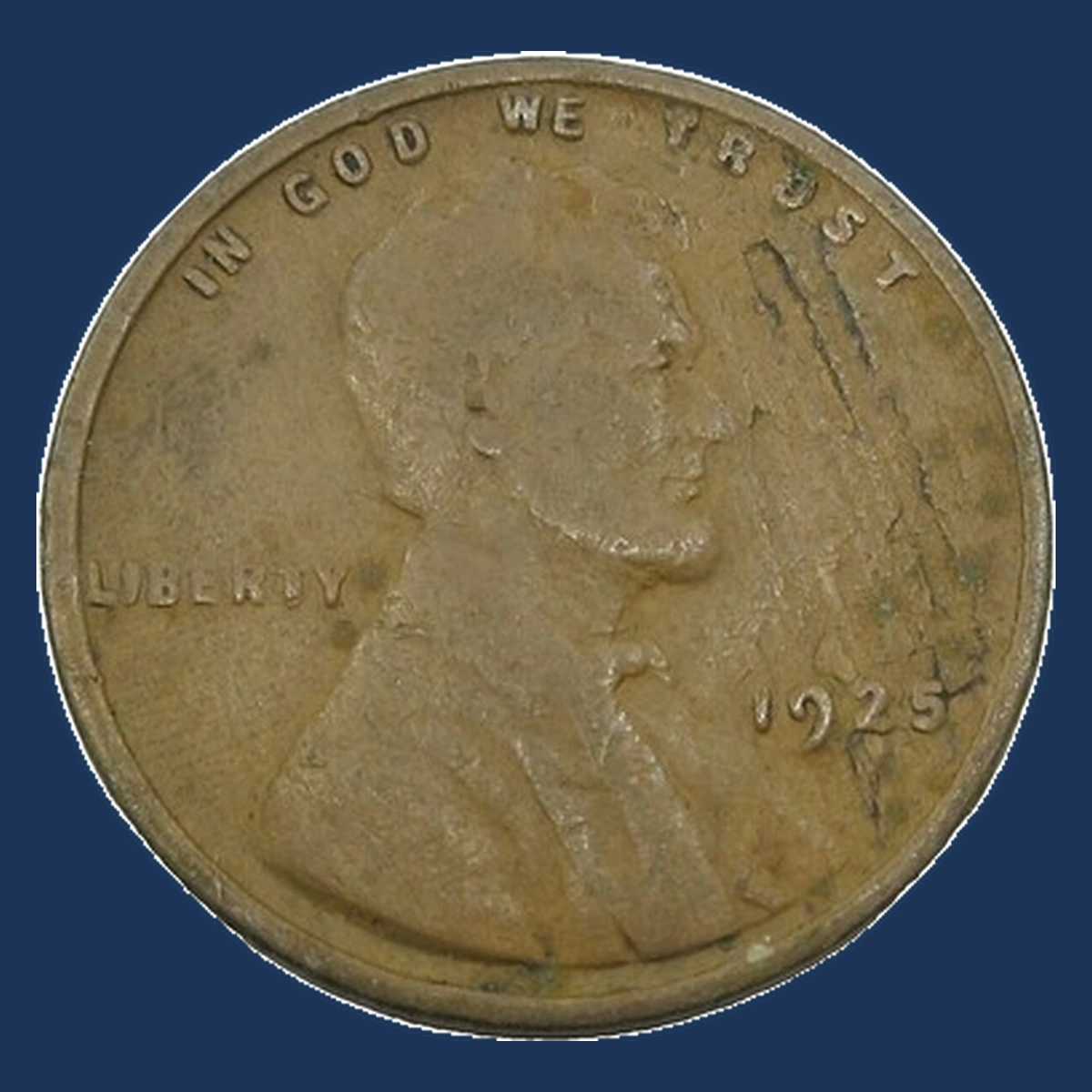
A thin raised line may appear before a larger section of the stamping tool breaks away. Copper enters the opening in the tool and copies its shape onto the coin.
Late examples of the 1925-S FS-501 mintmark variety show growing cracks near the lower portrait, shoulder, or hair. The exact appearance depends on the tool’s stage of wear.
Denver and San Francisco also have larger rim breaks. A cud replaces design with a raised patch, while a retained break may still show design inside its outline.
One Denver sequence also records changing alignment between the two faces.
Estimated Value
Small cracks can fit an estimated $3–$40, while visible retained breaks and rim cuds can range around $40–$750. Size and preservation affect the comparison more than the number of recorded tool stages.
These are estimates rather than sale results for every named break. A coin carrying both a major variety and a crack needs one overall assessment.
The added crack does not create another complete coin price on top of the variety’s value.
How to Identify
For the late FS-501 coin, inspect the lower portrait and shoulder under a 10× magnifier. Follow a raised line rather than a scratch cut into the metal.
Normal cent measurements are 3.11 g and 19.05 mm. Use a scale and calipers on a loose coin to help rule out added metal around an unusually large lump.
Compare a rim break with its own numbered photograph, including any surviving letters inside the outline. Those letters can remain when a broken tool section is still trapped in place.
For the Denver sequence with reported rotation, hold the front upright and turn it top to bottom. The back should reveal the alignment change while the same rim-break outline identifies the tool pair.
7. 1925 Lincoln Wheat Penny Off-Center Strike
On the twenty-percent Denver example, the date and D remain visible but the entire front motto is missing. The wheat stems also extend beyond the metal on the back.
The blank was not fully between the stamping tools when they struck. A different Philadelphia coin is sixty percent off-center toward ten o’clock but keeps a full date.
Another Philadelphia example has a smaller fifteen-percent shift toward one-thirty. A San Francisco coin is recorded at five percent.
These are distinct coins, and the surviving letters depend on each blank’s position rather than the year alone.
Estimated Value
The Philadelphia sixty-percent example graded PCGS AU58 sold for $960 in September 2019. AU58 describes only slight circulation wear.
A separate fifteen-percent Philadelphia coin graded ANACS AU58 brought $159 in January 2022. The difference shows how a more dramatic dated strike can attract stronger interest at a similar wear level.
An estimated $40–$1,500 covers the 1925 off-center group, with surface problems and missing date digits affecting the comparison.
How to Identify
The Denver example retains 1925 and D but loses IN GOD WE TRUST. Begin by finding those surviving details before comparing its larger bare area with another mint’s coin.
A complete cent blank starts near 3.11 g and 19.05 mm. A scale and calipers record the loose coin’s actual weight and outline after striking.
Place photographs of the front and back beside each other. Both designs should have run beyond the blank’s edge, leaving unfinished space elsewhere.
With a 10× magnifier, inspect the border of that space. Grinding leaves disturbed metal rather than the smooth unused surface of an off-center strike.
The San Francisco example has a much smaller shift. Examine both rims closely to find the small area untouched by either stamping tool.
8. 1925 Lincoln Wheat Penny Doubled Die
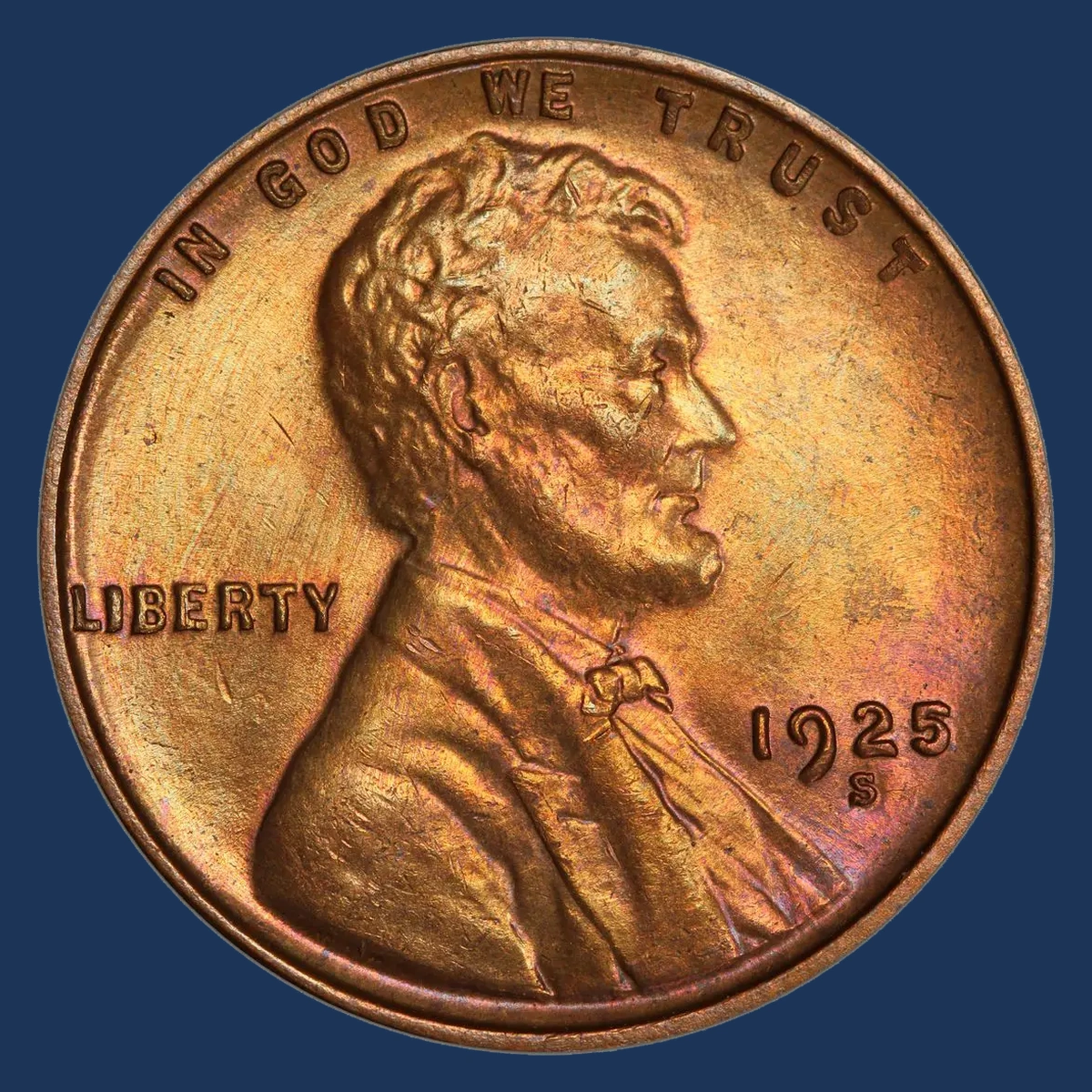
FS-101 on the 1925-S cent is known for thickened date and lettering. The tail of the 9 and WE TRUST are useful places to examine.
This doubled design began in the tool before any coins were struck. It is different from the low, flattened shelf that movement during striking can leave beside a letter.
Philadelphia has separate extra-eyelid varieties and a doubled back. Another San Francisco variety also shows an extra eyelid below the main one.
The eyelid is therefore not the main test for FS-101, even though both types fall within doubled-die collecting.
Estimated Value
Estimate $5–$250 for minor identified eyelid or back varieties, while stronger named FS-101 examples can fit roughly $50–$2,000. The ranges reflect different patterns and conditions rather than every doubled letter receiving the same price.
PCGS lists a $1,150 January 2023 eBay result for an MS63 Red and Brown FS-101, an unworn coin with marks and partly red copper color.
The upper estimates require a convincing variety match and strong preservation.
How to Identify
For San Francisco FS-101, magnify the 9’s tail and WE TRUST at 10×. Compare the thickness with a normal 1925-S penny under the same light.
Philadelphia’s extra-eyelid varieties need a different view: the small line below or beside Lincoln’s eye. Several patterns look similar, so compare the whole eye and nearby marks with the correct photographs.
A loose cent normally weighs 3.11 g and spans 19.05 mm. A scale and calipers check those basics, although weight cannot distinguish one doubled stamping tool from another.
For the Philadelphia doubled back, turn to E PLURIBUS UNUM and the wheat details. The extra thickness must follow that back-side pattern; a front eyelid match alone does not identify it.
9. 1925 Lincoln Wheat Penny Double Strike
A coin can leave the press with two overlapping designs after receiving another blow. Its movement between blows determines where the second portrait and letters appear.
One Philadelphia example has an off-center second strike and an NGC XF40 grade, indicating noticeable wear. The record does not supply the second strike’s exact percentage.
Another example turned between strikes and also has a small clip near eleven o’clock. That coin was graded NGC VG10 for considerable wear.
Its missing edge and rotated designs are two features of the same piece, not evidence of an additional third strike.
Estimated Value
The XF40 coin with an off-center second strike sold for $360 in May 2018. The more worn rotated double strike with a small clip brought $188 in May 2015.
An estimated $150–$2,500 allows for differing overlap, surface quality, and preservation in 1925 double strikes. Those two actual sales concern circulated examples.
For the coin with a clip, compare the complete combination rather than adding a separate full clipped-coin value.
How to Identify
Map the two date or letter groups before estimating a second strike’s position. A coherent second design should fit the way the coin moved between blows.
Use a 10× magnifier to inspect where one impression crosses the other. A flat shelf beside a single letter cannot explain widely displaced groups of design.
On the rotated example, also photograph the small gap near eleven o’clock. The clip is not a third impression.
A scale and calipers can compare a loose coin with 3.11 g and 19.05 mm, allowing for missing metal and reshaping. Follow several overlapping letters to see whether they agree with the movement shown by the second portrait.
10. 1925 Lincoln Wheat Penny Repunched Mintmark
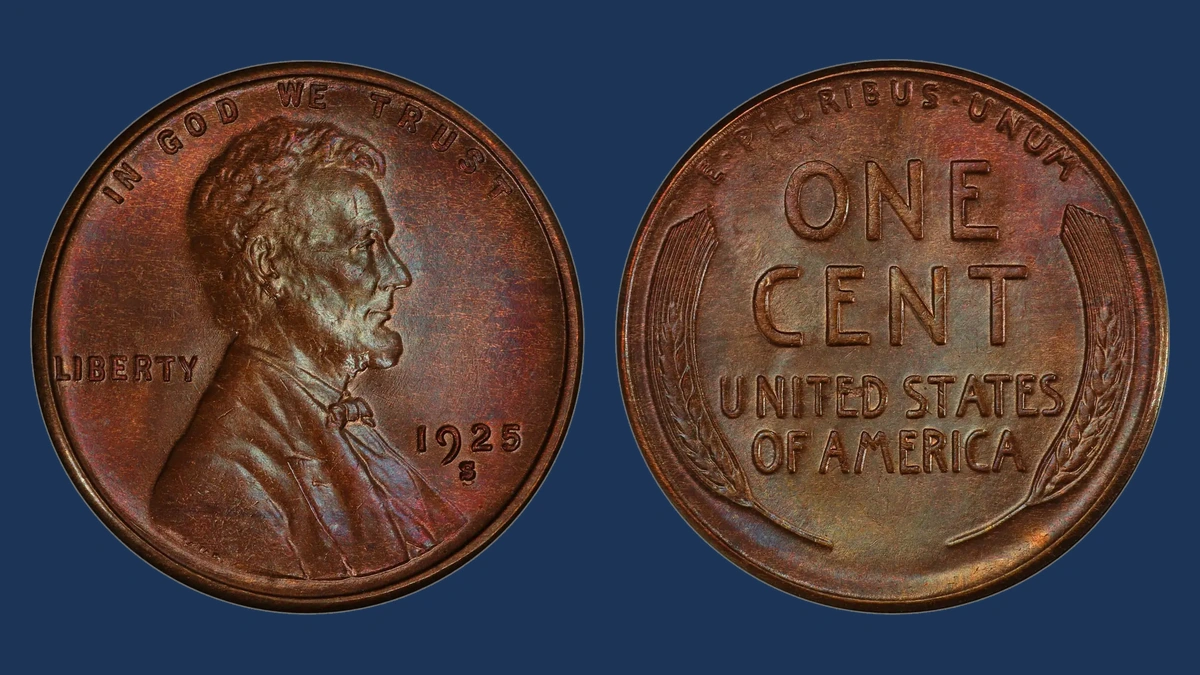
An extra S below the main S identifies the direction of the familiar FS-501 repunch. The hand punch shifted while a worker added the mintmark to the stamping tool.
Early coins can show clear separation, while tool wear can soften the extra stroke later. Denver’s listed repunched D varieties also have earlier impressions toward the bottom.
Other San Francisco patterns point sideways or show rotated impressions. One listed triple-S pattern also carries doubled date and lettering.
The mintmark and the wider doubled design require separate comparisons, even when the same coin shows both.
Estimated Value
A PCGS MS64 Red FS-501 sold for $1,920 at Stack’s Bowers in March 2018. The grade describes an unworn coin with some marks and original red copper color.
Use an estimated $5–$3,000 across the mintmark group, placing modest worn patterns below exceptional examples of named varieties. This range is not a prediction for every small extra stroke.
Tool wear can hide part of the repunch, making an accurate comparison especially important.
How to Identify
For FS-501, examine below the S through a 10× magnifier and compare early and later tool-stage photographs. A weak extra stroke can reflect tool wear rather than a different mintmark variety.
The two Denver southward repunchings need more than the direction to distinguish them. Compare the D’s position relative to the date and its smaller surrounding marks.
A scale and calipers check 3.11 g and 19.05 mm on an ordinary loose cent, but they do not identify a punch pattern. On the combined San Francisco triple-S and doubled-design variety, inspect both features separately before applying either name to the coin.
11. 1925 Lincoln Wheat Penny Struck on a Silver Dime Blank
Lincoln’s portrait can appear on a smaller silver blank intended for a dime. The reduced space leaves less room for the cent’s outer lettering and rim.
A Philadelphia example has an ANACS VF20 Details description noting scratches and other damage. A San Francisco example has a PCGS AU Details description noting polishing.
Those later surface problems do not change which blank received the cent design. They do matter when judging condition and price.
A normal 1925 dime blank contains 90 percent silver and ten percent copper, unlike the bronze used for ordinary cents.
Estimated Value
The scratched, damaged Philadelphia VF20 Details coin sold for $1,092.50 in February 2007. A separate Philadelphia silver-blank coin with PCGS VF Details and damage brought $1,080 in September 2024.
Estimate $800–$6,000 for authenticated 1925 dime-blank cents across different conditions and mints. The upper part requires a stronger comparison than a heavily impaired worn example.
Neither Philadelphia sale establishes the price of the polished San Francisco coin.
How to Identify
Start with size and weight. A dime blank’s standards are 2.50 g and 17.91 mm, compared with a cent’s 3.11 g and 19.05 mm.
Use a precise scale and calipers on a loose coin. The cent strike can spread a small blank beyond its original diameter.
Inspect the edge with a 10× magnifier for plating or filing. A coated copper penny can look silver without containing a dime blank.
Professional non-destructive testing can check for ninety percent silver. This helps separate a genuine dime blank from a bronze cent with a silver-colored surface.
Photograph the full date and any surviving mintmark before comparing prices. On these documented examples, also check the scratches or polished surface against the coin’s condition description.
Conclusion
A 1925 penny can carry a tiny extra S, a large missing design area, or even the wrong metal. Estimated values range from $3 for modest tool or blockage features to about $6,000 for stronger silver-blank examples.
Match the coin to its specific photographs before comparing prices. Keep surface damage separate from the original error, and value combinations as one coin.
Leave attached flakes undisturbed and use measurements to support what the design shows.