1873 Penny Error List with Pictures

Look at the 3 before pricing an 1873 penny’s doubled letters. Its tips can sit close together or farther apart, and the strongest Double LIBERTY comparison belongs to the Closed 3.
One such coin sold for $42,000 in March 2025. This 1873 Indian Head penny error list spans estimated values of $15–$50,000, including small tool flaws, displaced strikes, and separate Proof collector coins.
Check the date style and finish as you follow each feature below.
1. 1873 Indian Head Penny Struck Through Material (Estimated Up to $750)
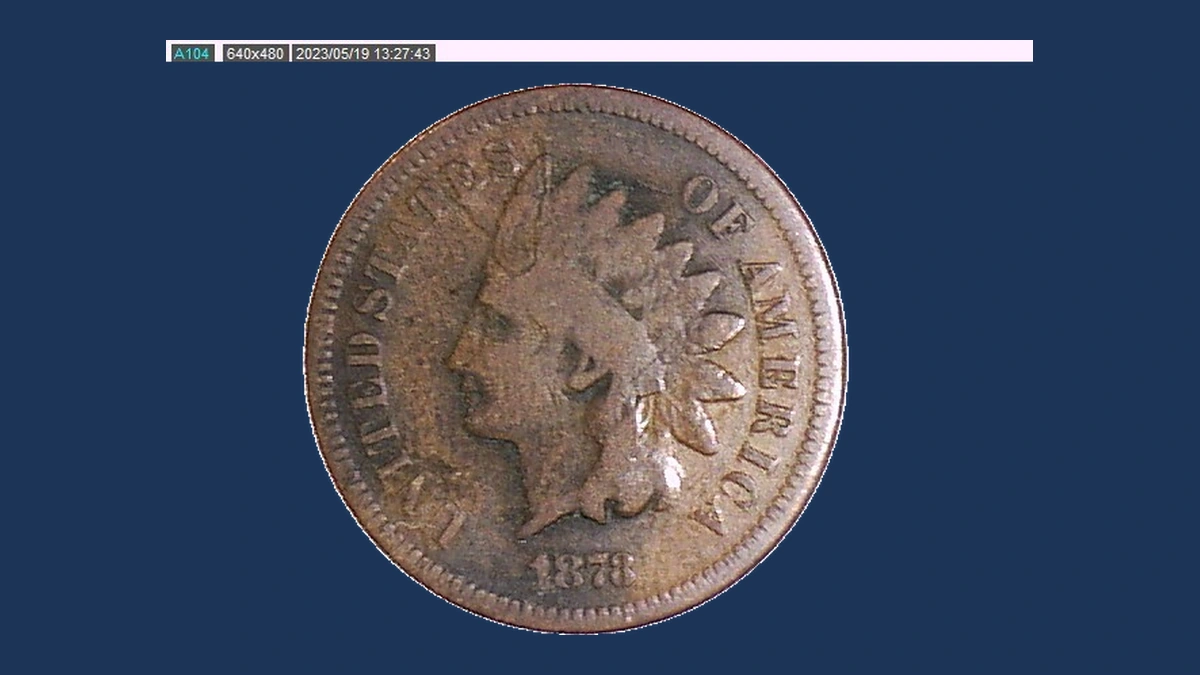
An area of design can disappear when material blocks contact between the blank and the stamping tool. Other areas may remain clear because they received the normal pressure.
The catalog reports this effect among both Open 3 and Closed 3 coins. It does not identify one material or a fixed location for every example.
This is a struck-through error. It differs from polishing away shallow design in the tool before the penny was made.
The boundary around the missing detail helps distinguish the causes. Wear or a later blow can also weaken design without involving an obstruction in the press.
Estimated Value
A struck-through example can be estimated at $25–$750, depending on the affected area and remaining condition. The range includes the value of the 1873 coin itself.
A later 1920 bronze cent struck through a metal fragment sold for $134 in March 2025. That known-object example offers context, but it does not identify the material on an 1873 penny.
This is an estimated range rather than an 1873 transaction. A worn patch with no evidence of interrupted striking needs another explanation.
How to Identify
Find where clear detail enters the affected area and follow it under a magnifier. Note whether the design becomes faint, stops, or appears crushed after it had already formed.
Photograph any attached material without lifting or cleaning it. The surface where it meets the design may contain the evidence needed to explain the obstruction.
Check the plain edge for a corresponding impact. For a loose coin, use a scale and calipers to compare 3.11 grams and about 19 millimeters with the normal bronze cent.
Then identify the date’s Open or Closed 3. Keep the suspected blocked area separate from the feather-base and eye-socket loss documented on a particular Proof tool.
2. 1873 Indian Head Penny Die Cracks, Chips, and Retained Cuds (Estimated Up to $1,500)
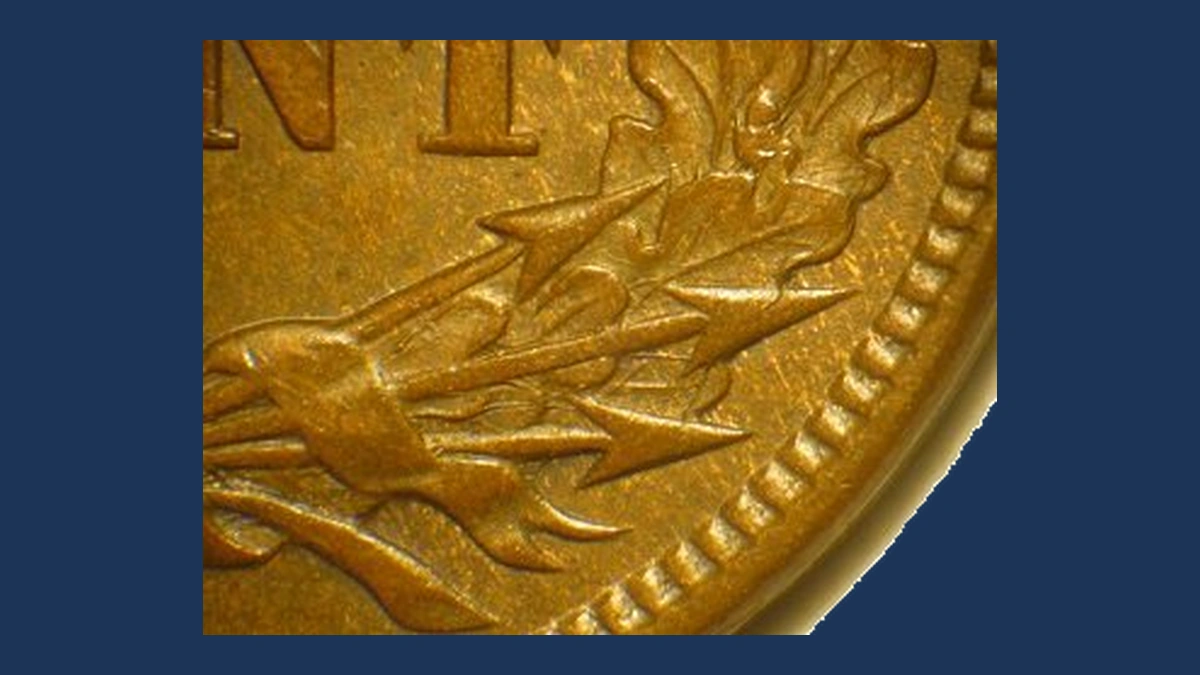
A small raised patch between the eye and hair marks the temple chip on an Open 3 variety. A piece of its steel stamping tool, called a die, had broken away.
Other 1873 examples have thin raised cracks or larger shifted sections along the back rim. A retained cud means a broken tool section stayed in place, sometimes preserving design within a step.
One Closed 3 retained break spans about 6 to 7:45 on the back. Open 3 examples have different locations.
These marks show varying amounts of tool damage. A thin crack does not automatically prove a section moved.
Estimated Value
Estimate $15–$150 for modest chips or cracks and around $75–$1,500 for stronger retained rim breaks. These ranges cover complete coins in different states of preservation.
A 1946-S Lincoln cent cud brought $288 in March 2021. That later bronze example lost a tool piece, unlike the retained sections described here.
Use the sale as broad context, not an exact retained-break price. The date style, original surface, and surviving design inside the affected area determine which example makes a useful comparison.
How to Identify
Check the plain edge beside a raised patch before tracing its outline. Folded metal or a later addition can look like a tool break from above.
For a loose coin, compare scale and caliper readings with 3.11 grams and about 19 millimeters.
For the Open 3 temple chip, enlarge the area between the eye and hair. Its interior position differs from a rim-connected break.
At a suspected retained cud, use a magnifier to look for design surviving inside a stepped section. Match the correct date style: the Closed 3 lower-back example should not supply the position for an Open 3 coin.
A narrow line through the shield or wreath calls for its own path comparison. A cut-in groove indicates a scratch rather than an original raised crack.
3. 1873 Indian Head Penny Repunched Date (Estimated Up to $1,500)
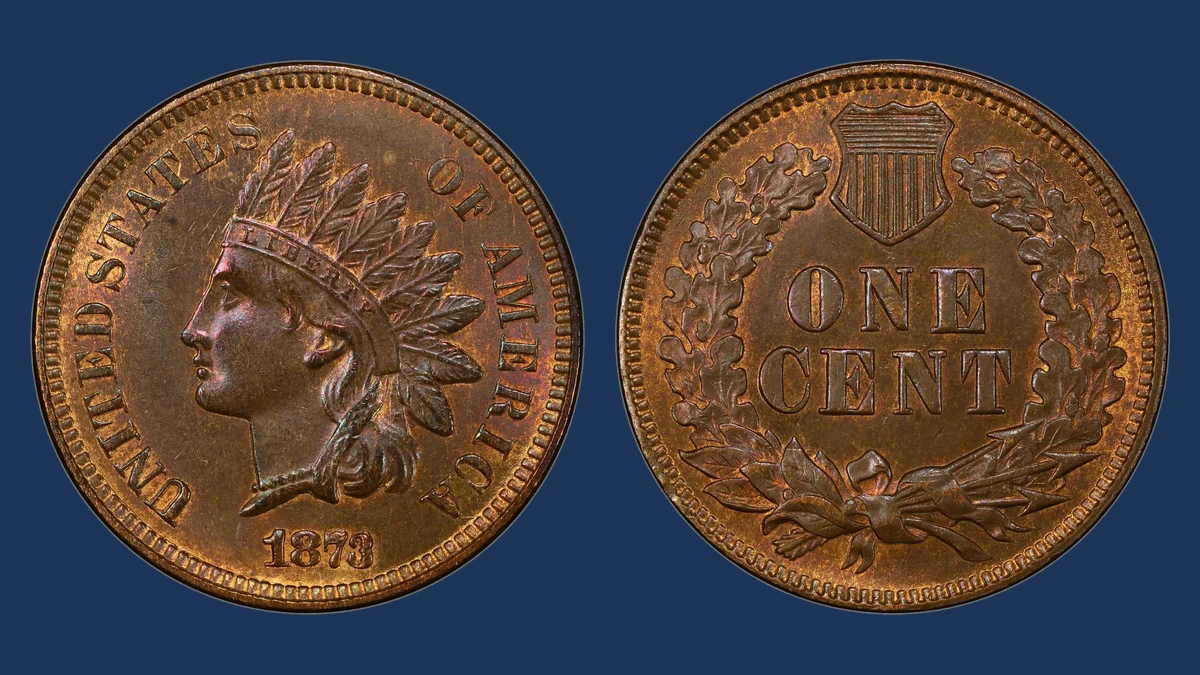
An extra raised stroke below 1 or above 73 can preserve a date-punch position. The date was punched again into the tool, leaving part of the first impression.
The documented 1873 repunched-date examples belong to the Open 3 coinage. Another listed pattern has a remnant to the right of 3 instead.
Those directions describe different tools. They should not be joined into a single date that must show every listed remnant.
One strike from such a tool can produce the repeated numerals. A second portrait is unnecessary, while a dent or flat shelf beside the date may have another cause.
Estimated Value
For an Open 3 repunched date, estimate $25–$1,500 according to its visible remnants and the coin’s condition. Worn traces generally require a more modest comparison.
An 1889 repunched-date cent graded MS64 has a recorded $405 eBay result from May 2015. It is an unworn coin of another date, not a transaction for the 1873 pattern.
Keep its price attached to that identity. An unidentified corner beside 3 does not become the same collectible variety merely because it looks doubled.
How to Identify
Read the shape of 3 before mapping any extra stroke. On an Open 3 coin, compare the space between its tips with a normal example, then keep the date upright under a 10× magnifier.
Use one matching variety photograph at a time. Trace the pattern below 1 and above 73 separately from the variety with a remnant to the right of 3.
Inspect the plain edge and date for alteration, and compare a loose coin’s weight and width against 3.11 grams and about 19 millimeters. A shallow shelf that narrows a digit may have formed during striking instead.
The extra strokes should rise above the surface and connect as the photograph shows. An unrelated doubled portrait is not needed to establish a date-punch match.
4. 1873 Indian Head Penny Misplaced Date (Estimated Up to $2,000)
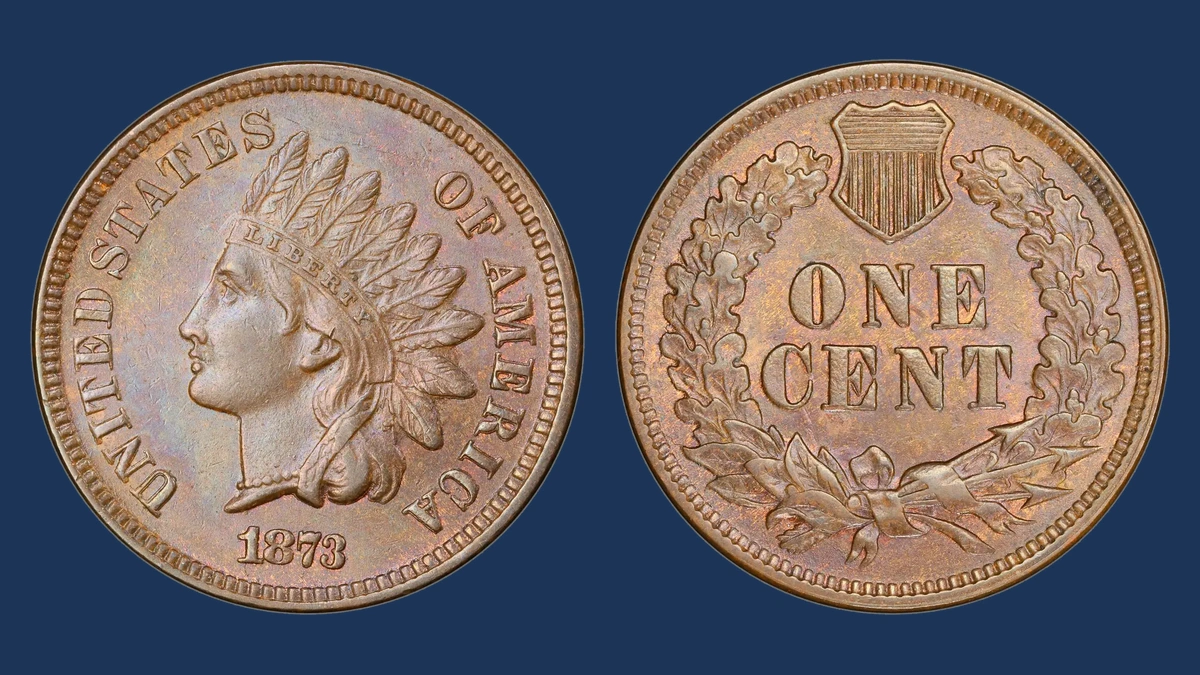
A date-punch fragment can appear above the border teeth beneath 7, in the wrong position. The tool received part of a numeral where the normal date should not have been punched.
This misplaced-date example belongs to the 1873 Open 3 coinage. The catalog does not name the digit represented by the fragment.
A separate suggestion identifies a possible 1 at the portrait’s lower edge. That possibility should not be promoted into the same confirmed location.
The raised fragment is what must be compared. A tooth corner or cut-in scratch can resemble a number without having come from the date punch.
Estimated Value
Use an estimated $30–$2,000 for a matched Open 3 misplaced-date example, with preservation and the clarity of its extra fragment guiding value. This is a whole-coin range, not a sale assigned to the possible portrait-edge mark.
A 1908 Indian cent misplaced date in MS65 Red and Brown has a recorded $1,187 eBay result from 2021. That unworn coin provides comparison context.
The amount does not confirm a suggested 1873 digit. Identify the actual raised fragment before applying a variety premium.
How to Identify
Inspect the plain edge and suspect area for added metal or cutting before tracing an extra number. For a loose coin, a scale and calipers can check the ordinary bronze-cent standards of 3.11 grams and about 19 millimeters.
Now place a normal Open 3 date beside the enlarged border below 7. Follow the raised fragment with a magnifier without completing it into a digit that the catalog does not name.
If the mark is at the portrait’s lower edge, set aside the below-7 photograph and use the separate possible-1 comparison. A damaged tooth corner or a convenient scratch cannot connect these different locations, even when both resemble part of a date.
5. 1873 Indian Head Penny Off-Center Strike (Estimated Up to $3,000)
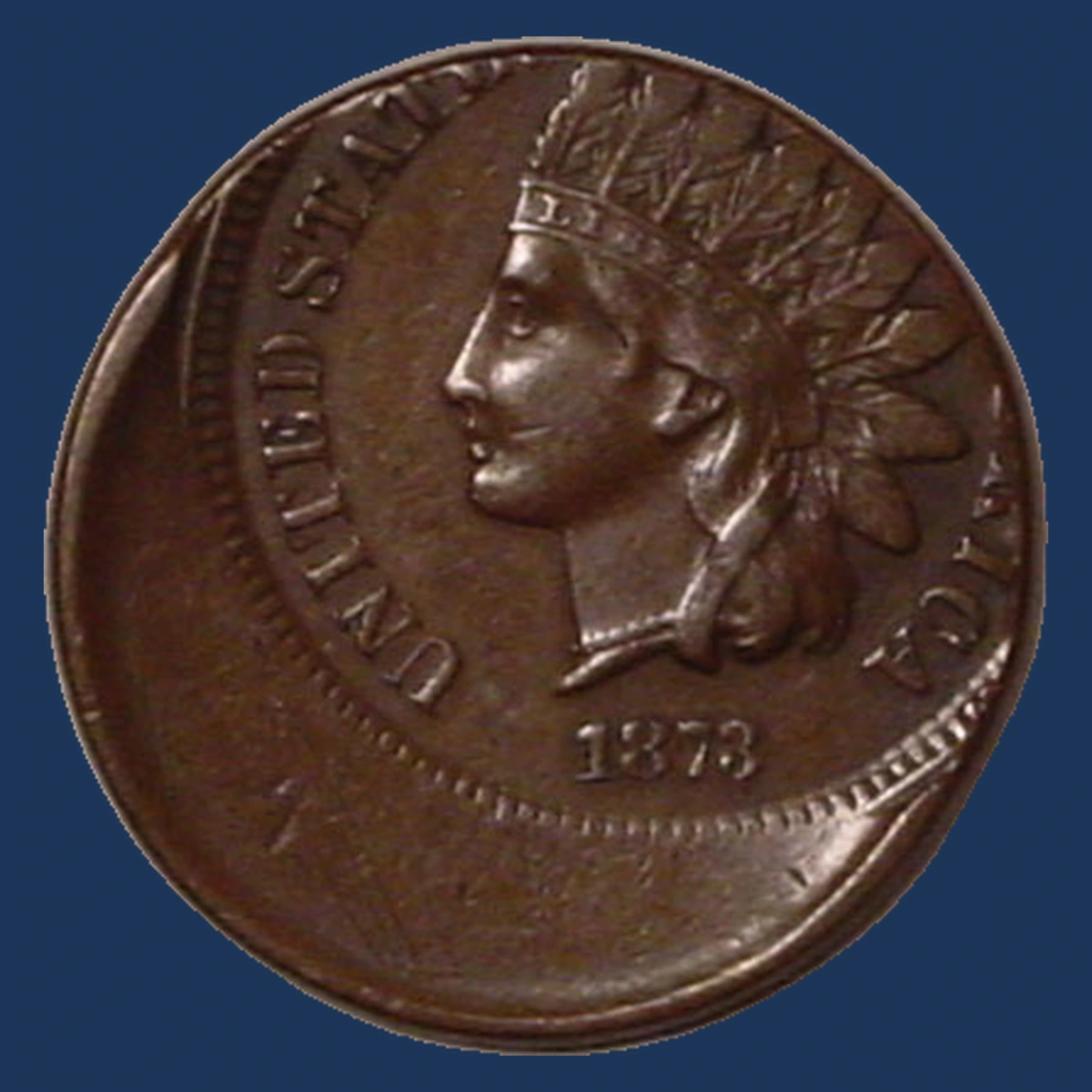
A blank placed incorrectly in the press leaves an unused crescent opposite its shifted design. The 1873 examples include both date styles, with different positions and amounts of displacement.
A Closed 3 coin graded NGC AU55 Brown is described as 25% off center toward 1 o’clock. AU55 means light circulation wear.
An Open 3 example graded NGC VF35 Brown is 20% off center toward 11 o’clock. A separate Open 3 coin graded XF45 Brown has a 45% displacement.
Those are three coins, not interchangeable measurements. The surviving date, portrait, and blank area need to agree within each example.
Estimated Value
Estimate $150–$3,000 for dated examples, comparing their date style, amount of displacement, and remaining condition. The illustrated grades do not supply a single shared sale price.
A 10% off-center 1897 Indian cent in AU58 sold for $280.60 in March 2026. That very lightly worn coin offers a later-year comparison with a smaller shift.
Greater displacement does not guarantee a higher price. A readable 1873 date and sound original surfaces can be more useful than a larger empty crescent with damage.
How to Identify
Weigh a loose coin against 3.11 grams and use calipers to record the outline beside a normal 19-millimeter cent. Missing design does not necessarily mean missing metal.
Inspect the plain edge for cutting or filing before mapping the blank crescent.
Photograph both faces straight on and mark where each design stops. Those boundaries should fit one displaced blank, rather than a shift confined to the front tool.
Use a magnifier to read the date style and match the surviving digits. The Closed 3 25% example and Open 3 20% or 45% coins have separate photographs.
Keep each coin’s direction and percentage together. Do not reconstruct an unreadable date from the identity of a better-preserved comparison.
6. 1873 Indian Head Penny Clipped Blank (Estimated Up to $5,000)
A missing section can begin when the blank is cut from a place where some metal is absent. The incomplete blank then receives its design around that gap.
One ordinary 1873 listing describes a 5% curved clip near 8 o’clock. Its heavily worn condition belongs to that particular example.
A separate Closed 3 clipped coin appeared at GreatCollections graded PCGS Proof62 Red. Proofs are collector coins made with special preparation, and this grade allows visible surface imperfections.
The Proof listing does not establish the same gap position or shape as the ordinary coin. The two must remain separate image comparisons.
Estimated Value
The ordinary 5% curved clip appeared with a $32 minimum bid in an older dealer auction listing. That was an opening amount, not a verified selling price.
Estimate $30–$600 for ordinary clips and $500–$5,000 for suitable Proof examples. The PCGS Proof62 Red listing establishes a separate collector coin, without a realized price used here.
Compare the actual edge, condition, and finish. The small opening bid on a worn ordinary cent cannot determine the value of the Proof clip.
How to Identify
Confirm ordinary or Proof manufacture before selecting a gap photograph. Keep a certified Proof sealed; its recorded measurements and images can be used without opening the holder.
For a loose coin, weigh against 3.11 grams and record the outline with calipers beside the normal 19-millimeter size. Lost blank metal can reduce weight, but a later cut can do that too.
Inspect the exposed gap and plain edge under a magnifier for filing or an edge formed before striking. Check the opposite rim for weakness as supporting evidence where appropriate.
Only the ordinary example supplies a 5% curved gap near 8 o’clock. Let the Proof’s own photographs establish its shape and location instead of copying those details across.
7. 1873 Indian Head Penny Overpolished Proof Die (Estimated Up to $5,000)
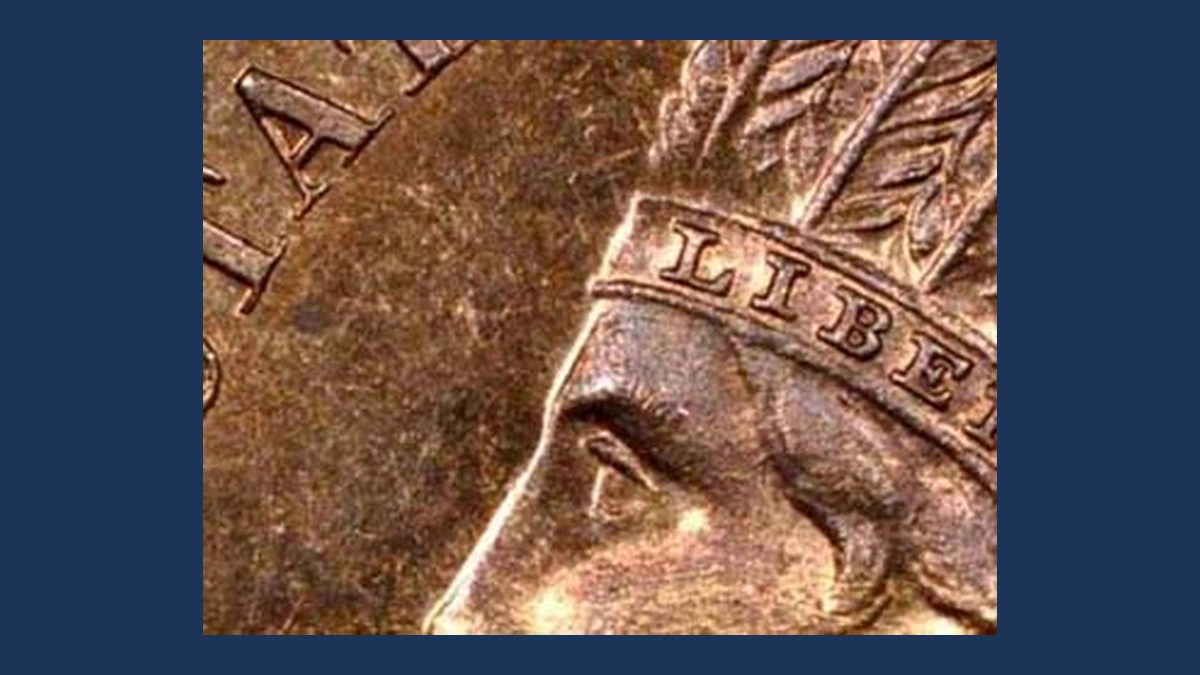
Missing detail at the first feather’s base and in the eye socket can have the same cause. Excess polishing removed shallow design parts from a Closed 3 Proof tool.
Later coins could not receive details that were no longer present there. This differs from an object briefly covering the blank during striking.
The pattern belongs to a specific Proof variety. A worn ordinary coin should not be assigned to it simply because its eye area looks weak.
Polishing the finished penny is also different. That treatment can leave lines across a completed design rather than remove detail before it forms.
Estimated Value
Estimate $300–$5,000 for Closed 3 Proofs with the matching missing-detail pattern. The range includes the Proof’s condition and color rather than assigning a separate fee to each weak area.
An exceptional 1901 repunched-date Proof sold for $8,700 in August 2019. That different-year, different-variety sale illustrates how preservation can dominate Proof value, not a price for an 1873 polished tool.
The estimate requires the correct Proof identity. A polished circulation coin or general wear around the eye calls for another comparison.
How to Identify
Confirm the Closed 3 date and Proof identity before interpreting a weak eye. If the penny remains sealed, use its recorded measurements; for a loose coin, use a scale and calipers to check 3.11 grams and about 19 millimeters.
Inspect the plain edge and portrait for later treatment, then place a normal Proof photograph beside the suspect coin. Under a magnifier, compare the first feather’s base and eye socket with neighboring details that remain clear.
General wear across the portrait does not reproduce this specific tool pattern. If cut-in polishing scratches cross already formed feather detail, treatment of the finished coin explains something different from shallow details removed from the tool before striking.
8. 1873 Indian Head Penny Doubled Dies and Double LIBERTY (Estimated Up to $50,000)
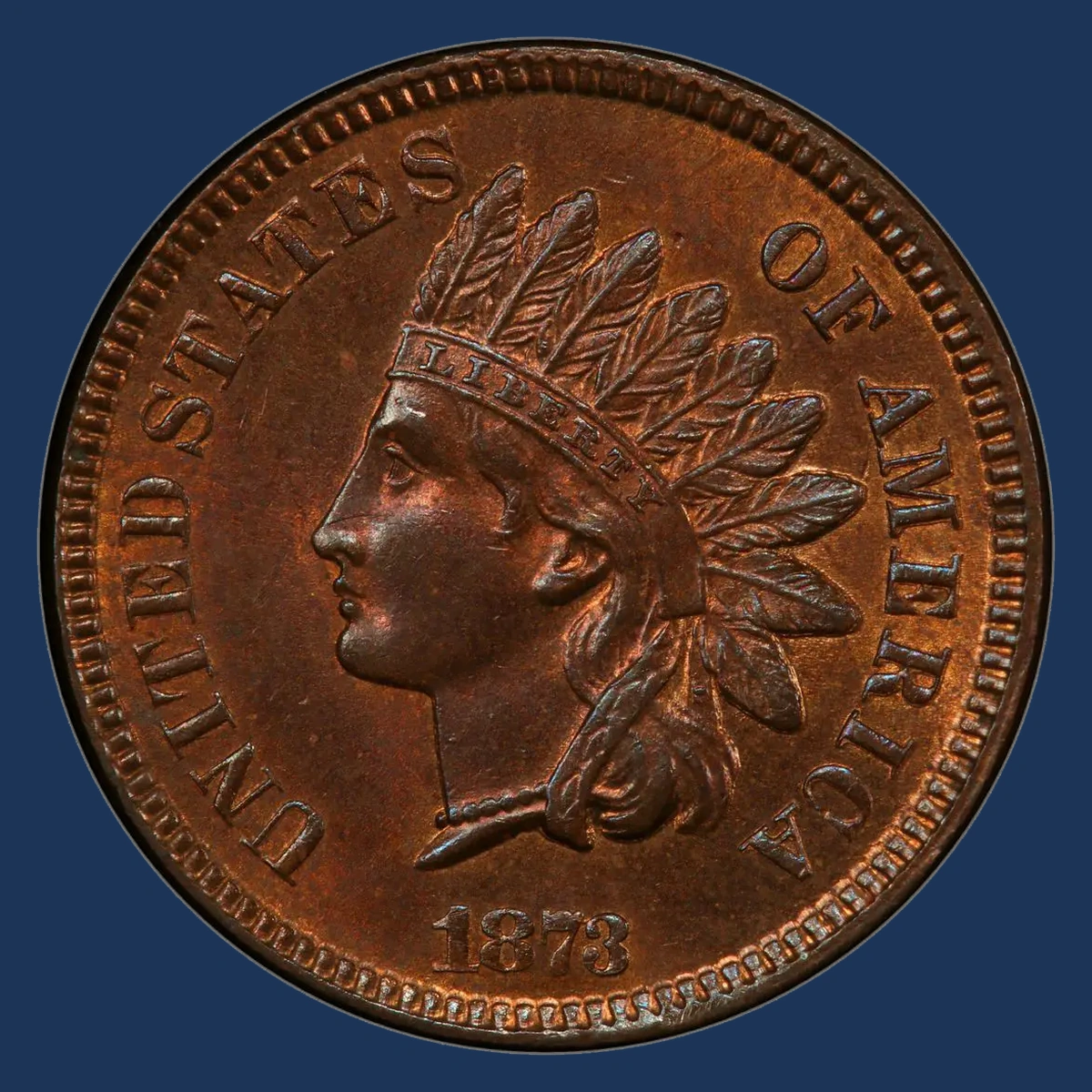
A second raised edge in the headband lettering can originate in the tool itself. A normal strike then copies that repeated design onto the coin.
The major Closed 3 Double LIBERTY variety has pronounced repeated lettering. Other Closed 3 descriptions include IBERTY, while an Open 3 pattern focuses on L.
They belong to the doubled-die mechanism, meaning a stamping tool already carried doubled detail. Their strength and market values are not interchangeable.
A faint shelf beside one letter should not receive the identity of the strongest variety. Both the date’s 3 and the pattern of affected letters need to match.
Estimated Value
A Closed 3 FS-101 example graded MS65 Red and Brown sold for $42,000 in March 2025, recorded by PCGS. It was a well-preserved unworn coin retaining some original red color.
Estimate $200–$50,000 for the major Double LIBERTY variety across wide condition differences. Smaller documented patterns can fit roughly $25–$1,000 instead.
The large sale should remain attached to its strong Closed 3 pattern and grade. An Open 3 L-only feature is not the same price comparison.
How to Identify
Check whether the apparent extra letter edge is a low flat shelf that makes the original letter narrower. Under a 10× magnifier, that appearance may point to movement during striking rather than doubled detail in the tool.
Read the date’s 3 next. Closely spaced tips select a Closed 3 comparison; a wider opening selects Open 3.
Inspect the plain edge for alteration and compare a loose coin’s scale and caliper readings with 3.11 grams and about 19 millimeters.
Then map the repeated headband letters against the selected variety photograph. Strong Double LIBERTY needs agreement across the pattern, while an Open 3 L-only feature must stay with its own comparison and price.
Conclusion
The estimated $15–$50,000 range includes modest tool marks and exceptional examples of the major Closed 3 Double LIBERTY variety. Its $42,000 auction result does not price every faintly doubled letter.
Keep Open 3 and Closed 3 comparisons distinct. A Proof clip also needs its own photograph, while the small temple chip, back cracks, and retained rim breaks represent different amounts of damage to stamping tools.