1854 Cent Error List with Pictures

A small metal flaw can appear on a very valuable 1854 large cent. One Proof comparison sold for $28,200 in June 2014, a price driven chiefly by its rare collector finish and preservation.
This 1854 Braided Hair cent error list separates that kind of coin from ordinary cents with peeling metal, tilted designs, or misplaced strikes. Estimated whole-coin values range from $20–$45,000.
Read the feature checks below before comparing prices: a shifted front, a rotated back, and a half-off-center strike have different causes.
1. 1854 Braided Hair Cent Clashed Dies — Estimated Up to $500
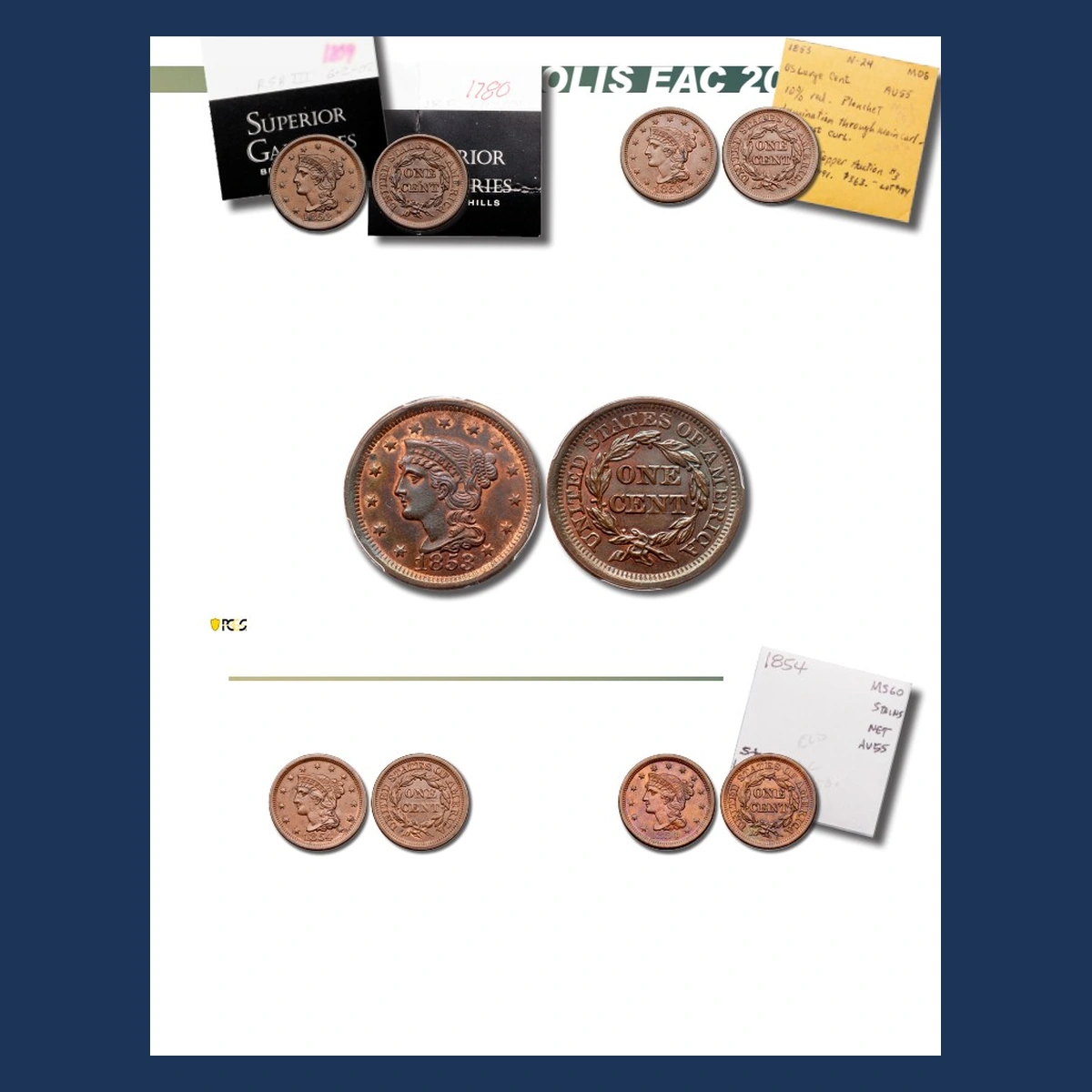
An unexpected outline can appear beside the normal portrait or wreath. If it follows part of the opposite design, it may be a die clash.
Dies are the steel tools that stamp coins. When they hit without a metal disc between them, contact can leave marks that later coins copy.
An 1854 N-18 example was cataloged with clashes on both faces. That does not make every low spot or line a clash; the extra shape must actually connect with the design normally found on the other side.
Estimated Value
Estimate $20–$500 for circulated through attractive examples with identifiable clash marks. Many faint clashes add only a modest amount to the cent’s ordinary collector value.
An 1854 off-center cent sold for $1,527.50 in 2016, but its dramatic missing design puts it in a different price class. A clash should be valued for the recognizable transferred shape and overall preservation, without borrowing that larger striking error’s premium.
How to Identify
Place clear photographs of the front and back beside each other. Look for an odd curve that could belong to the portrait or wreath on the opposite face.
Use a 10× magnifier to follow enough of the shape to recognize it. A random straight line, a scrape, or an isolated low spot does not establish transferred design.
Use a scale to compare a loose coin with 10.89 grams and use calipers to compare its diameter with 27.5 mm. Inspect the plain edge for alteration or attached metal.
The N-18 example has marks on both faces, so compare both rather than relying on one patch. Trace the unusual outline into a recognizable part of the opposite design.
2. 1854 Braided Hair Cent Misaligned Front Die — Estimated Up to $600
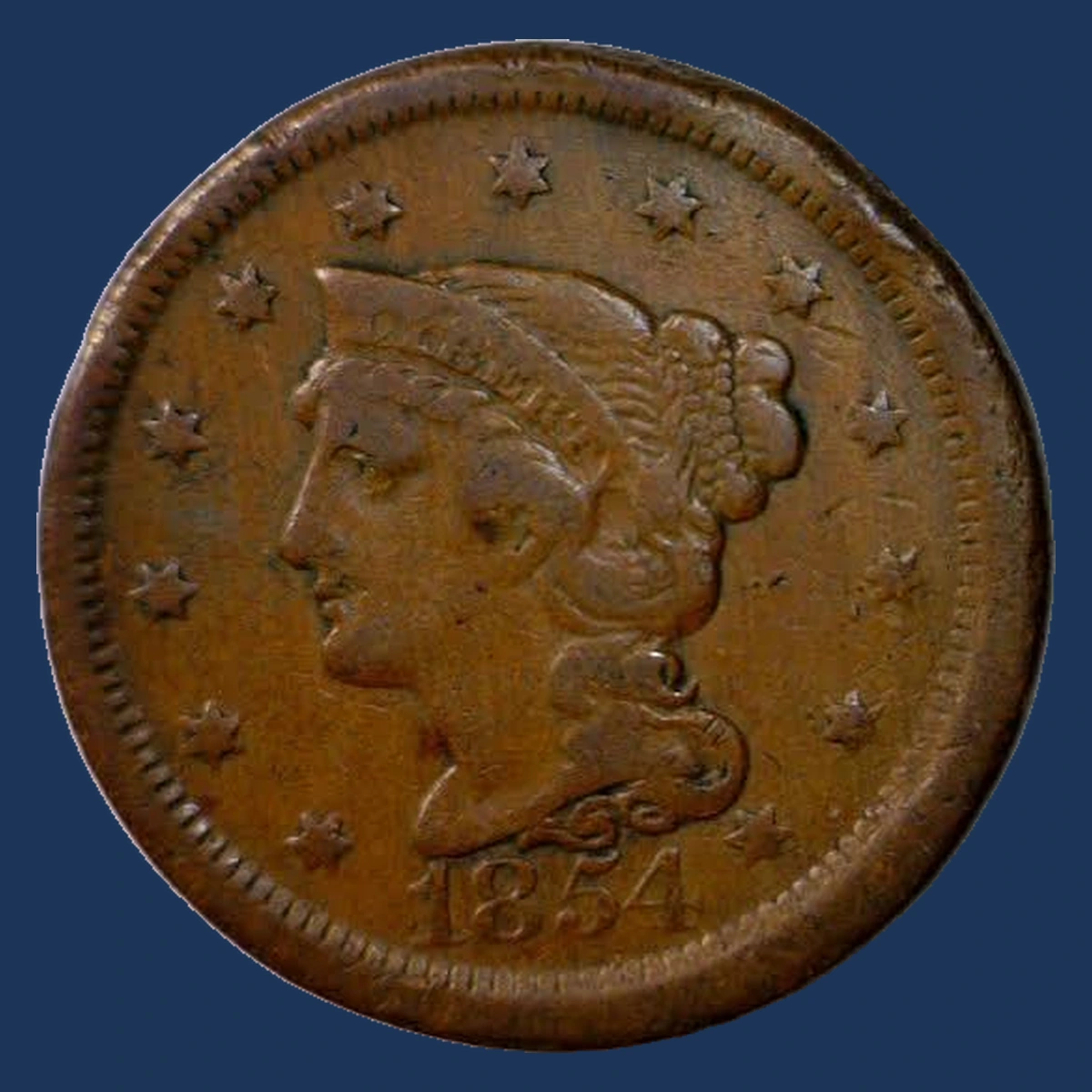
The front design sits off to one side while the back remains centered. This happens when one stamping tool moves sideways from its proper position.
An 1854 auction example has its front shifted toward one-thirty. A separate collector’s N-8 cent was also reported with a small front misalignment.
The distinction depends on both faces. An uneven front rim by itself cannot show whether the entire disc was misplaced or only one tool shifted, and a slight difference in border width is not automatically a valuable error.
Estimated Value
A minor one-sided shift may leave the cent close to ordinary value. Use an estimated $25–$600 for collectible examples, with a clear shift and strong surfaces supporting more interest.
The same-year two-sided off-center cent sold for $1,527.50 in 2016. That comparison illustrates why the amount and cause of displacement matter: a modest front-tool misalignment should not receive the price of a coin struck with half its design outside the disc.
How to Identify
Put the front and back photographs at the same scale. Compare the distance from the outer design to the edge all around each face.
If only the front shifts, examine that border under a 10× magnifier for filing or a pushed-in rim. The back must support the one-tool explanation.
Use calipers to check about 27.5 mm across intact parts of the coin. A scale compares the copper cent with its normal 10.89 grams.
Inspect the plain edge wherever the front border is narrowest.
On the auction example, compare the front shift toward one-thirty with the centered back; that difference between faces identifies the misalignment more directly than rim width alone.
3. 1854 Braided Hair Cent Rotated Dies — Estimated Up to $700
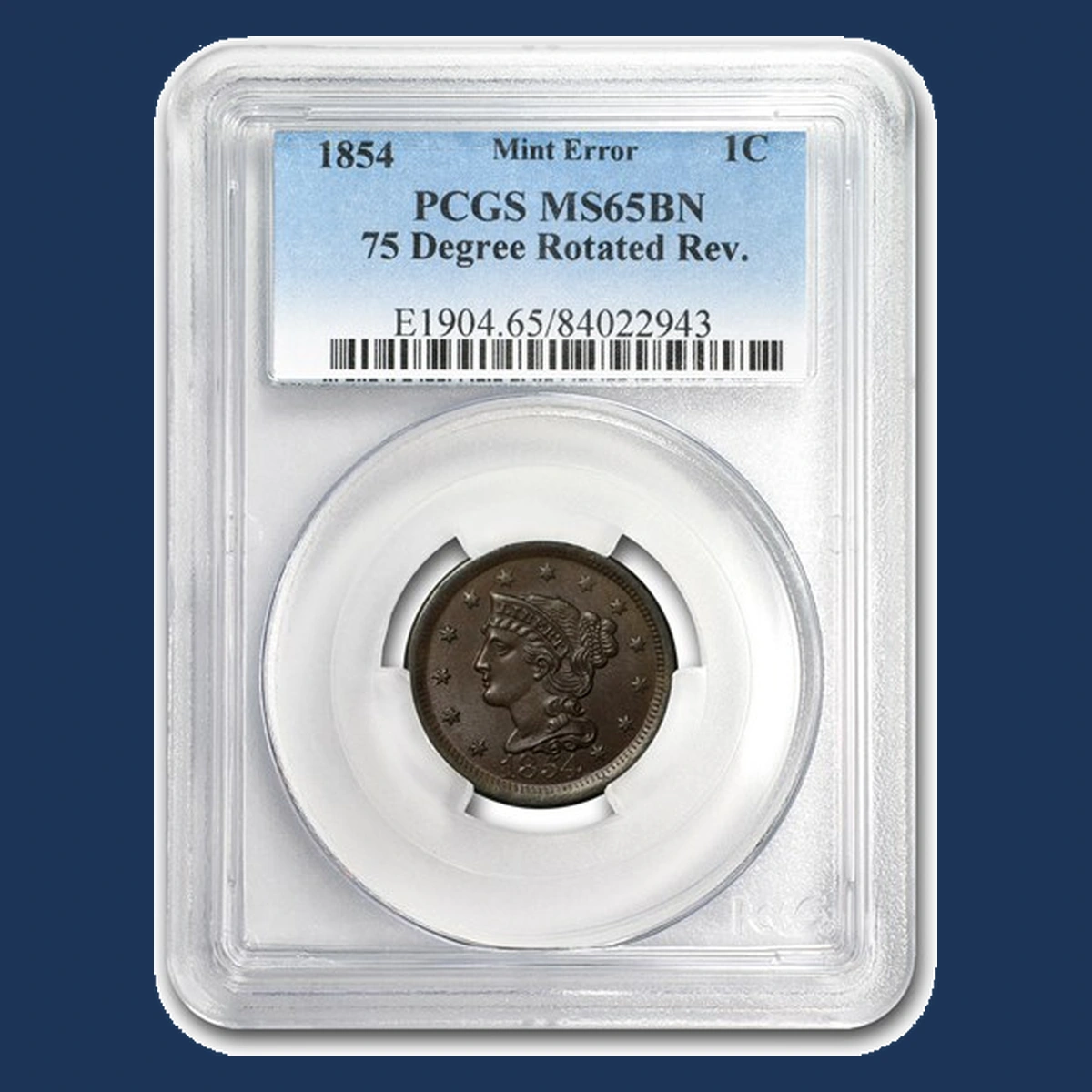
ONE CENT may appear tilted after an upright portrait is flipped from top to bottom. A collector reported an 1854 large cent with a back turned about 110 degrees counterclockwise.
The angle described that particular coin and was a preliminary measurement. It is not a standard position for all 1854 cents.
A stamping tool can turn in the press, changing the relationship between the two designs without shifting either one sideways. Both faces may remain well centered, making the controlled flip more useful than the border width.
Estimated Value
An estimated $30–$700 allows for condition and a clearly demonstrated large rotation. Stack’s Bowers explained that such nineteenth-century rotations generally bring a modest premium rather than an automatic windfall.
For a recent copper-nickel small-cent comparison, an 1858 Flying Eagle with rotated dies sold for $154 in June 2026 in the well-worn Fine 12 grade. The larger 1854 copper cent has a different base value, so its own preservation and measured angle still control the estimate.
How to Identify
A sideways flip can give a misleading result, so first practice a top-to-bottom flip with a normal United States coin. Then secure the 1854 cent with its date level and repeat that motion without twisting it.
Measure the back’s angle from an upright line and repeat the test. The reported 110-degree counterclockwise figure should be checked on the actual coin rather than assumed from separate pictures.
Use a 10× magnifier to inspect the plain edge for a join; a scale and calipers compare normal weight and size with 10.89 grams and 27.5 mm. Keep the front fixed and repeat the same flip to see whether the back returns to one consistent tilted position.
4. 1854 Braided Hair Cent Lamination — Estimated Up to $800
A patch can peel away from the back when the original copper contains a weak layer. The opening may look rough, and part of the layer can remain attached.
This separation is called lamination. A collector’s 1854 N-8 cent was reported with a large back lamination, rather than an entire coin splitting into two discs.
The boundary matters more than the patch’s color. Dirt, corrosion, and cleaning can change the surface without producing an original separating layer, while a later gouge can remove metal after the design was already complete.
Estimated Value
For a clear lamination on a collectible ordinary cent, estimate $25–$800. A broad visible layer boundary can interest error collectors, but extensive missing design or damaged surfaces may reduce that interest.
A smaller 1857 Flying Eagle cent with a defective blank sold for $610 in June 2026, graded MS61 for unworn surfaces with noticeable marks. That different metal and defect offer a general comparison, not a direct sale for the reported 1854 N-8 lamination.
How to Identify
Leave any loose flap alone. Start with close photographs under side lighting rather than trying to lift the metal.
Use a 10× magnifier to follow the separation into the surrounding design. A stain has no layer opening, while a gouge cuts through a previously finished surface.
If handling is safe, use a scale to compare the cent with 10.89 grams; a retained layer can leave nearly normal weight. Measure an intact span with calipers against 27.5 mm, keeping the jaws away from loose metal.
Inspect the plain edge if the flaw reaches it. Find the actual opening or attached layer boundary on the back before identifying a rough-looking patch as lamination.
5. 1854 Braided Hair Cent Off-Center Strike — Estimated Up to $4,000
About half the intended design missed the disc on the documented 1854 example. The strike shifted toward ten-thirty, leaving the date and denomination visible while UNITED and LIB were cut off.
The metal disc was out of position when both stamping tools came together. Unstruck metal remained on the opposite side.
ANACS graded the coin VF20, indicating clear circulation wear. Its exact tool-pair number was tentative, but that does not change the large displacement visible across the coin or turn it into a one-sided tool misalignment.
Estimated Value
The ANACS VF20 cent sold for $1,527.50 on September 7, 2016. Its roughly 50% displacement and readable date provide a concrete same-year comparison.
Use an estimated $300–$4,000 for genuine off-center examples across differing amounts of wear and displacement. A surviving date helps identify the coin, while corrosion, edge damage, and missing central detail affect the whole price; the percentage alone does not supply a fixed valuation.
How to Identify
Find the date and ONE CENT before judging the size of the blank area. On the auction example, those features survive even though UNITED and LIB extend beyond the disc.
Compare both faces at 10× and check that the lost design and unstruck metal fit one displaced disc. A normally centered back would instead suggest a shifted front tool.
The original copper normally weighs 10.89 grams, so use a scale to check for removed material. Calipers record any stretching relative to the usual 27.5 mm diameter.
Inspect the plain edge for grinding that could imitate missing design.
Follow the intact date toward the cut-off lettering and opposite blank area to test the documented half-off-center arrangement.
6. 1854 Braided Hair Cent Natural Blank Flaw on a Proof — Estimated Up to $45,000
A small natural flaw sits near the lower-left border of the recorded 1854 Proof cent. It lies outside the small border teeth beside the first two stars.
The defect began in the blank, the metal disc before striking. The coin was specially made with a collector finish, called Proof, and graded NGC Proof-66 Red and Brown.
Its fine preservation and rarity account for much of its importance. The N-12 tool pair also made ordinary circulation coins, so that catalog number alone does not establish a Proof or an unusually valuable flaw.
Estimated Value
Estimate $15,000–$45,000 for a comparable well-preserved 1854 Proof as a whole coin. This amount reflects the rare Proof issue and condition, not a separate premium for the small flaw.
A different Red and Brown Proof graded PR65 sold for $28,200 in June 2014, as recorded by PCGS. That comparison supports the scale of value without claiming a completed-sale price for the particular Proof-66 coin with the border defect.
How to Identify
Keep the certified Proof sealed. Its delicate reflective surface is more important to preserve than obtaining new weight or diameter measurements.
Under a 10× magnifier, locate the first two stars beginning near the date on the lower left. Inspect the area beyond the small border teeth and compare the flaw with the documented specimen.
For an unsealed coin, a scale and calipers compare normal specifications of 10.89 grams and 27.5 mm; examine the plain edge without touching the reflective faces. Neither those figures nor N-12 alone establishes Proof manufacture, so match the border flaw to the professionally identified Proof before applying its value range.
Conclusion
On an 1854 large cent, examine both faces before deciding what went wrong. A single shifted design differs from an off-center strike, while peeling metal needs a close look at the layer boundary.
Estimated values extend from $20 to $45,000 for whole coins. The upper end belongs to a rare Proof example’s overall value, so a small flaw on a circulated cent does not imply a similar price.