1849 Cent Error List with Pictures

Half the design can miss a cent while all four date digits survive. An old dealer catalog describes just such an 1849 large cent, with the strike displaced toward two o’clock.
For comparison, a different-year 1808 cent struck thirty percent off center brought $6,462.50 in February 2018. That is not a sale price for the 1849 coin.
The 1849 penny errors below span estimated values of $25–$15,000. Look closely at the raised marks, peeling copper, and unusual outlines that separate them.
1. 1849 Braided Hair Cent Raised Lines, Small Bumps, and Rim Breaks
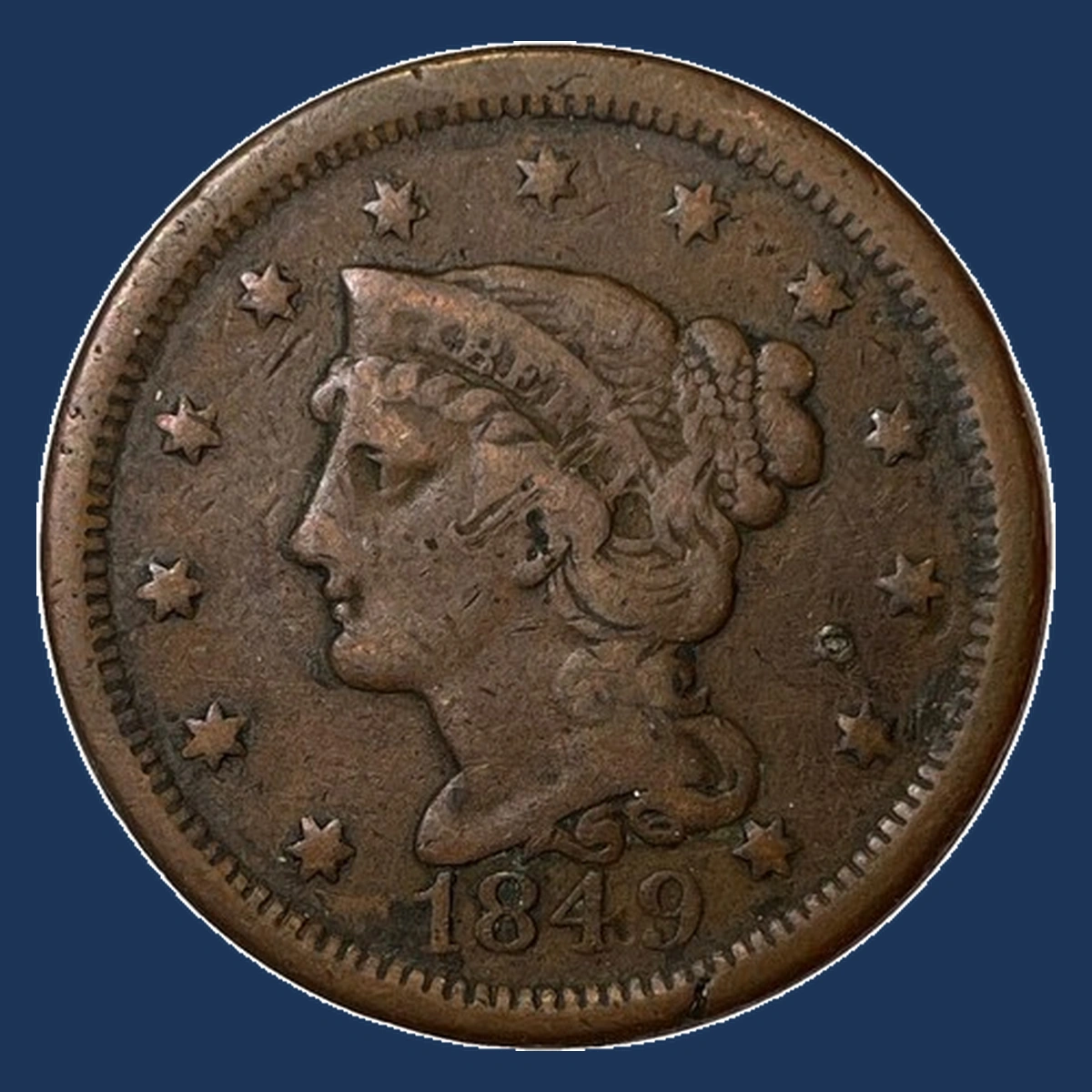
Fine lines and small bumps can form when a stamping tool starts to fail. A crack in its steel leaves a raised line on the copper it strikes.
A small missing piece of steel leaves a bump instead. If a larger break reaches the outside edge, the resulting rim-connected patch is called a cud.
The year guide describes an 1849 N-2 example with a break below the E in UNITED. N-2 names a particular pair of tools, not a separate coin denomination.
The position helps identify that report; it should not be assigned to every raised mark dated 1849.
Estimated Value
Worn 1849 cents with small cracks or chips have estimated whole-coin values of $25–$150. Clearer rim-connected breaks can fit an estimated $75–$750 range.
The larger patch is easier to display, but the coin’s surfaces still matter. A small feature on attractive copper may appeal more than a large one on badly corroded metal.
These are estimates for identifiable mint-made features. They do not turn every raised stain or battered rim into a valuable error.
How to Identify
Find UNITED on the back and locate its E before comparing the reported N-2 break. With a 10× magnifier, follow the raised patch from the letter area to the rim.
Inspect the plain edge at the same point. A hard blow can push edge metal inward and create a misleading lump above the face.
For thin lines elsewhere, move the light until you can distinguish a raised ridge from a scratch cut into the surface. Small interior bumps need not reach the rim.
A normal copper cent weighs 10.89 grams and measures roughly 28 millimeters across. Record a loose coin with a scale and calipers, then photograph each feature without trying to scrape away its surface.
2. 1849 Braided Hair Cent A Copper Layer Lifting from the Surface
The surface of a large cent can lift in a thin sheet if the original copper contains an internal weakness. That separation is called lamination.
Some flakes fall away; others stay attached along one edge. The remaining design and the point of attachment help explain what happened.
Lamination is reported for 1849 cents, but the year alone does not identify a particular flap or affected side. A separate examination is needed for each piece.
This coin was made from copper throughout. A peeling area is therefore not evidence that a plated outer coating came off a modern-style cent.
Estimated Value
Estimate $40–$300 for worn 1849 cents with clear peeling flaws and $300–$1,000 for stronger examples on attractive unworn coins. These ranges value the entire piece.
The estimate reflects the general market for similar large-cent metal flaws. It is not a claimed sale price for an unidentified 1849 specimen.
A broad attached sheet may be more noticeable than a tiny missing flake. Heavy corrosion, cleaning, or fresh damage can reduce interest despite the original flaw.
How to Identify
Begin with the attachment point, keeping your fingers and any measuring tool away from the loose metal. A 10× magnifier can show whether a thin sheet separates within the copper.
Look across the flap and surrounding design with light from the side. Do not lift it to improve the view; the original connection is part of the evidence.
If it is safe to handle, weigh the loose coin on a scale against 10.89 grams. Copper that has fallen away may reduce the weight, but corrosion can also remove metal.
Use calipers across intact spans near the normal 28-millimeter width. Include the plain edge in photographs when the peeling reaches the side, and distinguish a sheet from isolated rough pits.
3. 1849 Braided Hair Cent Expanded Outline with a Complete Design
A broadstrike spreads the coin’s metal farther outward during the blow. The finished outline becomes larger than usual while the intended design remains complete.
This category is reported for 1849 large cents. Its useful clue is expansion around the design, rather than a missing piece of lettering.
A broad rim on one side alone does not establish it. Slight tool misalignment can produce unequal borders without the same overall spreading.
Later hammering can also flatten and widen a cent. The design, surface, and edge must fit together before an enlarged coin can be called a mint error.
Estimated Value
A genuine worn 1849 broadstrike can fit an estimated $100–$500 range. For an attractive unworn piece with clear expansion, use an estimated $500–$2,000.
These are whole-coin estimates for the reported type. They are not a recorded transaction for a specific 1849 coin.
The amount of spreading and the completeness of the design affect appeal. A broad border created by damage, or a barely uneven rim without real expansion, should not receive the same error valuation.
How to Identify
Measure more than one diameter with calipers. A loose ordinary cent is roughly 28 millimeters wide, so photographs alone can exaggerate an apparent increase in size.
Weigh it on a scale against 10.89 grams and examine both faces. An intact oversized outline should be distinguished from missing copper or a design that partly missed the blank.
At 10× magnification, inspect the outer design where it meets the expanded area. Hammering may flatten lettering and leave repeated impact marks rather than the natural movement of metal during striking.
The edge should be plain, but that is normal for this series. Check it for later compression and compare the complete outline with an ordinary 1849 cent under the same lighting.
4. 1849 Braided Hair Cent Large Unstruck Crescent beside the Design
An empty crescent forms when the blank sits partly outside the striking area. The tools press the design into only the copper beneath them.
An old Mike Byers catalog describes an unworn 1849 cent fifty percent off center toward two o’clock. All four date digits remain visible.
A separate N-8 example is thirty percent off center in the same direction. NGC graded it VF Details: moderate wear with a problem, including initials scratched into the unstruck front area.
Those later scratches do not create the displaced strike. They are a condition problem on an otherwise separate documented error coin.
Estimated Value
Estimate $400–$2,500 for worn 1849 off-center cents and $2,500–$15,000 for strong unworn examples with a readable date. Surfaces and displacement both influence the complete price.
The old Byers list offered its fifty-percent example at $750. That historical asking price is neither a current value nor a confirmed sale.
For a different-year comparison, an undated cent identified as 1808 sold for $6,462.50 in February 2018. It was thirty percent off center and had only light wear.
How to Identify
With Liberty upright, compare the struck design’s movement toward two o’clock with the empty copper on the opposite side. Both recorded examples share that direction, but their displacement and condition differ.
Use a 10× magnifier to separate scratches in the bare area from original striking details. The initials on the NGC example were added after minting.
Keep the date visible in your photograph, then photograph the back using the same physical edge for orientation. A missing section of design should not be confused with a piece cut out of the coin.
The original copper disk weighed 10.89 grams and was roughly 28 millimeters wide. Check a loose example with a scale and calipers, and inspect its plain edge for later trimming.
Conclusion
An empty crescent, an expanded outline, and a peeling surface tell different stories about an 1849 cent. Raised lines or patches instead point toward damaged stamping tools.
Estimated whole-coin values here run from $25–$15,000. Compare the actual size of the error and the condition of the copper together.
Photograph both faces and the plain edge before seeking an opinion. Leave old surfaces and fragile flakes untouched so the evidence remains available to examine.