1999 Nickel Error List with Pictures

Jefferson’s portrait can appear over traces of a completely different coin. A 1999-P nickel struck over a dime brought $5,462.50 in a reported 2008 auction result.
This 1999 Jefferson nickel error list also covers displaced designs, missing edge sections, and coins joined during striking. Estimated values range from $5 to $6,500, depending on the mistake and condition.
Read on to learn what each unusual shape means and which simple checks help separate minting errors from later damage.
1. 1999 Jefferson Nickel One Design Shifted toward the Edge
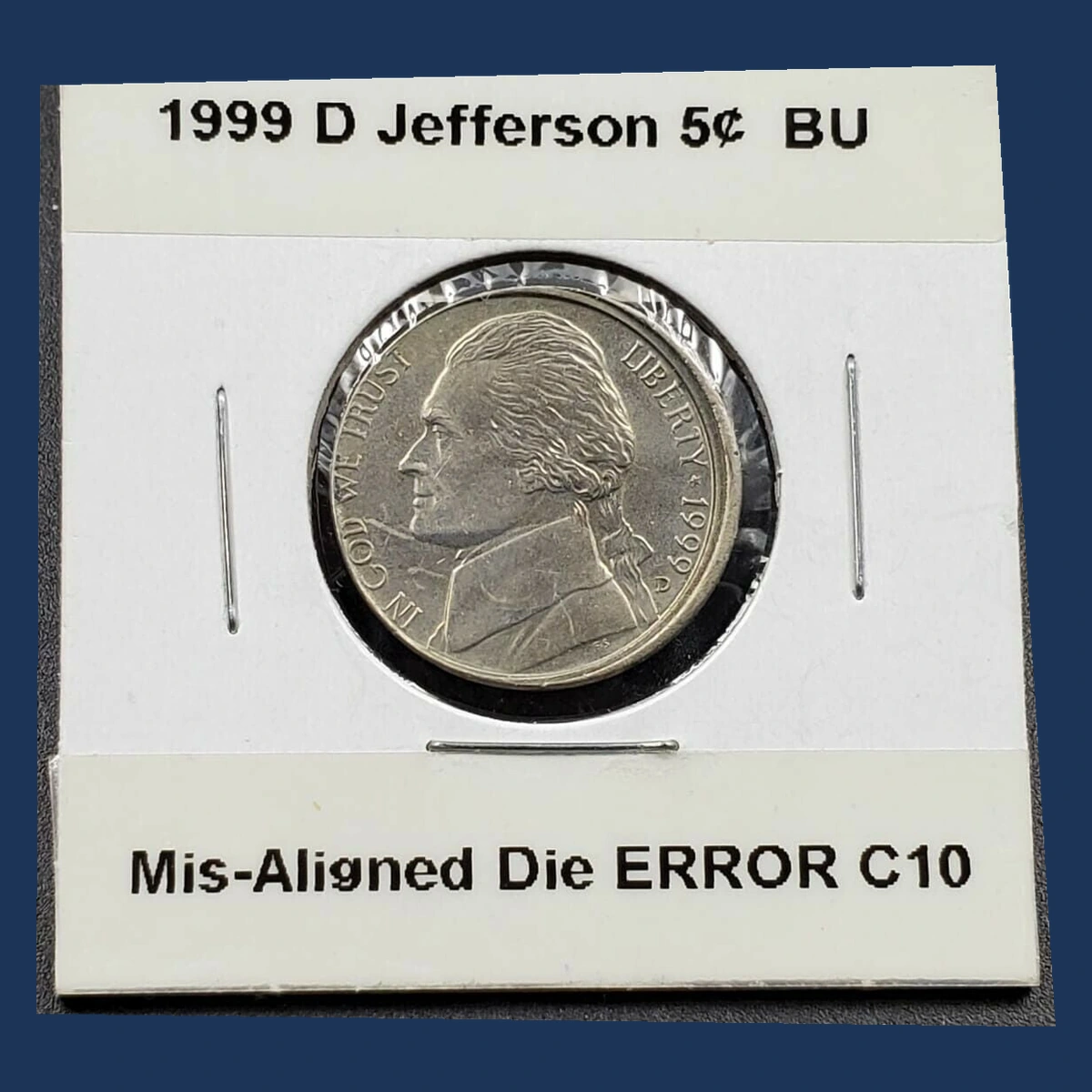
One face can sit noticeably closer to the rim while the other remains centered. This happens when a die, the steel tool that stamps a coin, sits out of position.
A 1999 nickel report describes this type of mismatch. It differs from an off-center strike, where the blank itself misses the correct position between the tools.
A slightly wider rim on one side is not enough by itself. Compare the whole design and the opposite face before deciding that the tool shifted.
The mint letter alone does not establish this error.
Estimated Value
Allow an estimated $5–$75 for clear, modest tool shifts on 1999 nickels. A barely uneven rim offers much less interest than a visibly displaced design with a normal opposite face.
This range describes the reported type rather than a priced, certified 1999 example. Stronger proof of the mismatch and better surfaces support the upper end.
Damage from a rim hit does not receive the same premium, even when it makes one side look off balance.
How to Identify
Compare each face with an ordinary nickel, keeping the portrait and building upright while checking the space around them. A design shifted toward the edge on one face should differ noticeably from the better-centered opposite face.
Use a 10× magnifier to follow the narrow rim for dents, since an impact can squeeze the border inward. If both faces instead lose parts of the design, inspect for a misplaced blank rather than a misplaced tool.
Calipers and a scale should find roughly 21.2 mm and 5 g on a loose, intact nickel. Turn the plain edge toward the light and check whether damage there explains the uneven border you first noticed.
2. 1999 Jefferson Nickel Extra Outlines in the Front Design
Look for a small extra raised outline beside letters or the portrait. A doubled die carries duplicated detail in the stamping tool itself, which can transfer that detail during a single strike.
Reports for 1999 point to LIBERTY, the date, and the portrait. They do not establish a particular mint letter or a numbered variety that every example must match.
A flat ledge beside a letter has another explanation. Slight movement during striking can flatten its edge without leaving a true second raised outline.
Strong lighting can also create a misleading bright border.
Estimated Value
For clear, confirmed tool doubling of this reported kind, estimate $10–$150. The range assumes visible raised separation, rather than common flat shelf-like marks beside letters.
A named, well-documented variety would need its own comparison before commanding a stronger price. No specific 1999 auction result is being assigned to these broad reports.
Worn examples with blurred lettering belong near the lower end. An unworn coin with the same extra outlines clearly visible is easier for collectors to assess.
How to Identify
Move the light before deciding that a bright border is extra metal. Under a 10× magnifier, a real raised outline remains in the same place as the lighting changes.
Compare LIBERTY first, then the date and portrait where any repetition appears. Do not expect every reported area to show equal strength on every coin.
Flat ledges that reduce a letter’s width suggest movement during striking. Two rounded contours or a clear split at a letter corner deserve closer comparison.
Match the shape with a confirmed example. A vaguely thick letter does not establish a particular doubled die.
Check a loose coin with a scale and calipers against 5 g and 21.2 mm. An altered plain edge or heavily polished surface can accompany other misleading changes, so inspect beyond the enlarged lettering.
3. 1999 Jefferson Nickel Front Design Blurred by a Stuck Coin
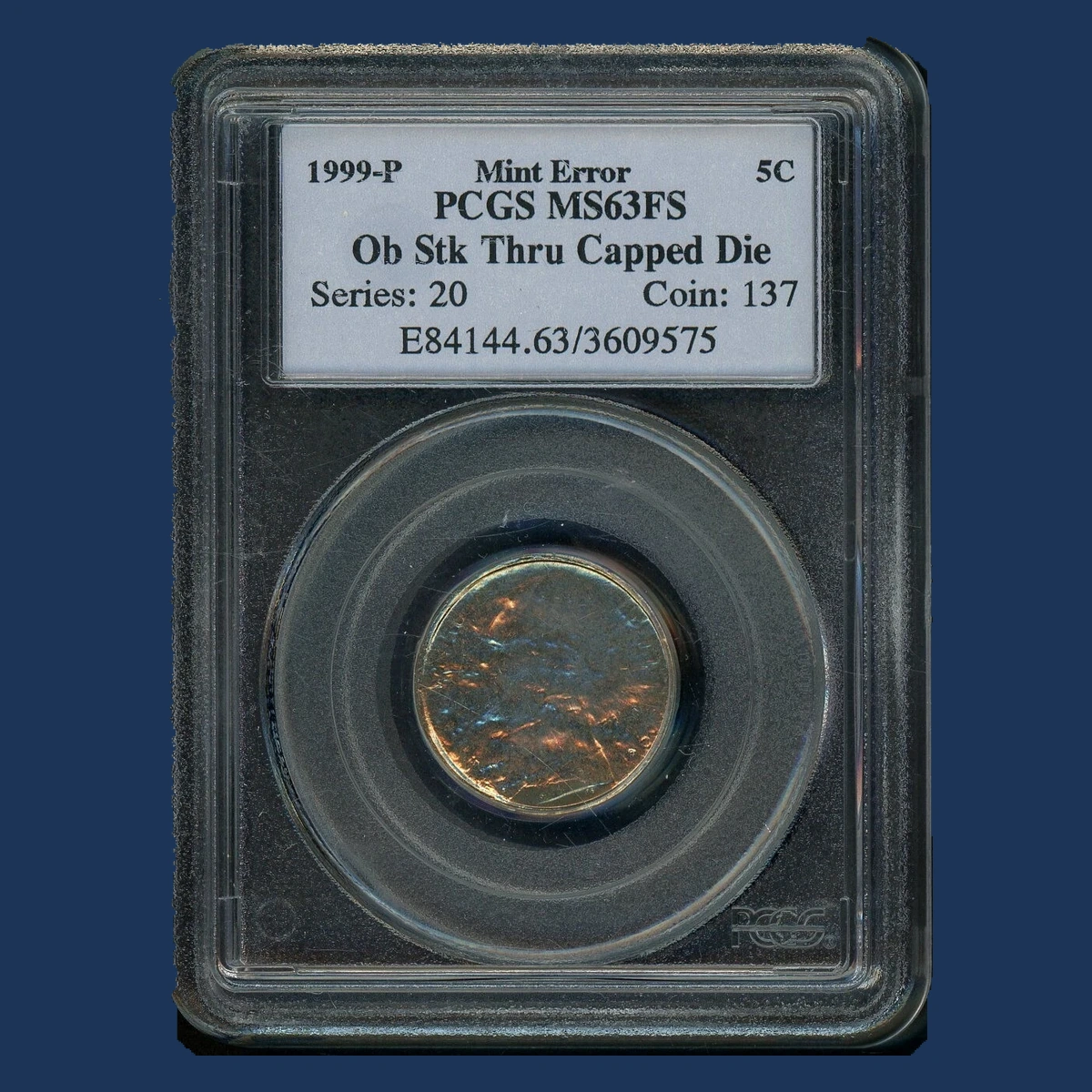
Jefferson’s design can look blurred or stretched when another coin lies between the fresh blank and the stamping tool. The trapped coin acts as a covering, often called a die cap.
A 1999-P example was cataloged as struck through a capped front die and graded PCGS MS64 Full Steps. Full Steps refers to clear steps on Monticello, not another minting error.
This nickel received its impression through the trapped coin. It is different from the cup-shaped coin that formed the covering.
Ordinary wear or grease can also weaken detail, so the overall shape matters.
Estimated Value
For a clear 1999 strike through a cap, estimate $50–$300. Strong distortion on an otherwise well-preserved coin can support the higher part of the range.
A 2000-D example graded NGC MS64 Full Steps sold for $84 in September 2025. That nearby-year sale concerns the same broad process, rather than the 1999 coin itself.
An almost featureless face needs convincing evidence before receiving this value. Simple wear or a weak ordinary strike belongs in a different comparison.
How to Identify
Leave cleaning aside; the faint surface detail is part of the evidence. Compare the weak front with the back, looking for a large difference that ordinary circulation would not readily explain.
A 10× magnifier can reveal traces of Jefferson’s design spread through the affected area. Broad distortion is more useful than one missing letter, which grease in a tool can also cause.
Check the plain edge for flattening and the high points for rubbing. For a loose coin, record its weight near 5 g on a scale and its diameter near 21.2 mm with calipers.
Compare the entire affected face with an authenticated cap-struck nickel. A nearly blank front alone cannot distinguish a trapped coin from several other causes of missing detail.
4. 1999 Jefferson Nickel Back Turned Almost Upside Down
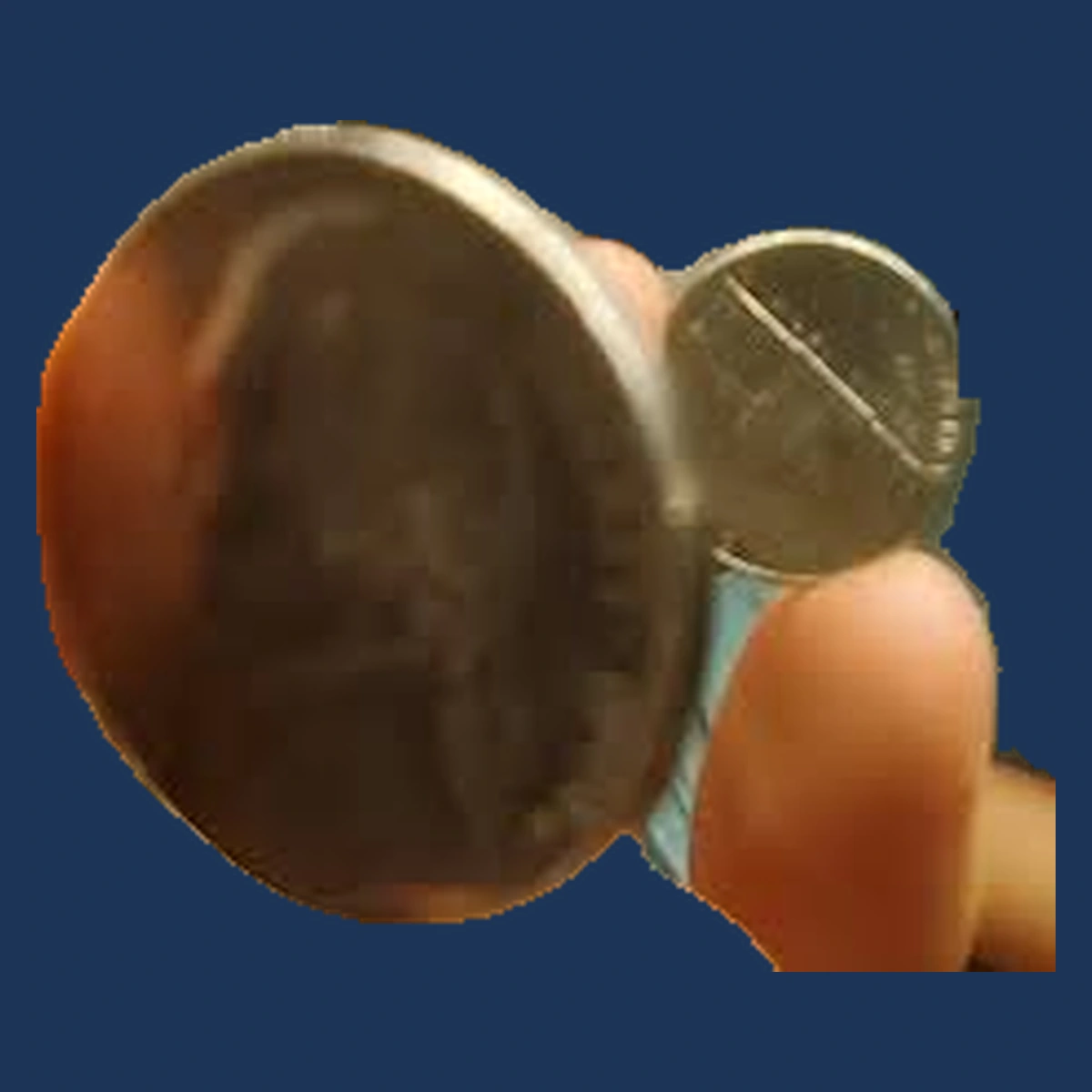
Jefferson may look upright while Monticello turns almost upside down after the correct flip. A rotated die error changes the angle between the two designs because one stamping tool turns out of position.
A recorded 1999-P nickel has a rotation of 170 degrees and a PCGS AU55 grade. AU55 means light wear remains on the highest points.
The portrait and building can each look normal when viewed separately. Their relationship is what makes this mistake visible.
Two photographs rotated independently cannot show the true angle between the faces.
Estimated Value
Estimate $75–$300 for a genuine 1999-P rotation approaching the recorded 170 degrees. The actual angle and condition should remain clear when the coin is turned over.
For comparison, a 2015-D nickel with a ninety-degree rotation sold for $79 in October 2021. That later coin had a smaller rotation and an unworn grade, so it is not an exact match.
Light wear alone does not hide this error, but damage can still reduce its appeal.
How to Identify
Practice with an ordinary United States coin, turning it from top to bottom so the back finishes upright. Hold the 1999 nickel the same way and repeat that movement without spinning it sideways between views.
A 170-degree error leaves the building nearly upside down, as described for the recorded PCGS AU55 example. Repeat the flip several times to make sure movement in your fingers is not creating the unusual angle.
Use a 10× magnifier around the plain edge to look for a seam joining two altered halves. A scale and calipers should also find close to 5 g and 21.2 mm on a loose, otherwise intact nickel.
5. 1999 Jefferson Nickel Wide Coin with the Design Still Present
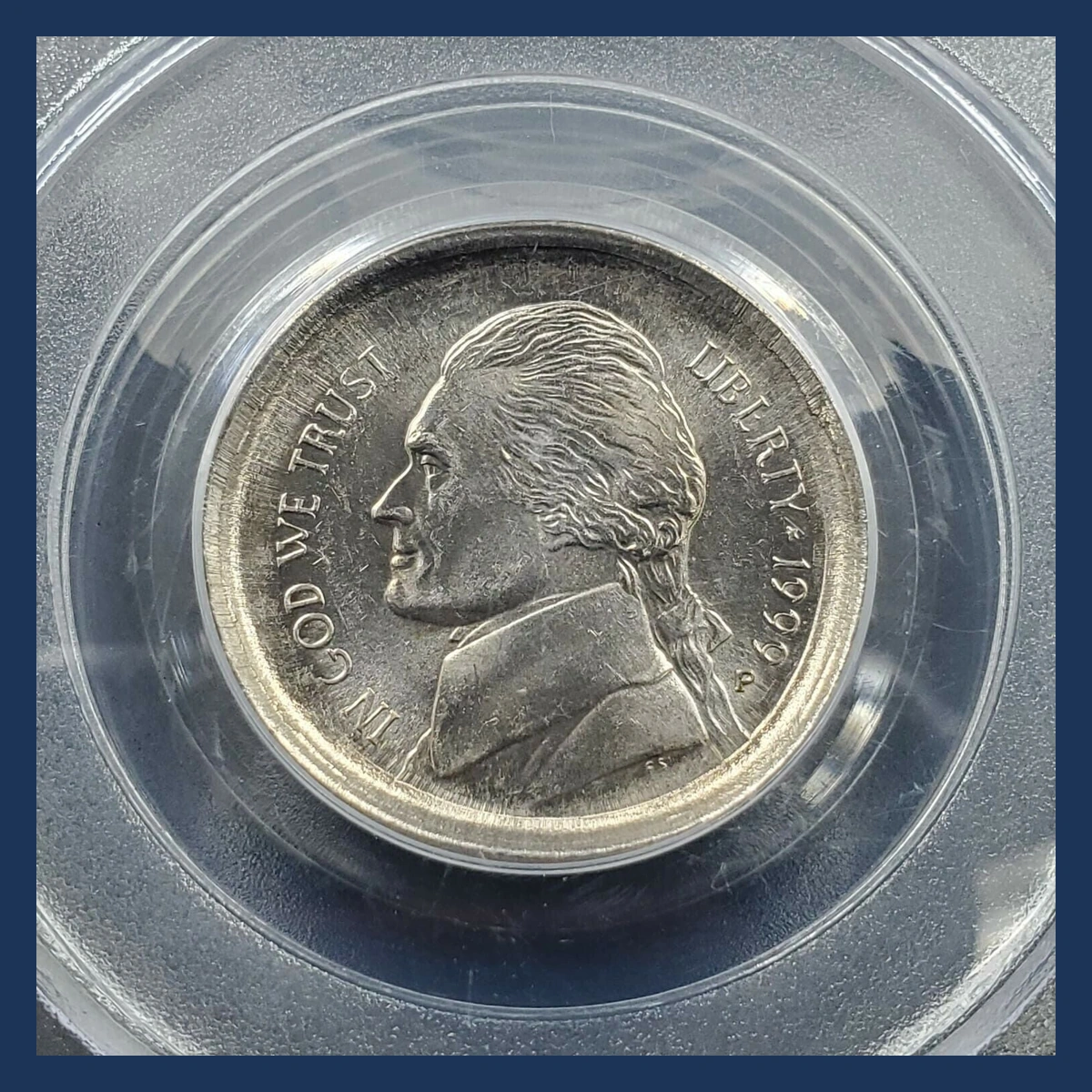
The design can remain complete even when the nickel spreads beyond its normal outline. A broadstrike forms when the collar, the ring that normally restrains the edge, fails to hold the blank properly.
Metal moves outward during the blow instead of stopping at the ring. The resulting border may look wider or less even than usual.
A 1999-P example received a PCGS MS63 grade, indicating an unworn coin with noticeable marks. Its broad shape is the error.
The smooth edge is ordinary for a nickel and does not establish a broadstrike on its own.
Estimated Value
The PCGS MS63 1999-P broadstrike sold for $89 on March 31, 2025. It provides a direct comparison for an unworn, visibly expanded example.
Estimate $30–$150 for worn or marked pieces and $150–$350 for cleaner examples with strong outward spread. The complete design helps distinguish these from coins struck partly off the blank.
A nickel flattened after leaving the Mint does not qualify, even if calipers show an unusually large diameter.
How to Identify
Calipers can measure the wider outline, but check the raised design before deciding that the coin spread during striking. The portrait, date, building, and outer lettering should remain present rather than being lost off the blank.
Use a 10× magnifier to examine the letters near the wide border for crushing or pressure marks from later flattening. Then follow the plain edge around the coin, watching for a sharp lip or recent marks from a tool.
Record the diameter in several directions against the normal 21.2 mm, since the spread may be uneven. A scale should still show about 5 g for an intact loose example, even when the outline has expanded.
6. 1999 Jefferson Nickel Curved Missing Section with a Shifted Strike
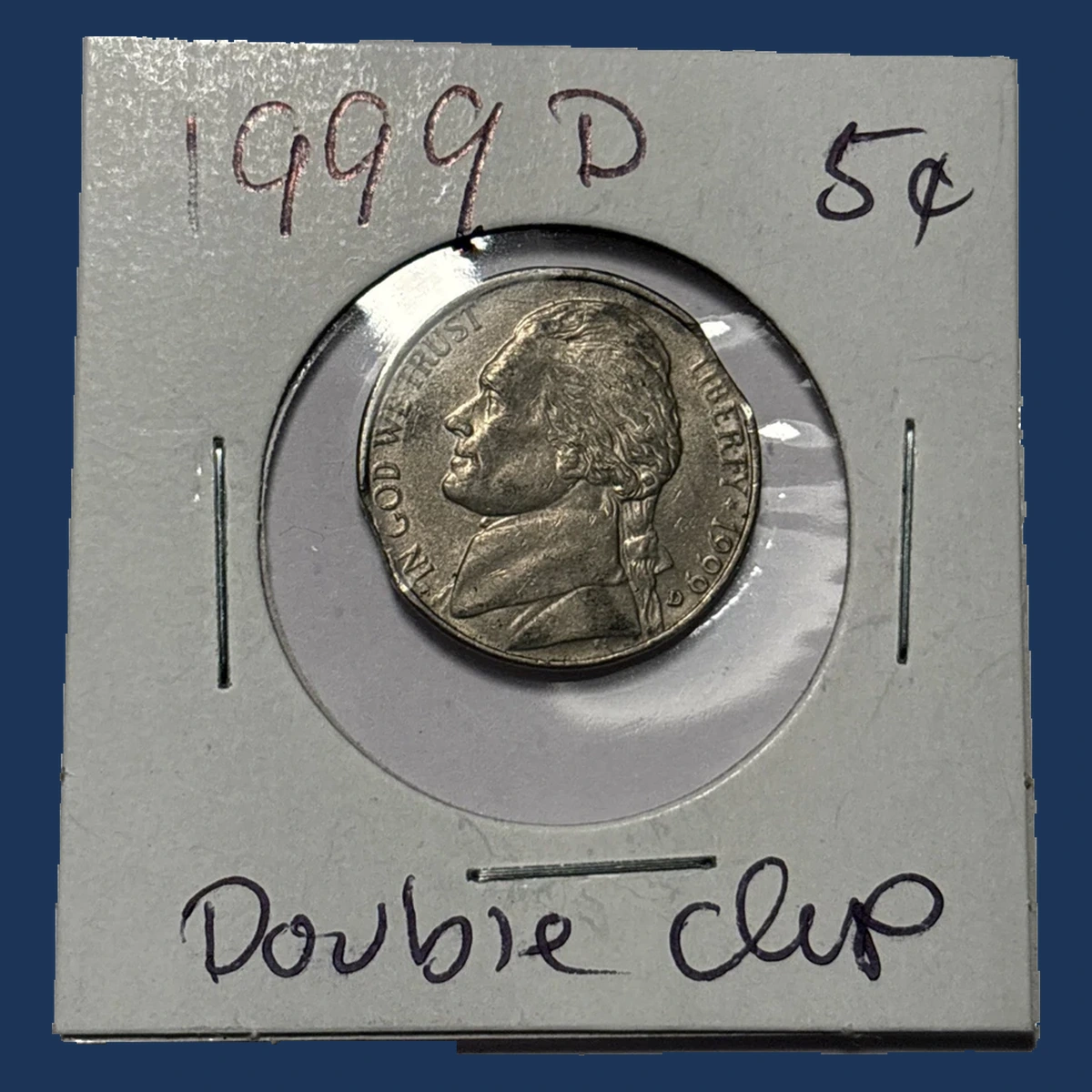
A curved bite interrupts the rim, and the design is also slightly displaced. The recorded 1999-P example combines a twenty-percent clip with a five-percent off-center strike.
The clip began before striking. A blank, the plain metal disc used to make a coin, was cut from an incomplete area of metal.
The press then stamped that incomplete disc while it sat a little off center. These two features belong to the same coin.
Its PCGS MS60 grade means unworn surfaces with substantial marks. It does not measure the size of the missing section.
Estimated Value
The 1999-P clipped, slightly off-center example sold for $54 on March 31, 2025. Its relatively low unworn grade shows why a large missing section need not bring a high price.
Estimate $20–$175 for identifiable circulated or marked examples and $175–$400 for more attractive pieces. These figures value the complete coin with its combined features.
A readable date and an original-looking gap matter more than simply calling the missing portion large.
How to Identify
A scale can help establish how much metal is missing, but it cannot tell when that metal disappeared. Compare a loose example with the ordinary 5 g nickel, without calculating an exact weight from the stated clip percentage.
Use calipers across intact parts of the coin against the normal 21.2 mm diameter. The undamaged edge should be plain.
Inspect both ends of the curved gap with a 10× magnifier. Original design near the opening should fit a strike on incomplete metal, rather than lettering abruptly sliced away by a saw.
Finally, check the separate slight shift of the design. A weak rim opposite the gap can help, but its absence does not by itself rule out a genuine clip.
7. 1999 Jefferson Nickel Design Struck Away from the Center
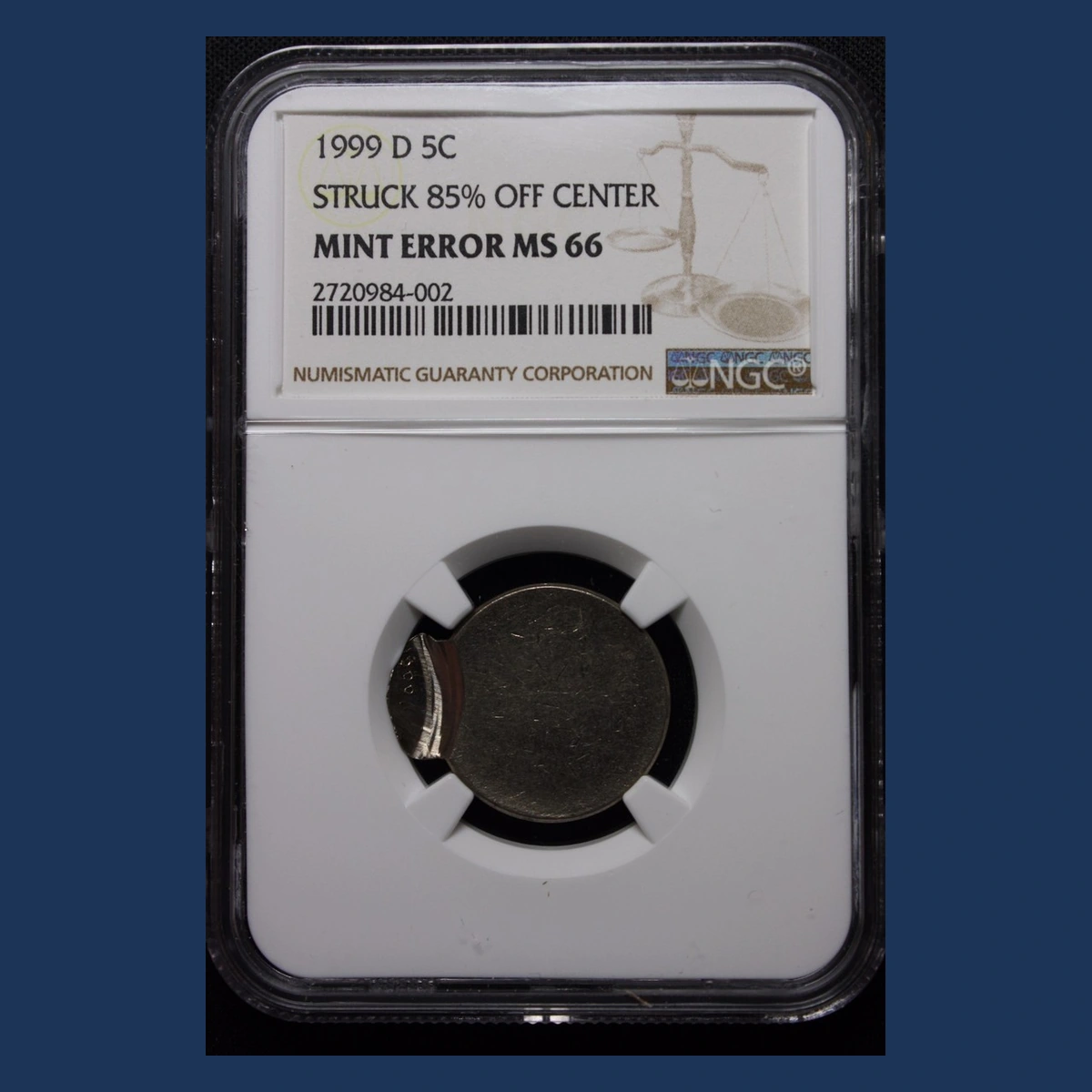
An empty crescent remains beside the stamped design when a blank sits partly outside the striking area. Some lettering or portrait detail then falls beyond the metal’s edge.
Two 1999 examples show how different the result can look. One Philadelphia coin is fifteen percent off center, while a Denver example is sixty-five percent off center.
The larger displacement leaves much less of the intended design on the coin. It does not mean that the remaining plain metal was cut away.
Wear, date visibility, and surface damage all affect how easily either coin can be recognized.
Estimated Value
A 1999-P fifteen-percent off-center nickel brought $64 in March 2025. The 1999-D sixty-five-percent example sold for $75 in September 2024.
Use an estimated $25–$200 range for ordinary clear examples, extending to $200–$500 for particularly attractive pieces with a readable date. More displacement does not guarantee a higher price.
The two sales illustrate that difference. A dramatic shape still competes with condition and the amount of recognizable design remaining.
How to Identify
Place an ordinary nickel beside the error and locate the missing design, not just the wider border. A true off-center strike normally leaves original blank metal beside an incomplete impression.
Through a 10× magnifier, examine the boundary between the stamped and unstamped areas. Grinding often leaves scratches where design was removed, while the original blank area was never given that design.
Turn to the back and check whether its displacement fits the same misplaced disc. Calipers may show an irregular outline around the usual 21.2 mm size, but a scale should still find roughly 5 g unless another defect removed metal.
Follow the plain edge around the empty crescent. A missing bite belongs to a clip, which is a separate feature from metal left unstruck.
8. 1999 Jefferson Nickel Smooth Hollow Made by Another Blank
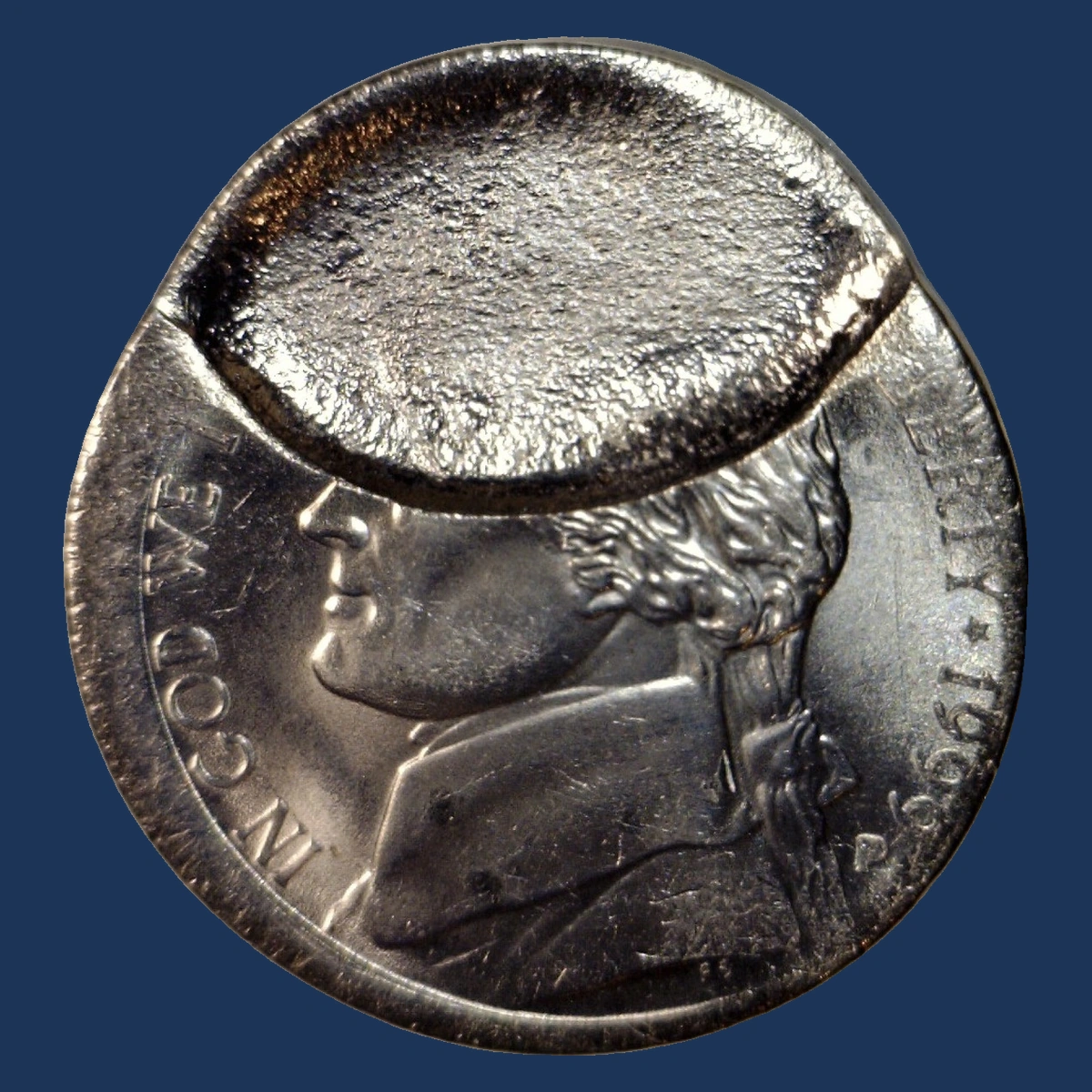
A smooth hollow can replace part of Jefferson’s portrait when another blank overlaps the nickel during striking. That overlapping metal presses into the lower coin and blocks the design in the covered area.
This feature is called an indent. One auctioned 1999-P broadstrike has an indent across about thirty percent of the front, with a small metal crack along its lower boundary.
Another example appears in a GreatCollections listing graded NGC MS66 with six clear steps. That separate coin should be compared on its own shape, rather than assuming the same crack.
Estimated Value
An estimated $100–$500 covers clear 1999-P indents, with attractive broadstruck examples toward the stronger end. The depth and smooth boundary should be visible without relying on a label alone.
The $89 sale of a plain 1999-P broadstrike in March 2025 is a simpler comparison. A genuine overlapping-blank impression adds a separate feature, so that sale is only a starting point.
Deep damage made after minting receives no indent premium, regardless of how much of the portrait it covers.
How to Identify
Look inside the hollow before judging its size. A blank that blocked the design should leave a relatively smooth area, whereas another already struck coin may leave backward lettering.
Use a 10× magnifier to follow the curved boundary and any crack below it. Do not expect the crack described on one example to appear on every 1999 indent.
Examine the opposite face for the effects of the same strike. Sharp gouges and pushed-up lips around a hollow instead suggest later damage.
Check a loose nickel on a scale against 5 g. Calipers may show more than the normal 21.2 mm when the strike also spread the coin outward.
The plain edge should fit that spread without fresh filing. Compare the indentation with the surviving front details to see exactly which area the overlapping blank blocked.
9. 1999 Jefferson Nickel Design on a Cent or Dime Blank
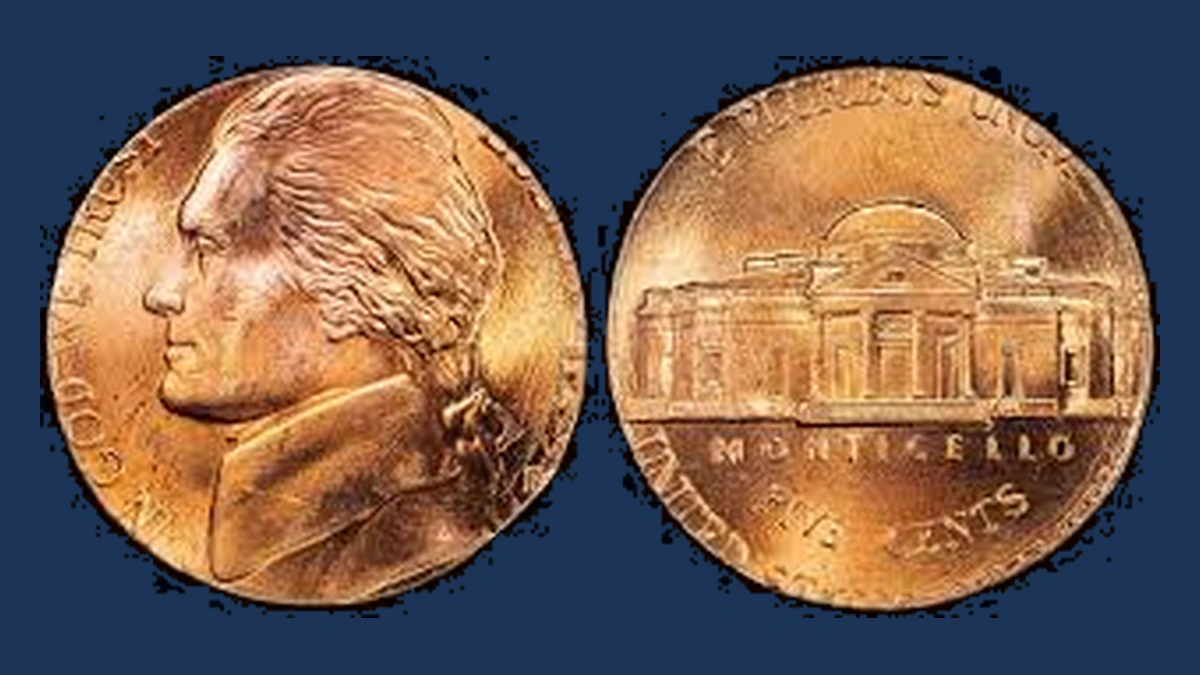
Jefferson can look too large for a small copper-colored or silver-colored disc. The nickel tools struck metal intended for a different denomination, so the outer design ran beyond the smaller blank.
A 1999-P cent-blank example weighs 2.5 g and was graded NGC MS66 Red. A Denver cent-blank example is also recorded, without a stated measured weight.
A separate Philadelphia nickel was struck on a dime blank. Dime metal has bonded layers, unlike the uniform copper-nickel mixture of an ordinary nickel.
No older cent or dime design is required on an unused blank.
Estimated Value
Three 1999-P cent-blank nickels sold for $360, $372, and $588 in September 2024, with different unworn grades. A dime-blank example brought $396 in that sale.
Estimate $250–$800 for recognizable, authenticated examples on either blank, with cleaner surfaces and clearer dates supporting stronger prices. Metal color alone cannot justify this range.
A copper-plated nickel remains the wrong comparison if its normal size and weight show that it began as an ordinary five-cent coin.
How to Identify
Put a loose coin on a scale before relying on color. Ordinary nickels weigh 5 g, while modern cent and dime blanks normally begin at 2.5 g and 2.27 g respectively.
The recorded Philadelphia cent-blank coin actually weighs 2.5 g. The dime figure is a normal blank standard, not a measured weight supplied for the auctioned error.
Calipers can compare the smaller outline with a normal 21.2 mm nickel. Cent and dime blanks start near 19.05 mm and 17.91 mm, but a nickel strike may spread them.
Use a 10× magnifier around the edge for filing or added plating. A dime blank has bonded metal layers; a nickel’s plain edge and uniform mixture differ from that construction.
Look for naturally cut-off design at the boundary, rather than letters removed later.
10. 1999 Jefferson Nickel Backward Design Pressed into the Surface
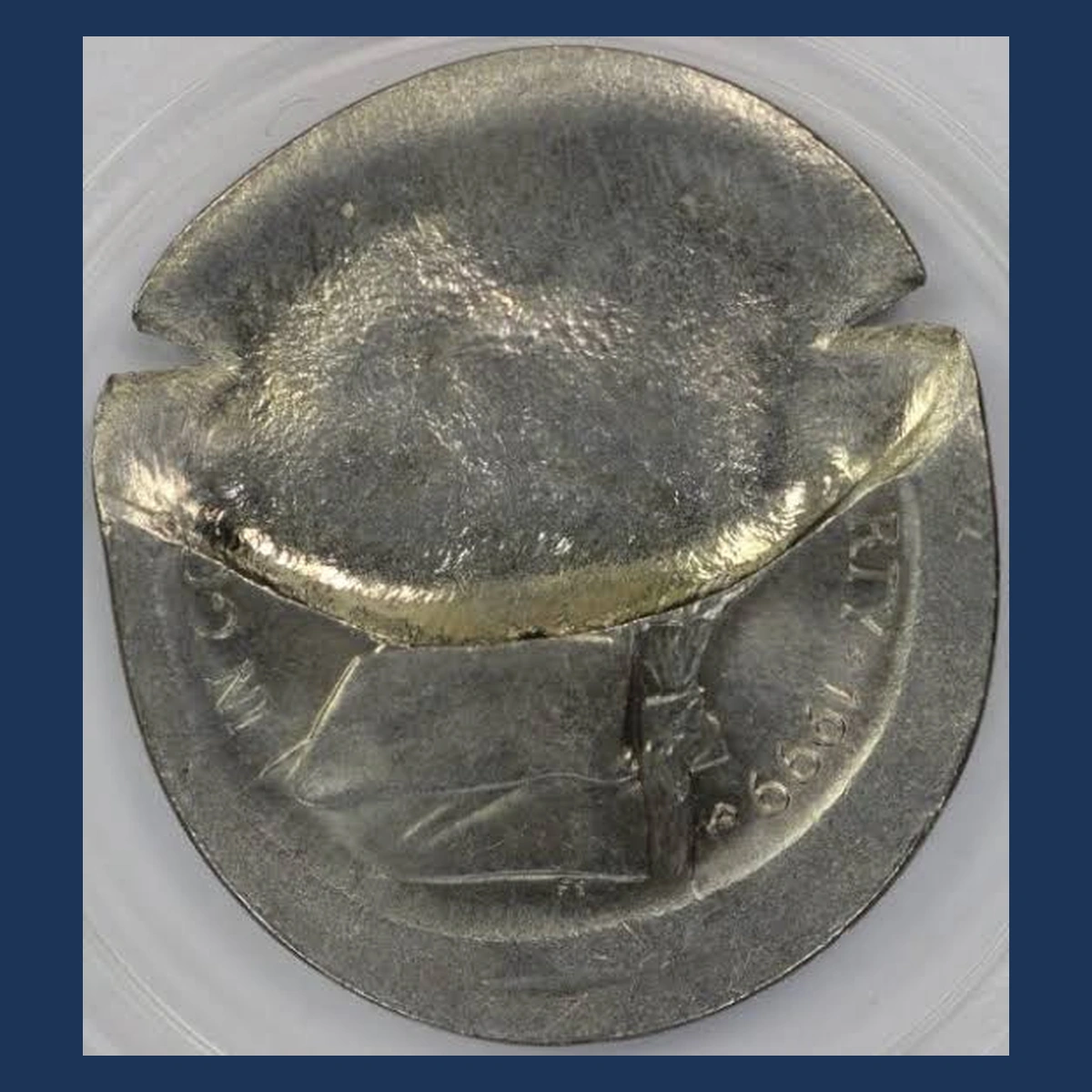
Backward letters or a reversed portrait can sink into a nickel instead of standing above it. Another struck coin pressed that design into the fresh blank during the blow.
This is called a brockage. A 1999-P auction example combines a thirty-percent front brockage with metal spread beyond the normal border.
A separate report describes a 1999 nickel with the reversed impression on its back. These examples show the same process on different faces.
The reversed area may cover only part of the coin. It need not replace the entire ordinary design to be meaningful.
Estimated Value
Allow an estimated $150–$800 for clear partial 1999 brockages and $800–$1,500 for especially strong examples. Larger, readable mirror images on attractive surfaces usually give collectors more to see.
A 1999 matched pair involving brockage sold for $1,260 in September 2025. That was a two-coin lot with other striking mistakes, so its price must not be assigned to one ordinary brockage.
The ranges here concern individual coins. Later squeezing between two coins is damage, not the original minting process.
How to Identify
Read the unexpected letters as if they were reflected in a mirror. Then tilt the coin under a 10× magnifier to confirm that those details sink below the surrounding metal.
Check which face carries the impression before comparing examples. The reported 1999-P thirty-percent front brockage is not the same view as a nickel with a reversed design on its back.
A loose nickel normally weighs 5 g and measures 21.2 mm, checked with a scale and calipers; broadstriking can enlarge the outline. Inspect the plain edge and opposite face for pressure damage from later squeezing.
Fresh scrapes, flattened raised details, or an unnatural contact edge require closer examination. Have a specialist check the piece when the mirrored image could have been forced into an already finished coin.
11. 1999 Jefferson Nickel Two Coins from the Same Striking Accident
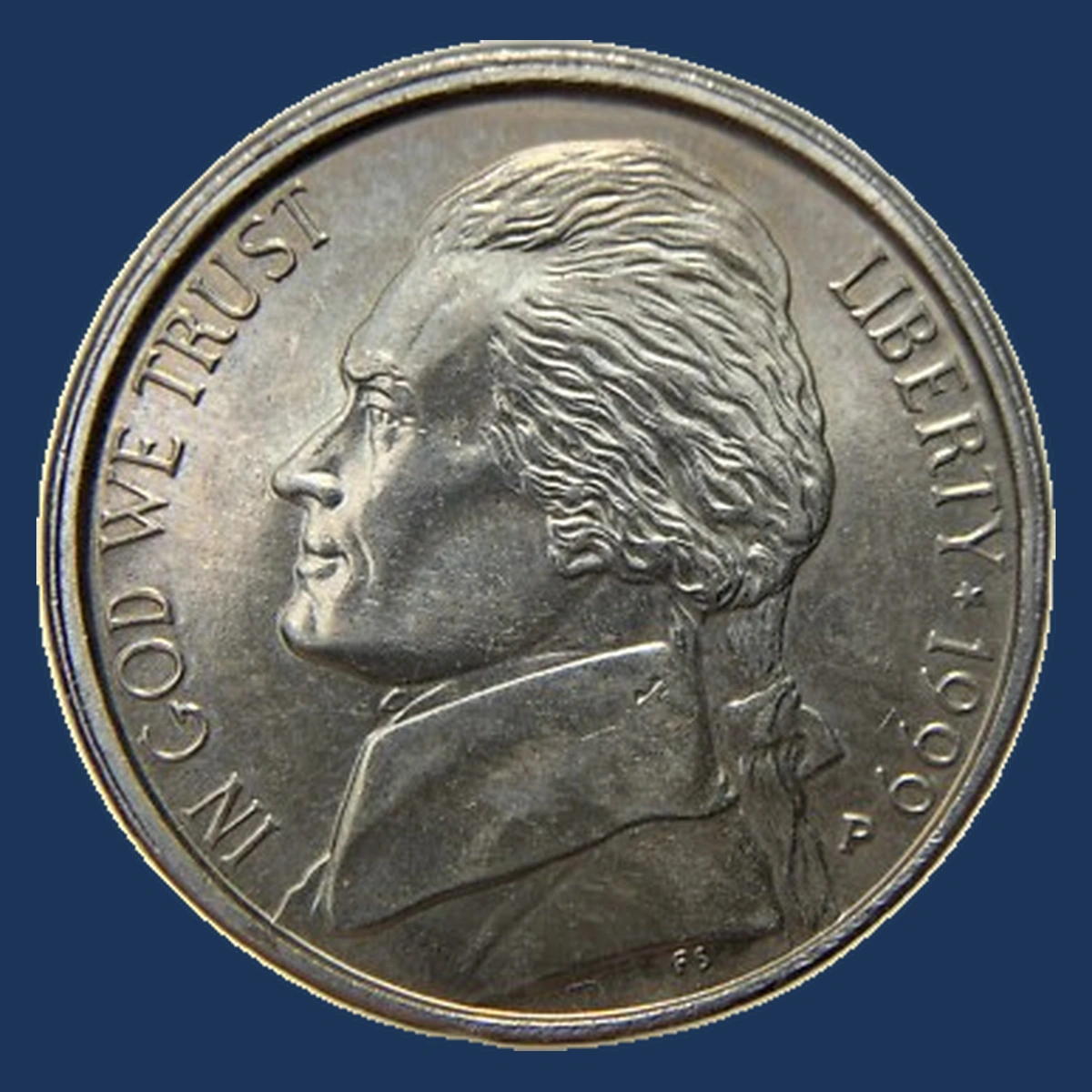
Two separate coins can preserve opposite sides of one minting accident. Their matching contact areas show that they met in the press, forming what collectors call a mated pair.
One recorded 1999-P pair includes a double-struck coin and a broadstruck coin with a backward impression. Another pair includes a coin struck ninety percent off center beside a coin with a front indent.
The second pair also shows metal partly restrained by the edge-holding ring. That stepped effect is called a partial collar strike.
Matching dates alone cannot prove that two coins belong together.
Estimated Value
Value an authenticated 1999 pair as a set, with an estimated range of $500–$2,500. Clear matching contact marks and strong preservation support the higher end.
A different 1999 pair sold for $1,260 on September 29, 2025. It combined a twenty-five-percent off-center brockage coin with a second coin struck twice, first thirty-five and then eighty-five percent off center.
That sale is a comparison for the complete pair. It does not establish the price of either earlier pair described here.
How to Identify
Compare both coins together under a 10× magnifier, looking for contact boundaries that explain how they met. In the ninety-percent off-center pair, one coin has a small tongue of metal near one o’clock.
The other has a front indent near seven o’clock, with no matching tongue on its back. Examine its stepped plain edge where part escaped the holding ring, without trying to force the two coins together.
Weigh loose pieces separately on a scale against the normal 5 g standard and measure their outlines with calipers. Spread beyond 21.2 mm may help explain their shapes, but dimensions alone cannot prove that two unrelated errors form a pair.
12. 1999 Jefferson Nickel Repeated Strikes and Overlapping Designs
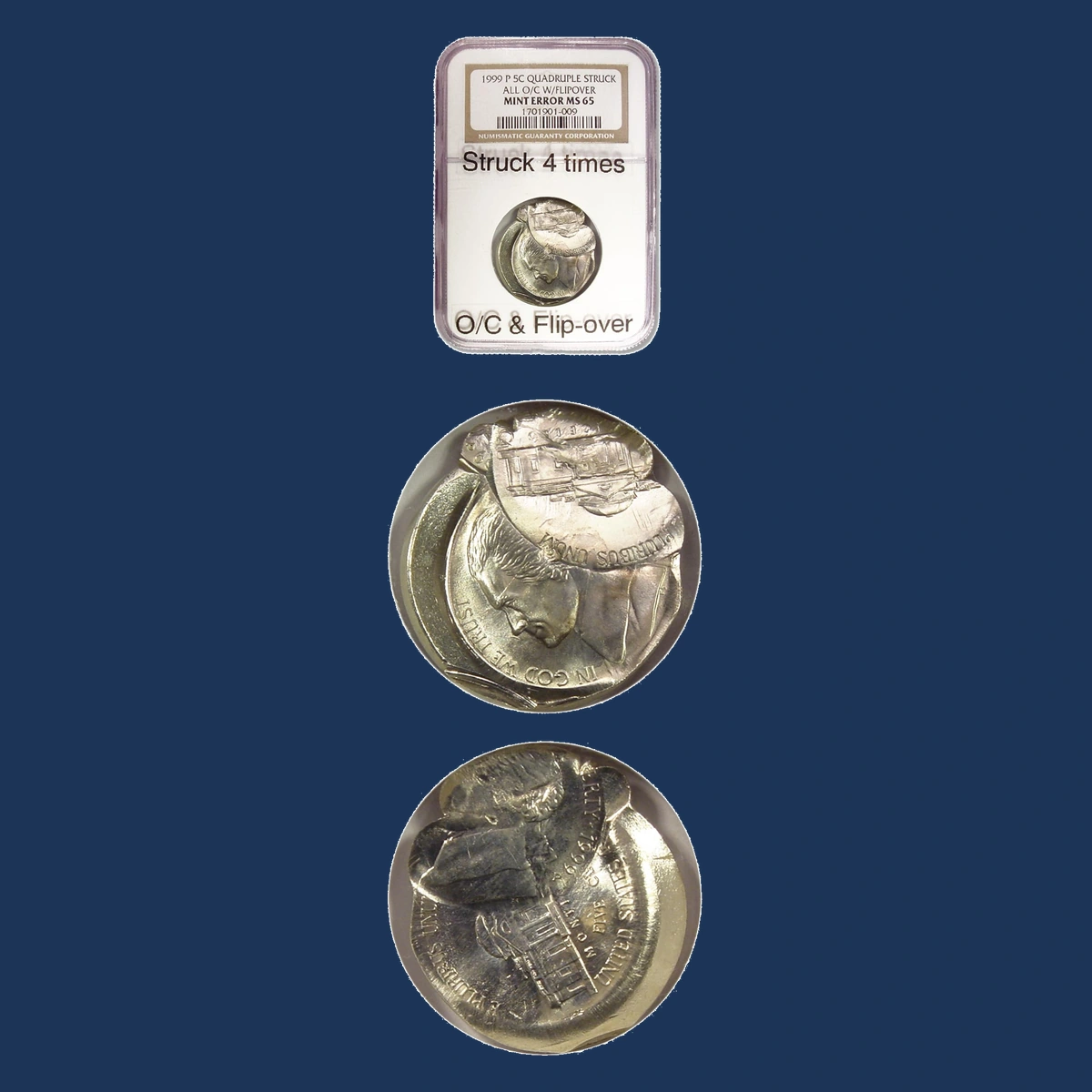
Extra portraits or letters appear when a nickel is struck again after moving. A reported 1999-P example received two blows while still inside the edge-holding ring.
Other examples spread outward during the second blow or received two front indents from overlapping blanks. Their extra shapes belong to those individual accidents.
A triple-struck example also shows an indent, edge contact with an adjacent blank, and an area shielded from a stamping tool. Collectors call the last two features a chain strike and a uniface strike.
Neither term means the coin merely has doubled letters.
Estimated Value
Estimate $200–$1,500 for recognizable 1999 repeated strikes, extending to $1,500–$3,000 for striking combinations with clear overlapping impressions. The visible sequence matters more than the number of words on a label.
A 2007-D double strike with major outward spread sold for $1,260 in August 2025. That later-year example offers a comparison for the broadstruck form, not a price for every 1999 combination.
Ordinary flat doubling beside letters does not qualify for these ranges.
How to Identify
Start with the most complete portrait or building, then follow a second outline through it with a 10× magnifier. Mark each visible impression on a photograph before deciding how many blows occurred.
A repeated strike can leave much of the ordinary round shape when the coin stays inside the holding ring. Other examples spread beyond the normal 21.2 mm diameter.
Take caliper readings in several directions and record weight against 5 g for a loose coin. Inspect the plain edge for contact with another blank.
Compare both faces for areas shielded from a stamping tool. A smooth indent or missing impression should fit the neighboring struck details.
Where impressions cross, look for a later raised design pressing over an earlier one. Leave the sequence open when overlapping marks do not reveal which came first.
13. 1999 Jefferson Nickel Cup-Shaped Coins and a Bonded Cap
Metal can rise into a cup when a coin sticks to a stamping tool. Later blows stretch the trapped piece around that tool instead of allowing it to leave normally.
A 1999-P example was graded ANACS MS63, an unworn grade. Another recorded example formed around the back tool.
A more complex Philadelphia cap contains two blanks joined during striking. Its front design remains complete, while the right wall rises about half an inch.
The joined pieces are still part of one cap. They are different from a loose nickel struck beneath such a covering.
Estimated Value
Estimate $300–$1,500 for clear single-piece 1999 caps and $1,000–$3,500 for a well-preserved bonded cap. Wall height, complete shape, and evidence of the original join affect the value.
The separate 1999 bonded, repeatedly struck piece discussed below sold for $2,645 in 2010. It provides an older comparison for complex joined metal, rather than a transaction price for the cap itself.
Do not add two ordinary nickel prices simply because the cap contains two blanks.
How to Identify
Protect the walls first. Do not straighten a cup, pry apart joined pieces, or squeeze them between caliper jaws.
An ordinary nickel begins at 5 g and 21.2 mm with a plain edge. A scale can record a loose cap’s weight, while calipers should touch only safe, accessible surfaces; these deformed pieces need not retain normal dimensions.
Examine the side profile under a 10× magnifier, looking for stretched metal rather than sharp bends made after minting. On the recorded bonded cap, compare the complete front and tall right wall before checking the join.
Glue, solder, or fresh cuts at a seam would not explain natural metal flow through the strike. A specialist should examine that seam before a two-piece cap receives the stronger valuation.
14. 1999 Jefferson Nickel Joined Metal Struck Repeatedly by a Cracked Tool
Several overlapping impressions cover a joined piece of metal. Two blanks first met during off-center striking, and their borders bonded together under pressure.
The upper half then received two more blows, making three there. The lower half received at least three further blows, with fresh blanks shielding part of its front.
A deep crack in the back stamping tool left a raised horizontal line across Monticello. This line repeated with the tool’s impressions.
The NGC MS67 piece weighs 5.43 g. The other blanks that later blocked its design are not part of the surviving item.
Estimated Value
This unusual bonded piece sold for $2,645 on August 13, 2010. Its high unworn grade and several connected mistakes helped distinguish it from a simple repeated strike.
Use an estimated $1,000–$5,000 range for a comparable authenticated 1999 piece with clear joined metal and overlapping impressions. Each complete object needs its own comparison because the surviving shape can vary greatly.
The split-tool line is part of this same item. Its price should not be added again as a separate error coin.
How to Identify
Compare the object with photographs of the auctioned bonded piece before interpreting its crowded design. Start with the join, then trace the upper and lower impressions separately under a 10× magnifier.
The horizontal ridge across Monticello should rise above the surface. A scratch cut into the metal cannot explain the repeated raised line left by the damaged tool.
Do not pull the joined metal apart. A scale should document the actual 5.43 g of this example, rather than replacing it with a guessed total for two complete nickels.
Normal nickels begin at 5 g and 21.2 mm with plain edges. Use calipers gently on accessible parts to record the altered outline, and inspect the join for added adhesive or later squeezing.
15. 1999 Jefferson Nickel Design over an Already Struck Coin
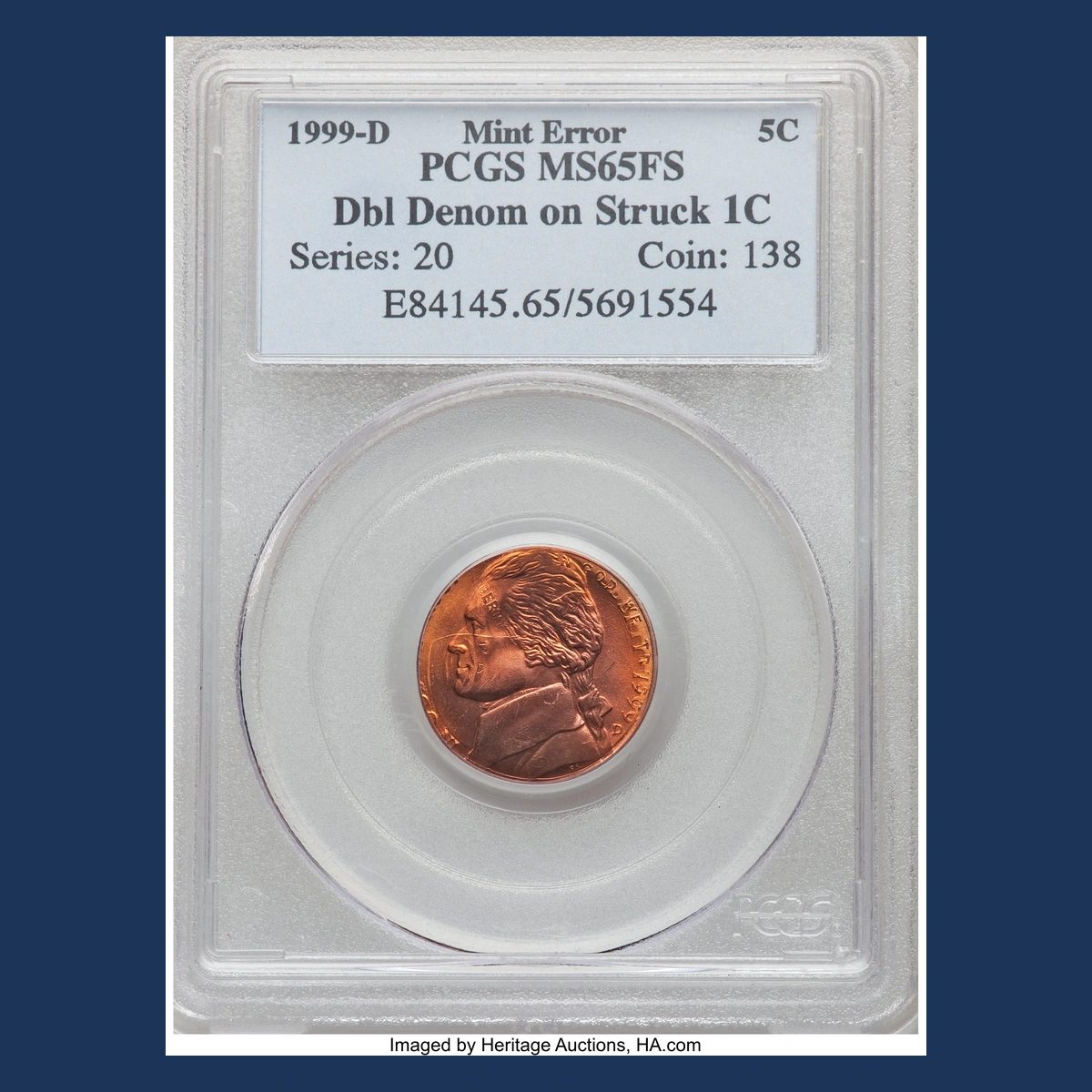
Two different coin designs can survive on the same piece of metal. A finished cent or dime entered the nickel press and received Jefferson’s portrait over its earlier design.
A 1999-D nickel was struck over a 1999-D cent, leaving traces of Lincoln’s coin underneath. A separate Philadelphia nickel was struck over a dime.
The dime’s original year and mint letter are not established by the nickel’s date. Look for its surviving design instead.
Collectors call this a double-denomination error because one piece carries designs intended for two different face values.
Estimated Value
The 1999-D nickel over a 1999-D cent sold for $1,320 in September 2024. Mint Error News reports $5,462.50 for the Philadelphia nickel over a dime in a 2008 auction.
Estimate $600–$2,500 for clear cent overstrikes and $1,500–$6,500 for convincing dime overstrikes. Visible remnants of both designs strongly affect interest.
A nickel struck on an unused blank lacks that earlier design. Its lower-priced sales therefore do not provide an exact comparison.
How to Identify
Find a surviving part of Lincoln’s or Roosevelt’s design before calling the coin an overstrike. Copper color or a small diameter alone only suggests that the nickel used the wrong metal blank.
A 10× magnifier should reveal older raised details partly flattened beneath the later nickel impression. Compare the opposite face as well, using an ordinary cent or dime to recognize fragments.
Weigh a loose piece with a scale and compare its size using calipers. The normal nickel standard is 5 g and 21.2 mm; a modern cent begins at 2.5 g and a dime at 2.27 g.
Examine the edge for added plating or later pressure damage. A reversed, sunken design forced into a finished nickel differs from an earlier raised coin design struck over at the Mint.
Conclusion
The estimated $5–$6,500 range covers very different 1999 nickel errors. A slightly misplaced design belongs at a different price level from Jefferson struck over another coin or an unusual bonded piece.
Start with the visible shape, then use weight, edge details, and both designs to test the explanation. Keep paired coins together, protect raised walls, and compare the price of a complete auction lot with the same kind of item.