1804 Cent Error List with Pictures

The Cardinal Collection’s 1804 cent sold for $223,250 in January 2013, carrying raised rim breaks and faint clash marks. Exceptional preservation of this scarce date helped drive that whole-coin price.
For the 1804 penny errors discussed here, estimates span roughly $1,000–$250,000. The largest figures belong to outstanding coins, not automatically to the largest defect.
These are original Draped Bust large cents. Read on to distinguish their striking features from damage and later private copies.
1. 1804 Draped Bust Cent Small Copper Layer Separation
A small peeling flaw appears just left of the L in LIBERTY on a cataloged 1804 cent. The coin was described as NCS AG Details, meaning very heavily worn with a noted problem.
The catalog connects that problem label to the small lamination. Lamination means a weak layer of copper separated from the metal beneath it.
The same cent also has raised rim breaks on both faces. Those breaks were copied from damaged stamping tools, rather than caused by the peeling layer.
The description establishes a local surface flaw. It does not describe an entire coin splitting into two sheets.
Estimated Value
A heavily worn original 1804 cent with a small lamination fits an estimated $1,000–$4,000 whole-coin range. The scarce date can contribute far more than the small peeling area.
No sale amount is assigned to the NCS AG Details example. For a much less costly date, a corroded 1812 Classic Head cent with a small flaw carried a $115–$140 auction estimate.
That comparison illustrates the importance of the date. It is neither an 1804 sale nor a confirmed lamination price.
How to Identify
Find the L in LIBERTY and inspect the copper immediately to its left through a 10× magnifier. Compare the local opening with surrounding wear rather than treating every rough area as peeling.
If a sheet remains attached, leave it alone. Low-angle light can reveal the boundary without bending the copper.
A normal loose large cent began near 10.89 grams and 29 millimeters, with a plain edge. Use a scale and calipers on safe, intact areas, noting that wear or lost metal can reduce weight.
Photograph the raised rim breaks separately from the surface flaw. One is extra height copied from a broken tool; the other involves separation within the coin’s copper.
2. 1804 Draped Bust Cent Curved Missing Piece of the Blank
A curved gap removes part of the coin’s outline on a reported twenty-percent clipped 1804 cent. The year guide does not give the gap’s clock position.
The missing portion began in the blank, the metal disc used to make the coin. A cutting punch could overlap a previously cut opening in the copper strip.
The incomplete blank then received the design. This differs from someone cutting a curved piece out of an already finished cent.
Its curved shape is only the first clue. The edge and nearby design need to show how the gap formed.
Estimated Value
Estimate $2,000–$8,000 for a worn original 1804 large cent with a clear, confirmed clip. The year guide reports a twenty-percent example offered at $2,550.
That figure is an asking price, not a completed auction result. The report also does not supply a certified grade for the piece.
Preserved date details and a natural-looking opening help support its appeal. A later cut removes collectible metal without creating the same mint-made error, even when the gap looks dramatic.
How to Identify
First read ONE CENT on the back. An 1804 half cent is a different coin and cannot establish the identity or value of this reported example.
A scale and calipers can record a loose candidate against the large cent’s original 10.89 grams and roughly 29-millimeter diameter. Missing copper should affect weight, but a later cut can reduce it too.
Inspect the curved wall and both ends of the opening with a 10× magnifier. Filing lines, saw marks, or freshly cut edges point toward later alteration.
Look at the design beside the gap for softness produced during striking. Weakness on the opposite rim may provide another clue.
Keep the plain edge and readable date together in the photographs sent for a specialist’s examination.
3. 1804 Draped Bust Cent Reported Double Strike and Doubled Chin
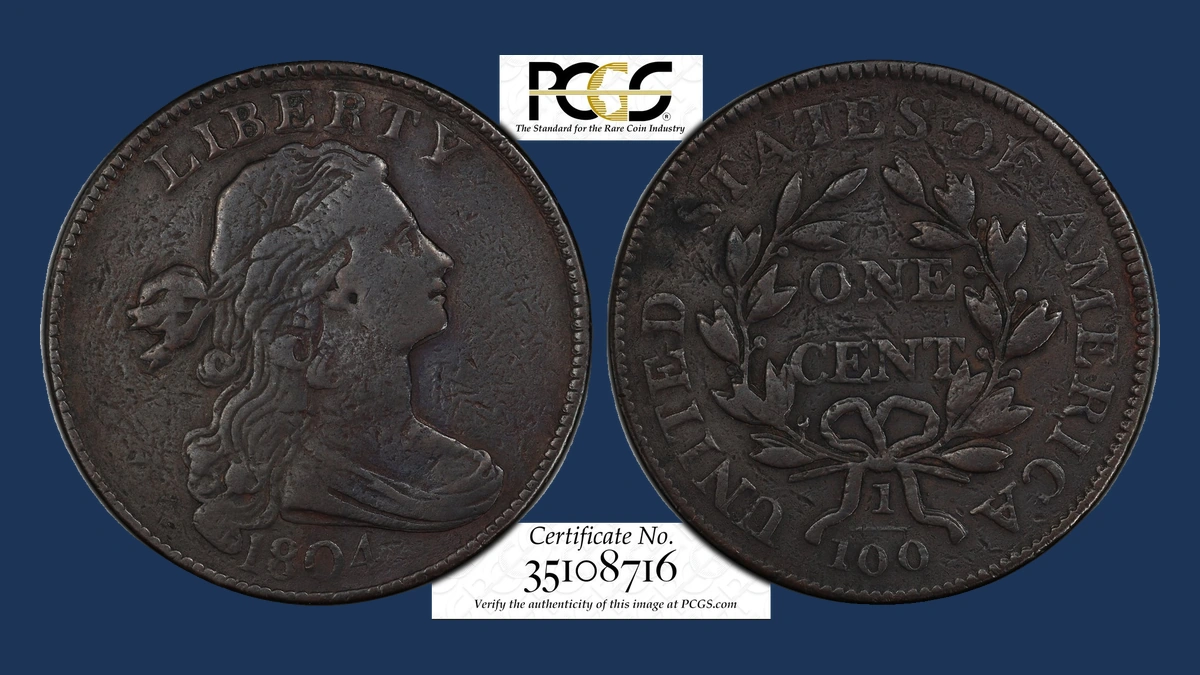
A second outline at Liberty’s chin prompted discussion of a possible double strike. The owner reported a PCGS holder naming the error, while other collectors questioned what produced the extra contour.
Some suggested a tool bouncing or sliding during a single striking event. That can leave a flattened ledge without a separate, fully formed second design.
The distinction depends on the surviving metal, not merely on whether the old press was operated by hand. A manual press can also produce movement during the blow.
The forum photographs and disagreement do not settle the mechanism on their own.
Estimated Value
A confirmed double-struck 1804 large cent in worn condition has an estimated $2,000–$20,000 range. Clear displaced design details would matter more than one thick-looking chin.
This estimate is not a sale value assigned to the debated forum piece. As a different-year comparison, a damaged, heavily worn 1817 Coronet cent with a second strike sold for $264 in June 2019.
The much scarcer 1804 date changes the starting value. A bouncing-tool explanation would not justify the same double-strike premium.
How to Identify
Use a 10× magnifier to compare the chin’s extra contour with the normal portrait. A flat shelf that narrows the original outline needs a different explanation from a separate rounded design.
Then inspect nearby features and the entire back. Two genuine blows should leave evidence that can be explained as one sequence, rather than an isolated interesting line.
The discussion of this coin contains competing interpretations. Include clear views of the holder and both faces when asking an early-copper specialist to examine it.
For a safely handled loose cent, a scale and calipers check about 10.89 grams and 29 millimeters. Photograph the plain edge too, since later pressure or alterations may leave evidence there.
4. 1804 Draped Bust Cent Back Design Tilted Counterclockwise
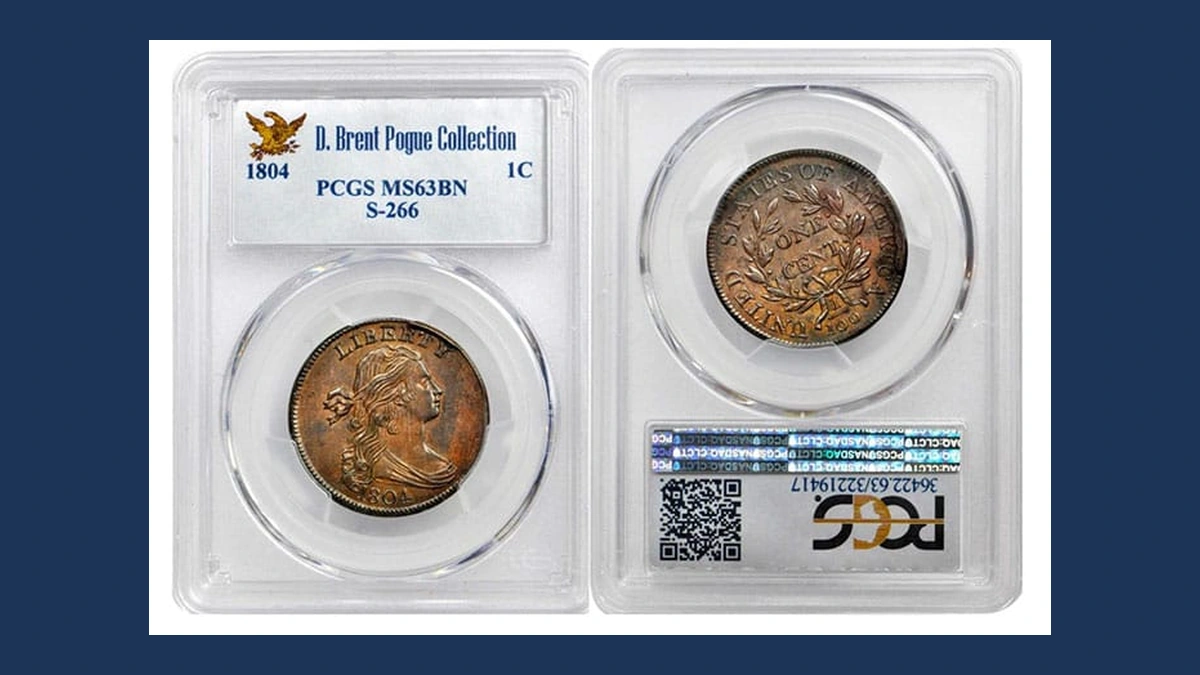
The back of an original 1804 cent may lean after the front is held upright and the coin is flipped top to bottom. A published description places the tilt near forty-five degrees counterclockwise.
This alignment is associated with the original pair of stamping tools. It is not automatically a rare, isolated accident on one surviving coin.
Separate photographs can conceal the tilt if each face is turned upright before being saved. The relationship between the two faces must remain fixed.
The feature also differs from a design shifted toward the rim. Rotation changes direction rather than simply moving the center.
Estimated Value
For original 1804 cents with this familiar alignment, estimate about $1,500–$75,000 across worn grades. Condition and surface quality drive most of that broad whole-coin range.
The angle alone should not receive a large separate premium. As a same-date condition comparison, an AU Details cent with altered surfaces sold for $19,200 in August 2024.
That result is not offered as a priced rotation error. An attractive, lightly worn original can differ greatly from a damaged coin with the same alignment.
How to Identify
Place the date below an upright portrait, then flip the coin top to bottom without turning it sideways. The wreath side should normally read upright under this coin-turn method.
Photograph the observed tilt before moving the back into a more attractive position. A transparent protractor can compare the reported roughly forty-five-degree counterclockwise angle.
Use a 10× magnifier to check the date and original large-cent design, including ONE CENT and the fraction beneath the wreath. Later private restrikes require a different comparison.
A loose copper original can be checked with a scale against 10.89 grams and calipers against about 29 millimeters. Keep the plain edge in view while repeating the flip so that handling, rather than the tool alignment, does not create the apparent angle.
5. 1804 Draped Bust Cent Faint Transferred Design Marks
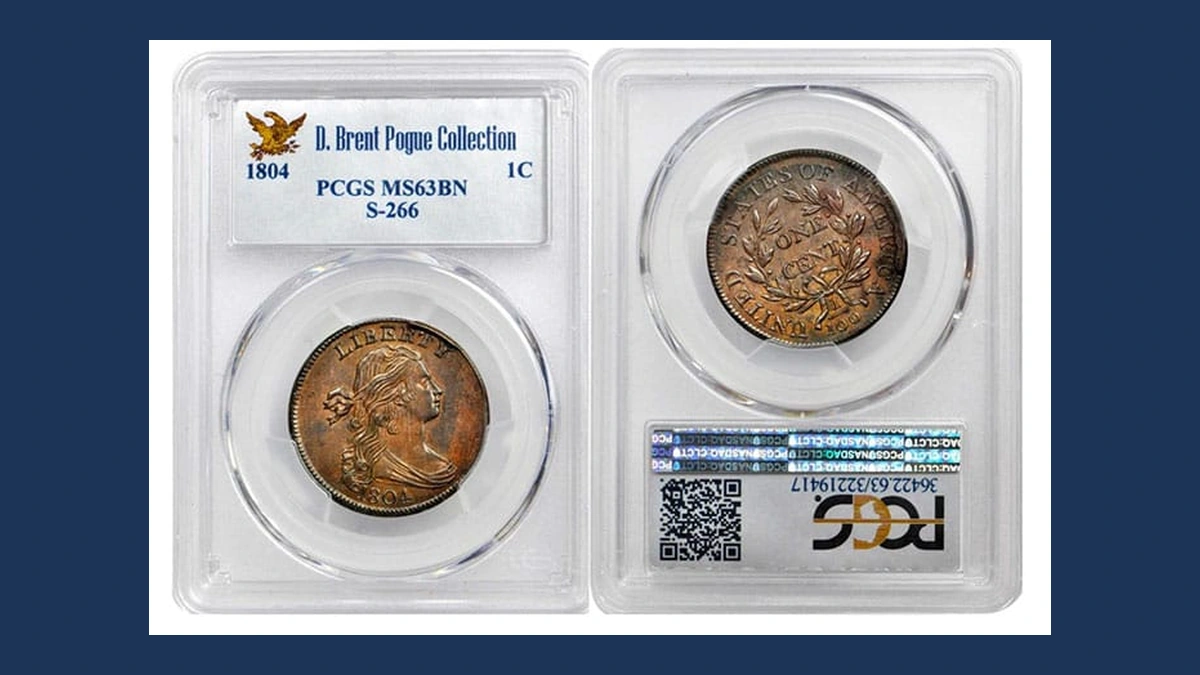
Unfamiliar faint lines can appear near Liberty’s face or around the back lettering. Some are fragments of the opposite design transferred through contact between the stamping tools.
This is called a die clash. The tools hit each other without a blank between them, and later coins copy the resulting marks.
A recorded 1804 example shows traces near the profile, throat, and below the hair bow. The Cardinal coin has faint back marks around S in STATES, OF, and below M in AMERICA.
Clash marks can occur before the broad rim breaks develop. A coin need not show both features.
Estimated Value
Estimate $1,500–$25,000 for worn original 1804 cents with visible clashes, with outstanding lightly worn coins potentially reaching $25,000–$250,000. These are whole-coin estimates, not prices for faint lines alone.
An AU Details example with altered surfaces sold for $19,200 in August 2024.
The Cardinal coin’s much higher result reflects exceptional preservation of the scarce date. Its clashes and rim breaks are features of one coin, so their values cannot be added together.
How to Identify
The clue is a shape that belongs to the other face. Compare full photographs before deciding whether a faint mark near the throat is a scratch or a transferred design.
Use a 10× magnifier with light nearly level with the surface. Check the hair-bow area on the front and the recorded lettering areas on the back as separate observations.
Do not require a broad rim break before looking for these marks. Earlier coins from the same tools can carry clash traces without the later breaks.
A scale and calipers can document a loose original against 10.89 grams and about 29 millimeters, with a plain edge. Leave certified coins in their holders.
Match each suspect outline to a specific opposite-side detail rather than treating all fine lines as clash marks.
6. 1804 Draped Bust Cent Raised Rim Breaks above LIBERTY and AMERICA
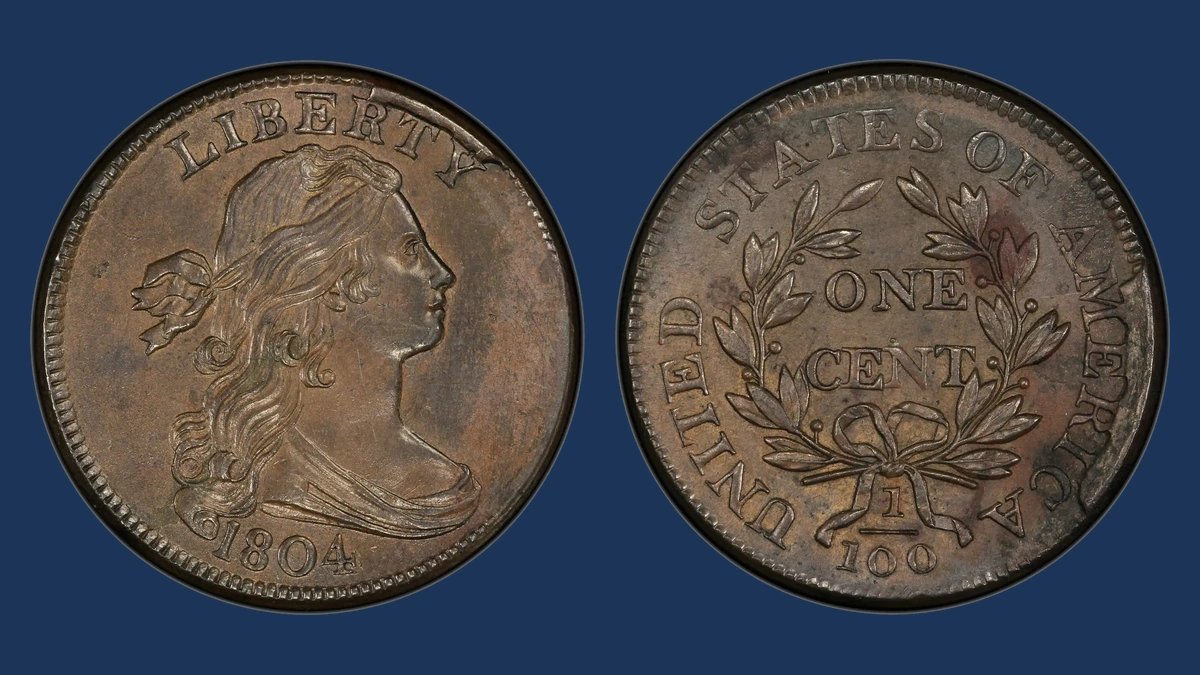
A raised patch can crowd the top of RTY in LIBERTY on an original 1804 cent. On later examples, another patch reaches above MERIC in AMERICA on the back.
These are cuds, formed when pieces broke from the stamping tools beside their edges. Copper entered the resulting spaces and rose above the intended surface.
The two patches show changes in the same original tool pair. Their different combinations do not mean that every original cent must display both.
The later private restrike has a different history and different tools. Its cracks cannot substitute for these original rim breaks.
Estimated Value
Worn original 1804 cents with these breaks fit an estimated $1,500–$25,000 range. Exceptional lightly worn pieces can fit roughly $25,000–$250,000.
The Cardinal PCGS AU55 example, with very light wear, sold for $223,250 in January 2013. It had both prominent rim breaks and unusually attractive surviving surfaces.
That is the value of a celebrated scarce-date coin, not a standard cud premium. A rough, heavily worn example with the same break pattern belongs in a very different comparison.
How to Identify
Begin above RTY rather than at any random edge bump. Under a 10× magnifier, follow the raised patch to the rim and compare it with photographs of an original 1804 cent.
Turn to the back and examine the area above MERIC separately. An example from an earlier stage may lack that second patch, so its absence alone does not prove the coin false.
Inspect the plain edge beside each patch for a dent or pushed metal, and record a loose coin’s weight and width with a scale and calipers. The normal copper comparison is about 10.89 grams and 29 millimeters, but the date, design, and exact break shapes remain essential checks against altered coins.
Conclusion
Estimated whole-coin values here range from $1,000–$250,000, with preservation and the scarce 1804 date strongly affecting the result. A tiny peeling flaw and a raised rim break require different checks.
Confirm the original large-cent design before comparing an unusual feature. Then inspect the relevant edge, overlapping outline, or front-to-back alignment.
A coin carrying several features still has one combined value. Clear photographs and a specialist’s examination are especially useful for altered dates or disputed double strikes.