1821 Cent Error List with Pictures

A thin line beside Liberty’s bust can look like a scratch yet come from the original stamping tool. One unworn 1821 example was offered at $18,500, largely for its preservation.
This 1821 cent error list uses estimated whole-coin ranges of $75–$20,000. For an actual auction comparison, an unworn 1825 cent with a crack sold for $12,650 in September 2011; that is a different year.
Use the visible features below to separate original mint problems from later damage.
1. 1821 Coronet Head Cent Peeling Layers in the Copper
A copper sheet can separate from the metal beneath it, leaving a flap or a shallow missing patch. Collectors call this lamination.
The 1821 year guide includes lamination among the date’s reported errors. It does not identify a particular coin or locate a patch beside specific lettering.
The feature to recognize is layered metal, rather than roughness alone. Corrosion can eat into an old copper cent without separating an original sheet.
A peeling surface also does not mean the entire blank split into two complete pieces. That is a larger, different claim requiring evidence through the thickness of the coin.
Estimated Value
For a worn 1821 cent with clear lamination, use an estimated $75–$500 range. Larger, more visible separations on better-preserved examples can fit roughly $500–$2,000.
As a nearby-type comparison, an 1840 cent graded VF30 sold for $108 including premium in May 2025. That moderately worn coin had lamination and other surface problems.
This is a different-year sale, not a price for an identified 1821 example. A peeled area may reduce eye appeal even when it formed at the Mint.
How to Identify
A peeling sheet is fragile, so keep fingers and measuring tools away from its edge. A scale can weigh a loose cent against the 10.89 g standard without touching the damaged surface.
Use a 10× magnifier and low light to inspect where the sheet separates. Surviving design may continue onto an attached flap, unlike a scraped patch that cuts across finished letters.
Calipers can record undamaged spans around the normal 28 mm diameter. Missing surface copper may lower weight without changing that width.
Photograph the boundary from more than one angle. Look for a layered break rather than relying on scattered corrosion pits or a patch that merely has a different color.
2. 1821 Coronet Head Cent Incomplete Edge with a Reported Crack
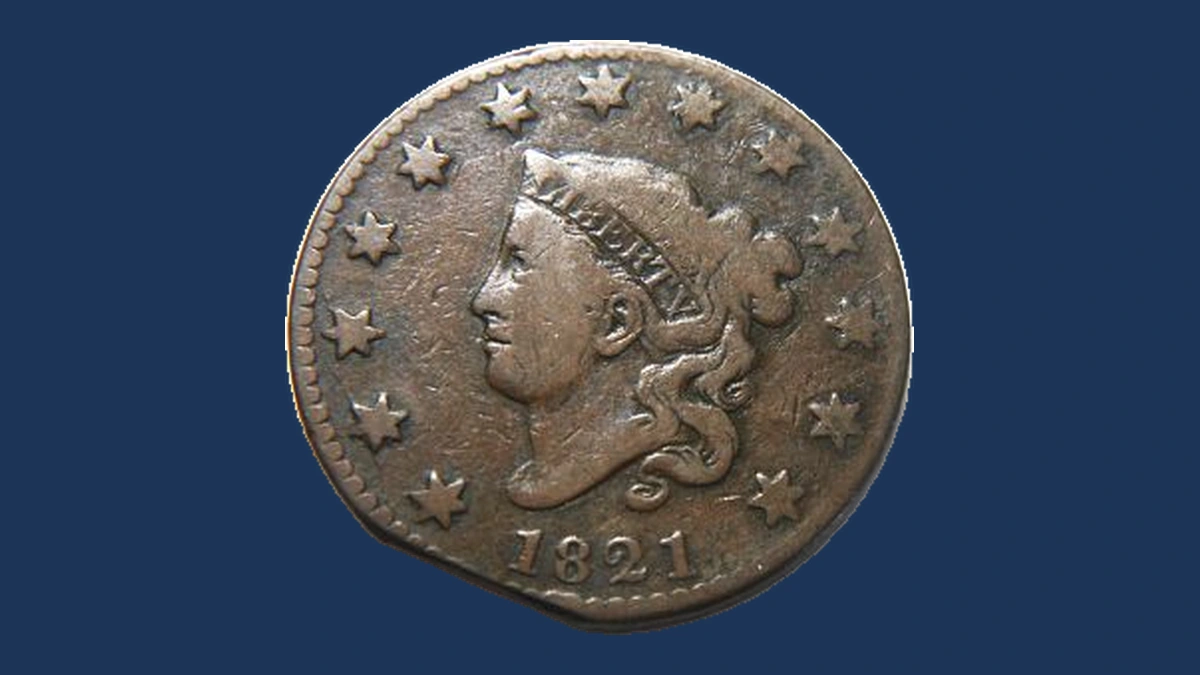
An incomplete copper blank can receive a normal cent design but keep a missing piece at its edge. This is a clipped planchet, meaning the shortage began before striking.
A seller on USA Coin Book lists an 1821 cent with both a clip and a die crack. The stated grade is VG+, indicating substantial wear.
The listing does not give the clip’s clock position, shape, or percentage. Those features should be read from the actual coin rather than assumed from another clipped cent.
A raised crack and an incomplete edge can coexist, but they come from different problems during manufacture.
Estimated Value
The seller’s VG+ clip-and-crack example was listed at $269.95 before shipping. That is an asking price for the whole coin, not a completed sale.
Estimate $150–$700 for worn 1821 clips of modest size. Larger, clearer examples with better surfaces can fit roughly $700–$2,500.
The crack does not justify adding a second full coin price. Evaluate the edge shortage, remaining detail, and surface quality together when comparing that combined example.
How to Identify
A fresh cut can look convincing from above, so the gap’s side wall matters. Under a 10× magnifier, inspect both ends of the missing section for filing, sawing, or a sharp cut across finished detail.
An original shortage may also leave a weak rim opposite the gap. Check that area, but do not rely on it alone because wear can soften the rim too.
Weigh a loose coin with a scale against 10.89 g, then use calipers on intact spans near the usual 28 mm. The amount missing, together with wear, influences the weight.
Keep the whole edge in the photograph so a small clip is not made to look large by cropping.
3. 1821 Coronet Head Cent Wreath Turned after a Top-to-Bottom Flip
The wreath should be upright after you flip an upright portrait from top to bottom. If it leans, the front and back stamping tools may have been set at different angles.
This is called die rotation. The term describes the relationship between the two faces, not the position of the design within the rim.
The year guide reports rotation for 1821 but does not establish a measured example. Its general discussion of quarter turns and half turns should not be read as confirmed angles for particular coins.
A sideways flip or independently rotated photograph can create the same apparent lean.
Estimated Value
Estimate $100–$700 for worn 1821 cents with a clearly measured rotation. Better-preserved examples with a substantial visible turn can fit roughly $700–$4,000.
An actual comparison is the rotated 1852 NGC MS65+ Red-Brown cent that sold for $2,350 in November 2014. It was unworn and is a different date.
The 1821 ranges are estimates rather than a recorded sale of a measured example. A slight lean may add little to the value of the underlying cent.
How to Identify
Place a straight vertical line behind Liberty and hold the portrait upright. Turn the coin over from top to bottom while keeping your fingers from twisting sideways.
A protractor can measure the wreath’s angle in the resulting photograph. Use a 10× magnifier to find the central line through worn leaves, rather than judging from a single tilted letter.
The copper type normally measures about 28 mm and weighs 10.89 g; a scale and calipers check loose examples. Repeat the fixed-line flip before recording a direction, because those size checks cannot reveal whether a photograph or your grip introduced the turn.
4. 1821 Coronet Head Cent Shifted Design with Bare Copper beside It
When a blank sits away from the center of the press, part of the coin can remain bare. The design is cut off where the tools extend beyond the blank’s edge.
An off-center strike therefore leaves two linked clues: missing design and unstruck copper. It does not necessarily mean metal is missing from the coin itself.
The 1821 year guide reports this error without naming a measured specimen. No particular percentage or clock direction is assigned to its report here.
A shifted design on only one face needs a different assessment because a single tool can be misplaced.
Estimated Value
A worn 1821 cent with a clear off-center strike fits an estimated $500–$2,500 range. Better detail, cleaner surfaces, and a readable date can support roughly $2,500–$6,000.
A 25% off-center 1829 PCGS VG10 sold for $1,380 in December 2024. That heavily worn coin is a same-series comparison from a different year.
Its 25% measurement is not evidence for an 1821 percentage. Compare the amount of surviving design on the actual coin before using the estimated range.
How to Identify
Compare the two faces first. The blank’s misplaced position should explain both the missing design and the copper left outside the struck area.
Under a 10× magnifier, inspect where the design ends. Flattened lettering, tool marks, or a sharply cut edge can show that a finished coin was altered later.
An unstruck crescent still has weight. Use a scale on a loose example to compare the original 10.89 g standard, allowing for circulation wear and corrosion.
Calipers record its outline against the usual diameter of about 28 mm; an irregular strike may not measure equally in every direction.
Photograph the date within the full outline so the year and the error remain connected in the same view.
5. 1821 Coronet Head Cent Fine Raised Line from the Bust to the Rim
A faint line leaves Liberty’s bust tip and reaches the rim just right of the first star. A dealer described this mark on an 1821 N-1 as a fine die crack rather than a scratch.
A die is the tool that stamps the coin. When it cracks, copper can fill the opening and leave a raised line on the finished surface.
The dealer’s example was PCGS MS62 Brown, meaning it had no circulation wear. A separate worn seller example combines a crack and a clip.
The crack path on that clipped coin is not identified as the same N-1 path.
Estimated Value
The unworn N-1 was offered at $18,500, an asking price driven largely by condition. Fine cracks on worn 1821 cents fit an estimated $75–$800 whole-coin range.
Strongly preserved examples can occupy roughly $800–$20,000, so grade makes an enormous difference. For an actual different-year comparison, an 1825 PCGS MS64 Brown with a back crack brought $12,650 in September 2011.
Neither high figure is the value of a thin crack by itself.
How to Identify
Move a low light across the suspected line before tracing its route. A 10× magnifier should show a ridge above intact copper, rather than a groove through the surface with disturbed edges.
The N-1 ridge runs from Liberty’s bust tip toward the rim just right of the first star. On a loose cent, a scale and calipers can check the 10.89 g and roughly 28 mm standards, but measurements cannot distinguish this fine crack from a scratch.
A clipped example may carry a completely different crack path. Photograph its own line clearly instead of using the N-1’s documented route to identify a mark in another position.
Conclusion
The clearest 1821 examples here concern an incomplete edge and a raised line beside Liberty’s bust. Peeling copper, shifted strikes, and turned backs require their own visible checks.
Estimated whole-coin prices run from $75 to $20,000, including expensive, well-preserved cents. The reported $18,500 amount is an asking price, not a sale.
Photograph both faces and the edge before buying an error. Match the actual feature and condition instead of borrowing another year’s angle or auction result.