2011 Nickel Error List with Pictures

A genuine mint error can also have damage from later handling. One off-center 2011-P nickel carried both descriptions and sold for $63 in January 2022.
That distinction matters when comparing 2011 Jefferson nickel errors. The estimated ranges here run from $3 to $500, covering weak mint letters, extra design outlines, broken tools, and misplaced strikes.
Work through the visible clues below to separate the original mistake from wear, scratches, or changes that happened after the coin left the Mint.
1. 2011 Jefferson Nickel Weak or Incomplete Mint Letter
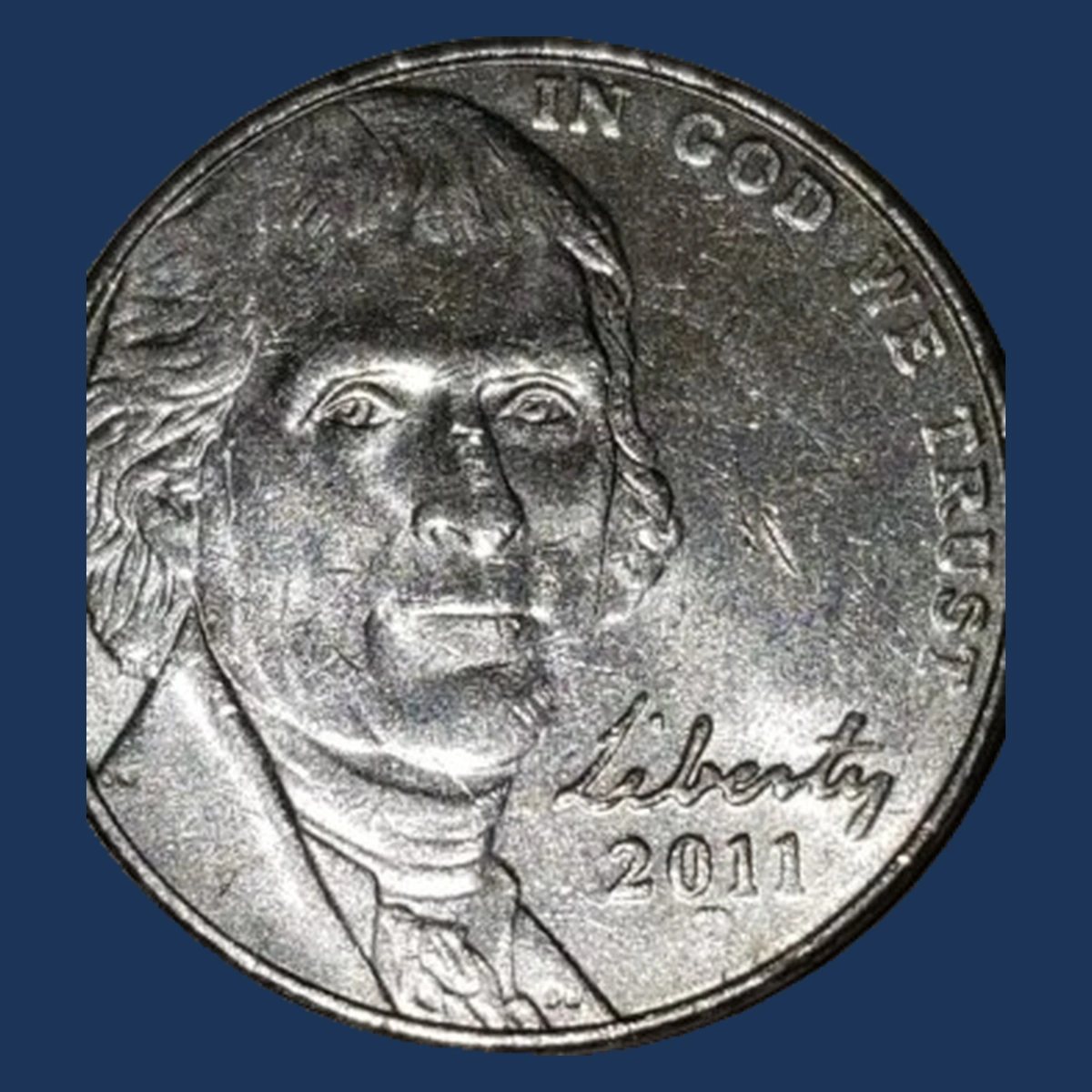
The D may appear incomplete while the surrounding date and portrait remain clearer. A reported 2011-D example shows this effect, and weak mint lettering has also been reported for Philadelphia coins.
Grease can fill a recess in the die, the steel tool that forms the design. The filled recess then fails to produce its usual raised detail.
This is not automatically a special “no mintmark” variety. Wear, a weak strike, or deliberate removal can also affect a small mint letter, so the surrounding surface needs close attention.
Estimated Value
For a genuine grease-filled mint-letter area, an estimated $3–$25 is appropriate. Slight weakness belongs near the bottom, while an obvious incomplete letter on a clean unworn coin can bring more.
The range is a collector estimate, not a claimed auction price for the reported 2011-D piece. That example came from a seller’s description rather than a documented grading-service result.
A missing letter alone does not create a major rarity. Damaged or worn-away mintmarks fall outside this error range.
How to Identify
Look for the surviving part of the mint letter before deciding it is completely absent. A 10× magnifier and photographs under changing light can reveal a small stroke hidden by a shadow.
Compare the surface with the nearby date, watching for a polished hollow, scratches, or metal disturbed by deliberate removal. General wear usually affects other raised details too, while a blocked recess can leave a local weakness beside sharper features.
Use a scale and calipers to compare a loose coin with 5 g and 21.2 mm, then inspect its plain edge. Include the date and surrounding portrait in the image so a close crop does not hide damage around the weak letter.
2. 2011 Jefferson Nickel Building Traces on the Portrait Side
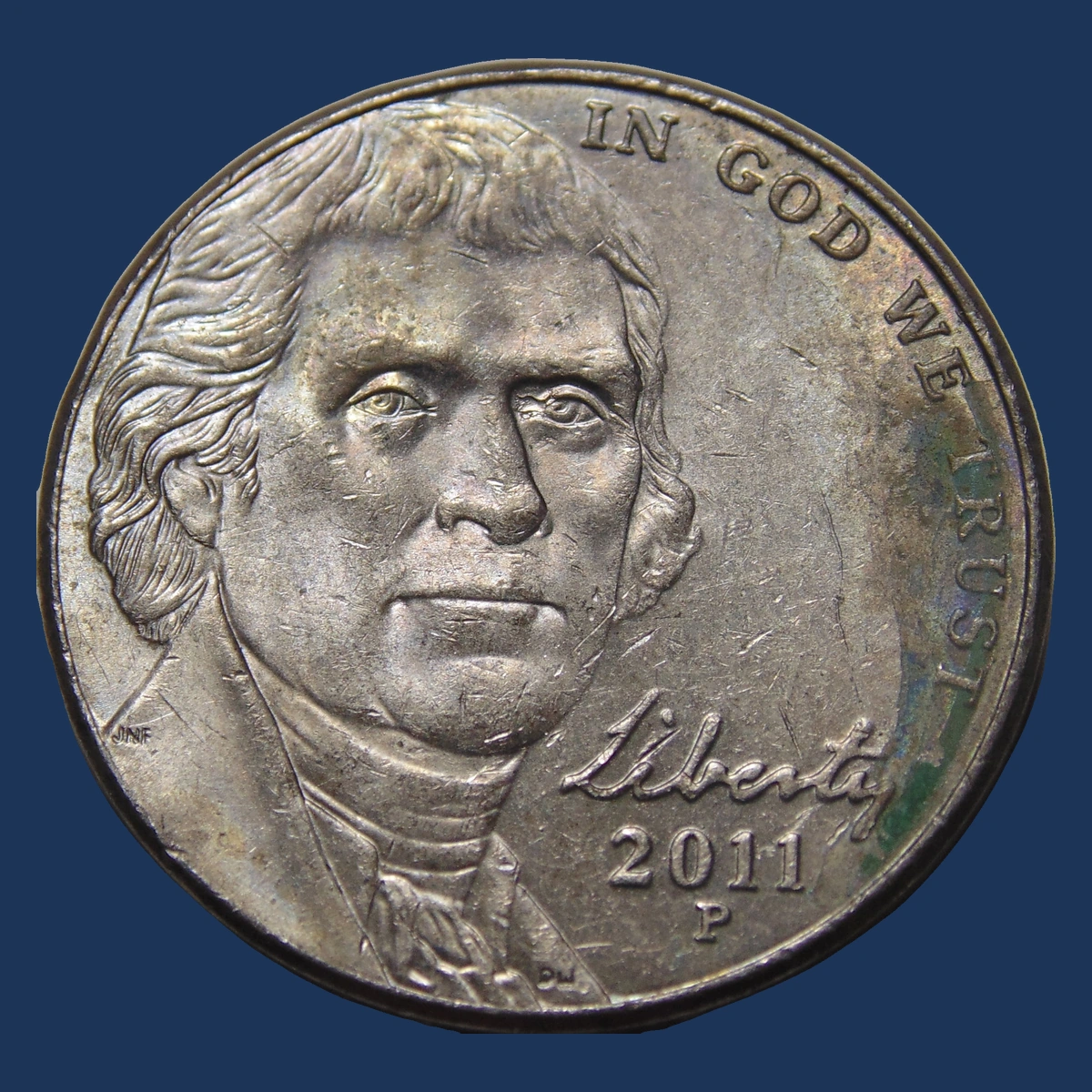
Monticello belongs on the back, but faint parts of its design can appear on the portrait side after a die clash. This effect is reported on 2011-P nickels.
The stamping tools touched without a blank between them. Damage from that contact then appeared on coins struck afterward.
The extra shape need not be a complete building or a deep impression. A short trace is meaningful only when its position and shape agree with the opposite design.
Random raised lines, surface dirt, and marks from later squeezing can otherwise suggest a misleading resemblance.
Estimated Value
An estimated $5–$60 covers recognizable 2011-P clash marks. Clear traces on clean unworn coins tend to attract more interest than faint shapes surrounded by wear.
This is an estimate for the visible feature, not a specific 2011 auction result. The upper end requires a convincing match to the building design.
Do not count every additional line as another valuable error. A few understandable traces can be easier to sell than a busy surface whose marks have several unrelated causes.
How to Identify
Begin with the portrait side and locate the extra mark in relation to Jefferson. Compare that position with Monticello on the opposite face instead of searching for any roughly similar curve.
A 10× magnifier and low-angle light can separate the faint extra shape from dirt or a cut-in scratch. Keep the surrounding portrait in view while making the comparison.
The loose coin’s normal specifications are 5 g and 21.2 mm, checked with a scale and calipers, with a plain edge. Ordinary measurements confirm the basic coin type rather than proving the clash.
If the mark looks like a complete sunken backward design, investigate direct contact with another coin instead. A clash generally leaves partial transferred traces beside the normal design.
3. 2011 Jefferson Nickel Extra Nose and Doorway Outlines
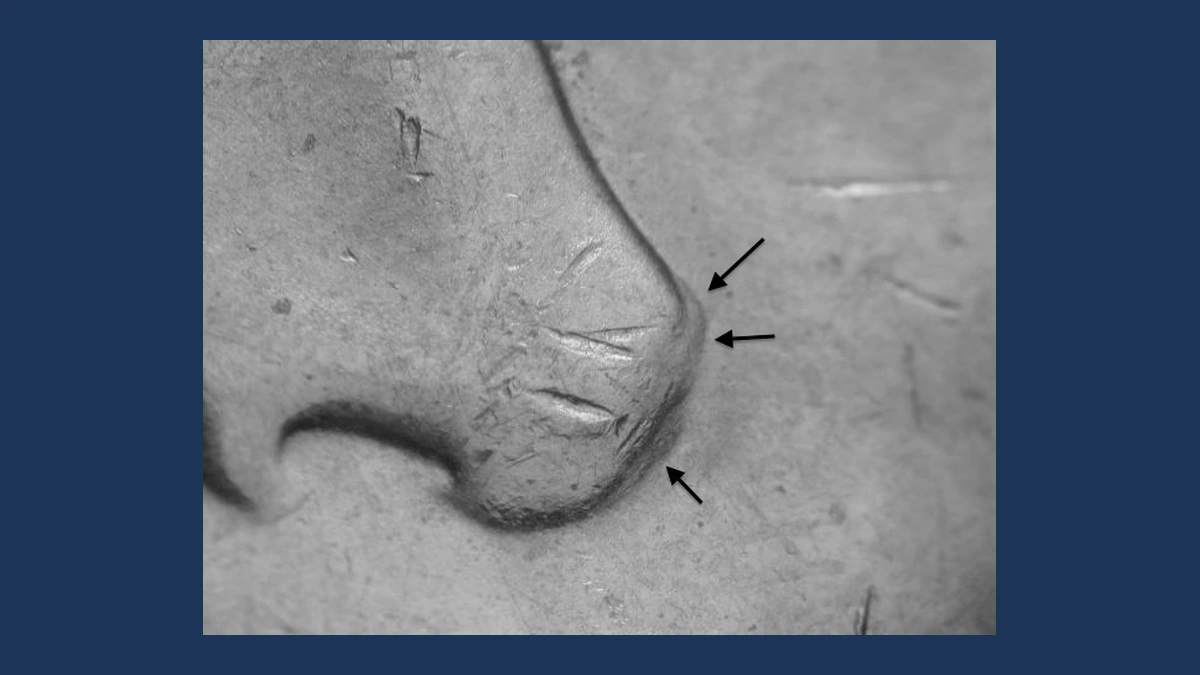
On a reported 2011-D front, an extra raised outline follows the right side of Jefferson’s nose. Back-side reports place added detail beneath the upper-left corner of Monticello’s central doorway.
These features are described as doubled dies: stamping tools that contain duplicated parts of the design. A coin does not need to receive two blows to copy that duplication.
Philadelphia and Denver back examples must be compared separately. They were made with different tools, even when the extra detail appears in a similar part of the doorway.
Estimated Value
For a clearly matched example, estimate $5–$75. Unworn surfaces and a well-defined extra outline support the higher part of this modest modern-variety range.
The estimate applies to actual design duplication. A broad shadow beside the nose or a flat mechanical shelf around the doorway does not receive the same premium.
Photographs should show the added shape in relation to the normal design. The number of enlarged close-ups is less important than one image that demonstrates the feature clearly.
How to Identify
For the nose feature, read the D first and compare a normal 2011-D portrait with the candidate. Examine the right side of the nose through a 10× magnifier without confusing a lighting shadow with raised metal.
For the doorway, keep the upper-left corner and nearby normal framework in the same image. Use a comparison from the same mint, rather than treating P and D examples as copies of one tool.
A scale and calipers should compare a loose coin with 5 g and 21.2 mm. Inspect its plain edge too.
Flat shelves that narrow the original design are common lookalikes. Follow the extra outline through its full shape before deciding whether it repeats part of the design or merely changes an edge.
4. 2011 Jefferson Nickel Missing Section from the Blank
A section of the nickel’s outline can be absent because the original blank was incomplete. A blank is the metal disc cut from strip before it receives the coin’s designs.
Clips can result from overlapping a previously punched hole or reaching the end of the metal strip. A curved opening is therefore not the only possible genuine shape.
The 2011-P reports concern this missing-blank type. Shape must be considered alongside the cut surface, nearby design, and metal flow; later cutting or filing can also make a coin incomplete.
Estimated Value
A 1997-P nickel with a 20% curved clip sold for $124 in March 2025. That earlier coin provides a price comparison for a clearly visible missing section.
For 2011-P examples, estimate $15–$150, depending on size, wear, and how convincingly the clip can be shown. Small missing sections usually cost less.
The comparison does not limit genuine clips to curves. A straight example still needs evidence that the metal was absent before striking, rather than cut away afterward.
How to Identify
Look at the opening from the edge, not only from the portrait side. A 10× magnifier can show cutting grooves or burrs that suggest later damage.
Inspect both ends for natural changes in the nearby struck detail. A weak rim opposite the gap can add support, but it should not replace those other checks.
Compare an intact diameter with 21.2 mm using calipers, and record weight on a scale against the normal 5 g. Missing metal should reduce the weight, though later cutting does that as well.
The remaining edge is plain. Include both faces in photographs so a straight or curved gap can be assessed from its metal and design boundaries, rather than being accepted or rejected solely by shape.
5. 2011 Jefferson Nickel Raised Cracks and Rim-Connected Blobs
A thin raised line on a 2011-P nickel can record a crack in its stamping tool. Pressure pushes metal into the narrow opening and leaves the line above the coin’s surface.
A reported 2011-D rim break is larger. Part of the tool’s edge was missing, so the coin developed a raised patch instead of normal design detail there.
This rim-connected patch is called a cud. A tiny interior blob or a sharp dent is not the same feature, and the P crack and D break are separate examples.
Estimated Value
Estimate $3–$25 for small crack lines and $30–$200 for a substantial rim-connected break. Those ranges reflect very different amounts of visible tool damage.
A 1983-P Jefferson nickel with a cud sold for $63 in July 2022 at PCGS AU53, a lightly worn grade. That is a different-year comparison, not the price of the reported 2011-D coin.
Original surfaces and a clear rim connection help support the larger premium. A battered edge can make a similar shape far less appealing.
How to Identify
For the D rim break, inspect the point where the raised patch joins the edge. The patch should replace normal detail, rather than look like loose material added over an intact design.
For a P crack, follow the narrow line under a 10× magnifier and side light.
A ridge above the surface differs from a scratch cut into it.
Use a scale and calipers on a loose coin to compare 5 g and 21.2 mm. Examine the plain edge beside the affected area for folds caused by an impact.
Photograph the opposite face as well. Weakness opposite a large break can help explain how metal moved during striking, while fresh damage on the edge needs to be judged separately.
6. 2011 Jefferson Nickel Expanded Border around a Complete Design
The main designs may fit completely on a coin that looks wider than usual. A broadstrike occurs when the surrounding metal ring fails to contain the blank during the blow.
That ring normally controls the outline. Without its proper support, the metal can spread outward and leave an enlarged or uneven border.
The 2011-P report concerns this expansion, rather than missing design at one edge. A normal nickel has a smooth edge already, so the lack of grooves does not show that the retaining ring failed.
Estimated Value
Use an estimated $25–$250 for genuine 2011-P broadstrikes. A clear enlarged border and complete, attractive design can justify more than barely noticeable expansion.
A 1999-P broadstruck nickel sold for $89 in March 2025 at PCGS MS63. It is an unworn, different-year comparison for the same general mechanism.
Width alone cannot set the price. A coin squeezed flatter after leaving the Mint may also spread, but damaged design and pressure marks place it outside this mint-error range.
How to Identify
Check that the portrait, lettering, and building remain on the coin before measuring its width. A missing section of design can instead point toward an off-center strike.
With calipers, measure the loose coin in several directions against the normal 21.2 mm. Record its weight with a scale against 5 g, since spreading should not remove the original metal.
Look through a 10× magnifier at the broad border and plain edge. Natural outward metal flow should agree with the expanded outline.
Compare the highest parts of both faces with a normal nickel. Flattened letters and matching pressure marks may reveal later squeezing, even if the final diameter is much larger than an ordinary coin.
7. 2011 Jefferson Nickel Dark Surface from Blank Heating
A dark nickel is sometimes called a “Black Beauty.” For a genuine heating error, the unusual surface developed during annealing, the step that softens a blank before it is stamped.
The metal’s surface chemistry can change if that process goes wrong. Reports list the type for 2011-P and 2011-D nickels.
The nickname itself proves nothing about the cause. Burial, chemicals, later heating, and ordinary aging can also darken a coin, even when some shine survives; a solid copper-nickel coin does not have a plated outer layer to peel away.
Estimated Value
A genuine 2011 annealing error has an estimated range of $30–$250. The coin’s condition and a reliable explanation for its dark surface matter more than the nickname.
A 2005-D Bison nickel with improper annealing brought $119 in December 2022, graded NGC MS62. That unworn example is a different-year comparison.
Dark stained coins do not share that value automatically. The estimate assumes the surface change belongs to the blank-heating process rather than damage or contamination after minting.
How to Identify
A normal 5 g weight does not prove that a dark nickel was improperly heated at the Mint. Use a scale and calipers to record a loose coin’s weight and approximately 21.2 mm diameter, then assess the surface separately.
Compare it with an ordinary nickel under neutral light. A warm bulb or altered photograph can exaggerate a coppery shade.
Through a 10× magnifier, inspect the plain edge and raised high points for a coating wearing through. Deposits, pitting, or chemical damage may explain darkness without any original heating mistake.
Keep those areas uncleaned.
A specialist needs both texture and color to assess the origin, since surviving shine alone does not rule out all later changes.
8. 2011 Jefferson Nickel Back Turned away from Upright
Monticello may lean far away from upright after the portrait is held straight and the coin is flipped top to bottom. A 2011-D example has been reported with about 120 degrees of rotation.
The two stamping tools were turned out of their normal relationship. This changes how the faces line up, without requiring a shifted portrait or missing design.
The angle must be measured during the same controlled turn. Two separate photographs can each be tilted, so their apparent mismatch alone cannot establish a rotated-tool error.
Estimated Value
For a clearly demonstrated 2011-D rotation, estimate $40–$300. Strong turns with attractive unworn surfaces are easier for collectors to appreciate than slight tilts.
A 2015-D nickel with a 90-degree clockwise rotation sold for $79 in October 2021 at PCGS MS64. That later coin has a different angle from the roughly 120-degree 2011 report.
The sale is a comparison, not a transaction for the earlier coin. Confirm the angle before using either listing to judge a particular example.
How to Identify
Try the turn with an ordinary nickel first. Hold Jefferson upright and flip top to bottom without rotating the coin sideways; Monticello should then appear upright.
Repeat exactly that movement with the 2011-D coin. Record the turn in a continuous video, then measure the back’s angle from upright with a protractor.
A 10× magnifier should also check the plain edge for a seam joining two altered faces. With a scale and calipers, compare a loose coin against 5 g and 21.2 mm.
Keep the mint letter visible at the start of the recording. For a certified coin, leave the holder sealed and use its fixed orientation instead of removing the coin to show the rotation.
9. 2011 Jefferson Nickel Off-Center Design with Later Damage
A 2011-P nickel offered by Heritage has an off-center strike and separate damage. Its design missed part of the blank because the disc was not correctly positioned under the stamping tools.
The untouched crescent and cut-off design explain the original mint error. Damage suffered afterward affects condition and value without changing how that misplaced strike occurred.
The NGC description gives lightly worn detail but also flags the damage. Those two observations belong together: the coin is an error example, yet it should not be priced as an undamaged one.
Estimated Value
The damaged 2011-P example sold for $63 on January 3, 2022. NGC described it as AU Details, meaning lightly worn detail with a condition problem.
For 2011 off-center strikes, estimate $30–$500 across different shifts and conditions. Readable dates and undamaged surfaces support higher prices.
The range does not turn the damaged auction coin into a $500 example. A larger, clean displacement would need to be judged on its own visible features.
How to Identify
Identify the off-center geometry first: original blank metal on one side and corresponding lost design on the other. Examine both faces to distinguish a displaced blank from a problem limited to one stamping tool.
Under a 10× magnifier, inspect the boundary of the struck area and record damage separately. Scrapes or dents should not be treated as extra minting effects.
For a loose nickel, a scale should compare the original 5 g, while calipers record the outline against a normal 21.2 mm blank. A distorted outline can result from striking, but cuts at the plain edge suggest missing metal.
Keep 2011 and the P visible in photographs. A clear date makes the auction comparison meaningful without guessing a displacement percentage that the description did not give.
Conclusion
Estimated values for these 2011 Jefferson nickel errors span $3–$500. Small weak details and faint raised lines occupy the lower end, while clear rotations and dramatic displaced strikes can bring more.
The damaged off-center auction coin shows why error and condition must be judged separately. Keep both faces, the edge, and the date visible in your photographs, and leave surfaces untouched while comparing the specific feature with a genuine example.