1799 Cent Error List with Pictures

Look beyond the date on a suspected 1799 cent. A small raised lump or a particular crack can help separate an original coin from an altered 1798.
This 1799 Draped Bust cent error list covers estimated whole-coin values of $1,000–$1,000,000. For perspective, an exceptional normal-date cent brought $977,500 in September 2009; that was the value of a rare complete coin, not a tiny defect alone.
Read the checks below to connect each feature with the right date variety and price comparison.
1. 1799/8 Draped Bust Cent Clashed Design Traces
Extra outlines near Liberty’s ribbon and throat can come from the opposite stamping tool. On recorded 1799/8 cents, other traces appear below TES and beside the E in ONE on the back.
The two dies, or steel tools that stamp coins, touched without a blank between them. Their contact marked the tools, which passed those traces to later cents.
This is called a die clash. A coin can carry several sets of transferred marks without itself having received several blows.
Early examples from these tools lack the clash marks. Their absence does not automatically make an otherwise matching coin false.
Estimated Value
For worn 1799/8 cents with clear clash traces, estimate $2,000–$125,000 across heavily worn examples and unusually attractive coins with strong remaining detail. The scarce overdate supplies much of that value.
One PCGS XF40 example with delicate clashes on both faces sold for $117,000 in January 2022. XF40 describes a circulated coin with substantial detail.
The sale is a whole-coin comparison. It does not imply that small transferred lines add $117,000 to another cent.
How to Identify
Compare the suspected marks with the design on the opposite face. A transferred outline should resemble a real part of that design rather than an unrelated scratch.
Inspect the ribbon and the open area before the throat with a 10× magnifier. Then check beneath TES and to the right of the E in ONE for the recorded back traces.
For a loose copper cent, use a scale and calipers to compare 10.89 grams and about 28–29 millimeters. Look along its plain edge for later squeezing, which can also transfer marks between coins.
Keep front and back photographs together when checking the pattern. A faint clash should not be described as a full sunken mirror portrait or as a separate second strike.
2. 1799 Draped Bust Cent Uneven Tool Alignment
A front design can sit too far toward the bottom when its stamping tool is out of position. Heritage described this southward shift on a 1799/8 cent whose date remains readable.
Tool alignment can also affect the strength of a strike. If the two tool faces are not parallel, pressure can differ across the blank.
That tilted-tool explanation has been proposed for uneven date and LIBERTY detail on normal-date 1799 cents. It is different from a sideways shift.
Weak lettering alone cannot show which happened. Wear and poor striking can remove detail, so both faces and the edge need comparison.
Estimated Value
The 1799/8 cent with the southward front shift sold for $117,000 in January 2022. It is the same PCGS XF40 coin noted for delicate clash marks.
Use an estimated $1,500–$125,000 for comparable circulated 1799 cents with genuine alignment features. Date variety and overall preservation remain central to the price.
An uneven border is not a separate large premium. Do not add this range to the clash estimate when both features belong to one coin.
How to Identify
Keep the date upright while comparing the distances from the portrait and lettering to the rim. On the auction example, the front impression shifts downward, but the date is still clear.
Now inspect the back in the same orientation. A shift on one face differs from an off-center blank that leaves both designs displaced together.
To assess a possible tilt instead, compare strong and weak areas across both faces under a 10× magnifier. Look for worn high points before assigning weakness to unequal pressure.
A scale and calipers check a loose cent against 10.89 grams and roughly 28–29 millimeters. View the plain edge from several sides for uneven thickness or later filing, without assuming that every weak date proves a tilted tool.
3. 1799/8 Draped Bust Cent Final 9 over an 8
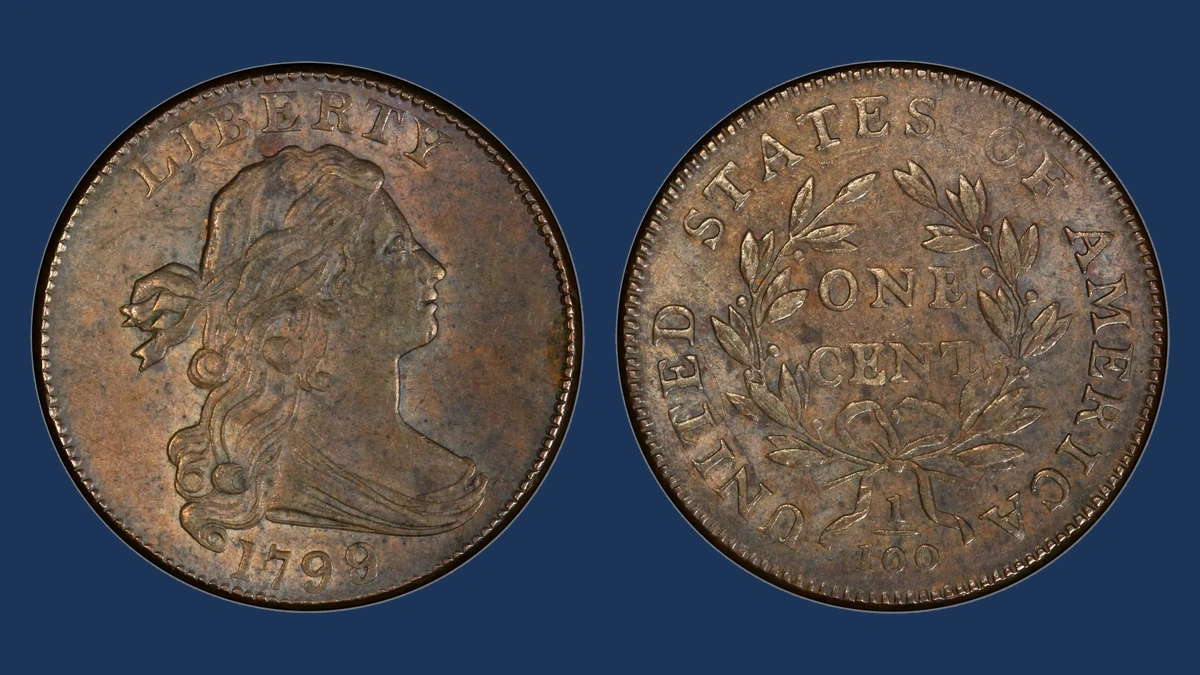
A small extra curve beneath the last 9 belongs to an earlier 8. The date was changed on the stamping tool before the cent was made.
Workers punched a 9 over the final digit of an unused 1798 tool. Coins made from it could retain part of that older numeral.
This is the 1799/8 overdate. It does not describe a finished 1798 cent that somebody later cut or reshaped to read 1799.
The final digit must agree with the rest of the coin’s design. A convincing-looking 9 alone is not enough, especially on a worn or corroded example.
Estimated Value
A strong 1799/8 example graded XF45 brought $368,000 in September 2009. That grade describes moderate wear, not an unworn coin.
For authentic overdates, estimate $2,000–$400,000 from heavily worn examples through exceptional survivors. A different PCGS XF40 example sold for $150,000 in January 2025.
These are prices for complete rare cents. The old 8 identifies the variety, while surface quality, remaining detail, and the particular coin’s appeal determine where a comparison belongs within the range.
How to Identify
Start with the entire date, not an extreme close-up of the final digit. Altered 1798 cents can preserve genuine old surfaces around a newly changed numeral.
For a loose candidate, weigh it and measure its diameter against 10.89 grams and about 28–29 millimeters. Check the plain edge for casting seams or later work, remembering that ordinary size does not establish authenticity.
Use a 10× magnifier to trace the lower loop of the old 8 beneath the last 9. Compare its position with clear photographs of a certified 1799/8.
Finish by matching the lettering, wreath, and other design details on both faces. A specialist should confirm that the whole coin matches genuine stamping tools before an expensive purchase.
4. 1799 Draped Bust Cent Raised Cracks and the CENT Lump
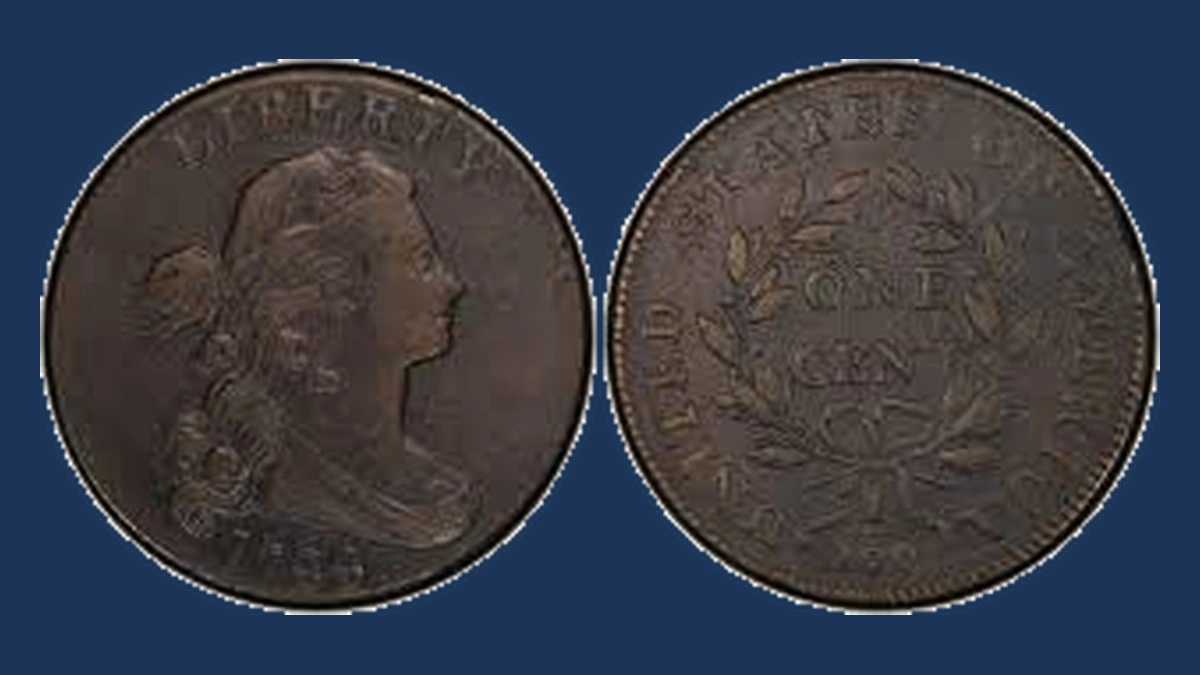
A small raised lump above the T in CENT helps identify many normal-date 1799 cents. It lies between that T and the E of ONE.
Copper entered a defect in the back stamping tool, creating raised metal. The lump is not a letter showing where the coin was minted.
Separate 1799/8 examples have tool cracks through RTY toward the rim and across the back from the final fraction 0 toward ME. Those thin raised paths record cracks in the steel.
The normal-date lump and overdate cracks belong to different tools. They are not a checklist that every 1799 must satisfy.
Estimated Value
Estimate $1,000–$200,000 for worn 1799 cents carrying correctly matched tool defects. Exceptional normal-date survivors extend the whole-coin estimate to $200,000–$1,000,000.
The normal-date variety has a $977,500 sale record from September 2009. That result reflects extraordinary rarity and preservation, not the value of a small lump by itself.
For the cracked overdate, use an overdate comparison with similar wear and surfaces. A scratch or attached lump does not create the same collectible feature.
How to Identify
On a normal-date coin, examine the space above the T in CENT through a 10× magnifier. Compare the raised lump’s position with a confirmed example rather than treating any blob as the same mark.
The overdate follows a different route: trace the front crack through RTY, then examine the back path through the fraction’s last 0. It continues by the right ribbon and lower outer leaves toward ME.
For a loose cent, a scale and calipers compare the usual 10.89 grams and approximately 28–29 millimeters. Inspect the plain edge for alteration.
A raised line must still match the correct coin variety. A genuine crack on an altered 1798 does not turn that coin into an authentic 1799.
Conclusion
The date, back design, and extra marks need to agree on an authentic 1799 cent. A raised lump belongs to the normal-date variety, while the described long cracks belong to particular overdates.
Estimated complete-coin values span $1,000–$1,000,000, driven largely by rarity and preservation. The clashes and shifted front on the $117,000 example are two features of one coin.
Keep close photographs with the full-face views, and confirm the variety before making a high-value purchase.