2016 Nickel Error List with Pictures

Turn the coin from top to bottom: a tilted building can reveal an error that a close-up misses. Among 2016 nickel errors, one rotated, struck-through example has a recorded $124.99 fixed-price sale.
The types below span estimated values of $3–$1,500. A related auction comparison, a 1984-P flipover double strike, brought $480 in September 2024; that was a different year and striking sequence.
Work through the features below to separate a real minting mistake from an ordinary mark or damaged edge.
1. 2016 Jefferson Nickel Cheek Crack and Small Tool Chips
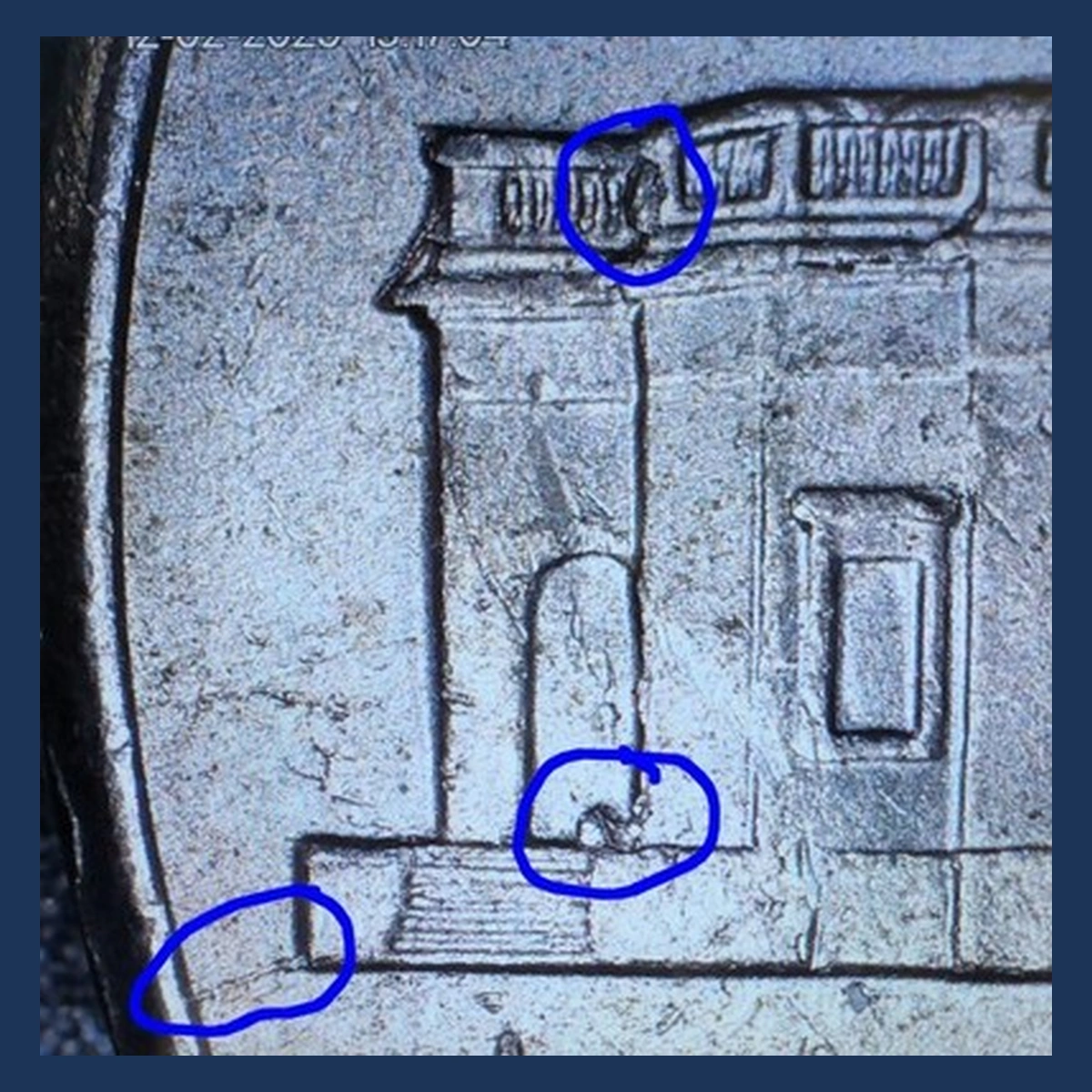
The nickname Scarface refers to a reported raised line on Jefferson’s cheek on 2016-D nickels. A crack in the die, the steel tool that stamps the design, caused the line.
Coin metal entered that opening during the blow. A small piece breaking from the tool can instead leave a raised patch on the coin.
Such chip effects are separately reported for 2016-P. They should not be given the Denver cheek location just because both involve damaged tools.
A scrape is different: it cuts into the surface, although it may push up a small ridge alongside the cut.
Estimated Value
For genuine small cracks and chips, estimate $3–$50. A clear line across the cheek or an obvious raised patch can attract more interest than a tiny speck.
The nickname alone adds no fixed premium. Wear and nearby contact marks can make the feature harder to recognize.
This range is an estimate for 2016 tool damage rather than a claimed auction record. Judge the size, shape, and condition together instead of pricing every small raised mark separately.
How to Identify
Check whether the mark rises above the cheek or cuts below it. Side lighting and a 10× magnifier make that distinction easier than a strongly lit overhead photograph.
For the Scarface report, confirm the D beside the date. A P chip report needs its own matching feature, not the Denver nickname.
Inspect the plain edge and nearby portrait for a dent that pushed metal toward the line. A tool crack transfers a raised shape without requiring that sort of impact.
A loose nickel can be compared with 5.00 grams on a scale and 21.21 millimeters using calipers. After that basic check, follow the entire raised line rather than treating one bright reflection as a crack.
2. 2016 Jefferson Nickel Clashed Portrait Traces on the Back
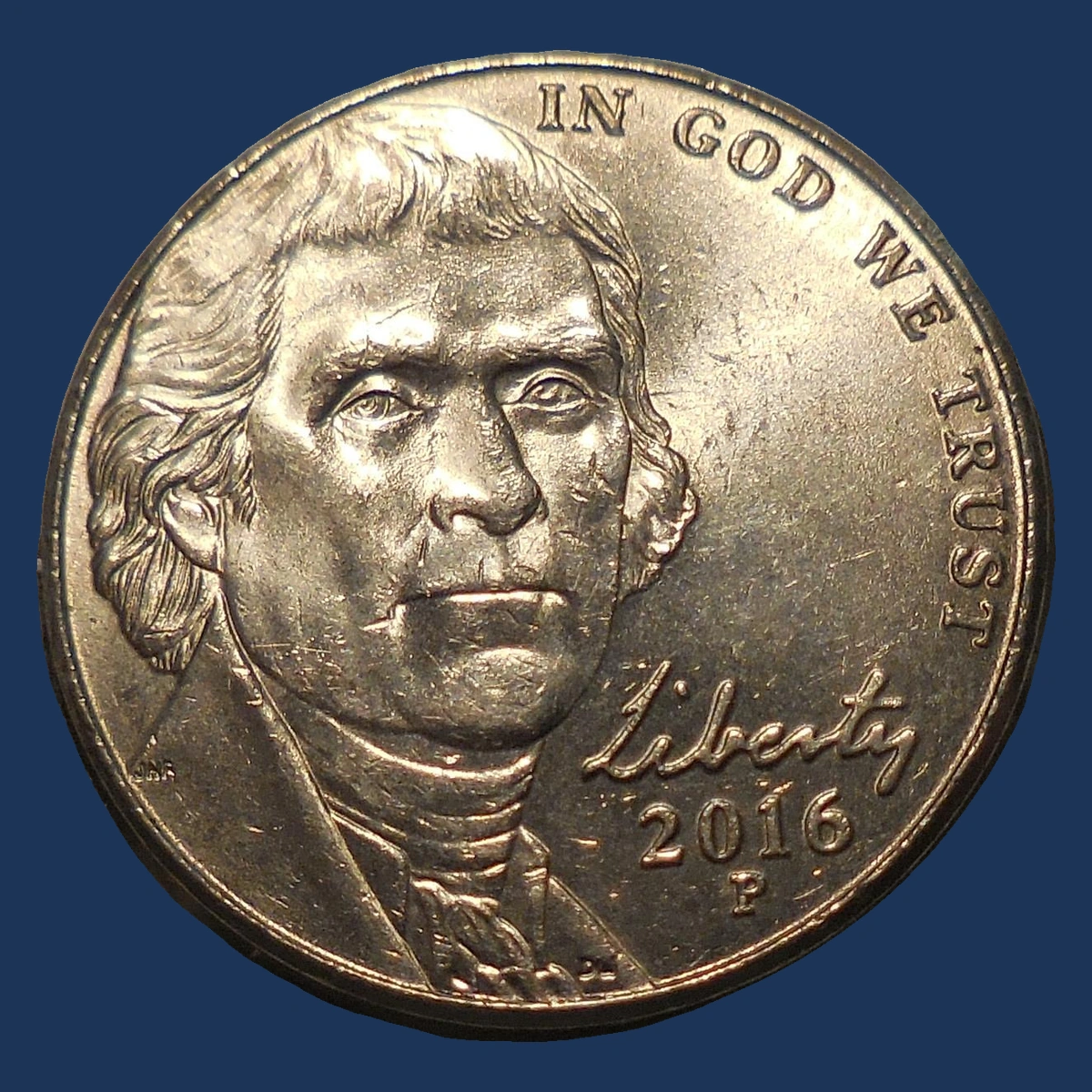
An eye-like trace on the building side led a collector to report a 2016 nickel clash. The unusual outlines were described below the steps and near MONTICELLO.
The explanation involves the two stamping tools touching without a blank between them. Their contact can transfer part of the portrait onto the tool used for the back.
Later nickels receive those transferred fragments. A single coin can therefore carry an extra portrait outline without having turned over inside the press.
Only part of the opposing design may appear. A complete backward portrait pressed deeply into a coin is a different error.
Estimated Value
An estimated $5–$60 suits recognizable 2016 clash traces, depending on clarity and condition. The stronger end requires a convincing connection to the portrait rather than a suggestive random line.
These small marks generally appeal to collectors who study how the tools changed. They do not normally carry the premiums of large distorted coins.
No specific sale is assigned to the reported example here. The estimate concerns a genuine transferred design, not ordinary scratches beneath the building.
How to Identify
Place a picture of Jefferson beside an enlarged photograph of the back. Check whether the supposed eye or nearby outline actually agrees with the portrait’s shape.
Use a 10× magnifier below the steps and around MONTICELLO. Move the lamp gently; a line that vanishes completely with one small lighting change may be glare.
For a loose coin, use a scale and calipers to compare 5.00 grams and 21.21 millimeters. Its plain edge should also be checked for squeezing that could transfer another coin’s design.
Keep an ordinary 2016 nickel nearby to separate normal architecture from extra traces. A clash match should account for the shape and placement together, not only a resemblance to one eye.
3. 2016 Jefferson Nickel Doubled Back Design
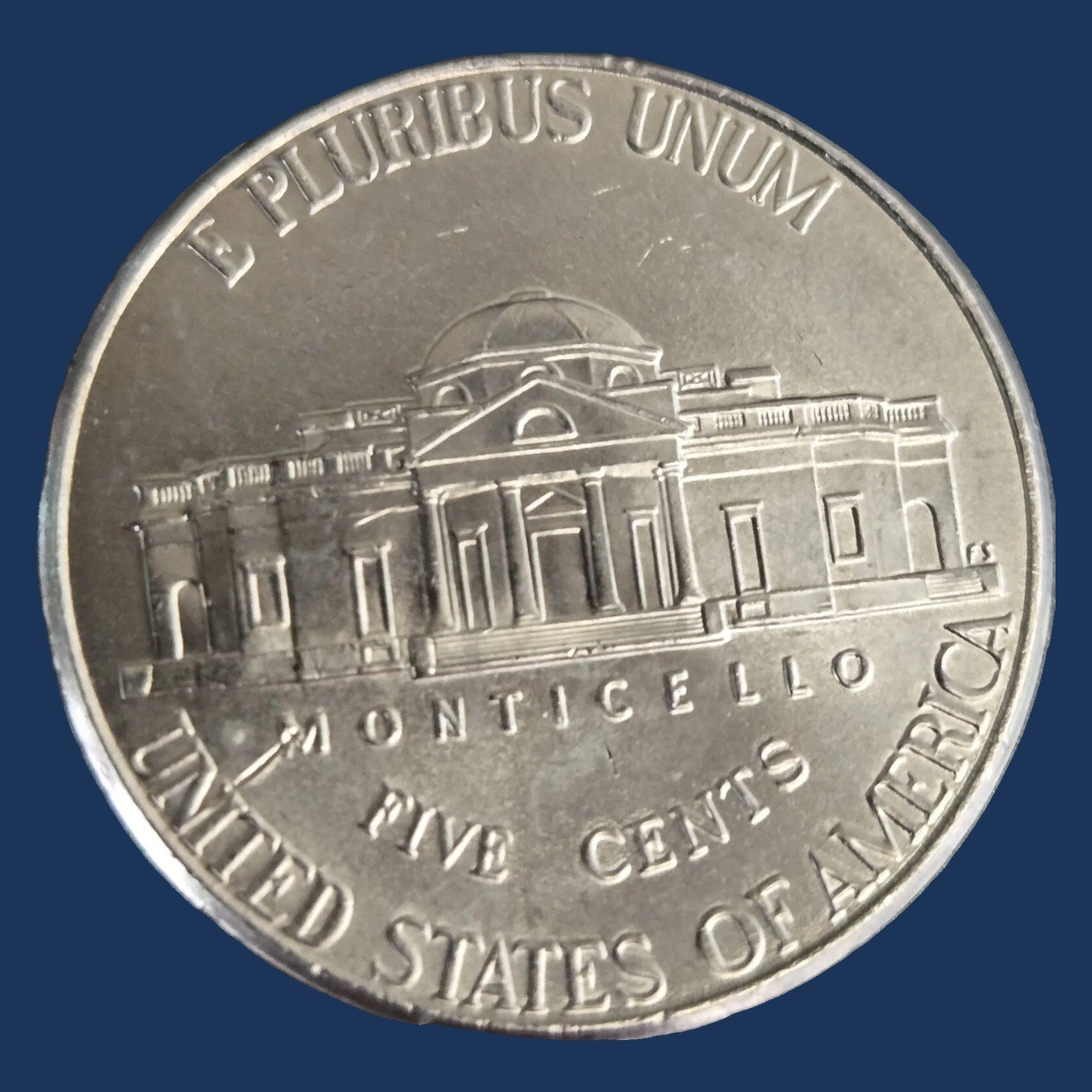
A second edge attached to Monticello or its lettering can begin during tool production. A doubled die is a stamping tool that already contains the extra design.
Each nickel struck by that tool can repeat the same feature. The coin itself need not receive an extra blow.
Back doubling is reported for 2016-P, involving the building and lettering. The exact added shape must be matched on the individual coin.
A flat shelf made when the tool moves during striking is different. Bright reflections and ordinary differences in strike strength can also make a single edge look doubled in a photograph.
Estimated Value
Estimate $5–$100 for a clearly identified 2016-P doubled back design. Small features requiring careful magnification usually sit below obvious additions on a clean unworn coin.
This is a range for genuine tool-made doubling, not a price assigned to thick lettering alone. A repeatable match helps buyers understand what they are purchasing.
Condition matters because wear can flatten the small added edges. A costly certification label cannot replace a clear photograph of the feature itself.
How to Identify
Confirm the P and the normal coin before chasing tiny lines. For a loose nickel, a scale and calipers compare 5.00 grams and 21.21 millimeters, while the plain edge should show no later alteration.
Find a photograph of the same reported building or lettering feature and compare it with your coin under a 10× magnifier. An overall picture labeled doubled is less useful than a close view of the particular addition.
Follow the added shape through more than one point. Does it remain beside the design when the light changes?
A reflection moves with the lamp. A low, flat shelf may be mechanical doubling from tool movement during striking, rather than the repeated shape made into a doubled tool.
4. 2016 Jefferson Nickel Grease-Blocked Detail
Grease or debris in a stamping tool can prevent some details from forming. A letter, facial feature, or part of the building may look weak while neighboring areas remain sharper.
This type is reported for 2016-P nickels. The obstruction affects the transfer of the design rather than removing metal from a finished coin.
Weak steps alone are not enough to identify it. Ordinary strike quality and tool wear can also leave Monticello’s fine lines poorly defined.
A separate 2016-P coin combines a front blockage with rotated tools. A weak patch on another nickel does not automatically establish that rotation.
Estimated Value
Genuine small grease-blocked areas have an estimated range of $5–$100. Large, clearly bounded missing details generally interest collectors more than a slightly soft word.
A 2000-D nickel struck beneath a coin stuck to the tool sold for $84 in September 2025. Its obstruction was different, so it is only a general blocked-strike comparison.
The range does not apply to normal weak steps or worn lettering. The effect should remain clear when compared with the surrounding surface.
How to Identify
Monticello’s steps are too fine to use as the only test. Compare several ordinary 2016 nickels to see how much their normal detail varies.
On a loose coin, a scale and calipers can compare the normal 5.00 grams and 21.21 millimeters. Also check the plain edge for pressure damage before examining a flattened-looking area.
Now study the transition from weak to sharp detail with a 10× magnifier. A localized obstruction can interrupt one part of the design without smoothing every exposed high point nearby.
Follow the portrait’s high points to check for wear. Scraping lines across the weak patch or metal pushed aside at its boundary instead suggest that detail was removed after minting.
5. 2016 Jefferson Nickel Curved Clip
A 2016-P nickel listed by GreatCollections has a curved section missing from its outline. Its recorded weight is 4.68 grams, below the normal five grams.
ANACS graded the coin MS64, meaning unworn with some visible marks. The missing section began in the blank, the metal disk cut before striking.
When a cutting punch overlaps an earlier hole in the metal strip, it can produce this curved gap. The incomplete blank then receives the nickel design.
The documented weight belongs to that particular specimen. Another genuine clip can lose a different amount of metal depending on its size.
Estimated Value
For 2016-P curved clips, use an estimated $15–$150. Tiny openings on worn coins generally bring less than clear missing sections with attractive surrounding surfaces.
A 1997-P nickel with a 20% curved clip sold for $124 in March 2025. That is an earlier-date comparison; the percentage does not describe the 4.68-gram 2016 example.
The GreatCollections record supports the 2016 coin’s identity and weight. Its publicly displayed listing does not provide a sale amount to substitute for this estimate.
How to Identify
The recorded 4.68-gram specimen shows why a scale is useful, but weight alone does not prove a clip. Filed coins can also be light.
With a 10× magnifier, examine where the struck face meets both ends of the curved opening. Look for metal shaped during striking rather than sharp cutting ridges or repetitive file lines.
Use calipers across the surviving circular outline, comparing with 21.21 millimeters. Inspect the normally plain edge and check for weakness opposite the gap.
Do not expect another clip to weigh exactly 4.68 grams. Its size, edge texture, and relationship to the struck design must make sense together before the weight becomes useful supporting evidence.
6. 2016 Jefferson Nickel Lifting Front Surface
A thin flap on the portrait side can form when the metal separates internally. The reported 2016-P lamination concerns that front surface, not a missing outer coating.
Lamination is the splitting or lifting of a layer within the coin’s alloy. Modern nickels contain a uniform mixture of copper and nickel throughout.
A flap may stay attached or leave a shallow hollow after falling away. The design can remain partly visible on the separating layer.
A local peel should not become a claim that the whole blank split in half. A small lift and a complete separation differ in size.
Estimated Value
An estimated $10–$200 covers genuine 2016-P surface lamination, with a visible retained flap often more interesting than a tiny rough patch. Readable surrounding design helps display the defect.
These figures are estimates for the reported type. They are not an auction price for a particular 2016 coin.
A large defect can also harm appearance, especially with corrosion or missing date details. More peeled metal does not automatically produce a higher value than a smaller, clearer example.
How to Identify
A shallow hollow and a retained flap need different handling. For a hollow, first inspect whether its boundary follows a thin separating layer; scattered pits are more typical of corrosion.
If a flap remains, leave it untouched and use a 10× magnifier to inspect its connection. Do not bend the metal to see underneath.
A loose example can be weighed against 5.00 grams. A missing layer may reduce weight, while one still attached may leave it nearly unchanged.
Use calipers on intact areas to compare the usual 21.21-millimeter width, keeping clear of the flaw. Photograph the plain edge if the separation reaches it.
Look for design continuing onto the thin layer, rather than an unrelated object stuck on top of a complete surface.
7. 2016 Jefferson Nickel Overlapping-Blank Indent
An indent can resemble a smooth bite pressed into the face rather than removed from the edge. Another blank overlapped the nickel when the tools came together.
That overlapping piece blocked the design and pressed into the lower coin. The boundary can be curved because it follows part of the other blank’s outline.
A 2016-D example is reported in this category. Its affected area belongs to one face rather than proving that part of the coin was cut away.
If a struck coin supplies readable backward design inside the depression, that introduces a brockage rather than a plain blank-shaped indent.
Estimated Value
For an authenticated 2016-D indent, estimate $50–$300, depending on the area covered and the clarity of its curved boundary. A large clean depression can be easier to display than a shallow partial mark.
This is an estimate for the reported coin type, not a confirmed price for the listed specimen. Surface damage and a missing date can reduce buyer interest.
A tool-made dent after minting does not receive the same valuation simply because its shape is round.
How to Identify
Photograph the opposite face as well as the depression. A later squeeze can flatten both sides, so a cropped image of one curved mark is not enough.
Check a loose coin with a scale and calipers against 5.00 grams and 21.21 millimeters. Those are normal starting points, not exact limits for every overlapping-blank error.
At 10× magnification, follow the curved boundary and inspect the plain edge for pressure damage. The indentation must fit another blank occupying space above this coin while the design was struck.
Look inside the depression for lettering. A blank leaves no readable design of its own.
If reversed letters or a recognizable portrait appear there, the object doing the pressing was already struck; the error then involves brockage.
8. 2016 Jefferson Nickel Rotated Tools with a Blocked Front Strike
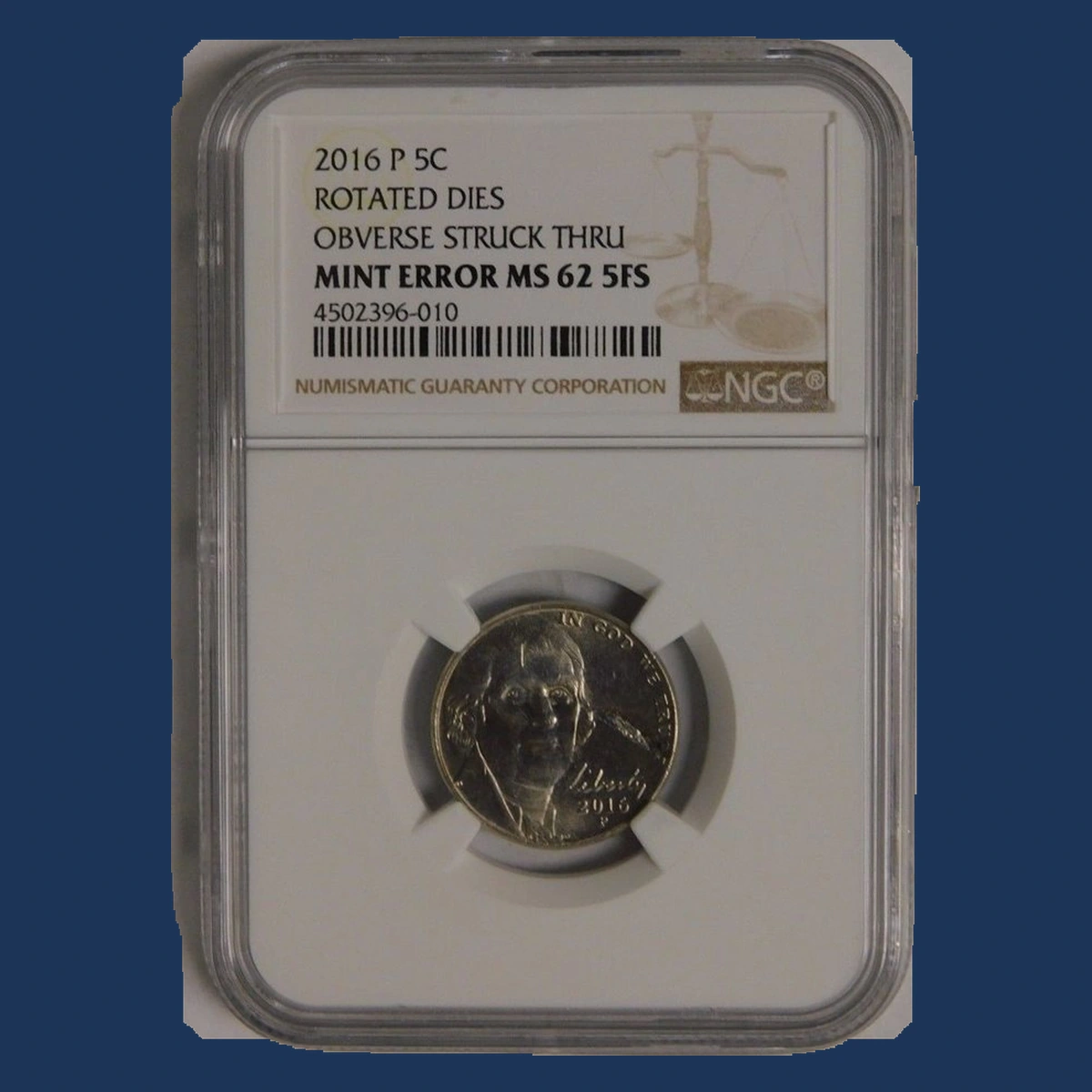
A 2016-P nickel can look fairly ordinary in one photograph yet have its back tilted relative to its front. One recorded coin also has a struck-through area on the portrait side.
The rotation comes from the relationship between the two stamping tools. The blocked front design comes from material interfering with the strike, a separate event on the same coin.
The record identifies an NGC MS62 example, an unworn coin with noticeable marks. Its 5FS label means five fully defined Monticello steps, not a second error number.
The rotated angle must be measured on the coin itself.
Estimated Value
PCGS records a $124.99 eBay Buy It Now sale for this NGC example in September 2018. It was a fixed-price transaction, not a live bidding result.
Estimate $75–$350 for comparable 2016-P combinations, depending on the amount of rotation and the visibility of the blocked front design. Small effects generally bring less.
The recorded price covers the entire coin. Do not add a separate maximum price for each of its two errors.
How to Identify
Hold Jefferson upright and turn the coin from top to bottom without twisting it sideways. Monticello should come up upright; a remaining tilt is the rotation to measure.
Repeat the test with an ordinary nickel to check your handling. A rotated photograph or a coin turned inside its holder can create a misleading impression.
Inspect the front interruption separately with a 10× magnifier. Compare its weak area with sharp nearby detail rather than assuming the rotation caused the blockage.
For a loose example, compare 5.00 grams and 21.21 millimeters with a scale and calipers, and inspect the plain edge. Record both faces in one controlled turn so the measured tilt cannot be mistaken for different camera positions.
9. 2016 Jefferson Nickel Improper Annealing Color
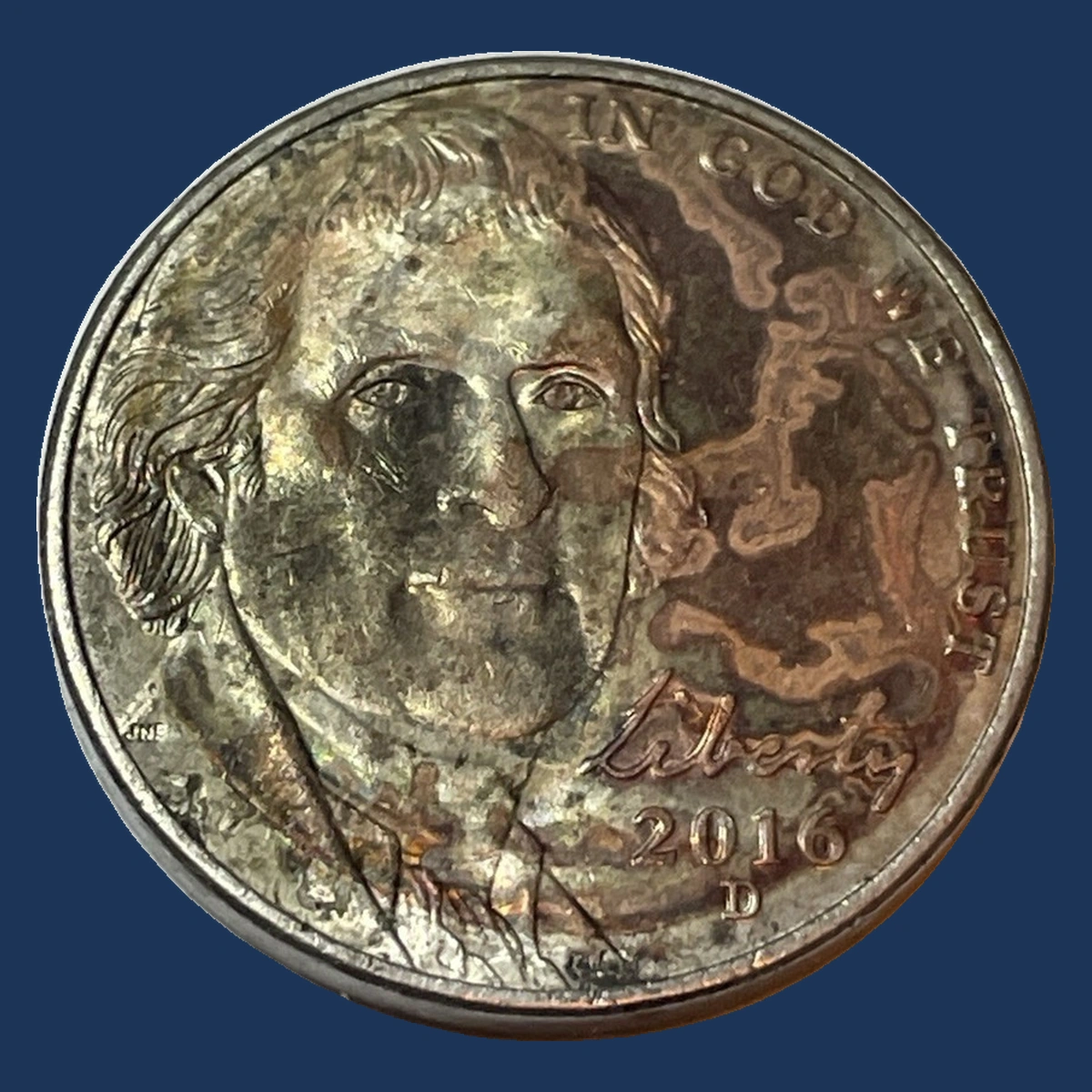
A brown or very dark surface is sometimes described as an annealing error on 2016 nickels. Annealing is the heating step used to soften blanks before the design is struck.
An abnormal heating process can affect the surface of the alloy. Reports include Philadelphia examples and dark Denver coins, but color names do not identify the cause by themselves.
Later heat, chemicals, and the environment can change a finished nickel too. Those effects must be distinguished from a mint-made change.
The coin has no thin nickel coating to lose. Its normal metal is a uniform copper-nickel mixture.
Estimated Value
A 2005-D Bison nickel described as improperly annealed sold for $119 in December 2022. NGC graded that unworn comparison coin MS62, allowing noticeable surface marks.
For an authenticated 2016 example, estimate $30–$400. Strong, attractive effects and clean surfaces can support the higher end; blotchy damaged coins have less appeal.
The Bison sale concerns a different design and year. It does not turn every brown 2016-P or dark 2016-D nickel into a similarly valuable heating error.
How to Identify
Begin with the surface, not a color chart. Inspect whether the unusual shade follows normal struck metal or accompanies pitting, residue, or other damage.
View both faces and the plain edge under neutral light, using a 10× magnifier for suspicious patches. Do not clean or polish the coin to see what lies beneath.
A scale and calipers can compare a loose example with 5.00 grams and 21.21 millimeters. Normal measurements are helpful but cannot tell you when the color developed.
Save clear photographs and have the surface assessed by an error specialist before pricing it as improperly annealed. Neither a dark color nor a grainy appearance alone proves a problem in the Mint’s heating process.
10. 2016 Jefferson Nickel Off-Center Strike with Partial Collar
Two shapes matter on this reported 2016-P combination: a blank crescent beside the design and a step around part of the edge. They describe different parts of the strike.
The off-center design comes from the blank sitting out of position. The edge step comes from the collar, the surrounding metal ring, containing only part of the coin’s thickness during the blow.
Collectors call the latter a partial-collar strike. It can occur alongside an off-center design on one nickel.
Because a nickel normally has a plain edge, the test is not a change from grooved to smooth metal.
Estimated Value
For a genuine 2016-P off-center and partial-collar combination, estimate $50–$400. A visible step and clear missing-design area make the combined effect easier to recognize.
A simpler 1999-P nickel struck 15% off-center sold for $64 in March 2025. That earlier comparison does not establish a partial collar on either coin.
The estimate prices the complete 2016 combination. A large amount of displacement may be less attractive if it removes the date or hides the edge feature.
How to Identify
Examine the side before concentrating on the blank crescent. Rotate the coin slowly under a lamp to see whether a real step separates two levels of the plain edge.
Use a 10× magnifier on that boundary, then compare the shifted designs on both faces. Later grinding can create an edge ledge without the matching striking effects.
For a loose example, compare its weight with 5.00 grams on a scale. Calipers help compare the outline with 21.21 millimeters and record where the edge expanded.
The off-center portion should include genuinely unstruck metal, not flattened letters. Both that displacement and the stepped side must be visible before assigning the combined description to the coin.
11. 2016 Jefferson Nickel Double Strike Inside the Collar
A nickel can receive two strikes without growing a large off-center lobe. If it remains inside the collar, the surrounding ring can keep its outline close to normal.
GreatCollections lists a 2016-P example certified by ANACS as double struck in collar. Its AU58 grade describes very light wear.
The extra blow leaves surviving design fragments in another position. Portions of the earlier impression may be flattened by the later one.
This differs from a doubled die, where the tool already carries extra detail. It also differs from the normal repeated blows used to make collector Proof coins without displaced designs.
Estimated Value
Estimate $75–$600 for genuine 2016-P in-collar double strikes, depending on how clearly the two impressions separate. Light wear can still leave an appealing error if both designs are recognizable.
A 1984-P flipover double strike sold for $480 in September 2024. That coin turned over between blows, so its design arrangement differs from a coin that stayed facing the same way.
The sale is a related comparison, not the undisclosed price of the ANACS 2016-P listing.
How to Identify
Look for a second arrangement of the design even when the outline appears normally round. A retaining collar can hide the dramatic shape often associated with multiple strikes.
Magnify both faces 10× and connect several surviving details from each impression. A small flat ledge beside one letter is not enough to demonstrate another blow.
For a loose nickel, compare the 5.00-gram weight and 21.21-millimeter diameter using a scale and calipers. Examine its plain edge for deliberate squeezing or joined metal.
Check where the later impression partly flattened the earlier design. The surviving fragments should form a consistent second arrangement, rather than scattered doubled-looking edges produced by reflections or ordinary tool movement.
12. 2016 Jefferson Nickel Reported Wrong Blank
A nickel design struck on a blank meant for another coin can have the wrong size, weight, or metal. Some outer lettering may not fit if the blank is too small.
The 2016 wrong-blank category is reported without an established blank identity. A dime blank should not be assigned merely because a nickel looks small or silver-colored.
Modern nickels are already silver-colored copper-nickel coins. Filing, corrosion, and deliberate thinning can also change their measurements.
A genuine wrong-blank diagnosis requires the measured metal and striking details to agree. The nickel design alone does not identify the original blank.
Estimated Value
If authenticated on a blank intended for another denomination, estimate $200–$1,500 for a 2016 nickel. The actual blank, readability of the date, and condition determine where it fits.
A 1981-P nickel struck on a cent blank sold for $372 in September 2025. That earlier cent blank used different metal from a modern zinc cent.
The sale is a comparison for wrong-blank striking. It does not identify a 2016 specimen as being on a cent or dime blank.
How to Identify
Record measurements before naming the supposed blank. A normal loose nickel weighs 5.00 grams and measures 21.21 millimeters; use a scale and calipers to document any difference.
Next inspect the plain edge with a 10× magnifier. Filing, cutting, or thinning may explain the changed size without any Mint mistake.
Compare the remaining design with the smaller or differently shaped metal surface. The loss of outer details should make sense for how the blank sat beneath nickel tools.
Have its metal checked without damaging the coin, and compare the result with the proposed blank’s specifications. Matching only its color or one weight reading is insufficient to establish which blank was actually struck.
Conclusion
A tilted back, a 4.68-gram clipped blank, and a second design each point to different production problems. Their checks should differ too.
Estimated values across this list run from $3–$1,500, with the highest range reserved for an authenticated wrong-blank coin. The $124.99 rotation-and-blockage record is a price for one complete combination coin.
Preserve the edge and both faces in your photographs, and let the visible feature guide the comparison.