1863 Penny Error List with Pictures

A penny shaped like a deep cup brought $18,000 in August 2020. Its unusual shape came from repeated striking while the coin clung to a stamping tool.
This 1863 Indian Head penny error list starts with much smaller features and works toward dramatic mistakes. Estimated whole-coin values run from $15–$50,000, including a reported silver-blank category.
These copper-nickel pennies normally weigh about 4.67 grams and have smooth edges. Use the comparisons below to connect an unusual feature with the right minting mistake.
1. 1863 Indian Head Penny Tiny Raised Bumps from a Rusted Tool
Rust can damage the steel tool before it stamps a coin. Small pits in that tool leave raised bumps when metal enters them during striking.
The 1863 varieties include roughness near UN on the front. Another report concerns the back, so those locations should be compared as separate examples.
Collectors call this die rust; a die is the steel stamping tool. The name describes damaged steel, rather than rust growing on the copper-nickel coin.
That distinction matters because corrosion on a finished penny usually eats into its surface. Dirt can also make an ordinary surface look bumpy.
Estimated Value
Allow an estimated $15–$150 for worn examples with recognizable tool-rust texture, or $150–$600 for clearer unworn pieces. Much of the value still belongs to the underlying 1863 cent.
This is a modest tool-feature estimate, not a premium for every rough penny. A clean surface makes the repeating pattern easier to compare.
Dark corrosion, deposits, and cleaning can reduce appeal even when an original rusted-tool feature is also present.
How to Identify
An 1863 cent contains copper and nickel; rusty-looking dirt does not mean the coin itself has developed a rusted-tool error. For a loose example, compare scale and caliper readings with 4.67 grams and 19 millimeters.
Inspect the plain edge for coatings or other changes, then look near UN with a 10× magnifier. Light from the side helps distinguish bumps above the metal from pits below it.
A photograph of the matching variety should show bumps in the same positions. Random rough holes across the portrait instead call for a corrosion assessment.
Do not brush the surface to reveal the pattern. Take photographs under two lighting angles so the bumps remain visible beside the letters.
2. 1863 Indian Head Penny Raised Line at the Seventh Feather
A narrow raised line at the seventh feather is a recorded 1863 tool mark. It can look like a scratch until its height is examined.
A cut in the stamping tool creates a hollow that fills with coin metal. The finished penny therefore carries a raised copy of the cut.
This is called a die gouge. A scratch made directly on the penny normally cuts into the copper instead.
The line belongs at a particular feather on this variety. Similar-looking marks elsewhere need their own explanation rather than borrowing the same name.
Estimated Value
Estimate $20–$150 for worn examples with a clear matching line, and roughly $150–$750 for unworn pieces. Preservation usually matters more than the small tool mark.
These figures place the variety above ordinary damaged coins without treating a fine raised line as a major striking accident. They are whole-coin estimates.
A sharp, matching feature is more useful to a collector than a vaguely similar scratch. Cleaning lines or corrosion can make the comparison harder and reduce the price.
How to Identify
A line that looks like a scratch may actually stand above the coin. Move the lamp across it while using a 10× magnifier, and compare the light and shadow on both sides.
Check a loose copper-nickel cent’s size with a scale and calipers: normal figures are about 4.67 grams and 19 millimeters. Examine the plain edge too, since later work can affect more than one area.
Now locate the seventh feather using the full portrait and a matching variety photograph. The raised line needs the correct position and endpoints, not merely the same general direction.
Keep normal feather outlines in view when making that comparison. An extra line elsewhere cannot be identified from this example’s location.
3. 1863 Indian Head Penny Peeling Metal on the Front
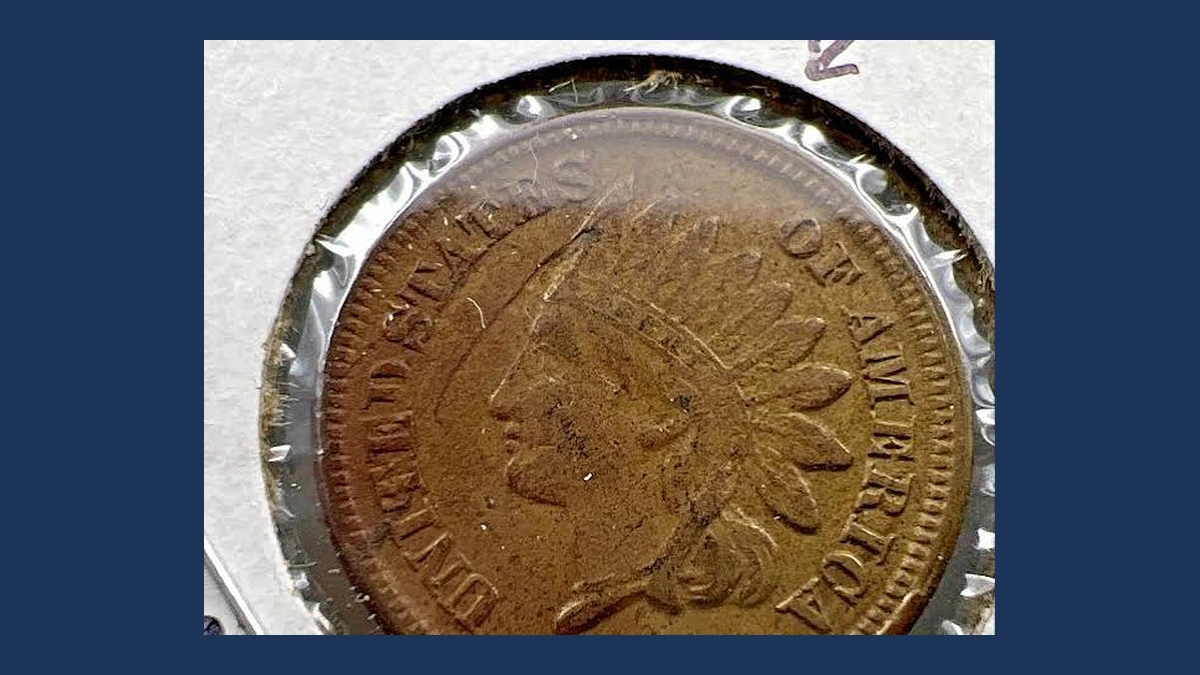
A surface layer can split from the metal beneath it and leave a flap or shallow opening. This kind of separation is called lamination.
A dealer reported an 1863 example graded NGC G6 with front lamination. G6 means the coin is heavily worn, so remaining detail needs careful comparison.
The flaw starts with a weakness inside the original metal. It is not the removal of a separate outer coating from a modern layered coin.
The peeling area belongs on the front of that example. Its shape and boundary reveal more about the separation than the depth of one isolated pit.
Estimated Value
For an identifiable 1863 lamination, estimate $20–$200 in worn condition and $200–$1,000 with stronger preservation. The price includes the cent itself.
The reported G6 coin belongs among worn comparisons, not among pristine examples with large intact flaps. No completed sale is assigned to that dealer report.
A deep missing patch may lower the appeal of a well-preserved cent even when it formed naturally. The clearest explanation of the defect does not always produce the largest premium.
How to Identify
Leave a loose flap untouched. Pulling it back can turn a useful original feature into a larger damaged area.
Look along the separation with a 10× magnifier and low side lighting. An opening that follows a thin internal layer differs from scattered pits or a scrape that pushed metal aside.
If the coin can be handled without disturbing the flap, record its weight on a scale. The original standard is about 4.67 grams, although missing metal and wear can lower it.
Calipers compare sound areas with the normal 19-millimeter diameter. Inspect the plain edge and take a side view of the peel, keeping the full front photograph for its location.
4. 1863 Indian Head Penny Opposite-Side Design Traces near the Neck
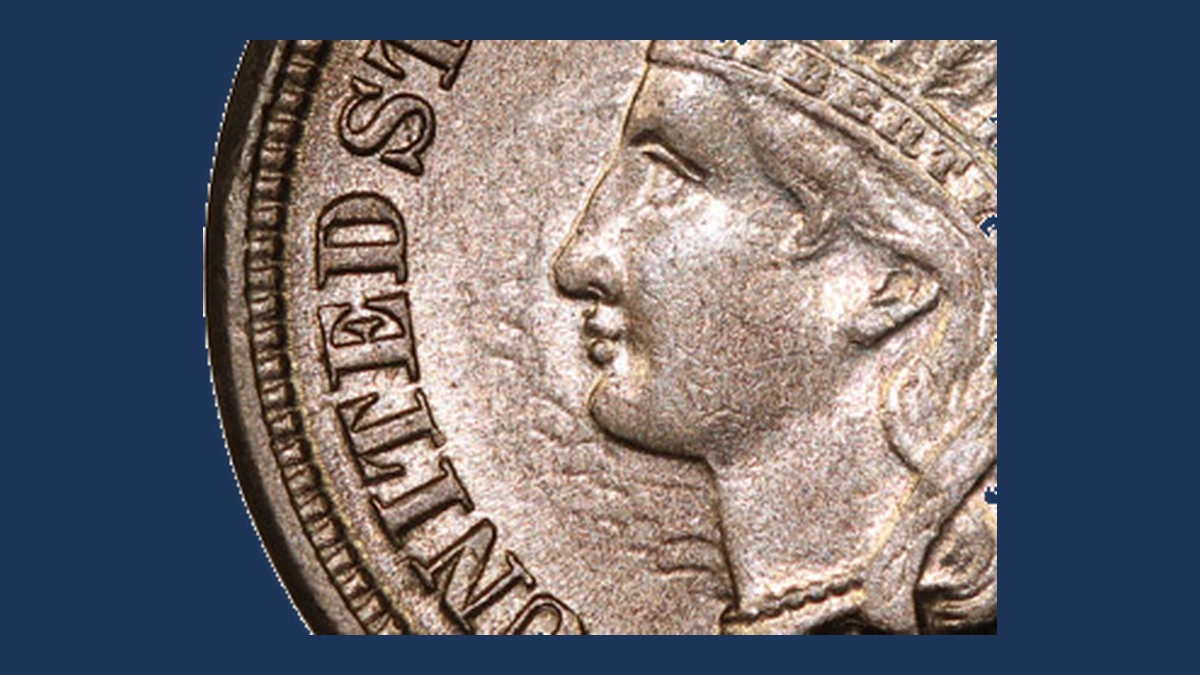
An extra outline near the neck can come from the opposite stamping tool. The two tools touched without a blank between them and marked each other.
Later coins copied those marks along with the intended design. Collectors call the result a die clash.
The 1863 records include an off-position clash near the neck, as well as other front and back examples. Their locations should not be combined into one imagined coin.
The penny itself need not have received two blows. A clash starts with contact between the tools, while a double strike repeats the design on the coin.
Estimated Value
Use an estimated $20–$200 for recognizable clashes on worn cents and $200–$1,500 for better-preserved examples. The strength of the trace and the underlying coin both matter.
A different 1875 Indian cent with a repunched date and small tool chip sold for $5,040 in August 2020. Its exceptional red, unworn condition explains why that broad tool-variety comparison is much higher.
The sale is not a price for an 1863 neck clash. Modest worn traces belong lower.
How to Identify
Two coin photographs are more useful here than one enlarged mark. Set a normal back design beside the candidate’s neck area to look for a matching transferred shape.
For a loose cent, check its plain edge for pressure damage and compare 4.67 grams and 19 millimeters using a scale and calipers. A later squeeze between coins needs to be excluded before calling an extra outline mint-made.
Use a 10× magnifier around the neck and change the light angle to follow faint lines. The off-position clash should be matched to its own photograph, rather than to every other 1863 clash.
A broad backward portrait sunk into the metal is a different feature. A clash carries fragments transferred through the steel tools.
5. 1863 Indian Head Penny Back Design Turned Counterclockwise
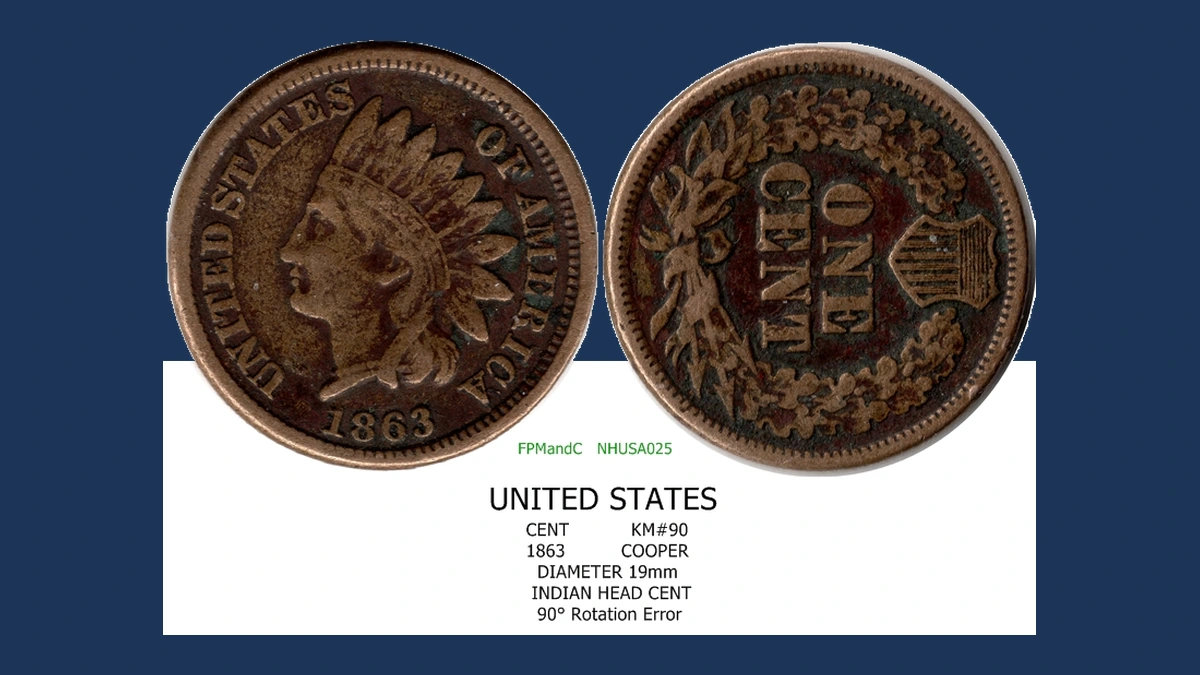
The front can look properly centered while the back sits at an angle. A recorded 1863 variety has about twenty-five degrees of counterclockwise rotation.
This concerns how the two stamping tools lined up. It does not mean the copper blank was twenty-five percent off center.
On a normally aligned United States coin, a top-to-bottom flip of the upright front brings the back upright. A turned tool changes that relationship.
Photographs straightened separately can hide the difference. The two faces need to be recorded with a fixed flipping motion before the angle has meaning.
Estimated Value
A noticeable twenty-five-degree turn fits an estimated $25–$250 on circulated 1863 cents. Better-preserved examples may fit roughly $250–$1,500, with much of the value belonging to the coin’s condition.
This is a moderate rotation estimate. It does not borrow the prices of dramatic half-turns or rare specially made collector coins.
A small lean may add little when the penny is worn or corroded. A clear, repeatable measurement is more useful than an impressive angle produced by rotating a photograph.
How to Identify
Place a straight vertical guide behind the coin and hold the portrait upright. Flip the coin from top to bottom without adding a sideways twist.
Repeat the movement and photograph the back each time. A protractor can compare its lean with the guide; the reported example turns counterclockwise by about twenty-five degrees.
Use a 10× magnifier to locate the central lettering if wear makes alignment difficult. Do not straighten each face separately before comparing them.
A loose cent normally weighs about 4.67 grams and measures 19 millimeters, checked with a scale and calipers. Inspect its plain edge as well, since a joined or altered coin could imitate an unusual relationship between two faces.
6. 1863 Indian Head Penny Missing Section Cut into the Outline
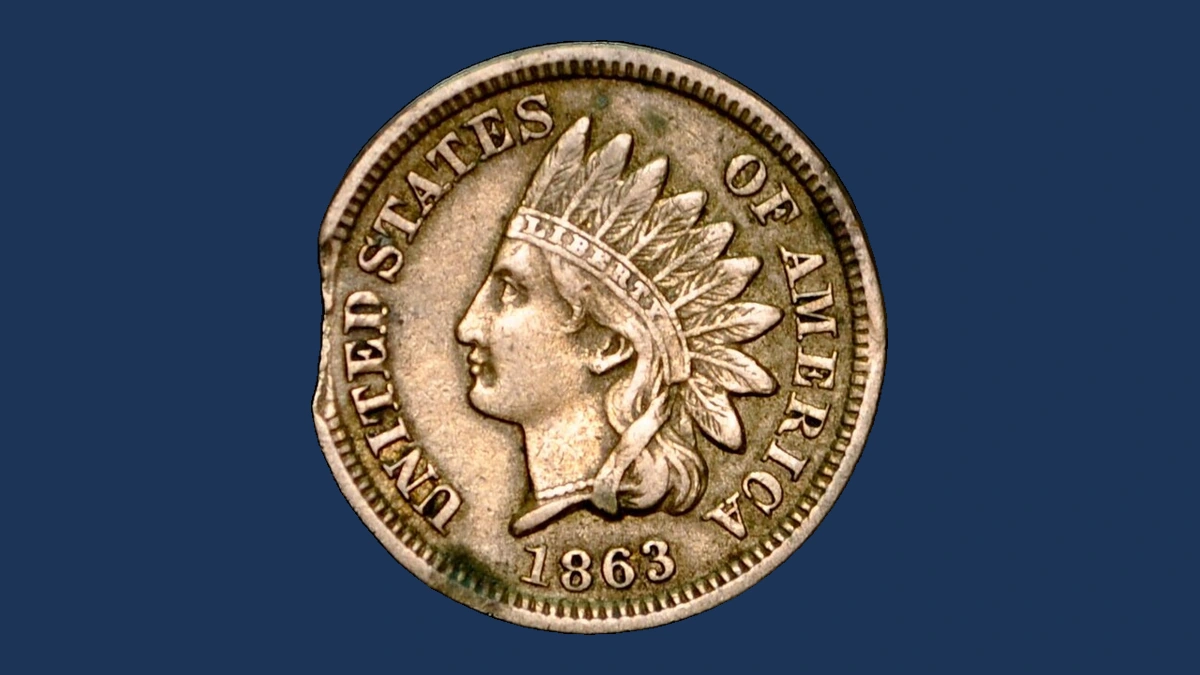
A missing edge section can begin before a blank becomes a coin. The blank-cutting process may leave an incomplete disc that later receives the design.
A seller reported an 1863 cent with a clip and described it as lightly worn. That report supplies a candidate to examine, rather than a certified identification.
The missing section should be judged together with the adjacent design and edge. A cut made after striking can produce a similar outline.
A coin can lose metal through wear or corrosion too. Neither a low weight nor an unusual outline proves that the gap formed before striking.
Estimated Value
For a genuine 1863 clip, estimate $40–$400 on worn examples and $400–$2,000 on attractive unworn coins. The missing section’s size and clarity influence the comparison.
An unworn 1852 large cent with a clip sold for $384 in June 2024. That older, larger copper type provides context, rather than a direct price for the seller’s 1863 coin.
The estimate requires an original incomplete blank. A later cut does not earn the same mint-error premium.
How to Identify
Compare the opening on both faces before weighing the coin. It should be the same missing section, not just a flat area where the design is weak.
With a 10× magnifier, inspect the ends and wall of the opening. Saw marks, sharp burrs, or a cut through already finished lettering suggest later removal.
An original curved clip can have weakness opposite the gap, but that supporting clue is not present on every genuine example. The surrounding design and edge still need to agree.
Use a scale against the normal 4.67 grams and calipers across intact spans near 19 millimeters. The normal edge is plain, and lost metal can reduce weight without establishing when it was lost.
7. 1863 Indian Head Penny Cracks, Small Chips, and Rim Breaks
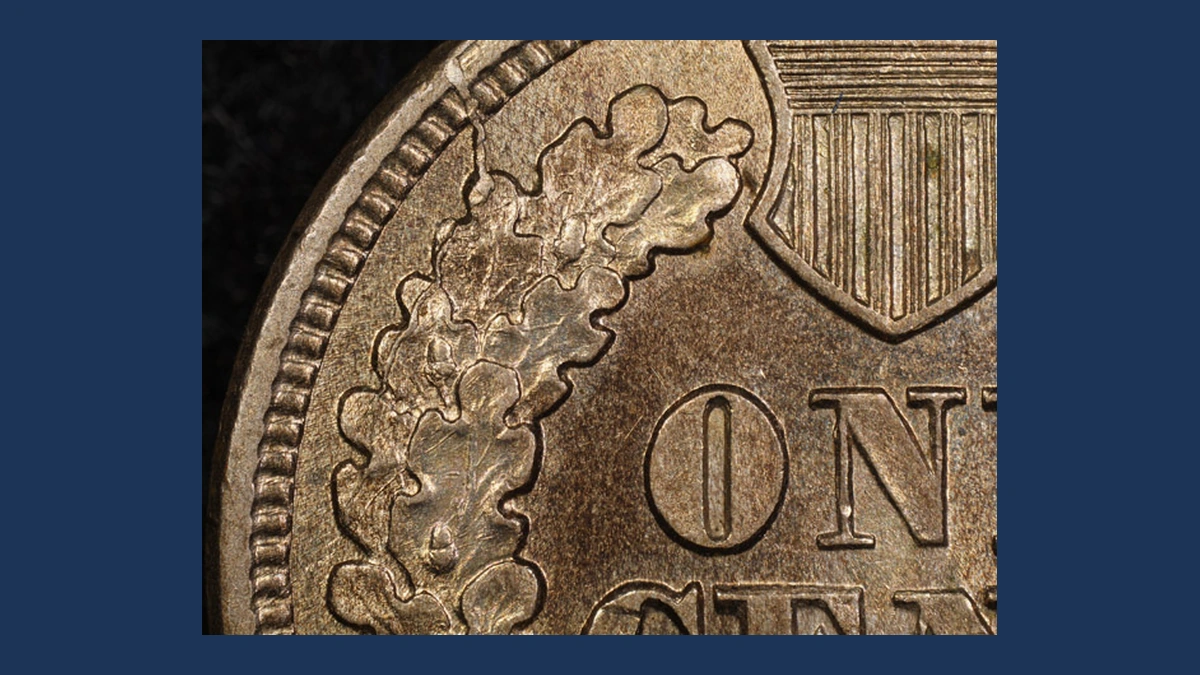
A fine raised line and a broad rim patch can be stages of damage to a stamping tool. Copper enters the opening and copies the missing or cracked steel.
The 1863 records include back cracks and a retained break around nine-thirty to eleven-fifteen. Retained means the broken steel stayed in place but shifted.
Smaller chips appear inside the design, including a curl below the ear, the area before the eye, and the T in CENT. These are separate reported examples.
A chip inside a letter is not a cud. That word describes a larger break connected to the rim.
Estimated Value
For small cracks or chips, estimate $15–$200 on worn coins. More obvious rim breaks can fit roughly $100–$2,500, depending on preservation and how much design the break affects.
An unworn 1866 Indian cent with a back cud sold for $504 in March 2021. It supplies a different-year comparison for a larger tool failure.
A retained break can preserve some original design. Its value depends on the actual shift and appearance, rather than the word cud alone.
How to Identify
Start at the rim if examining the upper-left back break. With a 10× magnifier and side lighting, look for a change in surface level across the boundary.
A retained break may still contain wreath or letter details. A raised crack without a shifted section should not automatically be called the same thing.
The 1863 variety photographs separate these examples and the small interior chips. Select the matching location rather than combining every recorded mark.
For a loose coin, use a scale and calipers to compare 4.67 grams and about 19 millimeters. Inspect the plain edge beside a suspected cud for a dent that pushed metal onto the face.
8. 1863 Indian Head Penny Doubled Leaves on the Back
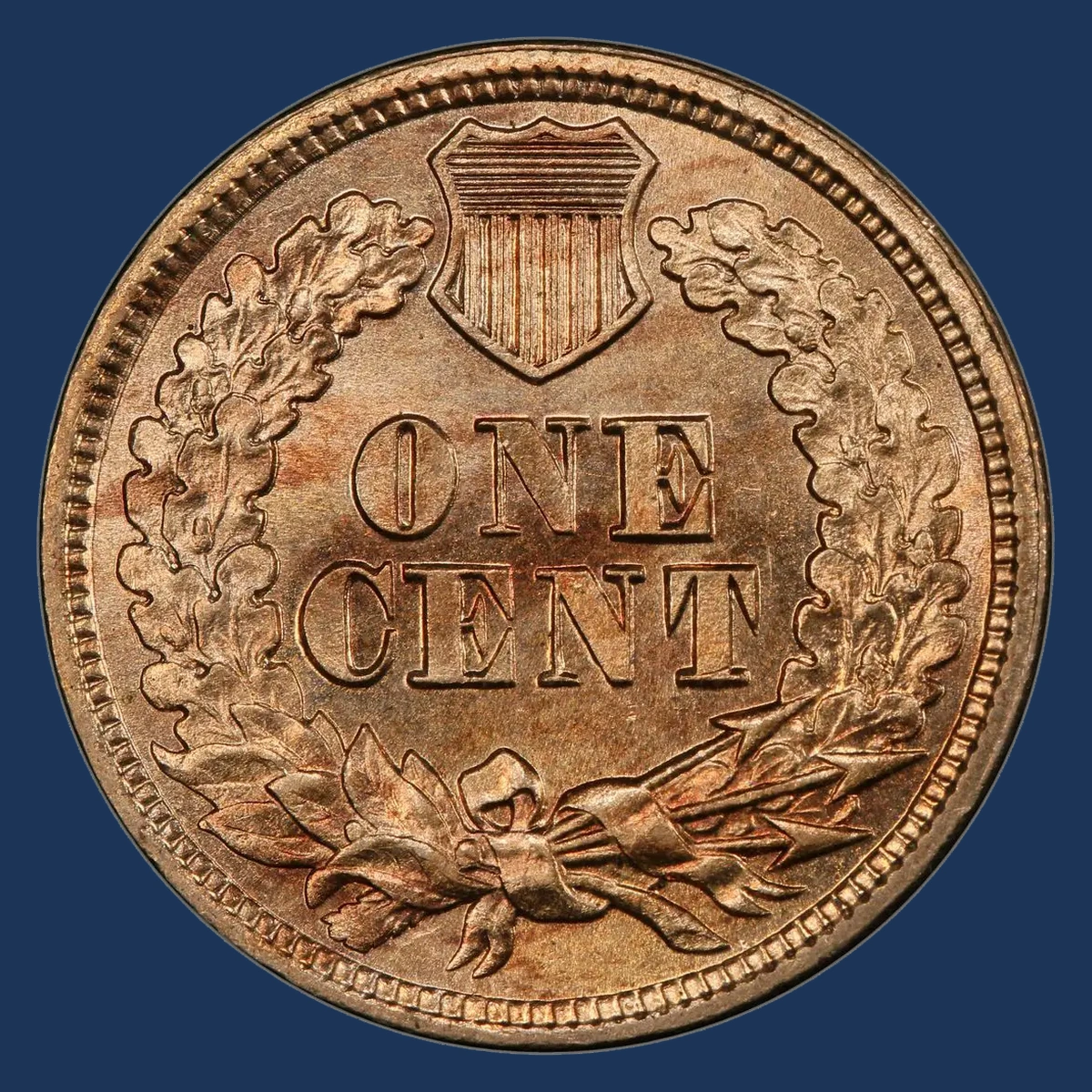
The wreath can carry extra outlines, especially among the leaves on its right side. A recognized 1863 example is called FS-801 or Snow-10.
These names identify the same variety, not two different errors. DDR means doubled die reverse: the back stamping tool was made with partly repeated design details.
Coins struck from that tool copy the extra outlines. This differs from a coin moving and receiving a second blow.
The recorded pattern includes leaves and ribbon details shifted toward the lower left. Other reported left-wreath doubling needs its own comparison rather than an automatic FS-801 label.
Estimated Value
An unworn MS62 example of FS-801 sold for $1,560 in March 2023, as recorded by PCGS. MS62 describes a coin without circulation wear but with noticeable marks.
Estimate $100–$800 for recognizable circulated examples and $800–$3,500 for unworn pieces. The doubling must match the variety, not merely look thick.
Better surfaces make the small outlines easier to see. Wear can hide the leaf details that establish the comparison.
How to Identify
The right wreath is the starting area for Snow-10, but a report of left-wreath doubling does not automatically name that variety. Keep the full back in the photograph while choosing the correct comparison.
For a loose coin, use a scale and calipers to check the usual 4.67 grams and 19 millimeters. Its edge should be plain, and the metal should match an ordinary copper-nickel cent.
Enlarge the leaf and ribbon details with a 10× magnifier. Several extra outlines should agree in their direction and spacing with the confirmed example.
Repeat the photograph after moving the lamp. A bright reflection will move, whereas an extra part of the design remains at the same leaf or ribbon.
9. 1863 Indian Head Penny Earlier Strokes beside the Date
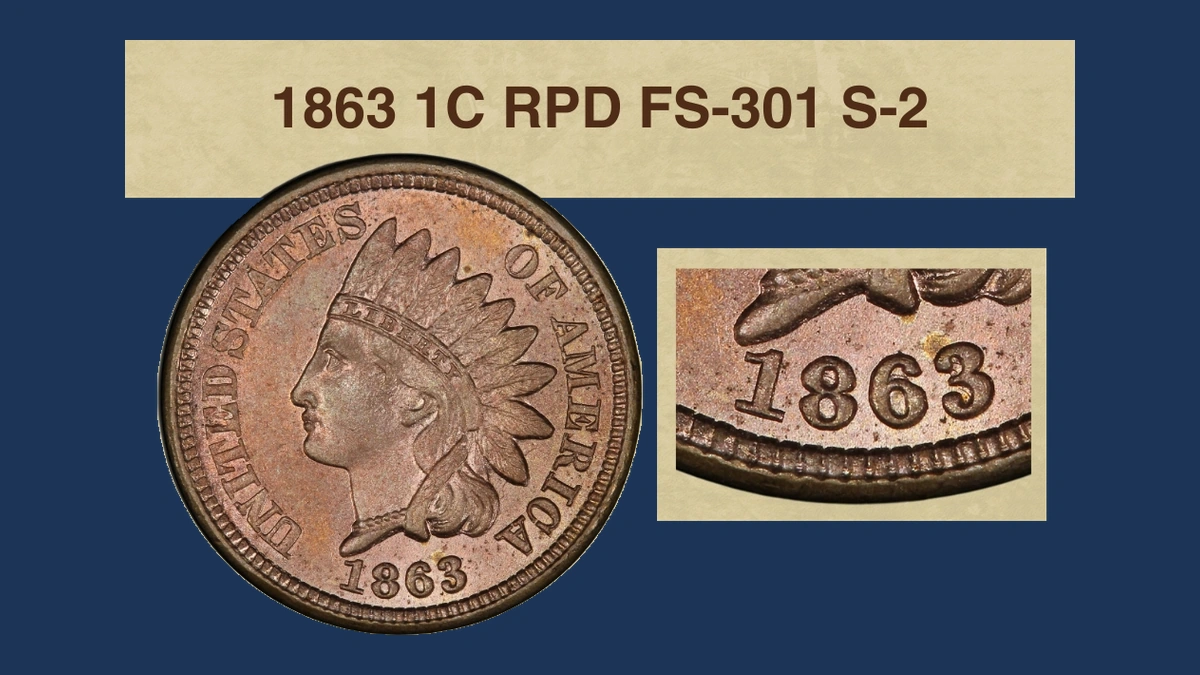
The date can show parts of an earlier impression beside its main digits. Workers punched the date into the stamping tool, and a slightly different second position left both sets of strokes.
The 1863 varieties include earlier detail above 18 and, on other examples, below and left of 863. These are different patterns within the repunched-date category.
The year itself remains 1863. An extra curve beside the 6 does not automatically mean a different year was underneath.
Only the date was punched again in the tool; the finished penny did not need another strike.
Estimated Value
Estimate $35–$500 for clear repunched dates on circulated coins and $500–$5,000 for attractive unworn examples. Stronger, recognizable date patterns make better comparisons than faint stray marks.
A different-year 1867/67 graded MS65 Brown sold for $2,500 in June 2000. That unworn coin illustrates the combined effect of a prominent date variety and good preservation.
The 1863 range is a whole-coin estimate. It does not price every doubled-looking digit as that older auctioned variety.
How to Identify
The normal size cannot tell you whether the date was punched twice. A scale and calipers can still check a loose candidate against 4.67 grams and about 19 millimeters, with a plain edge.
Photograph all four digits together before enlarging an extra stroke. Their positions help you select a matching 1863 date photograph.
One pattern has earlier strokes above 18; another has them below and left of 863. Look in the appropriate area with a 10× magnifier instead of expecting both patterns on one cent.
Follow a suspected extra curve far enough to recognize part of a numeral. A pit, rough deposit, or flat shelf beside a digit needs a different explanation from a second punched date.
10. 1863 Indian Head Penny Numeral Traces Away from the Main Date
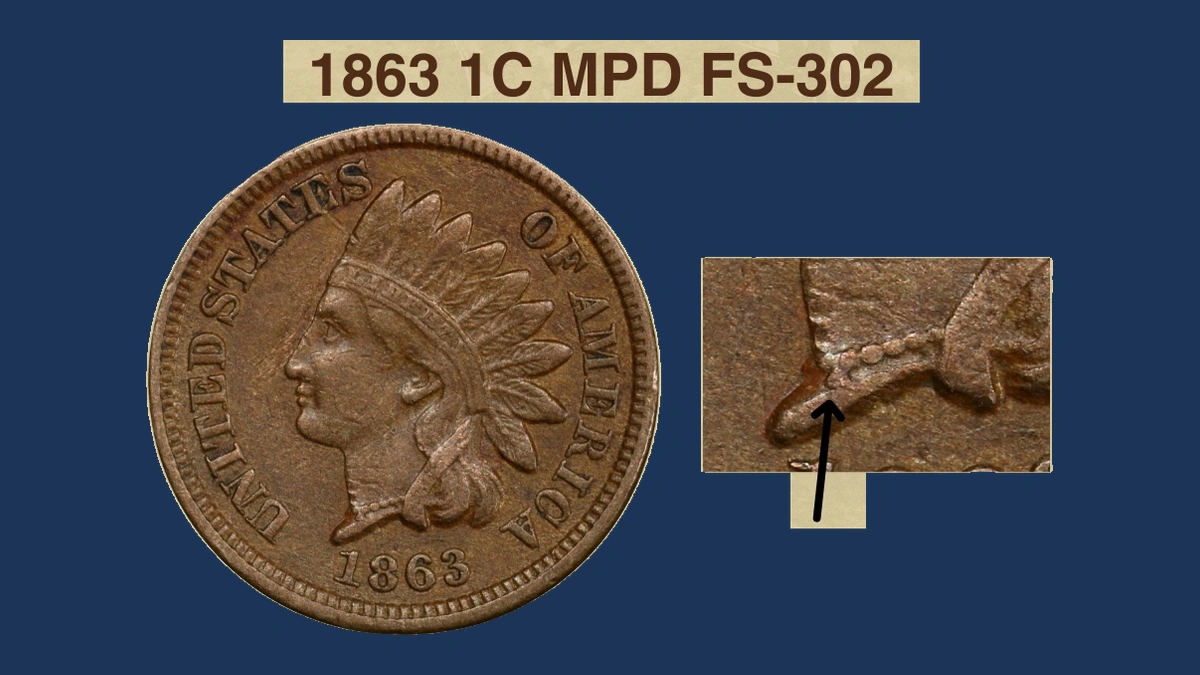
A small part of a numeral can appear where no date should be. A date punch touched the stamping tool outside its intended position, and later coins copied the mark.
The 1863 reports include a 6 within the small lower rim teeth. Other examples have digit traces near the necklace beads or the base of a 1 beyond the bust tip.
These marks belong to separate varieties. One penny does not need to show all three locations.
This is a misplaced date, rather than a repunched date beside the normal numerals. The location of the extra stroke makes the difference.
Estimated Value
For identifiable misplaced-date varieties, allow an estimated $50–$750 on circulated cents and $750–$6,000 on attractive unworn pieces. Which numeral remains visible is part of the comparison.
An unworn red 1878 misplaced-date cent sold for $1,920 in October 2019. It is a different date and pattern, used here as same-series context.
The estimates cover a correctly matched coin. A random raised dot among rim teeth does not earn the price of a recognized misplaced numeral.
How to Identify
Compare the suspected mark with a numeral in the normal date. A small tool chip can resemble a dot, but a misplaced digit should preserve a recognizable curve or base.
For a loose coin, check the usual copper-nickel weight of 4.67 grams with a scale and the 19-millimeter diameter with calipers. Inspect the plain edge before concentrating on a tiny face mark.
The 1863 variety photographs show separate locations near the lower rim teeth, necklace, and bust tip. Choose the matching area and enlarge it with a 10× magnifier.
Keep surrounding beads or teeth in the image. Their relationship to the extra stroke helps distinguish an added numeral from an ordinary design element.
11. 1863 Indian Head Penny Wider Coin with Its Main Design Intact
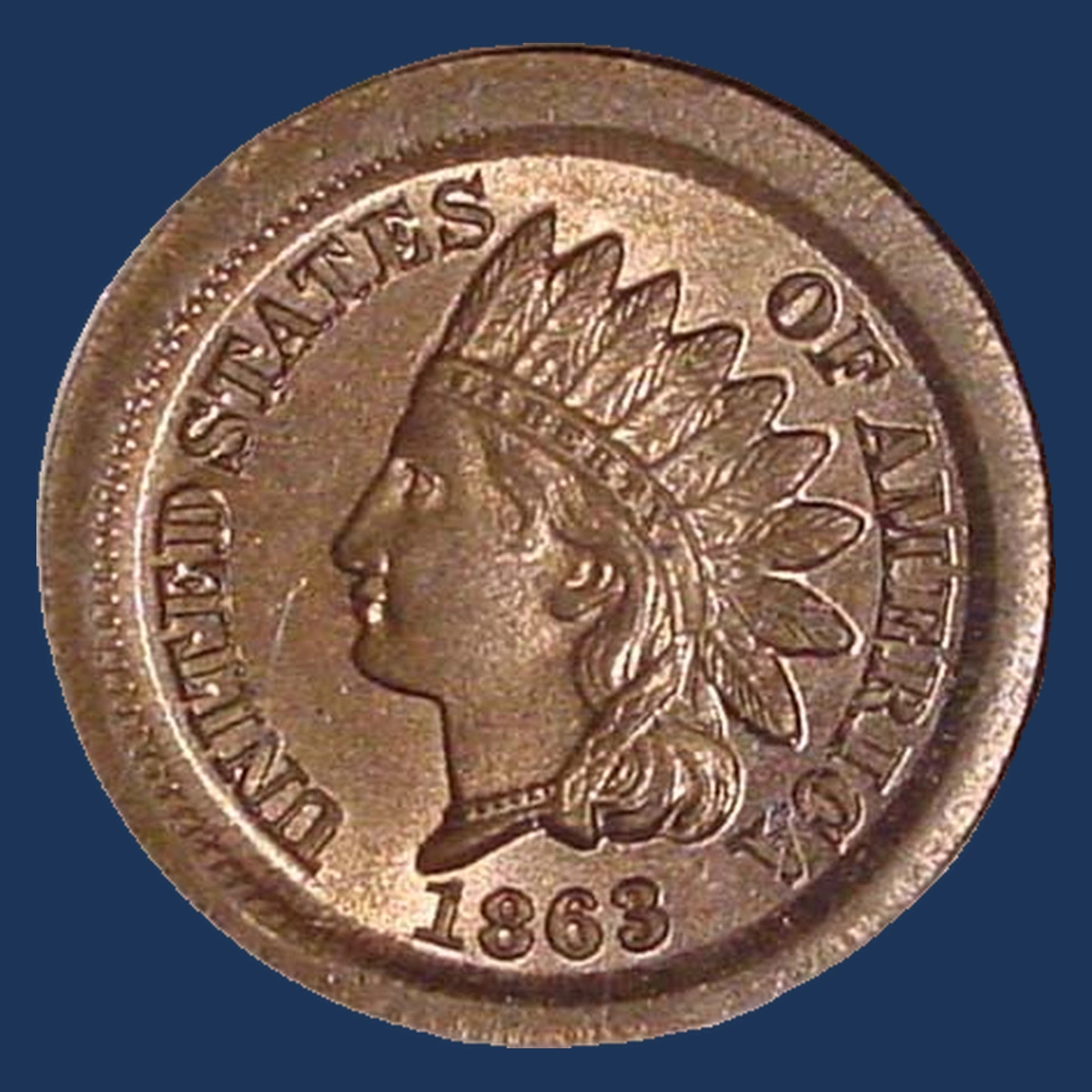
The metal can spread outward when the ring around the blank fails to contain it during striking. That ring is called the collar.
A centered broadstrike keeps the main design while developing an unusually wide outline or border. The 1863 collection example is graded NGC MS65, meaning an unworn coin with relatively few marks.
This is separate from the collection’s off-center cent. That other coin loses part of the design beyond the blank.
The normal 1863 edge is already smooth. Missing grooves therefore cannot be used as evidence that the cent was struck without its collar.
Estimated Value
Estimate $150–$1,000 for recognizable circulated broadstrikes and $1,000–$6,000 for attractive unworn examples. The NGC MS65 collection coin belongs with the latter condition group.
A separate old dealer record offered an uncentered 1863 broadstrike with a back crack at a $165 minimum bid. That was an opening requirement, not a recorded completed sale.
The estimate rewards natural expansion and clear design. Later flattening can make a coin wide without making it a mint error.
How to Identify
Measure several spans with calipers, comparing them with the normal diameter of about 19 millimeters. The outline may spread unevenly rather than forming a perfect larger circle.
Weigh a loose example against the usual 4.67 grams. Broadstriking changes the shape without necessarily removing metal, so a much lighter reading needs another explanation.
Under a 10× magnifier, follow the outer lettering on both faces. The main design should remain present, with metal spreading naturally into the wide border.
A squeezed coin may instead have flattened letters and matching pressure damage. Inspect the plain edge too, and compare the whole coin with the documented centered broadstrike rather than only its widest spot.
12. 1863 Indian Head Penny Fifteen-Percent Shift toward Twelve O’Clock
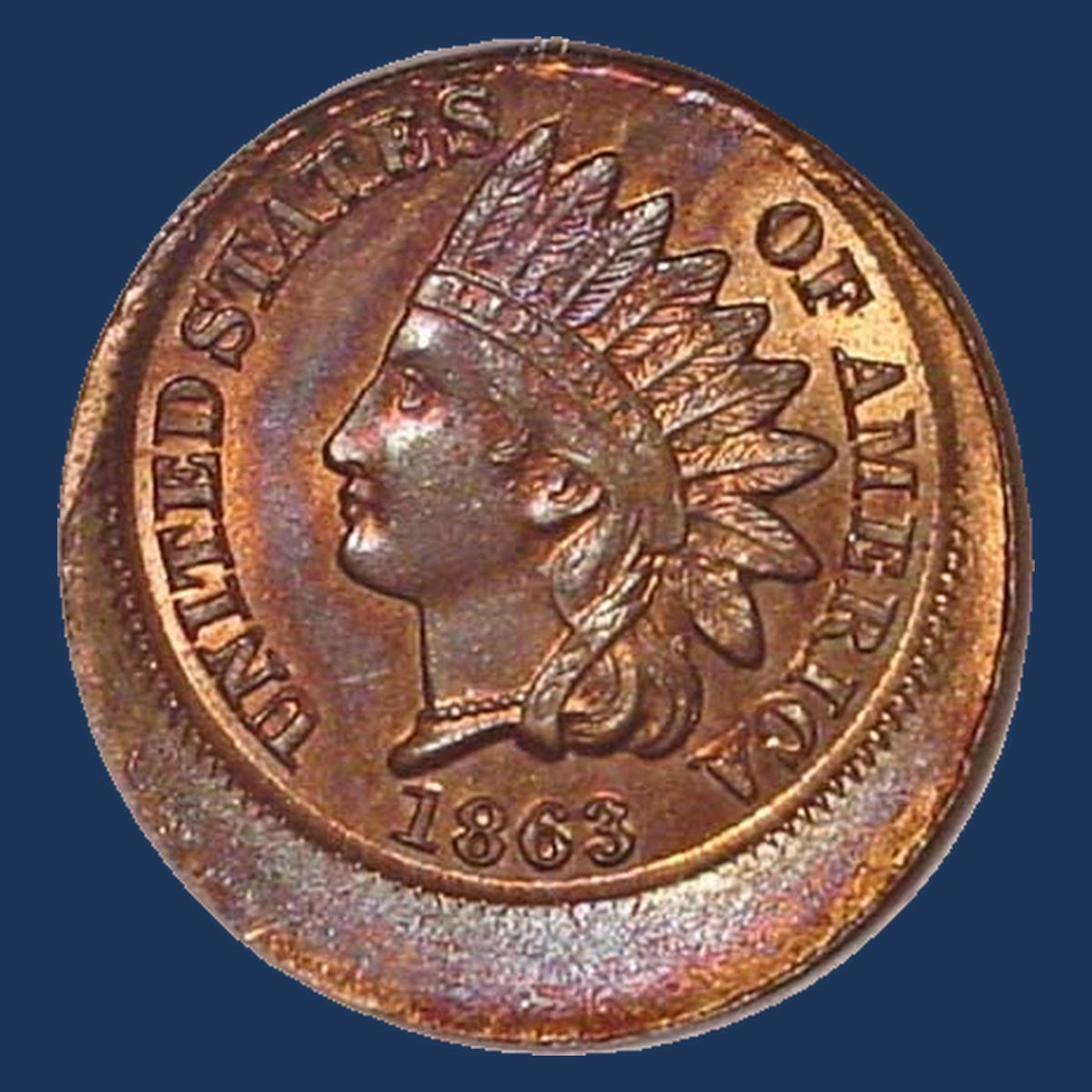
A blank that sits too far from the press center receives only part of the design. The opposite side retains an area of bare metal.
An 1863 example is recorded as fifteen percent off center toward twelve o’clock and graded NGC MS66. That grade describes a very well-preserved unworn coin.
The source also identifies a Type 1 blank. Here that means a blank that had not received its prepared raised border before striking.
The term does not turn the coin into the 1859 Indian cent design. The 1863 date and its own striking mistake remain the subject.
Estimated Value
Allow an estimated $150–$1,500 for readable worn off-center cents, and $1,500–$7,500 for substantial shifts with strong preservation. The documented MS66 coin offers a high-condition example, not a price for every shifted cent.
A worn 1875 Indian cent struck twelve percent off center brought $391 in February 2005. Its different year and condition keep it separate from the 1863 collection piece.
A visible date and original unstruck surface make the comparison easier for buyers.
How to Identify
With the portrait upright, locate the displaced design toward twelve o’clock. Keep the remaining date visible in the full photograph before taking a close-up of the bare crescent.
Use a 10× magnifier to examine the transition from struck design to original blank metal. A ground-away area can imitate missing detail but may leave scratches or unnatural flatness.
Turn the cent over and compare the missing design on the other face. A problem confined to one side can come from a misplaced tool instead of the whole blank.
A scale checks the loose coin against about 4.67 grams, while calipers record its outline against 19 millimeters. The plain edge and any natural expansion belong in the photographs too.
13. 1863 Indian Head Penny Small Shift between Two Strikes
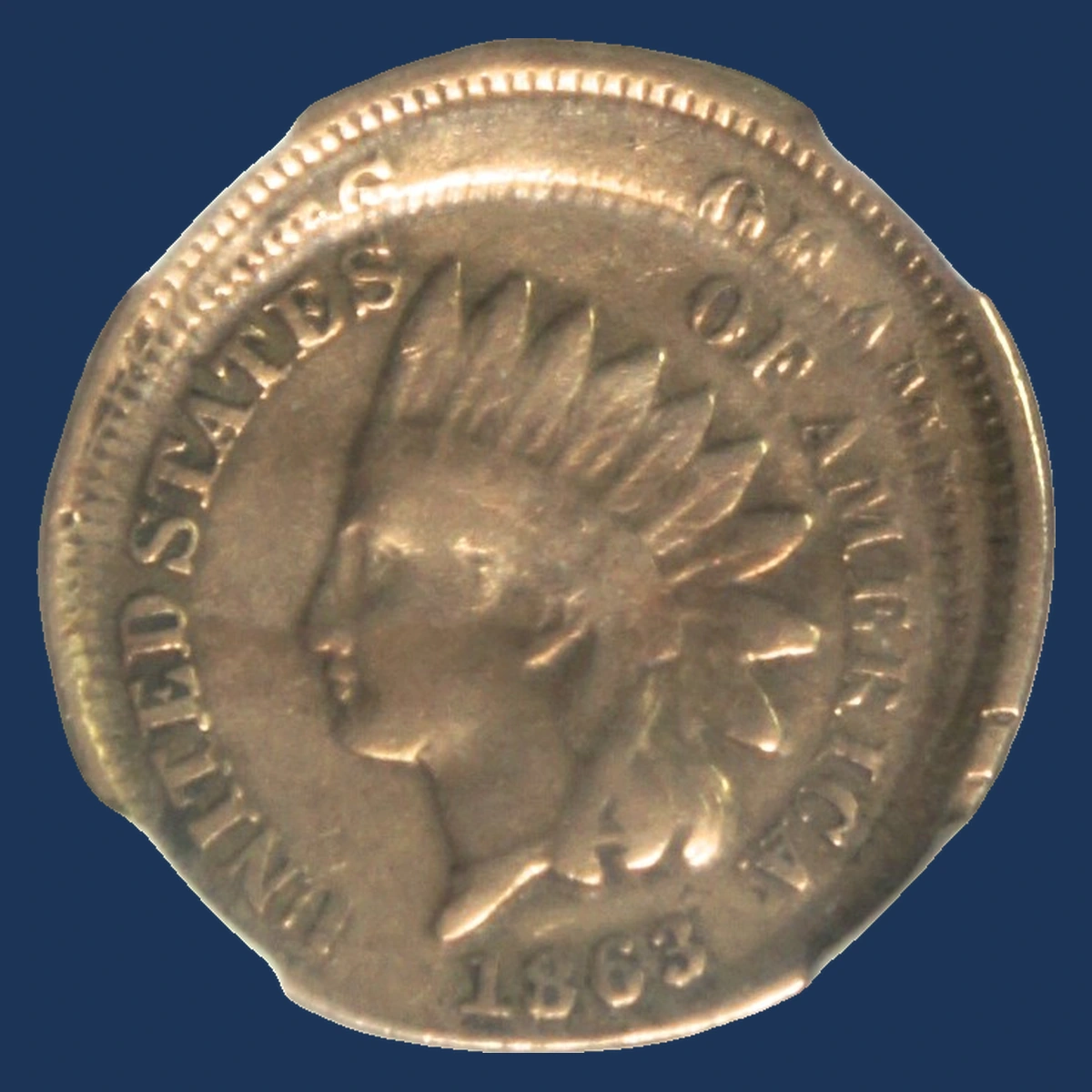
A second blow can leave overlapping details without producing a huge empty crescent. The recorded 1863 example first received a centered strike, then another about five percent off center.
The second impression moved toward six o’clock. Portions of the earlier design remained beneath the later one.
The collector’s record identifies the coin as NGC VF30, indicating moderate circulation wear. It should not be compared as an unworn mint-state specimen.
This repeated striking differs from small doubling already present in a tool. More than one design position survives on the copper itself.
Estimated Value
For identifiable 1863 double strikes, estimate $400–$2,500 on worn examples and $2,500–$10,000 with stronger preservation and clearer separate impressions. The small-shift VF30 belongs among circulated comparisons.
A corroded 1867 cent with an eighty-five-percent second strike sold for $517.50 in January 2006. It shows why a large shift alone does not guarantee a high price.
The coins differ in year, surface condition, and displacement. No completed auction amount is assigned to the recorded 1863 VF30.
How to Identify
Locate an extra letter or portrait outline below the main design through a 10× magnifier. Trace enough of it to establish another design position, instead of relying on one thick edge.
The recorded collector example describes a second strike toward six o’clock. Compare both faces with that small downward displacement in mind.
A loose cent normally began near 4.67 grams and 19 millimeters. Record weight with a scale and several widths with calipers, because repeated striking can alter its outline.
Inspect the plain edge and overlapping detail for later squeezing. A sunken backward portrait would need a brockage explanation, while two normal raised impressions support repeated striking.
14. 1863 Indian Head Penny Grooved Edge on a Normally Smooth-Edged Cent
An ordinary 1863 cent has a plain edge. Reports of examples with regular grooves raise a different question from a scratch or chip on the face.
A grooved collar, the ring surrounding a coin during striking, can form this kind of edge. But an 1863 experimental issue called Judd-300 also has grooves.
That special experimental coin is not automatically an accidental circulation error. Private Civil War tokens and later edge work can create further confusion.
Regular grooves deserve examination alongside the full design. Their spacing alone cannot show whether the piece is an accident, an experiment, or a later alteration.
Estimated Value
For an authenticated accidental grooved-edge 1863 cent, use a conditional estimated $1,000–$15,000. This range concerns the unusual manufacturing error, not grooves alone.
A correctly identified Judd-300 experimental piece belongs in a separate market and should use its own grade and composition comparisons. It cannot serve as proof that every grooved cent was a press accident.
Full edge photographs, original surfaces, and specialist identification support the estimate. Later cut grooves or a private token fall outside it.
How to Identify
Read the full designs and date before concentrating on the edge. Similar-looking private tokens must be excluded by their actual lettering and images.
Photograph the entire edge in overlapping views. A 10× magnifier can reveal freshly cut grooves, uneven depth, or displaced metal from later work.
Use a scale and calipers to record the loose coin against the normal 4.67 grams and 19 millimeters. Those measurements alone do not separate an experimental issue from an accidental error.
Ask a specialist to compare the design, metal, and edge with Judd-300 as well as ordinary cents. Keep the identification attached to this particular coin; a photograph of grooves by itself cannot establish how or why they formed.
15. 1863 Indian Head Penny Deep Cup Formed around the Front Tool
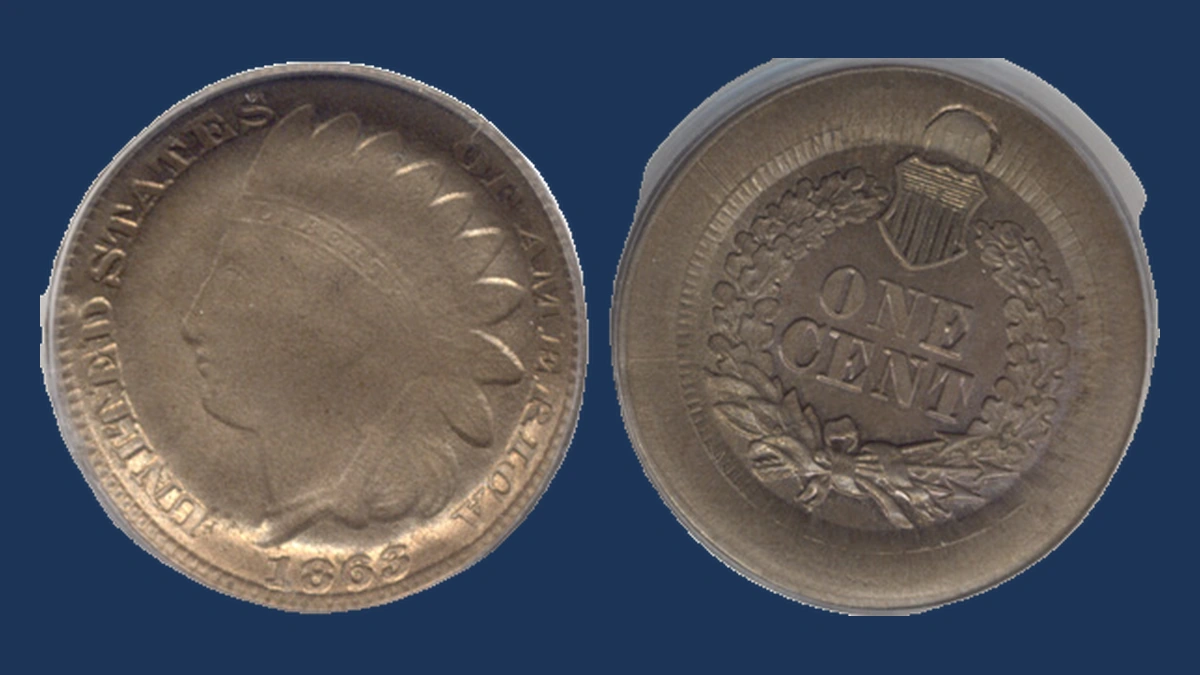
This penny looks more like a small cup than a flat disc. It stuck to the front stamping tool and continued to take part in later strikes.
Repeated pressure spread the metal around that tool. The sides rose while the back lettering and wreath became enlarged and stretched.
Collectors call the trapped coin a die cap. It is different from another coin struck through the cap while the cap remained in place.
The 1863 example graded PCGS MS65 is unworn and deeply formed. Its shape comes from repeated striking, not from a claim that it used the wrong metal.
Estimated Value
The deep 1863 front die cap sold for $18,000 in August 2020 at Stack’s Bowers. PCGS graded it MS65, an unworn coin with relatively few marks.
Estimate $5,000–$25,000 for genuine examples with varying depth, preservation, and clarity of the surviving design. The recorded deep cap supports the upper part of this broad estimate.
A bent ordinary cent belongs outside that range. Its bowl shape needs to be explained by original striking before it can use a cap comparison.
How to Identify
View the coin from the side before looking at the portrait. The high walls should connect naturally with a design stretched during repeated striking.
Under a 10× magnifier, compare the enlarged ONE CENT and wreath on the back with the front. A later bend can change shape without producing the same repeated-strike expansion.
The normal blank began near 4.67 grams and 19 millimeters, but the cap’s final width and height differ. Use existing certified measurements or careful scale and caliper readings on a safely handled loose piece.
Do not press the walls flat or force calipers across them. Photographs of the opening, back, and plain edge let an error specialist assess the shape without changing it.
16. 1863 Indian Head Penny Cent Design on a Small Silver Dime Blank
A silver-colored cent can involve more than a surface color change. The historical list of Indian cents struck on dime blanks includes an 1863 example.
A dime blank is a smaller disc of silver alloy intended for a ten-cent coin. It cannot contain the whole outer design of the larger Indian cent.
The 1863 report traces auction appearances in 1968, 1977, and 1978. It concerns a blank, rather than an already struck dime with an older design underneath.
Silver plating can imitate the color on a normal cent. The original metal, weight, size, and missing outer design must agree.
Estimated Value
For an authenticated 1863 cent on a silver dime blank, estimate $5,000–$50,000 according to preservation and strength of identification. The historical listing records $450 in June 1978, a much older market.
A different 1869 cent on a dime blank brought $25,300 in January 2012. That sale offers a same-series comparison, not a modern sale of the reported 1863 coin.
The historical dime-blank reference separates these years. Surface plating or a cut-down ordinary cent does not qualify.
How to Identify
Begin with weight and size, using a scale and calipers on a loose example. A contemporary dime blank was about 2.49 grams and 17.9 millimeters, smaller and lighter than the usual 4.67-gram cent.
Striking may expand the small disc, so the final diameter need not equal its starting width. Use a 10× magnifier to see how the outer cent design runs naturally beyond the edge.
Examine the edge for cutting or a plated coating. Color alone cannot establish the expected silver alloy, and surface testing needs to account for possible plating.
Have an error specialist identify the metal without scraping it. A blank has no earlier dime design, so any surviving dime details require a different explanation.
Conclusion
An extra numeral, a shallow peel, and a deep cup tell very different stories about how an 1863 penny was made. Start with the visible feature before choosing a price comparison.
Estimated whole-coin values range from $15–$50,000. Keep normal copper-nickel cents separate from silver-blank reports and special experimental pieces.
Photographs of both faces and the edge help connect small details with the whole coin, especially when a large striking mistake changes its shape.