1798 Cent Error List with Pictures

A backward portrait, an old 7 beneath the date, and a missing copper flake tell three different stories on 1798 Draped Bust cent errors. Even the edge needs care: one variety normally has diagonal grooves.
A rare S-144 cent with small flakes sold for $69,000 in February 2008 and $56,400 in January 2025. Its variety and preservation drove those whole-coin prices, not the flakes alone.
Estimated values below span $75–$75,000; read on to match the feature before choosing a price comparison.
1. 1798 Draped Bust Cent Small Planchet Clip
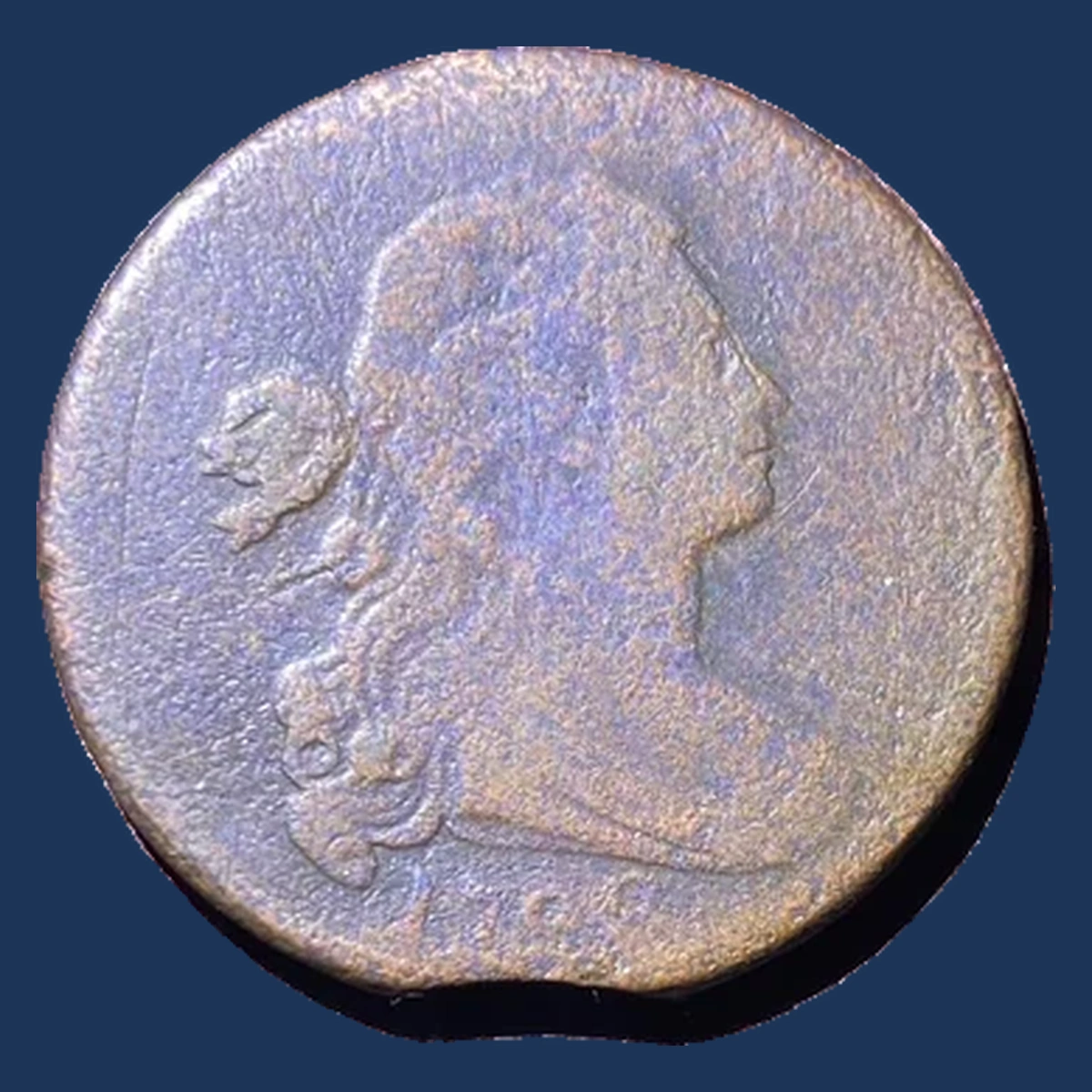
A tiny missing segment at the edge can begin before the coin is struck. The prepared copper disc, or planchet, was incomplete when it entered the press.
The S-171 example recorded in the American Numismatic Society collection has a very small clip. The description does not specify a large crescent or a fixed clock position.
Because little copper is missing, the coin can otherwise look close to normal. Later edge damage can imitate that small gap, so a correct date and variety alone do not establish when the missing segment was removed from the disc.
Estimated Value
Estimate $100–$3,000 for a genuine small clip on a 1798 cent, allowing for wear and the underlying variety. This is a whole-coin estimate, not a sale of the museum example.
A minor clip on an 1851 large cent graded NGC AU58 brought $159 in January 2022. That later issue provides a comparison for a modest gap, but it does not transfer its grade or price directly to the earlier S-171 cent.
How to Identify
Look around the entire edge before selecting a gap to examine. The recorded S-171 clip is small, so there is no reason to expect a dramatic missing crescent.
Under a 10× magnifier, study the gap for a natural old surface and border detail weakened during striking. Fresh filing, a folded lip, or a deep impact mark suggests later damage.
The remaining edge should be plain. Calipers compare about 29 mm across intact copper, while a scale checks the nominal 10.89 grams.
A tiny clip may change the weight only slightly. Check the rim opposite the gap for weakness as supporting evidence, while keeping the actual missing segment in view.
2. 1798 Draped Bust Cent Rotated Back Design
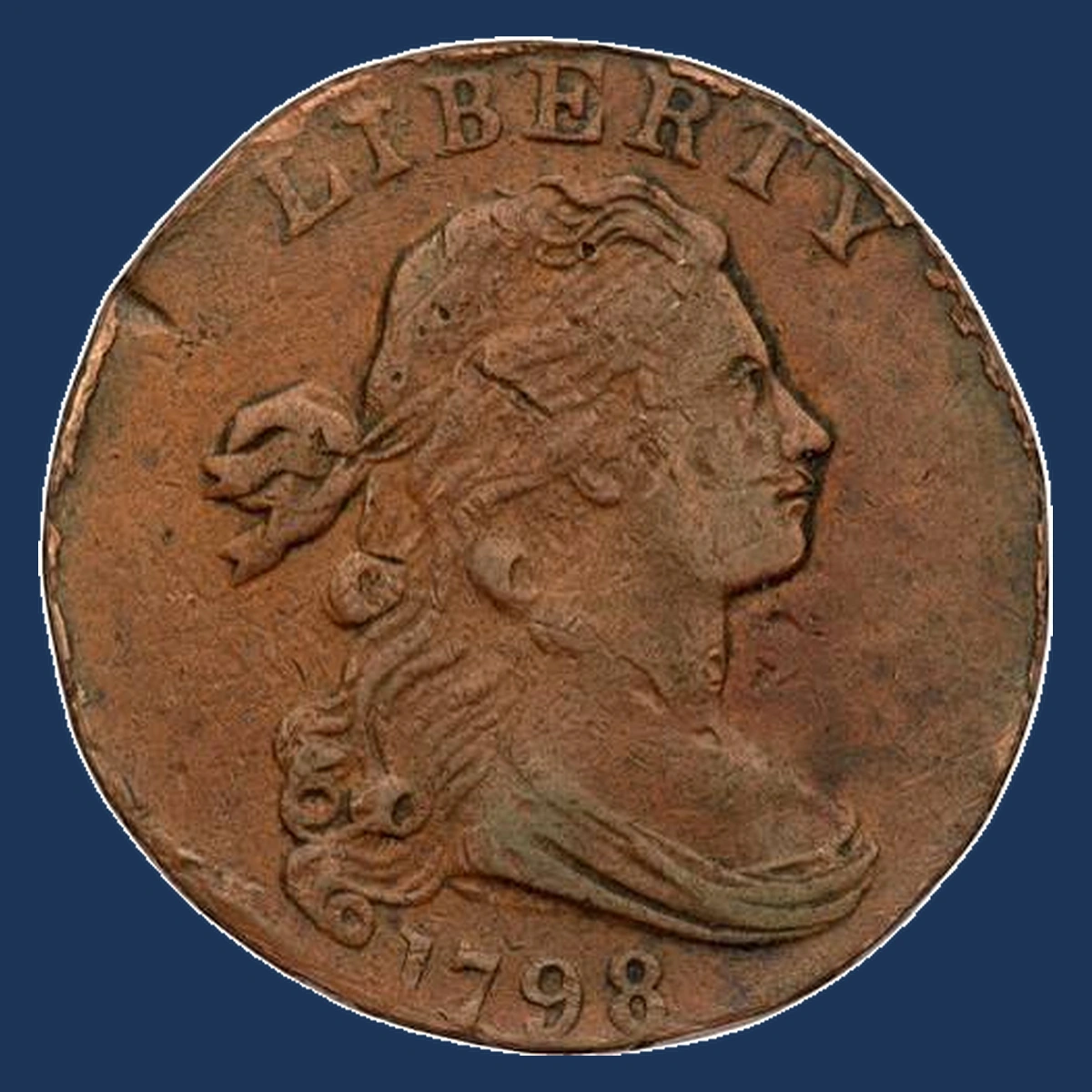
The back finishes sixty degrees counterclockwise from its expected position when the recorded S-173 coin is turned over. Its front and back stamping tools were set at different angles.
That differs from a coin turning between two separate strikes. A rotated-tool coin can have just one normal impression on each face.
The recorded example was described as Fine Details with corrosion by NCS, a conservation service. The angle is a mint feature, while the rough dark surfaces and green corrosion are later condition problems that need to be judged separately from the alignment.
Estimated Value
For authenticated rotated 1798 cents, estimate $100–$4,000, depending on surface quality, wear, and the visible angle. The recorded corroded example should not be priced like a clean coin with similar detail.
A different-year 1831 cent with a documented fifteen-degree rotation brought $920 in 2010. That result provides an early large-cent comparison, but the smaller angle and better preservation differ from the sixty-degree S-173 report; it is not a completed sale of the 1798 coin.
How to Identify
Use the portrait and date to set the front upright, rather than aligning the plastic holder. Turn the coin top to bottom without twisting, keeping the same vertical line as a guide.
The back should repeatedly return sixty degrees counterclockwise from normal on the reported example. A photograph rotated for display cannot establish this relationship.
If the coin is loose, compare 10.89 grams with a scale and about 29 mm with calipers. Examine its plain edge with a 10× magnifier for a join or other alteration.
Leave a certified coin sealed for the turning test. Repeat the controlled top-to-bottom turn and measure the back’s consistent departure from upright.
3. 1798 Draped Bust Cent 1798/7 Overdate
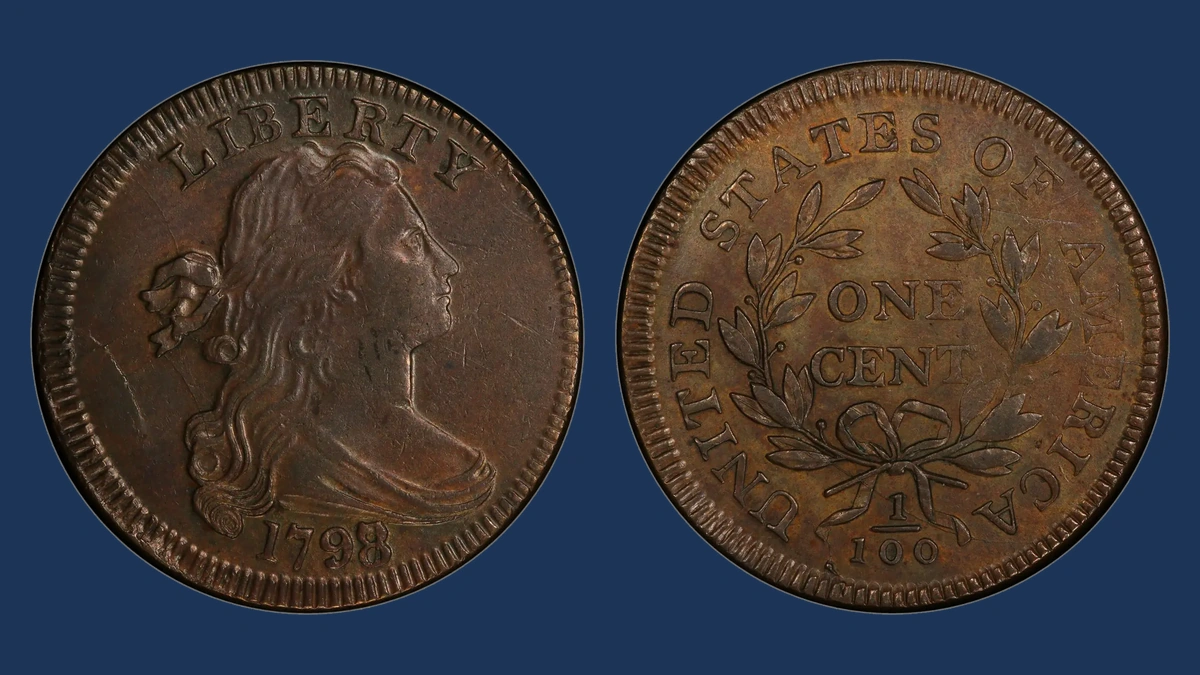
The last 8 can contain strokes left from an earlier 7. The stamping tool was changed from a 1797 date to 1798, but parts of the old digit survived.
That changed date is written 1798/7. It was already present on the tool before each coin received its strike.
The strength of the older strokes can vary with wear and the particular tool pairing. A normally dated 1798 cent should not be assigned an overdate merely because its 8 is rough, and two separate struck dates are evidence of a different kind of mint accident.
Estimated Value
An NGC AU58 S-152 overdate drew a $10,000 winning bid before fees at Goldberg in January 2016. A worn example assessed as Good 6 drew $100 before fees in the same sale.
Estimate $150–$20,000 for identifiable 1798/7 cents from worn pieces through attractive nearly unworn examples. The broad range reflects the complete coin and its specific variety; a small damaged mark inside an ordinary 8 does not receive the same estimate.
How to Identify
A normal copper cent of this type weighs 10.89 grams and measures about 29 mm. Use a scale and calipers on a loose example, then inspect its plain edge and the surface around the date.
Bring an identified overdate photograph beside the final 8. A 10× magnifier should show older straight or angled strokes that belong to the underlying 7, rather than random corrosion.
Keep the shape of the rest of the date visible so the correct variety can be matched. A second complete date elsewhere on the coin points to another strike; an overdate stays within the original final digit.
4. 1798 Draped Bust Cent Multiple Strikes with Off-Center and Indent Effects
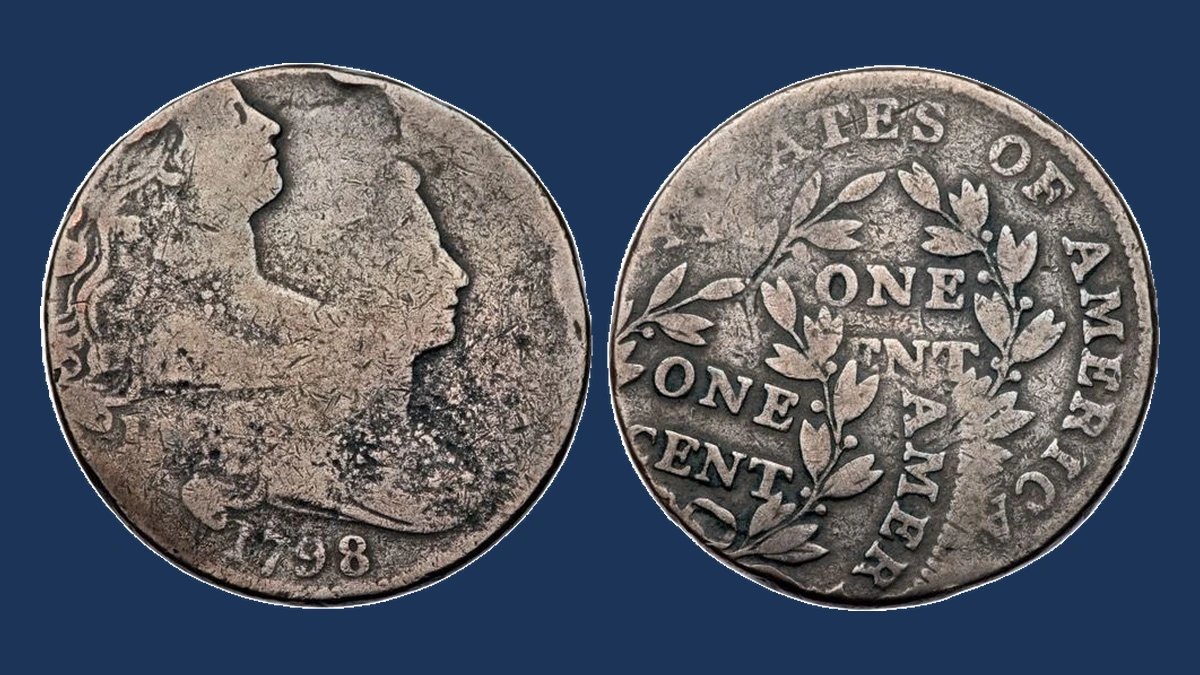
Repeated portraits or dates show that the same copper received more than one blow. Some 1798 examples also moved off center or overlapped another disc during a strike.
One recorded coin’s second strike shifted slightly beyond five percent toward twelve o’clock and left a back indent. That indent is a smooth impression where the overlapping disc blocked the tool.
Another example began with a strike about sixty percent off center toward eight o’clock. A separate brockage overstrike has three visible dates, including a sunken mirror date; these different coins should not be combined into one imagined accident.
Estimated Value
A double-struck S-149 graded NGC VG8 drew a $1,350 winning bid before fees in January 2016. That price belongs to the worn double-struck coin, not every reported 1798 compound example.
Estimate $500–$25,000 for clear multiple strikes, including stronger combined effects. An 1811 double strike brought $16,200 in September 2025, providing a different-year comparison; visible separation, original surfaces, and the survival of unusual mirror detail all influence the whole-coin estimate.
How to Identify
Count normal raised dates separately from sunken mirror dates. Under a 10× magnifier, two ordinary impressions show another blow, while a backward recessed date also records contact with an already-struck coin.
For the example with the upward second strike, compare its repeated front details with the smooth back indent. The indent itself need not contain letters.
Check a loose coin against 10.89 grams on a scale and about 29 mm with calipers, allowing for strike distortion. Inspect the plain edge for squeezing or an added metal piece.
Do not transfer the sixty-percent first-strike description to the coin with a slightly displaced second blow. Draw the positions of the surviving dates on a photograph so the normal and mirror impressions stay clearly separated.
5. 1798 Draped Bust Cent Mirror-Image Back Brockage
Liberty appears twice on the recorded coin: normally raised on the front and backward, pressed into the back. Even the small mark beneath her chin is copied into both images.
A struck coin stayed in the press and acted as a temporary stamping surface against the next copper disc. It transferred a sunken mirror copy instead of the normal wreath design.
This error is called a brockage. The recorded Second Hair Style cent was graded PCGS AU50, indicating light wear; its clear mirror image differs from the faint partial traces that a clash between the steel tools can leave.
Estimated Value
Mint Error News reported a $27,600 sale for the PCGS AU50 1798 back brockage. The clear transferred portrait and attractive copper surfaces make it a stronger comparison than a damaged or faint example.
An estimated $3,000–$40,000 covers authenticated examples with varying wear and image clarity. This is a whole-coin range, and the repeated chin mark is an identifying detail rather than a separate error whose value should be added to the brockage price.
How to Identify
Inspect the ordinary front first, including the small mark under the chin, with a 10× magnifier. Then find the same feature reversed and sunken on the back.
A mirror can make the backward lettering easier to read. A reversed photograph alone cannot establish the depth of the actual impression.
For a loose coin, compare its weight and diameter with 10.89 grams and about 29 mm using a scale and calipers. Inspect the plain edge for seams or later squeezing.
A coin pressed against another outside the Mint can also leave reversed detail, so examine the entire struck surface and seek authentication. Leave a certified example sealed while comparing both faces with its recorded photographs.
6. 1798 Draped Bust Cent Die Cracks and Rim Cuds
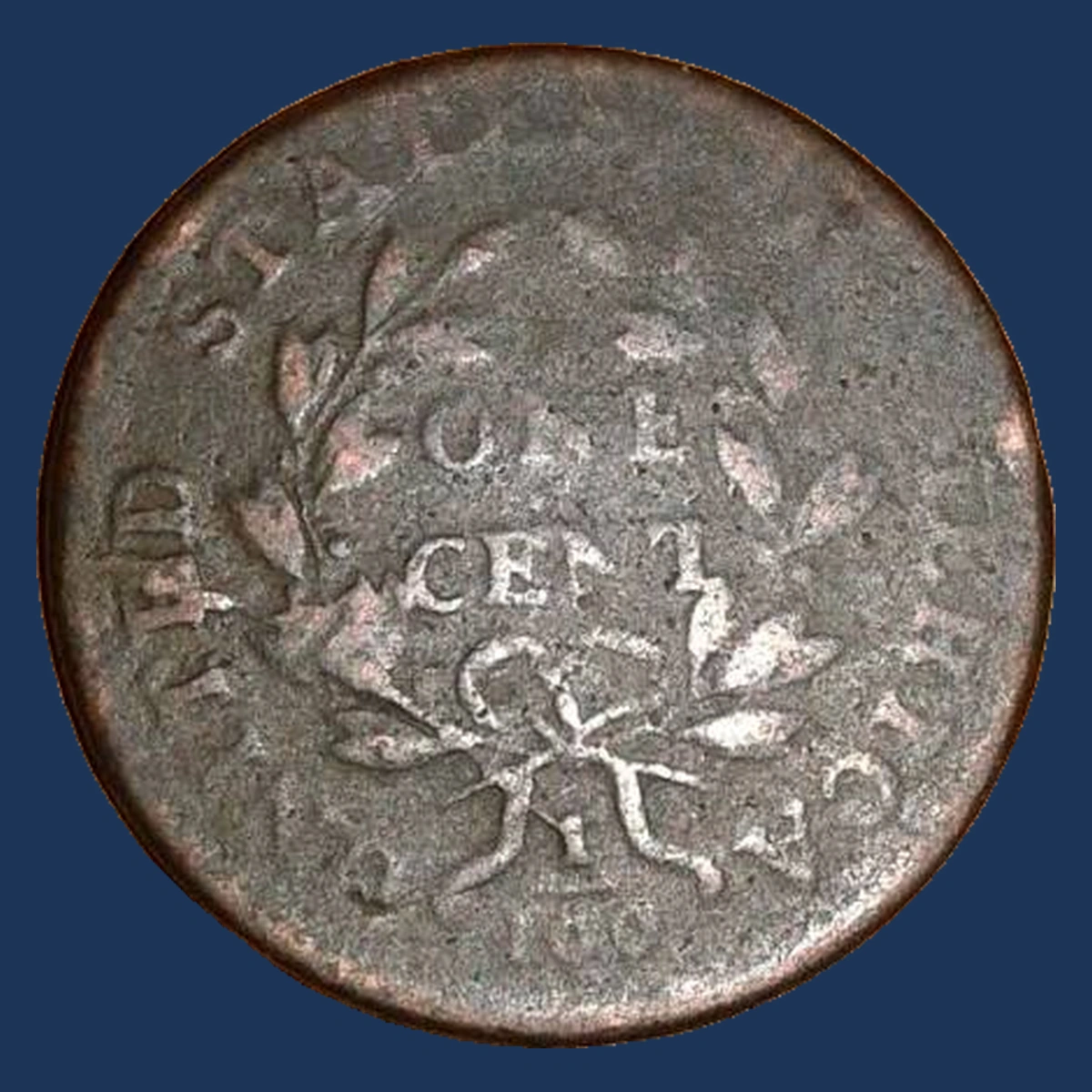
Raised lines run through the 7 into the hair, from the 7 toward the 9, and through L in LIBERTY on S-155. They copied cracks in the steel stamping tool.
Other 1798 coins have larger broken areas around UNITED on the back. A missing edge piece leaves a raised rim patch called a cud.
If the broken tool section remains in place, the coin may keep design inside the affected area. This is a retained break; the S-175 patch near U and other retained examples should be matched separately rather than assigned to the S-155 front.
Estimated Value
The S-155 cent graded PCGS MS63 Brown sold for $40,800 in January 2022. Its rare Reverse of 1796 design and unworn preservation explain much of that amount.
For worn cracked or cud-bearing examples, estimate $75–$5,000; exceptional unworn varieties can occupy a $15,000–$50,000 whole-coin range. The same S-155 also has clash marks, so its auction price is neither a crack-only premium nor an amount to add again for another feature.
How to Identify
Identify the front or back design before choosing a crack photograph. An S-155 front has specific date and L lines; a back patch near U needs the appropriate different comparison.
Use a 10× magnifier to follow a line above the surrounding surface. A cut-in scratch or corrosion trench does not reproduce a raised crack.
For a claimed cud, inspect the original rim connection and any design remaining inside a retained section.
A scale compares a loose cent with 10.89 grams, and calipers compare about 29 mm. Check the plain edge for an impact or attached metal.
Letters may survive inside a retained break because the fractured steel remained in the tool. Their presence does not automatically rule out that kind of rim failure.
7. 1798 Draped Bust Cent Clashed Dies
Extra traces appear at the lower right of the back on the S-155 example. The front and back tools had struck each other without a copper disc between them.
Parts of the opposing design marked the steel, and later coins copied those marks. This is a die clash, rather than another full strike on the individual coin.
Several sets of traces can survive from repeated tool contact. Other 1798 examples show transferred border-tooth marks near lettering, but their positions should be checked against the matching variety rather than borrowed to explain every unexplained line on the back.
Estimated Value
Worn 1798 cents with clear clash marks can be estimated at $75–$4,000. For an exceptional unworn variety, a broader $15,000–$50,000 range includes the coin’s rarity and preservation.
The S-155 PCGS MS63 Brown example brought $40,800 in January 2022 and also carries the front cracks described above. That is one sale of one coin; faint extra outlines on an ordinary worn example do not by themselves explain or command the same high price.
How to Identify
Compare an image of the front with the lower-right back area before trying to name an isolated line. A transferred shape should relate to a part of the opposite design.
The normal copper specifications are 10.89 grams and about 29 mm. Check a loose coin with a scale and calipers, and inspect the plain edge for signs of later pressure or alteration.
Now use a 10× magnifier and side light to follow the extra traces, keeping the surrounding letters and wreath visible. Change the light if shadows seem to create extra lines, and separate scratches crossing the ordinary design from the transferred pattern.
8. 1798 Draped Bust Cent Copper Flakes on a Defective Planchet
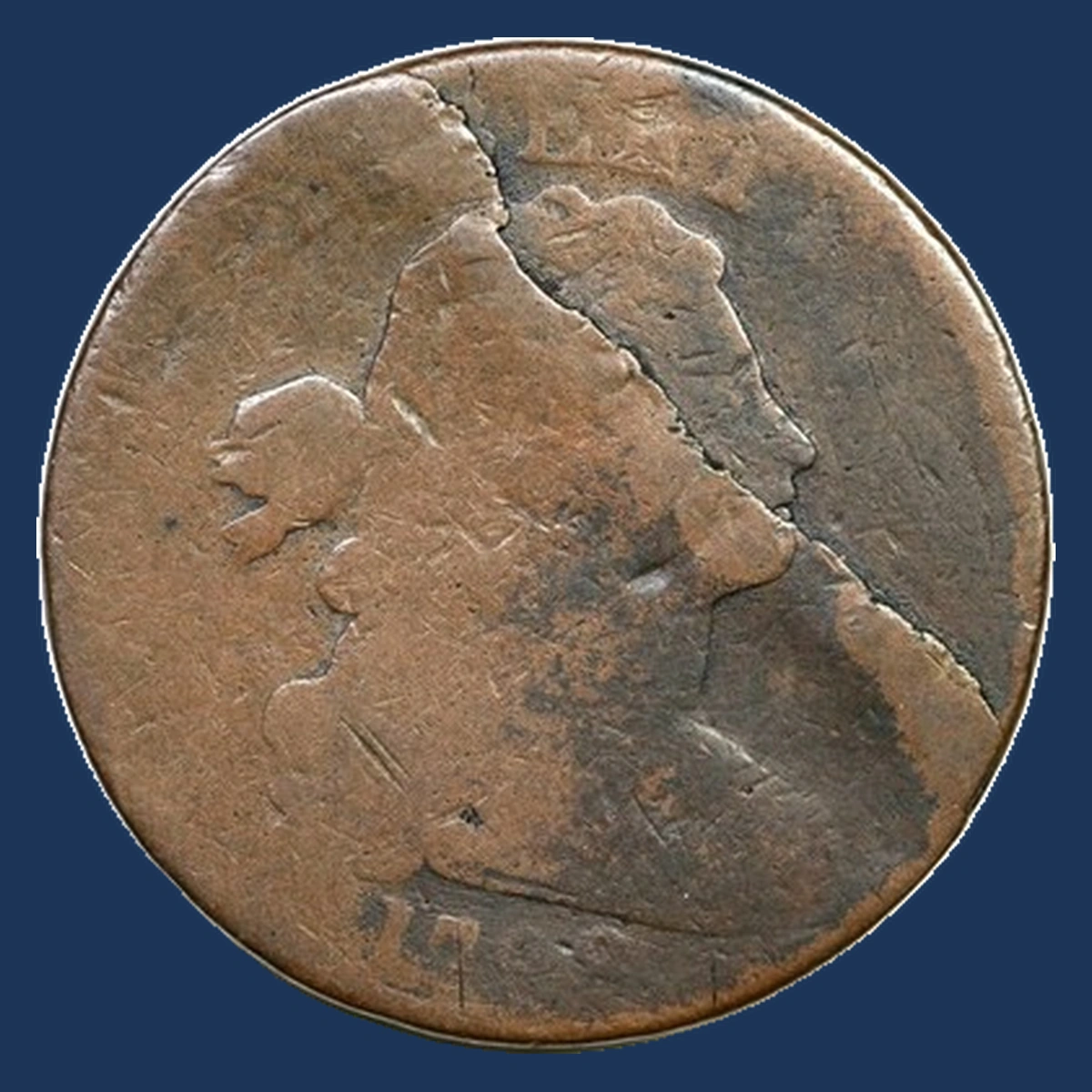
Small copper flakes affect the cheek and bust of the recorded S-144 coin, with a larger flaw on the forehead above the eye. The metal had weak areas that allowed shallow pieces to separate.
These are defects in the planchet, the copper disc prepared for striking. They differ from ordinary contact marks cut or knocked into the finished design.
The example is a scarce First Hair Style variety graded PCGS AU50. It also has diagonal grooves around the edge, a normal feature for S-144, so those grooves should not be mistaken for a second accidental defect.
Estimated Value
This S-144 example sold for $56,400 on January 9, 2025, after a recorded $69,000 sale in February 2008. Its variety, preservation, and collector history matter far more than the small missing flakes.
Estimate $100–$3,000 for ordinary worn examples with genuine copper flaws. Exceptional scarce varieties comparable to this nearly unworn coin can reach a $30,000–$75,000 whole-coin tier; a rough patch alone cannot justify that upper range.
How to Identify
Do not reject the S-144 example because its edge has diagonal grooves. Those grooves belong to this variety, although many other 1798 cents have plain edges.
Calipers and a scale compare a loose coin with approximately 29 mm and the nominal 10.89 grams. Small surface flakes need not cause a dramatic weight loss.
Examine the cheek, forehead above the eye, and bust under a 10× magnifier, following each shallow boundary. Scattered corrosion pits or newly cut grooves require a different explanation.
Keep any surviving attached copper in place. Photograph each affected area without brushing away material or enlarging a loose boundary; fresh handling damage can obscure the original separation.
Conclusion
A raised crack, a tilted back, and a sunken mirror portrait each require a different comparison. Read the actual coin before borrowing a direction, date pattern, or strike sequence from another example.
Estimated whole-coin values span $75–$75,000. The largest figures belong to unusual varieties in strong condition, and S-144’s diagonal edge grooves are normal; small flakes or faint tool marks alone do not explain those exceptional prices.