1828 Cent Error List with Pictures

On one 1828 cent, a fine raised line crosses the tops of TED. Another coin from the same tool variety shows a full raised patch at that border.
The first coin brought $15,863 in January 2013, largely reflecting its exceptional unworn condition. A small crack alone does not explain that price.
This 1828 Coronet Head cent error list covers whole-coin estimates of $20–$16,000. Use the checks below to separate broken tools from a repeated letter, a clipped blank, and a rotated back.
1. 1828 Coronet Head Cent Rotated Back Alignment
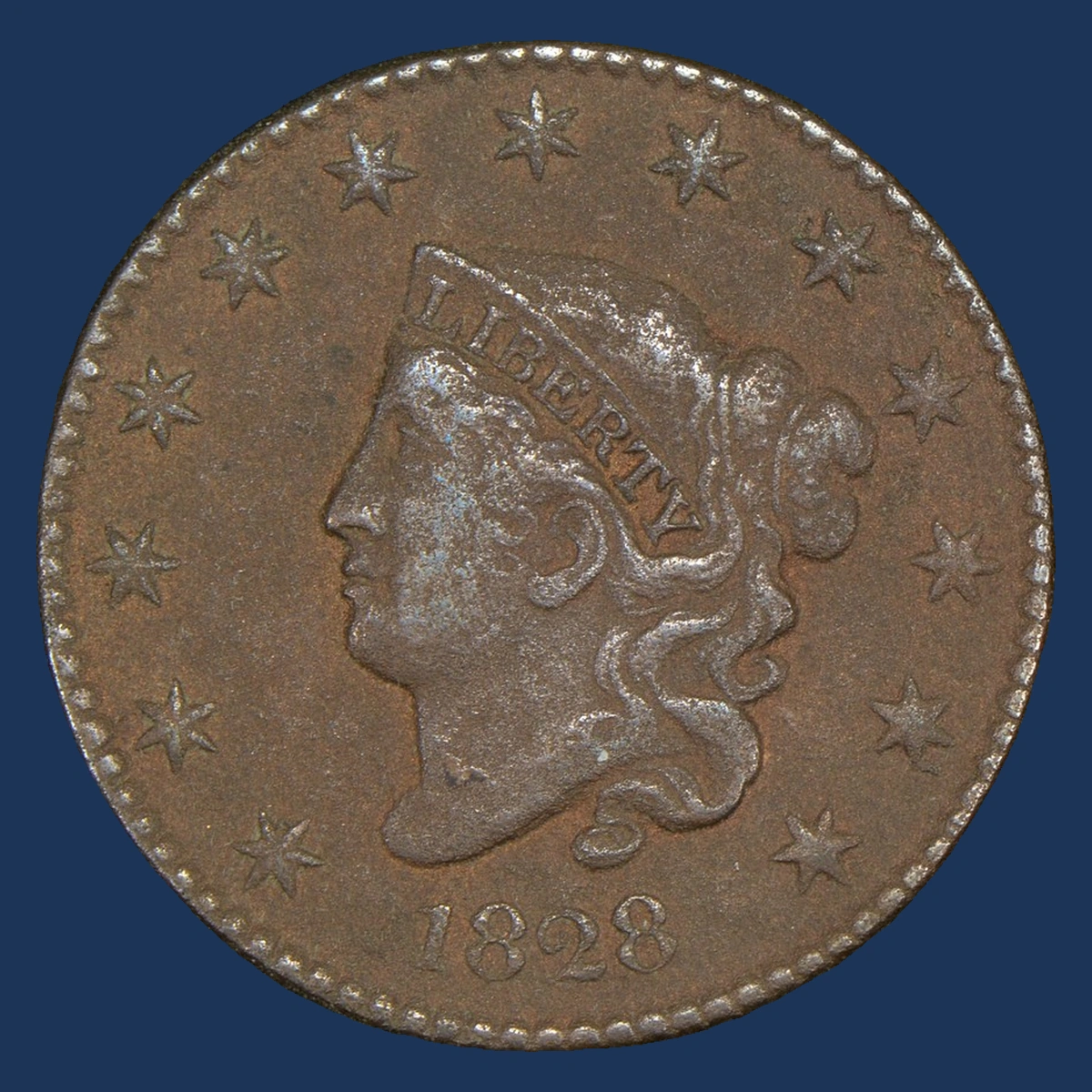
A crooked photograph is easy to straighten, but a rotated back remains tilted relative to the front. The difference becomes visible when the coin is turned without twisting it.
For normal United States coin alignment, an upright portrait should lead to an upright back after a top-to-bottom turn. A misplaced stamping tool can change that relationship.
Rotation is reported for 1828 cents without a specific angle established here. It should not automatically be described as a half turn.
The front and back can both carry complete designs. Nothing needs to be missing from the rim for this error to occur.
Estimated Value
Estimate $20–$2,500 for authenticated 1828 rotations, depending on the angle and the coin’s preservation. A modest tilt on a well-worn cent can add little beyond its ordinary value.
A dealer listed a different-year 1851 cent described as sixty degrees rotated for $39.99. The displayed amount was an asking price, even though the page later showed it sold out.
That listing does not establish a paid price or angle for an 1828 example. Value the measured relationship on the actual coin.
How to Identify
First check the edge for a join that might connect two different coin faces. For a loose coin, use a scale and calipers to compare 10.89 grams and roughly 28 millimeters.
The normal edge is plain. Magnification can help separate an added seam from an ordinary edge mark.
Place Liberty upright above a soft surface, then turn the coin top to bottom without twisting left or right. Note where the back’s top actually lands and repeat the motion.
Use one continuous video or a fixed holder when recording the result. Separate photographs can be rotated independently, so their apparent angle alone cannot establish how the designs line up on the coin.
2. 1828 Coronet Head Cent Straight Clipped Blank
A straight boundary interrupts the usual round outline on the reported example. The seller described it as a straight clip on an ungraded 1828 large cent.
This kind of missing section can begin when a round blank is cut across the end of a copper strip. The incomplete disc then receives the design.
The seller’s title does not establish exactly how its edge formed. A later cut can imitate the same simple shape.
The original listing described a heavily worn coin without a certified grade or a stated clock position. Its surface and edge must support the clip explanation together.
Estimated Value
The recorded seller page offered the coin for $40 Buy It Now, with a $15 auction opening and no bids. Neither figure is a completed sale.
For a genuine 1828 straight clip, estimate $20–$3,000 across worn small examples and clearer, better-preserved pieces. Authentication of the edge comes before applying that range.
A certified 1852 clipped large cent graded NGC MS63 Brown brought $384 in June 2024. That unworn different-year example provides context without certifying the seller’s 1828 piece.
How to Identify
Examine the straight edge directly instead of relying on its silhouette. Under a 10× magnifier, look for saw grooves, filing, and a cut passing cleanly through completed design.
Trace both places where the struck rim reaches the missing section. Their shape should fit a blank that was incomplete before the blow.
For a loose coin, use a scale against 10.89 grams and measure intact spans with calipers against roughly 28 millimeters. Missing copper can lower the weight, but later cutting does that too.
Inspect the remaining plain edge for related work. Compare the reported seller example as a worn coin requiring edge examination, rather than treating the listing title as an expert finding.
3. 1828 Coronet Head Cent Repunched D in UNITED
The D in UNITED can carry a slight extra stroke on its right. An auction description recorded this feature on an 1828 cent graded NGC MS62 Brown.
MS62 means unworn, with noticeable marks. Brown describes the copper’s surface color, rather than a separate error.
The letter was punched into the stamping tool more than once at slightly different positions. Traces of the earlier placement remained beside the final D and appeared on coins struck from it.
Collectors call this a repunched letter. It differs from repeating the whole design during tool preparation or striking the entire coin a second time.
Estimated Value
Allow an estimated $40–$4,000 for correctly matched 1828 repunched-letter examples across worn and unworn conditions. The reported MS62 Brown coin supplies a grade comparison, not a sale amount used here.
An 1851 inverted-date variety sold for $823 in February 2018, graded PCGS MS62 Brown. The auctioneer saw light wear; both its punching mistake and year differ from the 1828 letter.
A small extra stroke needs the correct shape. Ordinary thick lettering does not qualify for this variety estimate.
How to Identify
Locate UNITED on the back before enlarging the D. Keep the neighboring letters visible so an isolated rough edge does not appear more dramatic than the rest of the lettering.
Use a 10× magnifier to compare the right-side extra stroke with the reported auction description and a matching N-11 photograph. A scratch crossing the letter should not become an imagined earlier D.
For a loose coin, use a scale against 10.89 grams and calipers against about 28 millimeters. Check its plain edge for alteration.
Change the light while following the raised stroke. Look for the repeated letter shape, rather than a flat shelf that simply narrows the main D.
4. 1828 Coronet Head Cent Crack and Cud above TED
The tops of TED in UNITED show two stages of a broken tool. One 1828 example has a faint raised line there.
The line copied a crack in the die, the steel tool that stamps a coin. Copper entered the opening during the blow.
A different coin shows a full raised rim patch above TED, called a cud. The tool had lost an edge piece, leaving room for copper to rise.
That cud coin was graded PCGS Fine Details with environmental damage, meaning wear plus damaged surfaces. It should not be confused with the exceptionally preserved thin-crack example.
Estimated Value
The thin-crack example sold for $15,863 in January 2013. Its PCGS MS66 Brown grade describes exceptional unworn preservation, a major part of the whole-coin price.
Use an estimated $20–$16,000 across worn minor cracks, distinct cuds, and unusually well-preserved examples. The top end reflects condition as well as the tool fault.
The separate damaged cud coin has no realized price assigned here. A larger break does not erase the effect of porous or otherwise damaged copper.
How to Identify
Choose between a fine line and a broad patch before selecting a comparison image. The 2013 auction coin shows the line, while the 2015 Twin Leaf example carries the full cud.
Under a 10× magnifier, follow the tops of TED. A raised ridge should be distinguished from a sunken scratch with narrow pushed-up edges.
For the full cud, trace the patch into the rim and inspect any surviving nearby lettering. Rough pits elsewhere belong to the coin’s environmental damage, not automatically to the tool break.
For a loose coin, use a scale and calipers against 10.89 grams and approximately 28 millimeters. View the plain edge beside TED to check for folding, attached metal, or later cutting.
Conclusion
The letter D and the tops of TED offer two different places to begin looking. A repeated letter came from tool preparation; a crack or cud formed as a tool broke.
Estimated whole-coin values extend from $20–$16,000. The high-priced MS66 example and the environmentally damaged cud coin belong in very different condition comparisons.
For a missing edge or rotated back, examine the whole coin before assigning the error name.