1824 Cent Error List with Pictures

The last digit deserves a close look before you inspect an 1824 penny’s edge. Some examples preserve part of a 2 beneath the final 4.
An unworn 1824/2 overdate sold for $36,425 in June 2015. This 1824 Coronet Head cent error list also covers clips, peeling copper, broken tools, and off-center strikes.
Estimated whole-coin values span $35–$40,000. Work through the features below to distinguish an earlier digit from surface damage and to compare each error with the right kind of coin.
1. 1824 Coronet Head Cent Peeling Copper Layer
A patch of copper may lift along a seam instead of lying flat with the rest of the face. A weak layer inside the blank can separate before or after the design is struck.
This is lamination. The weakness belongs to the metal itself, not to a second design pressed onto the surface.
Lamination is reported among 1824 cent faults without a location specified for an example here. The visible layer must support that explanation on the coin being examined.
A scraped patch or rough corrosion has another cause. A thin flap should be left attached rather than peeled back.
Estimated Value
For genuine 1824 laminations on normal-date cents, estimate $35–$3,500 across worn and better-preserved examples. The copper’s overall condition remains an important part of the total.
A later 1839 large cent with two front laminations brought $600 before fees in January 2026. Its auction grade, AU50, described light wear.
That comparison is a different date with specific visible faults. An 1824/2 overdate needs its separate variety value considered, while corrosion or scraping should not receive a lamination premium.
How to Identify
Check whether the date is normal or shows a 2 beneath the 4 before comparing values. Photograph the entire coin as well as the damaged-looking patch.
For a loose coin, use a scale to compare 10.89 grams and calipers to compare approximately 28 millimeters. Missing flakes can reduce the weight; a still-attached layer may not.
Bring a 10× magnifier and side light to the seam without pressing on it. Look for a thin sheet opening within the copper rather than a groove cutting across finished detail.
Examine the plain edge if the separation reaches it. Leave loose metal alone, and distinguish a layered opening from scattered corrosion pits.
2. 1824 Coronet Head Cent Clipped Blank
Part of an incomplete blank can be absent when the design is struck. A curved gap may result from cutting across an earlier round hole in the copper strip.
A straight missing section can instead come from the strip’s end. Both belong to the clipped-blank family, with the metal missing before striking.
Clips are reported for 1824 cents without a gap size or clock position established here. A matching outline alone does not prove the cause.
The struck border can help explain the timing. Copper cut away from a completed cent may leave a similar gap but different edge surfaces.
Estimated Value
Estimate $75–$4,000 for authenticated clips on normal-date 1824 cents, from worn modest gaps to clearer unworn examples. The date and remaining design must support the identification.
An unworn 1852 clipped large cent graded NGC MS63 Brown sold for $384 in June 2024. It is a later-date comparison, not an 1824 auction result.
The amount of missing copper does not set the price alone. Original edge formation, wear, and whether the coin is an overdate all affect the complete value.
How to Identify
Compare the two ends of the gap before judging its overall size. Under a 10× magnifier, examine how the struck rim approaches the missing metal on each face.
A blank already missing a section can show altered metal flow nearby. Filing or sawing after striking instead cuts through a design that was once complete.
Use a scale on a loose coin against the 10.89-gram standard. Measure intact spans with calipers against about 28 millimeters, since the gap shortens any measurement taken through it.
Inspect the remaining plain edge for related tool marks. Both a genuine clip and a later cut can lower weight, so the edge evidence must explain how the missing section formed.
3. 1824 Coronet Head Cent Raised Cracks and Rim Breaks
A line from the rim through the top of star nine is reported on a normal-date 1824 cent. The line came from a crack in the die, the steel tool that stamps a coin.
Copper entered the narrow opening and copied it as a ridge. This differs from a scratch cut into the finished surface.
A piece breaking away at the tool’s edge can leave a larger raised patch called a cud. Reports include this mechanism without placing every cud at star nine.
The crack and rim break need matching views. Neither turns a normal date into an overdate.
Estimated Value
For normal-date 1824 cracks and cuds, allow an estimated $35–$6,000, depending on preservation and the visible break. A faint crack on a worn cent can add little.
An unworn 1836 large cent with a front cud and back crack sold for $2,040 in August 2020. Its PCGS MS65 Brown grade reflected relatively few marks.
That whole-coin sale gives a different-year comparison. The size of the raised feature does not replace an assessment of the surrounding copper or its condition.
How to Identify
Locate the ninth star on the front of a normal-date example, then follow the reported line toward the rim. Use a 10× magnifier and changing light to tell a raised ridge from a sunken scratch.
A scratch can push up narrow lips on both sides. Its central groove remains different from the raised line copied from cracked steel.
If examining a broader patch elsewhere, trace it all the way to the rim before calling it a cud. Do not transfer the star-nine position to a different break.
For a loose coin, use a scale and calipers against 10.89 grams and roughly 28 millimeters. Inspect the plain edge beside the feature for folding or added metal.
4. 1824 Coronet Head Cent Twenty-Percent Off-Center Strike
The design on one 1824 cent lies toward eleven o’clock, about twenty percent off center. Bare metal remains opposite the side where intended design missed the blank.
Heritage described this normal-date example as ANACS Very Good Details, Net Good 4, with corrosion. It had visible wear and surface problems as well as the original striking error.
The blank was misplaced when the tools came together. That explains the shifted design without requiring copper to be cut away.
The error and corrosion happened for different reasons. Rough surfaces do not create the original relationship between the struck area and bare crescent.
Estimated Value
Use an estimated $100–$8,000 for dated, normal-date 1824 off-center strikes across damaged worn pieces and better-preserved examples. The corroded ANACS coin needs a lower-condition comparison.
A different-year 1855 large cent struck seventy percent off center brought $1,092.50 in January 2009. PCGS graded it Fine 15, indicating substantial wear.
Compare the surviving date, displacement, and surface quality together. A larger percentage is not automatically worth more when key details are missing or corrosion seriously affects the coin.
How to Identify
The ANACS description separates remaining detail from damage: Very Good detail was reduced to a Net Good 4 assessment. Do not mistake the coin’s rough corrosion for the original unstruck area.
With a 10× magnifier, follow the boundary between the design and bare crescent. Compare both faces to see whether they fit the same displaced blank.
For a loose coin, use a scale against 10.89 grams and calipers to record its outline beside the usual 28-millimeter size. A shifted blow alone need not reduce its weight.
Keep the date upright to locate eleven o’clock. Inspect the plain edge and bare area for grinding before comparing the loss of outer design with the documented twenty-percent example.
5. 1824 Coronet Head Cent 1824 over 1822 Date
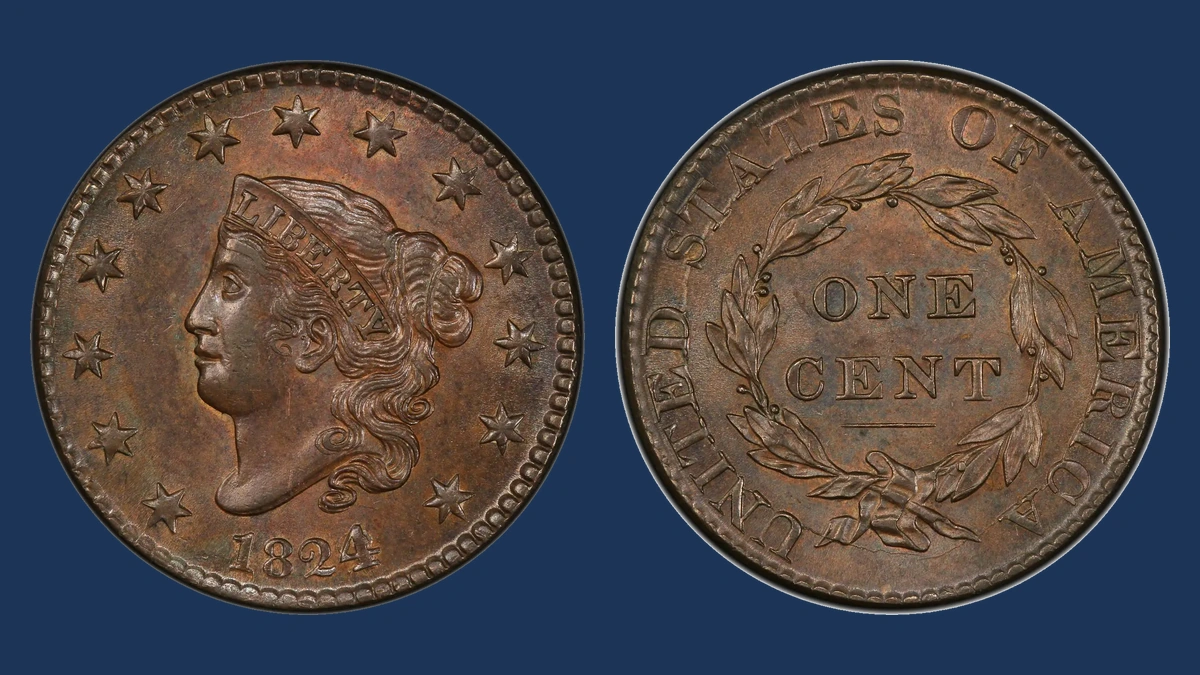
A remnant of the numeral 2 remains beneath the final 4 on the 1824/2 variety. The earlier date was changed on the stamping tool before these coins were made.
The new 4 did not erase every part of the old 2. Both outlines could therefore appear together during a normal coin strike.
This is an overdate, not a coin that received the full 1822 design and was later struck again. The visible trace belongs specifically to the last date digit.
Ordinary 1824 cents lack that earlier numeral. A thick 4 or a scratch beside it needs a different explanation.
Estimated Value
PCGS records a $36,425 sale in June 2015 for an 1824/2 cent graded MS63. That means unworn, with marks that remain visible.
Estimate $75–$40,000 across heavily worn identifiable examples and exceptional unworn overdates. Condition and the particular tool variety can create large differences within that range.
The earlier 2 must be correctly matched before using overdate prices. Cleaning, corrosion, or an altered final digit can reduce value even when the date initially looks promising.
How to Identify
Compare a clear normal 1824 date and a documented 1824/2 photograph at the same scale. Keep all four digits visible so the final 4 is judged in context.
For a loose coin, use a scale and calipers to check 10.89 grams and approximately 28 millimeters. Examine the plain edge and date area for signs of alteration.
Under a 10× magnifier, trace the surviving earlier 2 beneath the 4. Tilt the light slowly instead of accepting a single bright highlight as raised metal.
A flat shelf or a narrow cut beside the numeral can imitate an extra stroke. Match the shape of the earlier digit, not simply the presence of something unusual near the 4.
Conclusion
A trace beneath the 4 can tell a different story from a gap at the edge. Check the date first, then decide whether an unusual surface came from the blank, stamping tools, or strike.
Whole-coin estimates run from $35–$40,000, with the overdate reaching the highest range here. Worn copper and exceptional unworn examples need separate comparisons.
Keep the normal-date star-nine crack distinct from the earlier 2 beneath an overdate.