1978 Nickel Error List with Pictures

A salmon-pink 1978 nickel on a smaller copper blank sold for $207 in April 2006. Most of its date survived, even though some outer lettering did not fit.
This 1978 Jefferson Nickel error list covers estimated values from $5–$6,000. Missing detail, extra raised metal, and two different coin designs require different checks.
Use the examples below to compare what the coin shows, keeping actual auction results separate from a seller’s asking price.
1. 1978 Jefferson Nickel Letters or Steps Blocked by Grease
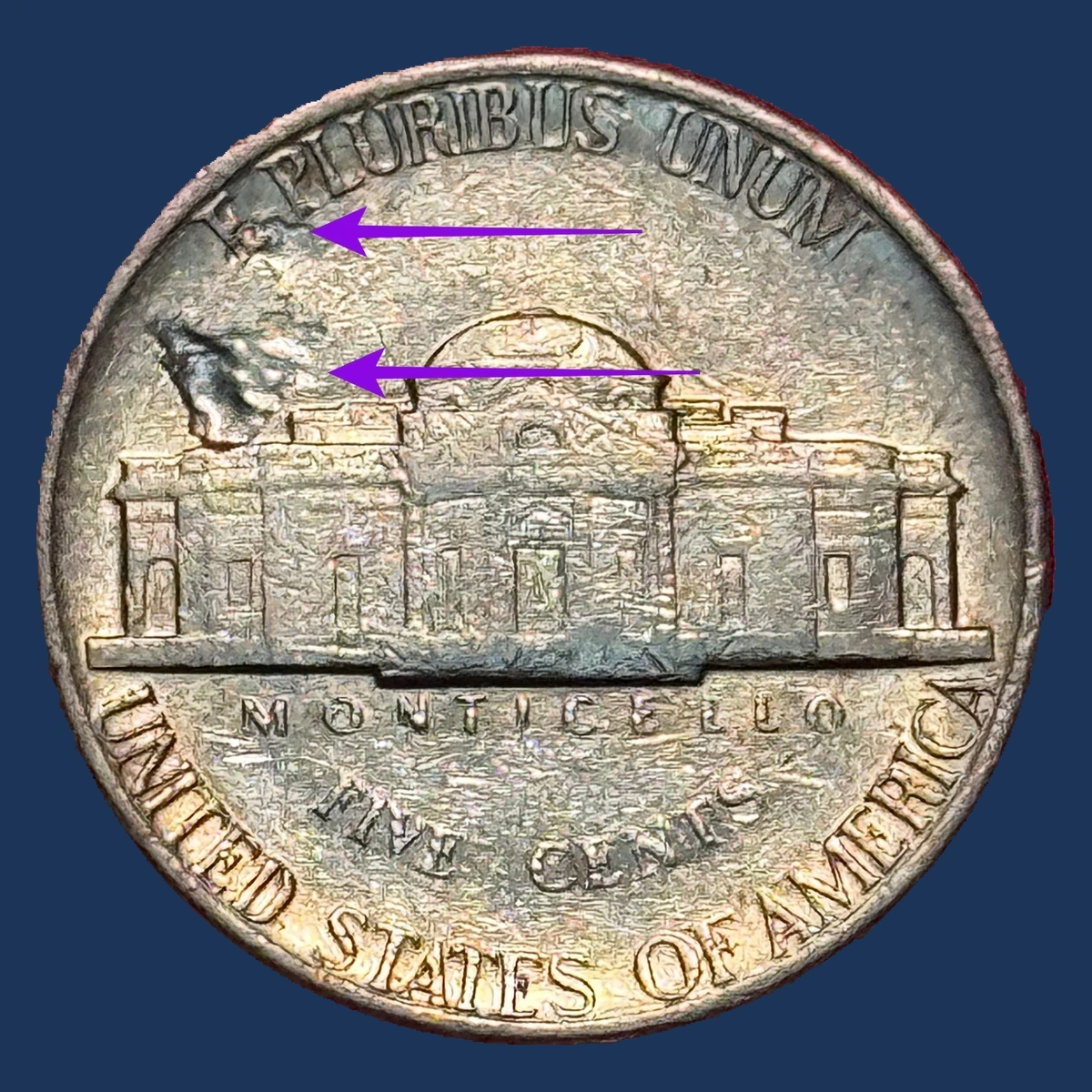
Some letters or stair lines can fail to form while nearby details remain sharper. Grease and debris in a stamping tool can block the small spaces that normally create those features.
The tool is called a die. A coin struck while those spaces are filled may show a local patch of weak or missing design.
The 1978 report mentions lettering and Monticello’s steps without one fixed mint or specimen. A weak staircase alone does not identify grease.
An ordinary soft strike or circulation wear can also blur the steps. The strength of the surrounding design helps separate these explanations.
Estimated Value
For a small genuine filled-tool area, estimate $5–$40. A larger, clear interruption on an attractive coin can fit an estimated $40–$150.
A different-year 2000 Philadelphia struck-through nickel sold for $84 in February 2015. That comparison does not establish a particular missing letter or substance on a 1978 example.
The range requires original striking evidence. Missing stair lines from wear or an ordinary weak strike should not be priced as an additional error simply because they are incomplete.
How to Identify
Compare the staircase with nearby walls and letters, then inspect the portrait’s high points. Widespread flattening can explain missing steps through wear rather than a local obstruction.
A scale and calipers can check a loose nickel against 5 grams and 21.21 millimeters. Inspect its plain edge for squeezing that could also damage the faces.
Use a 10× magnifier where sharp detail meets the weak patch. Scratches or a worked surface can reveal that completed design was removed afterward.
Move the light across that boundary without rubbing the coin. Look for local interruption beside sharper original detail, rather than using one missing stair line to identify grease.
2. 1978 Jefferson Nickel A Widened Coin with a Complete Design
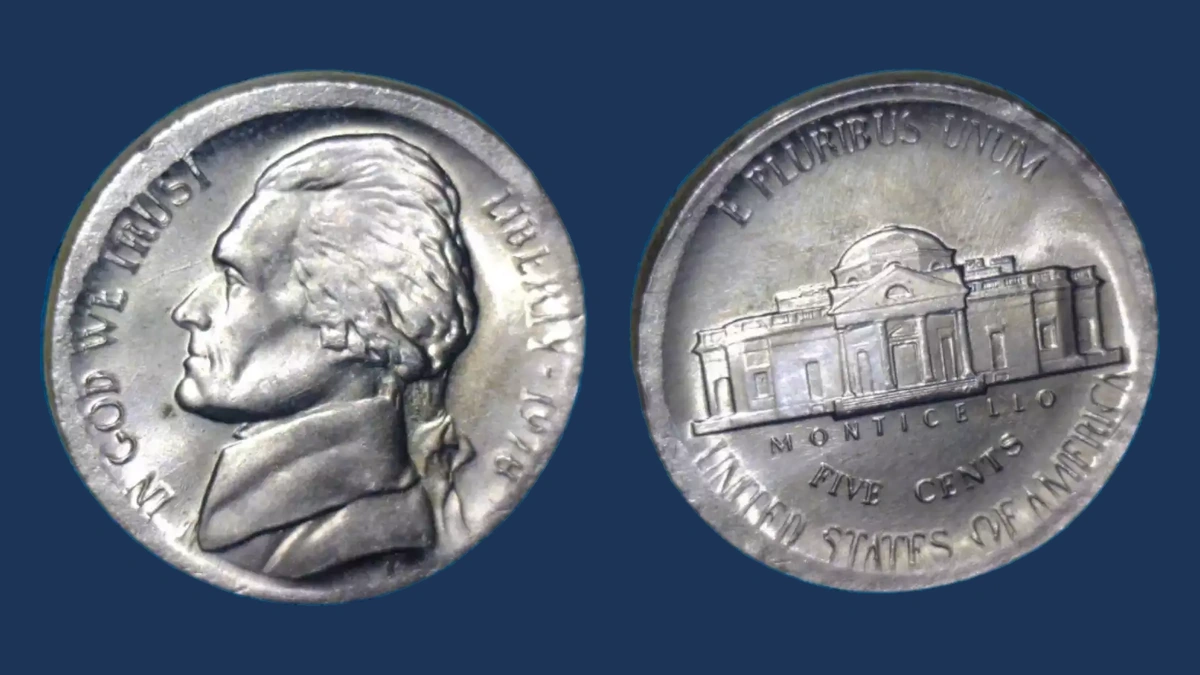
The metal can spread too far when the ring around a blank fails to contain it during striking. This ring is called the collar, and the resulting wide coin is a broadstrike.
A blank is the metal disk before it receives a design. Without normal restraint, its border can expand while the portrait and outer lettering remain on the coin.
The 1978 type is reported without a measured example or fixed mint. Its complete design is as important as width.
A nickel flattened by later blows can also grow wider. Crushed letters and impact marks point to that different process.
Estimated Value
Estimate $25–$250 for a genuine ordinary-strike broadstrike, depending on expansion and condition. A clear complete design inside a naturally enlarged outline supports a stronger comparison.
A 1999-P broadstrike brought $89 in March 2025. This later-year result offers context without assigning its size or appearance to the reported 1978 type.
Extra width does not establish an error by itself. A flattened coin with damaged original detail needs another explanation before the range applies.
How to Identify
Use calipers in several directions to record the outline of a loose coin. Compare with 21.21 millimeters, then check its weight against 5 grams on a scale.
Follow all the outer words on both faces. A broadstrike retains the intended design; if part actually misses the metal, examine the off-center category instead.
Under a 10× magnifier, inspect the extra border and the plain edge. Repeated hammer marks or crushed high points can explain a large diameter made after minting.
Photograph the complete outline alongside the edge view. The useful evidence is natural spreading around a complete struck design, rather than a wide-looking border or the absence of edge grooves.
3. 1978 Jefferson Nickel Raised Front Breaks from Damaged Tools
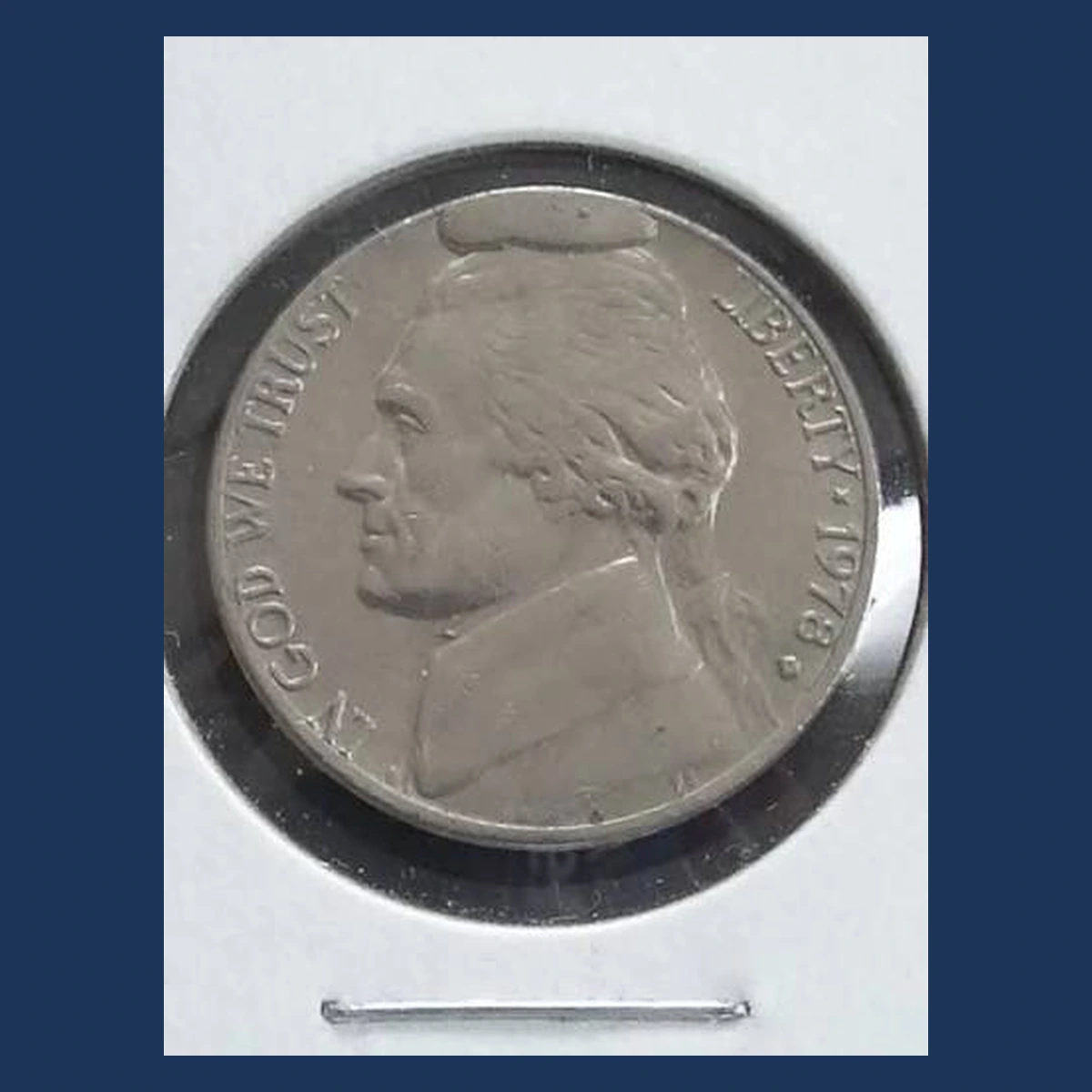
A stamping tool can lose a piece while still being used. Metal enters the opening and leaves a raised area where normal design should appear.
The tool is called a die. A substantial break may create a large lump, while its exact outline identifies the affected tool.
A recorded Denver example graded NGC AU58, meaning very slight wear. It appeared with two other 1978-D front-break nickels and a separate 1979 coin.
Those pieces do not share one required shape or condition. The particular front break needs a photograph match rather than a clock position borrowed from another example.
Estimated Value
The four-coin group sold for $132.25 in August 2010. That total covered three 1978-D break examples and one 1979 coin, so it is not an individual price for the AU58 piece.
For a comparable original 1978 break, estimate $15–$300, depending on size and preservation. A convincing larger raised area can support more interest than a faint bump.
Added metal or a rim crushed inward does not qualify for the same broken-tool estimate.
How to Identify
Inspect the plain edge beside the raised patch for an impact or a seam before calling it a broken-tool error. A dent can push metal onto the face, and added material may show a join.
Use a 10× magnifier to follow the original design into the patch and compare it with the chosen Denver example. If the patch reaches the rim, that connection can identify a cud, a rim-connected tool break.
On a loose coin, check about 5 grams with a scale and 21.21 millimeters with calipers, without treating normal measurements as proof. Match the entire patch and surrounding portrait details, since the recorded Denver coins need not share one outline.
4. 1978 Jefferson Nickel Off-Center Strike
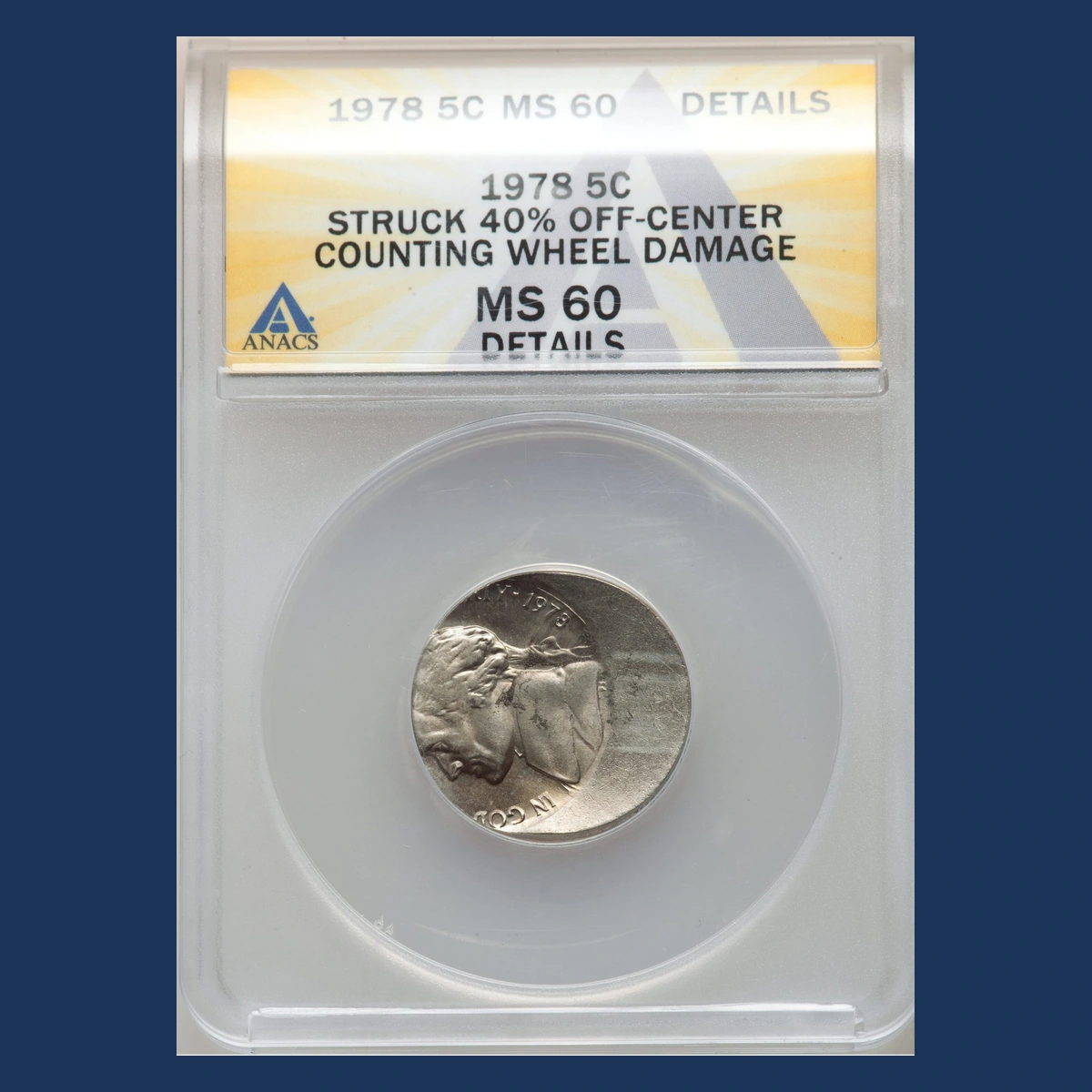
A nickel blank can enter the press away from the intended center. Some design then misses the metal, while a crescent of the blank remains unstamped.
This is an off-center strike. The report for 1978 does not establish a specific mint, angle, or percentage for every example.
The date must remain readable before a coin can be confidently assigned to this year. A normal Philadelphia nickel has no P mint letter in 1978.
That normal absence is different from losing the mintmark area during an extreme shift. Missing information cannot by itself prove Philadelphia origin.
Estimated Value
For genuine dated ordinary-strike examples, estimate $30–$400, depending on the displacement and overall condition. A readable year makes the comparison more useful.
A 1999-D nickel struck sixty-five percent off center sold for $75 in September 2024. That recent comparison does not establish the same percentage for the reported 1978 type.
A dramatic crescent with no remaining date should not automatically receive a 1978 identity or a higher price than a smaller shift with clear surviving detail.
How to Identify
Read the date first, then examine both faces rather than judging the border from one picture. Identify the untouched crescent and the place where the design runs beyond the metal.
Under a 10× magnifier, inspect the boundary for grinding or polishing. An area scraped smooth after striking is different from original blank metal left outside the blow.
A scale should remain near 5 grams when no metal has been removed. Calipers can record spreading against the normal 21.21-millimeter diameter.
Include the plain edge in photographs and keep the surviving mintmark area visible. A slightly uneven rim with a complete design on both faces needs a different explanation from true off-center striking.
5. 1978 Jefferson Nickel A Nickel Design on a Copper Cent Blank
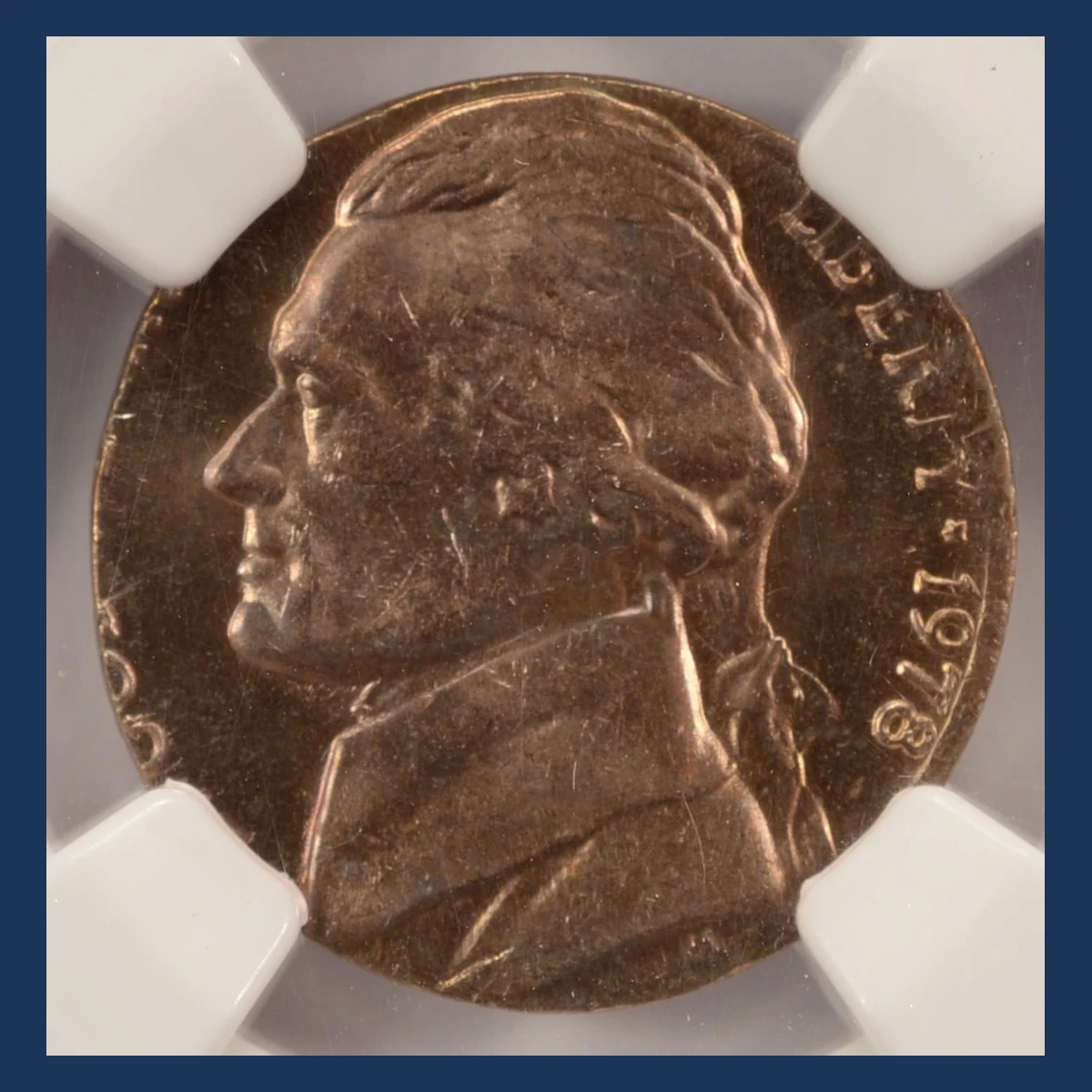
The wrong blank can give Jefferson’s design a copper color and a cramped outline. A cent blank is smaller and lighter than the metal normally used for a nickel.
A recorded Philadelphia example graded PCGS MS62 Red and Brown. Its date is almost complete, but parts of the border wording lie beyond the metal.
A Denver NGC MS65 Red and Brown example is separately reported. Its grade and identity should not be assigned to the Philadelphia piece.
These are nickel designs on unused cent blanks. They do not need traces of an earlier Lincoln portrait to establish the error.
Estimated Value
The PCGS MS62 Red and Brown coin sold for $207 on April 29, 2006. Estimate $200–$900 for comparable authenticated 1978 cent-blank errors.
MS62 describes an unworn coin with noticeable marks, while Red and Brown describes its copper surface colors. Better preservation and readable identity can support a stronger price.
The separate Denver coin needs its own comparison. Copper plating added to an ordinary nickel does not justify this wrong-blank range.
How to Identify
A scale can separate a period cent blank from a normal nickel before color enters the decision. The usual starting weights are 3.11 grams for the copper cent and 5 grams for the nickel.
Use calipers to compare the outline with 19.05 millimeters for a cent and 21.21 millimeters for a nickel. The smaller blank may spread when struck, so these standards are not measurements of the auctioned specimen.
Inspect the edge and the ends of the outer letters through a 10× magnifier. Fresh trimming or plating can imitate size or color without producing naturally cut-off design.
Read the date and surviving mintmark area. A copper-colored full-size nickel with intact outer design needs another explanation before it is called a cent-blank error.
6. 1978 Jefferson Nickel A Nickel Struck over a Finished Dime
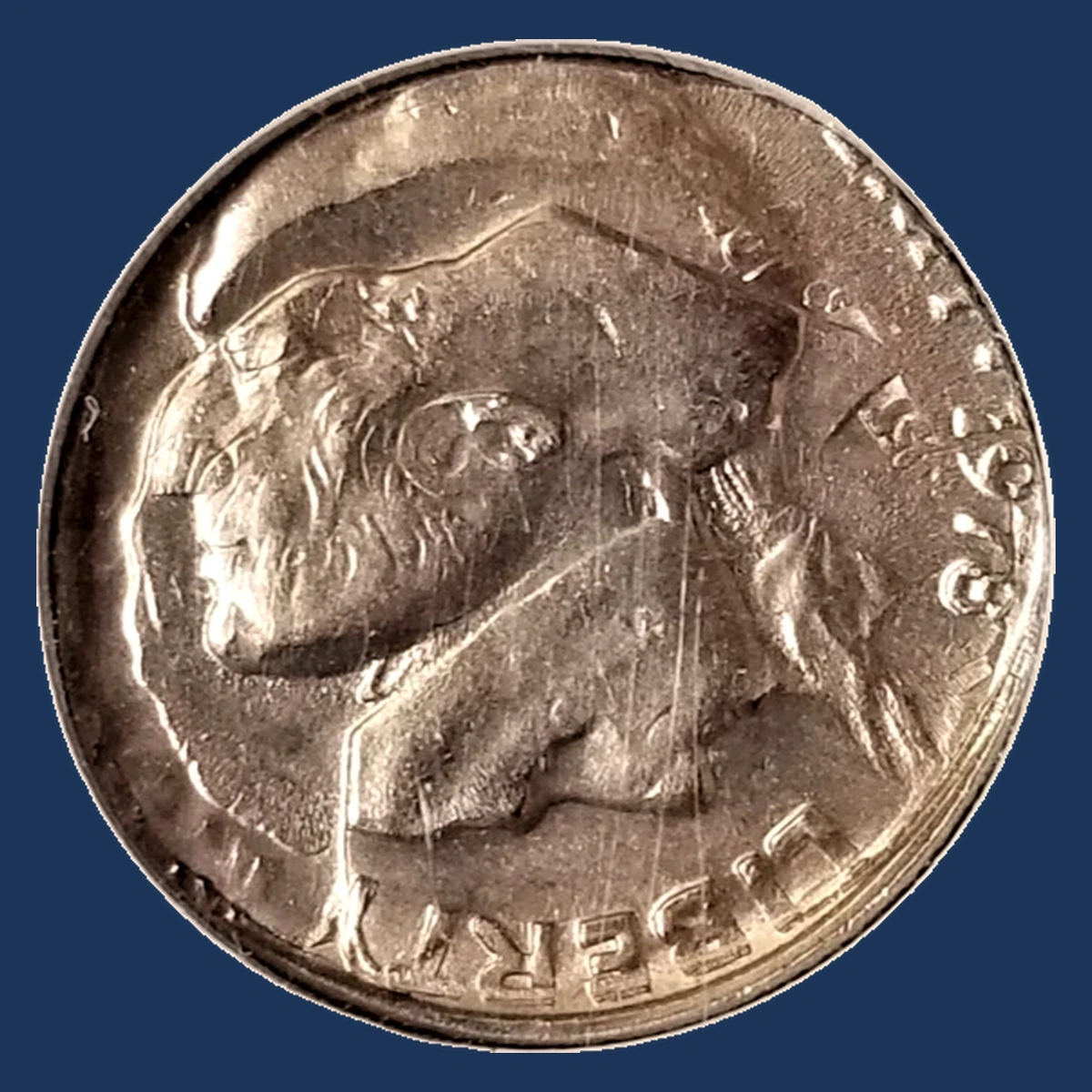
A finished dime can enter the nickel press and receive Jefferson’s design over its own. If parts of both images survive, collectors call the result a double-denomination error.
A seller reported a 1978 nickel of this type as NGC MS63, an unworn grade with some marks. The underlying dime’s year was not established in that report.
This differs from striking on an unused dime blank, which has no earlier Roosevelt portrait or torch to preserve. The older design is essential evidence.
The grading label and actual overlapping designs must support the seller’s description on the same piece.
Estimated Value
The recorded listing asked $5,250, with offers invited. That is a seller’s asking price, not a completed sale.
For an authenticated nickel-over-dime example of this reported type, use an estimated $1,000–$6,000. Readable designs from both denominations and original surfaces are central to that comparison.
A different combination, a 1986-P nickel over a finished cent, sold for $1,020 in September 2019. It offers context for overlapping denominations, but its different underlying coin limits the comparison.
How to Identify
Find an earlier dime feature first. A small pale nickel showing only Jefferson is not enough to establish that a finished dime was struck again.
With a 10× magnifier, trace a surviving Roosevelt or torch detail beneath the nickel design. Compare the actual holder label and both coin faces with the seller’s description.
For a loose candidate, use a scale and calipers to record weight and size. A modern dime’s 2.27 grams and 17.91 millimeters are comparison standards, not measurements or a date for this reported coin.
A normal nickel measures 5 grams and 21.21 millimeters. Inspect the edge for a join or marks from later squeezing.
Follow where the nickel design crosses the earlier dime image to establish that both belong to the same struck metal.
Conclusion
The estimated $5–$6,000 range includes affordable surface mistakes and a seller-reported nickel-over-dime combination that needs both designs identified. A high asking price is a different kind of evidence from a completed auction.
Use the whole coin’s design, size, and metal to choose a comparison. Keep group-sale totals separate from individual values, and leave original surfaces intact while photographing the unusual feature and edge.