1886 Nickel Error List with Pictures

One 1886 nickel has two different features: extra date strokes and a small original hollow below STATES. The complete coin, graded PCGS MS64, sold for $3,120 in August 2023.
Estimated values for the 1886 Liberty Nickel errors below span $150–$5,000. This scarcer date can be valuable before any error premium is considered.
Look through the examples to distinguish a shifted design, an expanded outline, and marks made during production.
1. 1886 Liberty Nickel Broadstrike
A broadstrike has more space around its design because metal spread without normal restraint at the edge. The steel ring that usually controls the diameter is called the collar.
When that ring fails to contain the blank, the metal disk being struck can widen. The portrait, stars, and lettering still fit on the resulting coin.
An 1886 example is recorded as NGC VF35, meaning a circulated coin with much detail remaining. Its width needs to be considered alongside the complete design, because later flattening can also produce a large, thin nickel.
Estimated Value
Estimate $200–$2,000 for authenticated 1886 broadstrikes, depending on condition and the strength of the expansion. The scarcer date contributes to the whole price alongside the error.
The NGC VF35 listing establishes a circulated example, but no final sale is assigned here. An opening or unfinished auction bid is not a completed price.
A better-preserved coin with natural spreading deserves a different comparison from one made wide by hammering after minting.
How to Identify
Use calipers on a loose coin to compare its width in several directions with the normal 21.2 mm diameter. A scale reading near 5 g supports spreading without a large amount of metal being removed.
Put it beside a normal Liberty Nickel and follow the outer lettering, stars, and border details around both faces. The complete design should fit within the enlarged outline, even if the border is wider on one side.
Inspect that border and the plain edge through a 10× magnifier for hammering, rolling, or flattened letters. Look for the full struck design within original expanded metal, rather than using width alone to identify a broadstrike.
2. 1886 Liberty Nickel Off-Center Strike
A readable date can survive even when many outer details miss the coin. One 1886 example, graded PCGS Fine 12, was struck 25% off center toward one o’clock.
It retains the full date and about half the front stars. On the back, the V and most of the wreath remain.
A professional catalog also records a smaller 7% offset as a separate example. The different percentages describe how far each blank missed the correct position, rather than separate kinds of error or repeated strikes on the same coin.
Estimated Value
The Fine 12 example sold for $930 on August 16, 2019. A separate PCGS VG10 twenty-five-percent example brought $1,725 in January 2006, including the auction premium.
Estimate $300–$3,000 for dated 1886 off-center nickels across a range of wear and displacement. These sales show that grade alone does not decide the price.
The Fine 12 auction concerns its own coin, not the smaller seven-percent catalog example.
How to Identify
Locate the complete 1886 date before comparing the offset. On the Fine 12 example, the design moves toward one o’clock and only about half of the front stars remain.
Turn to the back and compare the surviving V and wreath. Use a 10× magnifier where the struck surface meets the unused crescent to look for natural metal rather than a worked boundary.
Weigh a loose coin against 5 g on a scale and record its outline against 21.2 mm with calipers. Inspect the plain edge for cutting or grinding that could imitate missing design.
Follow the displacement on both faces. An original unused crescent opposite genuinely lost design distinguishes the error from an uneven rim or enlarged complete strike.
3. 1886 Liberty Nickel Shallow Original Void below STATES
A small shallow hollow lies below the final S in STATES on one cataloged 1886 nickel. The auction describes it as an original flaw in the metal, present when the coin was made.
This is a planchet void: a local area where the blank did not provide a normal solid surface. It should not be confused with a later pit from corrosion or a punch mark.
The PCGS MS64 coin also has a repunched date on the front. Those features have different causes but belong to the same specimen, not two separate coins.
Estimated Value
An estimated $150–$3,500 covers worn through attractive unworn 1886 coins with comparable small original voids. This is mainly a whole-coin condition range, not a large guaranteed premium for a tiny hollow.
The recorded MS64 repunched-date coin sold for $3,120 in August 2023. Its date, preservation, and variety all contributed to that price.
The sale record does not divide the amount between the front variety and the back flaw.
How to Identify
The cataloged hollow lies below the final S in STATES. Keep the surrounding letters visible when comparing your coin with the MS64 example.
For a loose coin, check near 5 g with a scale and 21.2 mm with calipers. A tiny hollow may barely affect either measurement.
Examine both faces and the plain edge for other damage, then return to the hollow with a 10× magnifier. Low side lighting reveals its boundary and the surface within it.
A punch can push metal around a depression. Corrosion can leave rough pits or altered color nearby.
Match the shallow feature’s position and original surface to the identified coin before calling it a production flaw. Normal weight alone cannot establish when a pit formed.
4. 1886 Liberty Nickel Repunched Date
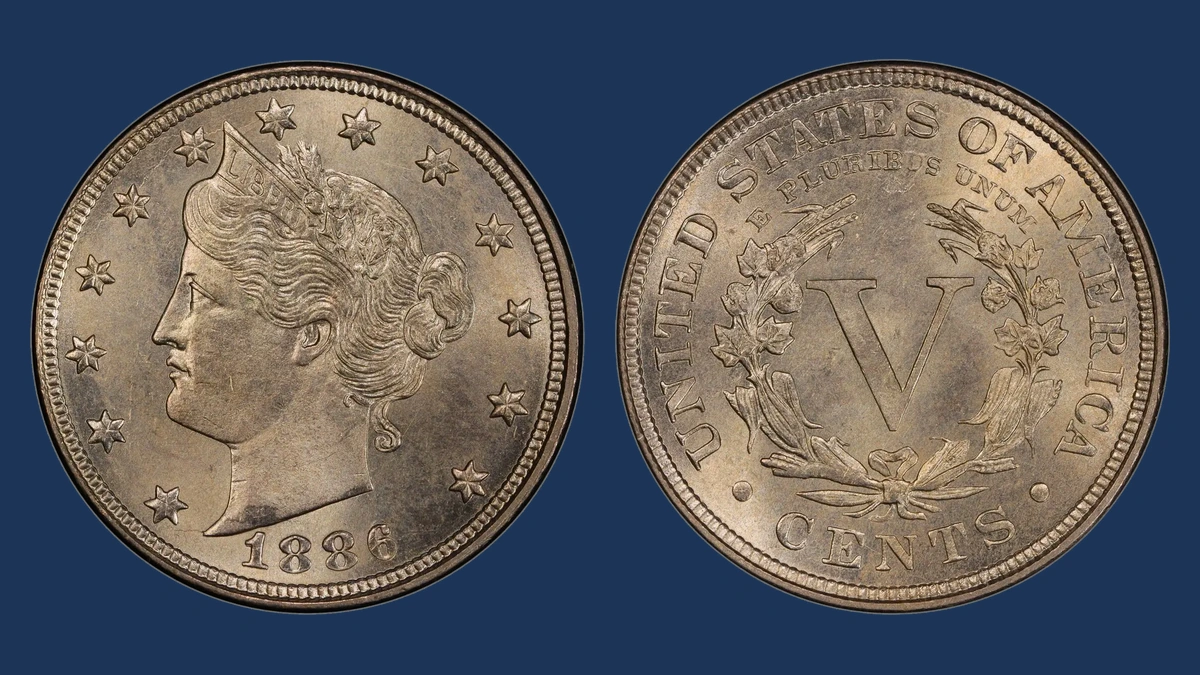
Extra strokes beside the date can be remnants of an earlier punch into the steel stamping tool. Once the finished date was in place, those traces could remain visible on coins struck from that tool.
This is called a repunched date. The recorded 1886 variety is known as FS-301, with another catalog using VP-001 for the same variety.
The date examination includes the final 86 and remaining traces at an earlier digit. Those extra strokes are different from the shallow back hollow on the MS64 specimen, so neither feature alone proves the other is present.
Estimated Value
For identified 1886 repunched dates, estimate $200–$5,000, with condition and clear extra strokes guiding the comparison. This includes the value of a scarcer Liberty Nickel date.
The PCGS MS64 example with the shallow back void brought $3,120 at Stack’s Bowers in August 2023. It is the same sale discussed above, not a second transaction or an extra amount to add.
A worn specimen or one with cleaning needs a lower condition comparison even when the date variety matches.
How to Identify
Compare the entire date with an identified FS-301 photograph at the same angle. Through a 10× magnifier, follow the extra numeral outlines around the final 86 and any earlier-digit traces.
Change the light to tell rounded extra metal from a flat shelf or a cut. Wear can hide parts of the pattern, so one thick digit is not enough.
For a loose coin, check 5 g with a scale and 21.2 mm with calipers, then inspect the plain edge. These are normal nickel measurements rather than proof of repunching.
The back void is optional evidence about one particular specimen. Match the extra date strokes themselves before identifying the variety; a hollow below STATES cannot replace that test.
Conclusion
The estimated $150–$5,000 range for 1886 Liberty Nickel errors reflects both the manufacturing feature and the coin’s basic value. A scarce date in good condition can command strong money even when its original flaw is small.
Keep the MS64 coin’s repunched date and shallow hollow together when comparing its sale. For striking errors, check whether the outer design is complete or actually falls beyond the metal.