1977 Nickel Error List with Pictures

A 1977-S nickel struck over a finished dime sold for $9,300, according to error specialist Mike Byers. That Proof, a specially made collector coin, carried two denominations on one piece of metal.
Estimated values for 1977 nickel errors range from $5–$10,000, including much smaller mistakes found on ordinary coins.
Compare the features below to separate a minting mistake from wear, damage, or a normal part of the design.
1. 1977 Jefferson Nickel Die Cracks and Chips
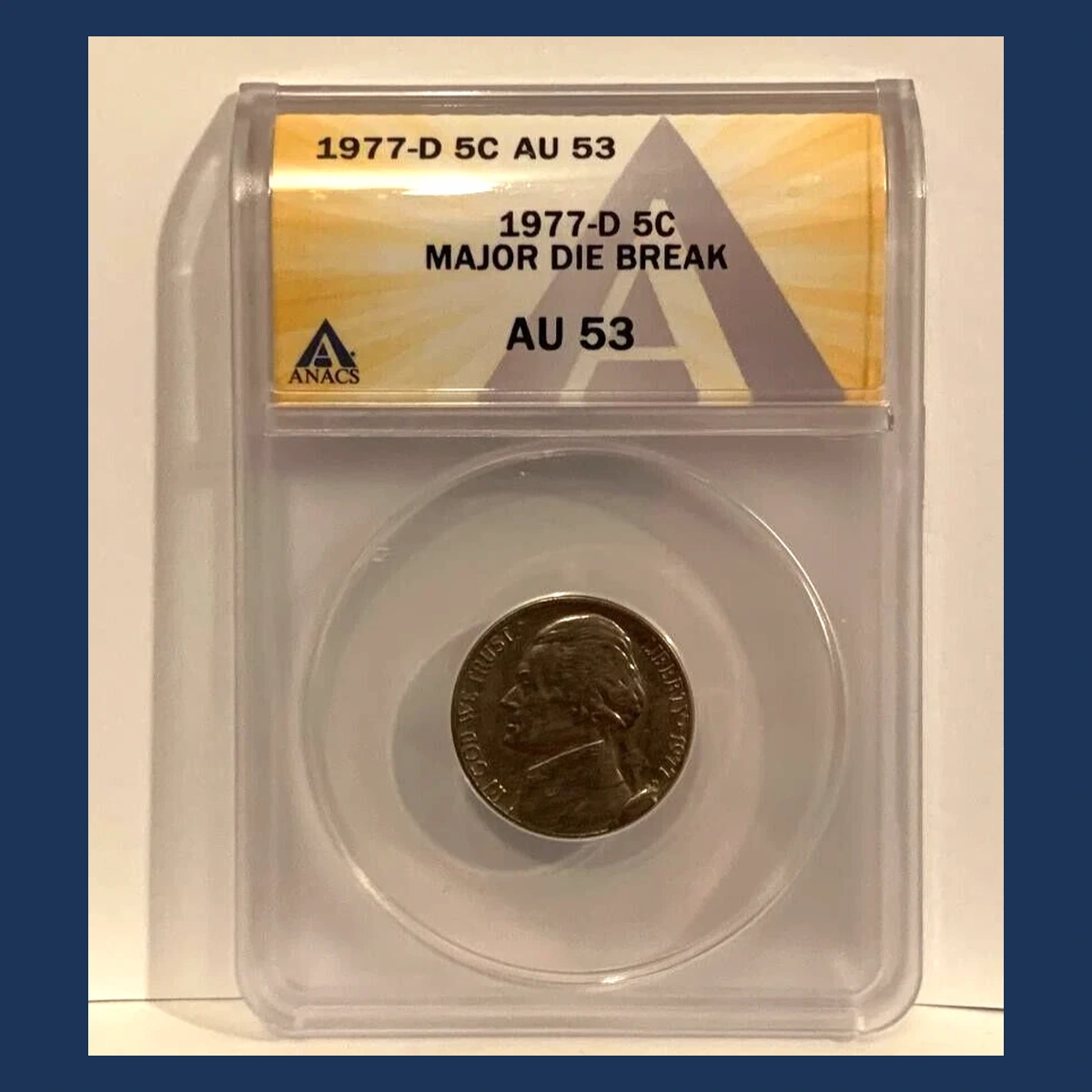
A thin raised line can appear where the design should be smooth. It forms when metal enters a crack in a die, the steel tool that stamps the coin.
A small piece breaking from the tool can instead leave a raised lump. Reports for 1977 include cracks and chips, as well as Denver coins with the center of the D filled by raised metal.
A filled D is not an extra mint-mark punch. It also differs from grease blocking the die, which can leave the mark weak rather than adding a raised center.
Estimated Value
Modest cracks and small chips generally fit an estimated $5–$75 range. A large, clearly visible raised feature is more interesting than a tiny filled space that requires difficult lighting.
These are estimates for genuine die damage on 1977 nickels, not a recorded price for every filled D. The coin’s condition and the size of the defect matter; dirt inside the letter does not create the same error.
How to Identify
Check whether the odd feature is actually raised metal. A 10× magnifier and side lighting can separate a filled D from dirt, dark toning, or a shallow blocked impression.
A loose nickel normally reads 5.00 grams on a digital scale and 21.21 millimeters with calipers. If an attached lump changes the outline or weight, inspect its boundary for a seam before calling it a die chip.
For a thin crack, follow the ridge where it crosses the design. It should rise from the original surface, while a later scratch cuts into the coin and often leaves displaced metal beside its groove.
2. 1977 Jefferson Nickel Misaligned Front Die
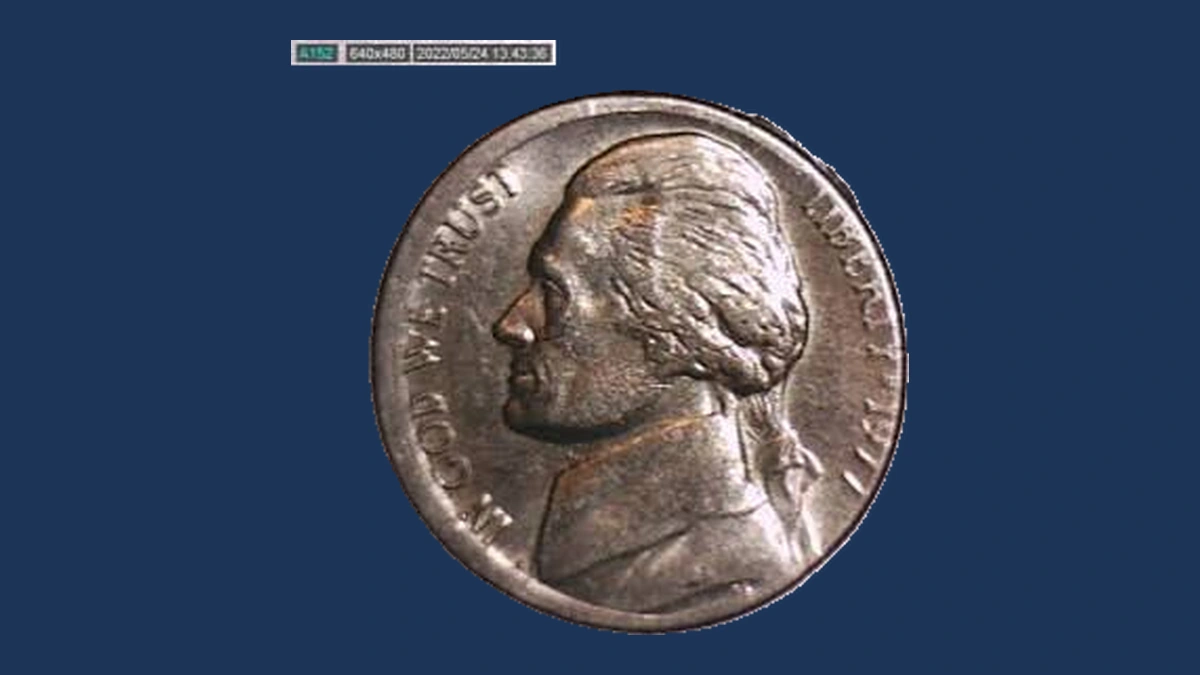
Jefferson can sit too close to one edge while the back looks normally centered. This difference can occur when only the front stamping tool shifts.
A collector’s discussion of a 1977 Philadelphia nickel identified that one-sided movement. The original description called it a partial collar error, but the discussion focused on the front design’s position.
The two features require different checks. A misaligned die concerns where the design sits; a partial collar concerns how the edge formed, and one should not be assumed simply because the other looks unusual.
Estimated Value
For a visible misaligned front die on an otherwise ordinary 1977 nickel, estimate $5–$100. Very slight unevenness can bring little interest, especially on a heavily worn coin.
The collector example provides a reported type rather than a documented sale. A stronger shift with a clearly centered reverse should be more appealing than a small difference visible only in a tilted photograph.
Additional edge damage would reduce that appeal.
How to Identify
Set the coin flat and photograph both faces directly from above under the same steady light. Before judging the rim, check that the camera was not angled toward one edge.
Compare the front’s wide and narrow borders with the reverse using a 10× magnifier. A shared blank crescent on both faces would instead suggest an off-center strike.
An ordinary 1977 nickel is about 21.21 millimeters across and 5.00 grams, which calipers and a digital scale can verify. Look around its plain edge for squeezing, filing, or an actual step; the clearest misalignment clue remains a shifted front beside a normally placed back.
3. 1977 Jefferson Nickel Repunched Mint Mark
A mint letter can retain part of an earlier impression above, below, or beside its final position. This happens when the punch that marks the die is applied more than once in slightly different places.
Repunched mint marks are reported in 1977 error lists. A matching photographed example is needed before assigning a direction to a particular coin.
Philadelphia nickels of this year have no mint letter. On coins that do, a filled letter or flat doubled edge does not by itself show a second punch.
Estimated Value
A confirmed repunched mint mark can be estimated at $10–$100, depending on the remaining extra outline and the coin’s condition. These figures are a guide for the reported mechanism.
They are not auction results for a specific cataloged 1977 variety. Clear evidence of the earlier punch matters more than a seller calling any thick or damaged mint letter “double.”
A weak, worn mark is usually less attractive than a sharp, recognizable overlap.
How to Identify
An empty space below the date is normal on a 1977 Philadelphia nickel. Only begin a repunched mint-mark comparison when there is a D or S to examine.
Photograph the entire letter under a 10× magnifier, then trace the proposed earlier outline. Its parts need to fit another mint letter, rather than form an unrelated bump or fill the letter’s center.
A digital scale and calipers can check a loose coin against 5.00 grams and 21.21 millimeters. Compare the raised strokes under changing light; a true earlier punch remains part of the letter, while a reflection shifts and a mechanical shelf looks flat.
4. 1977 Jefferson Nickel Doubled Die
Two small raised outlines may run along a letter, number, or part of Jefferson’s face. In a doubled die, that repeated detail was already present in the stamping tool.
The pattern can therefore appear on more than one coin without each coin being struck twice. Published 1977 lists report this type, but they do not establish one confirmed pattern for every mint.
The date, lettering, and portrait are sensible places to examine. Thick or blurry detail alone is weaker evidence than rounded separation that matches a documented doubled design.
Estimated Value
Estimate $15–$150 for a clearly confirmed doubled die with visible separation. The stronger end assumes an identifiable pattern and well-preserved detail, rather than a generally thick inscription.
No specific 1977 auction result is assigned to this reported type here. Mechanical doubling and worn-die blur should not receive the same estimate.
Before buying a claimed variety, compare its exact split strokes with a photographed example from the same mint.
How to Identify
Use a 10× magnifier to follow both edges of a promising letter or numeral. Rounded extra outlines and tiny splits at corners are more useful than one thick side.
The whole coin still matters: a digital scale and calipers should show about 5.00 grams and 21.21 millimeters on a normal loose nickel. An unusual weight would call for a separate explanation.
Photograph several neighboring details without changing the coin’s angle. A doubled design should show a consistent relationship among those details.
Now move the light. Bright reflections may disappear, while extra metal remains visible.
Match the repeated strokes, rather than accepting a flat shelf or soft lettering as proof of a doubled die.
5. 1977 Jefferson Nickel Lamination
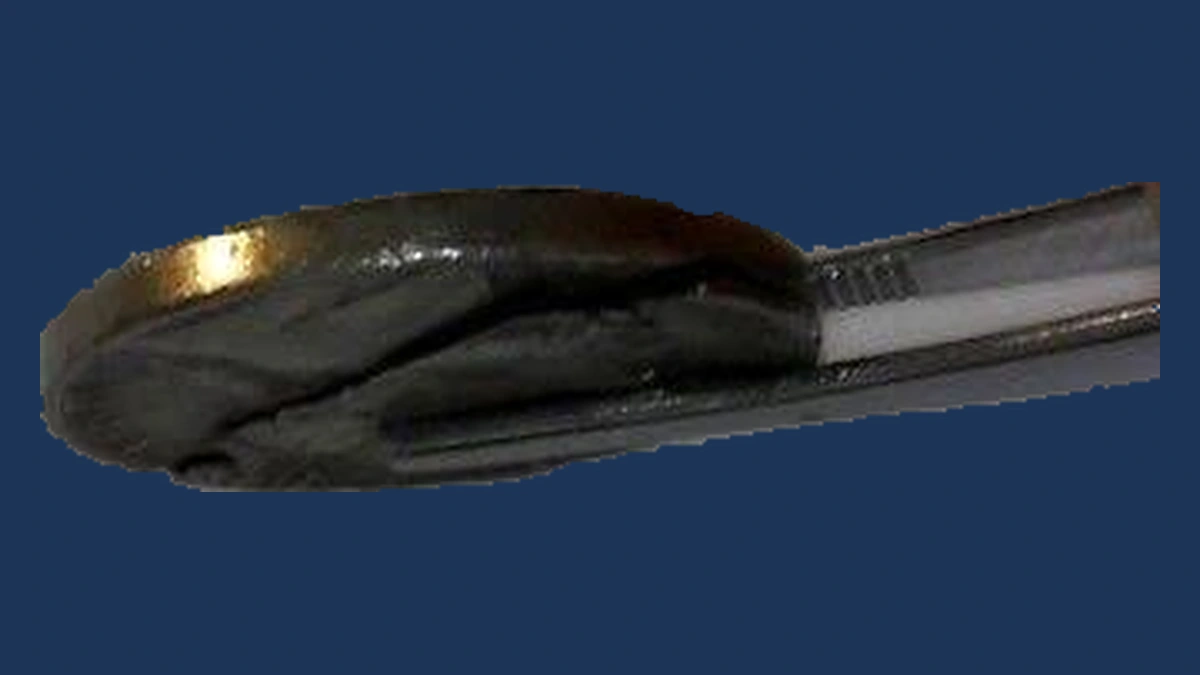
A thin flap or rough missing patch can interrupt Jefferson’s side. This type of metal separation is called lamination and can begin where the alloy contains a weak area.
A 1977 Philadelphia nickel with front lamination was graded NGC AU58, indicating slight circulation wear. It was sold in a group with other dates showing their own different errors.
The nickel’s normal alloy is uniform copper and nickel, not a layered construction like a modern dime. A peeling patch therefore does not mean that an outer clad layer is missing.
Estimated Value
Use an estimated $15–$150 for a recognizable 1977 front lamination. A larger intact flap or an obvious natural split is generally more appealing than a small rough patch.
The NGC AU58 coin was included in a four-coin lot sold for $161 in September 2010. That total also covered three other dates and cannot be treated as the 1977 nickel’s separate price.
A scratch or corroded spot does not qualify for the same range.
How to Identify
Leave any flap exactly where it is. Lifting the edge can destroy the surviving connection between the separated metal and the coin.
Use a 10× magnifier to inspect that connection and the nearby design. Look for a thin natural split rather than parallel scraping across a finished surface.
If metal has fallen away, examine the rough floor and the boundary around it. Scattered corrosion pits tell a different story from one connected peeling patch.
A digital scale may show some loss from the normal 5.00 grams. Calipers can compare the remaining shape with the ordinary 21.21-millimeter diameter.
Follow the split toward an intact letter or portrait detail, where the natural separation is often easiest to see.
6. 1977 Jefferson Nickel Clashed Dies
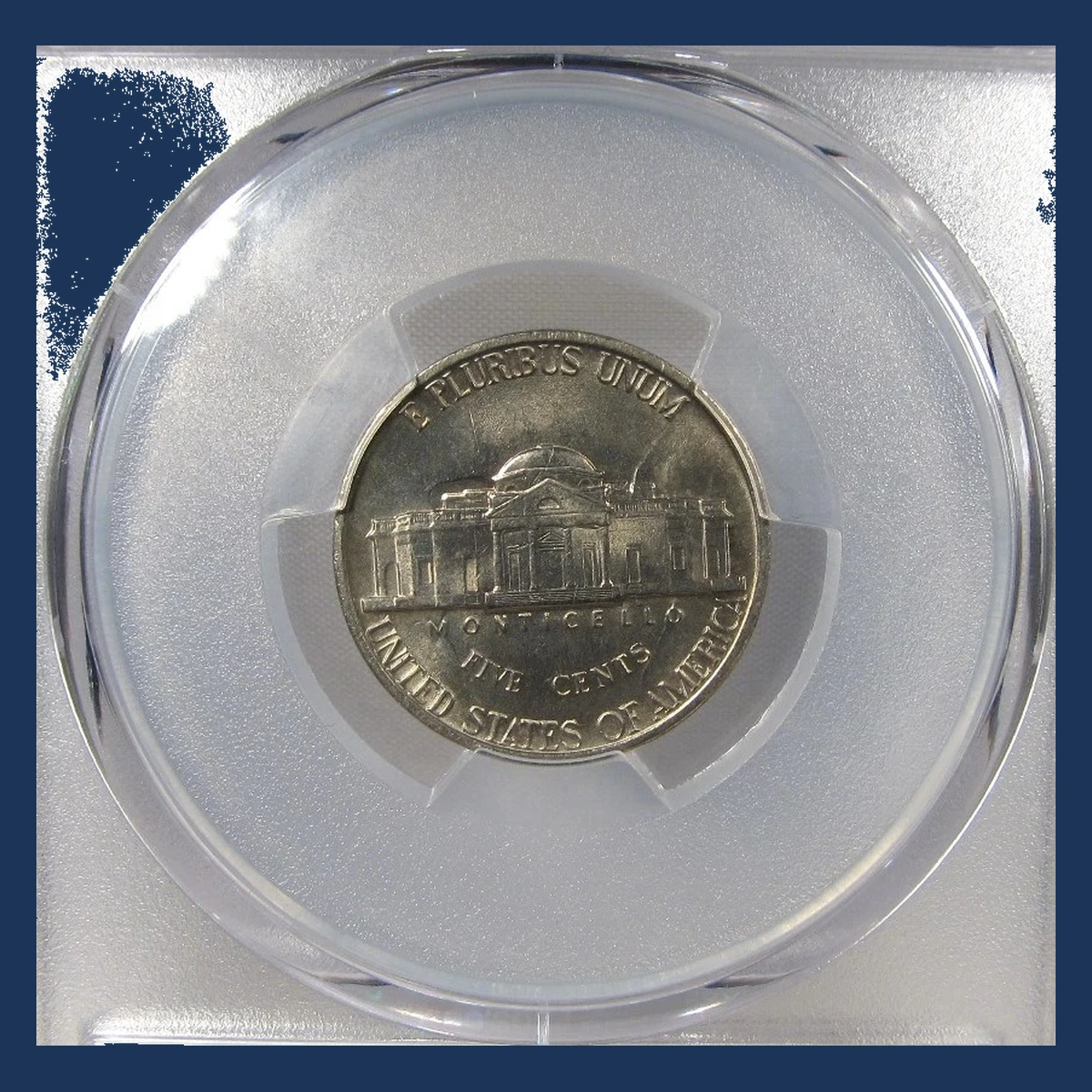
Faint fragments of the opposite design can appear in the smooth spaces beside Jefferson or Monticello. They come from dies that struck each other without a blank between them.
The damaged tools can then leave those extra marks on later coins. A documented 1977-S Proof struck on a dime blank also shows clashed dies.
That coin combines two features: the wrong blank changes its size, while the clash adds extra design traces. Ordinary 1977 nickels are also reported with clashes, but their marks need their own comparison rather than borrowing the Proof’s identity.
Estimated Value
For a visible clash on a normal-sized 1977 nickel, estimate $15–$150. A separate 1977-S Proof clash appears in a December 2025 sale record at about $124.
The documented Proof on a dime blank belongs in the more expensive wrong-planchet category as a complete coin. Its extra clash marks do not justify adding a second full coin price.
On ordinary examples, clear recognizable fragments matter more than faint stray lines.
How to Identify
Compare the extra lines with photographs of the opposite face. A clash fragment should resemble part of the other design, including its angle or curve, rather than an arbitrary scratch.
Use a 10× magnifier to find a second matching fragment. The relationship between two shapes is stronger evidence than one line in an open area.
For the wrong-blank Proof, inspect the grading record before using ordinary nickel specifications. Its recorded weight is about 2.3 grams, rather than the normal 5.00 grams.
A scale and calipers can measure a loose example; ordinary nickels are about 21.21 millimeters, while a dime blank begins around 17.91 millimeters. Match the faint shapes independently of the smaller coin’s clipped-off lettering.
7. 1977 Jefferson Nickel Clipped Planchet
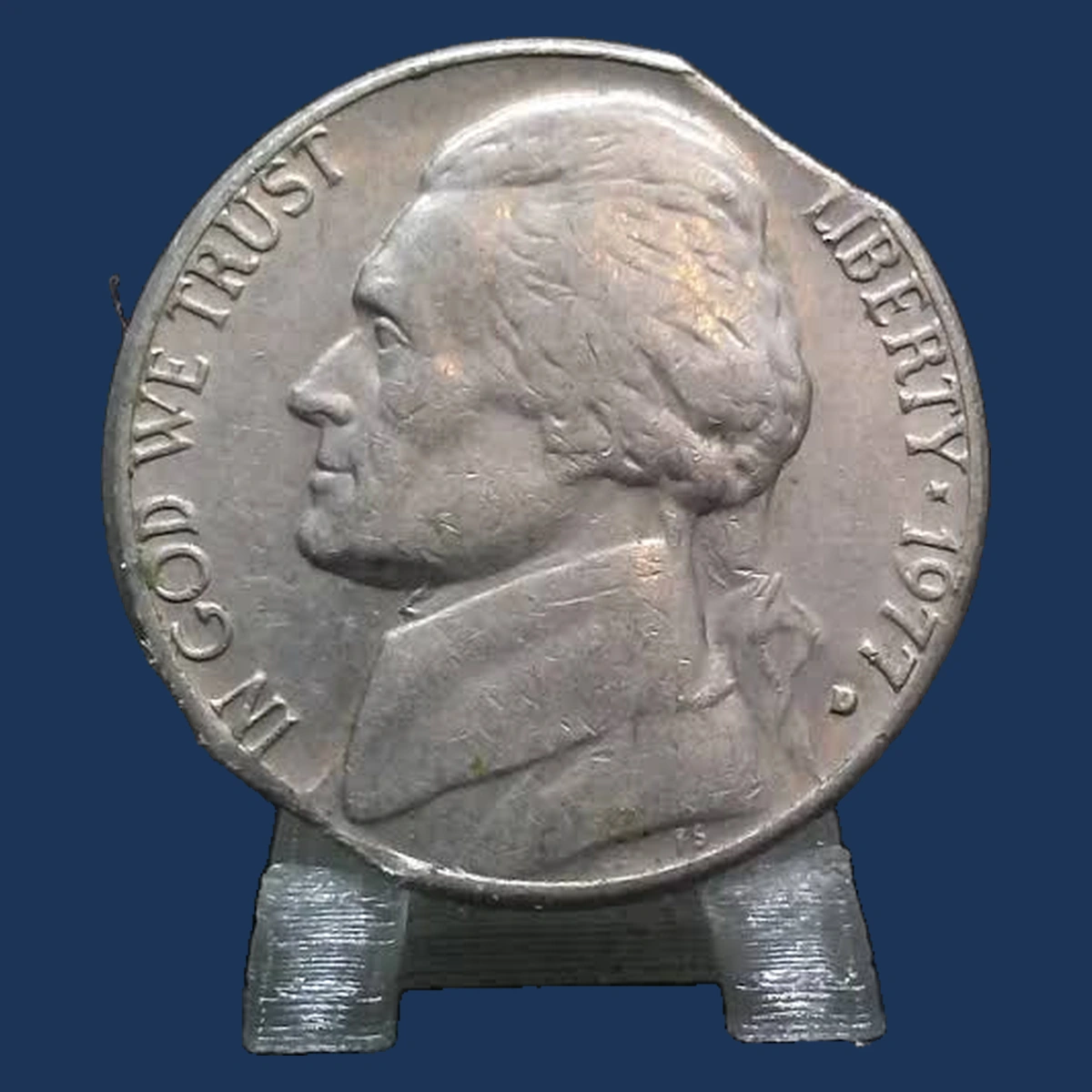
Part of the round blank can be missing before it ever reaches the coin press. A punch overlapping an earlier hole in the metal strip can leave a curved bite.
A straight missing edge can arise at the edge of the strip instead. Clipped blanks are reported among 1977 nickel errors, without one fixed shape or direction applying to every coin.
The coin’s design is struck after the gap exists. That timing is why the rim near a genuine clip may look different from a finished border cut away with a tool.
Estimated Value
A genuine clipped 1977 nickel can be estimated at $15–$175. A small missing piece belongs near the low end, while a larger natural gap and clean surfaces can bring more.
For comparison, a 1981-P double-clipped nickel graded NGC MS64 appears in a January 2024 sale at $168. That is a different date with two clips, so it supports the general scale of interest without pricing every 1977 example the same way.
How to Identify
Inspect the missing section before measuring how much metal is gone. Under a 10× magnifier, saw grooves, file marks, or a sharp folded burr suggest a later cut.
Look at both ends of the gap for a rim that weakens naturally as it approaches the missing metal. A weak rim directly opposite can help, but its absence does not automatically rule out a clip.
Weigh the loose coin on a digital scale against the normal 5.00 grams. Use calipers across surviving full sections against 21.21 millimeters; the most useful comparison is the struck rim’s transition into the gap, rather than the gap’s size alone.
8. 1977 Jefferson Nickel Struck through Material
An object or a patch of debris can prevent part of a die from reaching the blank. When the material moves away, it may leave a depression or an area of missing design.
This mechanism is reported for 1977 nickels. The available example descriptions do not establish a particular cloth, wire, or other object for every coin.
A soft obstruction can blur detail, while something harder can leave a more defined outline. The resulting mark must be distinguished from an ordinary dent made after the finished coin entered circulation.
Estimated Value
Estimated prices of $10–$200 cover genuine struck-through 1977 nickels with clearly visible affected areas. A small patch of weak lettering generally attracts less than a distinct, larger impression.
The range is an estimate, not a recorded sale tied to a named object or mint. Shape, depth, and surrounding surface quality should guide the comparison.
Post-mint dents and scratches do not become valuable struck-through errors merely because their shape is unusual.
How to Identify
Compare the affected area with the design that should cross it. The obstruction should explain where the impression stops or weakens, rather than simply crush an already complete letter.
Use a 10× magnifier and light from several directions to inspect the boundary. A later blow may cut the surface or push a raised lip around the dent.
The normal loose coin is 5.00 grams and 21.21 millimeters; check those with a digital scale and calipers if the shape also looks altered.
Do not scrape out anything still attached. Record its position in a photograph.
An interrupted struck design that follows the object’s outline is more persuasive than an unexplained pit by itself.
9. 1977 Jefferson Nickel Off-Center Strike
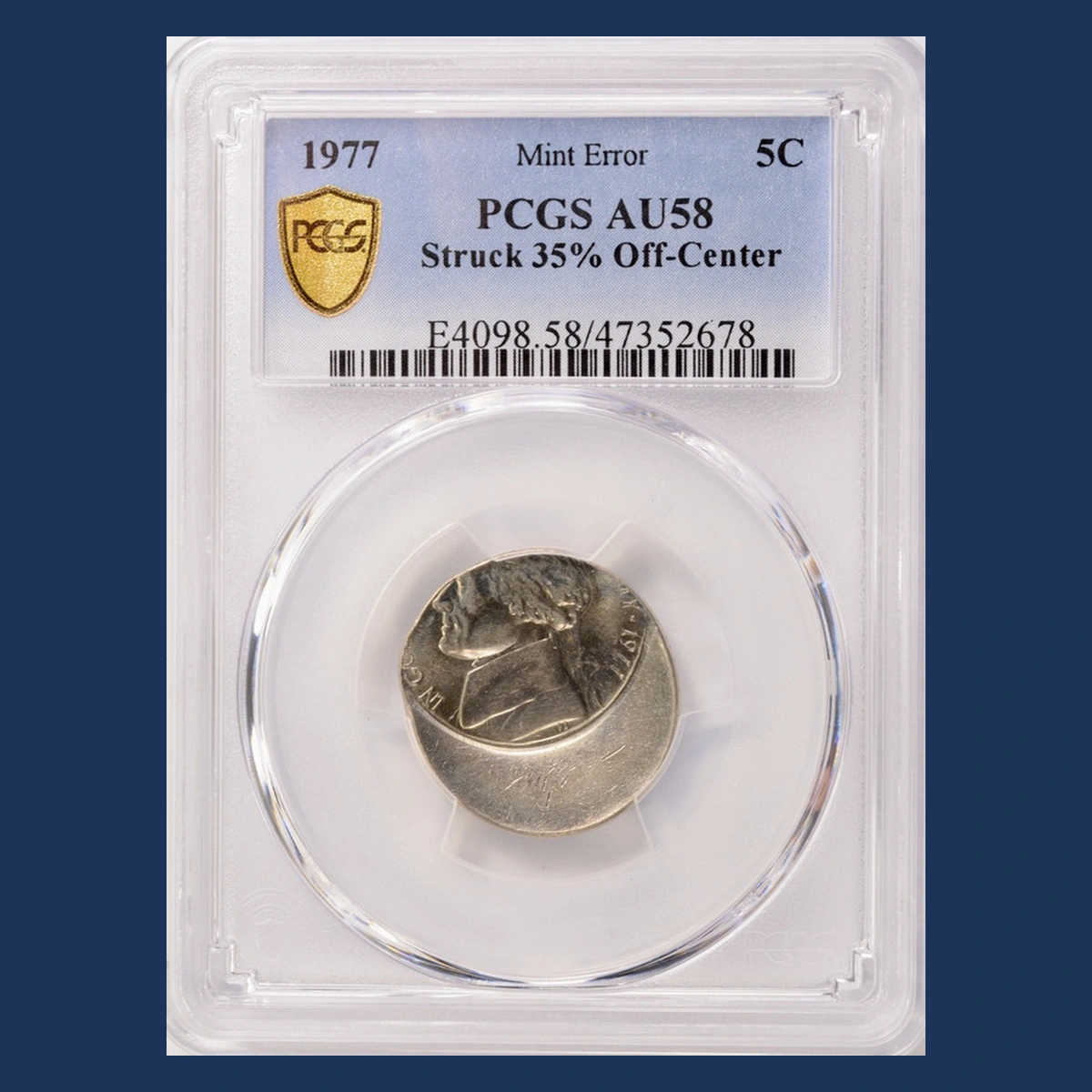
Even a small misplaced strike can leave a narrow crescent of untouched metal. A collector who searched original bags described a 1977 Philadelphia example about 5% off center toward 10 o’clock.
The blank entered the press in the wrong position. Both dies then struck the same displaced piece of metal, cutting off some outer design.
The surviving steps on Monticello can still be sharp. Clear steps describe the quality of the remaining strike; they do not turn a modest offset into a larger error or establish a professional grade.
Estimated Value
For 1977 off-center nickels, estimate $15–$250. The small collector-reported 5% shift should be compared with modest errors, rather than coins missing half their design.
A larger offset can bring more interest if the date and mint identity remain visible. Wear or heavy marks on the open metal reduce that advantage.
The bag-found example has no adopted sale price here, so this range is an estimate based on size and condition.
How to Identify
Look for untouched blank metal outside the struck design. On the reported bag example, compare a small shift toward 10 o’clock rather than expecting a large missing half.
Check the corresponding area on the other face with a 10× magnifier. A one-sided shift with a normally centered reverse suggests a misaligned die instead.
A digital scale should remain near 5.00 grams because the blank has not lost a piece of metal. Calipers document its outline against an ordinary diameter of 21.21 millimeters.
Follow the boundary where the design ends and the blank area begins. Scraping marks across that boundary would undermine the impression of untouched metal from an off-center blow.
10. 1977 Jefferson Nickel Partial Collar and Indent
A step can run around the edge where one part of the blank spread farther than another. The collar, a ring around the striking area, contained only part of the coin’s thickness.
A Philadelphia example graded ANACS MS64 also has an indent. Another blank or object occupied part of the striking space and left that additional impression.
The exact position of the indentation must be read from the coin itself. A collector also reported a separate 1977 bag coin with a slight reverse-side collar feature, rather than the same auction specimen.
Estimated Value
Estimate $30–$300 for a clear partial collar combined with an indent on a 1977 nickel. A stronger edge step and an easily seen indentation can support the upper part.
As a different-year comparison, a 1981 listing including a partial-collar nickel with a misaligned front is recorded at $24. The 1977 combination is different, and the comparison does not provide an individual auction price for its ANACS MS64 specimen.
How to Identify
Turn the coin on edge and follow the change in width around it. A partial collar produces a step between metal held in place and metal that spread more freely.
This is a plain-edged nickel. It should not be judged by the presence or absence of the grooves normally seen on a dime.
Use a 10× magnifier on the stepped edge and the indentation separately. A cut seam or an added ring would point toward alteration.
For a loose piece, calipers compare the two edge levels with the normal 21.21-millimeter diameter, and a scale checks about 5.00 grams. The step must be part of the struck metal, while the indent should have its own natural boundary.
11. 1977 Jefferson Nickel Broadstrike
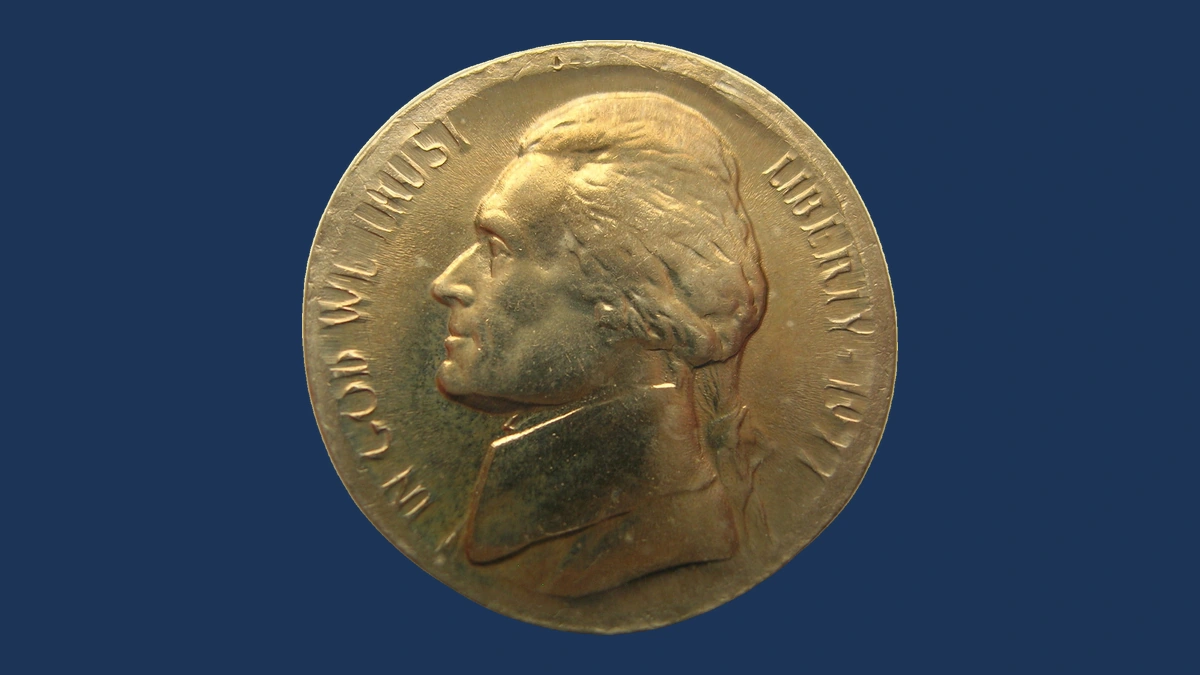
An oversized nickel may carry a full design inside a wide border. The blank spread outward because it was not properly contained by the collar during the strike.
A Philadelphia collector showed broadstrikes found while searching original bags. A separate Denver coin was described as approximately quarter-sized and graded NGC MS66 Full Steps.
Full Steps refers to the clear stairs on Monticello, not another error. The enlarged outline is the broadstrike feature; the seller’s size description should not be treated as an exact measurement of every similar coin.
Estimated Value
A seller offered the Denver NGC MS66 Full Steps broadstrike for $225 in April 2004. That was an asking price, not a confirmed completed sale.
A reasonable estimate is $40–$350 across visible 1977 broadstrikes. The amount of spreading and the condition of the design influence the value.
A modest Philadelphia bag find and a very wide, highly graded Denver coin should be compared separately rather than assigned one price.
How to Identify
A wide coin can be checked without flattening it further. A digital scale should remain near 5.00 grams because broadstriking spreads metal rather than removing it.
With calipers, record the widest and narrowest spans against the usual 21.21-millimeter diameter. Avoid squeezing the thin outer border.
Now examine the outer letters with a 10× magnifier. Most of the design should remain complete inside the expanded outline.
Look across the portrait for smearing or hammer marks that might explain a later increase in width.
Trace the lettering into the spread metal at the border. A natural struck relationship there is more convincing than an oversized outline with a crushed design.
12. 1977 Jefferson Nickel Reverse Die Cap
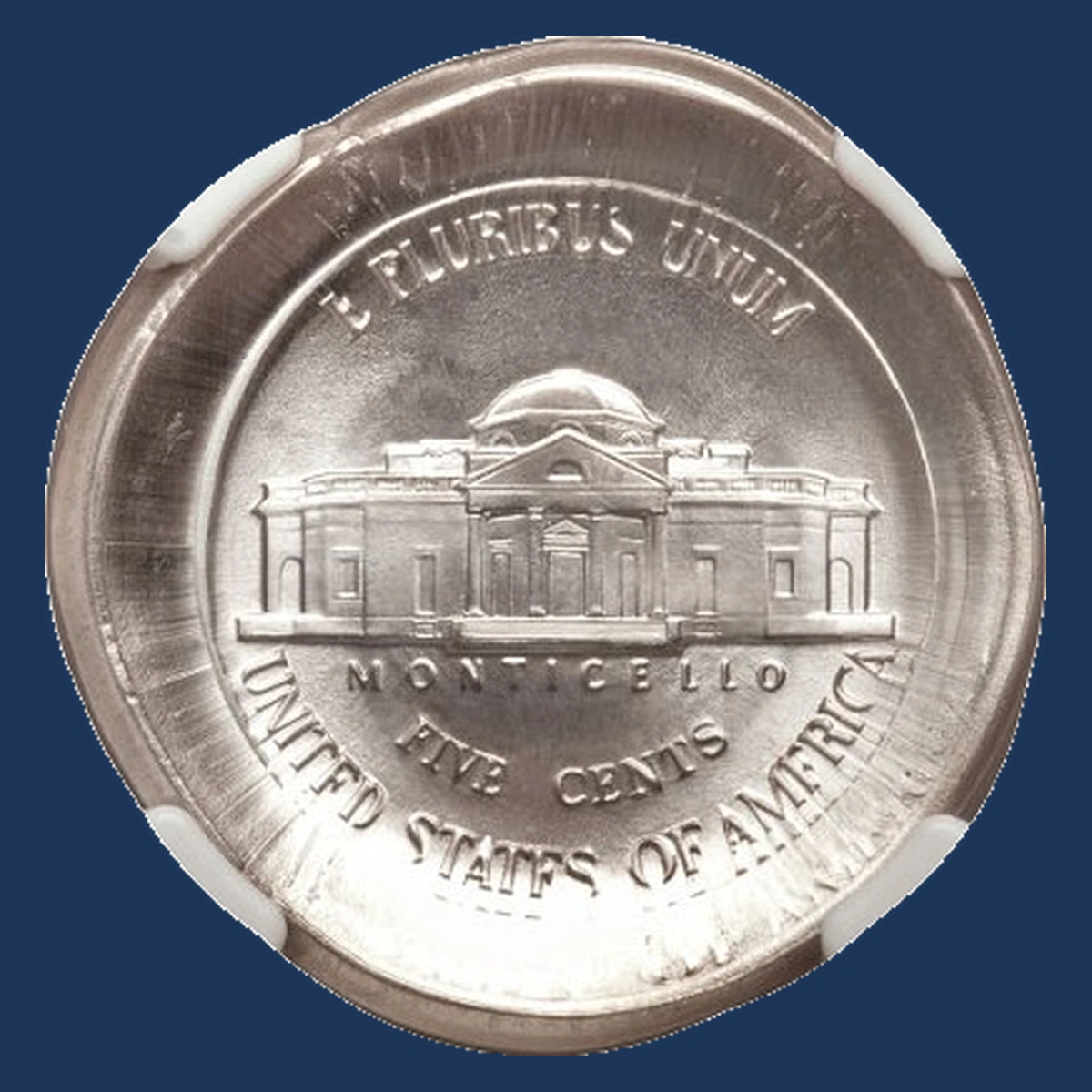
Monticello sits inside the cupped side of this error. The coin stayed attached to the reverse die, the lower tool, and its rim curved around that tool.
At least one fresh blank entered above it and was struck against it. That contact spread the cap’s front design outward while the back edge curled toward the die.
Error-Ref illustrates a 1977-D example with this shape. A wide outline alone would not identify a reverse cap, because an ordinary broadstrike can also spread beyond normal nickel size.
Estimated Value
A reverse cap with clear cupping and readable 1977-D identity can be estimated at $300–$1,500. Greater depth and an undamaged shape strengthen its appeal.
For comparison, a different 1977-D coin, a front die cap graded NGC MS67, sold for $487.20 in July 2021. Its opposite cap direction matters: that result is a comparison, not a sale record for the reverse-cap specimen shown by Error-Ref.
How to Identify
View the back from the side. The rim should cup toward the Monticello face, which is the defining direction of a reverse cap.
Inspect the front with a 10× magnifier next, looking for design spread from contact with another blank. The two sides should explain the same process.
Leave the curved edge untouched. A sharply bent corner is different from a rim that developed a continuous cup around a die.
An ordinary blank began at 5.00 grams and 21.21 millimeters. A digital scale and gentle caliper measurements can document a loose cap without forcing it flat.
The back-facing cup and expanded front belong together; a broad flat nickel supplies only one of those clues.
13. 1977 Jefferson Nickel Double Strike with an Indent
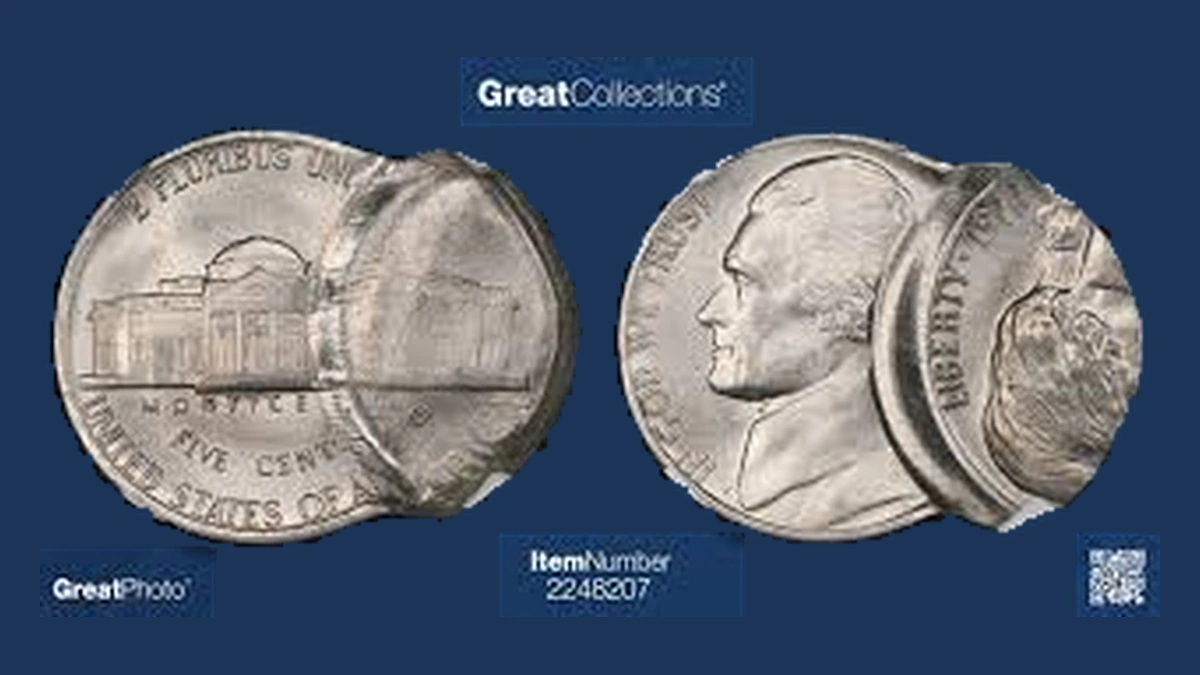
The first design can remain mostly visible while a second impression lands far to one side. One ordinary Philadelphia nickel received its second strike about 80% off center, with an indent on the back.
A different 1977-S Proof received a second strike about 95% off center and an indent on the front. NGC graded that coin PR65 Ultra Cameo, describing a well-preserved collector coin with strong contrast between its design and background.
The indent and repeated design record the same crowded striking event. Their locations differ between these two examples.
Estimated Value
The 1977-S Proof with the 95% second strike and front indent is listed at $720 in July 2021. Estimate $600–$2,000 for comparable Proof combinations.
For ordinary Philadelphia double strikes, a broader working estimate is $100–$600. The cited 80% example was not sold in its September 2004 appearance.
Both impressions and the indent contribute to one whole-coin price, rather than three separate amounts to add together.
How to Identify
Keep the two examples separate when comparing their dents: the ordinary Philadelphia coin has a back indent, while the San Francisco Proof has a front indent. A 10× magnifier helps trace each indentation beside its second striking area.
A scale and calipers can document a loose coin against the normal starting 5.00 grams and 21.21 millimeters. The distorted final outline may differ, but an off-center second blow should not remove large amounts of metal.
Follow a repeated portrait or word from the first impression into the second. The natural overlap should explain where the later blow landed, without relying on an unrelated dent or a flat doubled letter.
14. 1977 Jefferson Nickel Wrong Planchet and Rotated-Dies Combination
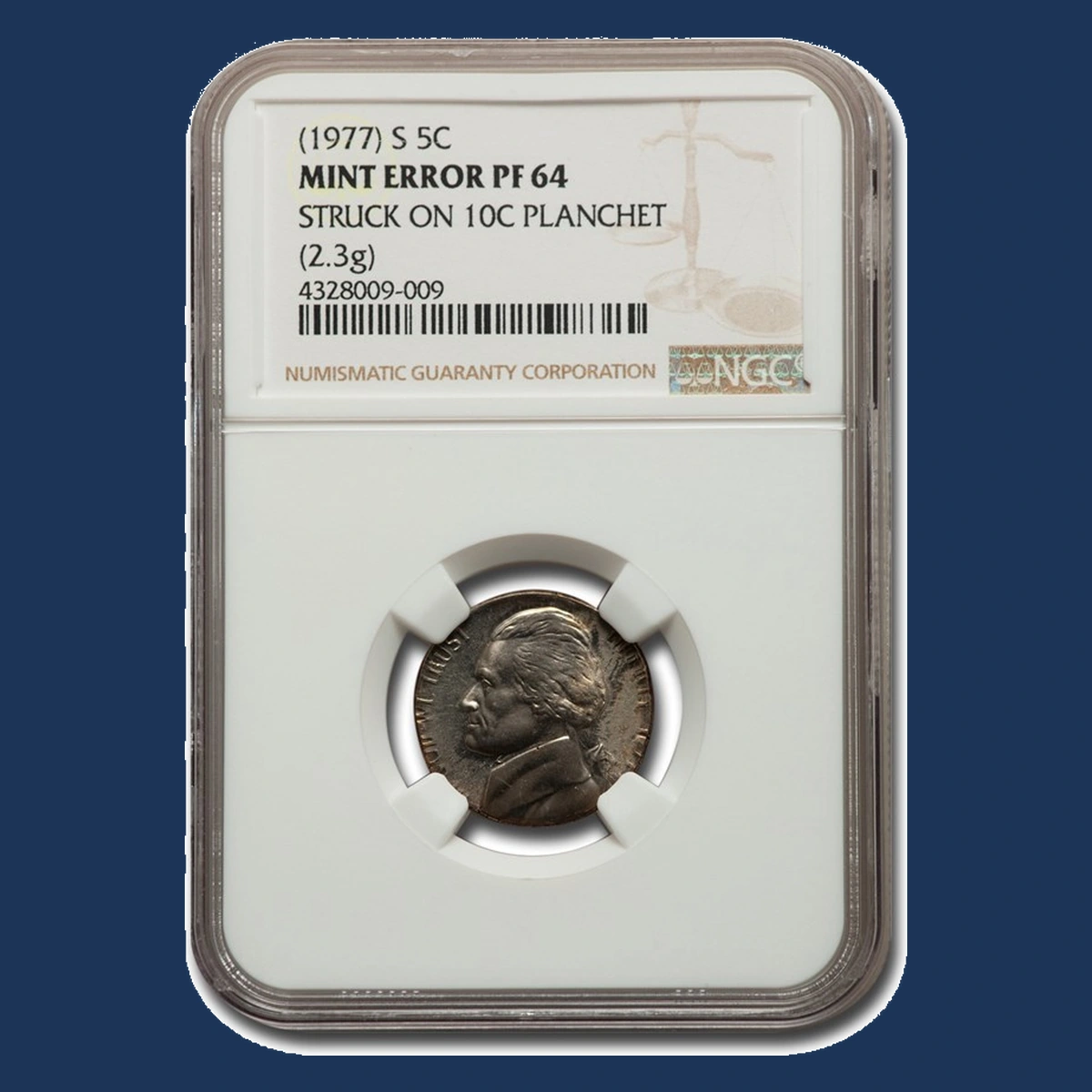
The nickel design can be too large for the metal beneath it. A 1977-S Proof on a clad dime blank loses parts of its outer lettering because the blank is smaller.
Other examples used copper-alloy cent blanks, including an ordinary Philadelphia coin weighing 3.1 grams. A separate 3.1-gram San Francisco Proof also has an unusually turned reverse.
Its two faces are nearly aligned like a medal, about half a turn away from normal U.S. coin alignment. That rotation and the wrong metal are independent mistakes sharing one coin.
Estimated Value
The dime-blank Proof graded PCGS PR68 Cameo sold for $1,440 in May 2022. The NGC PR65 Red and Brown cent-blank Proof with rotated dies brought $1,860 in August 2021.
Estimate $1,000–$3,500 for these Proof wrong-blank combinations and $250–$1,000 for ordinary cent-blank examples. The two Proof sale prices cover their complete coins; the rotated design is not an extra $1,860 to add to the blank’s value.
How to Identify
Test the rotated Proof’s orientation separately from its metal. Hold Jefferson upright and turn the coin over from top to bottom; a normal reverse would now be upright.
On the cent-blank Proof, Monticello instead lands nearly upside down. That reveals the roughly half-turn error.
A digital scale distinguishes a 5.00-gram nickel from a roughly 3.11-gram cent blank or 2.27-gram clad dime blank.
Use calipers to compare their starting widths of about 21.21, 19.05, and 17.91 millimeters, allowing for spreading during striking.
Inspect the smaller coin’s outer lettering with a 10× magnifier. A wrong unused blank leaves parts of the nickel design missing, without an earlier Lincoln or Roosevelt image underneath.
15. 1977 Jefferson Nickel Double Denomination
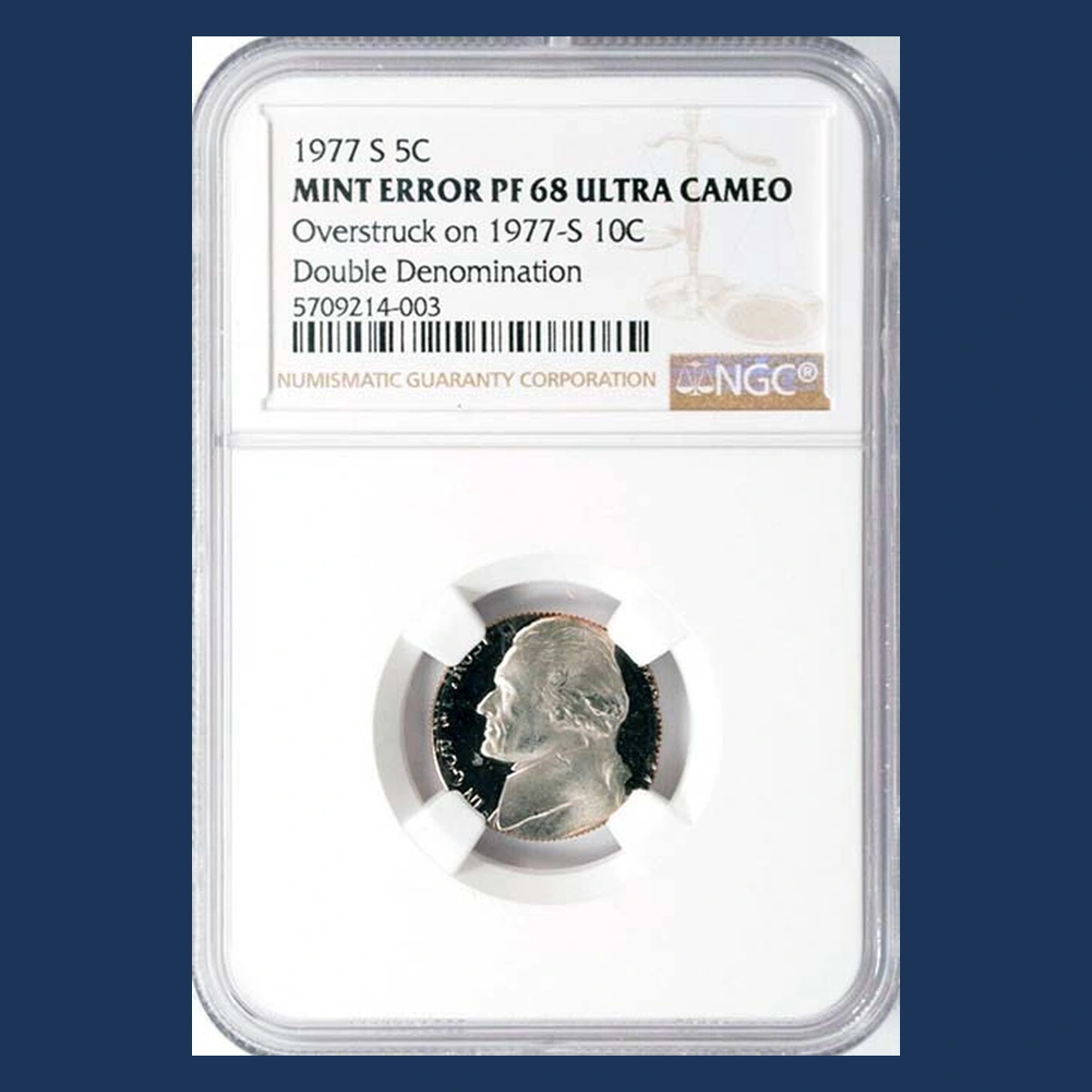
Two portraits or sets of lettering can remain on one coin after a finished smaller coin enters the nickel press. An ordinary 1977 nickel over a Lincoln cent has been offered as NGC MS65.
A more unusual 1977-S Proof was struck over a finished 1977-S dime. Roosevelt’s profile survives beneath Monticello, while parts of the dime’s reverse appear under Jefferson’s side.
Both dates can be seen on that example. The coin flipped between its dime and nickel strikes, so the earlier portrait is on the opposite side from Jefferson.
Estimated Value
Estimate $500–$1,500 for ordinary nickel-over-cent examples and $3,000–$10,000 for Proof nickel-over-dime errors. Clear traces of both designs help collectors follow what happened.
Mike Byers reports a $9,300 Heritage sale for a similar Proof without a visible dime date. That is a separate coin from his two-date example, not its recorded selling price.
An unused dime blank has no earlier Roosevelt image and belongs in a different comparison.
How to Identify
For the two-date Proof, begin on the Monticello side and look for Roosevelt’s profile underneath it. The earlier dime date appears beside Roosevelt’s neck.
On Jefferson’s side, use a 10× magnifier to search for parts of the dime’s reverse, including the olive branch. These opposite-side remnants explain the coin’s flip between strikes.
A loose cent-based error starts near 3.11 grams, while a clad dime starts near 2.27 grams. A digital scale distinguishes them from a normal 5.00-gram nickel.
Calipers can record spreading beyond the cent’s 19.05-millimeter or dime’s 17.91-millimeter starting width. The key is a recognizable earlier design crossing beneath the later nickel impression, not copper color or small size alone.
Conclusion
These 1977 nickel errors span estimated values of $5–$10,000, from small die chips to Proof coins carrying an earlier dime design. The price depends on the exact feature, finish, and condition.
Check both faces before naming the error, and use the edge when the shape looks unusual. Weight helps separate cent and dime blanks from normal nickel metal.
Leave peeling metal and curved caps intact, and keep clear photographs for expert review.