1964 Nickel Error List with Pictures

A tiny second D can matter more than a wildly bent coin. An exceptional 1964-D repunched mintmark nickel sold for $19,800 in July 2022.
The 1964 Jefferson Nickel errors below also include cloth impressions, missing metal, and coins struck on the wrong blanks. Their estimated ranges run from $5–$19,800, with special prices for complete matched pairs.
Read on to compare the visible clues, starting with modest errors and ending with that unusually valuable D/D variety.
1. 1964 Jefferson Nickel Weakly Formed Hair and Steps
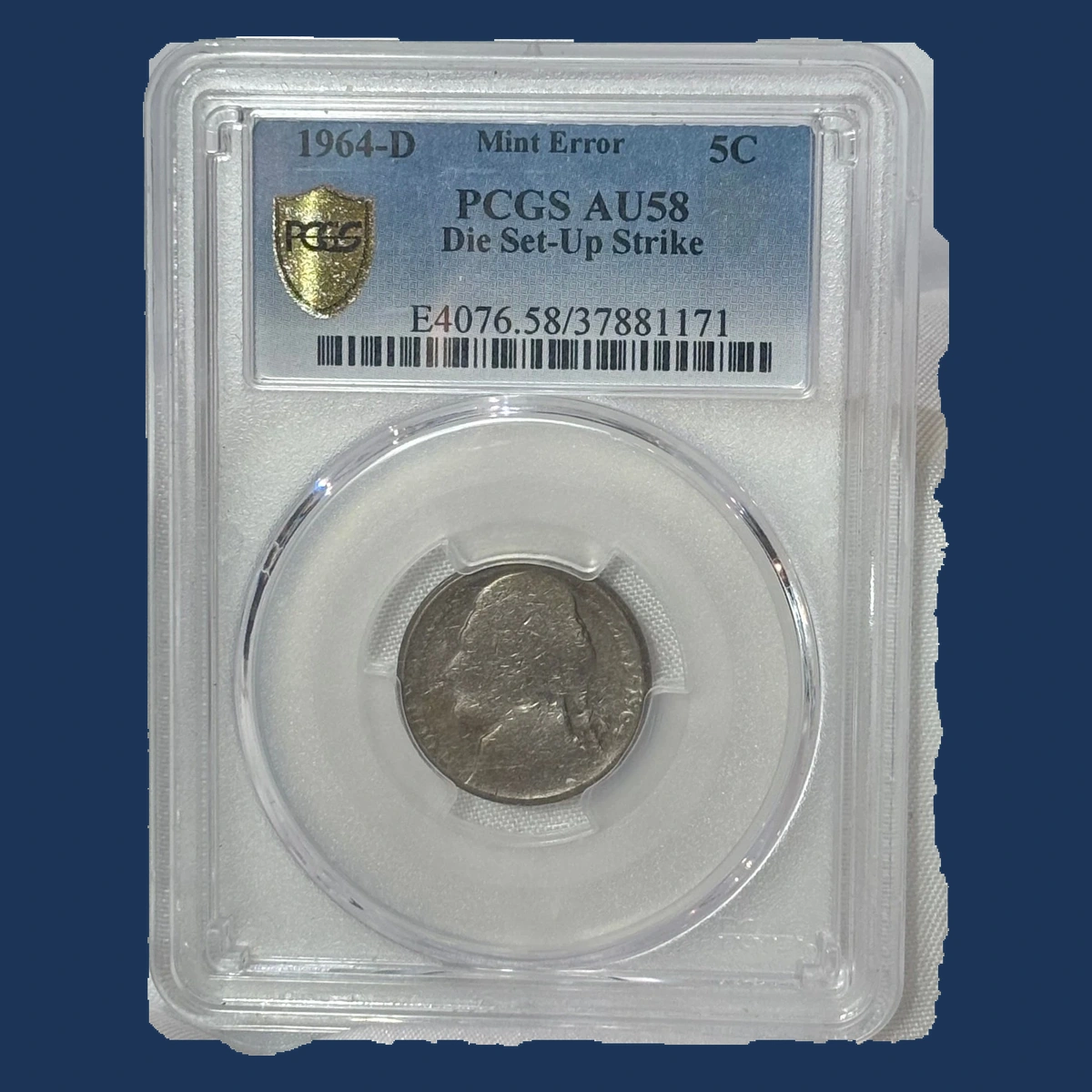
Jefferson’s hair above his ear and Monticello’s steps can look flat even when a coin has little wear. A weak strike leaves parts of the design incompletely formed.
The steel stamping tools, called dies, press the design into a blank. Low pressure or the condition of those tools can reduce the detail they leave.
Weak strikes are reported for 1964, but incomplete steps alone do not establish a special error. Many ordinary nickels lack sharp steps.
This appearance also does not turn a coin into a rare experimental strike.
Estimated Value
A distinctly weak, original strike can be estimated at $5–$50. The higher end requires a convincing contrast between preserved surfaces and unusually incomplete detail.
An ordinary worn nickel with soft hair does not gain this premium. Neither does every coin missing a few stair lines.
This is an estimate for the reported type, rather than a recorded sale of one identified specimen. Clear photographs of both faces help explain the difference to a buyer.
How to Identify
Begin with the surface rather than the steps. Turn the coin slowly under a lamp and compare the shine on high points with protected areas beside the lettering.
A 10× magnifier helps reveal smooth worn patches or fine lines from polishing. Weakly formed detail on an otherwise original surface deserves a closer comparison with a normal 1964 nickel.
For a loose coin, use a scale and calipers to compare with 5 grams and about 21.2 millimeters. Check the plain edge for squeezing that could flatten the design later.
If only the steps are soft, examine the hair and outer lettering too. Widespread wear across those areas points away from an unusually weak original strike.
2. 1964 Jefferson Nickel Dark Surfaces from Improper Heating
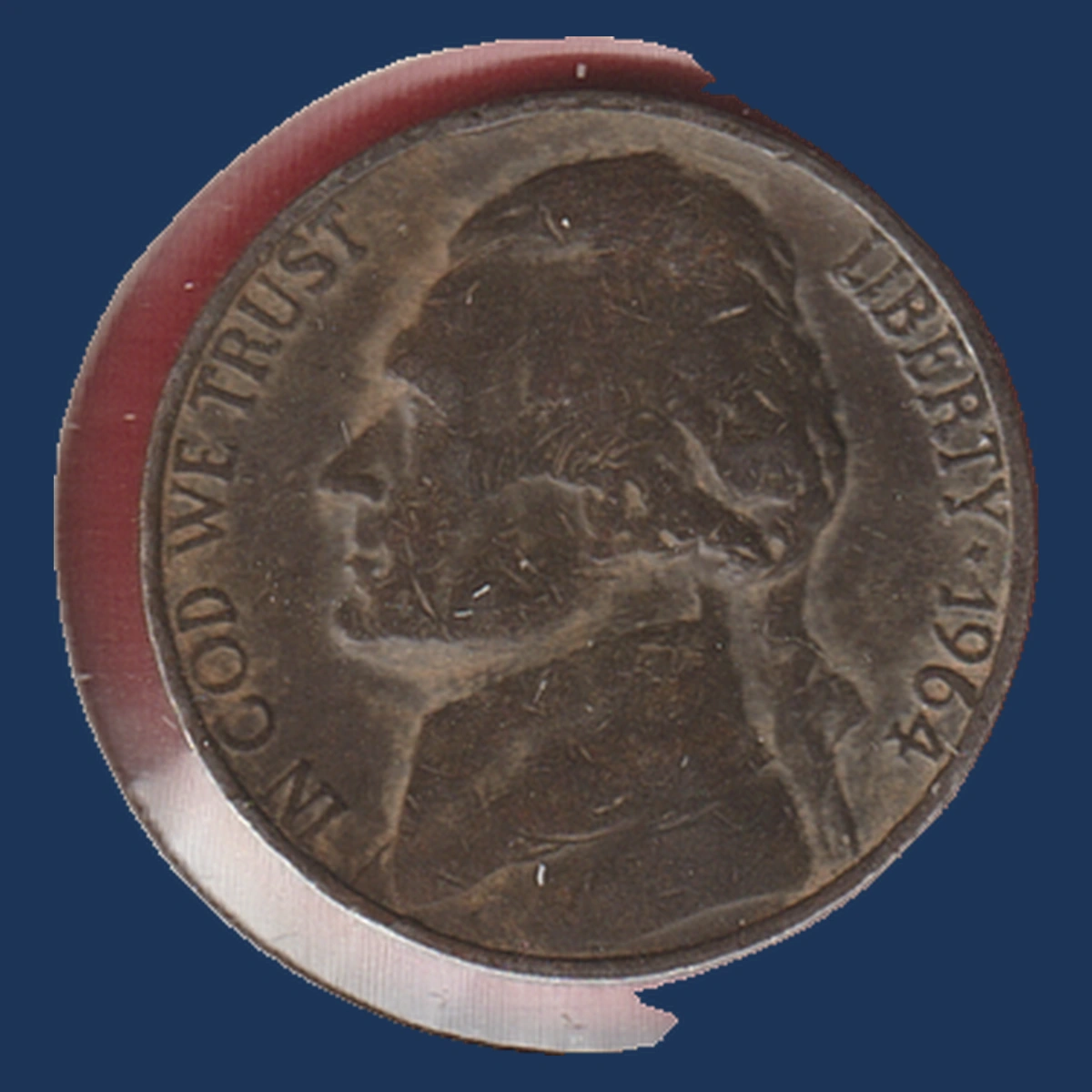
A dark nickel is not automatically dirty. Heating the blank to soften it before striking, a process called annealing, can change its surface when conditions are wrong.
An auctioned Philadelphia example was identified as improperly annealed. Reports also mention Denver pieces, which need their own checks.
These nickels contain copper and nickel mixed throughout the metal. Their color does not come from separate nickel and copper layers failing to join.
Collectors sometimes use the nickname Black Beauty. That name describes an appearance, not a test that separates mint heating from later stains.
Estimated Value
The Philadelphia example sold for $39 in September 2008. For a genuine heating error today, an estimated $20–$150 allows for differences in color strength and preservation.
A 2005-D example brought $119 in December 2022, offering a later comparison from another year. It does not establish a sale for a 1964-D coin.
A uniformly black surface can still be ordinary damage. The estimate requires original mint-related color rather than paint, corrosion, or later heating.
How to Identify
Place an ordinary nickel beside the dark one under neutral light. Compare the protected corners of the letters as you turn both coins, looking for original shine beneath the unusual color.
Do not rub the surface to brighten it. Under a 10× magnifier, paint may bridge tiny details, while corrosion can leave pits or crusts.
Compare a loose example with the usual 5 grams on a scale and 21.2 millimeters using calipers. The plain edge should be examined with both faces; normal measurements do not prove the cause of the color.
Keep the surface intact for an experienced examiner. A Philadelphia auction label cannot authenticate a similar-looking Denver coin.
3. 1964 Jefferson Nickel A Flap or Split in the Surface
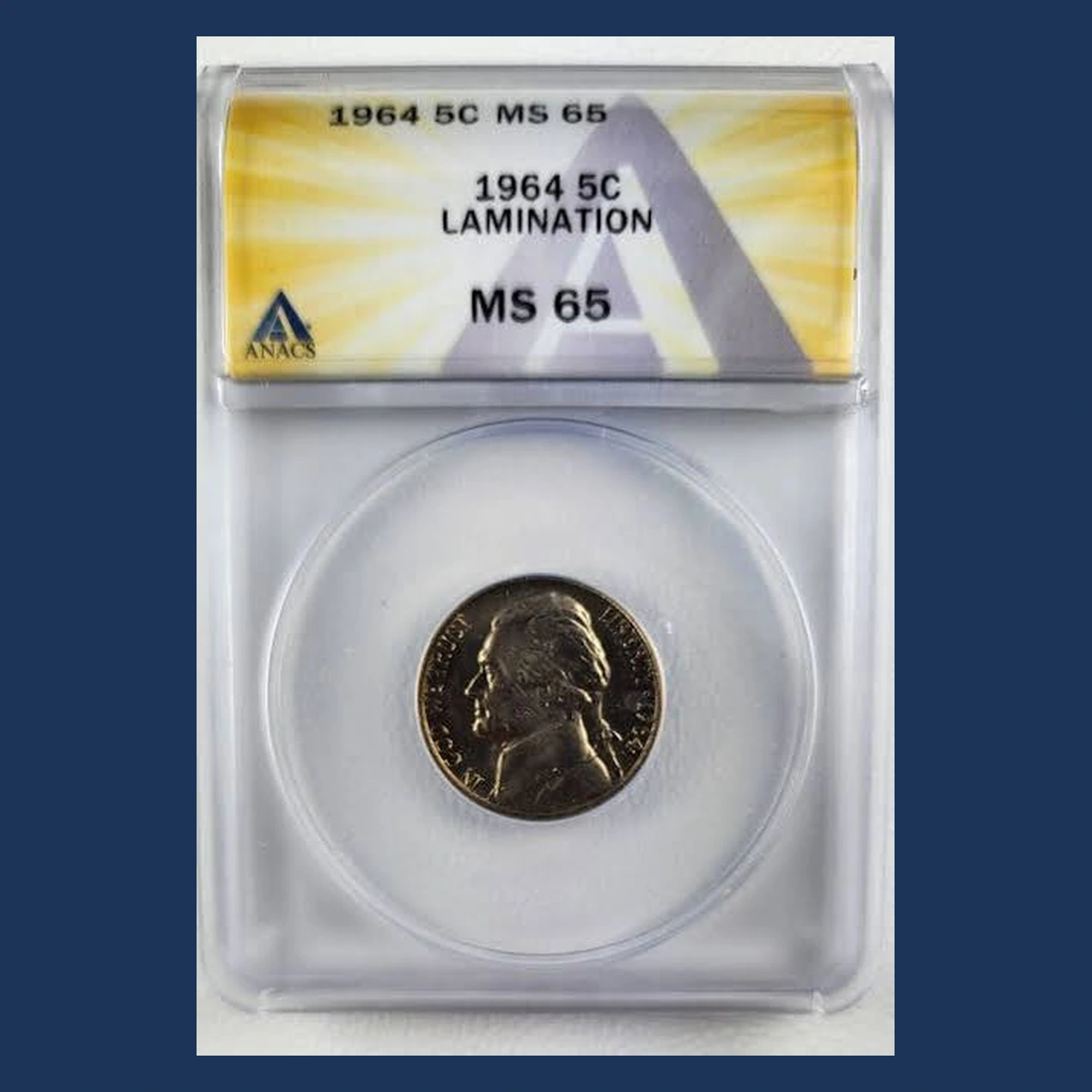
A thin piece of metal can lift from the surface while remaining attached at one side. Collectors call this kind of internal separation a lamination.
The weakness begins within the alloy, rather than in a separate plated coating. A piece may remain as a flap or fall away and leave a rough opening.
The 1964 report does not establish one position or mint for this type. Its identification rests on the split and surrounding design.
An ordinary Jefferson nickel has the same copper-nickel mixture throughout. A peeling patch therefore should not be called a missing outer nickel layer.
Estimated Value
Allow an estimated $10–$200 for an original lamination, ranging from a small opening to a larger, easily understood flap. Size matters, but so does the amount of undamaged design.
No specific 1964 sale establishes that entire range. These figures price a genuine separation within the metal.
A loose flap should remain attached. Pulling it away can lower appeal and remove the very feature that explains the error; corrosion and scraping do not receive the same premium.
How to Identify
Leave a loose flap alone. Start with side lighting and a 10× magnifier so its thin edge casts a small shadow without being lifted.
Follow the opening along the surrounding design. A shallow layer of the coin’s own metal differs from a coating sitting on top or a trench scratched into it.
If the opening reaches the plain edge, photograph that connection. A scale reading below the normal 5 grams can support missing metal, although a retained flap may leave the weight nearly unchanged.
Use calipers on a loose coin to compare its outline with 21.2 millimeters. Avoid gripping the fragile area, and show how the split meets the original letters or portrait.
4. 1964 Jefferson Nickel A Complete Design on an Expanded Coin
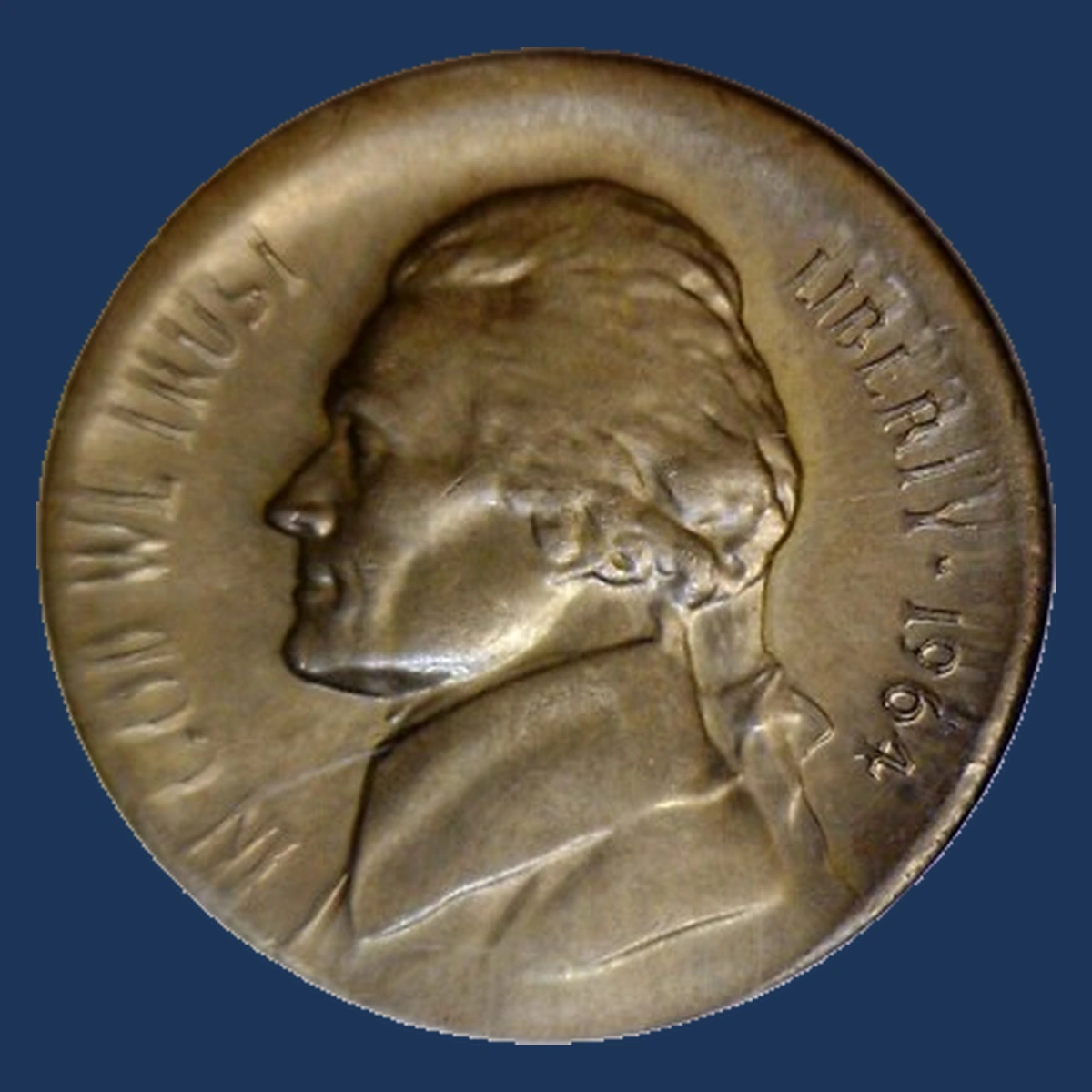
The portrait may remain centered while the letters near the edge spread outward. This is the appearance described for a 1964 broadstrike graded by PCGS.
A metal ring normally controls how far the blank can expand during striking. That ring is called the collar.
Without its restraint, metal spreads beyond the intended outline. The complete design can still fit on the coin, even when the border is uneven.
This differs from an off-center strike that loses part of the design beyond the blank. A wide outline alone also cannot rule out later hammering.
Estimated Value
The centered 1964 example sold for $31 in May 2004. A practical estimated range is $30–$250, depending on spreading, surface quality, and the clarity of the complete design.
For a more recent comparison, a 1999-P broadstrike sold for $89 in March 2025. Both prices concern single coins.
A broadstrike with an additional indentation belongs to a different combination discussed below. Do not add that combination’s full value to the price of an ordinary broadstrike.
How to Identify
Measure a loose specimen across several directions with calipers. Expansion beyond the usual 21.2 millimeters is useful evidence, especially when its weight remains near 5 grams on a scale.
Now follow every outer word on both faces. The auctioned example has a centered main design and lettering that stretches toward the expanded edge.
Check the spread metal through a 10× magnifier. Later hammering can crush letters or leave repeated impact marks that do not belong to the original strike.
A plain edge is normal for a nickel, so smoothness alone proves nothing about the collar. Include the whole outline in photographs so the complete design and expanded border can be judged together.
5. 1964 Jefferson Nickel An Unfinished Curved Punch Mark
A curved line can cross the coin while the metal on both sides remains present. This differs from a clip, where part of the blank is already missing.
The blank-cutting punch started an arc but did not cut completely through the strip. That unfinished cut survived the later coin strike.
A Denver example is reported with an NGC AU58 grade, meaning only slight wear. A separate AU55 report should not be assumed to describe the same coin.
The arc needs examination from both faces and the side. A later scratch can imitate part of its appearance.
Estimated Value
A genuine incomplete punch is estimated at $75–$350. A clear arc with convincing depth and preserved surrounding detail should command more attention than a faint line.
A secondary 1964 price table gives $180 for an AU55 example. Treat that as a reported price point without a confirmed sale date, not the auction result of the separate Denver AU58 coin.
The estimate depends on an original unfinished cut. A groove added after striking belongs outside this range.
How to Identify
The first question is whether metal is missing. If an open bite interrupts the outline, you are looking at a completed clip rather than just an unfinished punch.
Use a 10× magnifier to trace the arc across both faces and toward the plain edge. Photograph changes in depth without pressing on the affected metal.
For a loose coin, compare its weight with 5 grams on a scale and its diameter with 21.2 millimeters using calipers. Metal that remains attached need not cause a large weight loss.
Examine where the design crosses the line. Signs that striking acted on an existing cut are more persuasive than a sharp groove that slices through finished letters.
6. 1964 Jefferson Nickel Raised Lines and Rim-Connected Breaks
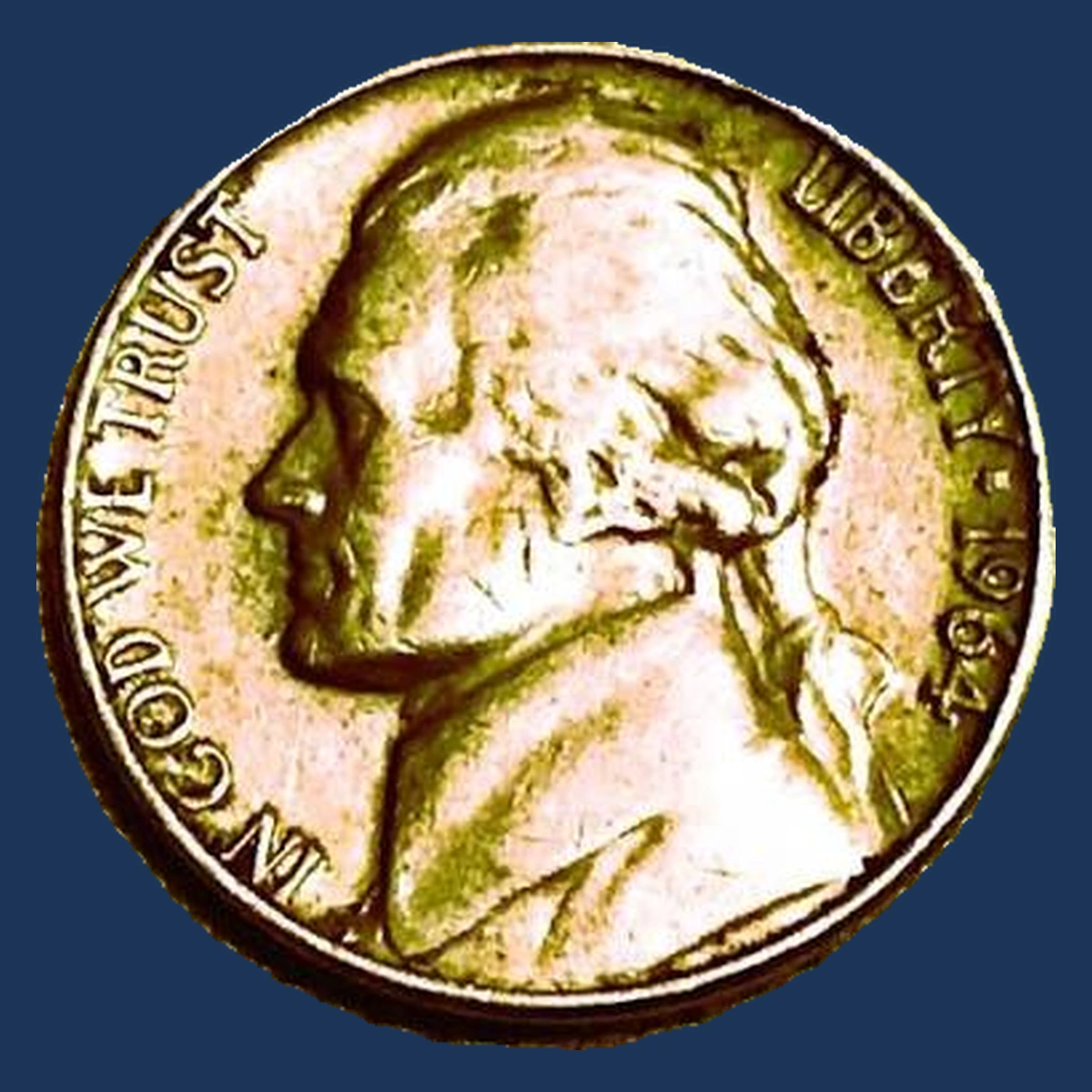
A raised line can form when metal enters a crack in a stamping tool. A larger raised patch can form where part of that tool has broken away.
When the missing section reaches the rim, collectors call the resulting blank raised area a cud. If the broken piece stays in place, some design may remain on a shifted patch.
Both cracks and larger breaks are reported for 1964. The general reports do not establish a single mint, position, or shape.
The distinction depends on the actual surface. A nickname cannot show whether the broken tool fragment stayed or fell out.
Estimated Value
Small original cracks are estimated at $5–$40. A substantial rim-connected break can fall around $40–$400, with size and preservation affecting its appeal.
For comparison, a worn 1983-P nickel with a cud sold for $63 in July 2022. That different-year result is not a sale of the reported 1964 type.
A retained broken section and a fully missing section can leave different detail. Price the visible coin rather than assuming every raised rim patch is equally scarce.
How to Identify
Put a normal nickel beside the candidate and compare the outline of the suspected patch. A cud must join the rim; an isolated lump inside the design has a different shape.
Through a 10× magnifier, check whether letters remain on a raised or shifted section. Their survival can help distinguish a retained tool fragment from a completely missing one.
For a thin line, compare its center with its sides. A ridge fits metal entering a tool crack, while a scratch usually has a cut center.
Use a scale and calipers on a loose coin against 5 grams and 21.2 millimeters. Inspect the plain edge beside the patch for a later blow that squeezed metal upward.
7. 1964 Jefferson Nickel Missing Pieces of the Blank
Clips leave real gaps in the metal, rather than smooth unstruck areas. The blank was incomplete before the design was pressed into it.
A Denver report describes a straight missing section of about twenty-five percent near eight-thirty. Another Denver example has a fifty-percent curved clip.
Other pieces show several separate gaps. A five-clip coin also spread beyond its normal outline during striking.
A three-clip example was cataloged with its year in parentheses, meaning the date was assigned rather than fully visible. These different shapes share the same basic problem: an incomplete blank entering the press.
Estimated Value
Estimated values run from $25–$600, covering modest clips through multiple missing sections. Several 2021 results show that size alone does not determine price.
The fifty-percent Denver clip sold for $132, the three-clip coin for $104, and the five-clip broadstrike for $450. All three sales took place in July.
The $450 paid for one coin with two features, not two separate premiums. A strong grade can also influence a price without making every similar gap equally valuable.
How to Identify
Count the gaps before measuring the coin. Photograph the whole outline so a five-clip example cannot be confused with one large missing section.
Use a scale for a loose specimen; missing metal should reduce the normal 5-gram weight. Calipers can compare intact spans with about 21.2 millimeters, although a broadstrike may expand them.
Under a 10× magnifier, inspect the gap surfaces and letters beside them. Flow toward a pre-existing opening differs from sharp cutting that removes parts of already finished letters.
The remaining edge should be plain. On the reported three-clip piece, keep the assigned date separate from any digits actually visible; on the Denver pieces, include the surviving D in the photograph.
8. 1964 Jefferson Nickel A Shifted Design Beside Blank Metal
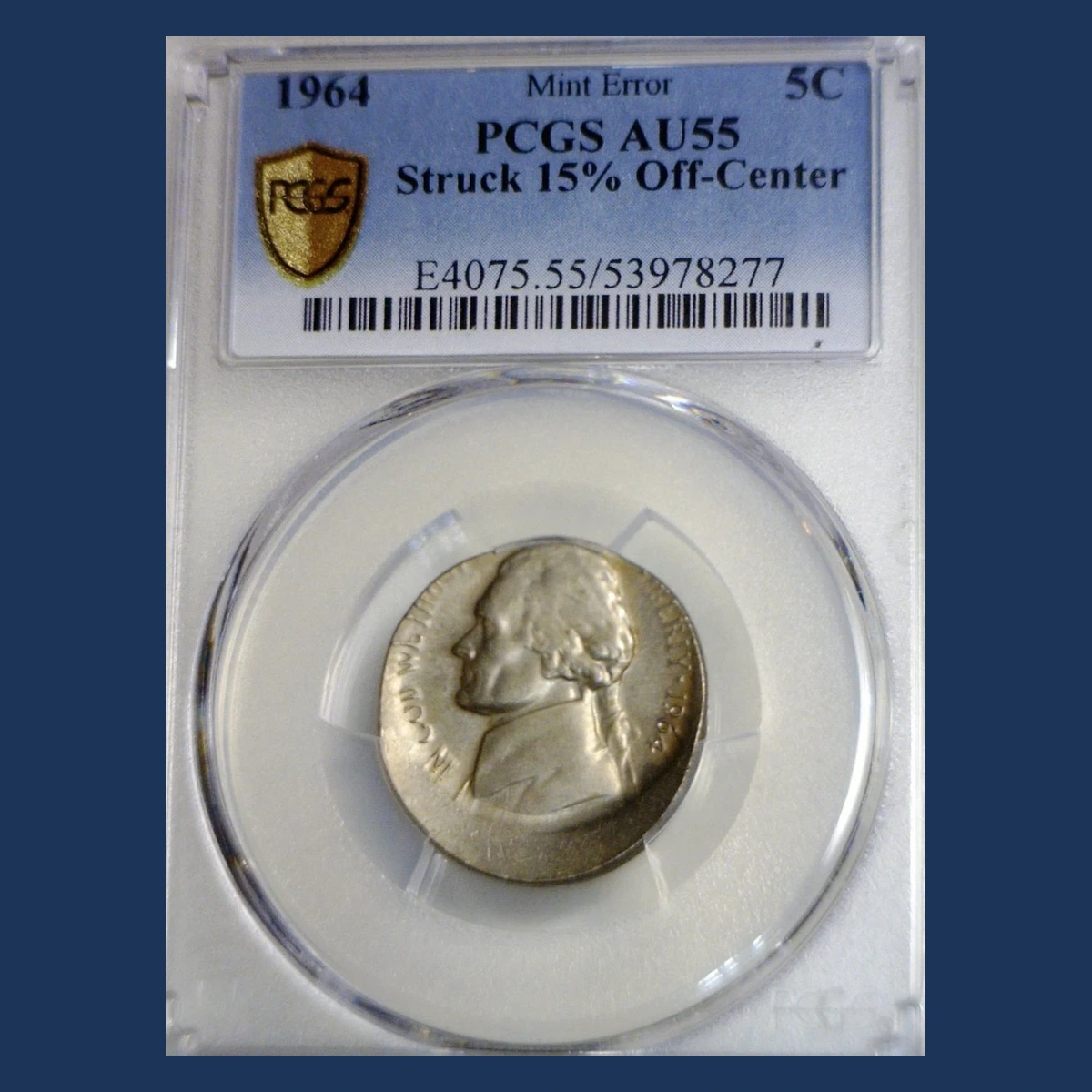
A broad unused area beside Jefferson shows that the blank was not centered under the stamping tools. Some design missed the metal while the opposite part of the blank received no design.
A Philadelphia example was described as thirty percent off center. A separate Denver coin has a seventy-five-percent offset toward eight o’clock.
Those percentages describe different specimens. The mint and surviving date help keep them apart.
The blank area is still metal, unlike a clip. The shift should also make sense across both faces rather than appearing only as an uneven border on one side.
Estimated Value
The thirty-percent Philadelphia example sold for $99 in July 2021. Estimate $50–$700 for normal-metal 1964 off-center nickels, allowing for the amount of shift and surviving date.
A larger offset is not automatically worth the upper end. Heavy wear or damage can reduce its appeal, and a readable date often helps.
The seventy-five-percent Denver example needs its own comparison. Neither the Philadelphia sale nor the price of a silver-dime-blank error should be transferred directly to it.
How to Identify
For a loose candidate, compare its scale reading with 5 grams and caliper measurements with the usual 21.2 millimeters. An unusually light, small piece may involve a wrong blank as well as an offset.
Find the unused crescent and check that it is solid metal. Turn the coin over to see whether the same blank position explains the opposite face.
With a 10× magnifier, follow the boundary where the design ends. Scraping marks or a trimmed plain edge may show that someone altered the coin later.
Include the date and the building’s right side in a full photograph; that is where a Denver D belongs in 1964. If this area fell outside the metal, leave the mint unassigned instead of assuming Philadelphia.
9. 1964 Jefferson Nickel A Back Struck through a Stuck Coin
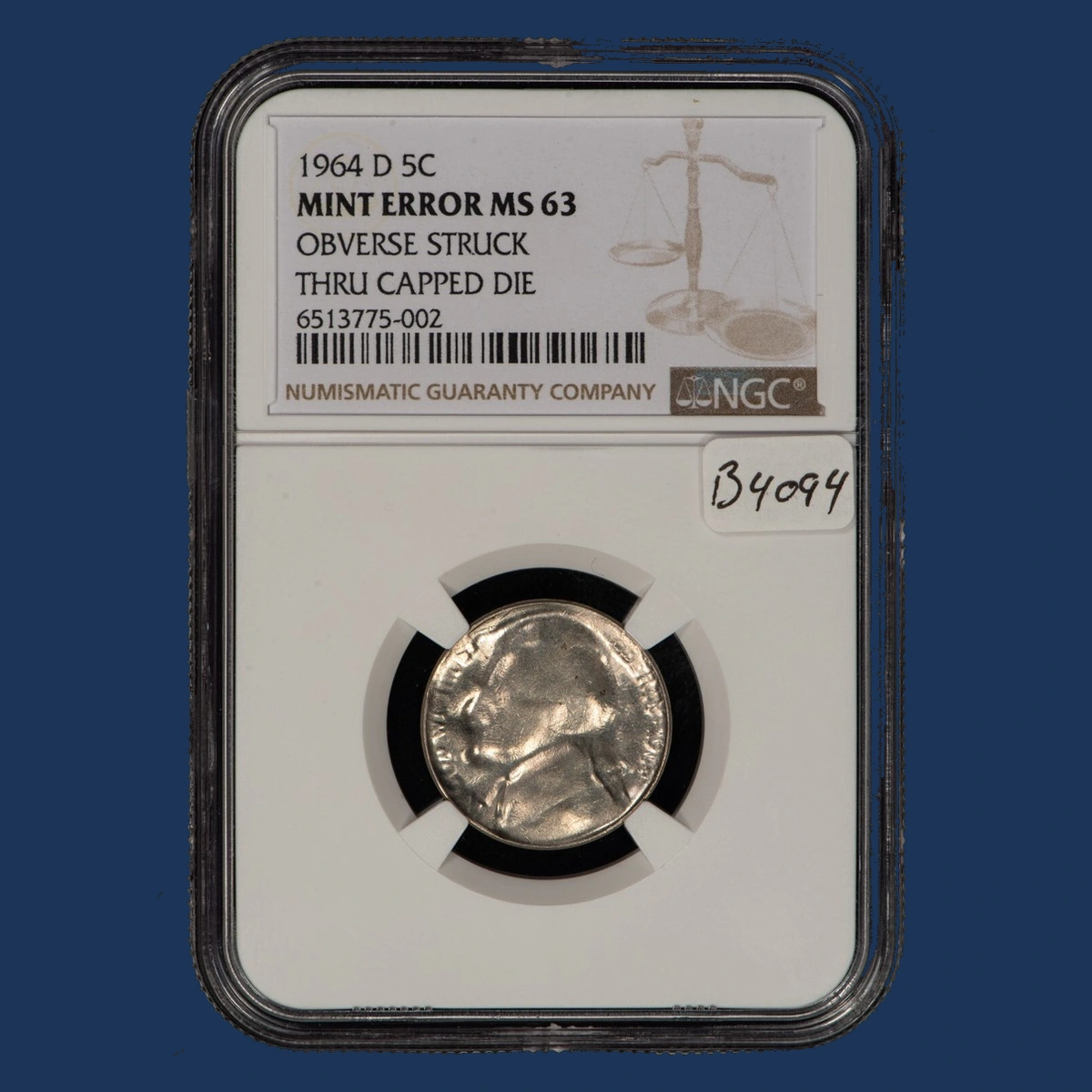
One face can lose direct contact with its stamping tool because an earlier coin is still stuck there. The later coin receives pressure through that stuck piece instead.
This is called a capped-die strike. The stuck coin is the cap; the coin below it is the receiver.
A 1964-D example was auctioned with its back affected in this way. It should not be described as the cup-shaped cap itself.
The amount of surviving detail depends on the cap’s condition. The available description does not establish a complete mirror image or a particular stage of thinning.
Estimated Value
The Denver receiver sold for $360 in July 2021. An estimated $150–$750 covers differences in the strength of the blocked design and overall preservation.
That result applies to a capped-die strike on the back. A detached cup-shaped cap or a matched pair belongs to a different market.
The coin was graded NGC MS64 Full Steps, meaning an unworn coin with defined stair detail. The label does not permit borrowing an unseen mirror image from another example.
How to Identify
Start with a side view: is the coin a tall cup, or a receiver with an affected face? Do not flatten either shape to make the comparison easier.
For a loose receiver, record its weight on a scale and its spans with calipers, comparing with 5 grams and 21.2 millimeters. Inspect the plain edge for later reshaping.
The Denver example has an affected back opposite a more normally impressed front. Use a 10× magnifier to examine that contrast and preserve the surviving D in your photographs.
Compare the remaining back detail with a photographed capped-die receiver. Ordinary wear, a cup-shaped cap, and a full backward impression can look very different; none should supply missing features for this particular coin.
10. 1964 Jefferson Nickel A Sunken Mirror Image on a Wide Coin
Backward letters pressed into the metal can reveal contact with another struck coin. Its raised design acted like a temporary stamping surface.
The resulting sunken mirror image is called a brockage. The reported 1964 examples also expanded beyond the intended outline during striking.
Two separate auction descriptions identify front-side brockage, with NGC MS64 and MS66 grades. Those grades describe different coins, not two faces of one piece.
The mirror impression must be studied directly to establish its coverage and source design. A plain depression without transferred detail would instead suggest a blank blocking the strike.
Estimated Value
The MS64 broadstrike with brockage sold for $319.20 in July 2021. A reasonable estimated range for this combined type is $200–$1,000.
Clear backward lettering usually explains the error more readily than a weak, partial impression. Surface quality and the size of the transferred design also matter.
The separate MS66 listing does not provide a reason to assign it the MS64 sale price. Each is one complete coin, so the brockage and spreading are valued together.
How to Identify
Read the odd letters as though viewing them in a mirror. With a 10× magnifier and low light, confirm that their centers are below the surrounding surface.
Raised extra outlines point toward a different kind of doubling. A blank depression with no design is not enough to establish brockage.
Photograph the entire front and normal design on the opposite face. Compare the mirrored features with the design that could have pressed them into the coin.
After that match, measure a loose coin with calipers and a scale. Its expanded outline may exceed the normal 21.2 millimeters while its weight stays near 5 grams; inspect the plain edge for later hammering.
Do not turn or mirror the photograph itself without also keeping an unchanged image.
11. 1964 Jefferson Nickel A Depression Made by Another Blank
A second blank can overlap a nickel and block part of the strike. It leaves a smooth depression instead of the normal design.
This is called an indent. A reported example has a ninety-percent front depression and a cupped shape.
Other 1964 coins combine an indent with an off-center strike or spreading beyond the normal outline. One broadstrike has a twenty-five-percent front indent; that percentage does not apply to the other pieces.
An example cataloged as “(1964)” carries an assigned date. Unlike brockage, the indented area need not contain a backward copy of another coin’s design.
Estimated Value
Three broadstruck indents sold for $150, $216, and $312 in July 2021. The same sale included an off-center coin with a back indent at $288.
Allow an estimated $100–$1,000 across these shapes, with a clear matching boundary and good surfaces supporting stronger interest. The reported ninety-percent cupped piece requires its own comparison.
These are whole-coin prices. An indent plus spreading or an offset does not justify adding the complete price of each separate error type.
How to Identify
Find where the depressed area meets the struck design. A blank’s rounded outline should explain that boundary better than a random dent does.
Inspect the depression with a 10× magnifier for lettering. A recognizable sunken mirror image changes the explanation from a plain indent to contact with a previously struck coin.
Use side photographs to show a cupped shape without bending the piece. For a loose coin, take scale and caliper readings against the normal 5 grams and 21.2 millimeters.
Follow the plain edge around any expanded or offset area, then compare both faces. Do not apply the twenty-five-percent front measurement to the ninety-percent report or the back-side example; locate the actual boundary on each coin.
12. 1964 Jefferson Nickel A Nickel Struck on an Unidentified Copper Blank
This Denver nickel looks copper-colored and weighs 3.7 grams, well below a normal nickel. Its blank also differs from the standard copper cent blank used in 1964.
The auction described an unusual copper blank and weak detail on Monticello. It suggested a possible foreign origin without establishing that identification.
The coin should therefore be described by its known weight and metal appearance, rather than assigned to a specific foreign denomination.
The nickel design was pressed onto that unusual blank. A later copper coating would change the surface color without proving the same origin.
Estimated Value
The 3.7-gram Denver piece, graded PCGS AU50 with visible wear, sold for $299 in January 2005. Estimate $250–$1,200 for a comparable authenticated copper-blank error.
Preservation and a stronger explanation of the blank can affect interest. An attractive unworn example need not trade like this worn specimen.
The range does not price a confirmed Philippine coin. Neither the color nor the original suggestion establishes a country, and a later-plated normal nickel belongs outside this comparison.
How to Identify
Weight is the first useful split in the investigation. On a scale, 3.7 grams differs from both the usual 5-gram nickel and the roughly 3.11-gram copper cent blank.
For a loose coin, use calipers to compare its outline with the normal nickel’s 21.2 millimeters. Inspect the plain edge and both faces through a 10× magnifier for a surface coating.
Include the Denver D to the right of Monticello and the weak building in your photographs. Do not polish the copper color or scratch the edge to test it.
A specialist can test the alloy without assigning a country from appearance. Until that match exists, the weight and genuine nickel strike are the useful facts to compare.
13. 1964 Jefferson Nickel Cloth Texture and Other Blocked Design
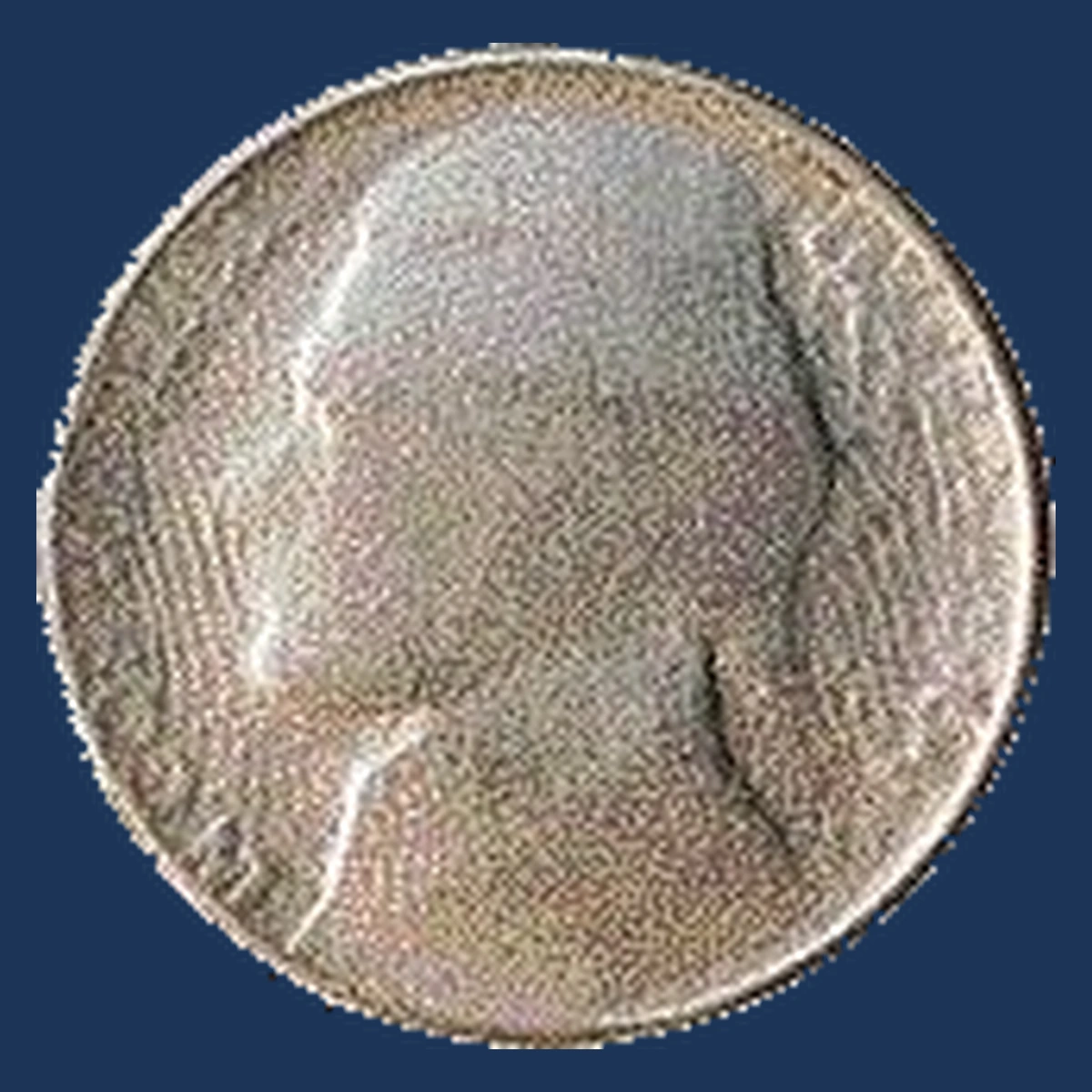
A woven pattern covers the entire front of one 1964 nickel. Cloth lay between the blank and the stamping tool, blocking the normal portrait while leaving its own texture.
The back retained ordinary shine and a slightly soft strike. The coin was graded NGC MS64 and accompanied by an older Error Trends certificate.
Other reports describe missing detail from filled tools or material caught during striking. They do not establish cloth as the cause in every case.
Grease can weaken letters without leaving woven threads. The texture, extent, and surviving opposite face distinguish these different appearances.
Estimated Value
The full-front cloth impression sold for $862.50 in December 2009. Estimate $400–$1,500 for a convincing extensive cloth strike-through of comparable quality.
Minor blocked details are a different price level, estimated around $5–$100. Their lower range should not be used to price the dramatic whole-face example.
The fabric need not remain attached for its impression to be valuable. A later cloth rubbing or an ordinary polished patch, however, does not belong in either mint-error range.
How to Identify
The cloth-covered front may hide the date, so begin with the surviving back and the coin’s authenticated identification. A full-face weave does not justify guessing the mint.
For a loose normal-blank specimen, compare scale and caliper readings with 5 grams and 21.2 millimeters. Photograph the plain edge without rubbing away any surface material.
Next use a 10× magnifier to distinguish crossing thread impressions within the metal from loose fibers resting on top. The auctioned coin has this texture across the entire front, opposite a relatively normal back.
Missing letters without a weave call for another comparison. Look for a local blocked area beside sharper detail, but do not identify the obstruction as cloth from a smooth patch alone.
14. 1964 Jefferson Nickel Repeated Lettering Built into the Stamping Tools
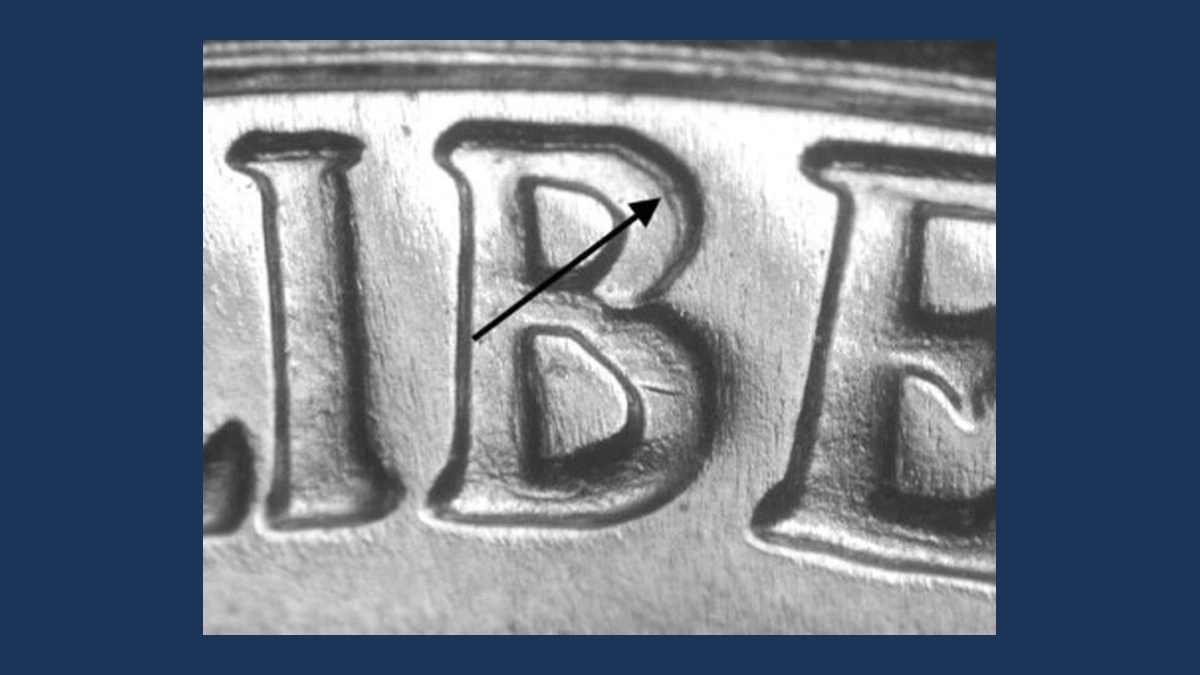
Extra rounded outlines can appear on the front lettering, back words, or building. They were already present in the tool before it struck the coin.
Denver examples include doubling in IN GOD WE TRUST and inward extra outlines on back lettering. Philadelphia has many separate patterns, often on Proofs, collector coins made with special preparation.
Some shared patterns came from a parent tool used to make several stamping tools. Identical-looking letters therefore do not always identify one particular tool.
A coin may also have both front and back doubling. Those features belong to one specimen rather than two separate coins.
Estimated Value
Minor matched patterns can be estimated at $10–$100. Stronger, clearly identified examples, especially attractive Proof varieties, may fall around $100–$1,500.
These are estimates, not one auction result applied to every numbered listing. A small shared-tool outline should not inherit the value of an unusually strong doubled design.
Confirm the mint, finish, and exact pattern before comparing prices. A mirror-like Proof and an ordinary Denver nickel can show extra lettering yet belong to very different markets.
How to Identify
First separate ordinary coins from specially made Proofs and locate any Denver D beside Monticello. On a loose coin, check 5 grams on a scale, about 21.2 millimeters with calipers, and the plain edge.
Then choose the same mint and finish in the 1964 variety photographs. They show separate patterns rather than one universal doubled date.
Use a 10× magnifier to follow a complete extra letter outline. A flat shelf caused by movement during striking differs from rounded separation built into a tool.
A shared parent-tool pattern can occur on several working tools. Compare the smaller identifying marks before choosing a specific listing, keeping front and back photographs paired throughout.
15. 1964 Jefferson Nickel A Nickel Design on a Copper Cent Blank
A copper-colored disc can carry Jefferson instead of Lincoln when a cent blank enters the nickel press. The smaller blank cannot receive the entire nickel design.
Philadelphia and Denver examples are recorded, including pieces weighing 3.06 and 3.08 grams. A separate Denver nickel was struck twice on a 3.1-gram cent blank.
That twice-struck coin does not need an old Lincoln design underneath. Its starting piece was a blank, not a finished cent.
Another report concerns a damaged cent blank. To belong to that category, the damage must precede the nickel strike rather than occur afterward.
Estimated Value
For authenticated cent-blank pieces, estimate $200–$1,500 depending on preservation, surviving date, and added striking errors. The twice-struck 3.1-gram Denver example sold for $411.25 in August 2013.
A recent different-year comparison is a 1981-P nickel on a copper cent blank at $372 in September 2025. That blank also belongs to the heavier copper-cent era.
The reported damaged-blank piece needs a discount for its actual condition. Later damage does not create another premium to add to the wrong-blank value.
How to Identify
For a loose copper-colored candidate, compare a scale reading with about 3.11 grams for an original copper cent blank. A normal nickel weighs 5 grams; modern 2.5-gram cent specifications do not apply here.
Use calipers to document its smaller outline against the normal 21.2-millimeter nickel. A cent starts near 19.05 millimeters, but striking can change the final shape.
Under a 10× magnifier, inspect the plain edge for plating and the date for repeated nickel impressions. An old Lincoln design would indicate a finished cent underneath, a different event.
On the damaged-blank report, look for nickel detail formed over the damaged area. Fresh cuts through completed letters show that the injury happened later.
16. 1964 Jefferson Nickel Two or More Separate Strikes
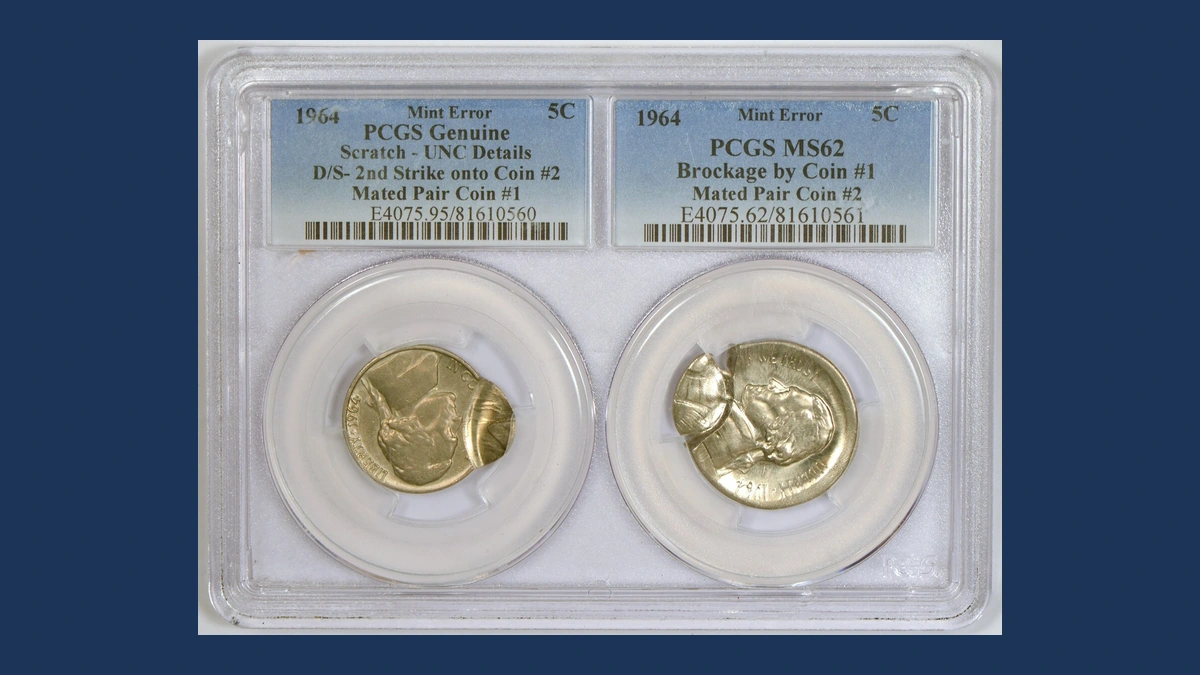
A second date across Jefferson’s first portrait shows that a coin moved before another strike. This is a repeated strike, not fine doubling copied from one tool.
The 1964 examples include two off-center strikes, a second strike ninety percent off center, and a coin struck four times. The four-strike coin rotated between blows, with other blanks blocking the back during the last three.
Some pieces also spread outward or receive an indent. Another three-strike coin has an assigned “(1964)” date.
Each sequence needs its own two-face photographs. Not every repeated strike leaves an equally clear new design on both sides.
Estimated Value
Recorded results range from $144 for a second strike ninety percent off center to $1,200 for four strikes. Those sales occurred in July 2021 and May 2018, respectively.
An estimated $100–$2,000 accommodates simpler doubles through more dramatic sequences. A multiply struck indent brought $168 in July 2021, while the assigned-date triple strike sold for $499.38 in July 2014.
Count the visible strikes, but price the whole coin. An extra blow does not multiply its value automatically.
How to Identify
Look for separate centers of design before counting strikes. A second date or another portrait at a different angle is more useful than slightly thick letters.
Use a 10× magnifier to trace which impression overlaps another. For the four-strike type, photograph each surviving impression without inventing detail on the blocked back.
If one face lacks matching repeated detail, compare it with the obstruction on that same piece. It need not disprove a strike when another blank intercepted the tool.
Weigh a loose coin against 5 grams and use calipers against 21.2 millimeters, noting spreading or distortion. Inspect the plain edge for later bending.
Keep an assigned date in parentheses when the original year cannot be read fully. A cropped date is not permission to complete the missing digits.
17. 1964 Jefferson Nickel A Nickel on a Philippine Ten-Centavo Blank
The nickel design barely fits on this small blank. Its recorded weight is 2.06 grams, much lighter than a normal Jefferson nickel.
The auction identified the piece as struck on a Philippine ten-centavo blank and graded it NGC MS65. It was an unused blank, not an already completed foreign coin.
That distinction explains why an old Philippine design is not required underneath Jefferson. The foreign blank entered the nickel press before receiving its intended design.
The weight and appearance need to be checked together. A small clipped nickel or a silver dime blank calls for a different identification.
Estimated Value
This example sold for $998.75 in March 2014. An estimated $750–$2,000 suits a comparable authenticated Philippine-blank error, with preservation and visible nickel details affecting the result.
The MS65 grade describes an unworn coin with relatively few marks. It should not be reduced to the MS64 grade sometimes repeated in secondary summaries.
The estimate is for the identified blank type. Low weight alone does not support that price or establish a foreign denomination for another small nickel.
How to Identify
A scale reading near the reported 2.06 grams is a useful starting point for a loose specimen. Compare it with the usual 5 grams, then use calipers to record its outline against the normal 21.2-millimeter nickel.
Under a 10× magnifier, check whether the design ends naturally at the smaller edge. A shaved edge may instead cut through the finished design or leave tool marks.
The nickel’s ordinary edge is plain. Record the actual edge here rather than assuming that every small foreign blank should have grooves.
Have the blank identification checked against its physical measurements and metal. Searching for an underlying Philippine picture is the wrong test for an unused blank; first establish the genuine smaller strike.
18. 1964 Jefferson Nickel A Reported Triple Saddle Strike
A saddle strike can leave separate struck areas joined by a bent bridge of metal. The coin’s shape reflects different parts being caught under the striking surfaces.
A triple-saddle listing gives the date 1964 but calls the coin a Buffalo nickel. Those identities cannot both be correct, because Buffalo nickels were no longer made in 1964.
The reported shape remains worth examining, but the date and design must identify the actual coin. It is not an established 1964 Jefferson example solely because the auction title includes that year.
A later bend without matching struck areas has a different cause.
Estimated Value
For a genuine 1964 Jefferson triple saddle strike, use a conditional estimate of $500–$2,000. The unusual shape and the clarity of the separate struck areas would drive its appeal.
The title-conflicted auction lot sold for $1,140 in July 2021. That is an actual lot result, but it does not settle whether the coin belongs to this year and series.
Confirming the design comes before applying the estimate. An ordinary bent coin does not receive a saddle-strike premium.
How to Identify
Identify the portrait and back before interpreting the bend. Jefferson and Monticello belong to this article; an Indigenous portrait and buffalo would require a different year and series.
Use a 10× magnifier on every surviving date digit and keep the complete coin in the photograph. The auction title cannot substitute for a readable design.
For a loose candidate, a scale can compare its weight with 5 grams. Calipers should record the distorted spans, with 21.2 millimeters serving only as the normal starting diameter.
Inspect the plain edge and bridge without flattening them. Separate struck areas must explain the bridge’s shape; random folds or vise marks are not enough, even when the coin remains near its normal weight.
19. 1964 Jefferson Nickel A Coin Curled around the Stamping Tool
A coin can stay attached to a stamping tool and curl around it as more blanks are struck. Its raised sides create the cup-shaped object called a die cap.
A 1964 front-side cap was cataloged as NGC MS65. Its shape must be distinguished from a later coin struck through that cap.
A separate report uses the name reverse die cap but describes a blocked later strike. The actual side view is needed to choose between the cap and its receiver.
Cup height and inner detail vary. A simple bowl-shaped dent made after minting does not establish either mint error.
Estimated Value
The front-side cap sold for $1,500 in July 2021. Estimate $750–$2,500 for a comparable genuine cap, depending on its shape, condition, and remaining design.
The ambiguous reverse-cap report lists $270 without a confirmed sale date. That figure should not set the price of a tall cup if the original coin was actually a capped-die receiver.
The two objects have different roles in the press. An examiner should establish which object is being offered before using either comparison.
How to Identify
Photograph the side profile first, then the inside and outside of the cup. A die cap must have a shape consistent with metal wrapping around a stamping tool.
Use a 10× magnifier to follow the original design into the curved sides. Tool marks that cut or squeeze an already finished coin can point toward later reshaping.
For a loose cap, weigh it against the normal 5 grams without forcing it flat. Calipers can record height and width, with 21.2 millimeters as the ordinary nickel diameter rather than a required final span.
Inspect the plain edge around the raised wall. A nearly flat coin with blocked detail may be the receiver instead; use the side view to resolve that distinction before judging the portrait.
20. 1964 Jefferson Nickel A Nickel Design over a Damaged Indian Coin
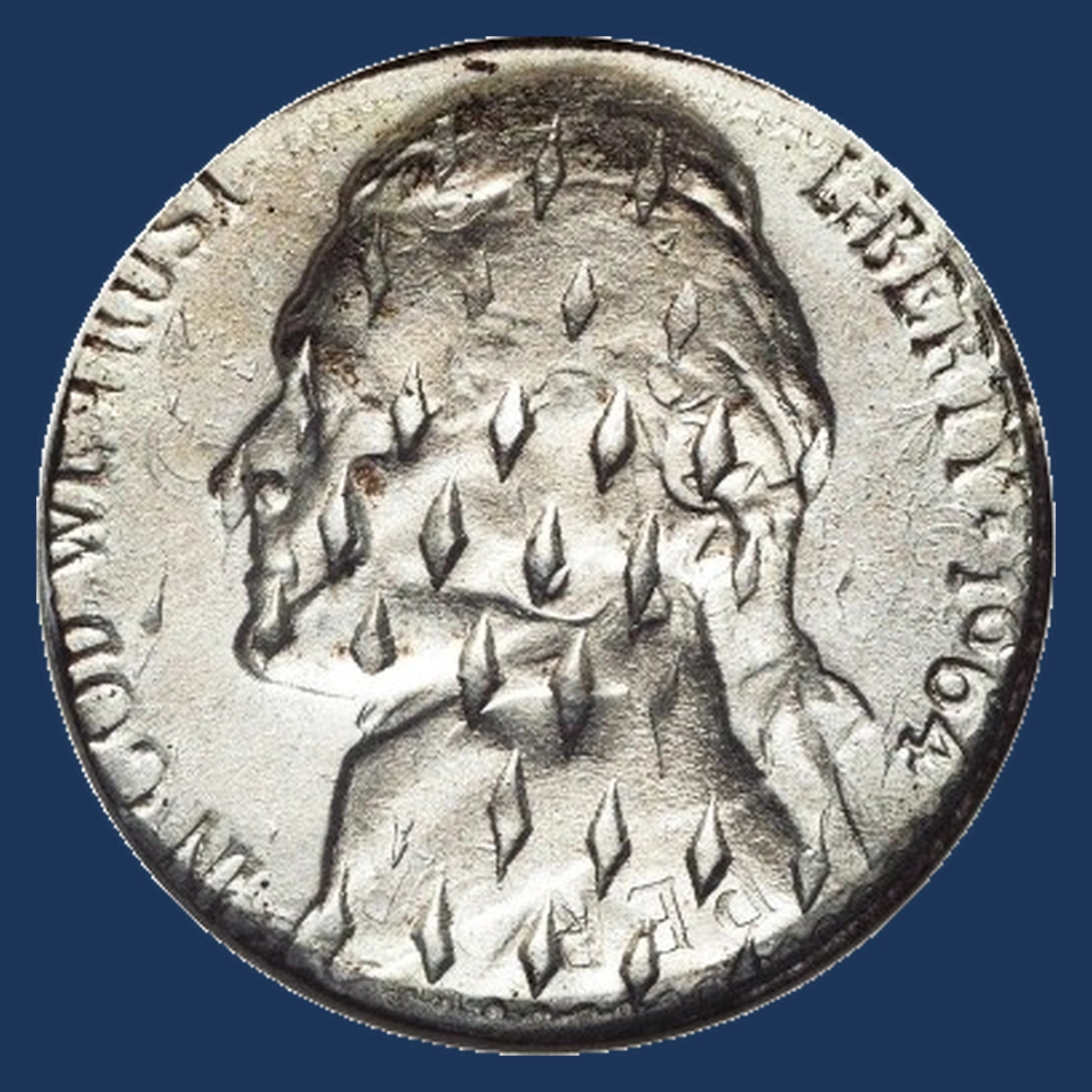
Diamond-shaped dents cross the surface beneath a Denver nickel design. The starting piece was a 1940 Indian quarter rupee that had already been struck and damaged.
The nickel strike came afterward. Surviving host-coin details separate this unusual object from a nickel made on an unused foreign blank.
ANACS graded the piece MS60, an unworn grade allowing many marks. Its history is unusual, but the surviving coin does not establish how it entered the nickel press.
The earlier patterned damage is part of that history. It should not be described as an ordinary accidental mixing of clean blanks.
Estimated Value
The coin sold for $1,610 in May 2008. A working estimated range of $1,000–$3,000 applies to this unusual, authenticated overstrike rather than a routine wrong-blank nickel.
The earlier patterned damage is already part of the object being priced. It is not a later defect to erase from its description.
Collectors are buying the whole sequence visible on one coin. Neither the host’s ordinary value nor a separate nickel-error premium should be added to the auction result.
How to Identify
Compare three layers of evidence: the Indian coin’s surviving details, the diamond-shaped dents, and the later nickel design. Under a 10× magnifier, look for the newest design crossing the earlier surface.
Include 1964 and the Denver D in the photographs where they survive. The illustrated foreign-coin overstrike helps distinguish the earlier pattern from random later damage.
For a loose example, record scale and caliper readings. The ordinary 5-gram, 21.2-millimeter nickel specifications are comparisons, not the required measurements of this foreign host.
Inspect its actual edge against a normal nickel’s plain edge without filing it. The visible order of the three features supports the identification; a story about who placed it in the press does not.
21. 1964 Jefferson Nickel A Nickel Design on a Silver Dime Blank
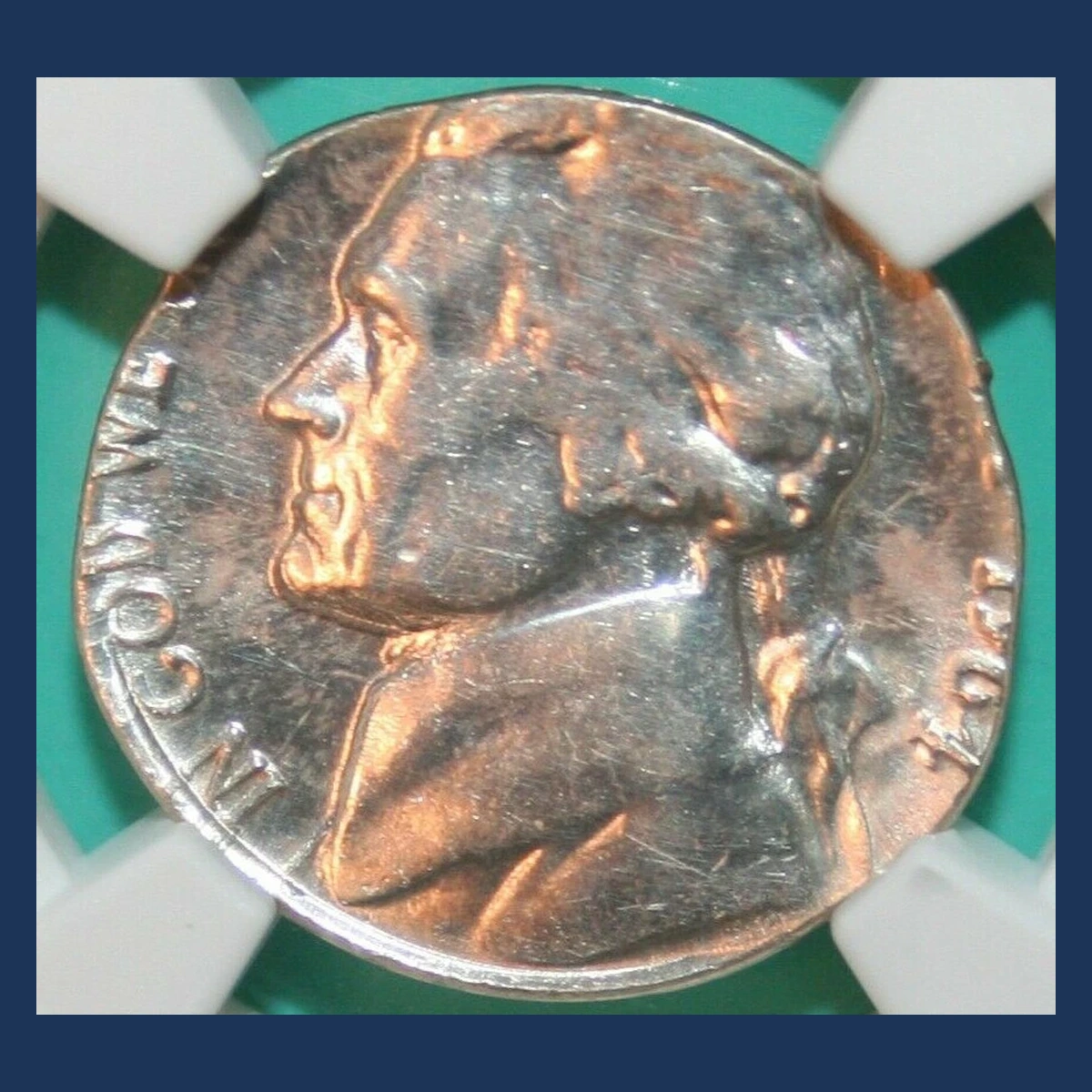
A silver dime blank is smaller and lighter than a normal nickel blank. When it receives the nickel design, some outer lettering can fall beyond its edge.
One PCGS MS62 example is slightly shifted toward six o’clock. Its mintmark area lies outside the metal, so the absence of a visible D cannot establish Philadelphia.
A separate NGC MS63 example was struck thirty-five percent off center and weighs 2.5 grams. These are different pieces.
Normal 1964 nickels contain no silver. The valuable feature here is the wrong silver blank, rather than an ordinary change in surface color.
Estimated Value
The thirty-five-percent offset example sold for $900 in July 2021. A separate MS63 silver-blank nickel appears in a January 2006 auction-results table at $3,450.
Estimate $750–$4,000 across comparable authenticated examples, allowing for grade, design placement, and appearance. The nearly centered MS62 coin should not inherit either result as its own sale.
An off-center strike and a silver blank coexist on the $900 piece. That single price already covers the combination, rather than two values to add together.
How to Identify
Weigh a loose candidate before relying on its silver color. A 1964 silver dime blank normally weighs 2.5 grams, compared with 5 grams for a nickel.
Use calipers to compare its outline with a dime’s starting diameter near 17.9 millimeters and the nickel’s 21.2 millimeters. The final strike may spread the smaller blank.
A 10× magnifier can show whether letters end naturally at the edge or were removed by later cutting. Record the actual edge; a nickel normally has a plain edge, and a dime blank need not acquire dime-style grooves under nickel tools.
Finally locate the mintmark area beside Monticello. If it never landed on the metal, leave the mint unassigned rather than calling the coin Philadelphia.
22. 1964 Jefferson Nickel Matched Pairs from One Press Accident
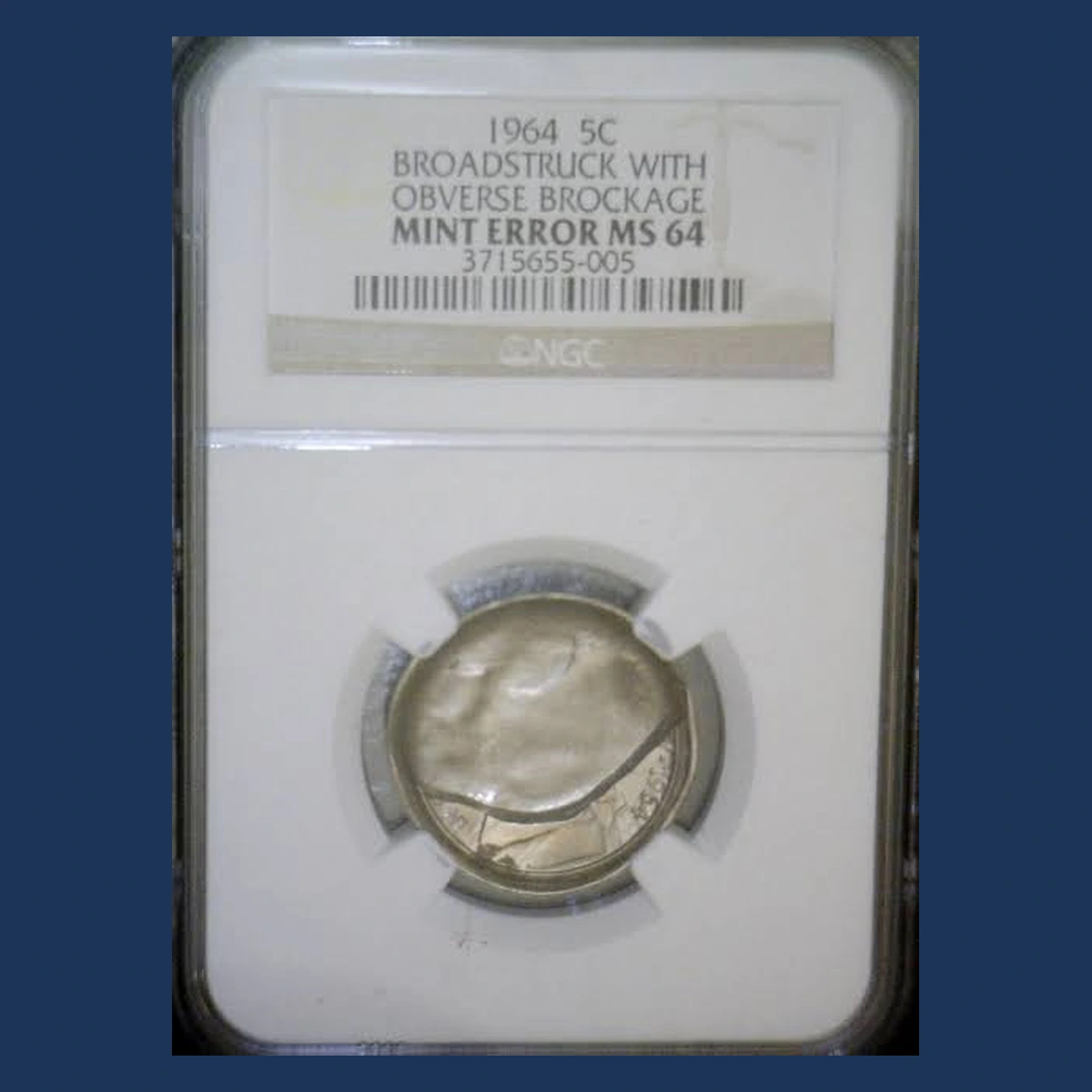
Two surviving coins can explain an accident together. One may carry the outline or backward impression of the other, creating a matched pair.
A 1964 repeated-strike pair includes one coin struck onto the other. Another reported pair combines a seventy-five-percent indent with a matching twenty-five-percent off-center coin.
A third pair consists of specially made Proof coins that formed front and back caps together. Their edges curled upward and developed small projecting points.
These are three separate pairs, not stages of one object. The matching contact surfaces are what connect the two members within each pair.
Estimated Value
The repeated-strike pair sold for $3,000 in July 2021. The Proof cap pair brought $6,000 in the same month.
For complete, convincing pairs, estimate $2,000–$8,000. These figures apply to both coins together, not to each member separately.
The reported indent pair has its own shape and grades. Neither known auction result establishes its exact price, and separating a matched pair can reduce the story and appeal that collectors value.
How to Identify
Keep both coins visible in the first photographs, then compare their contact boundaries through a 10× magnifier. The shape pressed into one should correspond to the part of the other that touched it.
Do not push the coins together. Existing photographs or outlines can demonstrate the fit without risking their raised points.
The repeated-strike pair has a surviving date beside the backward impression on the second coin. Its cracks near twelve and four o’clock differ from the Proof pair’s curled edges.
For loose pieces, record each weight and span separately with a scale and calipers against 5 grams and 21.2 millimeters. Inspect each plain edge, noting distortion; a combined weight or two unrelated matching grades cannot prove that the coins belong together.
23. 1964 Jefferson Nickel A Second D from a Repunched Mintmark
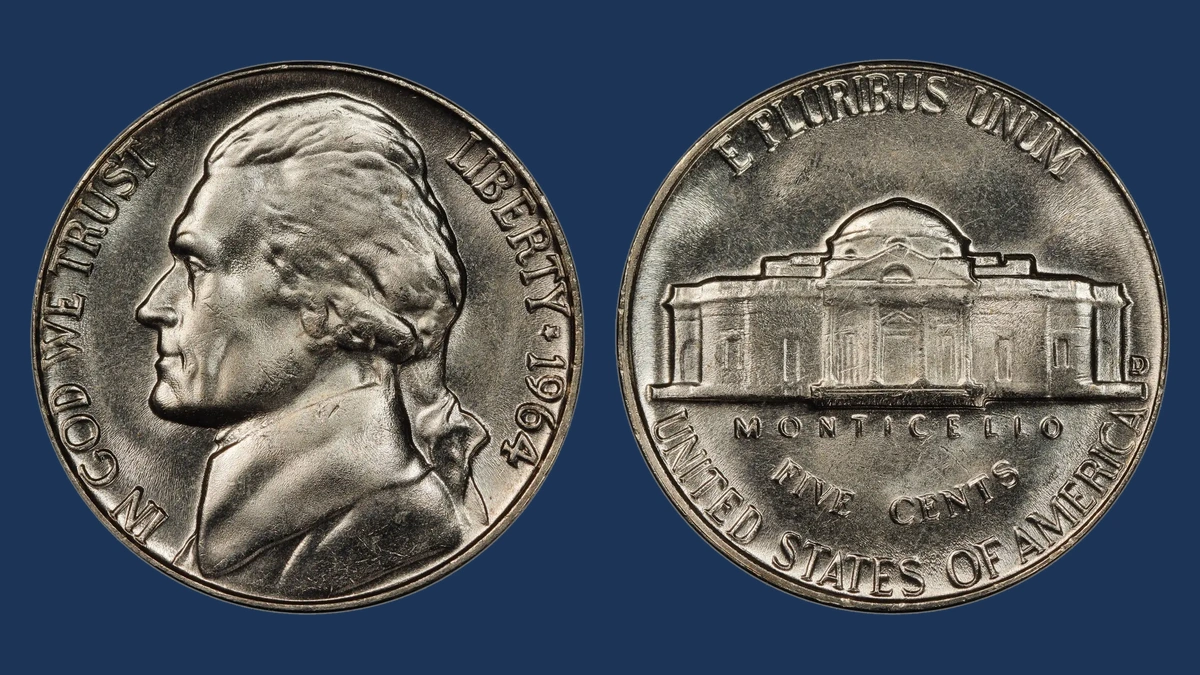
The small D sits to the right of Monticello on a 1964 Denver nickel. An extra partial D can survive when the letter was punched into the tool more than once.
This is a repunched mintmark. It differs from doubling in the surrounding words, which may have another cause.
The well-known FS-501 variety shows an extra outline below the main D. Other Denver varieties have different directions, including an eastward extra outline.
Those shapes cannot be exchanged just because their catalog numbers look similar. Philadelphia coins have no mint letter here, so a blank area is normal for them.
Estimated Value
Minor matched Denver varieties are estimated around $25–$300. Strong FS-501 examples can reach higher levels, with exceptional preserved coins occupying an estimated $1,000–$19,800 range.
An FS-501 graded PCGS MS66 sold for $19,800 in July 2022. MS66 means an unworn coin with few marks.
That result prices an exceptional whole coin. It is not a blanket value for every doubled D, and full stair detail should not be assumed from the variety number alone.
How to Identify
A loose 1964 nickel normally weighs 5 grams, measures about 21.2 millimeters, and has a plain edge. Record those basics with a scale and calipers, then turn to the building.
The small Denver D belongs beside Monticello. Searching below Jefferson’s date would send you to the wrong place on this year.
Use a 10× magnifier at the bottom of the D for the FS-501 extra outline. Compare the whole letter with a labeled photograph.
An eastward outline belongs to another pattern. A flat shelf can instead come from movement during striking.
Keep a full back photograph beside the close-up. Match the D’s exact shape and nearby identifying marks before applying the exceptional FS-501 price.
Conclusion
Estimated values span $5–$19,800, but the photographs should lead your search. A weak building, an extra letter outline, and an oddly shaped blank tell different stories.
The largest results need the right coin: the exceptional D/D grade or both members of a matched pair. Keep ordinary Philadelphia coins, Denver coins, and specially made Proofs separate when comparing them.
Photograph both faces before concentrating on a small detail. That wider view often answers the first question.