1966 Nickel Error List with Pictures

A 1966 nickel can carry the right portrait on the wrong-sized metal. One struck on a clad dime blank sold for $862.50, with most of its date surviving but little outer back lettering.
This 1966 nickel error list covers estimated values from $10 to $1,800, including split metal, misplaced designs, and a second strike. No mintmark is normal for the year, so a missing mint letter is not an error.
Use the visible clues below to choose the right comparison.
1. 1966 Jefferson Nickel Rotated Reverse
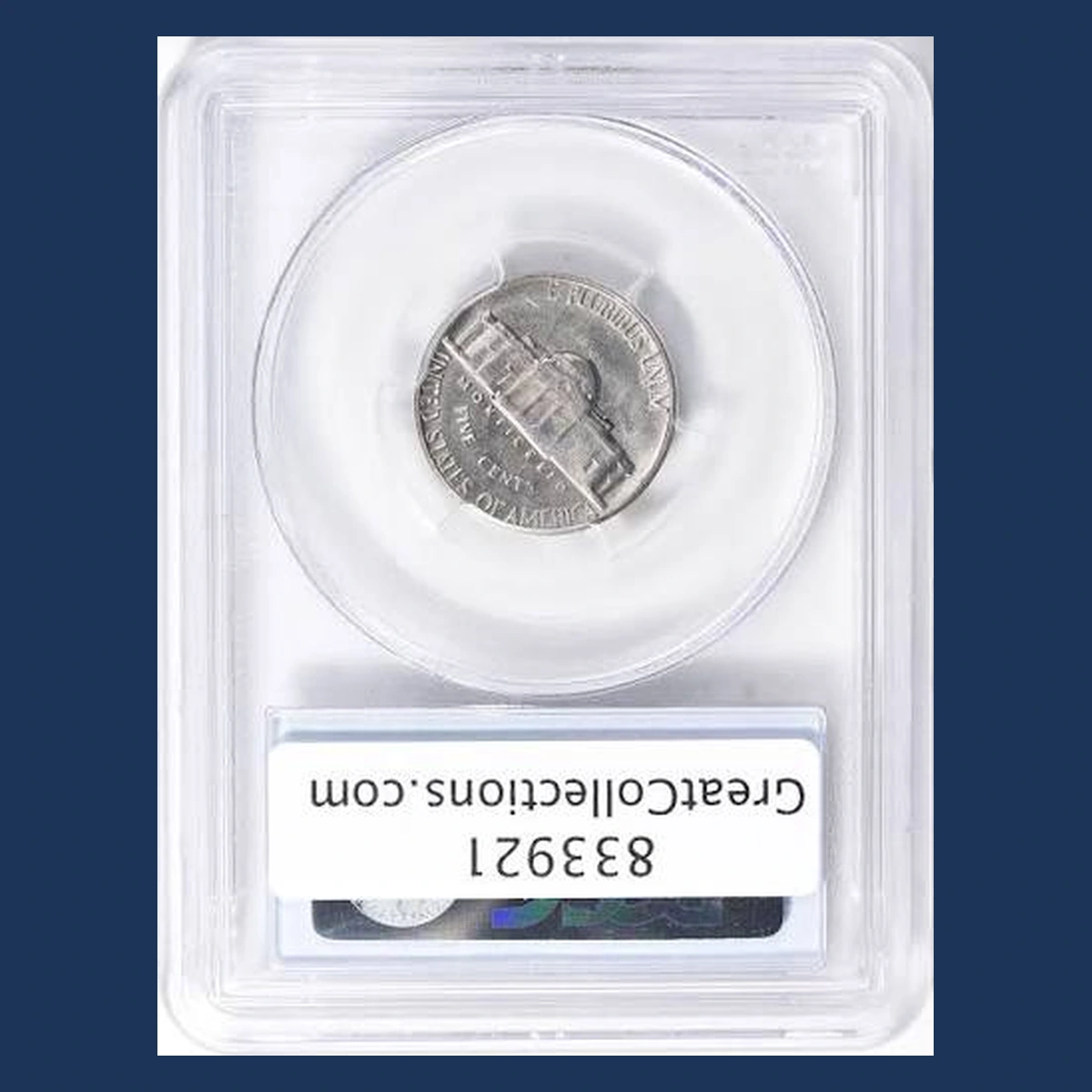
The building on the back can sit at the wrong angle when Jefferson is upright on the front. This happens when one stamping tool turns away from its intended position.
A recorded 1966 example was graded NGC MS65, meaning unworn with relatively few marks. It was auctioned together with a rotated 2001-P nickel, a separate coin from a much later year.
The description does not give the 1966 coin a specific angle. Turning a photograph or flipping the coin sideways can also make the back appear incorrectly aligned without a minting error.
Estimated Value
Estimate $20–$200 for genuine rotations on collectible 1966 nickels. A larger, easily demonstrated turn usually attracts more attention than a slight tilt.
The MS65 coin sold together with the 2001-P example for $118.45 in August 2010. That is the total for two coins, not an individual price for either one.
The 2001-P coin also had a Full Steps designation for clear building steps. That detail does not establish the grade or design sharpness of the 1966 piece.
How to Identify
Keep Jefferson upright and flip the coin from top to bottom without turning it sideways. The building should then stand upright too; repeat the flip in a holder that prevents the coin from slipping.
Photograph both positions before measuring the tilt, because angled pictures can make a normal coin appear rotated. The catalog gives no angle for the 1966 example, and its 2001-P auction companion cannot supply that missing measurement.
Examine the plain edge with a 10× magnifier for a join between altered pieces. A scale and calipers should show about 5 grams and 21.21 millimeters on a loose nickel; a repeatable tilt during the same flip reveals the misalignment.
2. 1966 Jefferson Nickel Doubled Design
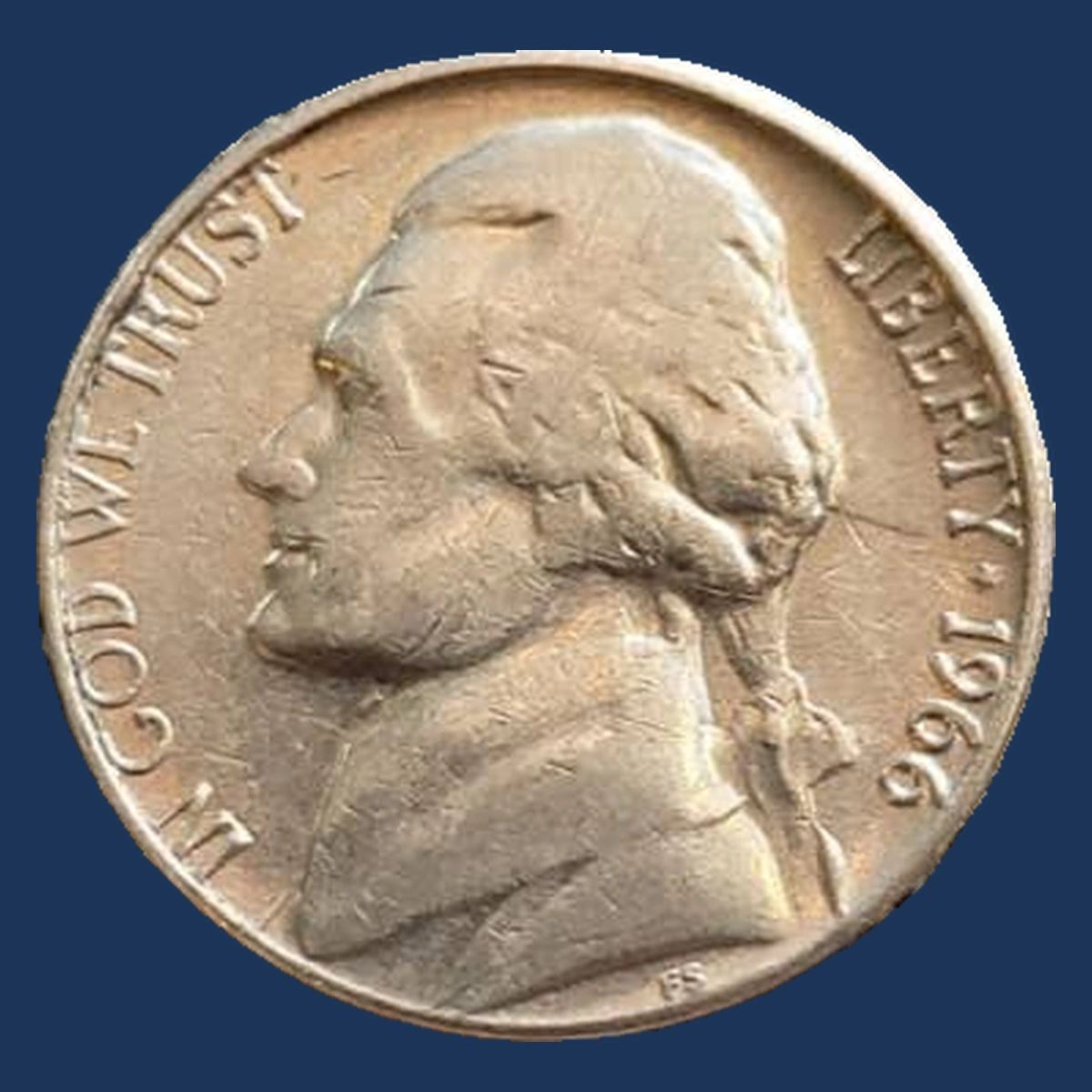
An extra raised outline can repeat part of a letter or building detail. If that repetition began in the steel stamping tool, collectors call the tool a doubled die.
The 1966 back report points to UNITED STATES OF AMERICA, UNUM, and the right side of Monticello. The repeated outlines are described as separating more clearly toward the right.
Front doubling is also listed, but without a fixed matching pattern in the available report. A thick-looking date cannot fill that gap, since movement during striking can leave flat ledges beside otherwise ordinary letters.
Estimated Value
For an identified doubled design, use an estimated $10–$250, with the specific pattern and visibility guiding the comparison. Strong repeated lettering on an attractive coin can bring more than very close outlines.
The front report supplies no variety number or certified sale. Its range applies when the repeated design is identified, rather than whenever a seller uses the word doubled.
A flat shelf caused during striking generally adds little. It should not inherit the price of a recognized doubled tool.
How to Identify
Concentrate on AMERICA and the right side of Monticello. A 10× magnifier should make it easier to see whether a second rounded outline follows the first.
Compare UNUM and the rest of the upper wording under the same light. Repetition across several features is more useful than one thick letter.
A flat ledge that narrows the original stroke may come from movement during striking. It is different from the repeated design described for the back.
For a loose coin, use a scale and calipers to check roughly 5 grams and 21.21 millimeters. Those normal figures cannot establish doubling.
Treat a front claim separately: photograph the date and portrait and compare them with an identified front example. A match on the back proves nothing about the front.
3. 1966 Jefferson Nickel Clipped Blank
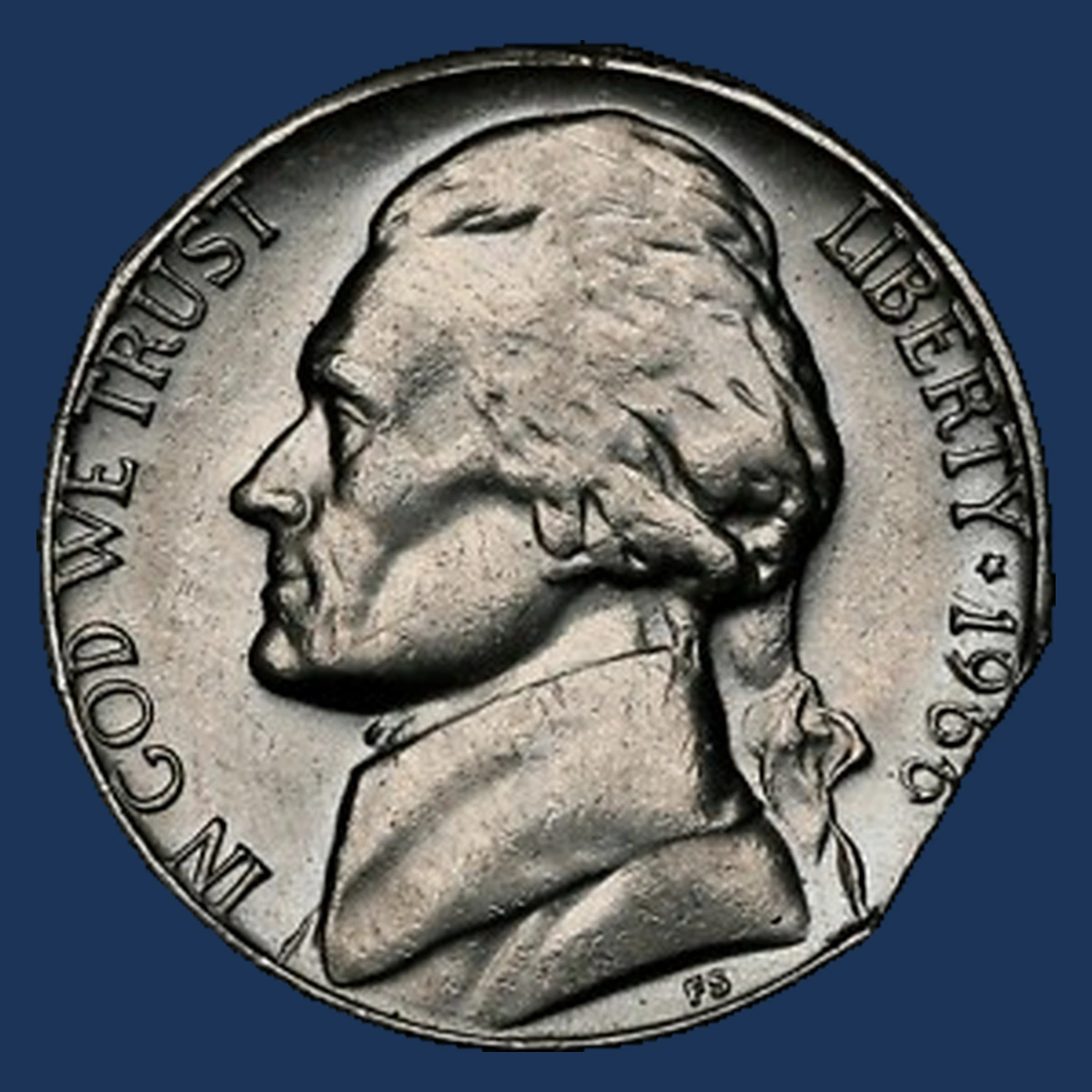
A blank can be partly cut without losing the piece inside the cut. Heritage cataloged a 1966 example as an incomplete clipped planchet, graded NGC MS62, meaning unworn with noticeable marks.
A planchet is the disk prepared for striking. An incomplete clip records a blanking cut that did not fully separate the metal, unlike the familiar open gap of a complete clip.
The auction description gives no size, direction, or shape for this 1966 cut. Other nickels in the same lot had different clips and cannot supply those missing details.
Estimated Value
The 1966 MS62 incomplete clip appeared in a five-coin lot that sold for $460 in August 2010. That total includes four other nickels, so it is not an individual 1966 price.
Estimate $10–$300 across genuine 1966 clips, with appearance, condition, and the amount of affected metal guiding the comparison.
A clear incomplete cut can interest collectors even when the metal remains attached. A later saw cut does not receive the same error premium.
How to Identify
Do not expect an open bite on the cataloged incomplete clip. Use a 10× magnifier to inspect the partly cut metal, then compare both faces for how the cut meets the design.
The attached portion may leave the coin close to its normal 5 grams on a scale. Calipers can compare the intact outline with 21.21 millimeters without pressing on the cut.
For a complete clip, inspect the rim at the gap and look for supporting weakness opposite it. The incomplete 1966 example needs a different comparison because its missing area cannot be assumed.
Leave joined metal untouched and check for later saw or file marks. The useful evidence is a cut present before the coin received its struck design.
4. 1966 Jefferson Nickel Broadstrike
The nickel can spread wider than intended if the ring around it fails to contain the strike. This ring is called the collar, and it normally controls the coin’s diameter.
A broadstrike can keep the complete front and back designs within an expanded outline. An off-center strike instead loses part of the design beyond the blank.
The 1966 broadstrike report does not establish an exact width, grade, or collector-set finish. A smooth edge is not unusual by itself, since a normal Jefferson nickel already has an edge without grooves.
Estimated Value
Use an estimated $30–$400 for genuine 1966 broadstrikes with complete designs. Clear expansion and original surfaces help an example stand out from a merely uneven rim.
A 1974 nickel graded MS64 sold as a broadstrike for $24 in August 2021. That different-year sale shows that an unworn broadstrike can still have a modest price.
The estimate allows for stronger examples and different demand. A coin flattened after minting should not be valued as a broadstrike simply because it became wider.
How to Identify
Place the coin beside a normal nickel and compare the complete outlines. A wide border can be uneven without any part of the intended design falling off the metal.
Use calipers across several directions against the normal 21.21 millimeters. A scale should read close to 5 grams when metal has spread without being removed.
Now inspect the portrait and building with a 10× magnifier. Hammering a finished coin can also increase its diameter, but often flattens the design and damages the rim.
Look along the edge for impact marks or squeezed metal. Its lack of grooves tells you nothing here because nickels normally have plain edges.
The visible distinction is an enlarged border around an originally struck design, rather than a crushed design on a widened disk.
5. 1966 Jefferson Nickel Lamination and Split Layers
A weak seam inside the alloy can allow a nickel to peel or separate into pieces. This is lamination, and a deep separation can leave a thin piece carrying one face.
One 1966 nickel graded NGC MS65 survives in three matching pieces held together in one large holder. A different coin is represented by a front fragment weighing only 0.5 gram, graded AU58 for slight wear.
The three pieces are parts of one coin, not three independent errors. Neither example is a missing silver coating: ordinary 1966 nickels use a copper-nickel alloy throughout.
Estimated Value
The three-piece MS65 example brought $109.25 in August 2010. The separate 0.5-gram front fragment sold for $159 in October 2022, showing that a single surviving piece can also attract collectors.
Estimate $10–$500 across small surface separations and more dramatic split pieces. Matching parts, preserved design, and the extent of the separation affect the complete price.
Do not multiply a whole-coin estimate by the number of fragments. A three-piece set remains the remains of one original nickel.
How to Identify
Leave every attached flap in place and keep loose pieces from rubbing together. The broken surfaces can preserve evidence of the original separation.
Use a 10× magnifier to compare the rough inner surface with the outside face that received the design. Saw marks, polishing, or deliberate peeling can point to later damage.
The documented front fragment weighs 0.5 gram; a normal complete coin weighs 5 grams. Weigh each loose piece separately rather than assuming every split must produce two equal halves.
Calipers can record the surviving outline against 21.21 millimeters without pressing on a thin fragment. Inspect the plain edge and the boundaries where pieces would meet.
Photographs should show both the original face and the exposed inner surface. Keep the single front fragment separate from the unrelated three-piece example.
6. 1966 Jefferson Nickel Struck through a Thin Die Cap
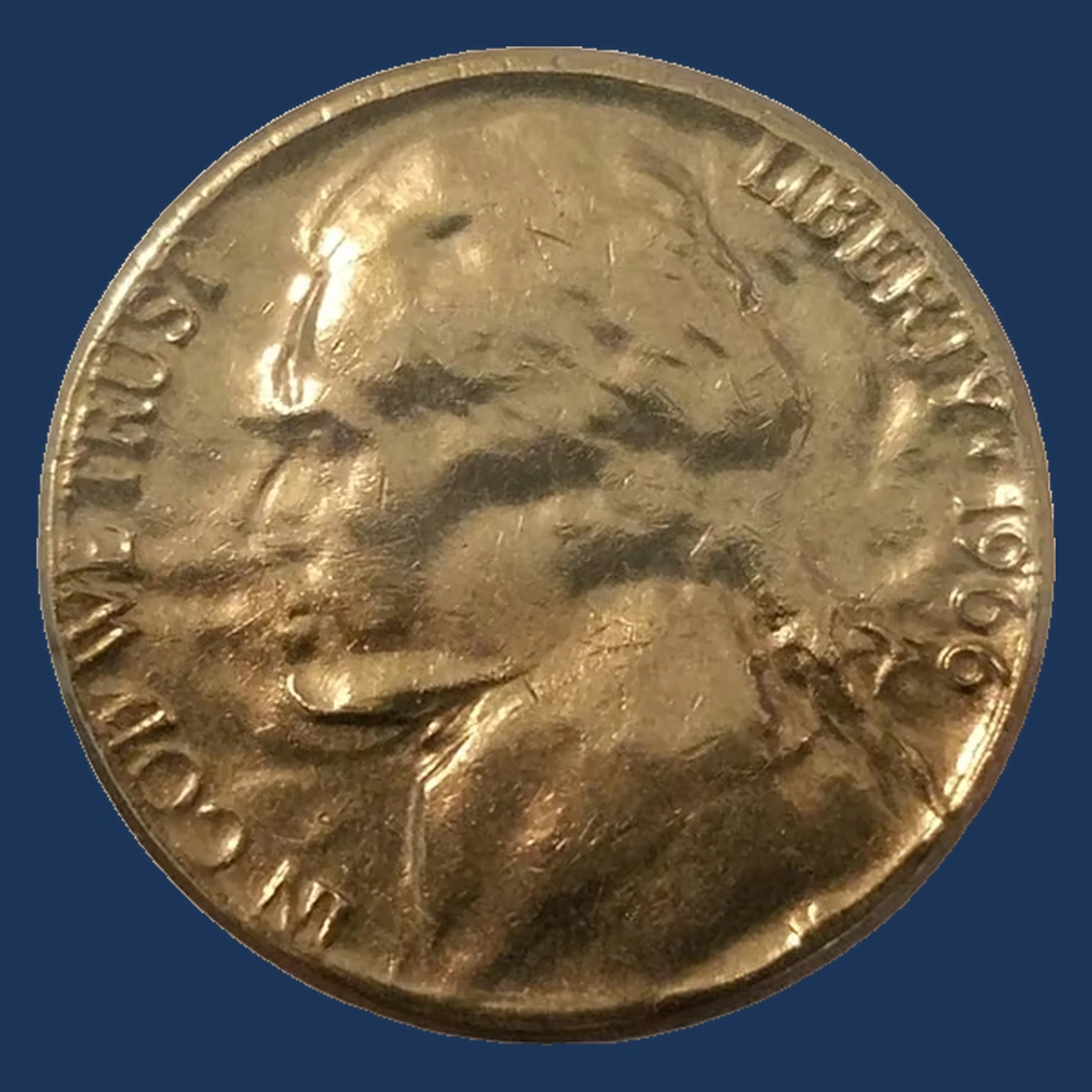
Jefferson can look stretched across a wavy surface while the back remains normal. A collector showed this combination on a 1966 nickel, and error specialist Fred Weinberg explained it as a late-stage capped-die strike.
A die cap is a coin stuck over the steel stamping tool. Repeated strikes can thin that covering until parts of the tool’s design show through it.
If the thin covering shifts, it can distort the portrait transferred to the next coin. The illustrated nickel received that distorted design; it was not itself the cap covering the tool.
Estimated Value
Estimate $50–$600 for a genuine 1966 nickel struck through a thin cap, depending on the distortion and preservation. A clearly altered portrait with an otherwise original surface is more appealing than faint general weakness.
The collector’s illustrated example was acquired in a five-coin lot without an individual price stated. The range is therefore an estimate for the mechanism.
A deep cup-shaped cap is a different object. Its price should not automatically be transferred to the coin struck beneath it.
How to Identify
Compare the two faces at the same scale: the illustrated coin has a wavy, stretched front and an unaffected back. That difference is more informative than viewing the softened portrait by itself.
Move a side light across Jefferson while using a 10× magnifier to examine the waves. Check whether they belong to the original struck surface or show later crushing, heat damage, or heavy cleaning.
Use a scale and calipers on a loose candidate to compare it with 5 grams and 21.21 millimeters. Then match both the front distortion and normal back to the illustrated example; one weak letter does not establish a thin, shifted covering.
7. 1966 Jefferson Nickel Off-Center Strike
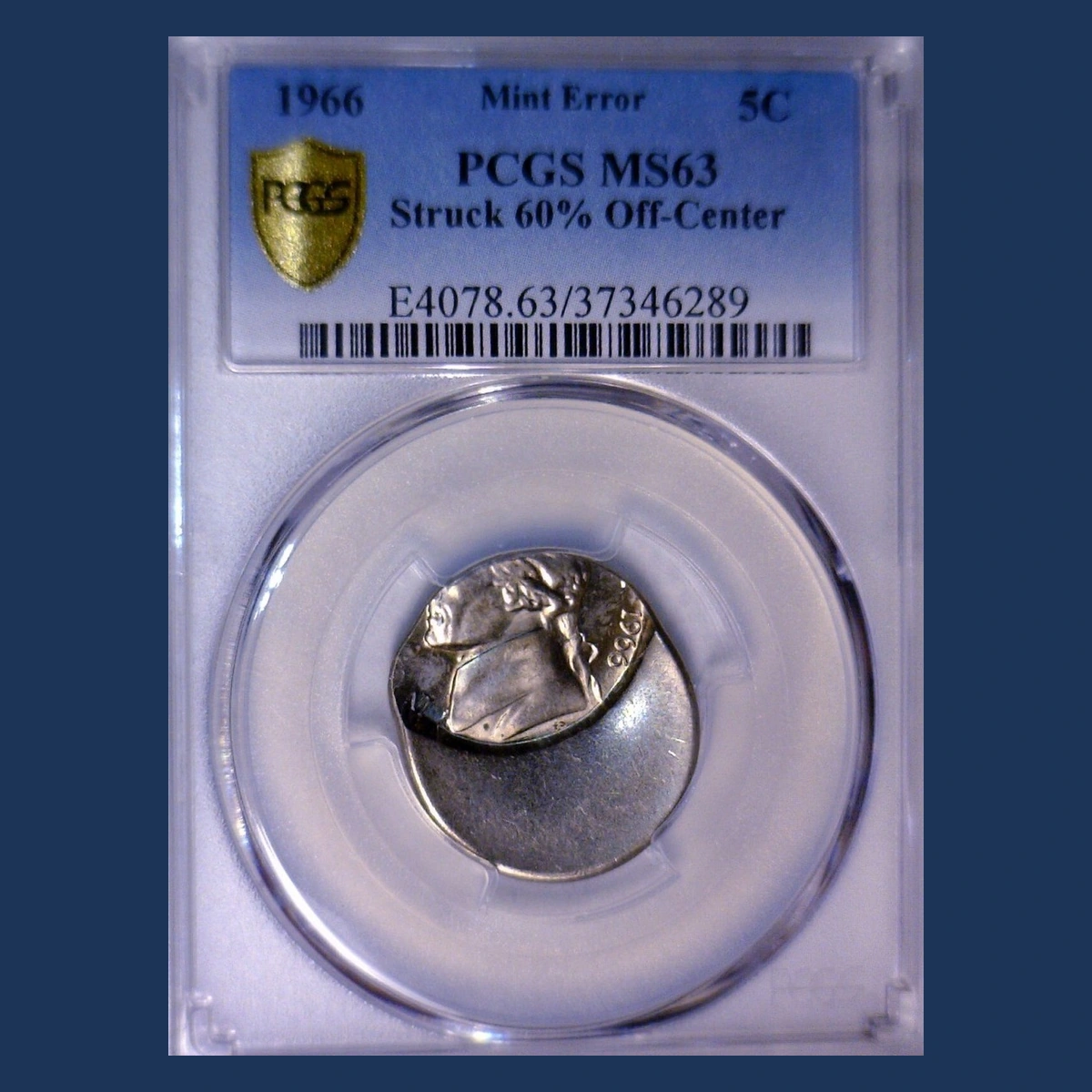
A blank that sits partly outside the striking area can receive only part of the design. The unused portion remains as a crescent of metal beside the stamped image.
The 1966 listing includes off-center strikes without identifying an exact percentage or direction. Both faces need to fit the same misplaced blank before a new example receives that name.
A wide rim on just one side is not enough. One stamping tool can be out of position while the opposite face remains centered, and an expanded broadstrike can have uneven borders while retaining the complete design.
Estimated Value
Estimate $25–$700 for genuine dated 1966 off-center nickels, depending on the shift and the remaining design. A clear date helps collectors place the coin in a year collection.
A 1999-D nickel struck sixty-five percent off center sold for $75 in September 2024. That different-date result shows why a large displacement does not automatically mean a four-figure price.
The estimate also depends on preservation. A smaller shift on an attractive coin may appeal more than a dramatic but badly damaged example.
How to Identify
Find the surviving date first, then compare where the stamped design ends on each face. An undated nickel cannot be assigned to 1966 from Jefferson’s appearance alone.
No mintmark is normal for 1966 nickels. Do not infer a particular mint from an absent letter or treat that absence as another error.
Through a 10× magnifier, follow the original surface across the bare crescent. Grinding away an old design can leave tool marks rather than untouched blank metal.
Weigh a loose coin against 5 grams and measure its outline with calipers against 21.21 millimeters. Its plain edge and nearly normal weight can remain despite the misplaced design, since no piece needs to be removed.
8. 1966 Jefferson Nickel Struck on a Cent Planchet
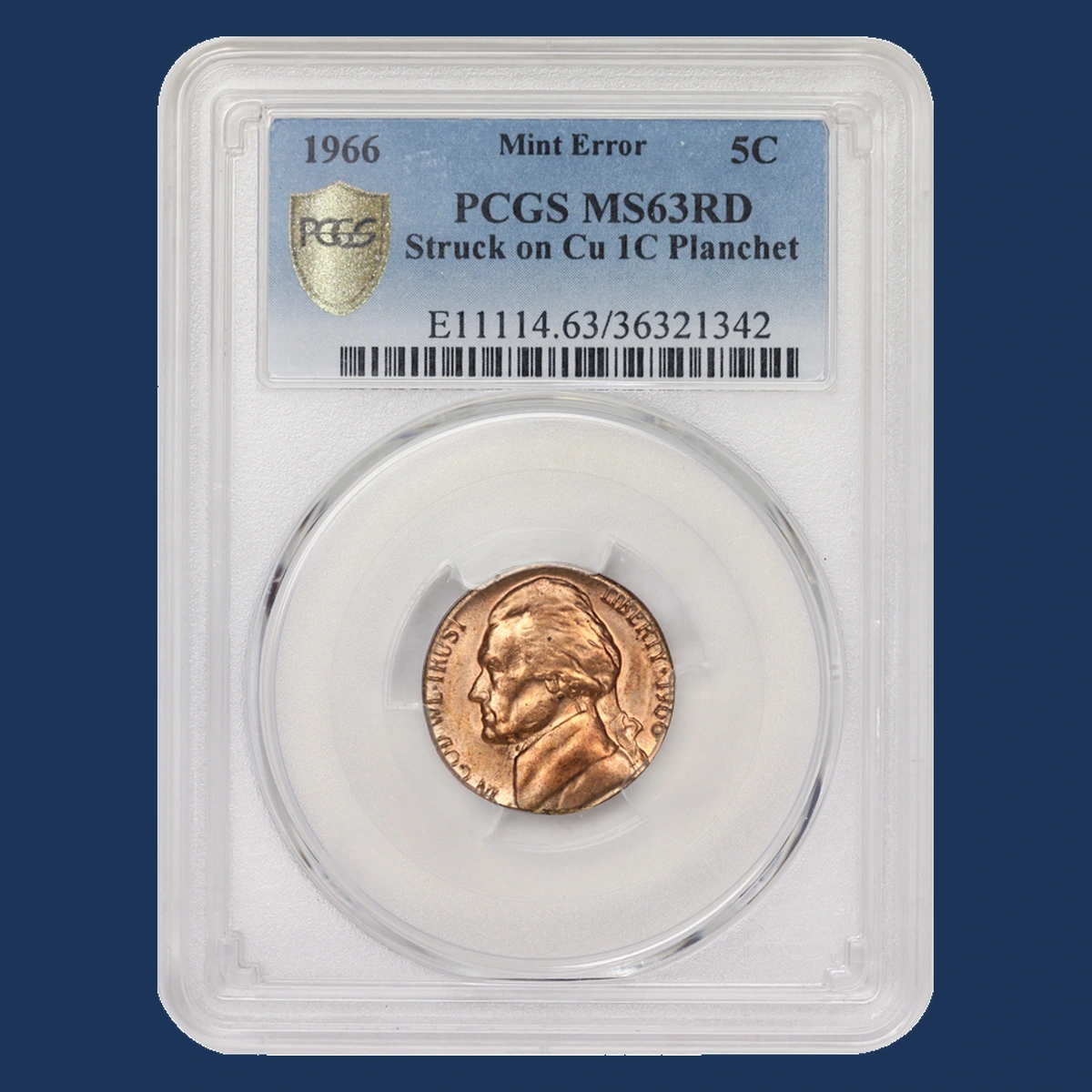
A copper-colored nickel can be a five-cent design stamped onto a disk prepared for a cent. The smaller blank cannot hold all the larger nickel design.
A recorded 1966 example weighs 3.1 grams and was graded NGC MS63 Red and Brown. It is unworn with visible marks, while the color designation describes a mixture of original copper color and brown toning.
This disk was an unused cent blank, not necessarily a finished Lincoln cent struck again. Surviving Lincoln details would require that separate explanation, and added copper plating can make a normal nickel look misleadingly similar.
Estimated Value
The 3.1-gram MS63 Red and Brown example sold for $552 in December 2025. Estimate $200–$1,000 for genuine 1966 cent-blank nickels across different preservation and completeness.
A readable date and enough design to identify the denomination make the coin easier to collect. Cleaning, scratches, and damaged edges can reduce its appeal even when the underlying error is real.
The brown color does not by itself establish a wrong blank. A normal nickel with a later copper coating belongs outside this range.
How to Identify
A copper coating changes the color of a nickel without turning it into a cent blank. Start by weighing a loose candidate: the recorded coin is 3.1 grams, close to the contemporary cent’s 3.11-gram standard.
A normal nickel weighs 5 grams. With calipers, compare the outline with the cent blank’s starting 19.05 millimeters and the nickel’s 21.21 millimeters, allowing for spread during striking.
Inspect the outer lettering and edge through a 10× magnifier. A genuine smaller blank runs out of room for the larger design, while trimming or plating may leave tool marks or a surface coating.
Keep the 1966 date in the photograph. Any surviving Lincoln design would point to a previously struck cent rather than an unused blank.
9. 1966 Jefferson Nickel Struck on a Clad Dime Planchet
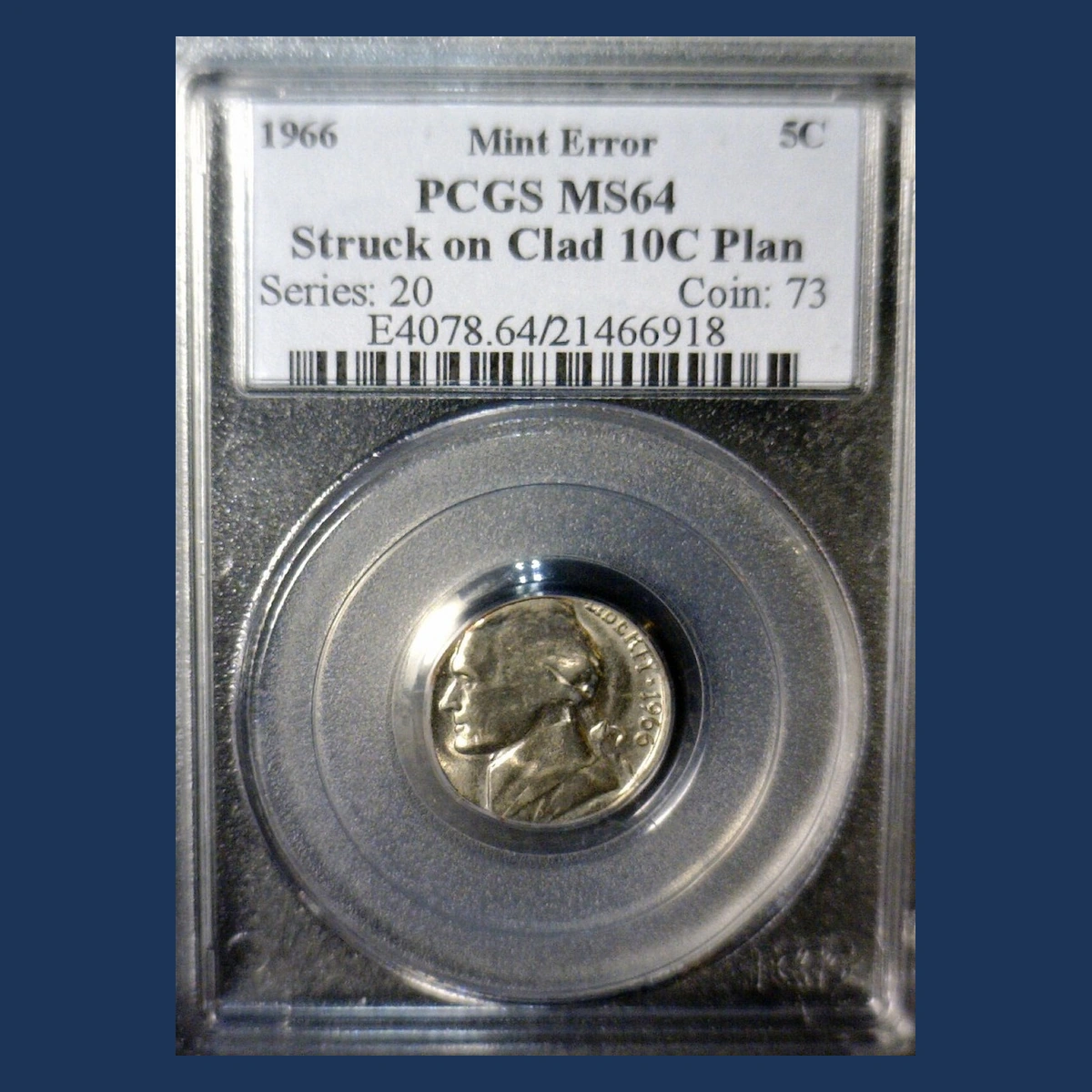
A smaller, silver-colored disk can carry Jefferson’s portrait while losing much of the outer lettering. The documented 1966 example was struck on a clad dime blank and graded PCGS MS63.
Most of its date remains, but only small parts of the wording around the back fit on the metal. Some design weakness also appears because the smaller disk did not fill the nickel tools normally.
A clad dime has silver-colored outer layers bonded to a copper center. This is different from a silver dime blank or an ordinary solid-alloy nickel that has been cut down.
Estimated Value
The PCGS MS63 clad-dime-blank nickel sold for $862.50 in August 2006. An estimated $300–$1,500 covers identifiable examples across different condition and design completeness.
The surviving date gives this coin a useful advantage over an undated wrong-blank error. Its preserved surfaces also help show that missing letters result from the smaller disk.
The estimate concerns a clad blank. A silver wrong-blank nickel would need its own material identification and price comparison.
How to Identify
Start with the back, where the cataloged coin retains only fragments of the outer lettering. Compare that shortage with the mostly complete date on the front.
For a loose candidate, a scale can check against the clad dime’s standard 2.268 grams and the nickel’s 5 grams. The catalog does not give an actual measured weight for this specimen.
Calipers compare the dime blank’s starting 17.91 millimeters with the nickel’s 21.21 millimeters. Allow for metal spreading under the larger tools.
Inspect the edge through a 10× magnifier for its layered structure and any evidence of trimming. A normal nickel has a plain edge, but edge smoothness alone cannot identify the metal.
Confirm the material and the surviving date together before using the auction comparison.
10. 1966 Jefferson Nickel Double Strike with a Far-Off-Center Second Impression
Two strikes can leave one nearly complete design and a second small impression near the edge. The recorded 1966 nickel was struck again about ninety percent off center.
PCGS graded it MS65, indicating an unworn coin with relatively few marks. It appeared in an auction lot with two other errors: a 1979 nickel on a cent blank and a 1966 quarter on a nickel blank.
Those companions do not make the double-struck nickel a wrong-blank coin. Its defining feature is the second displaced impression on the same piece, rather than the metal or denomination of its auction companions.
Estimated Value
Estimate $200–$1,800 for genuine 1966 double strikes with clearly separated impressions. Preservation, the remaining date, and how much of each strike can be recognized affect the price.
The MS65 example sold in August 2022 within a three-coin lot totaling $1,200. That amount cannot be assigned entirely to the nickel or divided equally without individual prices.
A small second impression can still be important when it clearly shows another strike. A dent in a similar location does not receive that premium.
How to Identify
Find a letter or recognizable design fragment in the small second impression. A dent without struck detail cannot establish that the coin went through the press twice.
Follow that fragment through a 10× magnifier to see how it relates to the larger first design. Check both faces for the effects of the second blow.
The ninety-percent figure describes the second strike’s displacement. It does not mean that ninety percent of the metal is missing.
A scale can compare a loose coin with the normal 5 grams; calipers can record its shape against the usual 21.21 millimeters. Inspect the plain edge for joined pieces or later squeezing.
Photograph the overlapping or separately placed design details on this nickel together, leaving its two unrelated auction companions out of the comparison.
Conclusion
Check the whole coin before putting a name to a small mark. A smaller blank, a displaced design, and a separated layer each call for different comparisons.
The estimated $10–$1,800 ranges cover the examples described, while the $862.50 dime-blank sale supplies a documented 1966 result. Keep multi-coin auction totals separate from individual prices, and leave loose layers untouched so their original surfaces can be examined.