1915 Nickel Error List with Pictures

A missing feather helped a 1915 nickel bring $3,840 at Heritage in January 2020. That small change came from a polished stamping tool, not a worn coin.
This 1915 nickel error list covers estimated values from $20 to $5,000. It also separates known examples from claims that still need a matching coin.
Read on to compare the facial details, feather shapes, missing metal, and unusual edges.
1. 1915 Buffalo Nickel Die Clash
An extra curve can belong to the other side of the coin. A die clash starts when the two stamping tools meet without a blank between them.
The tools can damage each other and leave faint extra shapes on later coins. Those shapes usually cover only part of the opposite design.
A public 1915 error list reports clashing, but it does not identify a particular mint or mark location. A random line is therefore not enough to match that report.
Scratches, small cracks, and polishing lines can all create misleading extra marks.
Estimated Value
A reasonable estimate for a confirmed 1915 clash is $20–$250. The upper end needs a clear, recognizable extra shape and a coin with attractive surfaces.
This is an estimate for the mechanism, not a recorded sale of the unnamed 1915 example. Worn coins with barely visible traces usually attract less interest.
The mint and overall grade still matter, especially when the underlying coin has value beyond the small clash mark.
How to Identify
Try tracing the strange curve on a photograph before looking for a variety name. Compare it with a mirror image of the design on the opposite side.
A 10× magnifier and light from two directions help separate a raised trace from a cut. A clash should connect with a recognizable part of the other design, rather than merely resemble a scratch.
Check both faces for related marks and keep the complete coin in the photographs. On a loose example, a scale and calipers should read close to the normal 5.00 grams and 21.21 millimeters.
The missing-blank event does not normally change those measurements. The convincing feature is an extra outline that fits the opposite design.
2. 1915 Buffalo Nickel Curved Clipped Blank
A small crescent is missing from the edge of a cataloged 1915-D nickel. Heritage describes the gap near 2:30, using the front of the coin like a clock.
NGC graded that example VF30, a circulated coin with clear remaining detail. The listing calls the clip minor and does not give a percentage.
The gap began when the blank was punched from metal that already contained another hole. Striking then formed the design around the incomplete edge.
That sequence differs from cutting a finished nickel with a tool.
Estimated Value
Allow an estimated $75–$350 for a genuine small 1915-D curved clip, depending on wear and the edge’s appearance. The cataloged VF30 coin has no selling price assigned here.
For scale, a different 1924 nickel with a four-percent clip and partial collar sold for $345 in January 2011. That better-preserved coin combined two errors, so its price is not a direct quote for the smaller 1915 gap.
How to Identify
Start at the two ends of the missing crescent. Under a 10× magnifier, the rim should blend toward the gap rather than finish in fresh cut marks.
Inspect the exposed edge from the side. File strokes, sharp burrs, or compressed metal can reveal a later alteration.
The reported Denver coin has its small gap near 2:30. That location helps match the specimen, but another genuine clip could occur elsewhere.
A normal loose nickel weighs 5.00 grams and measures 21.21 millimeters; check with a scale and calipers. A minor clip may remove too little metal for a basic scale to show clearly.
Look for natural rim flow into the missing arc, with any opposite rim weakness serving only as supporting evidence.
3. 1915 Buffalo Nickel Partial Collar
The edge can have two levels instead of one smooth wall. This happens when a blank sits only partly inside the metal ring that controls its size.
The supported band stays narrower while the exposed part spreads under pressure. Collectors call the result a partial collar strike.
A 1978 dealer list describes a 1915 nickel as a “wrong-way partial collar.” That old wording does not explain which face was higher in the ring.
The mint is also unspecified, so the edge itself matters more than an assumed direction.
Estimated Value
For a clear 1915 partial collar, use an estimated $100–$600. Size of the step, remaining detail, and surface quality can move a coin within that range.
The 1978 listing reprinted by Mint Error News asked $30 for an unworn example. That was a historical dealer price, not a recent auction result.
A comparable 1924 nickel combined a partial collar with a clip and sold for $345 in January 2011.
How to Identify
View the edge at eye level while slowly turning the coin. A genuine partial collar can show a clear ledge between its restrained and expanded bands.
Use calipers gently across several directions instead of measuring only the narrowest band. The usual diameter is 21.21 millimeters, and a scale should place an intact loose example near 5.00 grams.
This nickel has a plain edge. Do not look for the two rows of reeds sometimes illustrated on partial collar errors of other denominations.
A 10× magnifier can expose filing or hammer marks that created an artificial step. A continuous change in edge level with naturally spread metal is more useful than the old “wrong-way” label.
4. 1915 Buffalo Nickel Die Cracks and Rim Breaks
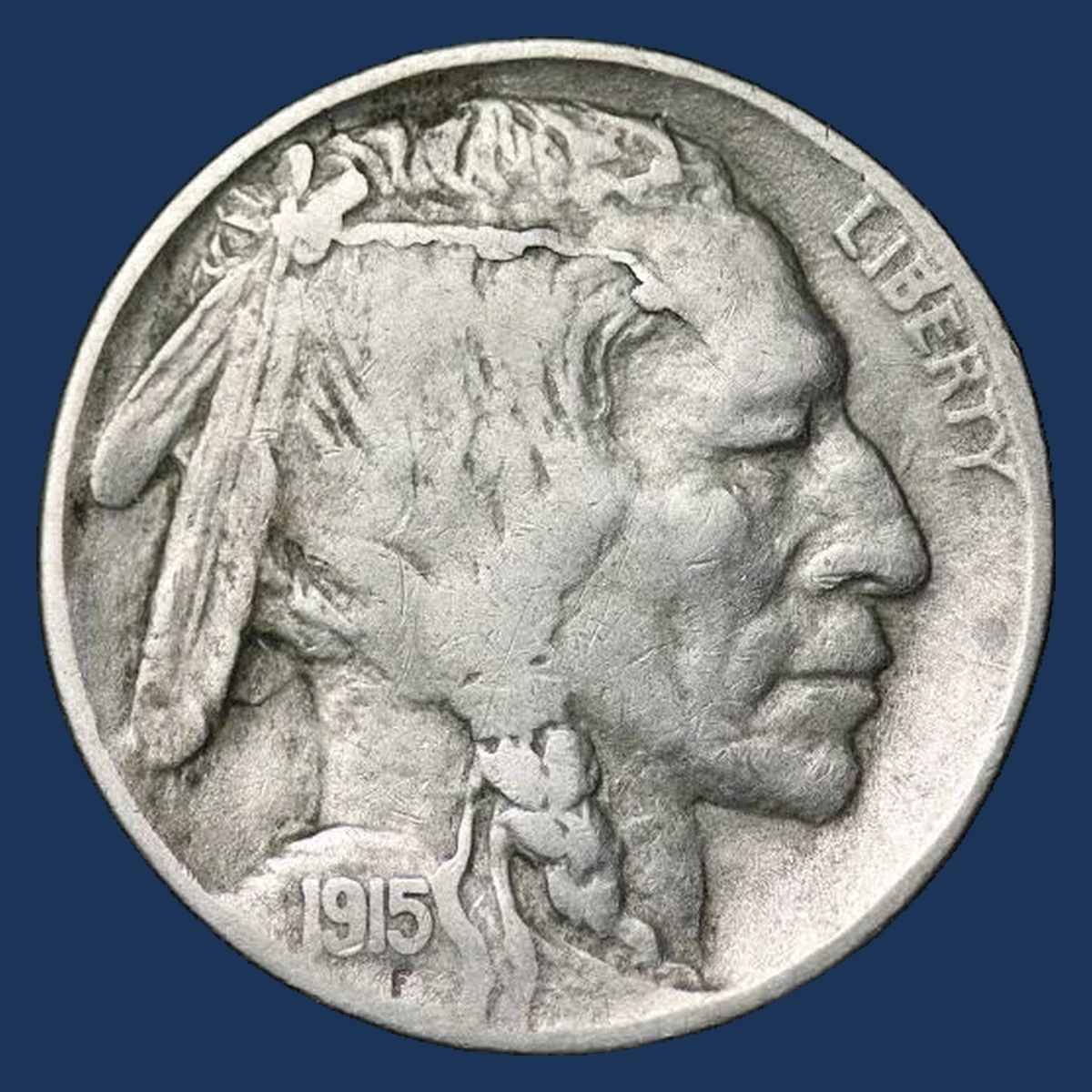
A thin raised line and a broad lump at the rim can come from related damage to a stamping tool. A crack allows metal to rise into a narrow opening.
If a piece of the tool breaks away at its edge, a larger raised area can form. Collectors call that rim-connected lump a cud.
A 1915-S year guide reports both features without establishing their exact locations. It also mixes complete breaks with damaged pieces that remained attached.
A retained piece can preserve some design, while an open break leaves a plainer raised patch.
Estimated Value
Estimated whole-coin values are $75–$800 for confirmed 1915-S cracks or rim breaks. Small lines belong near the lower end, while larger rim-connected breaks can draw stronger interest.
The range does not represent an auction record for the guide’s unnamed examples. The San Francisco date and the coin’s condition account for part of its value.
Corrosion, heavy damage, and an unclear break shape can outweigh the appeal of the raised feature.
How to Identify
Shine a light across the line rather than straight down onto it. A 10× magnifier should show metal standing above the surrounding surface, not a groove cut into it.
For a larger lump, follow it to the rim. A raised spot wholly inside the design is different from a rim break.
Some design may survive over a retained piece of the stamping tool. Do not decide that a piece fell away merely because the surface looks uneven.
Weigh a loose coin and measure it with calipers against 5.00 grams and 21.21 millimeters. A crack adds no foreign metal, so a glued lump or solder patch needs a different explanation.
The key view shows whether the raised area joins the original rim naturally.
5. 1915 Buffalo Nickel Reported Short Front Leg
A shortened front leg appears in a public list of claimed 1915 errors. The claim has not been tied to a verified 1915 specimen or a named mint.
It belongs here as a reported possibility, rather than an established variety with a known auction history. Missing-leg varieties from other years do not prove this one.
Heavy polishing of a stamping tool can remove part of a leg from later coins. However, ordinary wear, a weak strike, and damage can make a normal leg look incomplete too.
Estimated Value
If a correctly dated 1915 example proves to have genuine tool-polishing loss, estimate $100–$1,000. That is a conditional working range, not evidence of a completed 1915 sale.
A recognizable shortened leg with sharp nearby detail would support more interest than a generally weak reverse. A coin explained by wear receives no missing-leg premium.
Prices for established short-leg varieties of other years should not be copied onto an unverified 1915 claim.
How to Identify
Keep the date in the first photograph. Pictures of a different Buffalo nickel can show what polishing does, but cannot establish a 1915 variety.
Examine the legs and nearby belly through a 10× magnifier. Compare the missing part with the surrounding detail: broad flattening across the buffalo points toward wear or weak striking.
Check for a scraped channel where a leg should be. A scale and calipers can confirm the loose coin is near the normal 5.00 grams and 21.21 millimeters, but cannot prove polishing.
A claimed example needs comparison with a properly identified 1915 coin bearing the same local feature. Sharp neighboring detail beside a consistently shortened leg is the useful starting point.
6. 1915 Buffalo Nickel Repunched Mintmark
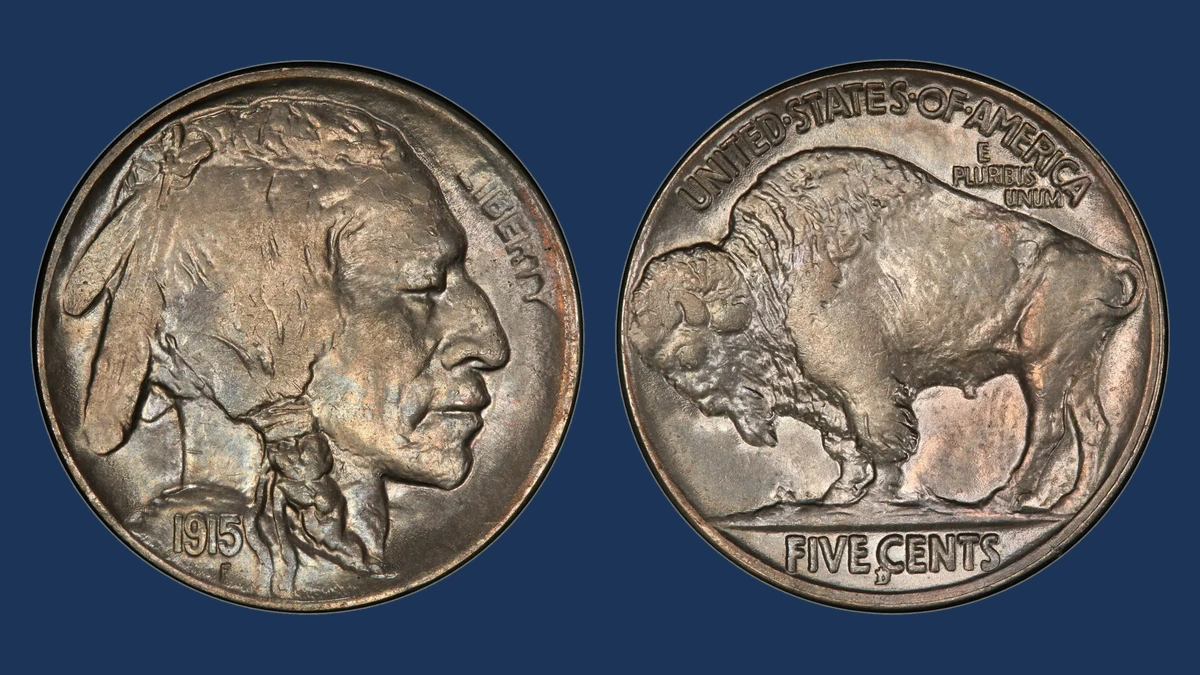
A second stroke around the small D or S can reveal an old hand-punching mistake. Workers added those letters to the stamping tools with a separate punch.
If the punch shifted between blows, part of its earlier impression could survive on the finished coins. This is a repunched mintmark.
The 1915 reports include separate Denver and San Francisco examples. Denver’s reported extra impression lies toward the upper right, while the San Francisco example shows traces around the S.
These are doubled versions of each mint’s own letter, not a D placed over an S.
Estimated Value
Expect an estimated $50–$1,200 for identifiable 1915 repunched mintmarks across circulated and stronger examples. Grade and the underlying Denver or San Francisco coin both affect the amount.
No individual 1915 auction price is assigned to the two reported examples here. The range allows for modest visible traces at one end and clean, sharp coins at the other.
Flat mechanical doubling or a damaged mintmark does not justify the same variety premium.
How to Identify
The mintmark sits on the back below FIVE CENTS. The F on the front is the designer’s initial, so it is not the letter to inspect.
Enlarge the D or S with a 10× magnifier and compare its outer curves with a normal example. Look for a second rounded stroke that follows part of the letter’s shape.
A flat shelf along several nearby details often has another cause. A dent can also push metal beside the letter without creating a matching second outline.
Take a close-up plus full views of both sides so the year and mint stay linked. For loose coins, check 5.00 grams and 21.21 millimeters with a scale and calipers; the extra stroke, not the measurements, identifies the repunch.
7. 1915 Buffalo Nickel Lamination
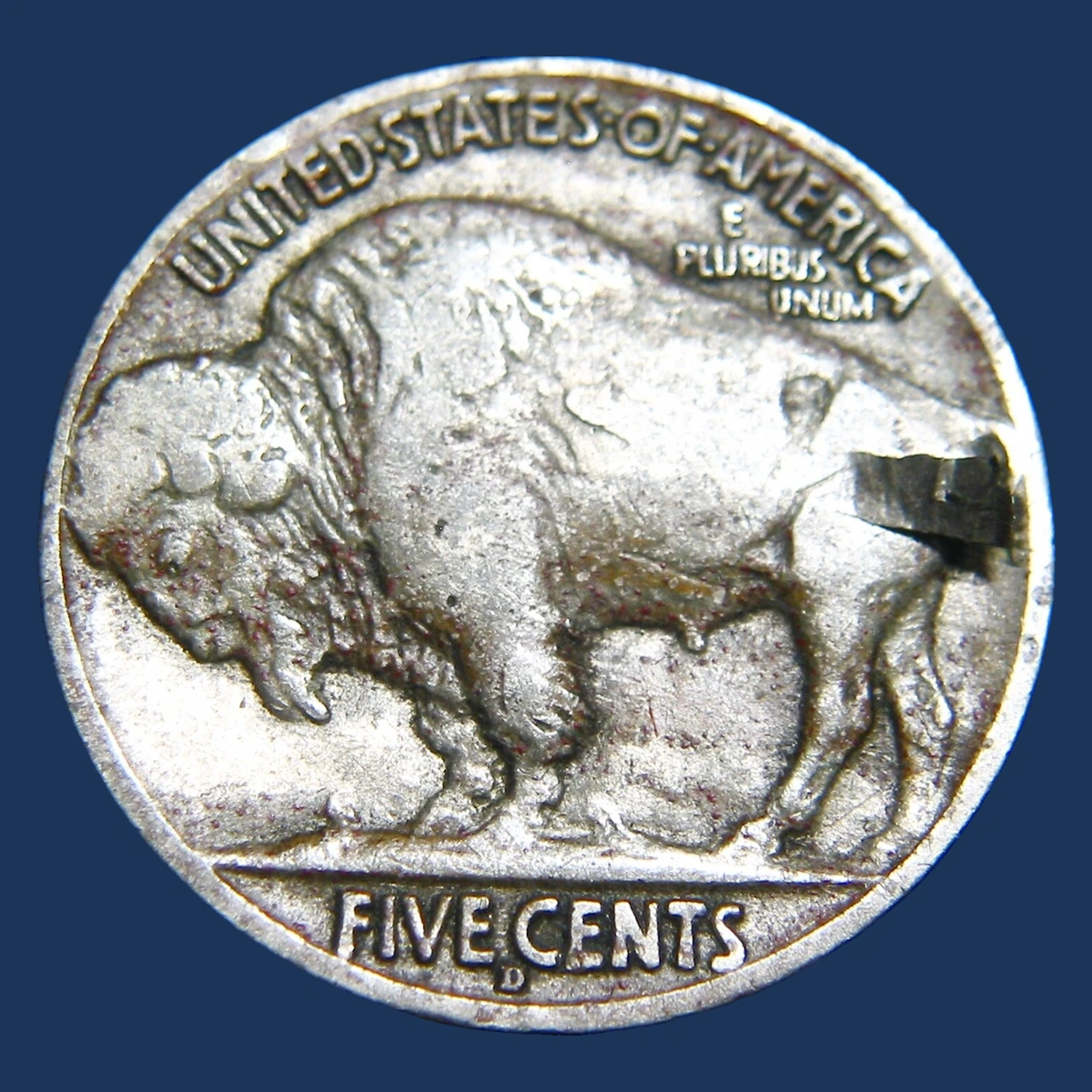
A ragged flake or shallow peeling area can expose a flaw inside the metal. The split starts in the blank and may open before or after striking.
This is called lamination. Buffalo nickels are solid copper-nickel alloy, so the flake is not a missing outer layer from a clad coin.
GreatCollections lists a 1915-D with reverse lamination graded ANACS VG10, meaning heavily worn but identifiable. A separate 1915-S is graded AU58 Details, indicating slight wear plus a condition problem.
That title alone does not explain the San Francisco coin’s problem.
Estimated Value
Use an estimated $40–$1,500 across the reported 1915 laminations. A worn Denver coin with a small flake sits in a different market from a lightly worn San Francisco example.
The 1915-S listing supplies a grade, but no sale amount is used here. The estimate includes the coin’s date, mint, and condition rather than treating the entire price as a peeling-metal premium.
How to Identify
Leave any loose flap alone. Lifting it can remove original metal and change both the appearance and value.
Use low light and a 10× magnifier to inspect the split boundary. Natural peeling may show a thin lip or rough layered surface, while scraping often leaves tool marks.
The known Denver listing concerns the back. Check both faces of a San Francisco example because its title does not identify the affected side.
A scale is helpful when a substantial piece has fallen away: an intact nickel normally weighs 5.00 grams. Calipers should show roughly 21.21 millimeters unless another error changed the shape.
For a sealed grading holder, use its photographs and recorded measurements. A lifting layer joined to the coin is clearer evidence than color alone.
8. 1915 Buffalo Nickel Doubled Die Obverse
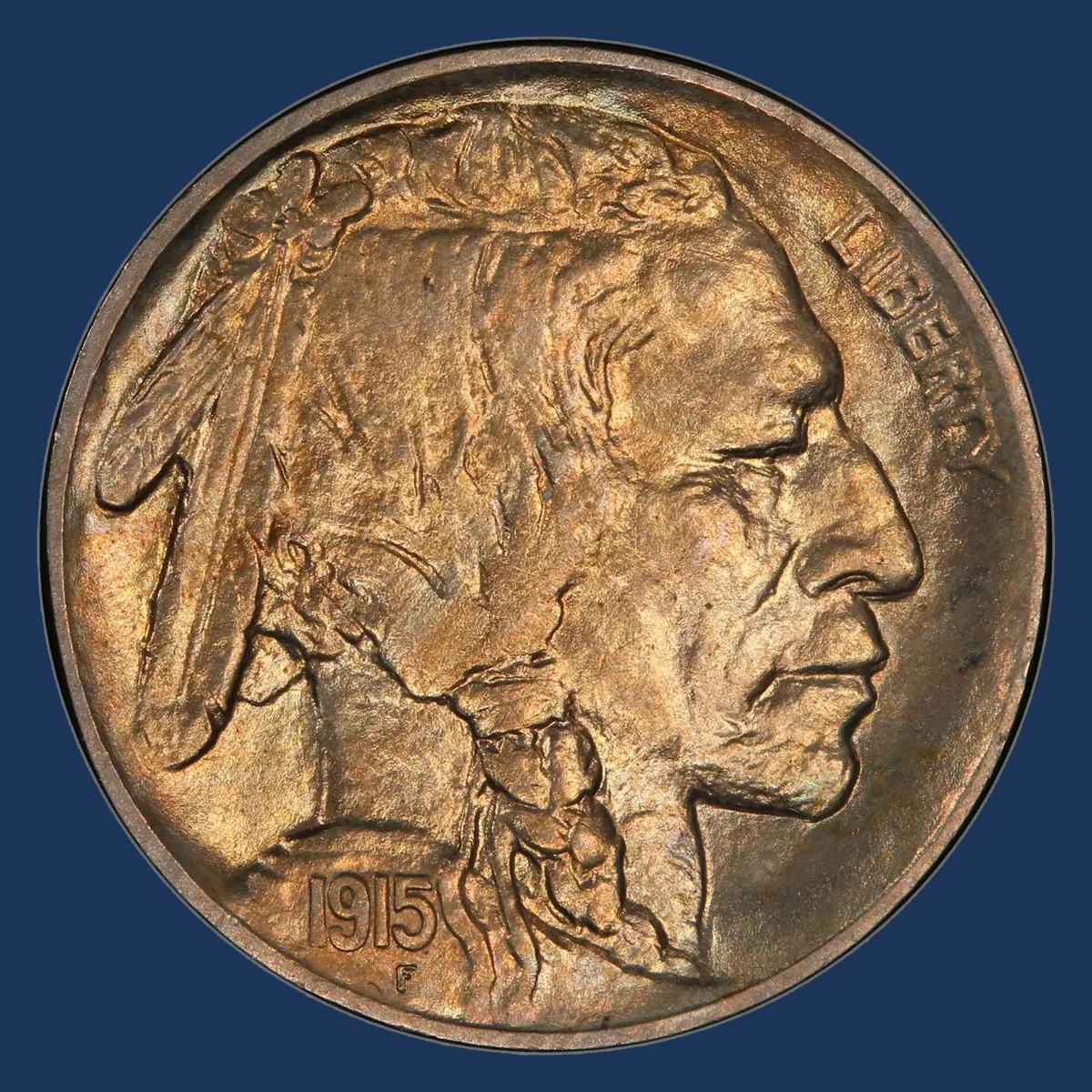
The face carries the important clues on this 1915 variety. Extra outlines appear around the nostril, eyelid, and lips rather than simply making the date look thick.
A die is a metal stamping tool. When that tool received a doubled design during preparation, it passed the same extra details to the coins it struck.
This Philadelphia variety is commonly labeled FS-101, a catalog number for identifying the pattern. It is not the famous and much stronger 1916 doubled date.
The year must remain part of every comparison.
Estimated Value
A Philadelphia FS-101 graded AU58 sold for $1,320 at Heritage in August 2019, according to PCGS. That grade means the coin retained almost all its detail with slight wear.
For 1915 examples across a broader condition range, estimate $100–$2,500. Clear facial doubling and clean surfaces support stronger prices.
The 2019 result is a whole-coin sale, not a fixed premium to add to every ordinary 1915 nickel.
How to Identify
Position a 10× magnifier over the eye, then move down to the nostril and lips. Compare all three areas with an identified 1915 FS-101 photograph.
A single thick edge is less convincing than matching extra outlines across the face. Change the light angle to see whether the second detail stays rounded or becomes a flat shelf.
The latter may be mechanical doubling from movement during striking. Check the complete reverse for the mint area before calling the coin the Philadelphia variety.
A loose ordinary example should be near 5.00 grams and 21.21 millimeters on a scale and calipers. Finish the comparison at the lips and eyelid: the correct repeated facial pattern matters more than a doubled-looking date.
9. 1915 Buffalo Nickel Struck Through Material
A roughly triangular hollow interrupts the date area on a cataloged 1915-S nickel. Its smooth boundary helped distinguish it from an ordinary sharp-edged dent.
Stack’s described the coin in its March 2009 Coin Galleries sale as AU55, showing light wear. The depression sits near and above the date on the front.
Material caught between the blank and the stamping tool blocked the design and left the hollow. The description does not establish what that material was.
It should therefore not be labeled a grease error simply because details are missing.
Estimated Value
An estimated $500–$2,500 suits a confirmed 1915-S strike-through of this general size and condition. The scarce San Francisco date contributes substantially to the whole coin’s value.
The March 2009 catalog documents the AU55 example, but no realized price is assigned here. A smaller or more worn interruption could fall below this range, while damage around the date can reduce the appeal of an otherwise clear error.
How to Identify
Frame the date and hollow together in a photograph. The reported 1915-S example has a roughly triangular depression, so an isolated close-up without the date is not enough.
Examine the boundary using a 10× magnifier and light from the side. Later blows often displace metal around a dent; a struck-through hollow reflects an obstruction during the original strike.
Check the back for the S below FIVE CENTS. A scale and calipers can compare a loose coin with 5.00 grams and 21.21 millimeters, though those figures will not identify the trapped material.
Leave dirt and surface deposits undisturbed. The date’s interruption and the hollow’s smooth boundary need to be judged together, without cleaning away their original surfaces.
10. 1915 Buffalo Nickel Reported Off-Center Strike
Part of the design can miss the blank entirely when the blank enters the press out of position. The result has a struck area beside an untouched crescent.
Both faces usually show the same broad displacement. A border that looks uneven on only one face can instead come from a misplaced stamping tool.
A public year list includes off-center 1915 nickels but does not identify a certified specimen or its mint. No particular percentage or direction follows from that report.
A visible 1915 date would be especially useful for checking a claimed example.
Estimated Value
For a confirmed, dated 1915 off-center nickel, estimate $150–$3,000. Slight displacement on a worn coin belongs well below a dramatic, attractive example with the date preserved.
This is a comparison-based estimate, not a documented sale of the year list’s unspecified coin. The mint can also change the underlying value.
Do not assign Philadelphia merely because the mintmark is absent when the entire area below FIVE CENTS failed to receive a strike.
How to Identify
Compare the front and back before measuring the apparent error. Both should show missing design beside a corresponding blank portion if the blank sat off center.
Find the full date next. A partly visible number can make a different year look like 1915, especially on a worn Buffalo nickel.
Use a 10× magnifier along the boundary between struck and blank metal. Grinding or pressing a finished coin can leave marks unlike the natural transition made in the press.
For an unaltered loose blank, a scale should read close to 5.00 grams. Calipers may show an uneven outline instead of the usual 21.21-millimeter circle, so photograph both faces beside a ruler to show the matching displacement.
11. 1915 Buffalo Nickel Two Feathers
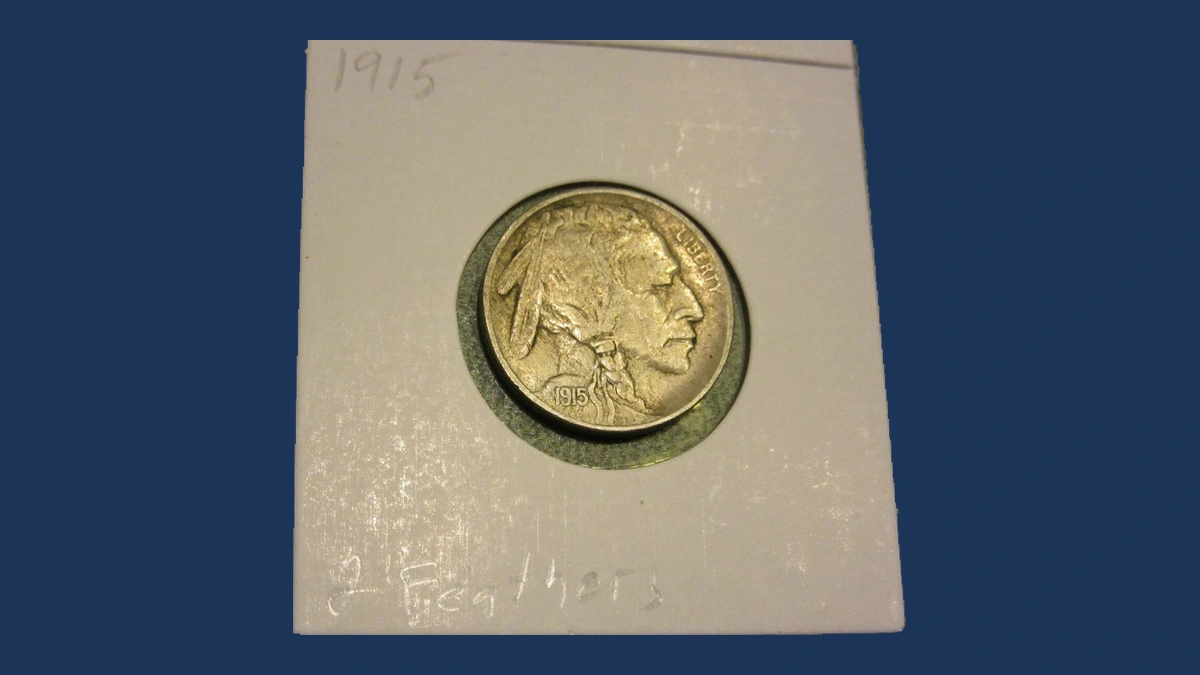
Look behind the head for the shortest inner feather. On a Two Feathers nickel, that small feature disappeared after workers polished the stamping tool.
The two larger feathers remain, which gives the variety its name. This is a local loss of design rather than a coin worn smooth everywhere.
Philadelphia examples appear in PCGS records, and Denver examples are also reported. Each mint needs its own comparison because similar missing feathers do not mean the same tool made both coins.
The catalog label FS-401 is useful, but the actual remaining feather shapes matter most.
Estimated Value
A Philadelphia Two Feathers nickel graded MS66 sold for $3,840 at Heritage in January 2020, as recorded by PCGS. MS66 describes an unworn coin with few noticeable marks.
Estimated values across worn and stronger 1915 examples are $100–$5,000. The high end requires much more than simply counting two feathers.
Clean surfaces, a clear missing inner feather, and a secure match to the correct mint all influence the price.
How to Identify
Compare the small feather with the larger pair before judging the whole portrait. If all three have faded together, wear or a weak strike may explain the loss.
With a 10× magnifier, inspect the area nearest the neck and the outlines of the surviving feathers. Match a Philadelphia coin to a Philadelphia example, and a Denver coin to its own pattern.
The mint letter, when present, sits below FIVE CENTS on the back. For a loose nickel, use a scale and calipers to check the standard 5.00 grams and 21.21 millimeters.
A polished tool can remove a local feature while leaving nearby detail visible. The useful contrast is the missing inner feather beside the much clearer larger feathers.
Conclusion
For 1915 Buffalo nickels, estimated values run from $20 to $5,000 across the errors discussed here. A faint extra line and a sharp Two Feathers coin belong at very different price levels.
Keep the date and mintmark in every photo. The face, inner feather, and edge each answer different questions.
A claimed short leg needs stronger proof than a worn outline before it deserves an error premium.