1899 Nickel Error List with Pictures

One 1899 nickel kept its portrait and date but lost its entire back layer. Another received the nickel design on a penny blank.
A different 1899 example, struck about 40% off center, sold for $575 in September 2002.
Estimated values for these 1899 nickel errors run from $5 to $8,000. Below, learn how the date, missing metal, and remaining design help tell them apart.
1. 1899 Liberty Nickel Repunched Date
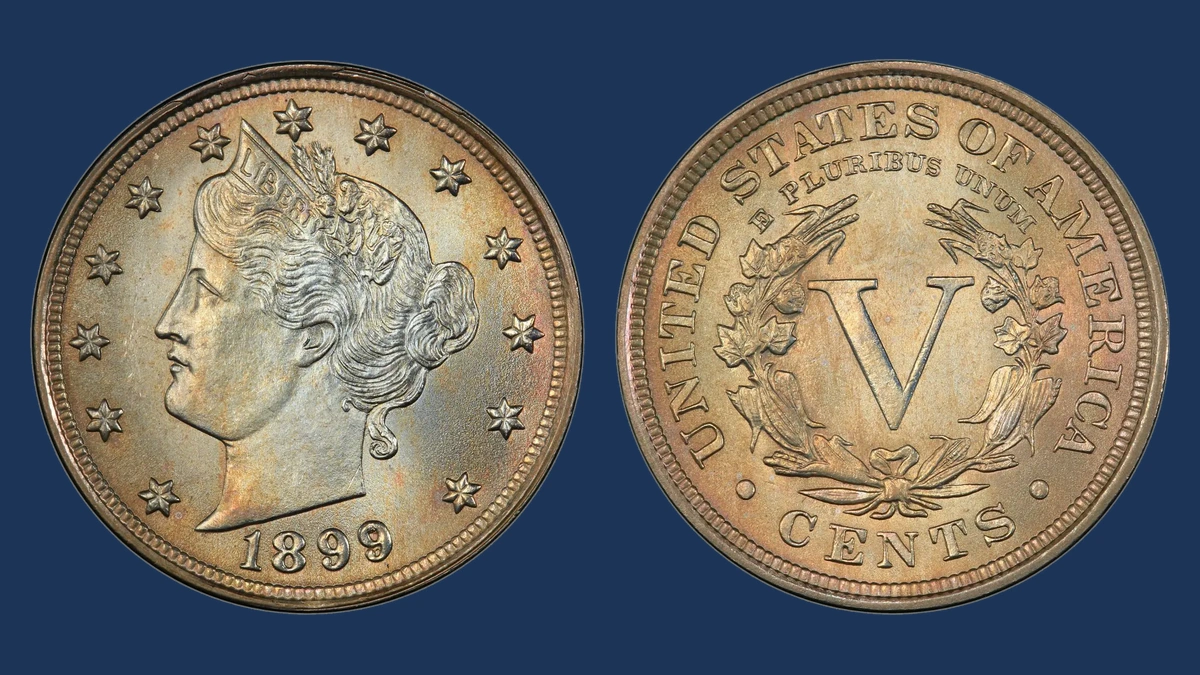
The last 9 can carry small extra outlines from an earlier position of the date punch. The punch added the date to a die, the steel tool that later stamped the coins.
A second placement did not fully erase the first. Each coin made with that die could therefore repeat the extra number detail.
The familiar name 1899/9 describes a repunched date, not a change from one year to another. The variety called FS-301 also appears on a known split coin, but the date feature itself is a separate trait.
Estimated Value
For intact repunched-date coins, estimate $20–$300 across worn to moderately marked unworn examples. Strong extra outlines and an undamaged surface support the upper end.
A split 1899 FS-301 nickel sold for $109 in January 2023, but that price covered both traits on one piece. It is not a separate $109 payment for the date.
The estimate draws on Liberty nickel date-variety prices, with the coin’s ordinary condition value included.
How to Identify
A clear enlarged photograph is the best starting point for this date variety. Compare your last 9 with the extra contours on a pictured FS-301 coin.
Matching numbers should have the same shapes and spacing, not merely a bright edge. Under a 10× magnifier, distinguish raised curves from a gouge or flat shelf beside the numeral.
Check the rest of the coin too. An intact loose example normally reads about 5 grams on a scale and 21.2 mm with calipers, with a plain edge.
A much lighter piece needs a separate explanation, such as the known split example. Its missing layer does not erase the extra date strokes that identify the variety.
2. 1899 Liberty Nickel Lamination and Split Planchet
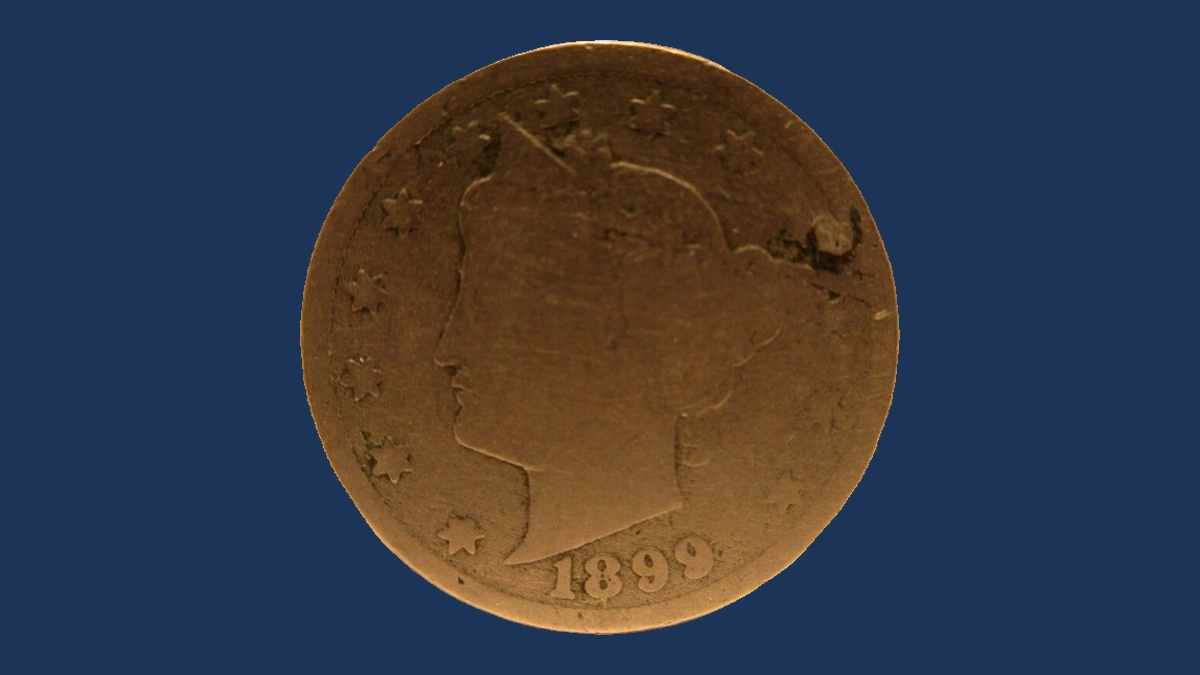
Liberty remains on the front, but the normal wreath and V are gone from the other side. On the known split example, that side is an exposed inner surface of the coin.
A weak layer in the metal allowed the nickel to separate after striking. A smaller peel from the same kind of weakness is called lamination.
Heritage offered a front half weighing 2.6 grams, graded VF25 by NGC, which means moderately worn. It also has the FS-301 repunched date; the two features belong to this one piece.
Estimated Value
The documented 2.6-gram half sold for $109 on January 2, 2023. It was a single front half, not a matching two-piece set.
Estimated values are $10–$150 for small surface peels and $75–$400 for genuine detached halves of comparable circulated coins. Size, readable design, and freedom from later damage affect the price.
An intact flake may attract more interest than an empty patch left after someone removed it.
How to Identify
A scale explains why the illustrated piece feels unusually light: its recorded weight is 2.6 grams against a normal nickel’s 5 grams. Light weight alone cannot distinguish a natural split from grinding.
Study the exposed inner face with a 10× magnifier. Look for an irregular, rough separation surface rather than smooth grinding marks or evenly spaced saw lines.
Calipers should show a diameter near the normal 21.2 mm, while the surviving plain edge will be unusually thin. The diameter can survive even though much of the thickness is gone.
For a smaller peel, inspect the layer’s border without pulling it. An attached flap and its natural opening offer more useful evidence than shiny metal revealed by scraping.
3. 1899 Liberty Nickel Die Cracks and Cuds
A raised line or a smooth lump touching the rim can come from a damaged stamping die. The line forms when coin metal enters a crack in that tool.
A larger break at the tool’s edge can leave a rim-connected lump called a cud. The coin gains raised metal in that area; it does not lose a bite from its edge.
These are types to check on an 1899 nickel, without assuming one fixed location. A mark must have the right shape and surface before the error name fits.
Estimated Value
Allow an estimated $5–$50 for an ordinary worn coin with a modest raised crack. Much of that amount may be the value of the nickel itself.
A verified, prominent rim cud has an estimated $50–$500 range across worn through better-preserved examples. The larger estimate assumes an obvious lump made during striking.
A tiny line does not receive that premium, and corrosion or added metal can make a convincing-looking bump worth no error premium.
How to Identify
Begin with the height of the mark. Under a 10× magnifier and low lighting, a die crack should stand above the surface, while a scratch usually cuts below it.
For a cud, follow the lump all the way to the rim. A separate bead stuck onto the surface, or metal pushed up by a hit, does not explain a missing piece of the stamping tool.
Examine both faces around the same position; reduced detail opposite a large lump can help support the explanation. Check a loose coin with a scale and calipers against 5 grams and 21.2 mm, then inspect the plain edge for added solder or a crushed rim.
4. 1899 Liberty Nickel Clipped Planchet
A clipped blank starts incomplete before the coin receives its design. If the blank-cutting punch overlaps an earlier hole in the metal strip, it can leave a curved gap.
A strip edge or damaged metal can produce a different outline. The word clip describes missing original blank metal, rather than a piece cut from a finished collectible.
When examining an 1899 nickel, pay attention to how the design meets the gap. A crescent shape alone does not establish the error, because a later cut can copy that outline.
Estimated Value
For a verified clipped 1899 nickel, estimate $25–$600. A small gap on a worn piece belongs toward the lower end; a large clear clip on an attractive unworn coin belongs higher.
As a dealer-price comparison, a cleaned 1911 Liberty nickel with two curved clips was offered for $195. That was an asking price for a different year.
Cleaning and edge damage should be considered before paying extra for the size of a gap.
How to Identify
Photograph the gap from above and from the side. Metal shaped during striking can show softened design near the opening, unlike a sharp cut through already finished lettering.
Inspect the opposite rim for a weak section, sometimes called the Blakesley effect. This supporting clue can be faint, so its absence by itself does not settle the question.
Record the loose coin’s weight on a scale before estimating how much metal is missing. The normal full coin is 5 grams.
Calipers can check the surviving diameter against 21.2 mm. Use a 10× magnifier along the normally plain edge, especially where the gap begins and ends, to look for saw marks or fresh cutting.
5. 1899 Liberty Nickel Off-Center Strike
The design covers only part of the metal when a blank sits too far to one side in the press. Both faces can show missing outer details beside an unstruck area.
One documented 1899 Liberty nickel was struck about 40% off center. ANACS graded it VF20, meaning worn but with substantial detail still visible.
Its light gray surfaces and remaining designs showed even wear. This example demonstrates why a blank crescent must be considered together with the surviving design, rather than treated like a missing piece of the coin.
Estimated Value
An estimated $100–$2,000 range covers modest worn examples through larger, well-preserved shifts. The date must remain readable for a buyer seeking an 1899 error.
The approximately 40% off-center ANACS VF20 coin sold for $575 in September 2002. For another historical comparison, a 1903 nickel with a 65% shift brought $2,875 in MS64, an unworn grade.
That stronger example does not make a small shift equally valuable; the amount of displacement matters.
How to Identify
The first distinction is between missing metal and metal that never received a design. Weigh a loose coin: a complete off-center blank should remain near the nickel’s normal 5 grams.
Use calipers to compare its outline with a normal 21.2-mm nickel, then follow the surviving letters on both faces. They should run beyond the available metal, leaving blank areas elsewhere.
An uneven front rim with a centered back points toward a misaligned stamping tool instead. Check the plain edge and blank surface with a 10× magnifier for filing or grinding.
Finally, read the date from the coin itself. Enough of each digit must remain to establish 1899, even when a seller’s label supplies the missing number.
6. 1899 Liberty Nickel Struck on a Cent Blank
A brown coin showing Liberty and a large V deserves a closer look. An 1899 Liberty nickel is known struck on a blank intended for a copper cent.
The cent blank is smaller than the nickel’s stamping tools. Outer parts of the five-cent design therefore cannot fit as they would on the correct blank.
Mint Error News featured a PCGS AU58 example in its April 2020 auction preview. AU58 means only slight wear, while the unusual color comes from the blank’s different metal.
Estimated Value
Estimate $2,000–$8,000 for a genuine cent-blank example, depending on wear, damage, and how clearly the date survives. The AU58 coin shows that this error can retain considerable detail.
A comparable 1907 Liberty nickel on a cent blank sold for $5,280 in April 2020. That is a different year’s auction result, used here for comparison.
Natural surfaces and clear certification of the wrong blank matter more than a copper color by itself.
How to Identify
A copper coating can change a nickel’s color without changing its basic size. Start with a scale and calipers for a loose coin, rather than trusting the brown appearance.
A normal nickel is 5 grams and 21.2 mm; a contemporary cent blank starts at about 3.11 grams and 19 mm. Those cent figures are standard specifications, not measured figures for the illustrated AU58 coin.
Look for the nickel design extending beyond the smaller blank. With a 10× magnifier, inspect the plain edge for a coating seam, peeling plating, or grinding used to reduce the diameter.
A grading service can assess the metal and striking together. An ordinary nickel made brown later will not acquire the smaller blank’s correctly struck design boundaries.
Conclusion
An 1899 nickel can tell its story through an extra date stroke, a rough split surface, or a design that no longer fits. The estimated $5–$8,000 spread reflects those very different errors.
The known 2.6-gram front half sold as one piece with two interesting traits. Treat its $109 result as one purchase, not two prices to add together.
Keep loose flakes untouched and compare both faces before deciding what an unusual edge or blank area means.