1954 Nickel Error List with Pictures

A tiny D beneath an S can matter more than a large patch of weak detail. A well-preserved 1954-S-over-D nickel sold for $3,450 in August 2004.
This 1954 nickel error list covers estimated values from $2–$3,500. It includes extra mintmark outlines, incomplete blanks, misplaced strikes, and nickel designs on copper cent blanks.
Follow the visible checks below to compare your coin with the right kind of mistake.
1. 1954 Jefferson Nickel Swollen Design from a Deteriorating Die
Some details on a 1954-S nickel can look swollen rather than neatly outlined. The steel stamping tool, called a die, changed shape as it deteriorated.
Mike Diamond discusses a San Francisco example with mushroom-like back details and lines spreading toward the edge. The unusually early deterioration is the feature of interest.
A soft tool is the proposed explanation. The appearance alone cannot measure how hard the blank was or how much pressure the press applied.
Ordinary wear on a finished coin can also blur its design. Blurred letters by themselves do not identify this unusual tool problem.
Estimated Value
Allow an estimated $2–$50 for a clearly recognizable 1954-S example with this swollen pattern. Stronger visible distortion can appeal more than general softness on a worn coin.
This modest range reflects comparisons with minor tool-deterioration effects on ordinary Jefferson nickels. It does not treat every weakly struck San Francisco coin as a valuable error.
A useful example preserves the surrounding surface well enough to show how the design expanded. Heavy wear can hide that distinction and limit collector interest.
How to Identify
Compare the enlarged back details with a normal Monticello. The specialist’s example shows a spreading pattern, rather than one missing letter.
Under a 10× magnifier, follow the fine lines running toward the rim. Look at how the neighboring design has widened along with them.
Wear usually lowers exposed parts of the finished design. Later pressure can flatten the edge or crush letters, so neither effect should be confused with swollen tool-made outlines.
Check a loose coin with a scale and calipers against 5 grams and 21.21 millimeters. Normal measurements alone cannot reveal whether its stamping tool was soft.
Keep the date, the S beside Monticello, and the complete spreading pattern together in the comparison.
2. 1954 Jefferson Nickel Die Cracks
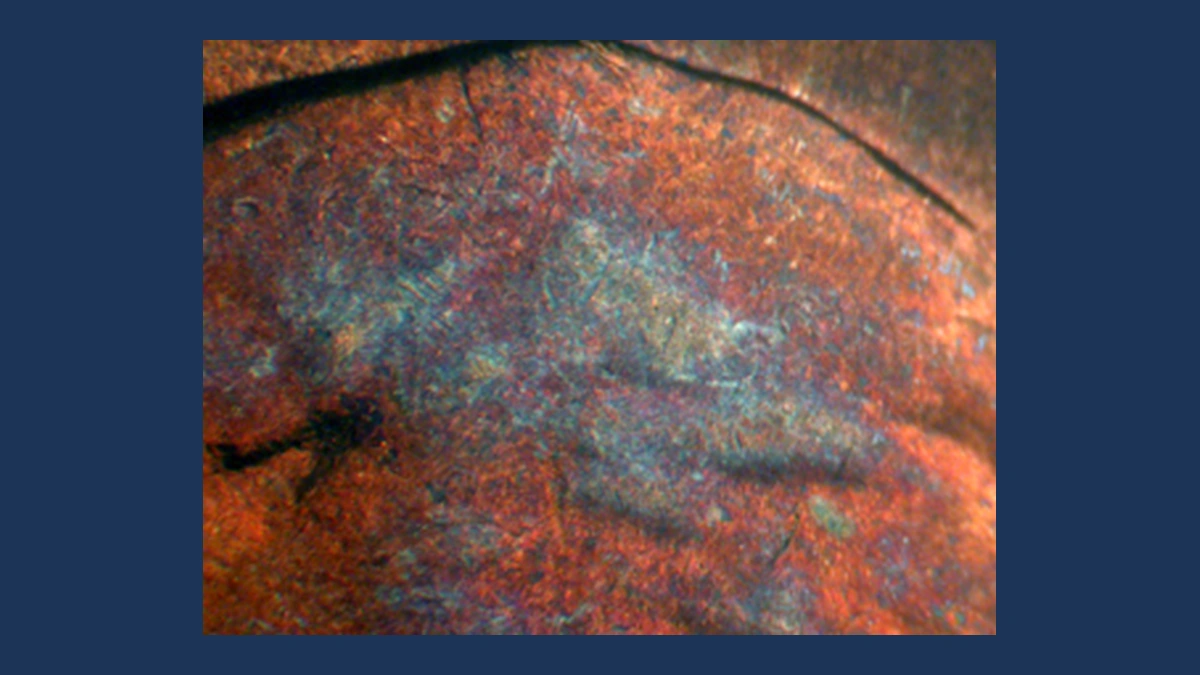
A raised line through Jefferson’s hair can come from a crack in the stamping tool. Metal enters that opening when the design is pressed into the blank.
One San Francisco repunched-mintmark variety develops a diagonal hair crack and another along the portrait’s base. A separate S-over-D variety can develop a light hair crack as its tool wears.
These are different tools at different stages of use. Their crack paths should not be assembled into one imagined coin.
The line is raised because metal filled the cracked tool. A scratch in the finished nickel usually cuts into the surface instead.
Estimated Value
For small genuine raised cracks, estimate $5–$100, depending on clarity and the coin’s condition. The diagonal hair line can be easier to demonstrate than a faint trace hidden in the portrait.
Some examples also have a collectible mintmark pattern. Their price should reflect the complete coin rather than adding two full estimates together.
Compare coins showing the same mintmark and crack stage. A heavily worn example may lose both the fine crack and the extra mintmark outlines.
How to Identify
Tilt the portrait beneath a lamp and trace the diagonal line through the hair with a 10× magnifier. On the reported repunched-S coin, it runs from upper left toward lower right and stands above the surface.
For a loose nickel, use a scale and calipers to check near 5 grams and 21.21 millimeters. A crack in the stamping tool should not cause a gap or missing weight in the coin.
Follow the base of the portrait for the separate raised line, then compare the mintmark with the same illustrated variety. The lighter hair crack on an S-over-D coin belongs to another tool; a cut into the surface is not either raised crack.
3. 1954 Jefferson Nickel Back Design Blocked by Material
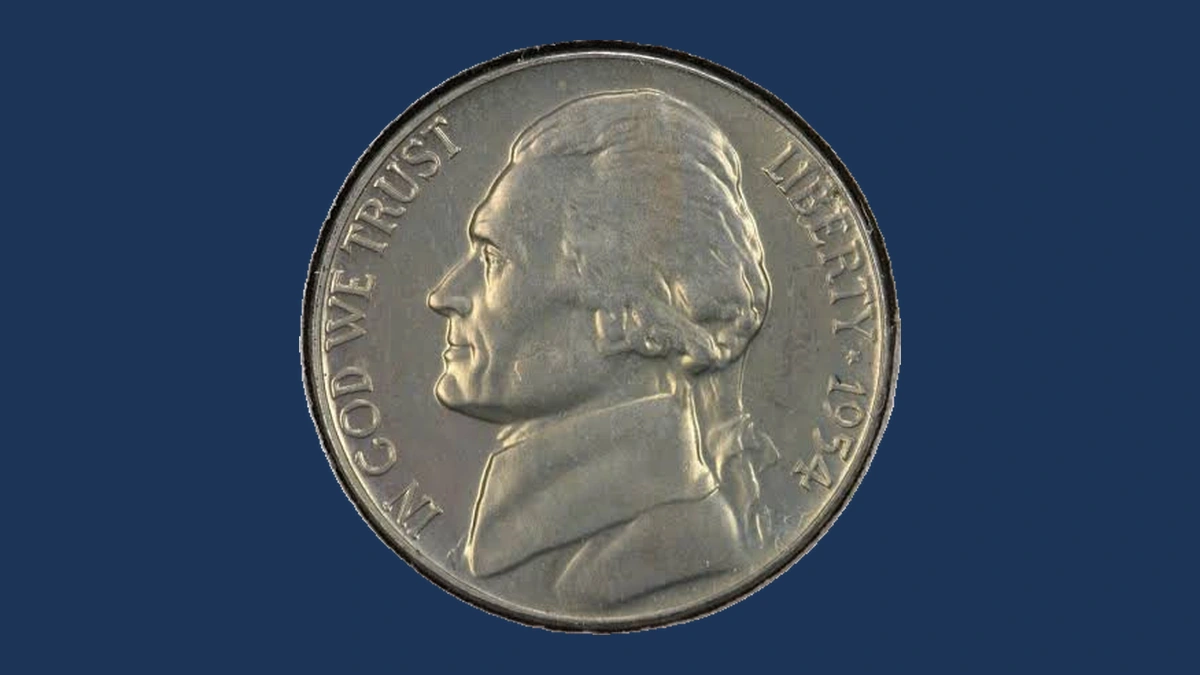
A local patch of lettering can fail to form when material blocks a stamping tool. Collectors often call this a struck-through error.
A dealer lists a 1954-S nickel with a reverse grease strike. Reverse means the back, where Monticello and the surrounding wording appear.
The description does not name particular missing letters. Grease is the dealer’s explanation for the obstruction, rather than something established by a weak-looking surface alone.
General wear, a weak blow, or later polishing can also soften the back. The boundary between normal and missing detail helps separate those possibilities from a local blockage.
Estimated Value
Use an estimated $5–$150 for genuine local blocked-design errors on 1954-S nickels. The affected area and the strength of the surrounding design help determine the comparison.
A small weak letter may attract little extra interest. A clear missing section surrounded by otherwise sharp detail is easier for a buyer to recognize.
The estimate follows comparable minor Jefferson strike-throughs. It applies to an original interruption during striking, rather than letters removed later by polishing or scraping.
How to Identify
Choose one weak area on the back and compare it with other details at the same height. Worn high points elsewhere may explain softness that first looked unusual.
A loose coin should remain near 5 grams and 21.21 millimeters, measured with a scale and calipers. Grease blockage changes the design that forms without requiring metal to be removed.
With a 10× magnifier, inspect the weak patch under light from several directions. Look for scraped lines, crushed nearby detail, or polished surfaces that point to later damage.
Photograph the date and S along with the affected back. A naturally struck surface beside a local interruption supports blockage, although it cannot identify grease as the exact material.
4. 1954 Jefferson Nickel Peeling Metal on the Back
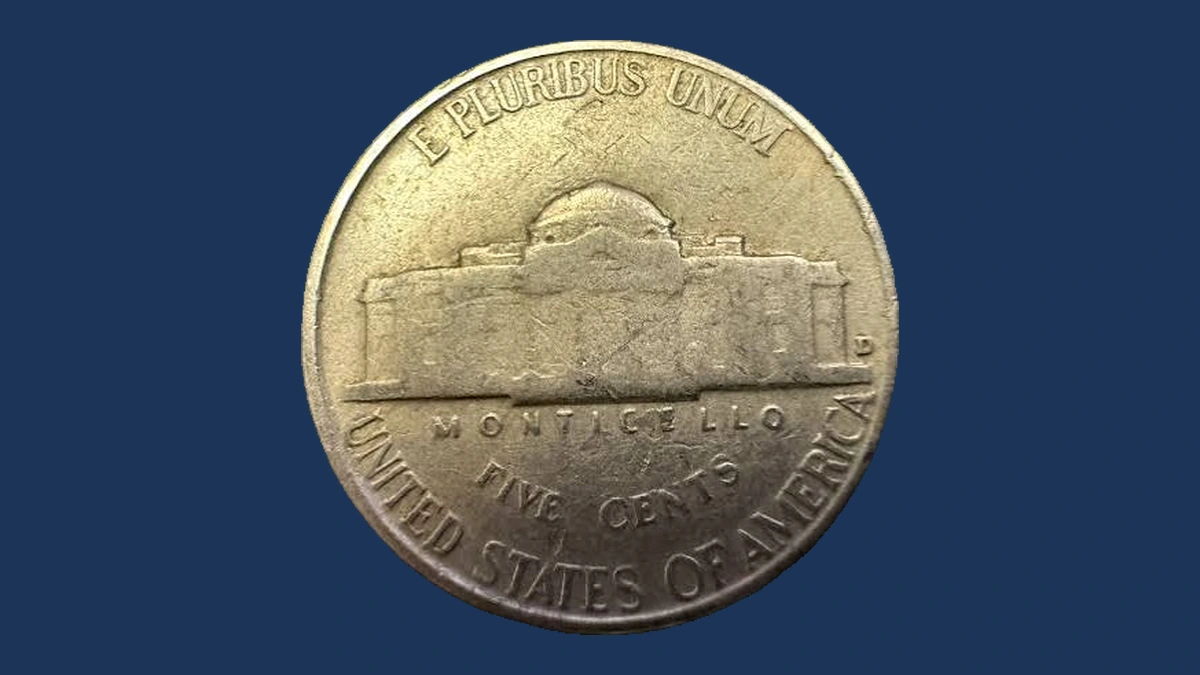
A thin piece of the back can separate from the metal below it. This internal weakness is called lamination, rather than a loss of silver plating.
A seller describes a 1954-D nickel whose loose layer fell away while the coin was in a container. The report concerns a back-side separation on a coin described as unworn.
The weakness and the later moment when the flap detached are different parts of the story. The report does not establish that the loose piece left the Mint separately.
Pictures of the exposed metal and any surviving fragment can help explain the separation.
Estimated Value
Estimate $10–$200 for a genuine 1954-D surface lamination, allowing for the size of the separation and remaining condition. A visible original flap can be more interesting than a tiny rough patch.
For perspective, a 1966 nickel split into three matching pieces sold for $109.25 in August 2010. That larger, different-year separation is not a recorded sale of the Denver surface flaw.
Keep any detached fragment with the coin. Further peeling can destroy evidence and reduce its appeal.
How to Identify
Photograph the exposed area and any detached fragment separately. Do not try to glue the piece back or enlarge the opening with a pin.
Under a 10× magnifier, compare the natural broken surface with the surrounding original design. Scraped metal can show tool tracks, while corrosion often leaves scattered pits.
The seller locates the flaw on the back but gives no required clock position. The actual separation boundary is therefore more useful than a generic diagram.
A scale can compare the remaining loose coin with 5 grams, allowing for the missing layer. Use calipers against 21.21 millimeters and check the plain edge for cutting.
A matching loose fragment may support the explanation, but its later detachment is not a second minting error.
5. 1954 Jefferson Nickel Defective and Tapered Blanks
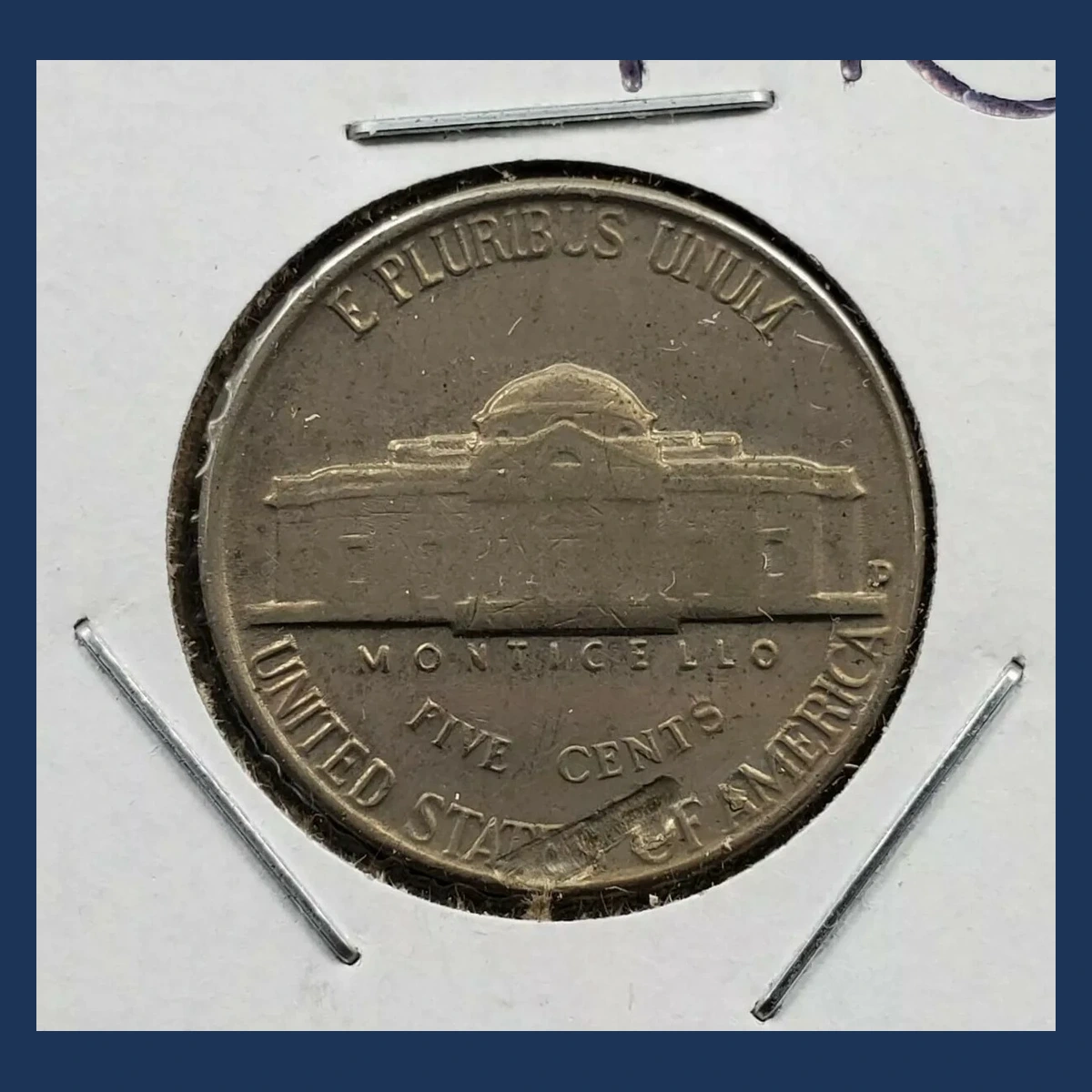
A blank can reach the press with uneven or defective metal. A tapered blank becomes thinner toward one side, where the design may not fill fully.
Two Philadelphia examples were cataloged at 4.6 grams and 4.40 grams. Both received MS62 grades, meaning unworn coins with noticeable marks.
A separate 1954-S nickel was graded NGC MS65 as struck on a defective blank. Its reported abnormal area lies left of Monticello, but the catalog does not name the exact metal defect.
The three coins should remain separate comparisons. Their weights and specific flaws are not interchangeable.
Estimated Value
Estimate $20–$300 for these original blank defects, adjusting for visibility, preservation, and the amount of thinning. The 4.40-gram Philadelphia example is reported at $64 in December 2024.
The 1954-S defective-blank coin sold in a three-coin lot for $161 in September 2010. That amount also covered defective 1959 and 1966 nickels.
It is not a separate $161 result for the San Francisco coin. A clear thickness change offers a stronger comparison than low weight alone.
How to Identify
View a suspected tapered blank edge-on and turn it slowly to find a gradual thickness change. Calipers can compare the thick and thin portions without pressing hard against the edge.
Weigh the loose coin on a scale against the normal 5 grams. The recorded Philadelphia coins weigh 4.6 and 4.40 grams; those are two examples, not two measurements of one coin.
The usual width is 21.21 millimeters. A thin area may retain that width while failing to fill the design fully.
Use a 10× magnifier to examine the weaker design for grinding marks or cuts. Such damage can also lower the weight.
For the separate San Francisco report, inspect the abnormal area left of Monticello instead of assigning it a Philadelphia weight or taper.
6. 1954 Jefferson Nickel Reported Clipped Planchet
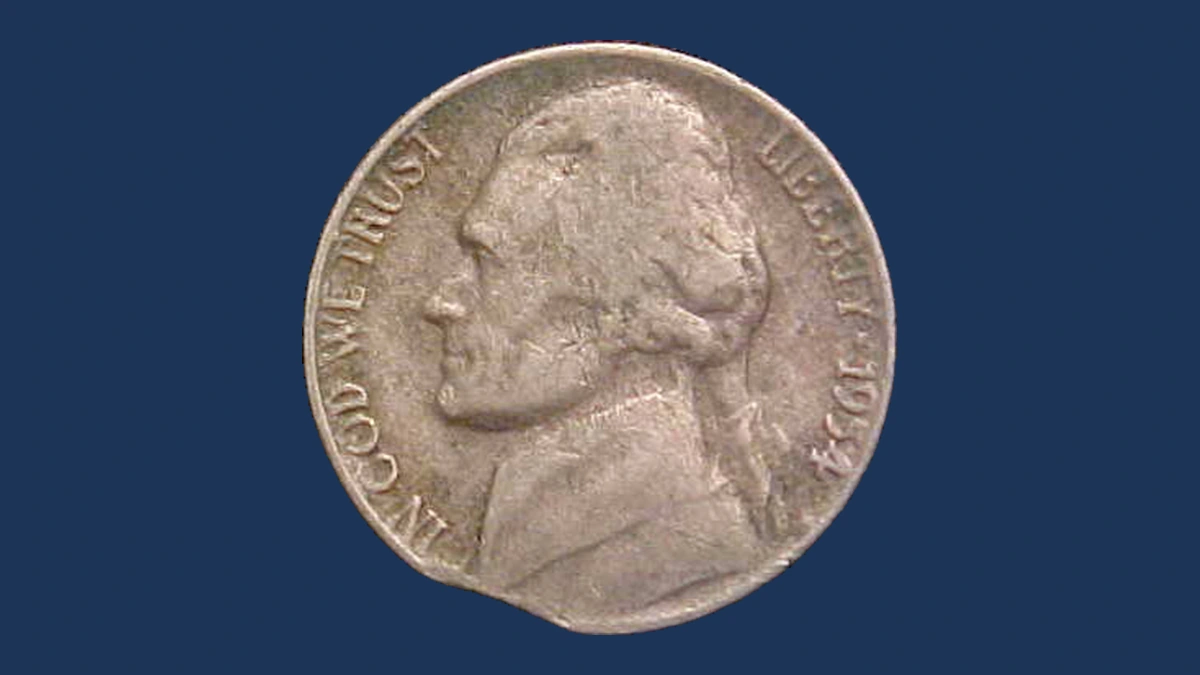
An incomplete disk can be struck with part of its original metal missing. Collectors call that disk a clipped planchet, with planchet meaning a blank prepared for striking.
The 1954 year list includes clips without documenting one specific mint, shape, or position. It therefore supports a category to examine rather than one fixed missing section.
Original lettering can form beside the shortage as the incomplete blank is struck. Cutting metal from an already finished nickel instead removes part of a design that was complete.
That difference makes the gap’s rim ends useful places to inspect.
Estimated Value
For a confirmed 1954 clip, use an estimated $10–$350. Larger clearly original gaps and a readable date can support more interest than a very small shortage on a worn coin.
A different-year 1974 nickel with two curved clips sold for $132 in July 2021. Its two gaps do not establish the shape or number of clips on a 1954 coin.
The estimate assumes missing metal from blank preparation. Later cuts do not qualify for the same premium.
How to Identify
Look at each end of the gap, where the original rim meets the missing metal. A 10× magnifier can show whether details formed naturally around the shortage.
Check for filing marks or a fresh cut through fully formed lettering. Weakness in the rim opposite a genuine gap can help, though it is not required on every coin.
Use calipers across intact spans against the usual 21.21 millimeters, avoiding the shortened width through the gap. Weigh a loose example against 5 grams and inspect its remaining plain edge.
A low weight also follows later cutting. The struck boundary, readable 1954 date, and natural gap must agree before the piece receives a clipped-blank identity.
7. 1954 Jefferson Nickel Reported Broadstrike
A broadstrike forms when the ring surrounding the blank fails to hold the metal to its usual size. The coin spreads while retaining its complete intended design.
A collector recalled seeing a 1954-S broadstrike described as having six full steps. Those steps concern sharp detail beneath Monticello, not six separate striking mistakes.
The recollection does not provide the original auction pictures. The proposed identity therefore needs a coin showing the full design inside an expanded border.
A shifted design with part missing beyond the metal would need an off-center explanation. Later flattening can also make a nickel wider.
Estimated Value
For a genuine 1954-S broadstrike, estimate $50–$500 across ordinary collectible examples. This conditional range requires an original expanded strike, not just a wide coin.
A confirmed exceptionally sharp San Francisco coin could have added value from its preservation and steps. The forum recollection alone does not establish that higher-quality identity.
For comparison, a 1974 Philadelphia broadstrike graded MS64 sold for $24 in August 2021. Its different date and mint make it context rather than a direct price for 1954-S.
How to Identify
Trace the outer lettering on both faces before measuring width. All of the intended design should fit on the metal for a simple broadstrike.
Next, use calipers in several directions against 21.21 millimeters. A normal starting blank weighs 5 grams, so check a loose coin with a scale as well.
Look through a 10× magnifier for flattened letters, rim impacts, or other signs of later hammering. The normal edge is plain; smoothness alone does not identify a broadstrike.
Check the small S beside Monticello and the date on the same coin. Only then examine the reported steps, keeping sharp building detail separate from evidence that the edge expanded during striking.
8. 1954 Jefferson Nickel Repunched D or S Mintmark
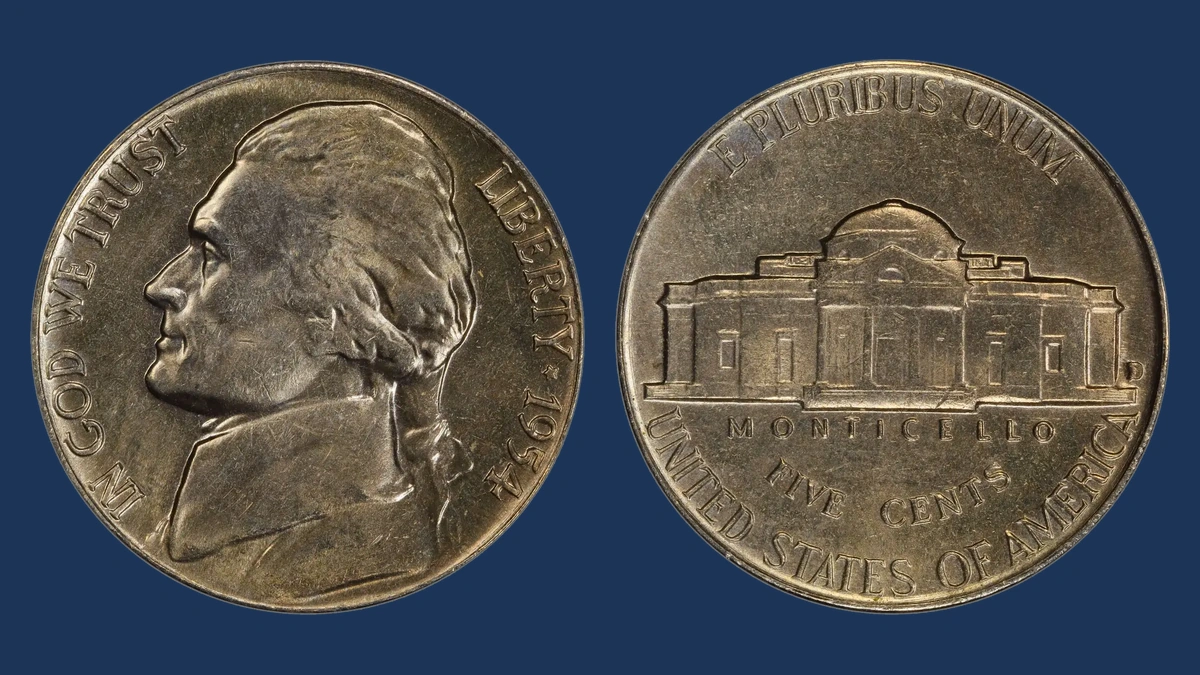
The small D or S on the back can show part of another impression of the same letter. Workers punched the mintmark into the stamping tool more than once in slightly different positions.
Denver examples include displaced or tilted D outlines. San Francisco examples have extra S portions in several directions, including the recognized northward S-over-S pattern.
These are alternative patterns, not features that every coin shares. Each needs a matching close-up.
A D repeated over another D is also different from an S placed over a D. The latter uses two different mint letters.
Estimated Value
Allow an estimated $10–$600 across identified minor repunches and stronger named varieties. The upper end suits clearer, better-preserved examples rather than every doubled-looking letter.
The northward S-over-S pattern is cataloged as FS-502. A Denver D-over-D has an FS-501 label, but that number does not make it the San Francisco S-over-D variety.
Compare the same letter pattern and condition. Wear and flat striking-related shelves can obscure the extra punch, while a well-matched unworn example is easier to collect.
How to Identify
Find the small letter to the right of Monticello and decide whether the extra shape is another D or another S. Examine it through a 10× magnifier rather than counting every nearby bump.
Use the illustrated mintmark patterns to choose the matching direction and shape. Several different examples can have extra metal on the same side of the letter.
A loose coin should be near 5 grams and 21.21 millimeters on a scale and calipers. Its plain edge and normal size cannot identify which punch pattern it carries.
Compare the whole extra outline and nearby identifying details. A flat ledge caused by movement during striking is not a second rounded mintmark.
9. 1954 Jefferson Nickel Doubled Front or Back Design
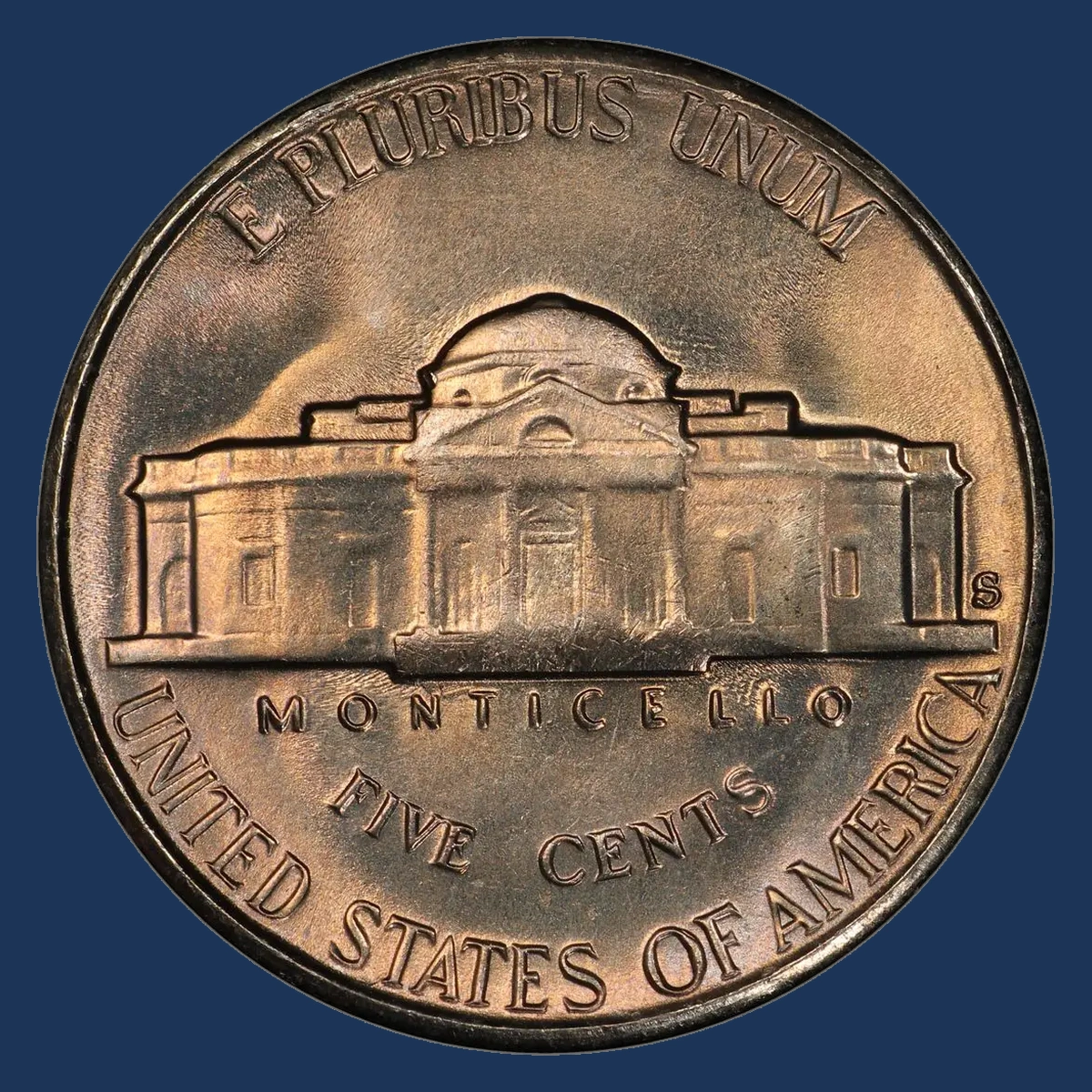
Extra outlines can appear in the lettering or in Monticello’s steps. The repetition began in the stamping tool before it struck any of these coins.
Denver examples involve the front date and LIBERTY, or a small area beneath the right-hand steps. San Francisco patterns include back lettering and a separate left-step variety.
A Philadelphia Proof has extra front outlines; Proof means a specially made collector coin. Other Philadelphia back patterns affect wording around Monticello.
Those back reports do not automatically inherit the Proof identity. Match the actual pattern and finish instead of combining every doubled area into one coin.
Estimated Value
Estimate $10–$750 across correctly identified 1954 doubled designs, with the range covering different patterns and preservation. Clear lettering or a recognized step variety can be more desirable than barely visible thickness.
An attractive Proof also carries value from its special manufacture and condition. It should be compared with the same finish rather than a worn Denver circulation coin.
The estimate depends on a matching doubled-tool pattern. Flat shelves left during striking do not command the same variety premium.
How to Identify
Locate the mintmark and choose a comparison for the same mint and finish. The Philadelphia front Proof needs a collector-coin comparison, while the other Philadelphia reports require their finish checked separately.
Use a 10× magnifier on Denver’s front lettering or beneath the lowest right-hand steps, depending on the suspected pattern. For San Francisco, compare the wording or the left steps above NT in MONTICELLO with the appropriate illustrated variety.
A scale and calipers can check a loose normal nickel against 5 grams and 21.21 millimeters. Then examine the extra outline itself: repeated rounded contours or split ends must match the chosen pattern, rather than a flat striking-related shelf.
10. 1954 Jefferson Nickel Off-Center Strike
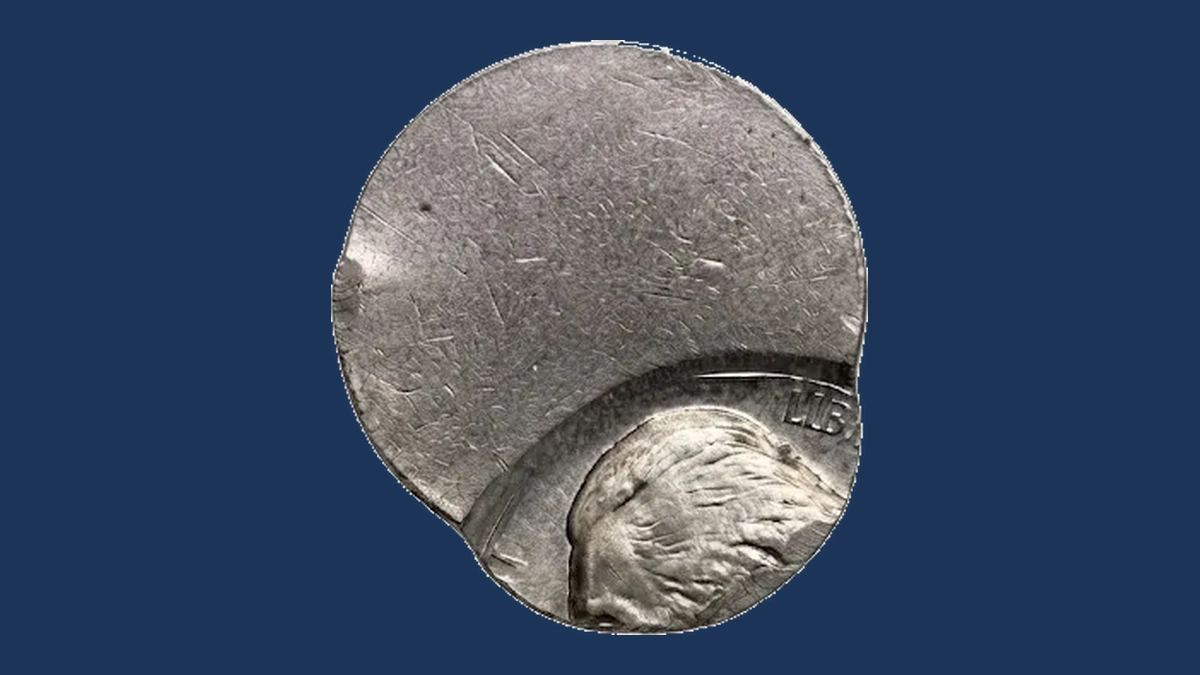
An untouched crescent can remain beside a design that runs off the edge. The blank sat partly outside the area between the two stamping tools.
A recorded 1954-S example is fifteen percent off center and graded PCGS MS61. That means unworn with noticeable marks, not that sixty-one percent of the design remains.
A separate Philadelphia coin is twenty percent off center near eleven-thirty. Its ANACS AU50 Details description records light wear and scratches.
The scratches are later condition problems. They are not part of the minting mistake and do not identify the San Francisco coin.
Estimated Value
The San Francisco MS61 example sold for $139 in March 2023. The scratched Philadelphia twenty-percent example is reported at $63 in October 2022.
Estimate $40–$1,000 across genuine dated 1954 off-center nickels with different shifts and preservation. Large readable errors can attract stronger interest than modest shifts on damaged coins.
The range values each complete piece. A bigger blank area alone does not ensure a higher price when the date or important identifying details disappear.
How to Identify
Confirm the date before estimating the shift. For San Francisco, look for the S beside Monticello if that area survives.
Turn the coin over and compare the struck-to-blank boundary on both faces. A single uneven border on one face may come from a shifted tool instead.
Use a 10× magnifier to inspect the bare area for scraped-away letters. Original unstruck metal never carried those missing details.
A loose intact blank may stay near 5 grams despite the displaced design. Check it with a scale and measure the altered outline against 21.21 millimeters using calipers.
Inspect the plain edge for damage, then match the specific percentage and direction. Only the Philadelphia report supplies the eleven-thirty position.
11. 1954 Jefferson Nickel Reported Mirror-Image Impression
Backward lettering pressed into the surface can come from another coin trapped in the press. The raised design of that coin acts like a stamp against the next blank.
The result is called a brockage. Its copied image is recessed and reversed, unlike the normal raised lettering made by the steel tool.
The 1954 year list includes this category without identifying a specific mint or affected face. A matching specimen must therefore show the reversed impression on an actual 1954 nickel.
An ordinary dent or a weak portrait does not demonstrate the same sequence of events.
Estimated Value
Use a conditional estimate of $150–$1,500 for a genuine 1954 brockage with recognizable backward design. A large clear impression generally explains the mistake better than a small indistinct patch.
The estimate draws on comparable Jefferson mirror-image errors rather than a sale of the unspecified example. Readable date details and original surfaces strengthen the comparison.
Later squeezing between finished coins can imitate recessed lettering. That damage does not qualify for the same range merely because the letters look reversed.
How to Identify
Find one recognizable letter in the depressed image. Compare its direction with a mirror view of normal nickel lettering.
Under a 10× magnifier, establish whether the letter is both backward and sunken. Ordinary raised doubling needs a different explanation.
Photograph the opposite face and any readable date before deciding that the coin belongs to 1954. The general year report does not specify which design should appear in the reversed area.
Weigh a loose candidate against 5 grams and measure it against 21.21 millimeters with a scale and calipers. Check the normally plain edge for crushing.
Squeezing finished coins together can imitate a brockage. Original strike surfaces should continue around the reversed image without the heavy crushing expected from later pressure.
12. 1954 Jefferson Nickel Struck on a Cent Blank
A cent-sized copper disk can receive the larger nickel design by mistake. The outer lettering may run out of space, while the surface has a copper color.
A Denver example was cataloged as PCGS MS63 Brown. A Philadelphia report gives the same grade, but it should remain a separate coin.
Another piece combines a cent blank with a seventy-five-percent off-center strike. It weighs three grams and is graded NGC MS64 Brown.
That catalog puts 1954 in parentheses because the date is incomplete. Its assigned year needs supporting evidence rather than being treated as a fully readable date.
Estimated Value
The Denver MS63 Brown coin sold for $558.13 in January 2014. A separate Philadelphia example is reported at $576 in September 2025.
Mint Error News records $1,110 in June 2018 for the partly dated, seventy-five-percent off-center coin. That figure prices its combined features once.
Estimate $300–$2,500 for identified cent-blank examples with varying condition and visibility. The severely displaced coin’s assigned date should remain part of its description, since incomplete identification can affect the comparison.
How to Identify
Weigh a loose candidate against the contemporary cent standard of 3.11 grams, rather than the nickel’s 5 grams. The partly dated example’s actual recorded weight is three grams.
Calipers can compare the outline with a cent blank’s starting 19.05 millimeters and nickel’s 21.21 millimeters. Striking may spread the smaller disk.
With a 10× magnifier, inspect the edge for trimming or copper coating. Missing outer lettering should fit an originally smaller blank.
Read every surviving date digit and check the mintmark separately. A fully dated Denver example cannot supply missing digits to the seventy-five-percent coin.
Look for older Lincoln details too. Their presence would indicate a previously struck cent rather than an unused blank.
13. 1954 Jefferson Nickel S Mintmark Punched over a D
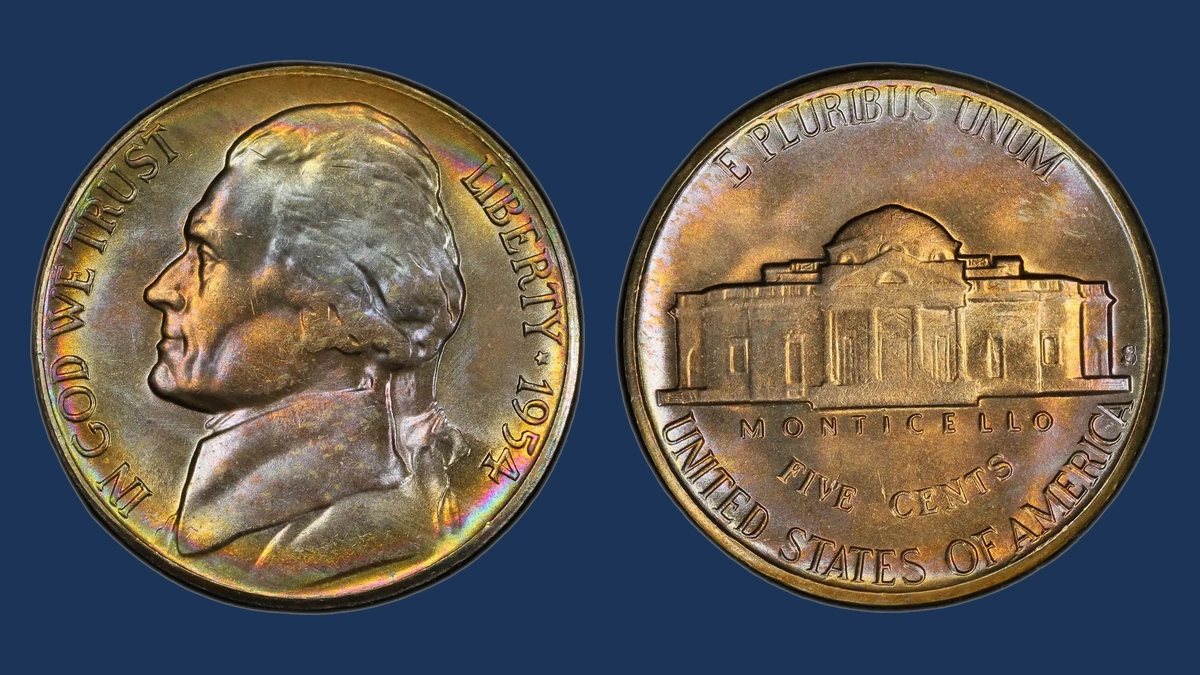
The small S can hide part of a different mint letter. On the 1954-S-over-D variety, a D was punched into the stamping tool before the S covered it.
Remains of the D show below and toward the lower left of the S. Collectors call two different mint letters in this arrangement an overmintmark.
The feature can weaken as the tool wears and the lower part of the S fills. A faint later example therefore needs careful comparison with the same known pattern.
This is different from an S punched over another S, even though both appear in the same area.
Estimated Value
PCGS records an MS66 example at $3,450 in August 2004. That grade describes an unworn coin with very few visible marks.
Use an estimated $20–$3,500 across worn through exceptional examples, with most ordinary coins far below that historical high. Recent MS66 records include $480 in November 2025 and $561 in June 2026.
The remaining D outline, attractive surfaces, and exact condition all matter. The old high result is not a routine price for every S-over-D nickel.
How to Identify
An S with extra metal below it needs a close look at the shape of that extra metal. A second S and an earlier D leave different outlines.
Use a 10× magnifier at the lower left of the S beside Monticello. Compare the lower straight and curved remains with a confirmed S-over-D example.
The lower trace can fade as the tool wears. A thick or filled S alone does not establish the variety.
For a loose coin, use a scale and calipers against 5 grams and 21.21 millimeters, then examine the plain edge for damage. These checks do not distinguish one mintmark pattern from another.
The decisive small detail is the surviving D beneath the S, rather than an FS-501 label shared with a different Denver variety.
Conclusion
Check the small mintmark, the edge, and the surviving date before choosing a price comparison. A repeated S, an S over a D, and a nickel struck on a cent blank have different explanations.
The estimated $2–$3,500 range covers everything from modest tool wear to exceptional varieties. Keep partly dated examples clearly identified, and value combined errors as one complete coin rather than adding separate maximum prices.