1888 Nickel Error List with Pictures

A loose brass coil helped make one 1888 nickel a $15,600 auction coin. Pressed into its reverse, the coil later fell out but stayed with the coin.
That unusual survivor leads this 1888 nickel error list, which spans estimated values of $25–$20,000. Other finds need closer inspection of the ear, date, lettering, or blank.
Read on to compare these small clues with errors that changed the whole strike.
1. 1888 Liberty Nickel Grease-Filled Die
A patch of missing detail can appear beside lettering that remains sharp. Grease or debris can block part of a stamping tool, called a die, and prevent that part of the design from forming.
An 1888 year guide reports an example offered as a grease-filled die error. It does not identify the exact missing letter or a certified specimen.
That distinction matters on this date, since ordinary weak strikes and circulation wear can also leave soft detail. The error concerns a blocked part of the design, rather than every nickel with a faint portrait.
Estimated Value
For an 1888 nickel with a convincing grease blockage, estimate $25–$250. A sharply defined missing area beside strong detail offers more interest than slight overall softness.
The year guide reports a $227.74 asking price for an example. That is a seller’s offer, not a completed transaction.
The estimate assumes the coin’s weakness comes from blocked design rather than wear, surface removal, or a generally light strike.
How to Identify
Place an ordinary 1888 nickel photograph beside the suspected coin. Identify exactly which detail has failed to appear, then compare the surrounding letters and portrait.
If the highest points are all worn smooth, circulation may explain the loss. If one patch is faint but nearby detail remains strong, inspect that boundary with a 10× magnifier.
A scale and calipers can check a loose coin against 5.00 grams and 21.21 millimeters. Those measurements should remain broadly normal because grease blockage does not require removing metal.
Change the light angle across the weak patch. Scraping or polishing marks suggest later removal, while a naturally struck surface within the missing design supports a blockage.
2. 1888 Liberty Nickel Reverse Die Break
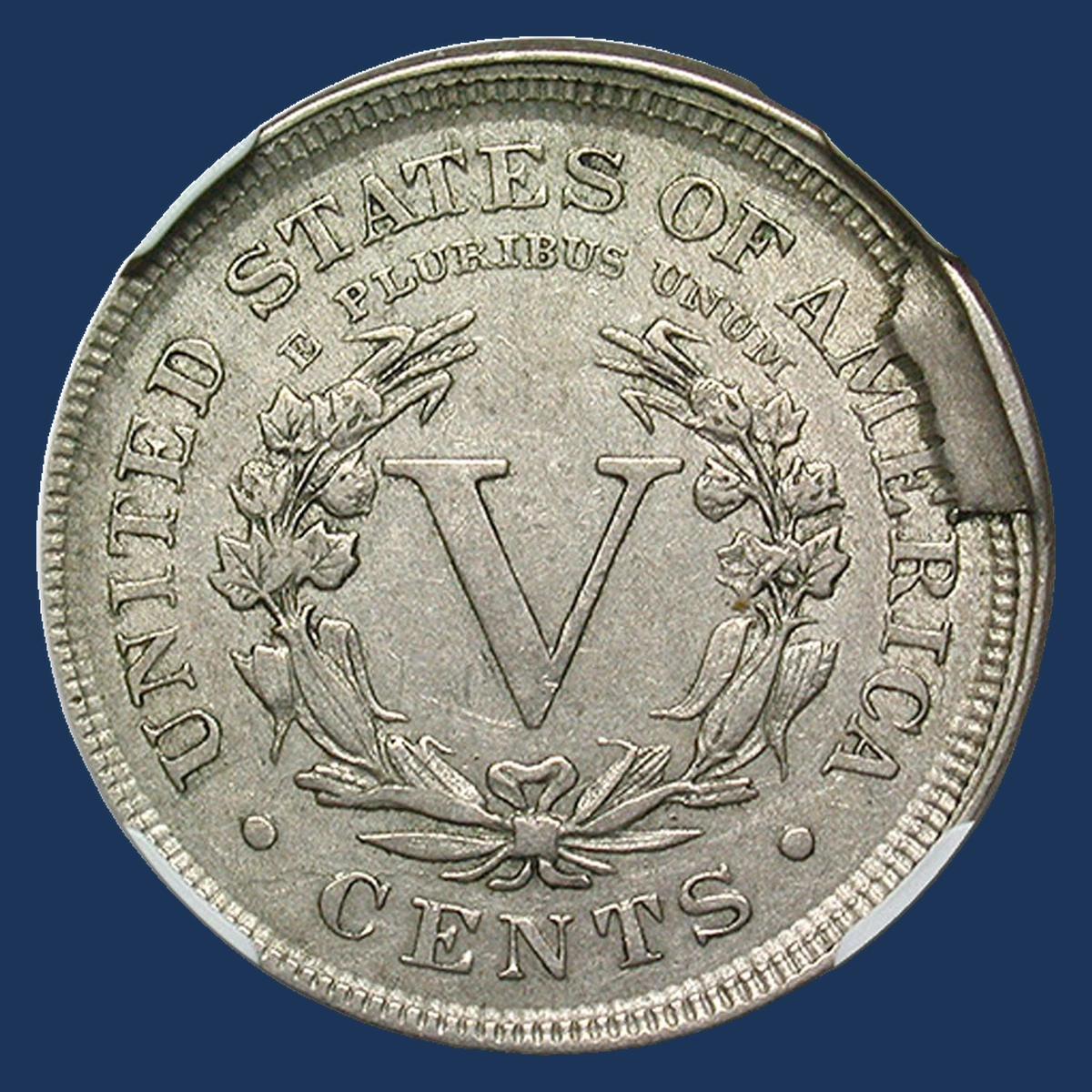
An extra raised patch on the back can form when a piece breaks from the stamping tool. The nickel’s metal fills the newly opened space and leaves a feature absent from the normal design.
APMEX lists an 1888 example as an NGC XF40 reverse die break. That grade describes a circulated coin with much of its finer detail still visible.
The listing does not establish the break’s precise location or whether it reaches the edge. A rim-connected break is often called a cud, but that name should not be assumed for this report.
Estimated Value
An estimated $75–$400 suits a visible reverse break on a circulated 1888 nickel. A larger, clearer raised area generally offers more collector interest than a tiny irregular bump.
The NGC example’s dealer listing confirms the reported type without supplying a completed sale price. The grade and visibility of the actual break should guide comparisons.
Corrosion or added metal would not justify the same error premium, even on an otherwise attractive coin.
How to Identify
Photograph the entire reverse with the raised patch in view, then take a closer image under low side lighting. A 10× magnifier should help reveal how its boundary joins the surrounding design.
For a loose coin, compare weight and width with the normal 5.00 grams and 21.21 millimeters using a scale and calipers. Extra solder may change the weight, but an ordinary reading cannot prove the patch formed at the Mint.
Check for a seam, a change in color, or nearby dents that pushed metal upward. Follow the raised area toward the edge to establish whether it actually touches the rim before calling it a cud.
3. 1888 Liberty Nickel Off-Center Strike
Even a small shift can leave the design too close to one edge and bare metal at the opposite side. The blank sat outside its intended position when the press struck it.
A PCGS AU55 example is described as five percent off center. It has light wear, while a separate ten-percent example reported as NGC VG10 is much more worn.
The larger shift does not make those coins equal in condition. Their surviving dates and the amount of design cut off must be considered separately.
Neither percentage alone gives the direction of the displacement.
Estimated Value
The five-percent PCGS AU55 nickel sold at Heritage for $373.20 on August 15, 2020. It provides a useful comparison for a modest shift with much detail remaining.
Estimate $150–$800 for dated 1888 off-center nickels around the reported five-to-ten-percent range. Condition, surface damage, and the clarity of the unstruck area can matter as much as the percentage.
A fully readable year helps distinguish the coin from an otherwise similar undated Liberty nickel.
How to Identify
Lay the coin beside a normal 1888 nickel and compare the placement of the design. Both sides should reflect the same overall displacement.
On a loose example, check the outline with calipers against 21.21 millimeters and the weight with a scale against 5.00 grams. Allow for wear and slight distortion.
Now follow the outer lettering to see what runs beyond the available metal. Keep all four date digits connected to the rest of the photograph.
An uneven border on only one side may come from a misaligned stamping tool. That is different from a blank struck outside its proper position.
Use a 10× magnifier at the bare margin to look for a natural struck boundary rather than filing or grinding.
4. 1888 Liberty Nickel Repunched Date
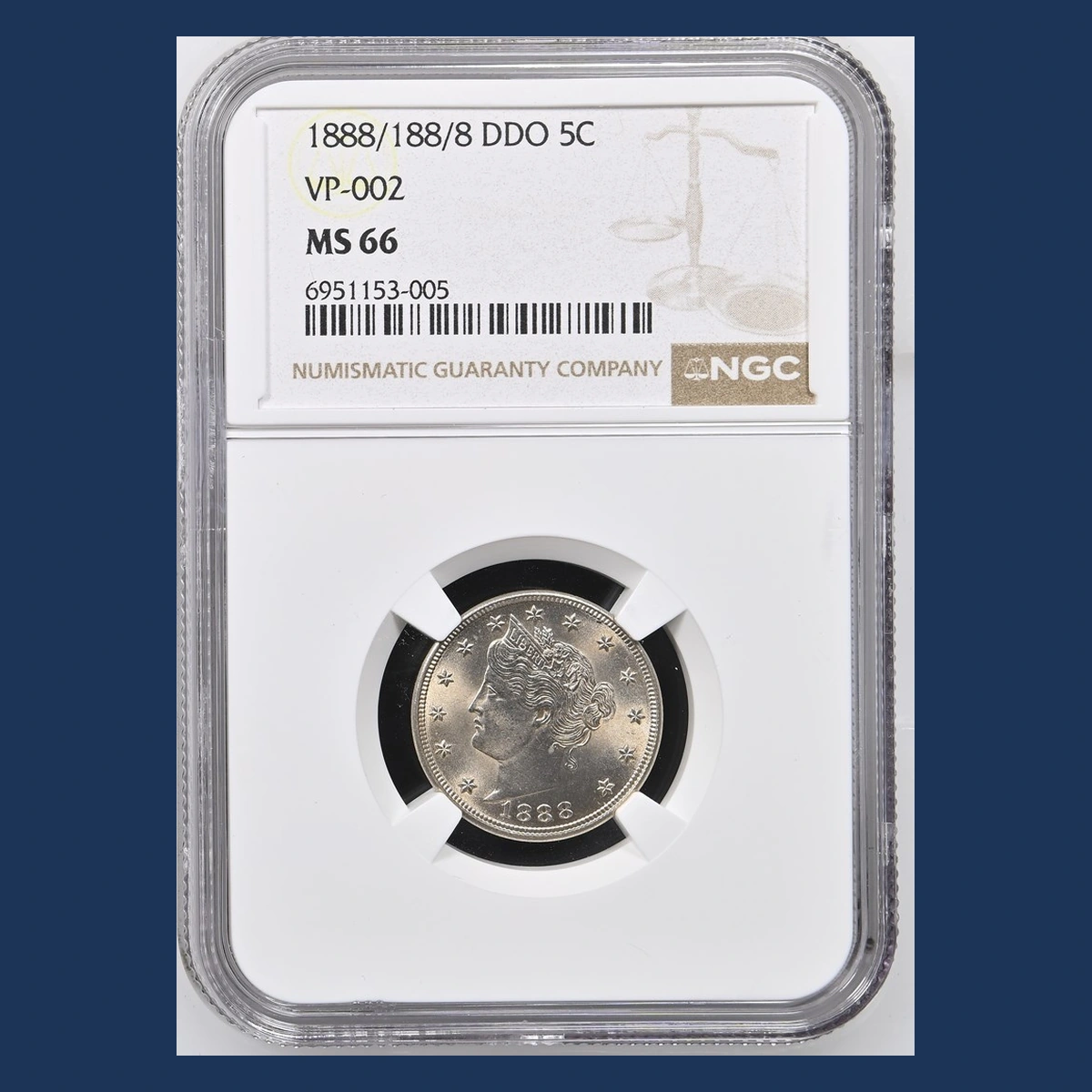
The repeated curves around the date can come from a punch used more than once in slightly different positions. These earlier date impressions remained in the steel tool and transferred to the coins it struck.
Heritage describes one 1888 example as a repunched date together with a doubled front design. Its RPD-003 label identifies the date variety, while DDO-002 names the separate doubling.
The two features can appear on one nickel. They do not mean the finished coin passed through the press twice.
This nickel variety also differs from the famous 1888/7 Indian cent.
Estimated Value
Use an estimated $60–$1,000 for identifiable 1888 repunched-date nickels across circulated and lower unworn grades. Clear extra numeral strokes and original surfaces help support the upper part of that range.
The ANACS MS64 example with both RPD-003 and DDO-002 sold for $552 at Heritage on March 4, 2024. MS64 means unworn with relatively few marks.
That amount prices the complete coin with both features; it is not a separate $552 date premium.
How to Identify
Confirm that the coin is a five-cent Liberty nickel with the large V and CENTS on the reverse. A scale and calipers should put a loose normal example near 5.00 grams and 21.21 millimeters.
Enlarge the complete date with a 10× magnifier and compare it with the RPD-003 photographs. The auction describes repeated portions of 188 and an additional 1 impression, not the Indian cent’s well-known 1888/7 overdate.
Trace each suspected extra stroke back to the numeral shape it repeats. Scratches cut into the surface, while a misplaced lump or flat strike-related ledge does not establish an earlier date punch.
5. 1888 Liberty Nickel Doubled Die on the Front or Back
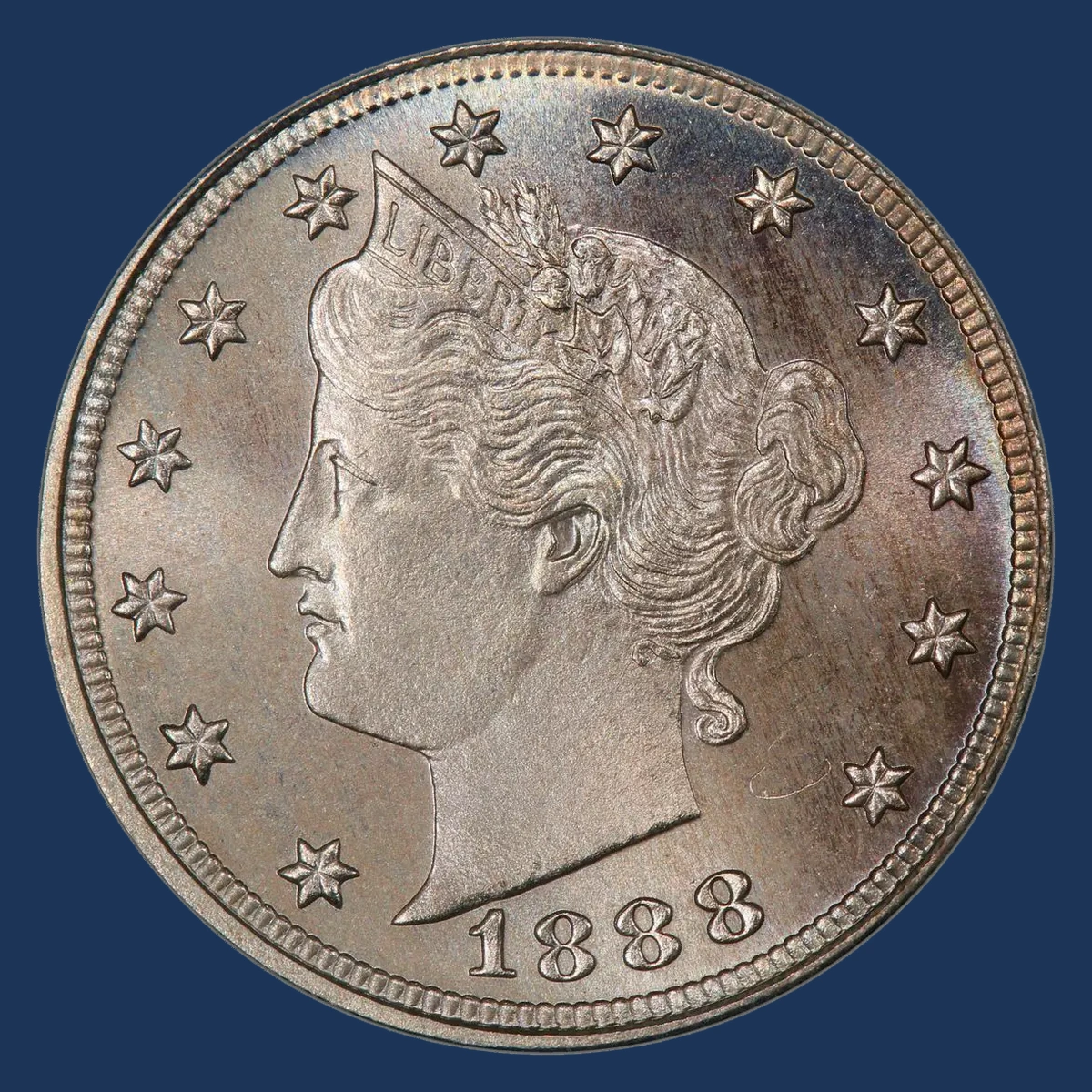
An extra outline beside Liberty’s ear is a useful clue on the FS-101 doubled die. A doubled die is a stamping tool carrying a doubled design, so its coins can repeat the same extra contours.
Another front variety shows doubling on the left stars, portrait, and LIBERTY. That example also carries a repunched date.
The back has a separate reported variety with doubling on small dots, CENTS, RICA in AMERICA, and the lower wreath. These are different coins to compare, not a requirement that every doubled 1888 nickel show all those features.
Estimated Value
Allow an estimated $75–$2,000 for recognizable 1888 doubled dies across worn and attractive unworn examples. Strong, easily matched detail supports demand more than a vague thick edge.
The front-doubled ANACS MS64 coin with a repunched date brought $552 in March 2024. That sale does not set a separate price for every reverse variety or for the doubled-ear FS-101.
Wear can hide the small extra outlines, while cleaning or scratches can reduce an otherwise desirable coin’s appeal.
How to Identify
The ear and reverse lettering offer different starting points. For FS-101, use a 10× magnifier to compare the extra ear contour with a confirmed photograph.
If the suspected doubling is on the back, move to CENTS, the last four letters of AMERICA, and the lower wreath. Look for agreement between those areas.
Do not require both patterns on one coin. The listed front and back examples came from different doubled tools.
A scale and calipers can check a loose nickel against 5.00 grams and 21.21 millimeters. Tool doubling should not change those basic measurements.
Flat ledges or generally thick, worn edges can mislead. Distinct repeated contours matching one documented pattern provide the useful comparison.
6. 1888 Liberty Nickel Struck on a Cent or Foreign Blank
Two unusually light 1888 nickels illustrate why weight alone cannot identify the wrong blank. One brown example, graded NGC MS64 Brown, weighs 3.1 grams and was struck on a bronze cent blank.
Another is cataloged as a foreign-blank strike at 3.2 grams, graded NGC XF45. That circulated coin’s country and intended denomination are not specified.
Both received the nickel design on metal intended for something else. Their similar weights do not make them the same blank type.
Color, size, edge, and the way the design fits must help explain the difference.
Estimated Value
The MS64 Brown cent-blank nickel sold for $4,743.75 in January 2007. Estimate $2,500–$6,000 for comparable genuine cent-blank examples, with wear and damage lowering demand.
The separate 3.2-gram XF45 foreign-blank coin realized $1,037 on June 29, 2026. An estimated $700–$1,800 suits that reported type and condition.
These prices should remain attached to their respective coins, rather than assuming every light 1888 nickel has the cent example’s stronger market.
How to Identify
A scale can separate both reported weights from a normal nickel’s 5.00 grams. It cannot by itself tell you whether 3.1 or 3.2 grams means a cent or a foreign blank.
For the cent comparison, use the normal bronze cent’s starting 19.05-millimeter diameter against the nickel’s 21.21 millimeters. Check with calipers, allowing for spreading during the strike.
Examine the edge through a 10× magnifier for a coating, filing, or rough metal loss. A lightened normal coin may retain signs of those alterations.
The foreign example needs its own metal and size assessment; no country is established by its weight alone. Match the recorded blank identification and full coin photographs instead of using brown color as a shortcut.
7. 1888 Liberty Nickel Struck Through a Brass Coil
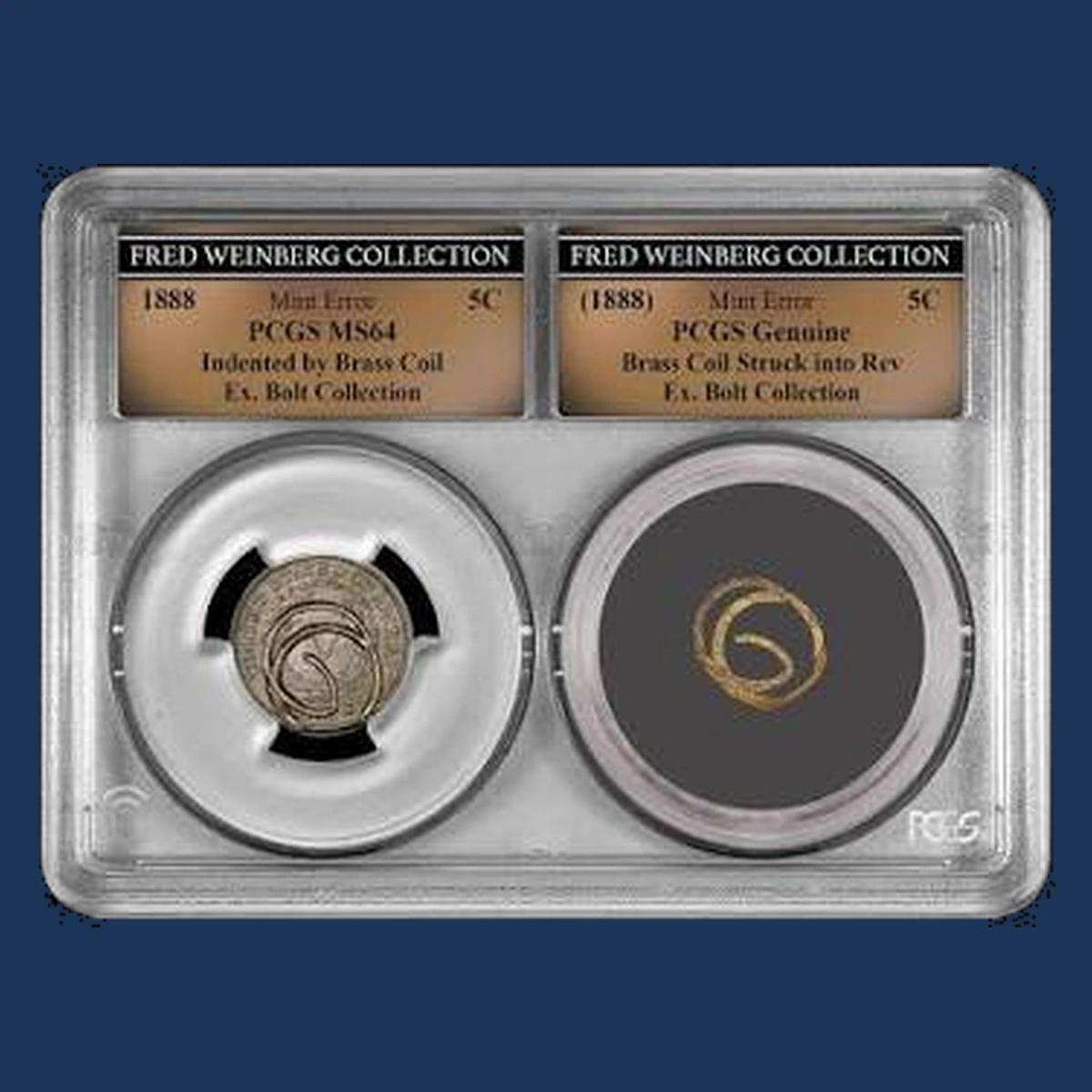
Curved depressions interrupt the back of this nickel, and a separate brass coil explains them. The coil lay between the blank and the reverse stamping tool during the strike.
It later fell free but remained with the coin. Parts of the wreath, V, CENTS, and CA in AMERICA can be seen on the coil itself.
Heritage cataloged the nickel as PCGS MS64, an unworn piece with relatively few marks. The coil’s preserved design makes this much more informative than an unexplained dent.
The nickel was struck through brass; its entire blank was not made of brass.
Estimated Value
The nickel and accompanying coil brought $15,600 in Heritage’s May 2022 auction. That is a price for the complete pair.
An estimated $10,000–$20,000 reflects the unusual surviving object, clear impressions, and strong preservation. Losing the coil would remove an important part of the coin’s appeal.
The result should not be used to price an ordinary dent or a small strike-through whose original object has not survived.
How to Identify
Keep the loose coil safe and separate from the nickel. Do not press it back into the depression or try to reshape it.
Compare enlarged photographs of the rounded recesses with the coil’s curves. A 10× magnifier should reveal the reported pieces of lettering and design on the coil, which help explain its position during striking.
For an unsealed coin, a scale and calipers can compare the nickel alone with the normal 5.00 grams and 21.21 millimeters. Do not include the detached coil in the coin’s weight.
Later impacts may create curved dents but cannot establish this original pairing. The matching recesses and struck design on the separate coil are the essential features of this documented example.
Conclusion
Estimated values for these 1888 nickel errors range from $25 to $20,000. The $15,600 brass-coil pair stands apart because the object that interrupted the strike survived with the coin.
For smaller finds, compare the ear, date, and reverse lettering before judging a premium. Keep different blank types separate, and remember that a coin with two varieties still has one total price.