1946 Nickel Error List with Pictures

A worn 1946 nickel sold for $9,600 in November 2022 because its metal belonged to the wartime years. The familiar design hid a leftover silver-alloy blank.
These 1946 nickel errors have estimated values ranging from $5–$15,000. Some need a metal test; others reveal themselves through extra letters, missing edges, or overlapping designs.
Use the checks below to choose the right comparison without mistaking ordinary wear for a minting mistake.
1. 1946 Jefferson Nickel Die Cracks and Rim Breaks
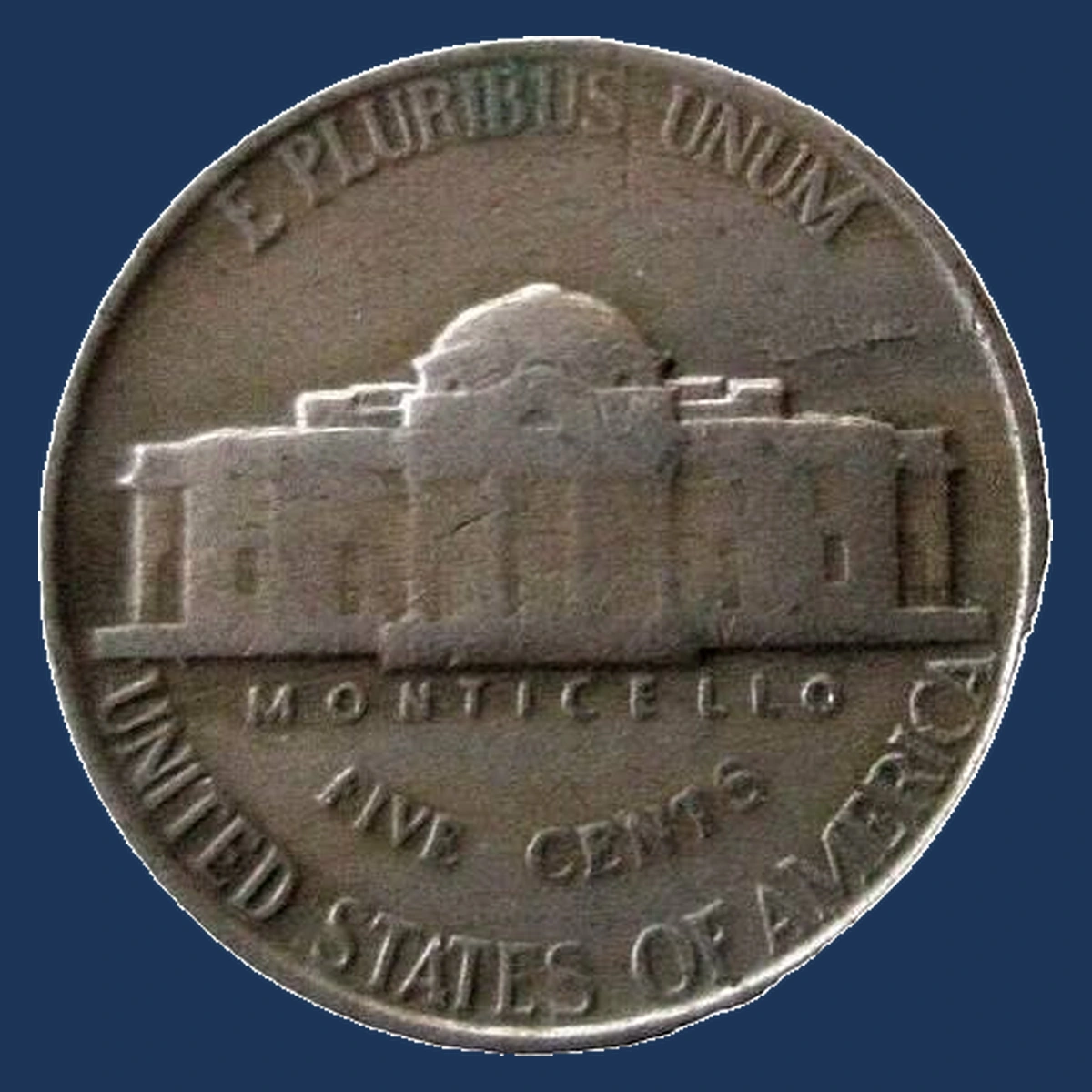
A thin raised line or a larger rim patch can come from damage to a stamping tool. The tool is called a die, which explains the term die crack.
Metal enters a narrow crack and forms a ridge. If a piece breaks from the tool’s edge, the metal can form a broader raised patch called a cud.
The 1946 year list reports both effects without fixing a location or mint. Each example therefore needs its own close-up.
A scratch, a rim hit, or added metal can create marks. Their surfaces differ from metal shaped by a damaged tool when struck.
Estimated Value
Estimate $5–$250 for genuine small cracks through clearer rim breaks on ordinary 1946 nickels. A faint ridge often adds little, while a broad original patch is easier to appreciate.
A 1970-D nickel with two front breaks sold for $63 in October 2022. That different-year example illustrates a modest whole-coin price, not the location of a 1946 break.
Condition still matters. Deep scratches or corrosion can reduce interest even when an original raised feature remains visible.
How to Identify
Inspect the plain edge beside a raised patch before calling it a cud. A rim hit can push metal onto the face, while a seam may reveal added material.
Use low light and a 10× magnifier to follow a thin line across the surface. A tool crack leaves a ridge; a scratch usually cuts down, sometimes pushing metal up alongside it.
Check an intact loose coin with a scale and calipers against 5 grams and 21.21 millimeters. The report supplies no required position, so compare the actual raised feature and nearby struck design rather than copying a location from another year.
2. 1946 Jefferson Nickel Clipped Planchet
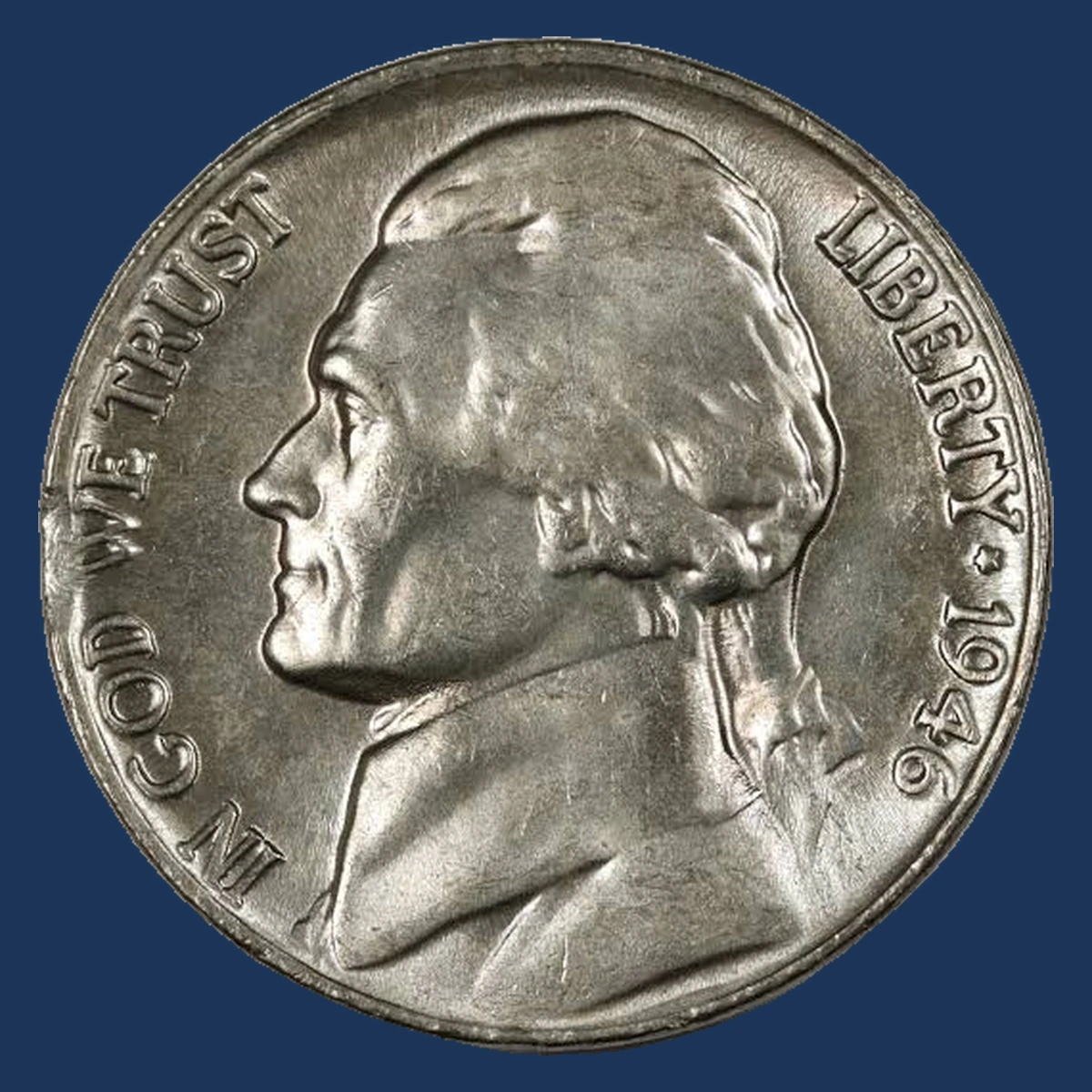
Part of the metal disk, or blank, can be missing before Jefferson and Monticello are stamped onto it. The design forms beside that earlier shortage rather than being cut away afterward.
An auction lists a Philadelphia 1946 clipped nickel graded PCGS MS65. That describes an unworn coin with few marks.
The record does not specify a curved or straight gap. Either outline would need confirmation from the coin rather than a general description of clips.
A low weight or an unusual outline can start the examination. Neither alone distinguishes an incomplete original blank from a finished nickel that someone cut.
Estimated Value
The PCGS MS65 clipped example is reported at $30 in March 2025. That provides a modest result for a genuine missing-blank error on this year.
An estimated $15–$300 covers varying clip size, preservation, and clarity. Larger natural shortages can be more appealing when the date remains readable.
The missing section must have formed before striking. A later cut receives no comparable mint-error premium, and a seller’s percentage should not replace a clear photograph of the actual gap.
How to Identify
Begin where the intact rim ends on either side of the shortage. A 10× magnifier can show whether nearby design formed around missing metal or was cut through later.
Check for file tracks, burrs, or a sharp cut across finished letters. Rim weakness opposite an original gap can help, but is not required on every specimen.
The recorded clip’s curved or straight shape is not specified.
Use calipers across intact spans against the normal 21.21 millimeters; measuring through the gap would understate its original width. Weigh a loose candidate against 5 grams and inspect the remaining plain edge.
The struck rim at the gap must show that the metal was absent before the design formed.
3. 1946 Jefferson Nickel Partial Collar
A ledge can divide the edge into areas of different width. The metal ring around the blank, called the collar, restrained only part of it during striking.
Metal above or beyond that restraint could spread more freely. The result is a partial-collar strike rather than a coin that simply has a smooth edge.
A Philadelphia 1946 example appears in auction records as NGC MS64. It was unworn with visible marks allowed by that grade.
The description does not establish the ledge’s exact position. A side view is needed because photographs of the two faces can hide the important edge change.
Estimated Value
The NGC MS64 partial-collar coin is reported at $98 in February 2005. Estimate $20–$350 for comparable genuine 1946 examples, allowing for preservation and the strength of the edge step.
A pronounced natural ledge can be easier to collect than a slight uneven border. Later squeezing, grinding, or a rim impact can reduce value instead of adding an error premium.
The whole outline should support the identification. A normal smooth nickel edge by itself belongs outside this estimate.
How to Identify
A nickel normally has a plain edge, so smoothness tells you little about whether its collar worked properly. Turn the coin slowly and look instead for two levels of different width.
Follow their boundary with a 10× magnifier, checking for a naturally formed ledge rather than a machined cut or joined pieces. Keep both faces visible in photographs so flattening or other damage can be compared with the edge.
A scale should place an intact loose blank near 5 grams, while calipers compare its different widths with 21.21 millimeters. The identifying view shows metal that spread beyond the restrained portion, not merely an uneven border on one face.
4. 1946 Jefferson Nickel Split Blank and Separated Coin Layers
A weakness inside the metal can divide a blank or coin into thinner layers. The remaining designs help tell whether separation happened before or after striking.
A Philadelphia example struck on a split blank weighs 2.81 grams and is graded ANACS AU50, indicating light wear. Its thinner metal received the designs afterward.
Separate reports concern a front half graded NGC AU55 and a cleaned 2.7-gram piece described as split after striking. These are different coins.
A split-after-striking piece can preserve an outside design beside a rough inner face. Its appearance should not be substituted for the earlier-split blank.
Estimated Value
Use an estimated $25–$500 across genuine thin split blanks and surviving separated portions. The 2.81-gram AU50 example is reported at $75 in August 2021.
The AU55 front half sold with a separate 1960 nickel in a two-coin lot reported at $104 in August 2010. That amount cannot be assigned wholly to the 1946 piece.
Clear original separation and readable identity support the comparison. Cleaning or further damage can reduce the appeal of the surviving metal.
How to Identify
Weigh each loose piece separately and compare it with the original nickel’s 5 grams. The recorded 2.81-gram thin blank and cleaned 2.7-gram separated piece are different specimens.
Now compare the faces to decide when separation happened. A thin blank can receive designs on both sides afterward, while a later separated half can expose a rough inner face.
A 10× magnifier helps distinguish that natural broken surface from machining or grinding. Do not lift attached metal or force loose pieces together.
Use calipers against the normal 21.21-millimeter outline and inspect the plain edge for cutting. Designs struck into thin metal indicate a different sequence from an outside design surviving beside an unstruck fracture surface.
5. 1946 Jefferson Nickel Repunched and Inverted Mintmarks
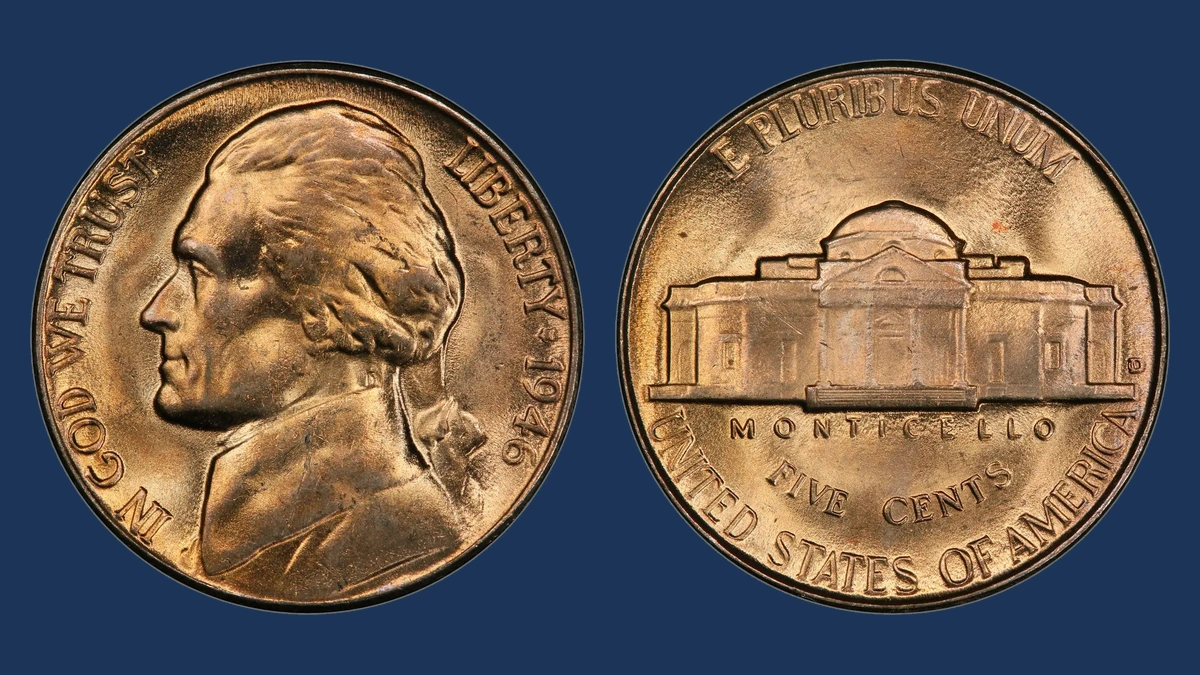
An extra D or S can remain beside the finished mintmark. Workers applied the letter to the stamping tool more than once in slightly different positions.
One Denver pattern has an upright D over an earlier upside-down D. Others show tilted or displaced D outlines, while San Francisco examples show extra portions of an S.
These shapes need separate comparisons. A coin does not need to show every direction to have a genuine repunch.
The inverted letter is an earlier mark in the tool. It does not mean the finished coin was struck upside down or has a rotated back.
Estimated Value
Estimate $10–$750 across recognizable minor repunches and clearer named patterns, depending on condition. A strong earlier letter on an unworn coin is more useful than a vague bump beside a worn mintmark.
The range includes both the original coin and interest in its particular pattern. It is not an amount to add for every extra stroke.
The inverted D needs its distinctive earlier letter shape. Other tilted D marks should not receive the same comparison simply because they look doubled.
How to Identify
Turn a photograph of a normal D upside down to understand the earlier letter beneath the inverted-D variety. Its surviving curves differ from those of a merely tilted D.
Find the small mintmark to the right of Monticello and inspect it with a 10× magnifier. Compare its complete extra shape with the photographed 1946 patterns.
San Francisco coins require S-over-S comparisons instead.
A loose coin normally reads about 5 grams and 21.21 millimeters on a scale and calipers, with a plain edge. Those measurements cannot distinguish the small mintmark varieties.
Look for rounded parts of the earlier letter in the correct places, rather than accepting a flat shelf or isolated scratch as a match.
6. 1946 Jefferson Nickel Reported Off-Center Strike
The blank can enter the press too far to one side. Part of the intended design misses the metal, while an untouched crescent remains beside the struck image.
The 1946 year lists report off-center nickels without establishing a particular mint, percentage, or direction. General examples discussing ten or fifty percent do not identify a specific coin.
Both faces should fit the same misplaced blank. If only one face has an uneven rim, a shifted stamping tool can be another explanation.
The date is especially useful when much of the design is absent. An incomplete portrait alone cannot establish 1946.
Estimated Value
For a genuine dated 1946 off-center nickel, estimate $25–$800, depending on displacement and preservation. A readable year strengthens the comparison when large areas remain unstruck.
A 1950 Philadelphia nickel with a sixty-five-percent shift and a back crack is reported at $528 in July 2022. That is a different-year combination, not a specific 1946 sale.
Use the visible shift together with condition. A bigger blank area can lose appeal if it also removes the date or leaves the coin badly damaged.
How to Identify
Find all surviving date digits before considering how dramatic the blank area looks. Keep the year and full coin together in photographs so the missing portrait cannot hide a mistaken date.
Use calipers to compare the outline with 21.21 millimeters and a scale to check a loose intact disk against 5 grams. Striking may spread the shape without removing the untouched metal.
Examine both faces with a 10× magnifier, looking for the same division between struck design and bare metal. Scraped-away letters or cuts in the plain edge suggest a different cause.
The crucial comparison is two designs displaced on the same intact disk, not just one uneven rim.
7. 1946 Jefferson Nickel Reported D over S Mintmark
Two different mint letters can overlap when one is punched over the other in a stamping tool. A D-over-S claim means a D was placed over an earlier S.
The D-over-S description appears in a 1946 year guide. Recognized same-letter varieties instead include an upside-down D beneath an upright D, plus other D-over-D patterns.
Those established same-letter patterns do not prove a hidden S. The proposed different-letter identity needs its own matching specimen.
An extra curve beneath a D can look promising under one light. Its complete shape must fit an S before this separate explanation applies.
Estimated Value
For a genuine 1946 D-over-S supported by a reliable identification, use a conditional estimate of $50–$1,000. This is not a recorded sale or an established premium for the year-list claim.
As broader context, a recognized 1954 S-over-D nickel graded MS66 sold for $561 in June 2026. That is a different date and the opposite order of letters.
The condition and surviving lower letter would guide the comparison. A known inverted D should instead be valued with that actual variety.
How to Identify
The extra outline must form parts of an S to support a D-over-S claim. First compare it with the documented upside-down D, which can explain an unexpected curve without a different mint letter.
Use a 10× magnifier on the small mintmark right of Monticello, keeping the coin’s 1946 date in view. A shape found on another year cannot establish the identity of this specimen.
On a loose coin, a scale and calipers should show about 5 grams and 21.21 millimeters, with a plain edge. Those normal measurements do not identify the earlier letter; only its complete surviving shape can distinguish an S from a D.
8. 1946 Jefferson Nickel Flipover Double Strike
Parts of the back design can appear among details from the front. The coin was struck, turned over, and received another blow on the opposite faces.
This is a flipover double strike. The later impression can flatten portions of the earlier design while leaving recognizable fragments beneath it.
The 1946 report concerns a Philadelphia coin graded MS66, an unworn grade with very few marks. It does not give a direction or surviving letter.
Those details need to come from the actual example. Ordinary doubled-tool lettering does not explain a second design from the opposite face on the same surface.
Estimated Value
The year guides report a $431 Heritage result in 2010 for the MS66 flipover coin. Use an estimated $200–$1,500 for genuine 1946 examples with varying clarity and preservation.
Recognizable opposite-face details make the sequence easier to demonstrate. A distorted patch that cannot be connected to either design offers a weaker comparison.
The estimate prices one coin with two strikes. It is not a separate amount for the earlier impression and another amount for the later one.
How to Identify
Put front and back photographs beside each other to look for details that belong on the opposite face. The flip should explain the relationship between both images, not just a crowded outline on one side.
With a 10× magnifier, follow an earlier detail beneath the later impression. A sunken mirror image needs a different explanation from two normal struck designs sharing the surface.
For a loose piece, record its weight and width against 5 grams and 21.21 millimeters using a scale and calipers. Extra blows can change the outline.
Inspect the plain edge for joins or squeezing. Trace recognizable opposite-face design beneath the later strike before accepting the flipover sequence.
9. 1946 Jefferson Nickel Struck on a Cent Blank
The full date fits, but parts of GOD WE TRUST and UNITED STATES OF do not. A smaller cent blank received the larger nickel design on this Philadelphia example.
Heritage listed the coin as PCGS MS63 Brown, indicating an unworn coin with noticeable marks and brown copper surfaces. The catalog also notes olive-green and lilac color.
The blank met the surrounding ring near four o’clock. Lower front and upper back areas remained weakly filled.
Philadelphia nickels of 1946 did not carry a P. A genuine example from that mint should therefore have no mint letter.
Estimated Value
The PCGS MS63 Brown cent-blank nickel is reported at $840 in September 2019. Estimate $400–$1,500 for comparable genuine 1946 examples, with preservation and readable identity affecting the comparison.
The complete date is an advantage when a small blank cannot hold all the outside wording. An attractive original surface can also matter more than bright copper color.
Cleaning, edge damage, or a coating can change the comparison. An ordinary nickel turned brown does not qualify merely because its color resembles copper.
How to Identify
A contemporary cent blank starts near 3.11 grams and 19.05 millimeters, compared with a nickel’s 5 grams and 21.21 millimeters. Use a scale and calipers on a loose candidate, allowing for spreading during the strike.
Those are normal blank specifications; the auction did not provide this specimen’s own measured weight.
Compare its complete date with the cropped GOD WE TRUST and UNITED STATES OF. On the documented example, the blank met the surrounding ring near four o’clock.
Inspect the plain edge with a 10× magnifier for trimming or coating, and remember that no P is normal for Philadelphia in 1946. The incomplete outside wording must fit a genuinely smaller original disk.
10. 1946 Jefferson Nickel Doubled Front or Back Design
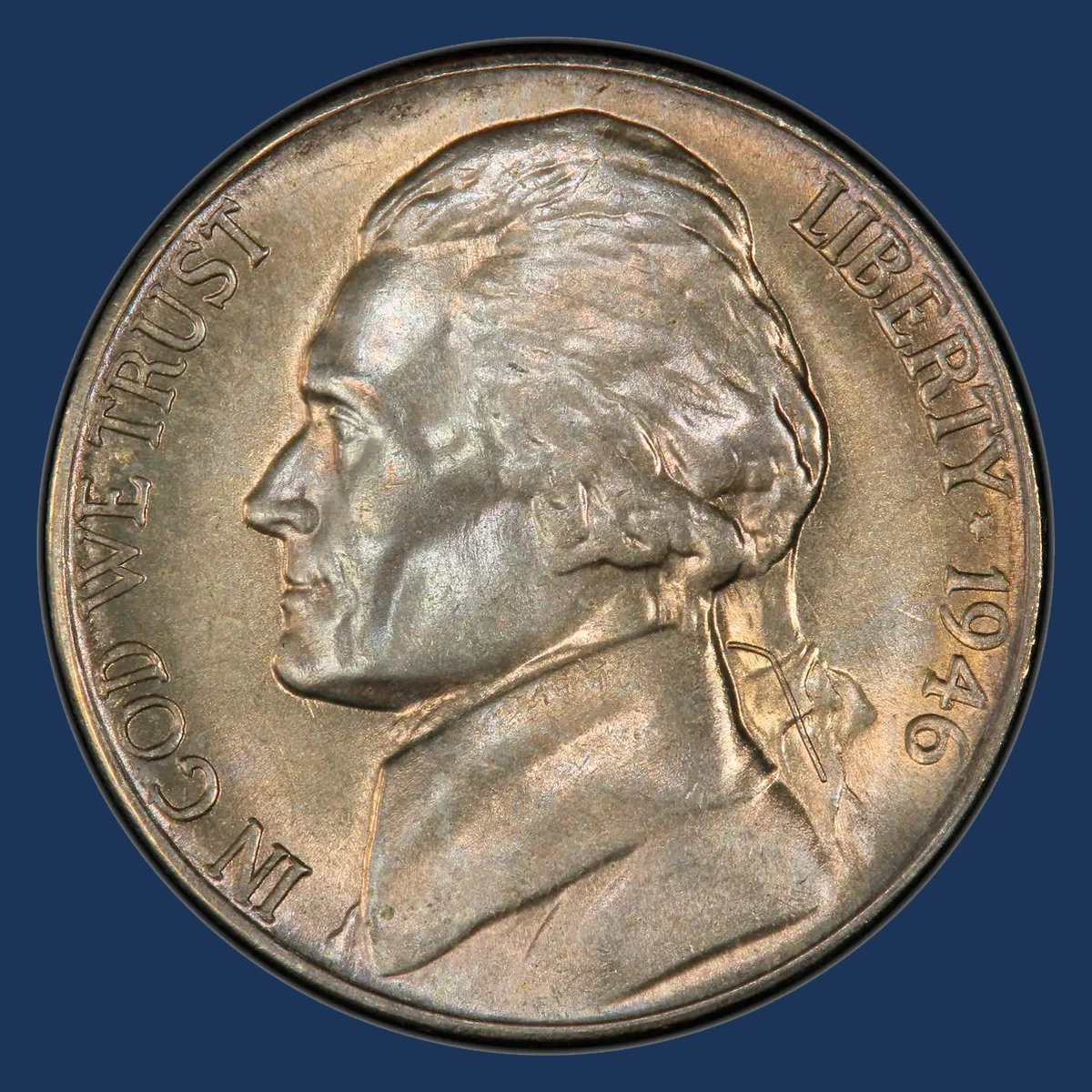
Extra outlines can repeat the date, lettering, or parts of Jefferson’s portrait. They began in the stamping tool before it touched the blank, allowing one strike to produce the repeated detail.
The San Francisco FS-101 front variety affects LIBERTY, the star, date, hair, and IN. Other Denver and San Francisco patterns emphasize different front or back wording.
Philadelphia back varieties include thickened or repeated letters in MONTICELLO and FIVE CENTS. Those patterns require their own comparison photographs.
The many catalog entries describe alternatives. They are not a checklist of extra outlines that must all appear on the same nickel.
Estimated Value
Estimate $10–$2,500 across identifiable minor and stronger doubled varieties in ordinary collectible conditions. A small close outline differs in appeal from a clearly separated, recognized pattern.
An MS65 Philadelphia FS-801 doubled reverse is reported at $504 in May 2019. That result concerns an unworn back variety, not the San Francisco front design.
Wear can hide fine repeated contours, while exceptional preservation can lift the whole coin’s price. Compare the specific pattern before assigning a strong variety premium to thick-looking letters.
How to Identify
Choose the mint before choosing a comparison photograph: Philadelphia has no letter, while D or S appears beside Monticello. A scale and calipers can check a loose coin against 5 grams and 21.21 millimeters, with a plain edge.
For San Francisco FS-101, use a 10× magnifier on the date, LIBERTY, star, hair, and IN. Philadelphia back varieties require separate comparisons around Monticello and the denomination.
Match the direction and shape against the illustrated 1946 varieties, rather than expecting every pattern on one nickel. Several matching repeated contours give stronger evidence than one thick letter or a flat shelf caused by movement during striking.
11. 1946 Jefferson Nickel Struck on a Wartime Silver Blank
A normal-looking 1946 nickel can contain the wrong alloy. One Philadelphia example was struck on a leftover wartime blank containing thirty-five percent silver.
Normal nickel production had returned to copper-nickel metal by then. The old blank received the regular 1946 design, so it did not gain the large P found on wartime Philadelphia coins.
PCGS graded the example Fine 12, meaning visibly worn with the main design recognizable. Heritage noted its silver-like surface color.
Both normal and wartime blanks started near five grams. That makes composition testing more useful than weight alone when examining this unusual find.
Estimated Value
The Fine 12 example sold for $9,600 in November 2022. It shows that substantial wear does not erase the appeal of a confirmed wrong-alloy blank.
For genuine 1946 wartime-alloy examples, use an estimated $5,000–$15,000, depending on preservation and reliable identification. This is an error-collecting value rather than the small value of the silver itself.
A silver-colored ordinary nickel does not qualify without evidence of the original alloy. Surface treatments can imitate a different metal.
How to Identify
A normal five-gram reading cannot separate a wartime silver blank from an ordinary 1946 nickel blank. Both began near that weight, so a scale is only an initial check on a loose coin.
Check all four date digits through a 10× magnifier for alteration. Photograph the back too: the regular 1946 Philadelphia design lacks the large wartime P.
Calipers should compare the diameter with 21.21 millimeters, and the edge is normally plain.
Have a qualified service test the metal without damaging the coin. A silver-colored coating can imitate its appearance without changing the original alloy.
The deciding evidence is thirty-five-percent silver in the original metal, together with an unaltered 1946 date.
Conclusion
The estimated $5–$15,000 range reflects very different errors, from small raised cracks to the confirmed wartime-silver blank. A normal weight alone cannot distinguish those two nickel alloys.
For visible mistakes, compare the complete date, both faces, and the edge. Keep split-before and split-after examples separate, and identify the actual mintmark shape before treating an extra curve as a hidden letter from another mint.