2021 Dime Error List with Pictures

A copper-colored face and a small raised bump need very different checks. This guide to 2021 dime errors focuses on ordinary clad coins, with estimated values of $5–$2,500.
For a high-value comparison, a 2018-P dime on a foreign iron blank sold for $2,160 in July 2023. That was a different year and material from the reported 2021 cent-blank type.
Follow the visible features below to work out which explanation fits your coin.
1. 2021 Roosevelt Dime Die Cracks and Chips
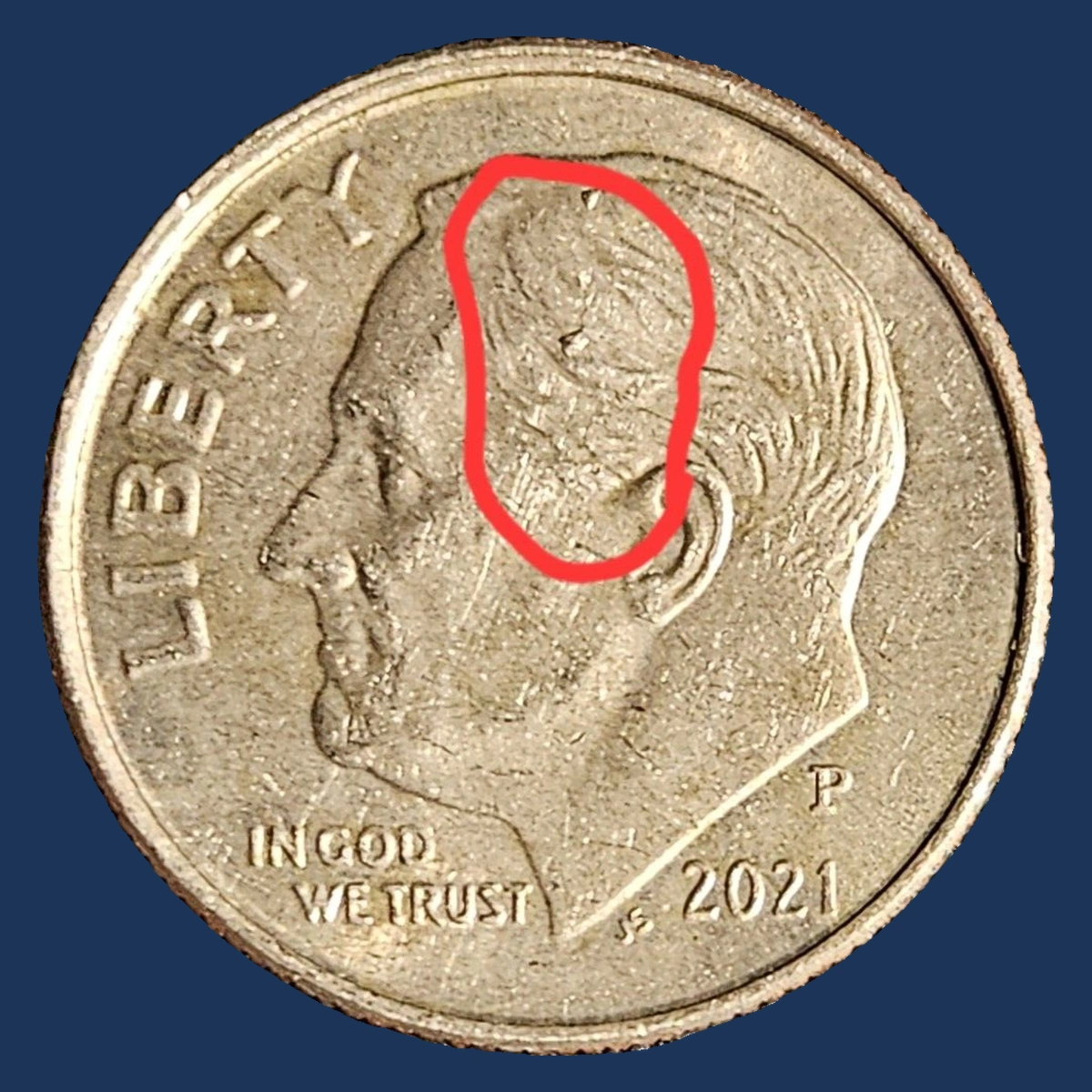
A raised line can run from Roosevelt’s head toward the rim. Small bumps may also replace parts of his face or appear around the torch and lettering on the back.
These marks can come from damage to a die, the steel tool that stamps a coin. A crack leaves a line, while a small missing piece of the tool can leave a raised chip-shaped patch.
Philadelphia examples are reported with head-to-rim cracks and small bumps. A bump above DI is another reported location, but its appearance must support a damaged-tool explanation rather than later damage.
Estimated Value
An estimated $5–$100 covers small genuine cracks and chips of the kind reported here. A tiny bump usually attracts less interest than an obvious line or a larger cleanly formed patch.
The coin’s ordinary condition still affects the total price. Strong magnification can make a minor mark look much more impressive than it does in hand.
A nickname does not establish value. Compare the actual size and shape before paying a major-error price for a small raised feature.
How to Identify
Use side lighting on the head-to-rim area, then inspect it through a 10× magnifier. The line should be raised, while a scratch normally cuts into the surface.
For a loose clad dime, use a scale and calipers against 2.268 grams and 17.91 mm. Inspect the edge grooves for a hit near the affected area.
Check bumps separately from lines: metal pushed up beside a dent can resemble a chip. Original design should meet the patch without fresh scrape marks around it.
A mark near DI or the torch does not need to accompany a head crack. Judge each reported location on its own coin rather than expecting all the bumps and lines in one example.
2. 2021 Roosevelt Dime Finned Rim
A thin lip of metal can stand up along part of the rim. Finning occurs when metal squeezes into a narrow gap beside the stamping tool during the strike.
The reported 2021 Philadelphia examples place this raised lip near the motto or LIBERTY on the front. The affected edge can look taller or sharper than the rest of the rim.
This is not the same as a broad raised bump from a broken tool. A rim can also be pushed upward after minting, so the thin lip and its surrounding surface both need examination.
Estimated Value
A modest original fin fits an estimated $10–$150 range. A tall, clear lip on an otherwise attractive coin can be more noticeable than a slight roughness along the rim.
The price depends on whether the metal still shows its original form. Bending, scraping, or breaking the lip can damage the feature and reduce interest.
An ordinary dime with a battered edge should not receive the upper estimate simply because its rim feels sharp to the touch.
How to Identify
Look across the coin at a low angle to see whether a thin lip rises above the rim. A front-on photograph showing only a wide border can miss that difference.
Use a 10× magnifier where the lip joins the rim near LIBERTY or the motto, without touching the delicate metal. Crushed edge grooves or an inward fold beside it can point to damage after minting.
A loose ordinary clad dime should remain near 2.268 grams on a scale, since finning moves metal rather than adding it. Compare its diameter with 17.91 mm using calipers, keeping them away from the fragile lip so the measurement does not bend the feature.
3. 2021 Roosevelt Dime Lamination
A small surface layer can lift or peel, leaving a rough boundary beside the portrait. Lamination means that metal has separated within the material used to make the coin.
For 2021, reports include Denver examples with affected areas near the hair or jaw. A loose-looking flap is a more useful clue than a general change in surface color.
A small peeling patch differs from a whole missing outer clad layer. Both involve metal separation, but they leave different amounts of exposed surface and should not automatically receive the same description or price.
Estimated Value
For genuine small through clearly visible peeling flaws, estimate $15–$200. A well-defined separation on an attractive dime is easier to appreciate than a tiny rough patch hidden by wear.
The estimate assumes original metal separation, not corrosion or a deep scrape. Large magnified photographs can exaggerate how much surface is actually affected.
If a loose flap survives, leave it attached. Removing it changes the appearance and can make the original cause harder for a buyer to assess.
How to Identify
Do not lift the loose metal. Begin with a 10× view of the boundary near the hair or jaw, where a thin layer may separate from rough material below.
Side lighting can show a shallow opening beneath a flap. A fresh gouge often leaves pushed-up metal beside a deeper cut instead.
Weigh a loose ordinary clad dime against 2.268 grams using a scale. A small peeling flaw may cause too little loss to stand out in that reading.
Use calipers to compare the diameter with 17.91 mm, then inspect the grooved edge for scraping. If much of a face is uniformly copper-colored, examine it as a possible missing clad layer rather than assuming the small-flap explanation fits.
4. 2021 Roosevelt Dime Struck Through Material
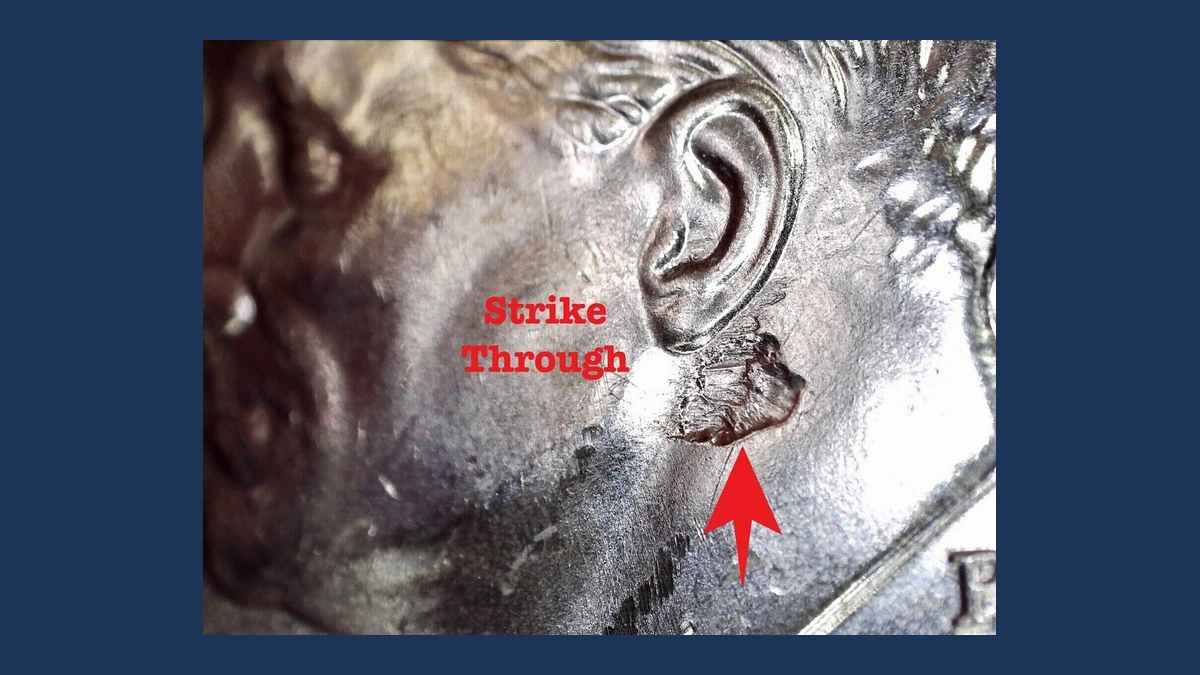
A narrow sunken mark or a patch of weak detail can form when material blocks the stamping tool. The coin records the obstruction instead of receiving the full design in that area.
The 2021 reports describe a mark above the jaw on a Philadelphia dime. A Denver example concerns the date and mintmark area instead.
Those positions belong to separate coins. A line-shaped depression does not by itself establish whether a thread, wire, or some other material was present, and the reports do not prove an object remains embedded in either coin.
Estimated Value
An estimated $15–$250 covers genuine minor impressions through clear, larger blocked areas on ordinary clad examples. The shape and visibility of the affected design matter more than an unsupported name for the material.
A narrow faint mark belongs lower than an obvious impression beside sharp original detail. A readable date and mintmark also help a collector identify the coin.
Later cuts or dents do not earn a striking-error premium, even when a seller describes the mark as a wire impression.
How to Identify
Read the mint letter near the date before choosing a comparison photograph. The Philadelphia report concerns the jaw area, while the Denver report concerns the date and mintmark.
Examine the depression’s borders through a 10× magnifier. Look for interrupted design without the sharp cut and displaced metal often left by a later scratch.
For a loose clad piece, use a scale and calipers against 2.268 grams and 17.91 mm. Check the edge grooves for related impact damage.
A narrow line does not reveal exactly what blocked the tool. Wire, thread, and other material can leave different impressions, but the object may be gone.
Follow the surface through the affected area rather than naming the object from its outline alone. Preserved detail beside the depression helps show whether the mark formed during striking.
5. 2021 Roosevelt Dime Die Clash
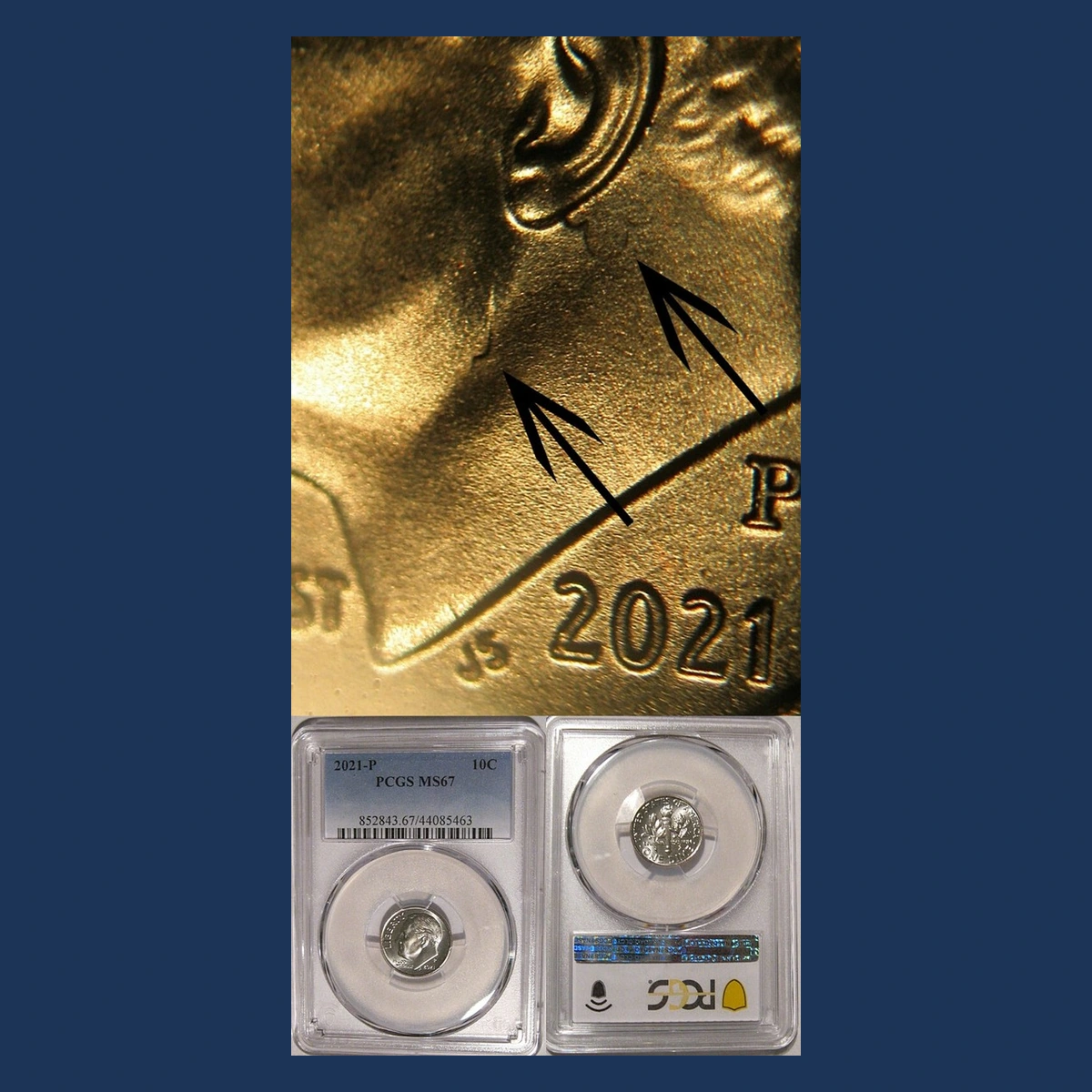
Unexpected lines around Roosevelt or the torch can resemble parts of the design on the opposite side. A clash happens when the stamping tools strike each other without a blank between them.
That contact can transfer parts of each design onto the other tool. Later dimes may then show those unwanted fragments beside the normal portrait or torch.
The 2021 error guide reports Philadelphia clashes. The identifying clue is a shape traceable to the other face, not merely a cluster of scratches or thickened lines around the main design.
Estimated Value
For faint through clearly recognizable clashes, an estimated $20–$300 is appropriate. A visible fragment that a collector can connect to the opposite design is more appealing than an unexplained line.
Good surface quality helps that connection stand out. Wear and scratches can hide the transferred shape or make the coin harder to judge.
The estimate is for the whole dime. Several fragments from one clash do not create separate prices, and enlargement should not substitute for a clear match.
How to Identify
Begin with the two normal designs, using clear pictures of Roosevelt and the torch to orient the coin. For a loose clad dime, check 2.268 grams and 17.91 mm with a scale and calipers, then inspect the grooved edge.
Now compare the unwanted marks with the opposite design through a 10× magnifier. A fragment near the portrait should fit a torch-side feature, or a mark near the torch should fit part of Roosevelt’s side.
Work with recognizable curves or letter shapes instead of treating every line as part of the clash. Random scratches may cross one another, but they should not consistently reproduce a section of the other face.
6. 2021 Roosevelt Dime Doubled Dies
Letters or design details can show a second raised outline rather than one clean edge. A doubled die has that extra shape in the stamping tool before it strikes the coin.
Philadelphia front reports mention the date, LIBERTY, motto, and portrait. Back reports concern lettering and the torch, without establishing one mint for every example.
These are different patterns, not a checklist that every doubled 2021 dime must satisfy. Flat ledges left by movement during striking can also make details look repeated, but they do not establish the same tool-making mistake.
Estimated Value
An estimated $20–$350 applies to genuine doubled varieties with recognizable additional detail. A strong match and attractive condition can place a coin above one with very small, hard-to-see doubling.
The upper estimate requires more than thick lettering in a blurry photograph. Ordinary strike-related flat doubling usually adds little to a modern dime.
Choose comparisons with the same side, mint, and pattern. A price for a doubled torch should not automatically be assigned to a Philadelphia portrait or date feature.
How to Identify
Choose the side you are testing and enlarge the particular feature, rather than searching for doubling everywhere.
A 10× magnifier should show rounded repeated contours or clear separation within the design. A flat shelf that makes the main letter thinner can come from movement during striking instead.
Check the mint letter before choosing a comparison photo. The Philadelphia front report does not establish the mint of every doubled-back example.
For a loose ordinary clad dime, use a scale and calipers to check about 2.268 grams and 17.91 mm. Inspect the edge grooves as part of the whole-coin examination.
Then compare the exact torch, letter, or portrait detail. A match to that shape matters more than a seller’s general claim that several parts look doubled.
7. 2021 Roosevelt Dime Clipped Planchet
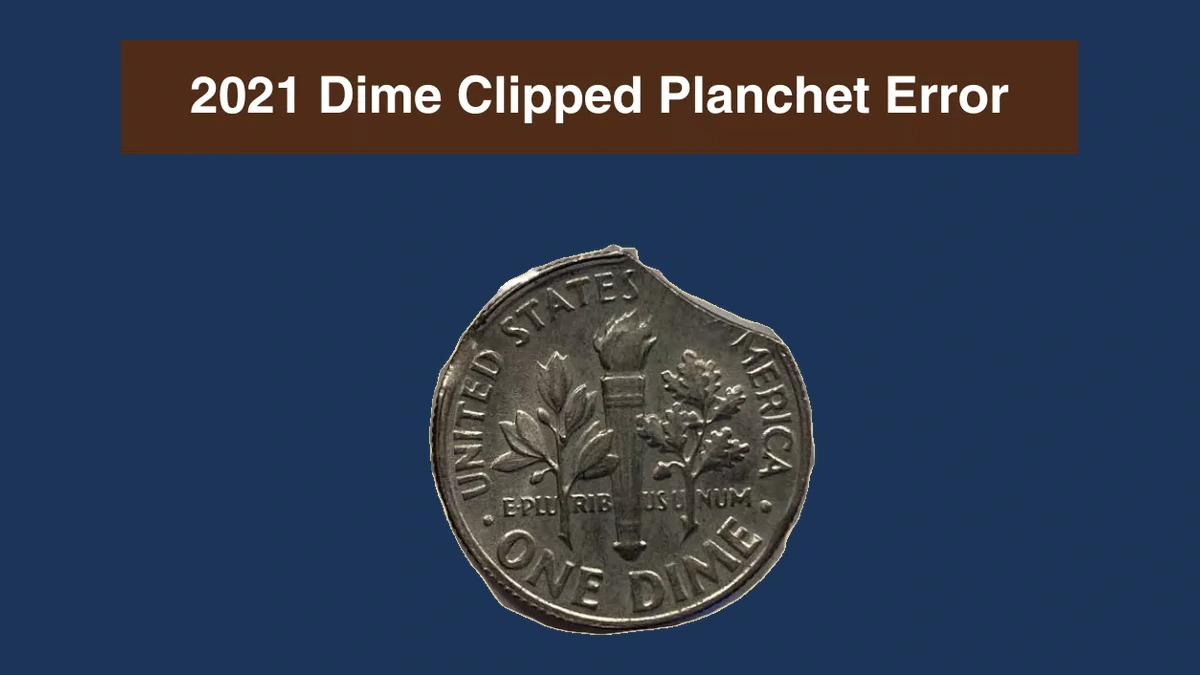
A missing section at the edge can begin before the dime receives its design. The machine cutting blanks may overlap a hole already punched from the strip, producing an incomplete disk.
Collectors call this a clipped planchet, with planchet meaning a prepared coin blank. The 2021 year guide includes the type without identifying one mint or one gap direction.
An original shortage can affect how the rim forms near the gap and on the opposite side. Later cutting or filing can remove metal too, so a missing piece alone is not enough to identify the cause.
Estimated Value
For original clips of modest through more noticeable size, estimate $20–$400. The readability of the date, the condition of the surviving design, and the shape of the gap all affect value.
A large missing area is easier to see, but it can also remove useful identifying details. A small clean clip may be preferable to a bigger damaged example.
The estimate requires an original blank shortage. A dime clipped with tools after minting belongs in a damage comparison instead.
How to Identify
Look at both ends of the gap before considering its size. Under a 10× magnifier, check how the original rim and design meet the missing area.
A weak rim opposite the gap can support an original clip, but it is only one clue. Parallel file marks or a sharp cut through finished edge grooves can indicate later removal.
Weigh a loose ordinary clad coin with a scale against 2.268 grams. Low weight supports missing metal but cannot tell you when it disappeared.
Measure the widest intact span with calipers for comparison with 17.91 mm. Keep the mint letter and readable date in the full photo, since no specific mint or clock position is established for the reported 2021 category.
8. 2021 Roosevelt Dime Broadstrike
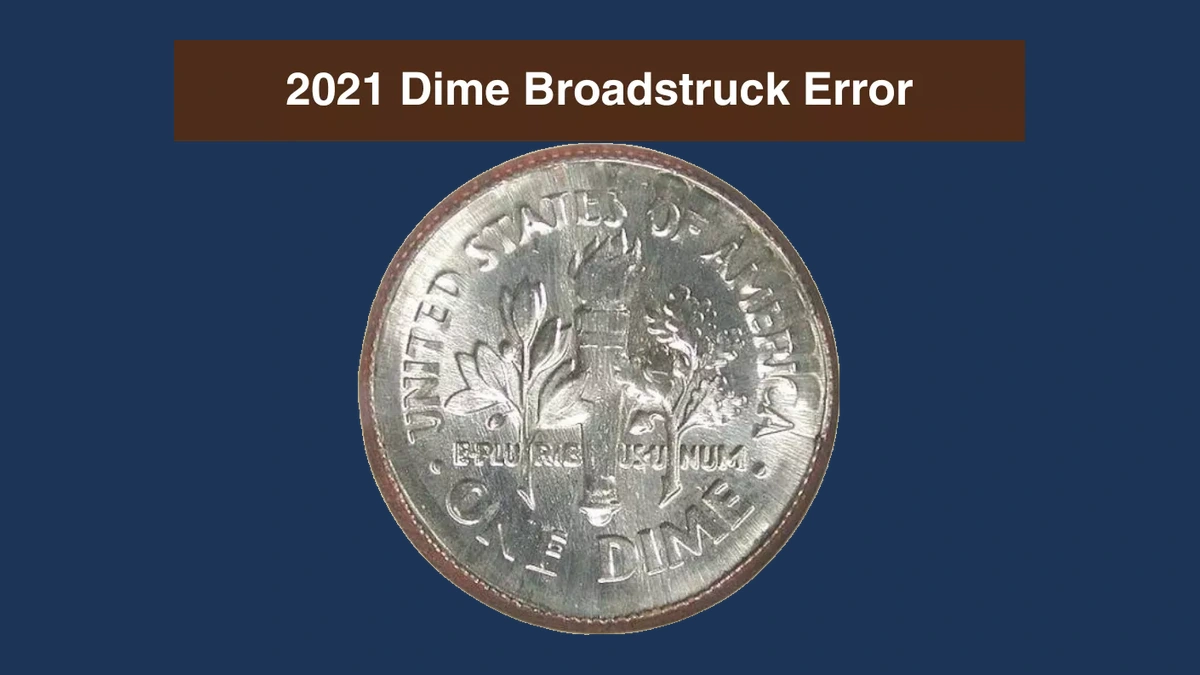
A dime can spread wider than usual when the collar fails to hold it in place during striking. The collar is the metal ring that normally controls the edge and forms its grooves.
A broadstrike keeps the complete intended design even though the outside margin expands. Its edge may not show the normal fully formed grooves.
The 2021 broadstrike report concerns ordinary dimes without fixing a particular mint or measured width. An expanded-looking border needs a full design check, since a misplaced blank can instead lose part of the design beyond the edge.
Estimated Value
A different-year 2000-P dime with broad spreading and multiple strikes sold for $159 in September 2025. Its extra blows make it a combination error, not a direct price for a simple 2021 broadstrike.
Estimate $50–$450 for genuine 2021 examples with visible expansion. The complete design, amount of spreading, and remaining surface quality influence the price.
Later hammering can also enlarge a dime. That damaged shape does not receive the same premium as metal spread naturally during the Mint’s strike.
How to Identify
Measure a loose coin in several directions with calipers and compare it with the normal 17.91-mm diameter. Use a scale to check against 2.268 grams; spreading alone does not remove the metal.
Trace all the outer design on both faces with a 10× magnifier. If part runs beyond the metal and an untouched crescent remains opposite, compare an off-center strike instead.
Examine the edge for incomplete grooves and compare their condition with the expanded margin. Smoothness alone is not proof, because wear and later grinding can remove grooves.
Look for crushed lettering or repeated hammer marks before accepting the wider outline. A genuine broadstrike should explain both the expanded metal and the preserved complete design.
9. 2021 Roosevelt Dime Off-Center Strike
Part of Roosevelt or the surrounding lettering can miss the metal entirely. On the opposite side, a crescent of blank surface receives no design.
The blank was out of position between the stamping tools. Both faces reflect that misplaced disk, rather than only one side having an uneven border.
The 2021 year guide reports off-center strikes without fixing one mint, direction, or percentage for every example. A small shift with its date intact and a much larger partly dated strike should therefore be examined as separate coins, even when sellers use the same error name.
Estimated Value
Keeping the year readable often matters more than maximizing the empty area. For genuine dated examples, estimate $30–$500 according to the shift and condition.
A 1977 dime struck ten percent off center sold for $109 in June 2026. It was graded NGC MS64 Full Bands, meaning unworn with visible marks and clear separation in the torch bands.
That earlier coin is a comparison, not a measured percentage for 2021. Damage or a missing date can reduce a larger shift’s appeal.
How to Identify
Keep the surviving date in the same photograph as the bare metal. An isolated crop of the blank area cannot identify the year.
With a 10× magnifier, compare the design boundary on both faces. They should fit the same displaced blank.
A shift on just one face can result from the alignment of one tool instead. That is a different starting point for identification.
For a loose clad dime, check weight against 2.268 grams on a scale and record its outline with calipers. Striking can distort the normal 17.91-mm circle.
Inspect the surviving edge grooves and the boundary of the blank area. Filed-away design leaves a different surface from metal that never received an impression, so that transition needs a sharp close-up.
10. 2021 Roosevelt Dime Missing Clad Layer
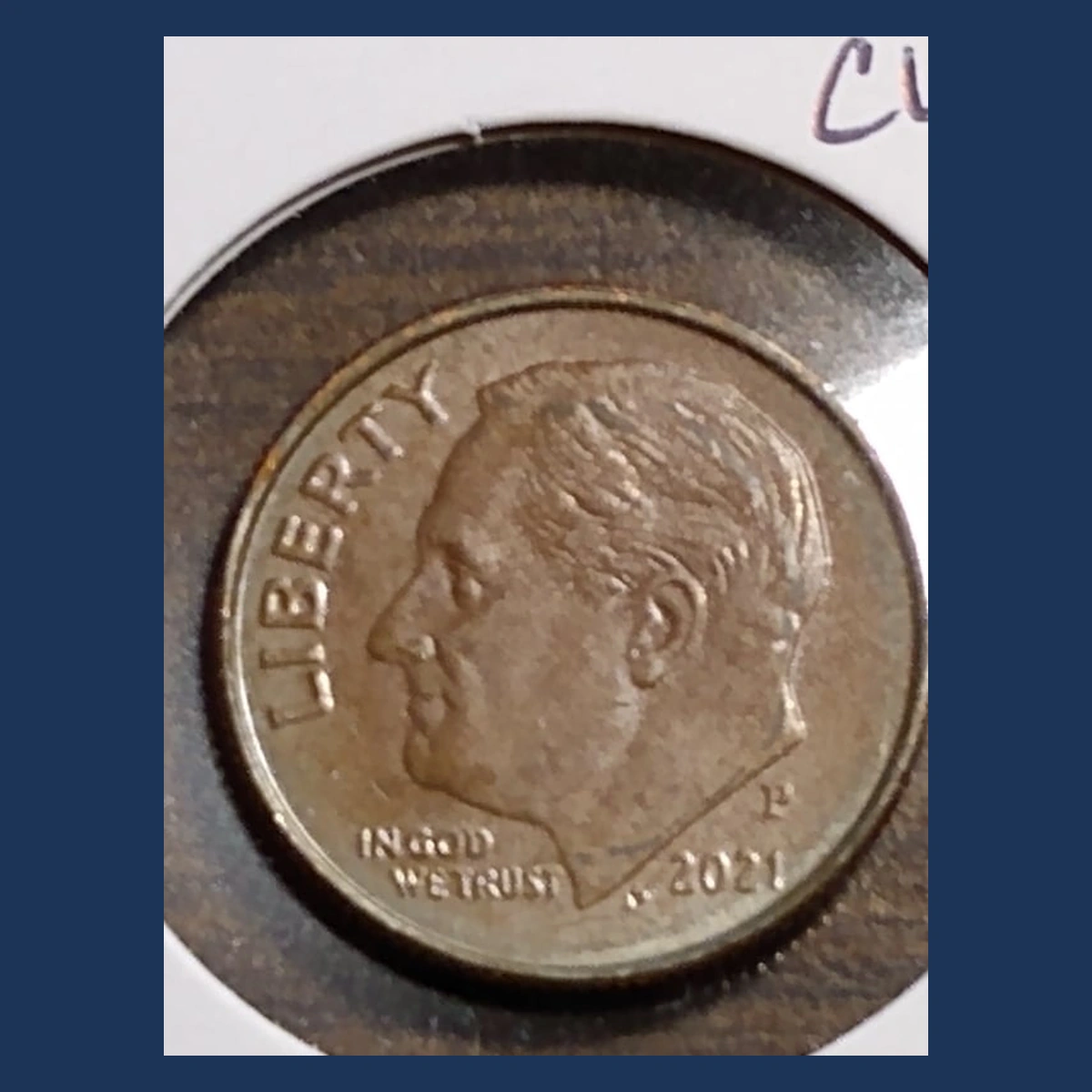
An ordinary dime has a copper core between two copper-nickel outer layers. If one outer layer is missing, much of a face can look copper-colored instead of silver-colored.
The missing-layer category is reported for 2021, but the report does not establish a single mint for every example. It belongs to clad dimes, not the solid silver collector version.
The missing metal should affect weight as well as appearance. Staining, heating, and chemical damage can also change color, while a tiny peeling patch may call for the separate lamination explanation.
Estimated Value
A 2018-P dime missing its front layer sold for $384 in July 2021, graded PCGS MS64. That unworn example is a different-year comparison.
For genuine partial through complete layer losses in collectible condition, estimate $50–$600. Larger clearly exposed areas can attract more interest when the remaining design and surfaces are attractive.
A brown face alone does not earn the estimate. The weight, edge, and surface must support original missing metal rather than discoloration or stripping after minting.
How to Identify
Put a loose ordinary clad dime on a scale before judging its color. The normal weight is 2.268 grams, and substantial loss of an outer layer should lower it.
Use calipers to compare the diameter with 17.91 mm, then inspect the grooved edge through a 10× magnifier. Follow where the silver-colored outer layer ends beside the copper core.
Compare the exposed face with that boundary. Pitting, rough chemical attack, or a thin colored coating can explain an unusual surface without an original missing layer.
The 2021-S silver Proof is a separately made collector coin, not a clad dime with a layer missing. Establish the coin’s metal and finish before applying the clad-weight comparison.
11. 2021 Roosevelt Dime Reported Strike on a Cent Blank
A dime design can be reported on a blank meant for a cent. That would be a different starting piece of metal, not merely an ordinary dime with a discolored face.
The 2021 year guide includes this claim, but its size descriptions conflict. A modern cent blank is normally about 19.05 mm across, which is larger than a normal dime blank.
The proposed type therefore needs the whole coin checked for size, metal, and strike. It should not be identified simply because a copper-colored object carrying Roosevelt looks smaller in a cropped photograph.
Estimated Value
After a genuine wrong cent blank is established, use an estimated $300–$2,500, depending on preservation and how clearly the strike fits that blank. This is not a claimed 2021 auction result.
For comparison, a 2018-P dime on a foreign iron blank sold for $2,160 in July 2023. Its metal and intended denomination differ from a cent blank.
The comparison shows demand for identified wrong blanks, while the specific metal and coin condition determine which price is appropriate.
How to Identify
Begin with the expected starting metal: a modern cent normally has a zinc core with thin copper plating and weighs 2.50 grams. A normal clad dime weighs 2.268 grams.
Use a scale and calipers on a loose candidate, comparing the dime’s 17.91-mm diameter with the cent blank’s roughly 19.05 mm. Striking can alter a blank’s final outline.
Inspect the edge and surviving design with a 10× magnifier. A cent blank starts with a plain edge, while a normal dime receives edge grooves during striking.
Professional non-destructive testing can distinguish copper-plated zinc from ordinary dime metal. A missing clad layer or chemical color change should be ruled out before treating a copper-colored face as evidence of a cent blank.
Conclusion
The estimated $5–$2,500 range covers small raised defects through a correctly identified wrong-blank coin. The biggest price requires more than an unusual color or a thick-looking letter.
Keep mint and finish in view when comparing photographs. On ordinary clad dimes, a weight reading, the copper layer visible at the edge, and the shape of the affected design help separate different mistakes without damaging the coin.