1911 Nickel Error List with Pictures

A wider Liberty nickel and a smaller copper-colored one can both be mint errors, but they tell different stories. One spread beyond its usual size; the other received its design on a cent blank.
A later 1918 Buffalo nickel on a cent blank brought $2,340 in January 2022, a comparison rather than a 1911 sale. Estimated ranges for these 1911 nickel errors run from $10 to $6,500.
Follow the visible shape and surface clues below to identify the right type.
1. 1911 Liberty Nickel Lamination
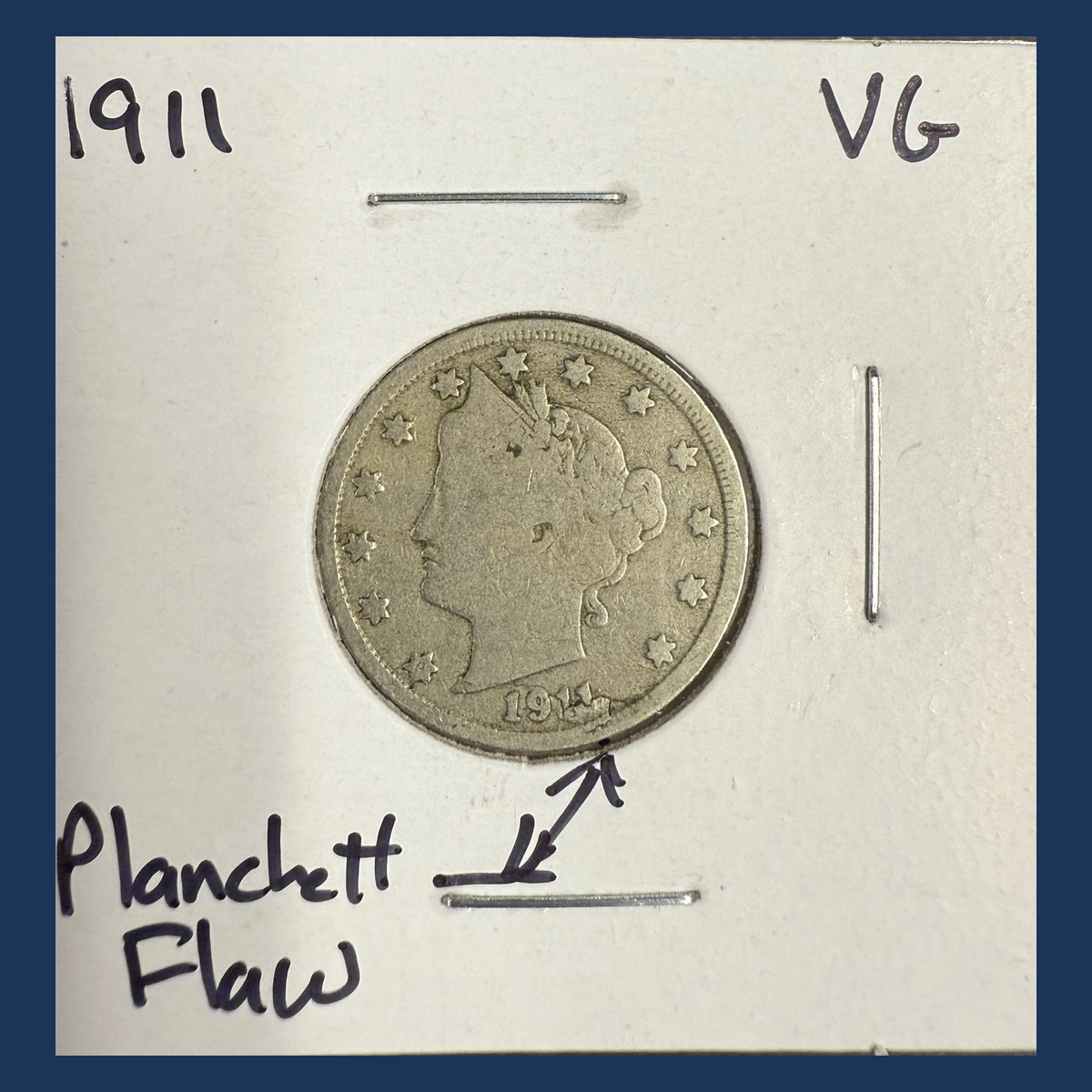
A strip or patch of the surface may separate when the metal contains a weak internal seam. Collectors call this lamination, whether the loose piece stays attached or falls away.
A heavily worn 1911 example with front lamination appeared at Heritage. A separate catalog describes peeling on the back between about 7 and 10 o’clock.
These locations are not two views of the same recorded coin. The normal alloy mixes copper and nickel throughout, so peeling is not evidence that a plated outer layer has come away from a different metal core.
Estimated Value
Heritage sold the front-lamination example, graded NGC Good 4, for $51 on January 2, 2023. Good 4 describes a heavily worn coin with its basic design still identifiable.
An estimated $10–$150 covers ordinary small laminations across differing wear and visibility. A large intact flap or a better-preserved coin may need a more individual comparison.
The recorded $51 is the complete coin’s price. It does not create a separate fixed payment for every peeling patch.
How to Identify
Find the boundary between the original surface and the separating metal with a 10× magnifier. A lifted edge or a layered opening is more useful than a dark patch that could be dirt.
The Heritage example has front lamination. Use the separate 7-to-10-o’clock back description only when examining that other reported shape.
For a loose coin, weigh against 5 grams on a scale and measure about 21.2 millimeters with calipers. Inspect the plain edge without squeezing any loose metal.
A surface flap may retain almost all the original weight. Leave it attached and photograph the seam from the side rather than lifting it to expose more of the interior.
2. 1911 Liberty Nickel Doubled Front Design
Extra outlines in the date and LIBERTY are reported for 1911 Liberty nickels. A true doubled die is a steel stamping tool that received a repeated design during preparation.
Coins made from that tool carry the same extra details without needing another strike. The year report also describes an example with both doubling and lamination, which would be two features on one coin.
The report does not establish a numbered major variety or a specific certified specimen. This makes a matching front design essential, rather than calling any thick date or worn letter a recognized rarity.
Estimated Value
Use a conditional $25–$250 estimate for a 1911 nickel with a confirmed minor doubled front. This range depends on a genuine repeated design and includes the coin’s normal condition value.
No sale of a matched 1911 variety establishes the range here. It should not be replaced with the price of a famous doubled die from another series.
If lamination occurs on the same coin, assess the complete specimen once. Adding two maximum estimates would not measure its actual market value.
How to Identify
If a candidate also has peeling metal, locate date and letter details beyond the disturbed patch first. A lifted seam crossing a numeral is not another copy of that numeral.
For a loose coin, check about 5 grams on a scale and 21.2 millimeters with calipers, with a plain edge. All normal 1911 Liberty nickels came from Philadelphia, so a D or S would require explanation.
Now compare the date and LIBERTY through a 10× magnifier with an illustrated same-year example of the claimed variety. Raised repeated shapes need to agree across the affected details; flat shelves from striking movement or rounded worn edges cannot establish that match.
3. 1911 Liberty Nickel Rim-Connected Die Break
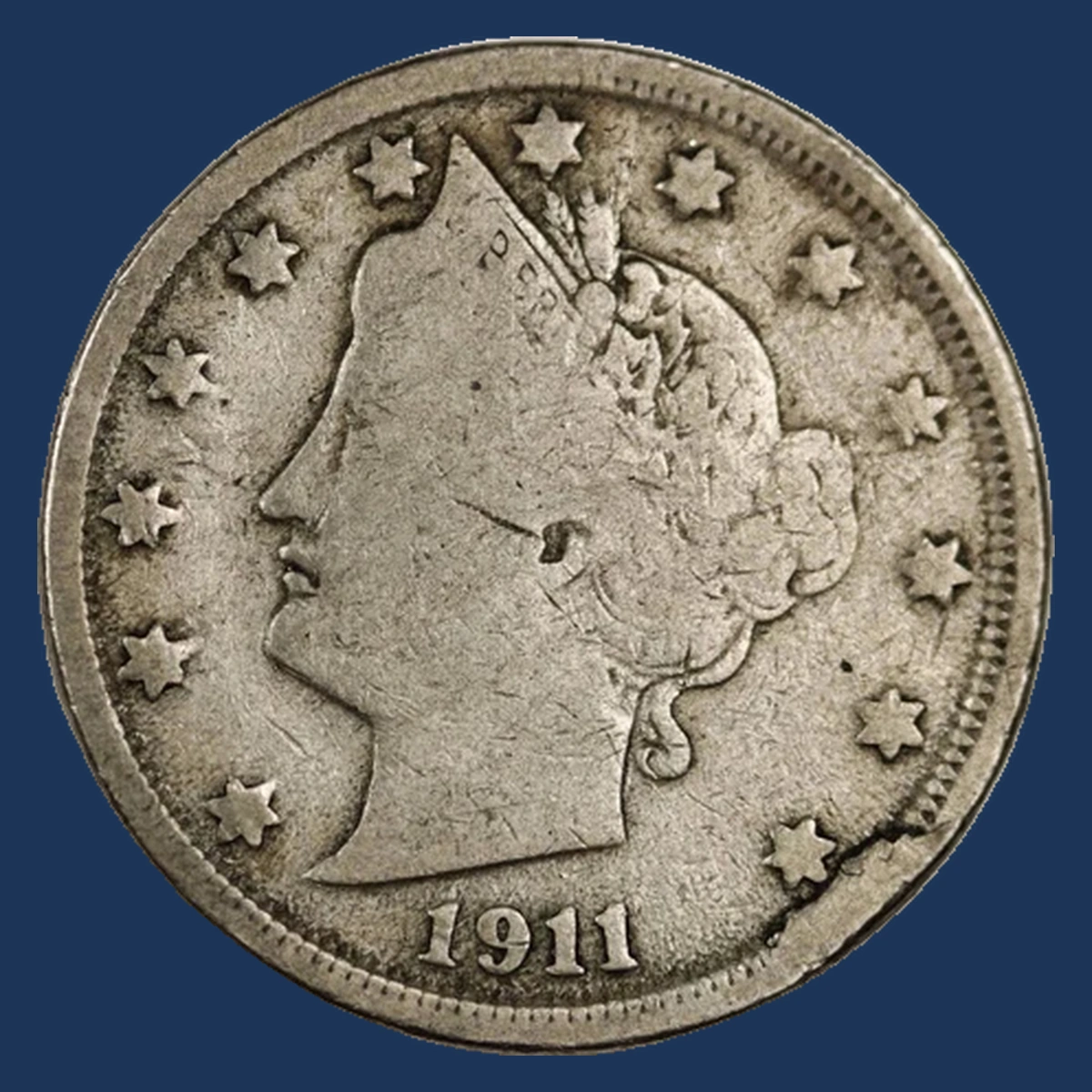
A raised blank patch that touches the rim can mark a missing piece of the stamping tool. Coin metal flows into that opening instead of receiving the normal details.
This is called a cud. A seller described a 1911 Liberty nickel with a back cud, but the listing was not a certification and did not establish its clock position.
The key relationship is between the patch and the rim. An isolated bump inside the design, corrosion stuck to the surface, or a dent at the edge does not automatically fit this particular type.
Estimated Value
Estimate $30–$300 for an ordinary 1911 nickel with a genuine back cud, depending on the break’s size and the coin’s condition. A clear rim-connected patch is easier to value than a small ambiguous lump.
The seller report does not supply a verified auction result here. This is a conditional estimated range, not a record for the listed coin.
Better preservation can raise the whole-coin price, while later damage to the same area can reduce both identification confidence and collector appeal.
How to Identify
Inspect the plain edge where the suspected back patch meets the rim. On a loose coin, a scale and calipers should record about 5 grams and the normal 21.2-millimeter diameter.
View the junction under a 10× magnifier with low side lighting. The raised area should continue into the rim rather than sit as an isolated bump within the design.
Trace its boundary through nearby details and look for material attached on top of the original surface. An edge impact may also push metal upward, but it disturbs the surrounding coin differently from a missing piece of the stamping tool.
Photograph the back and side together. Keep the complete junction visible so the patch’s rim connection can be assessed without assuming the seller’s unspecified clock position.
4. 1911 Liberty Nickel Double Curved Clips
Two curved gaps can form when a blank is punched across areas of metal already removed from the strip. The incomplete blank then receives the normal Liberty nickel design.
A dealer listed a 1911 example with double curved clips in NGC Fine Details. The details label records a condition problem; the dealer identifies cleaning on this coin.
The gaps are two parts of one error coin, not a pair of separate nickels. Their surfaces and the nearby rim must support missing metal before striking, since later cutting can also create two rounded bites.
Estimated Value
Northeast Numismatics listed the cleaned NGC Fine Details double-clip coin at $195. That is a dealer asking price, not a completed auction result.
A working estimate of $75–$350 covers ordinary 1911 examples with convincing curved clips. Clear date detail, original gap surfaces, and the amount of missing metal influence the price.
The cleaning problem belongs to the listed specimen and should not be assumed on every double clip. Nor should two gaps be priced as two separate coins.
How to Identify
Inspect each curved gap separately before comparing them together. With a 10× magnifier, look at the places where the design runs into each shortage and check for filing or cutting.
For a loose example, a scale should reveal some loss from the normal 5 grams. Use calipers across the intact outline, normally around 21.2 millimeters, and examine the remaining plain edge.
Weak rim sections opposite the gaps may support a genuine clip, but the edge surfaces need to agree too. Do not assign a clock position from another double-clipped coin.
The dealer-listed example is cleaned. Compare its mint-made shortages separately from the surface changes caused by cleaning when judging your coin’s condition.
5. 1911 Liberty Nickel Off-Center Strike
An unstruck arc at the upper-left of the front appears on the recorded 10% off-center coin. Part of the design runs beyond the blank on the opposite side.
This happens when the blank does not sit correctly between the stamping tools. The tools still strike, but they cannot place the whole intended design on the available metal.
Heritage described this example as VF20 without third-party certification, meaning moderate wear. Another catalog lists a 5% example, which belongs to the same error type but should not inherit the 10% coin’s outline or condition.
Estimated Value
The 10% off-center example sold for $155.25 at Heritage on March 1, 2003. Its VF20 description was the auctioneer’s assessment of an uncertified coin.
An estimated $75–$500 suits ordinary identifiable 1911 off-center strikes across varying wear and displacement. A readable date and a clear relationship between blank metal and lost design help comparison.
The separately reported 5% coin has no sale price assigned here. A smaller percentage does not automatically mean half the value of a larger one.
How to Identify
Find the complete or surviving date before measuring the empty crescent. That establishes which year you are comparing and prevents a dateless Liberty nickel from being assigned to 1911.
For the 10% example, compare the upper-left blank area with the missing design opposite it through a 10× magnifier. Examine both faces, since a one-sided shift may have another cause.
Weigh a loose coin with a scale against 5 grams and use calipers to record its outline against the normal 21.2 millimeters. Its plain edge should not show trimming that imitates lost design.
Follow the outer letters into the boundary of the strike. If the full design remains with an expanded margin, use a broadstrike comparison rather than calling that complete design off-center.
6. 1911 Liberty Nickel Uncentered Broadstrike
An enlarged margin can be wider on one side without making the coin an off-center strike. The recorded 1911 example is an uncentered broadstrike: its design remains complete inside an unevenly expanded shape.
The coin spread outward because the collar, the ring that normally controls its size, did not contain it properly. The expansion changes the outline rather than necessarily cutting off the lettering.
Stack’s Bowers listed an MS63 example in its November 2012 catalog. MS63 means unworn with some noticeable marks, and the coin’s uneven centering does not create a second error by itself.
Estimated Value
Allow an estimated $100–$750 for an ordinary 1911 broadstrike with a complete design, depending on preservation and the visible spread. The cataloged MS63 example provides a documented type but no sale amount used here.
A later 1999-P Jefferson broadstrike in MS63 sold for $89 in March 2025. That different series and year offer a comparison for the mechanism, not a price for the 1911 coin.
Original surfaces and a clearly expanded outline matter more than an uneven-looking rim alone.
How to Identify
Place the coin beside a normal Liberty nickel and compare the outline before enlarging any detail. For a loose specimen, calipers should show expansion beyond the normal 21.2 millimeters in the affected directions.
A scale checks against the usual 5 grams, and the edge should be plain. Inspect that edge through a 10× magnifier for hammering or an added metal ring.
Then follow the entire design, especially the outer lettering, around both faces. The cataloged uncentered broadstrike should be compared as a complete design spread over a larger area, rather than a design partly missing the blank.
Flattened patches around the edge can reveal later hammering.
7. 1911 Liberty Nickel Struck on a Cent Planchet
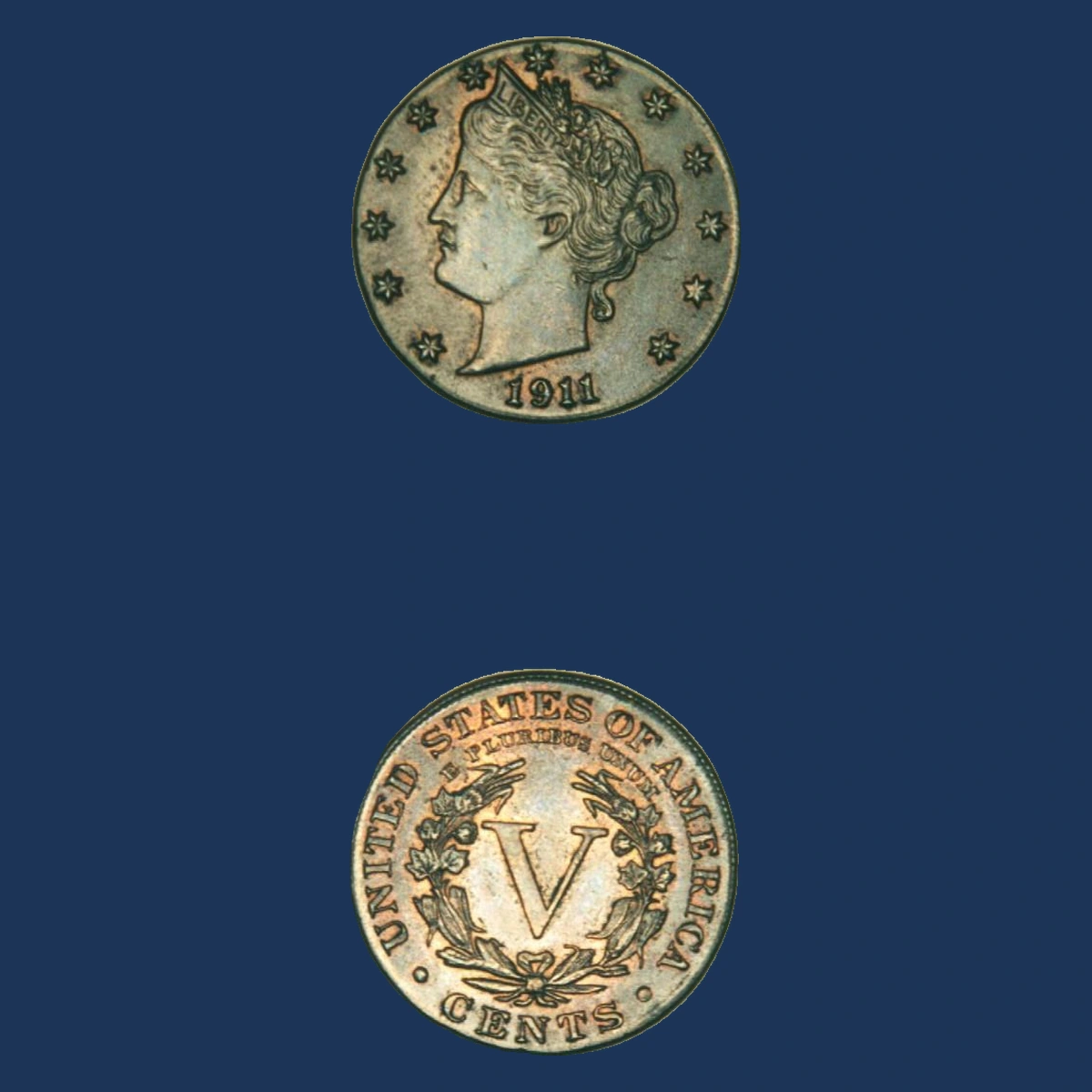
A brown coin with the Liberty nickel design can be a nickel struck on a cent blank. The smaller copper blank entered the wrong press and received a five-cent design instead of a cent design.
Stack’s Bowers cataloged a 1911 example graded PCGS AU55, meaning lightly worn. Its description emphasizes a well-centered design on the smaller blank, so severe displacement is not required.
The normal nickel is larger and contains a copper-nickel alloy. Color alone cannot establish the wrong blank, because toning, coating, and chemical treatment can also change the appearance of an ordinary nickel.
Estimated Value
An estimated $1,500–$6,500 covers identifiable 1911 cent-blank examples across differing condition and surface problems. No completed price for the cataloged AU55 specimen is assigned here.
For comparison, a 1918 Philadelphia Buffalo nickel on a 3.1-gram cent blank sold for $2,340 in January 2022. Its back was tooled, and its year and design differ from the 1911 Liberty nickel.
That result demonstrates the market for the mechanism without claiming the two coins deserve identical prices.
How to Identify
A loose candidate’s weight is more useful than its brown color. Compare the normal nickel’s 5 grams with a cent blank’s standard 3.11 grams using a scale.
Calipers help compare the normal 21.2-millimeter nickel with a cent blank around 19 millimeters before striking. The strike may spread the smaller blank, so diameter must be read with weight and metal.
Inspect the plain edge and the outer design through a 10× magnifier. The known 1911 example is well centered, so do not require the dramatic blank crescent seen on an off-center error.
Confirm the copper-alloy blank and the coin’s certification rather than accepting color alone. The standard cent specifications are a comparison, not claimed measurements of this individual AU55 specimen.
Conclusion
Begin with the shape: missing curved pieces, an untouched crescent, and a wider complete design point to different faults. A smaller copper blank requires weight and metal checks as well.
The estimated $10–$6,500 range spans modest peels through wrong-blank coins. The $195 double-clip figure is an asking price, while the $155.25 off-center result is an actual auction sale.
Keep those price types separate, and preserve the original edge and surface during examination.