1919 Nickel Error List with Pictures

A blank meant for Argentina became a Buffalo nickel and later sold for $6,600 in January 2021. It weighed just three grams.
This 1919 Buffalo nickel error list ranges from missing letters to split coins and repeated strikes. Estimated values span $15 to $8,000.
Several coins show more than one mistake, while similar-looking marks can have different causes. Read on to find the features that tell them apart.
1. 1919 Buffalo Nickel Struck Through Material
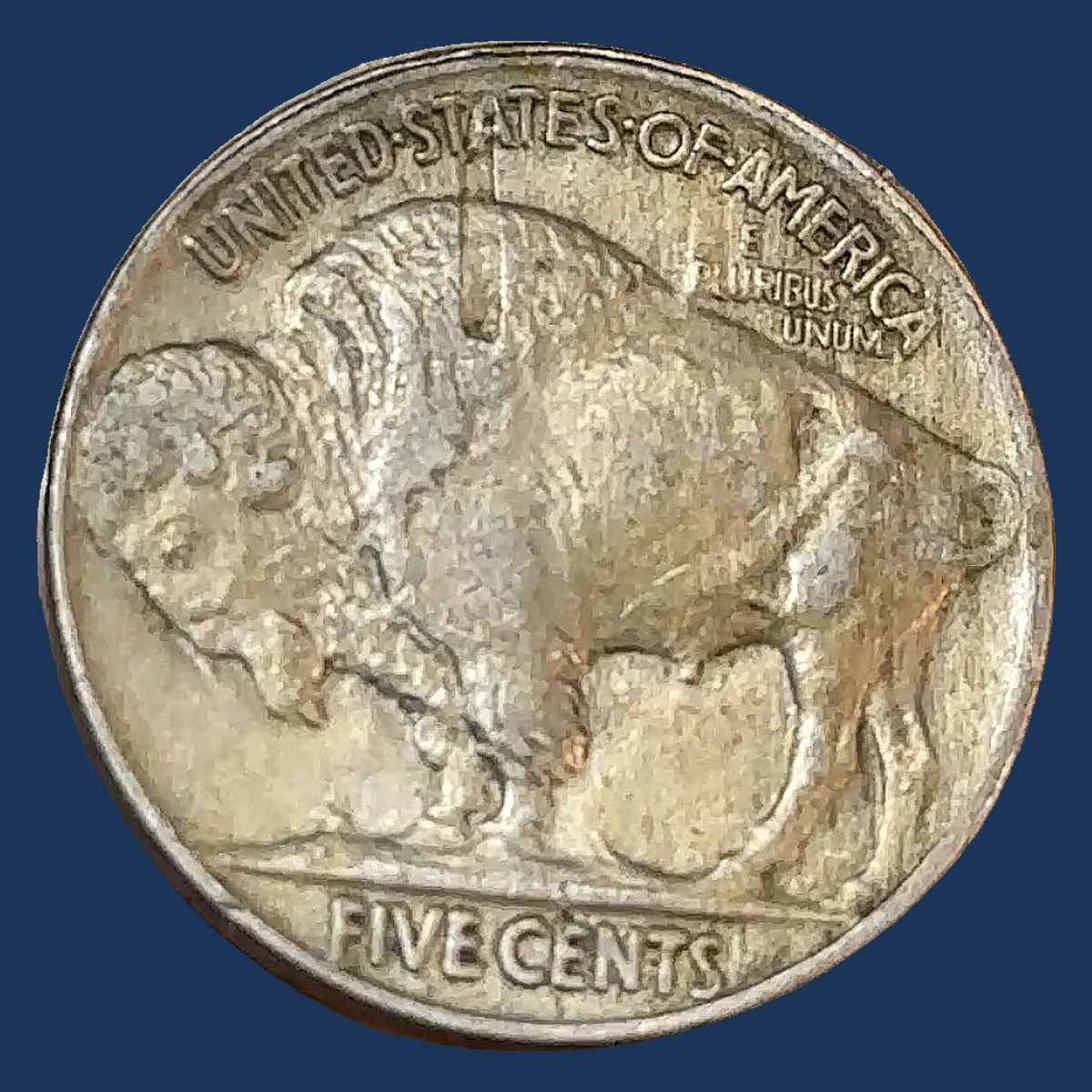
The word FIVE can tell the story. A collector’s 1919 Philadelphia example lacks its entire E and about half of the V.
Material between the blank and the stamping tool blocked those details during striking. The missing letters do not establish what the obstruction was made from.
The coin is described as AU58, meaning very slight wear. A separate MS64 report concerns an interruption on the front rather than the back.
Ordinary wear, a soft strike, or later scraping can also remove detail. Clear neighboring letters help distinguish a local interruption from general flattening.
Estimated Value
For confirmed 1919 strike-throughs, estimate $15–$250, depending on size, condition, and the clarity of the affected area. Small weak patches generally sit below strong, recognizable interruptions.
The Philadelphia AU58 reverse and reported MS64 front examples have no individual selling prices assigned here. Their grades describe different coins and do not set one shared value.
A missing letter caused by scraping or wear does not receive the same premium as detail blocked in the press.
How to Identify
Read FIVE through a 10× magnifier when checking the reported reverse example. Compare the missing E and half V with the surviving letters and nearby surface.
Look across the rest of the coin for wear before deciding that the loss is local. A scratched channel or pushed-up edge may show that metal was removed or displaced afterward.
For a loose coin, use a scale and calipers against the normal 5.00 grams and 21.21 millimeters. Those measurements cannot identify the obstruction.
Photograph the whole affected word rather than only the empty space. The useful comparison is interrupted detail beside normally formed letters, while the separate front example needs its own matching image.
2. 1919 Buffalo Nickel Repunched Mintmark
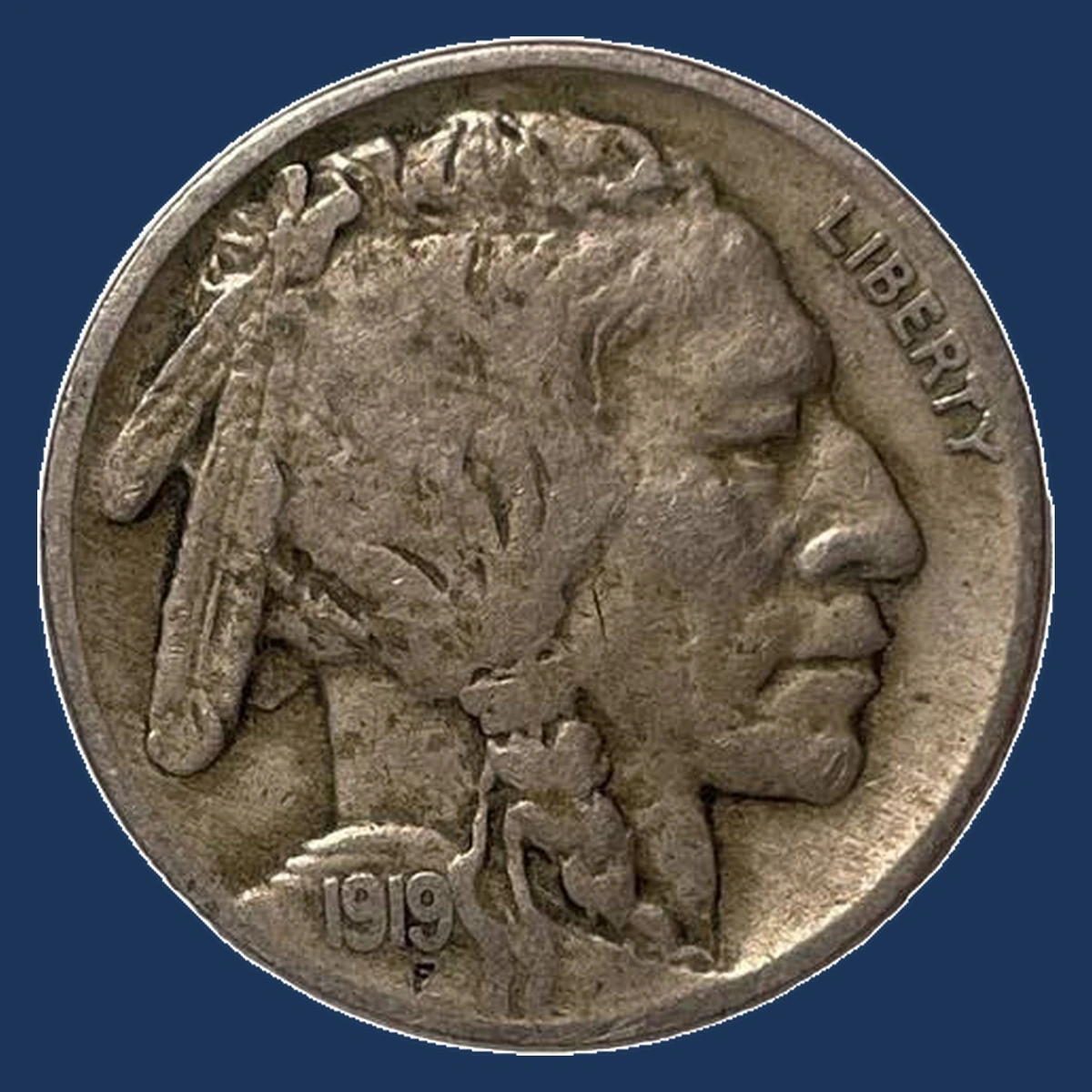
A mint letter can show a small extra part of an earlier impression. The D or S was punched into the stamping tool by hand.
If another punch landed slightly away from the first, pieces of both letters could remain. Coins made with that tool then repeated the overlapping shape.
The 1919 year listings report repunched mintmarks for Denver and San Francisco. Their precise directions need to be matched to the actual variety.
This does not mean a D was punched over an S. The report concerns repunching at each mint, rather than an established change between two different letters.
Estimated Value
Use an estimated $20–$250 for a clearly identified 1919 repunched mintmark. Visibility, surface preservation, and the particular mint all affect the comparison.
This is a working range for the reported varieties, not a specific auction record for a named D/D or S/S. A clear earlier letter fragment is more useful than a thick edge.
The condition value of the underlying Denver or San Francisco coin remains part of the total price.
How to Identify
Find the D or S below FIVE CENTS on the back. The small F under the front date names the designer and is unrelated.
A 10× magnifier should show whether the extra stroke fits another D or another S. Compare the complete letter, including its stem or curves, instead of enlarging one isolated bump.
Check the surrounding surface for a seam or disturbed metal from an added mint letter. A scale and calipers compare a loose coin with the usual 5.00 grams and 21.21 millimeters.
Change the direction of the light. A genuine raised fragment keeps its shape, while glare can make an ordinary letter edge seem to divide and then disappear.
3. 1919 Buffalo Nickel Doubled Die Obverse
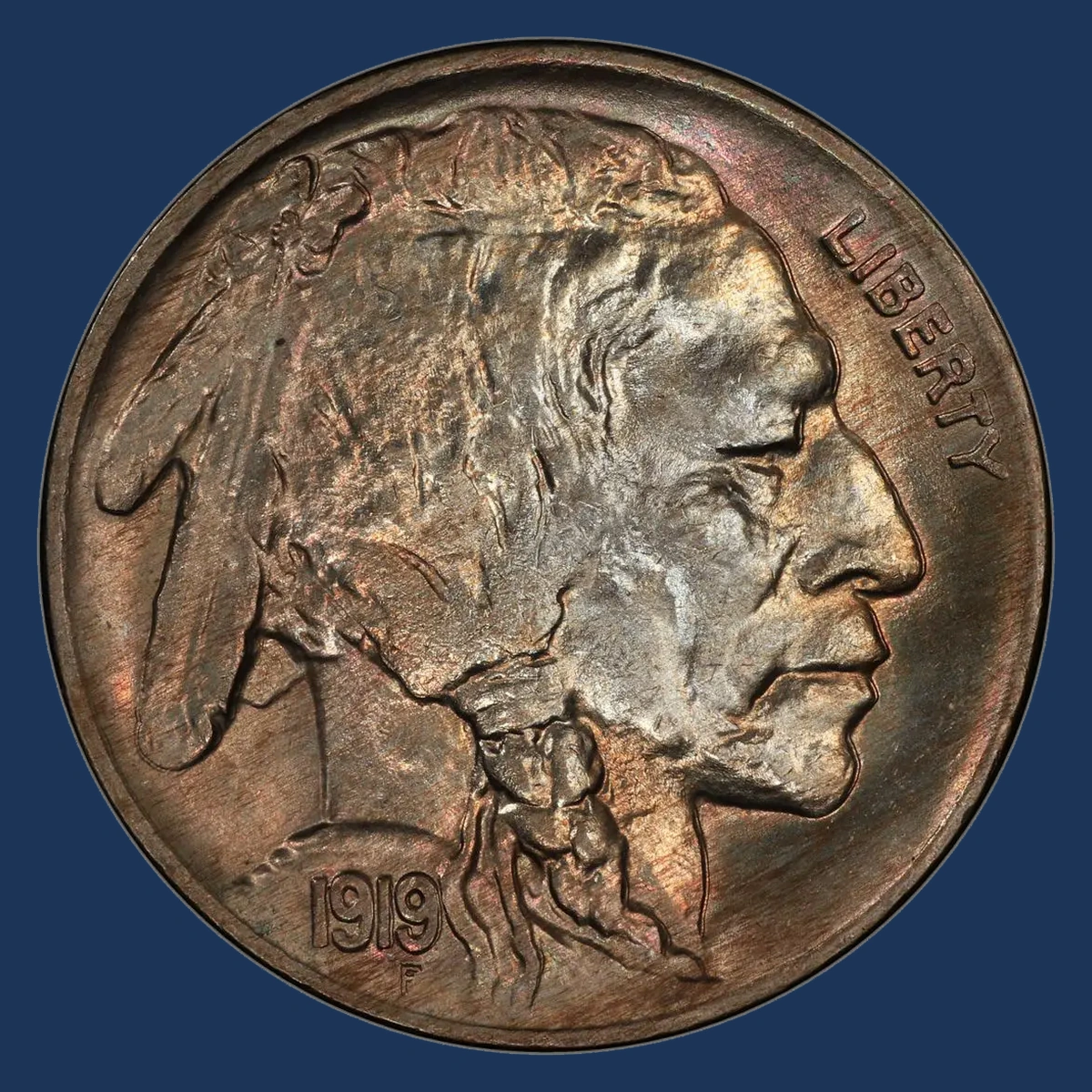
Two close outlines can originate on the stamping tool rather than from two blows on the finished coin. This is called a doubled die.
The 1919 Philadelphia reports direct attention to the date and LIBERTY on the front. They do not establish one catalog number or one strong doubled pattern for every candidate.
A true variety should repeat the same extra outlines on matching coins. A flat ledge caused by movement during striking has a different origin.
Worn or chemically treated dates can look uneven too. Their rough edges should not be mistaken for another original digit.
Estimated Value
For a matched, modest 1919 doubled-front variety, estimate $30–$300. This is an estimated range for the reported type, not a verified premium for an unconfirmed catalog number.
A clear unworn example can draw more interest than blurred outlines on a worn date. Multiple matching details strengthen the identification.
The spectacular 1916 doubled die is a different year and should not supply a price for this coin. A 1919 date alone cannot establish similar rarity.
How to Identify
Place a normal 1919 Philadelphia nickel beside the candidate and inspect both with a 10× magnifier. Begin with the date and LIBERTY, then follow any extra outline into another affected letter or digit.
Check the back for the absence of D or S below FIVE CENTS. A scale and calipers establish the normal 5.00-gram weight and 21.21-millimeter size of a loose coin, but do not prove doubling.
Use light from several directions to separate raised outlines from roughness or flat shelves. Match a repeated design shape across more than one detail, rather than treating a single thick number as a variety by itself.
4. 1919 Buffalo Nickel Missing Designer’s Initial
The small F below the date belongs to designer James Earle Fraser. A collector registry records a 1919 Philadelphia No F example where that initial is missing.
Tool polishing can weaken or remove shallow design details, but a blank-looking spot alone does not prove that cause. Wear and material blocking the tool can also hide a tiny letter.
The surrounding date and original surface therefore matter. A normal nickel rubbed smooth beneath the date can imitate the appearance.
No F is also separate from Two Feathers. Losing one small feature does not require the other to disappear.
Estimated Value
An estimated $50–$500 is appropriate for a correctly matched 1919 No F example, with condition and the clarity of the feature affecting value. This is not a recorded price for the registry coin.
The range assumes the missing initial belongs to the recognized variety rather than general wear. A strong date and undisturbed surrounding metal make the comparison easier.
Judge the date and surrounding detail when comparing condition. A scraped area beneath the date is not proof of the variety.
How to Identify
Compare the space under the date with a normal Buffalo nickel, using a 10× magnifier to locate the missing F. Follow the date digits and nearby surface for scratches, flattened details, or polishing that could explain its absence.
The normal coin weighs about 5.00 grams and measures 21.21 millimeters, checked on a loose piece with a scale and calipers. Those measurements establish the expected nickel, while the tiny letter and surrounding original texture establish the variety.
Photograph the complete date with the empty initial position rather than cropping out nearby wear. Compare that area with the recorded No F example, looking for the same missing detail without a rubbed or scraped patch.
5. 1919 Buffalo Nickel Lamination and Split Layers
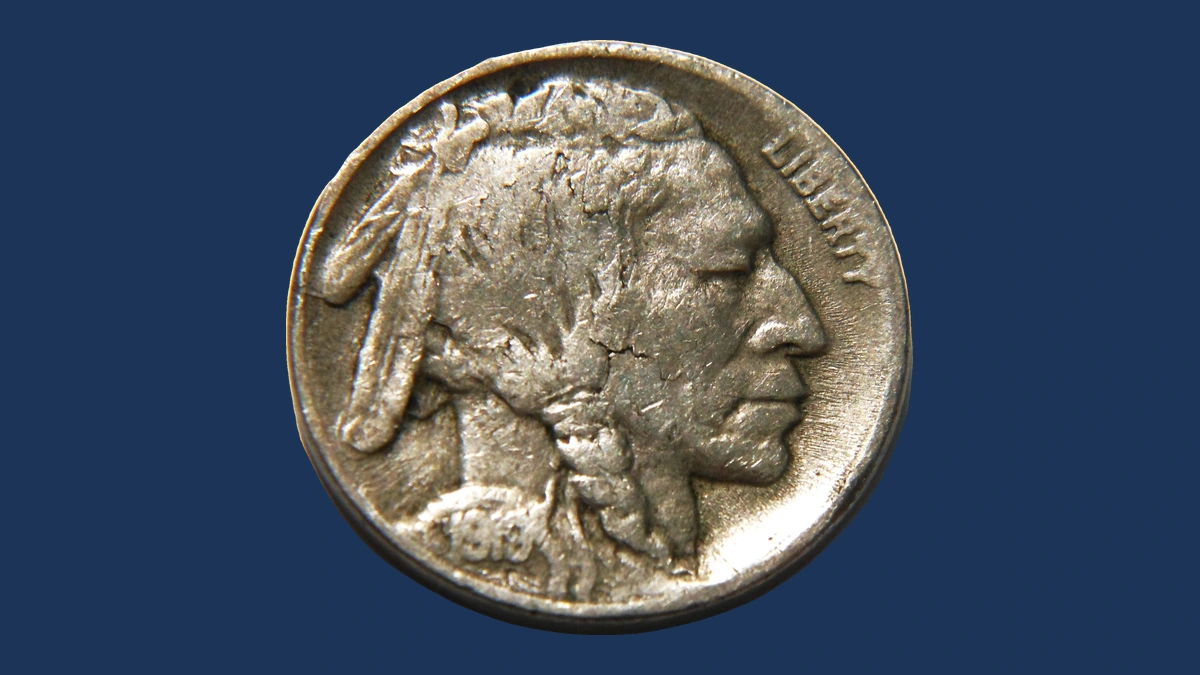
Metal separation can range from a thin surface peel to a coin splitting into front and back halves. A Philadelphia VG8 example survives as two matching pieces.
A different Philadelphia front half weighs 2.5 grams. Its exposed inside surface was not struck after separation.
A Denver AU55 example opened roughly halfway around its edge but stayed joined, giving it a clamshell shape. Surface peels are also reported on Denver fronts and San Francisco reverse edges.
These are different depths of separation. A thin loose flap is not automatically a split through most of the coin.
Estimated Value
Estimate $15–$150 for modest surface laminations and about $100–$600 for clear clamshell or split-layer examples. A complete matching pair may appeal differently from a single separated half.
The 2.5-gram Philadelphia front half, graded NGC VF20, sold for $149 in March 2025. That price belongs to one piece, not the registry’s paired halves.
Keep their identities separate when comparing values. An attached layer should not be pulled apart to make two sale items.
How to Identify
Look at the edge before touching a loose area. A clamshell opens deeply but remains joined, while a small surface peel follows a much shallower layer.
For separated pieces, use a 10× magnifier to compare the exposed inner texture with the struck outer face. Sawing can leave regular grooves across a surface that should show the metal’s natural separation.
A scale compares each loose piece with the normal 5.00-gram coin; the recorded front half is 2.5 grams. Calipers compare the original outline with 21.21 millimeters, without squeezing an opening.
Keep claimed matching halves together but do not force them against each other. Their internal boundaries and surviving outside designs should fit one original coin.
6. 1919 Buffalo Nickel Clipped Planchet and Partial-Collar Combinations
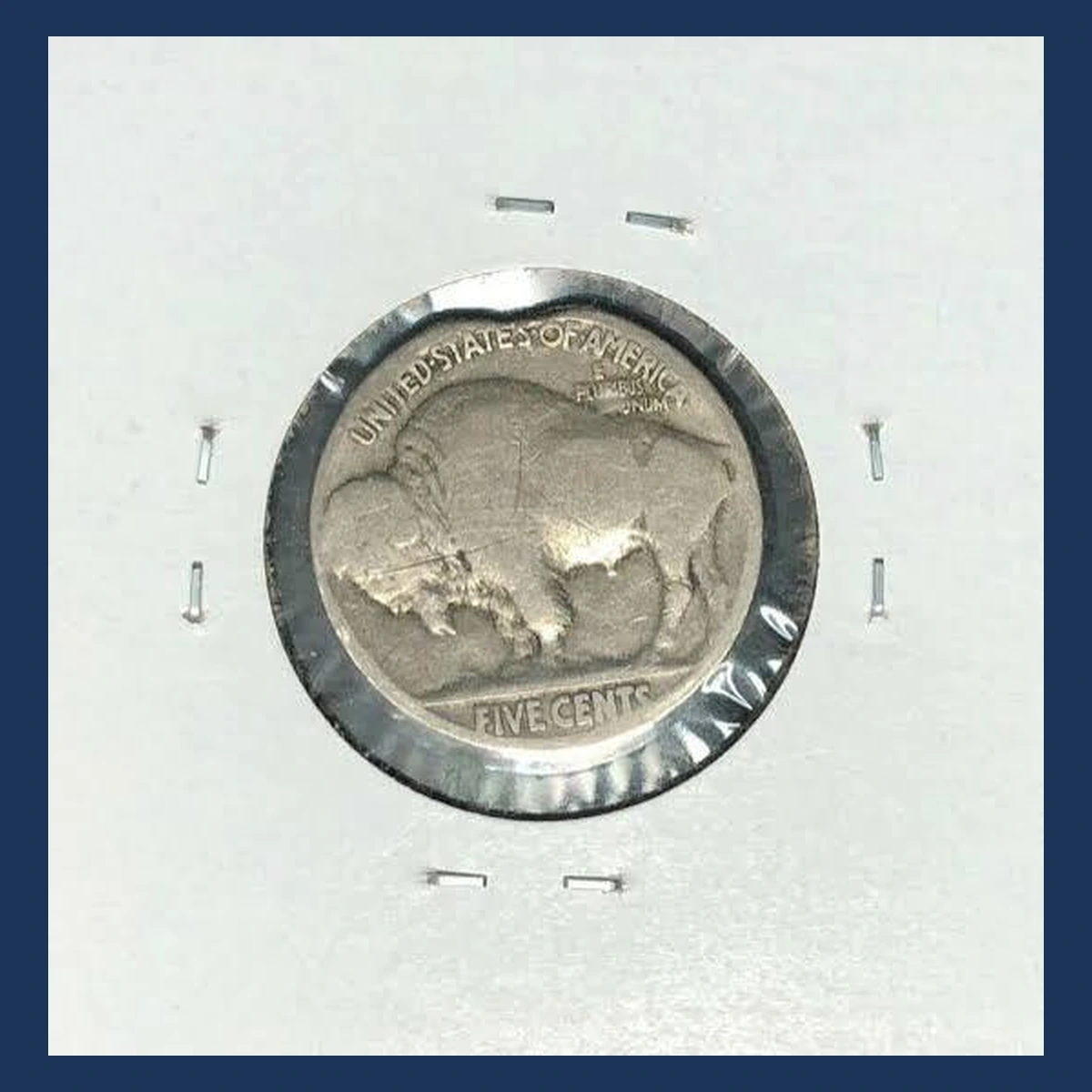
An incomplete blank can leave a rough gap at the finished coin’s edge. One 1919 Philadelphia example was described as a twenty-two-percent ragged end clip and graded PCGS MS63.
Another coin combines a small clip with partial collar contact. The collar is the ring that limits the metal’s outward spread during striking.
That second coin has a clip near five o’clock on the front and one o’clock on the back. They are views of the same opening.
Its uneven collar contact also affected the edge. The ragged clip and the smaller combination belong to separate specimens.
Estimated Value
Estimate $75–$800 across clear 1919 clips and clipped coins with a partial-collar edge. Size, preservation, and the visibility of each original feature affect the whole price.
For comparison, a 1924 MS64 Buffalo nickel with a four-percent clip and partial collar sold for $345 in January 2011. That different-year combination is not an actual price for either 1919 example.
A clip and an edge step on one coin should be valued together, not as two complete coins.
How to Identify
Find the opening first and inspect both ends through a 10× magnifier. Rim metal and nearby design should have formed around the missing area rather than been cut apart later.
For the partial-collar combination, turn the plain edge toward a lamp. Look for a step between the portion contained by the ring and the portion that spread.
There are no normal edge reeds on a Buffalo nickel. A reeding pattern is not required for this error.
Use a scale to compare the remaining metal with 5.00 grams, and calipers on intact spans against 21.21 millimeters. Keep the large ragged opening separate from the smaller five-o’clock clip.
Check the exposed edge for saw marks and the step for later rolling or crushing.
7. 1919 Buffalo Nickel Off-Center Strike
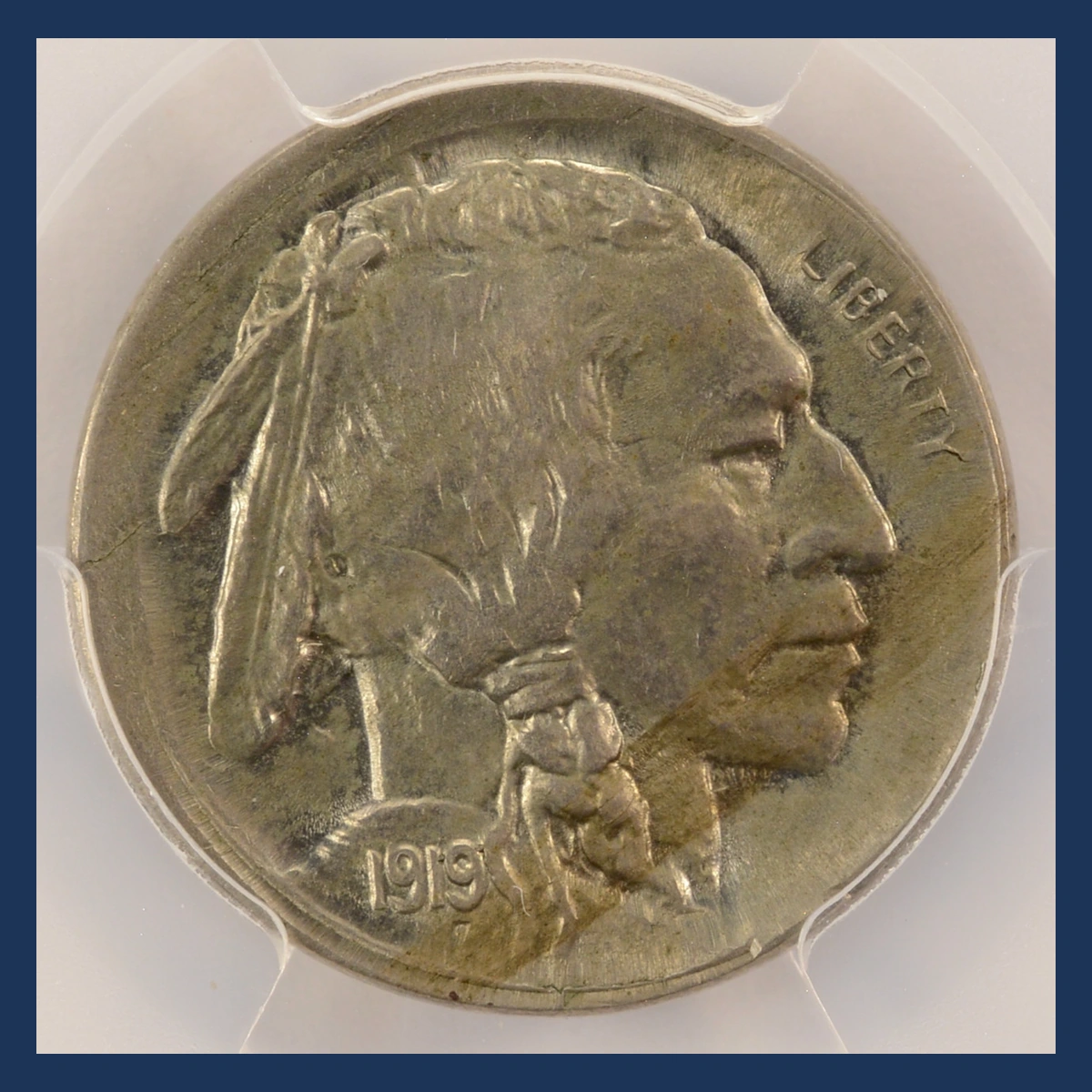
A shifted design leaves some original blank metal untouched. At the other side, part of the intended picture falls beyond the coin.
The 1919 records include a ten-percent example and a separate collector’s coin described as twenty percent off center toward the bottom. A San Francisco ten-percent example is also documented.
These percentages and mint identities belong to individual pieces. Losing the mint-letter area does not make every off-center coin a Philadelphia issue.
The shape can look dramatic even with circulation wear. A readable date helps connect the mistake to the correct year.
Estimated Value
For identified 1919 off-center nickels, estimate $100–$1,000 across moderate to stronger shifts and differing preservation. Clear dates and original surfaces usually make comparisons more useful.
A separate 1919 off-center coin with a reverse wheel mark sold for $432 in March 2025. The mark is later mechanical damage, and that result should not be assigned to the registry examples.
The size of the shift is one factor. Damage and the surviving design also influence demand.
How to Identify
Check the date in the surviving struck area before estimating the blank crescent. Then inspect the back for a corresponding shift.
If the entire design remains inside a wide border, consider a broadstrike instead. If only one face is displaced, consider a misaligned stamping tool.
A scale can still show close to the normal 5.00 grams because off-center striking need not remove metal. Calipers record the shape against the usual 21.21-millimeter nickel.
Use a 10× magnifier along the transition into the bare area to check for grinding or later flattening. Read the mint letter only where its original position survives; a missing section cannot establish Philadelphia origin.
8. 1919 Buffalo Nickel Broadstrike and Related Combinations
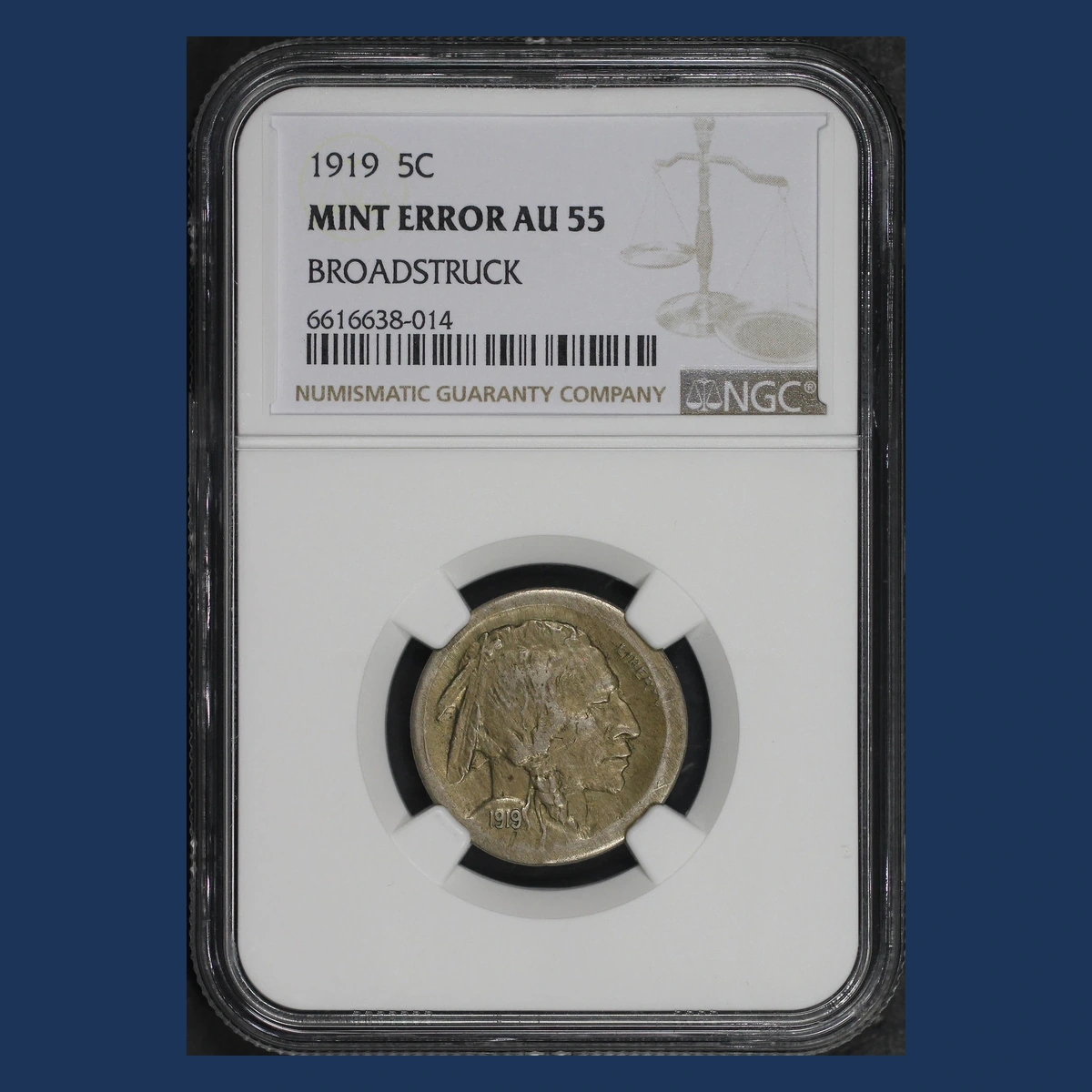
Without full support from the surrounding collar ring, metal can spread beyond a nickel’s normal width. A broadstrike retains the complete intended design.
The 1919 examples include centered and uneven expansion. One coin also has a curved clip near three to five o’clock, while another carries raised front details from a broken tool.
A separate MS63 coin was described as struck on a Type I blank. That means its blank had not received the usual raised edge before striking.
Type I here describes blank preparation. It does not mean the raised-ground Buffalo design used in 1913.
Estimated Value
Estimate $100–$1,500 for these broadstrikes and their documented combinations, depending on shape, wear, and extra features. A dramatic combination can sit above a modestly expanded coin.
The AU53 coin with a retained tool break brought $246.75 in August 2017. The separate MS63 example struck before rim preparation brought $199.75 that month.
The first coin had light wear; the second had no circulation wear but visible marks. Neither result prices every 1919 broadstrike alike.
How to Identify
Follow the outer lettering to see whether the complete design remains on the coin. That matters more than whether the border is perfectly even.
Use calipers to record the expanded spans against the normal 21.21 millimeters. A scale compares the weight with 5.00 grams, except that a clipped example has genuinely lost blank metal.
Inspect the plain edge through a 10× magnifier for later hammering or rolling. On the curved-clip example, examine the original opening separately from the outward spread.
A retained tool break may leave a raised area still carrying design because the broken piece stayed in place. Match that feature to its own coin; an enlarged outline alone cannot prove either a retained break or an unprepared rim.
9. 1919 Buffalo Nickel Dropped Number Impression
An extra 19 can appear sunken into the coin near the lower-left rim. The reported MS64 Philadelphia example has this mark around seven to eight o’clock.
The explanation is a dropped filling. Compacted material can fill number-shaped openings in the stamping tool, then fall onto a blank before another strike.
That shaped piece presses an impression into the metal. It creates a different result from the raised doubled digits made by a doubled die.
The shape and depth need close comparison with the recorded coin. A number added later with a punch can imitate an extra inscription.
Estimated Value
Use an estimated $150–$2,000 for an identified 1919 dropped-number impression, with a clear recognizable shape and original surface supporting stronger interest. This is a working range rather than an auction result for the registry’s MS64 coin.
MS64 indicates no circulation wear with some marks. The grade and the unusual number-shaped depression both contribute to the whole value.
A sunken 19 added after minting does not qualify, even if its position resembles the reported example.
How to Identify
Hold the portrait upright and locate the lower-left rim around seven to eight o’clock. Examine the extra 19 with a 10× magnifier under light from the side.
The number-shaped mark should be recessed, unlike a raised doubled-date outline. Compare its size and curves with the shapes that could have filled the tool’s number openings.
Inspect surrounding metal for a sharp displaced lip or damage from a later punch. A normal loose nickel should be near 5.00 grams and 21.21 millimeters, checked with a scale and calipers.
Use full-face photographs to keep the regular date and extra impression in view. The sunken shape, original surface, and specific position must match the reported dropped-number example.
10. 1919 Buffalo Nickel Two Feathers
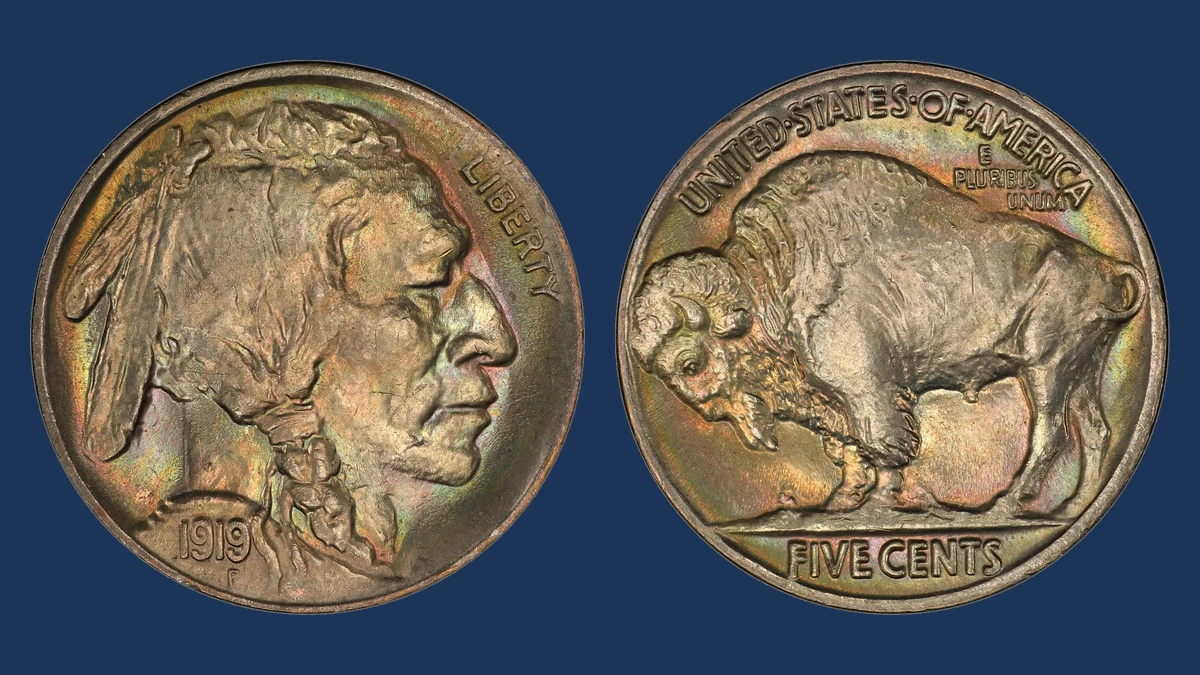
The smallest feather behind the portrait can nearly disappear when the stamping tool is polished. Two larger feathers remain, giving the variety its familiar name.
The 1919 records include Philadelphia, Denver, and San Francisco examples. Their missing-feather shapes need separate comparisons rather than one shared catalog label.
On the reported Philadelphia coin, the affected area extends toward the neck while the designer’s F remains present. Two Feathers does not automatically mean No F.
Circulation wear can also hide shallow feather detail. The remaining hair, neck outline, and larger feathers help distinguish a recognized pattern from ordinary flattening.
Estimated Value
An estimated $50–$3,500 covers identified 1919 Two Feathers examples across the different mints and conditions. The upper end requires a desirable, well-preserved coin rather than simply two visible feathers.
For comparison, a 1928-S MS63 Two Feathers coin sold for $2,040 in August 2019. That other-year result illustrates collector demand but is not a 1919 transaction.
Match the mint and surviving detail before choosing a comparison. Heavy wear alone can produce the same rough feather count.
How to Identify
Compare the small inner feather beside the neck with the two larger feathers. A 10× magnifier helps show whether the missing area follows a recognized polished-tool pattern.
Check the D or S below FIVE CENTS, or confirm the intact Philadelphia mint-letter area is blank. Use the correct mint’s example for the comparison.
Inspect nearby hair and the neck for scraping, and look for general flattening from wear. The Philadelphia example’s surviving F is compatible with its missing feather.
A scale and calipers check the normal 5.00 grams and 21.21 millimeters on a loose coin. Tool polishing changes the design without reducing the finished coin to a lighter blank.
Follow the inner feather’s remaining boundary into the neck area rather than counting only the two long feathers.
11. 1919 Buffalo Nickel Repeated Strikes and Major Tool Failure
A coin can stay in the press long enough to receive extra blows. A PCGS MS64 example was struck twice within the collar and also shows partial collar contact.
A separate MS63 report combines two strikes with forty-percent displacement. Its repeated images differ from the closer overlap of the first coin.
A much more extreme studied piece received at least four strikes while the tools were breaking. It has a huge raised front area and a nearly featureless back.
The study also found collar breaks at twelve and seven o’clock. Its unusual reverse was not fully explained.
Estimated Value
For ordinary 1919 double strikes, estimate $300–$2,000, depending on clarity and preservation. A verified complex piece with repeated blows and major tool failure can fit a broader $1,000–$6,000 estimate.
Neither range is a reported selling price for the catastrophic example. The documented MS64 in-collar coin was listed as unsold in June 2008.
Each combination needs its own comparison. The number of blows is not a rule for multiplying a normal coin’s price.
How to Identify
Find a recognizable repeated portrait or letter before counting strikes. A 10× magnifier can show where a later blow crossed or flattened an earlier image.
For the partial-collar example, inspect the plain edge for a step from uneven ring contact. On the separate forty-percent example, follow the displaced design and untouched metal.
The extreme specimen requires comparison with the published CONECA study, including its raised front patch and collar breaks. A blank-looking back alone cannot explain its entire striking sequence.
Use a scale and calipers on loose candidates against the normal 5.00 grams and 21.21 millimeters, allowing for spreading. Check for later crushing; the extra impressions should form a readable sequence in the same metal.
12. 1919 Buffalo Nickel Struck on the Wrong Blank
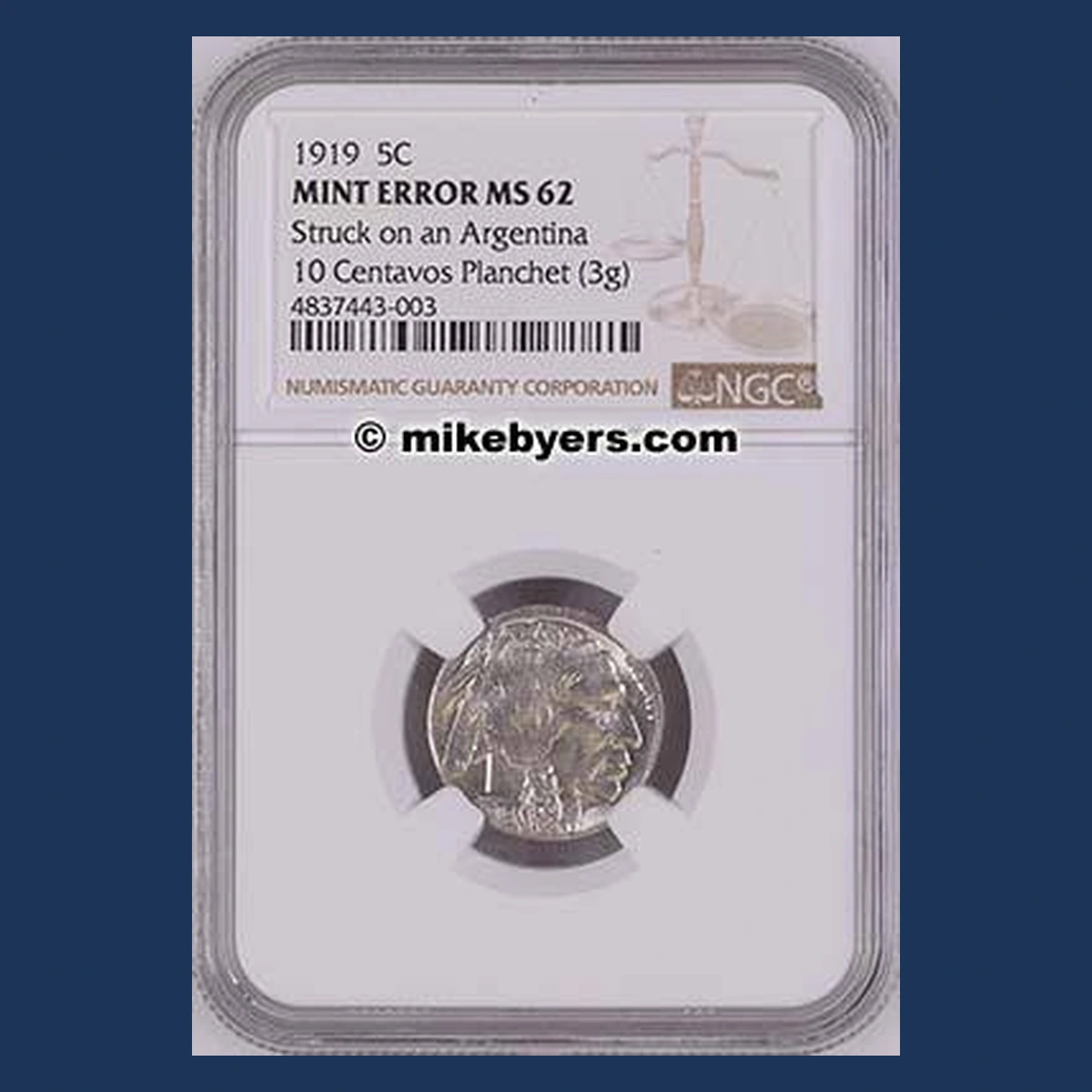
Two different small blanks received Buffalo nickel designs in 1919. One copper-cent-blank example was recorded as NGC MS61 Brown and weighed 3.06 grams.
The other used a copper-nickel blank intended for Argentina’s ten-centavos coin. Its recorded weight is three grams, and the blank standard is nineteen millimeters across.
The Argentina example retains the date and portrait but lacks the curve of the buffalo’s tail. The upper portions of LIBERTY and the reverse country name are also missing.
These were unused blanks. Neither error requires a Lincoln or Argentine design beneath the nickel images.
Estimated Value
The Argentina-blank MS62 nickel sold for $6,600 on January 22, 2021. Estimate $4,000–$8,000 for a comparable identified example.
For the copper-cent-blank type, use a separate estimated $2,000–$6,000. A 1924 MS62 Brown cent-blank nickel sold for $3,290 in January 2014, providing a different-year comparison.
The small weight difference between these blank types cannot determine price by itself. Metal, condition, and the surviving design all matter.
How to Identify
Begin with metal and weight together. A scale can compare the actual 3.06-gram copper example and three-gram Argentina example with a normal nickel’s 5.00 grams.
The normal cent blank was about 3.11 grams and 19.05 millimeters; the Argentina blank was copper-nickel, three grams, and nineteen millimeters. Calipers compare those starting sizes with the nickel’s usual 21.21 millimeters, allowing for spreading.
Use a 10× magnifier to inspect cropped letters and the plain edge for filing or plating. On the Argentina example, check the complete date and missing tail curve against the auction photographs.
Keep the two blank identities separate. A similarly light coin needs matching metal and design evidence, not just a close reading on the scale.
Conclusion
The estimated $15–$8,000 range covers small interruptions, missing feathers, unusual blanks, and complex striking accidents. A dramatic shape is useful only when the coin’s features explain how it formed.
Keep detached matching pieces together and leave attached layers alone. Compare each weight, mint letter, and defect with the same documented example.
For the most valuable wrong blanks, metal and measurements matter alongside a readable date and original surfaces.