1867 Nickel Error List with Pictures

Two 1867 nickels can tell one striking story: a smaller coin pressed a backward image into its partner. That pair sold for $10,800 in December 2022.
This 1867 Nickel error list spans estimated values of $15–$35,000, from small tool breaks to complex paired errors. Coins with rays between the back stars and coins without rays are both normal designs.
Read the features below to distinguish those designs and follow what went wrong during production.
1. 1867 Shield Nickel Traces of the Opposite Design
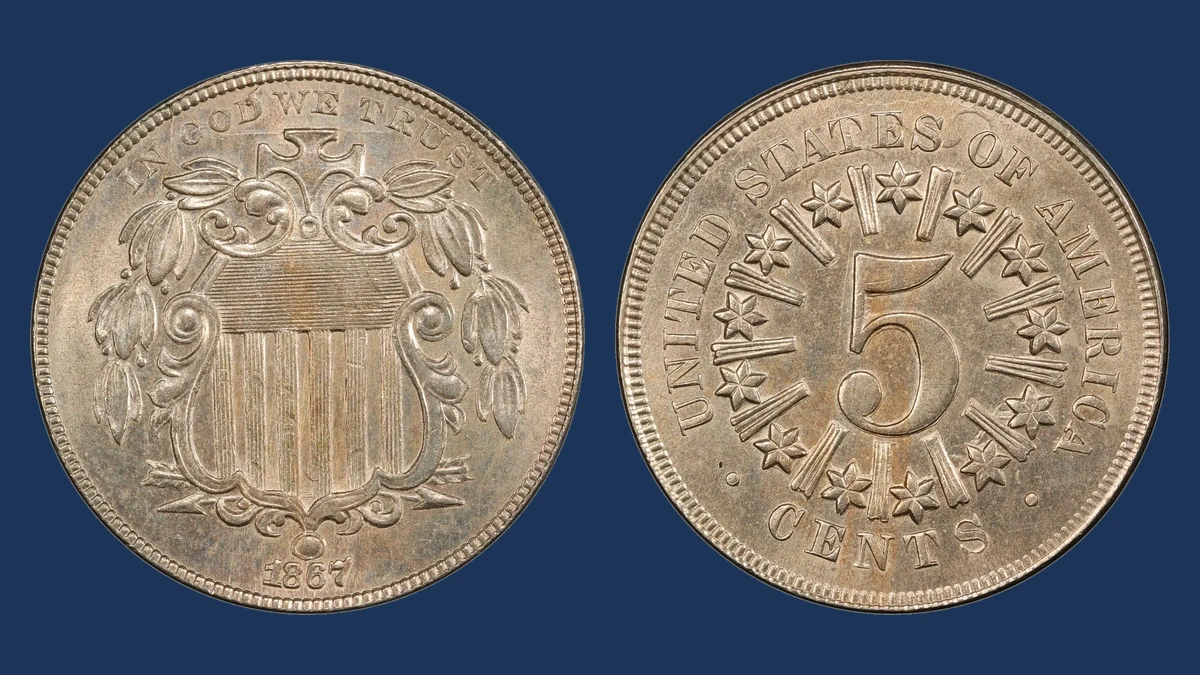
Extra vertical lines near the large back 5 may resemble the shield on the front. Other reported traces follow the lower shield, its ball-shaped base, or the date.
These shapes can come from a die clash: the two steel stamping tools hit each other without a coin between them. Each damaged tool can then leave parts of the opposite design on later coins.
Both normal 1867 designs have reported clashes. Their strength varies, and some transferred marks are displaced.
This is different from a coin being struck twice or receiving a deeply impressed backward image.
Estimated Value
Allow an estimated $20–$400 for worn through attractive examples with recognizable clash marks. This range concerns the whole coin, not a separate price for every transferred line.
Clear shield traces beside the 5 generally tell a stronger visual story than barely visible marks. Condition still matters, especially on the less common With Rays design.
The range is an estimate for ordinary collectible examples; it is not a recorded sale of a particular 1867 clash.
How to Identify
Start with the large 5 on the back, then compare nearby extra lines with the front shield. A 10× magnifier should help you distinguish a recognizable design fragment from a random scratch.
Check the front for corresponding traces of the back design. Photograph both sides before deciding that a single line belongs to a clash.
On a loose coin, a scale should show about 5 g and calipers about 20.5 mm. Its edge is plain; an edge blow may explain nearby distorted metal instead.
Polishing lines often run together without outlining the opposite design. Compare the extra bars or lower-shield curve beside the 5 directly with those features on the front.
2. 1867 Shield Nickel Cracks and Breaks in the Tools
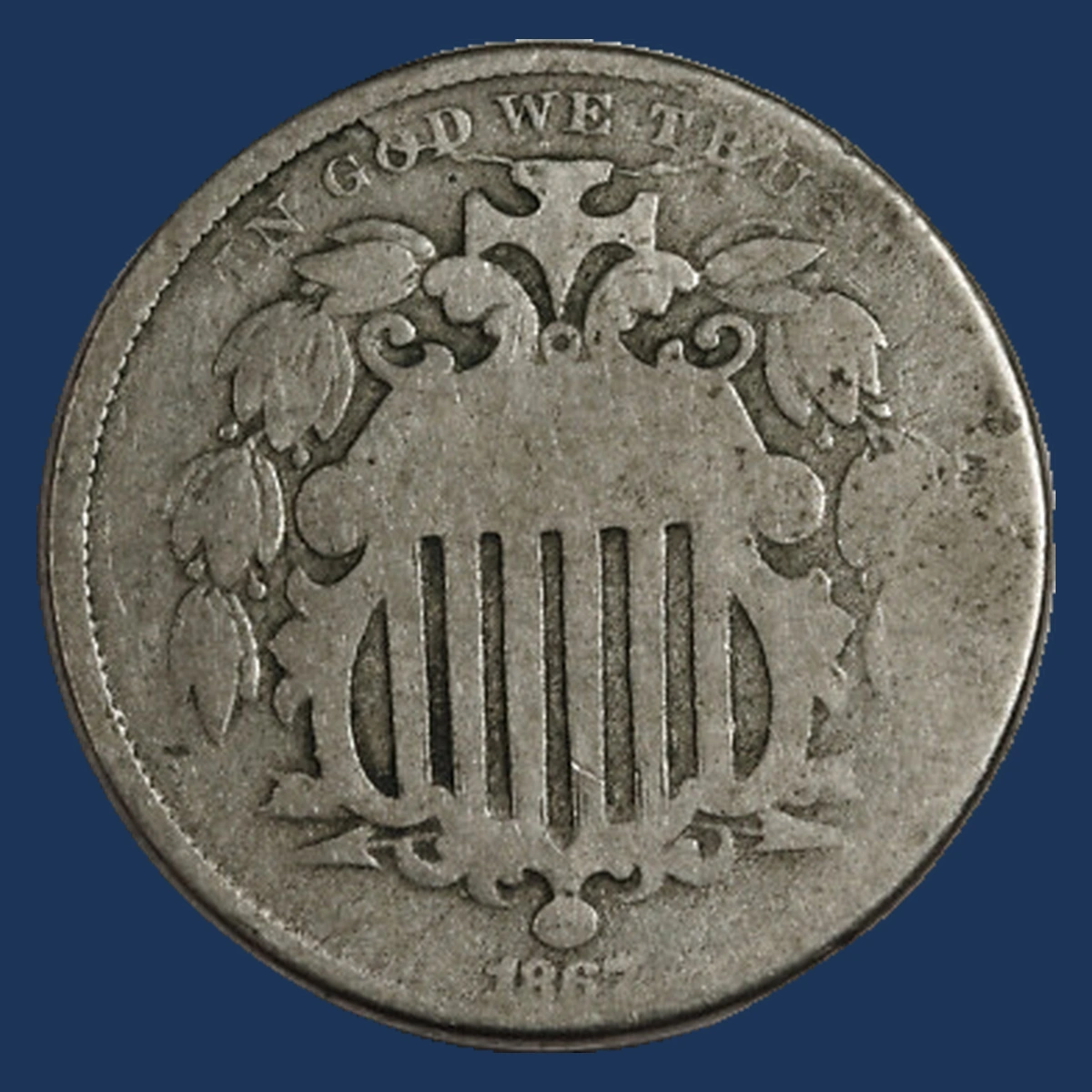
A raised line can cross the shield area, while a larger broken tool section can leave a raised patch. Both result from damage to the steel tool that stamps the design.
Reported cracks occur near the ball below the shield, at the lower left, or between OD in GOD and the cross. These are separate patterns, not one required route.
A No Rays example has a rim-connected raised break above ED in UNITED. Collectors call this larger edge break a cud.
Neither a cut into the coin nor a bent rim proves tool damage.
Estimated Value
Minor cracks on worn coins fit an estimated $15–$150 range. For a clear, genuine rim-connected break on the No Rays design, allow approximately $75–$600.
These are whole-coin estimates based on the size of the feature and the coin’s condition. No specific 1867 cud sale is being claimed.
A small line should not receive the price of a broad missing-tool patch, and a coin with additional varieties needs one combined valuation.
How to Identify
For the No Rays cud, inspect the rim immediately above ED in UNITED through a 10× magnifier. The raised patch should join the rim and replace part of the normal surface.
For a narrow crack, move to the relevant shield area and tilt the light across the line. Look for a ridge rather than a cut with metal pushed up along its sides.
Use a scale and calipers on a loose coin: normal standards are 5 g and 20.5 mm, with a plain edge. Check for an adjoining impact or added metal; above ED, an uninterrupted rim-connected patch is the useful first test.
3. 1867 Shield Nickel Turned Back Design
The back design may lean when the front is held upright and the coin is flipped top to bottom. A stamping tool turned away from its normal position can create this mismatch.
This is called a rotated die. The coin itself may otherwise have a complete, centered design.
A With Rays 1867 example is reported, but no measured angle is supplied for that specimen. Separate photographs cannot establish the angle because either picture may have been turned.
The useful evidence is the relationship between both faces of the same coin during a controlled flip.
Estimated Value
For a clearly measured, substantial rotation on a genuine With Rays coin, estimate $50–$750. Smaller shifts may add little beyond the normal coin’s value.
An unrelated 2015-D Jefferson Nickel with a 90-degree rotation sold for $79 in October 2021. That modern sale illustrates demand for an obvious turn, not the value of an early Shield Nickel.
The 1867 estimate also allows for its older design and preservation; no exact-angle specimen sale is claimed.
How to Identify
Hold the shield upright, gripping the top and bottom edges, then flip the coin top to bottom without twisting it sideways. The back 5 should normally stand upright after this movement.
A loose coin should be near 5 g on a scale and 20.5 mm with calipers. Inspect the plain edge with a 10× magnifier for a seam suggesting that someone joined altered coin halves.
Repeat the same flip several times, keeping your fingers in place and recording both faces through the movement. A back design that stops at the same abnormal angle each time gives a repeatable rotation measurement.
4. 1867 Shield Nickel Doubled Front Design
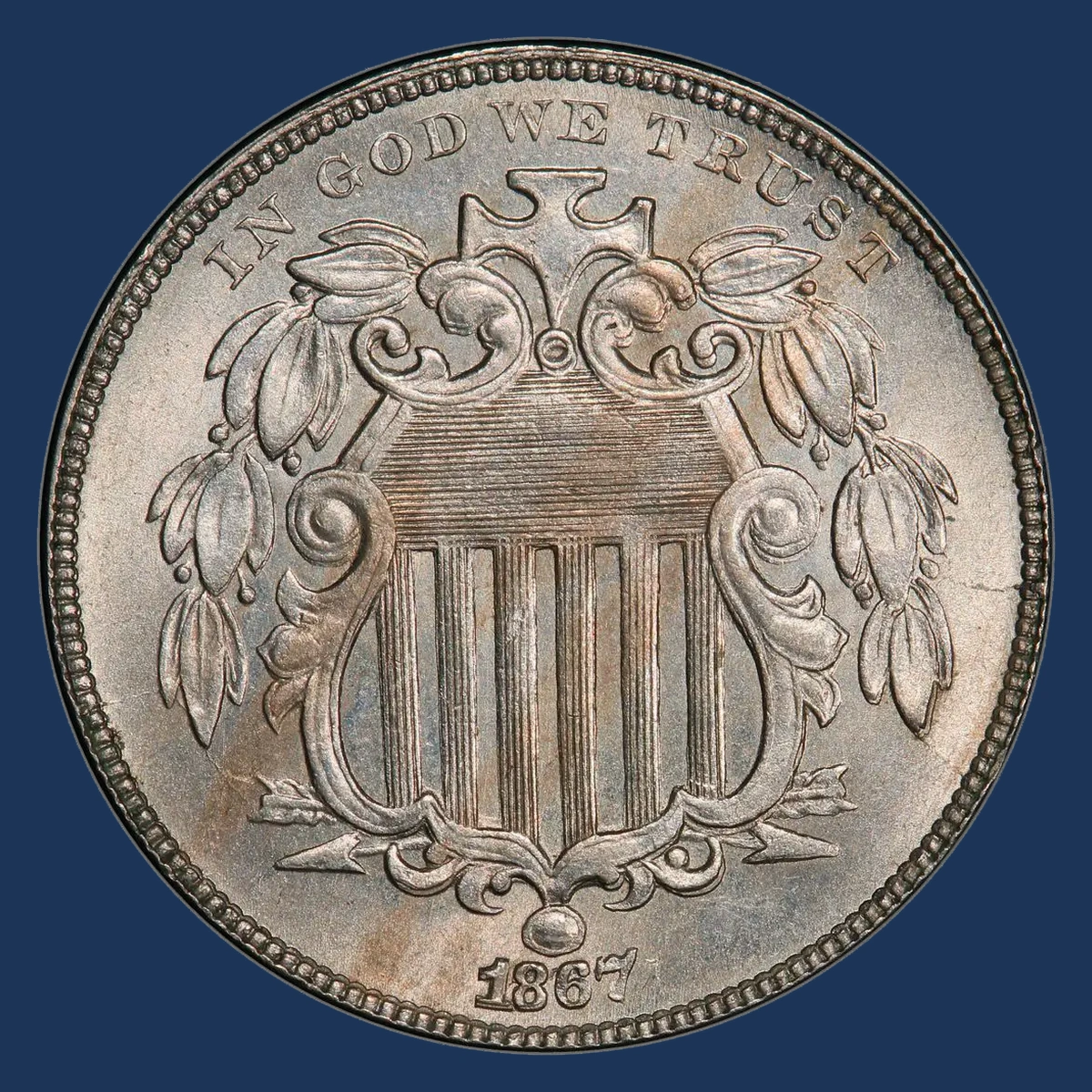
The motto and small loop at the top of the shield can show rounded second outlines. On reported With Rays examples, strong doubling spreads toward the lower right.
No Rays examples have their own patterns, including split ends on several motto letters. The patterns should not be combined into one imagined coin.
A doubled die is a steel stamping tool that carries the design twice. Coins inherit those repeated outlines from the tool.
Doubling confined to the date may instead involve repeated date punching, while a flat extra shelf can come from movement during striking.
Estimated Value
Identified doubled-front varieties have an estimated $40–$2,000 range across worn to attractive unworn condition. Strong separation and a clear match are more useful than general thickness.
A different-year Shield Nickel comparison is the 1875 FS-101 in MS63 that sold for $780 in August 2021. MS63 means unworn, though with noticeable marks.
That result is not an 1867 sale. The With Rays and No Rays varieties require their own condition and demand comparisons.
How to Identify
Determine the back design before choosing a reference photograph: rays between the stars, or no rays. Match that design to the front variety you are checking.
If the coin is loose, confirm the normal 5 g weight with a scale and 20.5 mm diameter with calipers. Check the plain edge for alteration.
Use a 10× magnifier on the motto and the small loop above the shield.
A low, flat ledge is different from rounded separation or split letter ends. Doubling confined to the date also needs a separate date-punch comparison.
Compare several affected motto and shield details in their correct positions with an identified example of the same back design.
5. 1867 Shield Nickel Repeated and Overlapping Date Punches
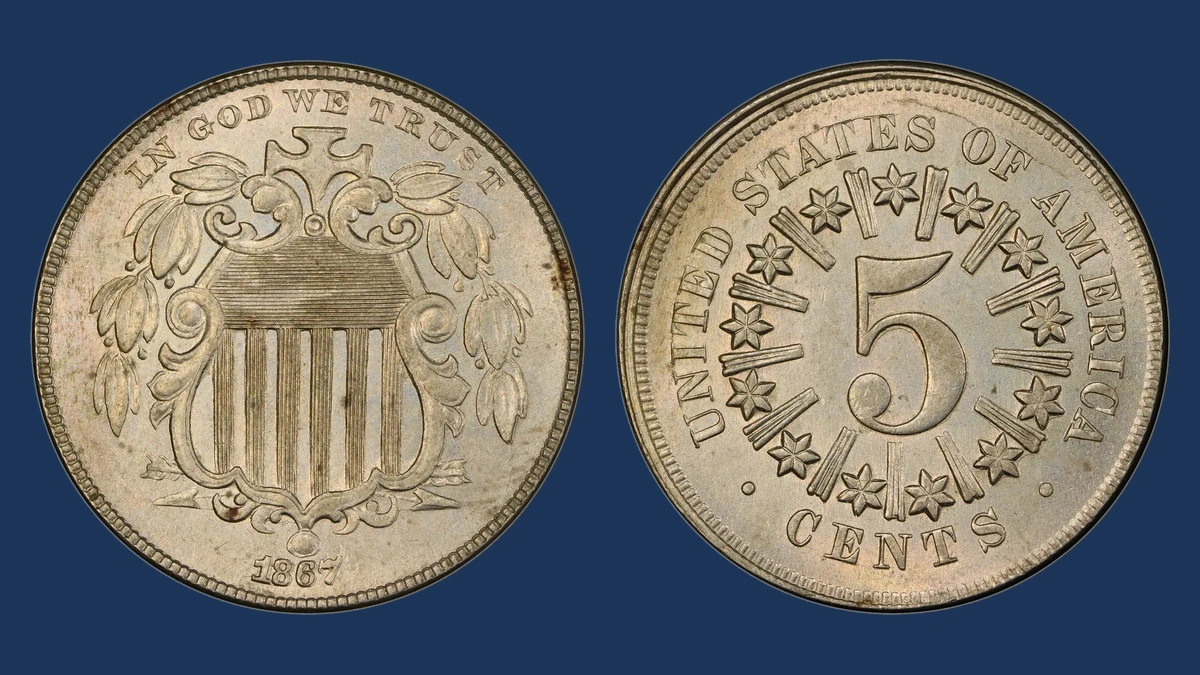
Extra strokes beside the date may record more than one use of a date punch. Reported positions include the upper left of 18 and the left side of 67.
One wide-spaced With Rays variety has a more unusual explanation. A specialist identifies smaller nickel numerals over an earlier, larger date punch intended for a Seated Dime.
That concerns the tool used to add the date. It does not mean the nickel was struck on a dime’s metal disk.
Different date arrangements are compared individually, rather than counted as repeated strikes of the whole coin.
Estimated Value
Estimate $40–$2,500 for clearly identified repeated-date examples, depending on variety and condition. A worn coin with faint remnants belongs far below an exceptional unworn specimen.
For a same-series comparison, an 1871 repunched-date nickel graded MS66 sold for $4,148 in July 2026. That is a different year with very well-preserved surfaces.
The comparison does not establish a sale price for the 1867 large-and-small date overlap. Its specific identification matters before assigning a premium.
How to Identify
Inspect all four numerals through a 10× magnifier before concentrating on one stray line. Look left and above the first two digits, then along the left sides of 6 and 7.
For the larger-date overlap, compare the size and spacing of the earlier strokes with the specialist’s photograph. An extra line should belong to a plausible numeral, not simply fill a gap.
Do not use color as evidence of a dime blank. This date-punch feature belongs on normal nickel metal.
A loose example should be near 5 g on a scale and 20.5 mm with calipers, with a plain edge. The key is a matching set of earlier numeral strokes beside the final date.
6. 1867 Shield Nickel Date Fragments near the Shield
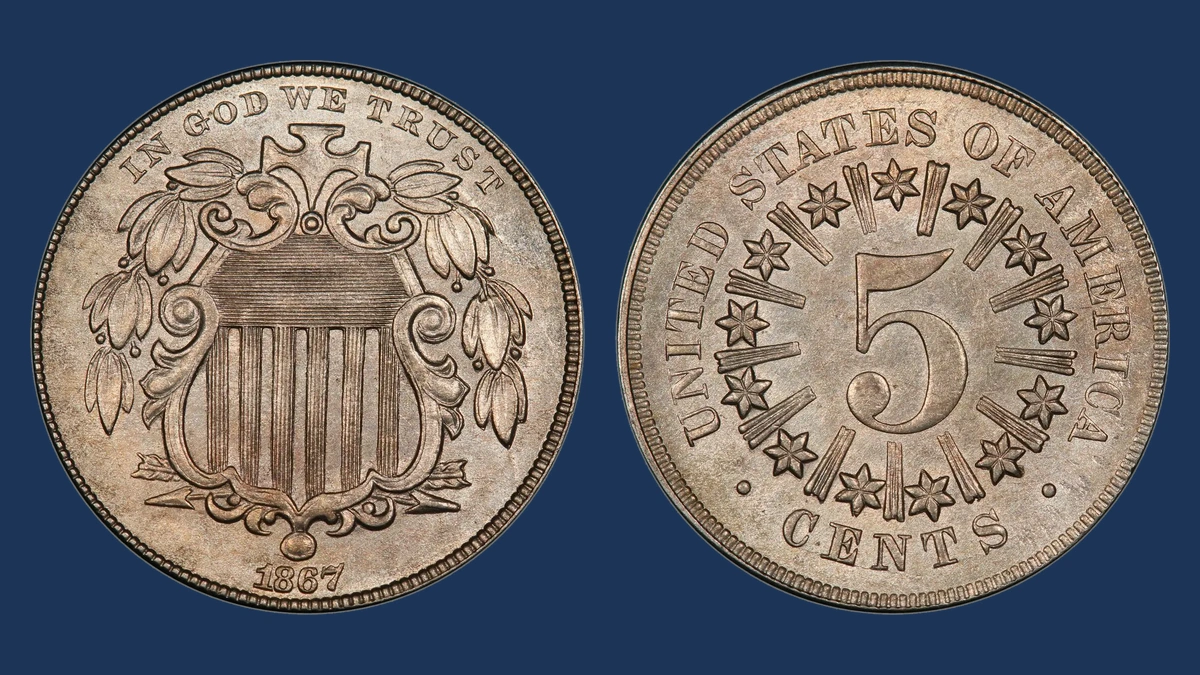
A small numeral fragment can appear near the ball-shaped base of the shield, away from the normal date. One report places the foot of a 1 at the ball’s lower-left side.
Another describes a misplaced 1 around the lower shield and upper ball area. These are separate reported arrangements.
A date punch touching the wrong part of the stamping tool can leave such a remnant. The correct date may still look normal below it.
Nearby cracks and ordinary shield details can imitate tiny digit fragments, so location alone is not enough.
Estimated Value
Allow an estimated $100–$3,000 for an identified misplaced-date With Rays example. The upper end assumes excellent preservation and a convincing, clearly visible fragment.
This is an estimate, not a recorded sale of the reported misplaced 1. The related market for early Shield date varieties includes the 1871 repunched-date MS66 sale at $4,148, but its mechanism and year differ.
A faint bump without a matching numeral shape should be priced as an ordinary coin.
How to Identify
Compare the ball below the shield with a normal With Rays nickel under the same lighting. The usual curves and border of that feature must be separated from the suspected extra stroke.
Use a 10× magnifier to examine its lower-left side and the area immediately above the ball. Keep the normal date visible in a wider photograph so the fragment’s position remains clear.
The loose coin should weigh about 5 g on a scale, measure 20.5 mm with calipers, and have a plain edge.
A wandering ridge may be a tool crack rather than a numeral. Compare the extra stroke’s straight foot or numeral contour with the identified misplaced-date photograph.
7. 1867 Shield Nickel Off-Center Strike, Sometimes with a Metal Crack
A blank crescent on one side and missing design on the other show that the metal disk sat off center. Both faces should reflect the same displaced strike.
A With Rays example graded VF35 was cataloged as 10% off center. A separate No Rays example graded AU55 was described as 15% off center with a crack in the disk.
That crack runs into the coin’s metal, unlike a raised line from a cracked stamping tool. The two features belong to one combined example.
A broad rim alone does not establish an off-center strike.
Estimated Value
For the reported 10%–15% off-center examples, estimate $500–$4,000 as whole-coin values. The cracked No Rays coin receives one combined valuation, not separate prices added for the crack and displaced strike.
The 2020 Stack’s Bowers catalog identifies the With Rays VF35 example without a sale amount used here.
For comparison, a more dramatic 1867 double strike brought $4,025 in 2007; that separate error should not directly price a single off-center strike.
How to Identify
Check where the design stops on both faces. Genuine displacement leaves unstruck metal beyond the design, while cutting a normal coin removes its original outer metal.
A 10× magnifier can reveal tool marks around a cut edge. Measure the overall shape with calipers against a normal 20.5 mm nickel and check its plain edge.
On the cracked No Rays example, inspect the opening from the face and side without flexing the coin. Do not confuse it with a raised tool-crack line.
A scale should normally show near 5 g unless metal has been lost. Compare the blank crescent on both sides and verify that the struck design is cut off opposite it.
8. 1867 Shield Nickel Metal Split into Two Layers after Striking
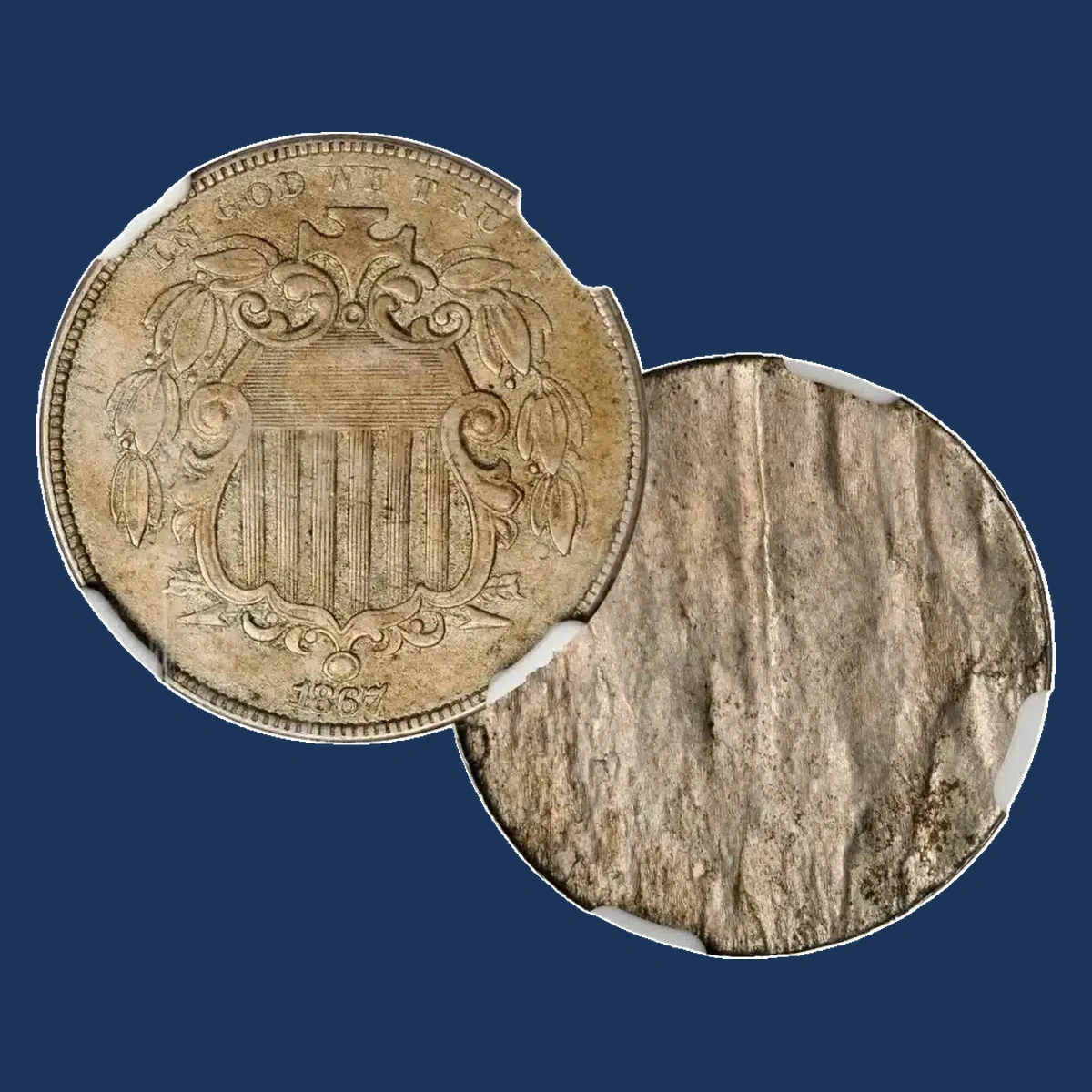
This coin separated through its thickness, leaving two thin pieces instead of one complete nickel. Each piece retains one original coin face and exposes a rough inner surface.
The split happened after the design had been struck. Weak bonding inside the original metal disk allowed its layers to pull apart.
Both pieces of the reported 1867 example survived together and were graded AU55 by NGC. They form one split coin, not two independent nickels.
The rough inner texture helps distinguish this separation from sawing a coin into layers or grinding one face away.
Estimated Value
Estimate $1,000–$6,000 for the matching pair, depending on preservation and the strength of its identification. Keeping both halves together preserves evidence that a lone thin piece cannot show.
A later-date comparison is a 1917 Buffalo Nickel split pair, both pieces graded MS64, that brought $1,260 in June 2023. That sale concerns another design and a higher grade.
The reported 1867 AU55 pair has no verified sale amount used here; the range is an estimate.
How to Identify
Inspect the inward-facing surfaces before concentrating on the date, looking for rough separation texture rather than parallel cuts or freshly smoothed metal. Examine those surfaces and the plain outer edge through a 10× magnifier.
Keep both pieces supported and never force them together, even if their outlines seem to fit perfectly. For loose pieces, weigh each on a scale and compare their combined weight with the normal 5 g.
Calipers can compare their diameters with the usual 20.5 mm and reveal the thinness of each layer. Check that the rough inner surfaces and outer outlines match as parts of one coin, with original struck faces outside.
9. 1867 Shield Nickel Second Strike Far Off Center
Most of the original design remains visible, but another strike overlaps it near the edge. The recorded With Rays coin first received a normal strike, then a second strike about 85% off center.
The second impression lies toward the lower left of the first design. It records another blow to the same coin after it shifted in the press.
This creates two displaced design impressions, not merely thicker letters. The recorded coin was graded XF40 by PCGS.
A single off-center strike would not explain the normal first design beneath the later overlap.
Estimated Value
The XF40 example sold for $4,025 at Heritage on May 11, 2007. XF40 indicates visible wear but substantial remaining detail.
Use an estimated $1,500–$7,500 for comparable genuine double strikes, allowing for visibility, condition, and how much of both impressions survives.
The old auction result is a reference, not a current offer. Damage at the overlap or loss of a readable date can reduce collector interest substantially.
How to Identify
Find the original centered design first, including enough of the date to establish 1867. Then trace the separate impression overlapping it near the lower-left side.
Compare the two faces through a 10× magnifier. Genuine overlapping strikes should show natural flattening and metal movement where the later blow met the earlier design.
Use calipers to record the expanded shape against the normal 20.5 mm diameter. A scale should remain near the normal 5 g if no metal was lost.
Check the plain edge for solder or a joint connecting separate pieces. A displaced second design crossing an intact first impression distinguishes this coin from ordinary letter doubling.
10. 1867 Shield Nickel Struck on a Cent Blank
A Shield Nickel design can extend beyond the edges of a smaller bronze disk meant for a cent. The result has the nickel’s design but lacks room for all its outer details.
A blank is the metal disk before a design is struck into it. Reports identify separate 1867 With Rays and No Rays examples on cent blanks.
They must be distinguished from copper trial coins intentionally made to test a design. A copper-colored normal nickel is also not enough to establish the error.
Size, metal, and the way the design meets the edge all matter.
Estimated Value
For an authenticated 1867 nickel on a cent blank, estimate $5,000–$25,000. This range covers the reported worn and unworn examples without assigning either a fabricated auction result.
A different-design comparison is a 1906 Liberty Nickel on a cent blank, graded MS63 Brown, that sold for $4,080 in September 2020. The early Shield examples are a separate, much scarcer collecting area.
Trial coins, plated nickels, and altered pieces require different valuations rather than this error range.
How to Identify
Weigh the loose coin first. A normal nickel is 5 g, while the bronze cent blank used in 1867 was normally about 3.11 g.
Those are standards, not measured weights of the reported errors.
Compare its diameter with calipers: a cent is about 19 mm, against the nickel’s 20.5 mm. Striking can spread the smaller disk.
Use a 10× magnifier around the plain edge to look for trimming, plating, or added color. Missing outer design should come from a small blank, not a later cut.
A specialist must distinguish the piece from a copper trial. Cent-like weight and metal, together with a naturally oversized nickel design, support the wrong-blank identification.
11. 1867 Shield Nickel Matching Coins from a Shared Striking Accident
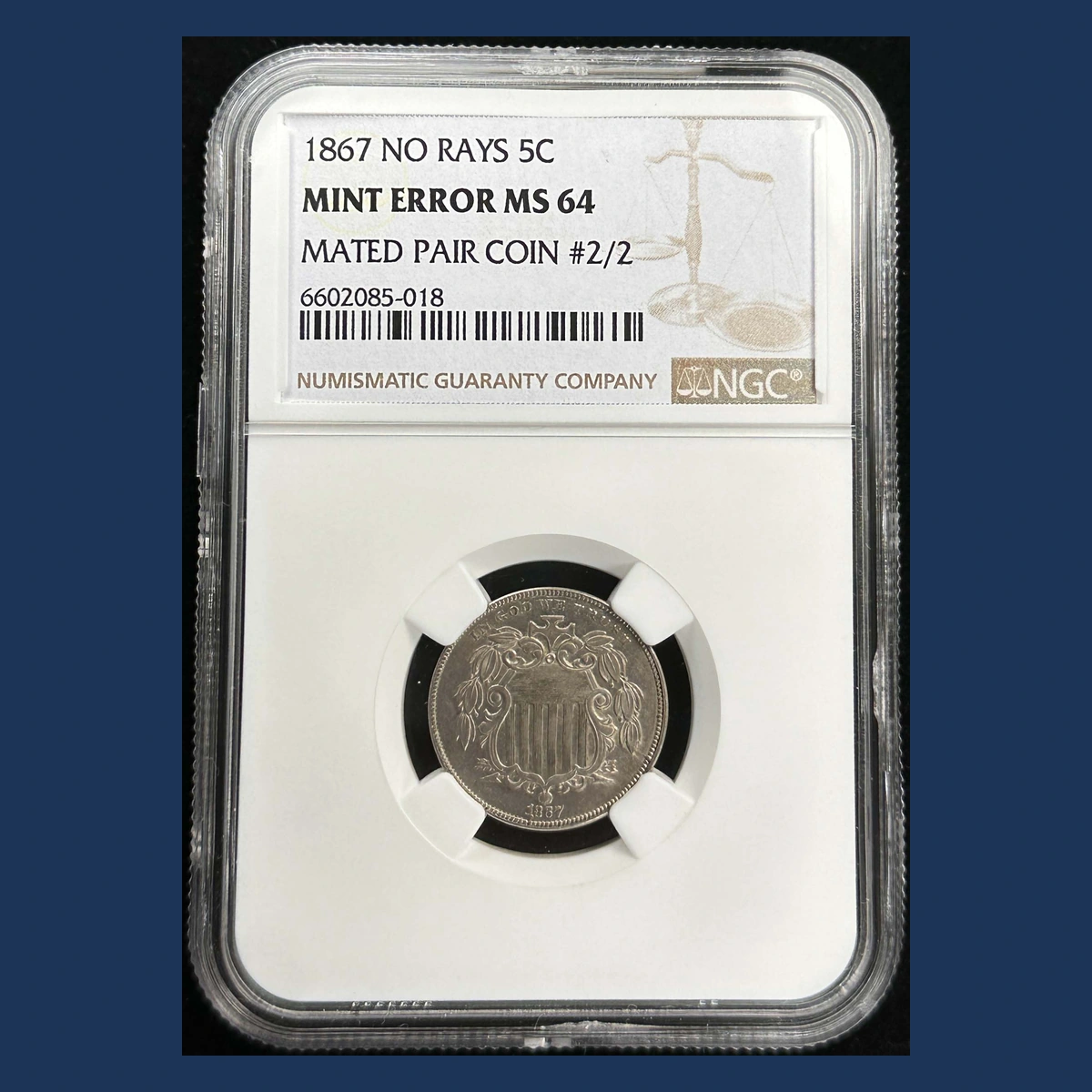
One small coin fits the depressed area of a larger companion. Inside that depression, a backward image records the design already present on the smaller coin.
The smaller disk was intended for a three-cent nickel but first received a five-cent design. It was struck again together with a normal nickel blank, impressing its earlier design into the companion.
That sunken, backward image is called a brockage. Both coins are No Rays examples and were graded MS64 by NGC.
The three-cent connection describes the smaller blank, not a surviving three-cent design beneath the nickel.
Estimated Value
The matching pair sold for $10,800, including the buyer’s fee, on December 21, 2022. Its smaller blank was identified afterward.
Estimate $10,000–$35,000 for the complete pair, reflecting the combined wrong-blank, repeated-strike, and matching-impression features. The upper figure is an estimate, not a later recorded sale.
The price must not be split into two equal coin values. Keeping the companions together preserves the evidence of their shared accident.
How to Identify
Compare the smaller coin with the depression in its companion without pressing them together. The outline and backward design should correspond to the same contact event.
Use a 10× magnifier to follow those matching details and the smaller coin’s overlapping strikes. Similar-looking damage on two unrelated coins is insufficient.
For loose pieces, record each weight with a scale and each diameter with calipers. Normal references are 1.94 g and 17.9 mm for a three-cent nickel, versus 5 g and 20.5 mm for a five-cent nickel.
Those are blank-type comparisons, not measured values for this expanded pair. Inspect the plain edges for alterations.
The earlier nickel design should match the sunken, backward impression on the companion.
Conclusion
Begin with the back: rays or no rays identifies the normal 1867 design, not an error. Then follow the date strokes, surface marks, displaced design, or unusual metal to the matching explanation.
Estimated values run from $15 to $35,000, with complete pairs valued together. Keep split pieces and paired coins intact as sets; their matching surfaces help explain the event and can matter greatly to collectors.